Review: Freud’s Last Session (Clock & Spiel Productions)

Venue: Seymour Centre (Chippendale NSW), Oct 30 – Nov 10, 2018
Playwright: Mark St. Germain
Director: Hailey McQueen
Cast: Yannick Lawry, Nicholas Papademetriou
Images by Alison Lee Rubie

Theatre review
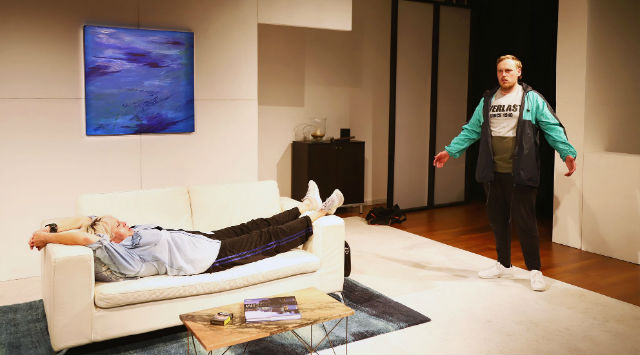
Two men, one atheist and one Christian have an intelligent, and civilised, discussion about the existence of God, in Mark St. Germain’s Freud’s Last Session. A fictional account of Sigmund Freud, approaching the end of life, inviting C.S. Lewis in for a meeting, presumably to help allay inevitable fears of impending death. Everything they talk about is relevant, even fundamental to our very being, but these are ideas we have tossed around in our minds many times, with decisions settled for each individual years ago. Some might be able to see new light on old questions and find the play intellectually stimulating, but for most, the best it can offer is an opportunity to hear the other side of arguments, within its stringently binary presentation of truths.

It is a polished production, with Hailey McQueen’s direction giving the theological themes an elegant and balanced focus. Tyler Ray Hawkins’ work on set decoration is noteworthy for its visual flair, cleverly manufacturing a sense of vibrant theatricality whilst maintaining realism in Freud’s office. Both actors deliver solid performances, with Nicholas Papademetriou particularly convincing as the ailing psychoanalyst, accurate in his portrayal of a legendary figure in his last days, but in a manner that is charmingly playful, to have us engaged and entertained. Lewis is played by Yannick Lawry, appropriately uptight, with an energetic presence that keeps things lively for his audience.

Life is mysterious, so there is no surprise that we often respond by embracing ideas that pertain to the supernatural. Science is in the business of demystification, but our nature seems not to permit an end to human interrogations; for every answer we discover, further questions will arise. The world is determined to be unknowable, yet we desire only to thrive on certainty. God may or may not exist, but if we agree that our time on earth is real, it should then follow that our emphasis must always be concerned with the here and now. The truth however is that, whatever we think is holy up above, has served to divide us. We see ourselves doing unspeakably cruel things to one another in the name of God, yet are unable to disown religious doctrines, refusing to acknowledge the harm that it can cause. The world has never been without Gods, so to imagine ourselves as entirely secular, although an appealing idea, is probably futile. The next best thing would be to trust that each of us can learn to be better persons with each passing day, no matter how ridiculous our personal beliefs.

www.clockandspielproductions.com

Review: Degenerate Art (Old Fitz Theatre)

Venue: Old Fitzroy Theatre (Woolloomooloo NSW), Oct 17 – Nov 4, 2018
Playwright: Toby Schmitz
Director: Toby Schmitz
Cast: Septimus Caton, Guy Edmonds, Giles Gartrell-Mills, Henry Nixon, Megan O’Connell, Rupert Reid, Toby Schmitz
Images by John Mamaras

Theatre review
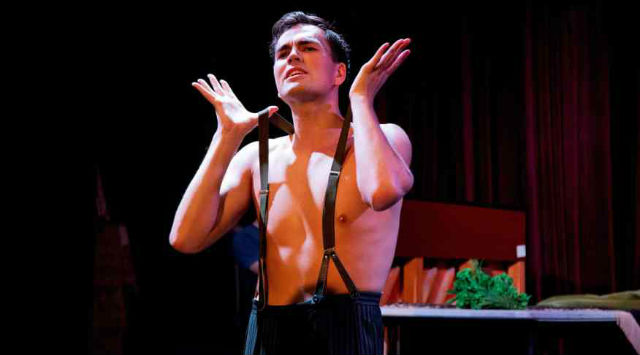
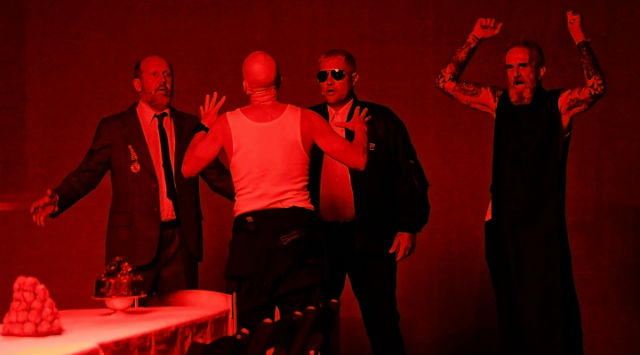
If it were a painting, Toby Schmitz’s Degenerate Art would comprise a thousand tiny brush strokes, too detailed and too intricate, but they collude to present broad strokes that are imperiously forceful, certain to make an impact. Like other bad boy artists of renown such as Adam Cullen and Damien Hirst, the work is brash and obnoxious, replete with evidence of genius, but unlike white box museums that allow us to glance, gasp and swiftly walk past, Schmitz’s 100 minutes of grandiose cocky art, holds us hostage in our overly snug seats, intimidating us into thinking that some very big meaning lies behind all that is being waxed lyrical in the playwright’s very many excessive diatribes.

The play is ostensibly about Hitler’s relationship with art, and the ironic and incongruous phenomenon of fascist attitudes always seeming to surround the dissemination and consumption of art. We see prominent Nazi figures of the time, arguing over art like any healthy society should, but the way these white men cannot help but escalate their competition of penis extensions into acts of violence, is despicable and telling. Visually sumptuous, the staging is provided a glossy glamour by Alexander Berlage’s diligent lighting design. Schmitz assembles a testosterone fest that begins desirous but eventually turns shrill, with shouty blokes intent on asserting their importance, a reminder that art cannot help but imitate real life.

Although little room for nuance, Degenerate Art is a showcase for some remarkable performances, and the rhapsodic peacocking of its six male actors proves to be truly impressive. Megan O’Connell too, is an effective and memorable narrator, despite never really being able to overcome looking like an afterthought. It is frustrating that we are still being subjected to groups of white men talking about Nazism. To some, it might make sense that white male villains can only be played by white men, but for others, this is completely counter-intuitive, and a lazy, even irresponsible way of getting into discussions about fascism. Actions speak louder than words, especially when the words are deafening.

www.redlineproductions.com.au

Review: Julius Caesar (Bell Shakespeare)

Venue: Sydney Opera House (Sydney NSW), Oct 23 – Nov 25, 2018
Playwright: William Shakespeare
Director: James Evans
Cast: Jemwel Danao, Maryanne Fonceca, Ghenoa Gela, Neveen Hanna, Emily Havea, James Lugton, Kenneth Ransom, Nick Simpson-Deeks, Russell Smith, Sara Zwangobani
Images by Prudence Upton

Theatre review
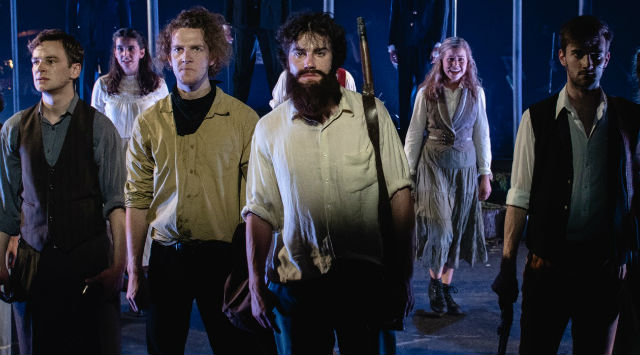
Some things never change, and Shakespeare’s Julius Ceasar could just as well be a story about Canberra in 2018. A controversial leader gets knifed, and all hell breaks loose, in this tale of a mutiny that does not go quite as planned. Cassius and Brutus conspire to have their leader extinguished, in order that a better system of government can be installed, but after Caesar’s death, they find themselves quite inadvertently shot in the foot. This is the story of Malcolm Turnbull, of Tony Abbott, of Julia Gillard, and of Kevin Rudd; a tradition of the Australian government that seems a recent phenomenon, but is in fact centuries old. Even after the chief takes a brutal fall, discontent among the ranks refuses to dissipate, and the process of elimination keeps repeating.

An appropriately modern tone is injected by director James Evans, who assembles for the production, a satisfyingly cinematic look and feel. Music by Nate Edmondson is particularly noteworthy. Luscious, bold and flamboyantly epic, sound proves itself this staging’s most reliable element, whenever we begin searching for explanations to the goings on.

Actor Kenneth Ransom is an unusual Caesar, statuesque but with a subdued presence. Cassius and Brutus are played by Nick Simpson-Deeks and James Lugton respectively, both delivering entertaining and rich characterisations, as well as impressing us with their marvellous ability at harnessing chemistry. In the role of Mark Antony is Sara Zwangobani who all but steals the show in Act III, when her disarming luminosity is given opportunity to occupy centre stage. The actor is intense and authentic, with a visceral power in her performance as the Roman leader that truly dominates.

A healthy democracy requires that we go the polls every few years to cast a ballot on who we wish to have representing us. This does not happen every time the tide changes or every moment we feel disillusioned by those whom we had given office. It is certainly not dependent on how private media companies and other interests wish to exercise their influence. There will always be people who think they know better than the populace, and seek to subvert our electoral rights. We can only hope that those who reject the universal rights all citizens are equally entitled to, like Cassius and Brutus, will in real life, suffer every consequence of their corruption.

www.bellshakespeare.com.au

Review: Two Hearts (The Anchor Theatre Company)

Venue: Kings Cross Theatre (Kings Cross NSW), Oct 19 – Nov 3, 2018
Playwright: Laura Lethlean
Director: Jessica Arthur
Cast: Phoebe Grainer, Damon Manns, Eliza Scott
Images by Clare Hawley

Theatre review
Girl meets boy at an inner-city house party, and they quickly fall in love. What follows is predictable, in an inevitable way perhaps, with things between the young couple taking shape like all the romantic narratives before, as though human connections can never stray far from established repetitious forms. In Laura Lethlean’s Two Hearts, love and sex are an exhilarating phenomenon, yet simultaneously, nauseatingly benign, except for the inclusion of a mysterious figure roaming the periphery, occasionally interjecting for gentle disruptions to the very ordinary story.

Tranquil and delicate, director Jessica Arthur’s approach makes for a show distinctively ethereal in tone, with an endearing cast helping to sustain our interest. Leading lady Eliza Scott’s playful exuberance and impressive lack of pretension, are valuable components to her engaging presence. Damon Manns brings outstanding ingenuity to his role, cleverly creating unexpected dimensions, to elevate a character that could otherwise be awkwardly pedestrian. The tricky part of the hallucinatory third-wheel is played by Phoebe Grainer, whose quiet concentration and honest impulses, provide an elegant solution to the play’s surreal aspects.

Two Hearts is in some ways a work about regret, a painful state of being, involving intense emotions that refuse to dissipate. We are held hostage, suspended in time but heavy with irreconcilable memories, partially paralysed and acutely embittered. It endures, because we fear the duplication of those grave mistakes, unable to trust that lessons have been learned. To let go of regret, is a simple idea, but being human is seldom a convenient exercise; the journey between inspiration and fruition is almost never the straightest and shortest distance between two points. We can only try to visualise the destination, and try to move ourselves in the right direction. Success may or may not come to pass, but stagnation is the only failure we must avoid.

www.facebook.com/AnchorTheatre

Review: random (Belvoir St Theatre)

Venue: Belvoir St Theatre (Surry Hills NSW), Oct 18 – Nov 11, 2018
Playwright: debbie tucker green
Director: Leticia Cáceres
Cast: Zahra Newman

Theatre review
A regular family wakes up to another ordinary day, getting ready for their midweek routine. We soon discover that things do not go as planned, when the police appear on their doorstep, delivering news of catastrophic proportions. debbie tucker green’s random is about youth violence in metropolitan cities, a consequence of our incompetence as communities to provide adequate care and guidance. The playwright’s unique combination of slang, patois and poetry, represents a sublime reshaping of the English language, that emerges from the Caribbean migrant experience in England. Keen observations of contemporary life, are positioned alongside nuanced social critique, giving palpable voice to the black working class.

Actor Zahra Newman plays all the characters in this one-woman show, proving herself a force of nature, and a legitimate superstar of the Australian stage. With extraordinary talent and skill, Newman tells the story of random with exceptional dynamism, taking us from jubilation to the extremes of tragedy, for an experience full of complexity and sentimental enthralment. The multitude of voices, emotions and gestures that the actor is able to portray for each and every personality, are administered with an astounding fluency, as we watch her switch flawlessly between states of mind, whether these people appear for a breathtaking split-second or for several bewitching minutes. Newman is an unequivocal genius, and the theatrical magic she dispenses here, is simply divine.

Directed by Leticia Cáceres, the production is sharp, powerful, often awe-inspiring. Hilarious at the start, and later on, turned harrowing, every moment is captivating, fuelled by an urgent confidence, a vehement need to present the play, with all its sociological pertinence and aesthetic glory. Designed with commendable sophistication, the staging features lights by Rachel Burke and music by The Sweats, both restrained in approach but marvellously efficacious, for this brazenly empty space.

There will be some who wish to call the phenomenon universal, but to neglect the racial dimension of violence in random would be callous. We are all capable of heinous acts, but the circumstances around racial inequity must always be taken into account when trying to understand the social ills of any community. Poor outcomes should never be considered random or accidental, when it is clear that the cards are clearly stacked against some. To be blind to the colour of our neighbours, is to be wilfully ignorant of the challenges that they face. We all deserve the same rights and privileges, but to imagine that things are already equal, and to behave as though nobody is ever in need of additional support, is to perpetuate and fortify the devil’s work.

www.belvoir.com.au

Review: In Waiting (Blood Moon Theatre)

Venue: Blood Moon Theatre (Potts Point NSW), Oct 11 – 19, 2017
Playwright: Liviu Monsted
Director: Liviu Monsted
Cast: Courtney Adams, Alison Benstead, Alana Birtles, Roslyn Hicks, Nathaniel Hole, Dale Wesely Johnson Green, Steve Maresca, Dean Nash, Katie Regan

Theatre review
In a purgatorial room, the dead wait for their turn to meet Ignus, a psychoanalyst in the esoteric dimension, who provides assistance to move these wandering spirits on to their eternity. It is an appealing allegory that we find in Liviu Monsted’s In Waiting, using the device of psychotherapy to illustrate the need for a certain enlightenment, intellectual and emotional , before life can take on a meaningful course. Monsted sets up an intriguing context, with charming interaction between his ghosts, but substantial portions of the 150-minute production involve two-hander sessions in Ignus’ consultation office, during which the writing often becomes convoluted and self-indulgent.

The work is certainly contemplative, but its dialogue frequently lapses into a dense and obtuse language, that is probably more suited to the form of a short novel than it does the stage. Acting style is uniformly animated, and although rarely authentic, the performers demonstrate a generosity in their prioritising of the text, which helps us decipher the proceedings. Actor Alison Benstead cuts a striking figure as the mysterious Ignus, impressive with the quantity of words she commits so effortlessly to memory. Also showing good commitment is Katie Regan as Estelle, the young woman who has to confront hard memories before she can be released from a state of stagnation.

The waiting room is a necessary space, but some of us can stay too long, in a condition of regret and fear. The future is always in conversation with the past. It might be useful to think that we can close the door on anterior events, but there is nothing we do today, that is not a result of experiences from all the yesterdays. To forget, is only to have it relegated to the subconscious. The characters who do well in In Waiting, are those able to find something that looks like acceptance. Time may not be linear, but no matter how we conceive of its passage, torment is not being able to move with it.

www.bloodmoontheatre.com | www.monsansproductions.com

Review: Evie May (Hayes Theatre)

Venue: Hayes Theatre Co (Potts Point NSW), Oct 12 – Nov 3, 2018
Book & Lyrics: Hugo Chiarella
Music & Lyrics: Naomi Livingston
Director: Kate Champion
Cast: Amanda Harrison, Loren Hunter, Keegan Joyce, Tim Draxl, Jo Turner, Bishanyia Vincent
Images by Nik Damianakis

Theatre review
In Hugo Chiarella and Naomi Livingston’s musical Evie May, a queer woman from early last century takes centre stage, to tell a story of lost loves against a backdrop of bittersweet nostalgia. We watch as our protagonist’s star rises, revelling in her achievements as an illustrious vaudeville performer, but also mournful of the sacrifices demanded of her, in a world that simply would not allow a woman to be her true self. Evie May is a strong work, beautifully imagined and executed with admirable integrity. Its narrative is intelligently constructed, with songs that are memorable yet unusually tasteful.

The show feels somewhat anomalous. In an industry that seems to thrive on relentless exhilaration, the languid melancholy of Evie May is paradoxically refreshing, sustained by a palpable desire to authentically represent a woman genius from our recent past. Director Kate Champion’s approach is elegant, often understated, and although visually underwhelming, her show is ultimately a moving one, profound in the messages it is able to convey. The characters come from a different time, but they all exist to impart something meaningful, and valuable, to how we see ourselves, then and now.

Within a no frills set up, the cast prove themselves more than proficient, at a lot of heavy lifting. The ingenue version of Evie, is played by bona fide triple-threat Loren Hunter, whose powerful acting and mesmerising dulcet tones, has us hopelessly engrossed in her character’s captivating melodrama. Amanda Harrison brings star quality to Evie at her early retirement age, a confident presence, thoroughly reliable as the production’s heart and soul, on which all the action anchors. Love interest June is played by a very delightful Bishanyia Vincent, effervescent as flamboyant showgirl and deeply poignant as the one who got away. Vincent is equally persuasive in the role of Margaret, Evie’s sister, a difficult personality made worthy of compassion by the actor’s detailed rendering.

It is convenient to think that the worst of our oppression as LGBTQ women are over, but Evie May’s story is not just a relic of yesteryear. The compromises we have to make, in order to succeed, or simply to survive, continue to be unreasonable and unjust. It is a modern Australia, but we must not live in the delusion that the straight white man has relinquished his position as top dog. Until our girls can walk into any space they choose, there is still much to fight for.

www.hayestheatre.com.au | www.newmusicalsaustralia.com.au

Review: TickTickBoom (Subtlenuance Theatre)

Venue: The Actors Pulse (Redfern NSW), Oct 10 – 20, 2018
Playwright: Melissa Lee Speyer
Director: Paul Gilchrist
Cast: Rose Marel, Emily McKnight

Theatre review
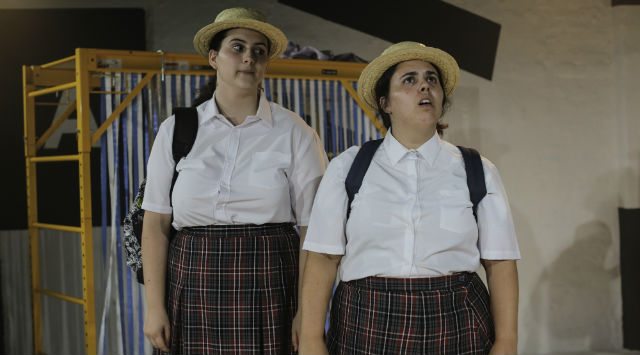
When the story begins, Jodie is seventeen and finishing up high school, but instead of exams and puppy love, it is her failing health that becomes all-consuming. To have her dug out of doldrums, chirpy schoolmate Clara is sent by parents to be the gallant lifter of spirits. In Melissa Lee Speyer’s TickTickBoom, the heart is the subject, literal and figurative, as we observe two young women navigate life and friendship, with a constant and unassailable reminder that death is always around the corner.

Big existential themes are cogently woven together by Speyer, who presents her observations in a manner that is indelibly tender and benevolent. The production struggles to establish an effective sense of humour, but its heavier sections are certainly sensitively rendered. Director Paul Gilchrist’s earnest approach makes for a warm, contemplative experience, and although chemistry between actors can seem inconsistent, both demonstrate undeniable talent, as they proceed to find authenticity, as well as integrity, for their respective roles. Rose Marel brings a valuable vulnerability to Clara, so that we can have an appreciation of the character beyond her shiny exterior. Emily McKnight is convincing in her performance of Jodie’s recalcitrance, for a portrait of teenage angst that we are all familiar with.

Time means nothing to this earth. It is the vanity of our mortal selves that creates the notion of time, and the notion of life running out. When Jodie is fearful of death, she is paralysed, unable to pay reverence to the ticking seconds that she so anxiously counts. To believe in time, is to imbue it with meaning. Species can come and go, but the world will evolve regardless of our individual fates. For each of our personal domains however, to make this fleeting existence bearable, will require a thing we name spirit, whatever one would like for it to mean.

www.subtlenuance.com

Review: Ear To The Edge Of Time (Sport For Jove Theatre)

Venue: Seymour Centre (Chippendale NSW), Oct 11 – 27, 2018
Playwright: Alana Valentine
Director: Nadia Tass
Cast: Belinda Giblin, Gabrielle Scawthorn, Christopher Stollery, Tim Walter
Images by Kate Williams

Theatre review
Martina is a young astrophysicist, poised on the brink of greatness. When she meets Daniel, a poet assigned to observe and write about her experiences at the culmination of her PhD work, a fissure transpires, revealing the entrenched gender inequity that works against Martina and other women in the field of science. Structural sexism is not an easy phenomenon to dissect, but in Alana Valentine’s Ear To The Edge Of Time, we are presented persuasive evidence of how power is wielded to the exclusion of women, especially at the highest ranks of our authoritative organisations. It is perhaps inevitable that substantial portions of the play would feel alienating for those dulled by science, or for those suffering from political apathy, but there is no denying Valentine’s embracive diligence in her crafting of this purposeful work.

It is a simple staging, directed by Nadia Tass, who puts immense faith in her actors to deliver all. Gabrielle Scawthorn is astonishing with several big passages of science speak, that she launches into with tremendous aplomb. Some depictions of emotional turmoil can seem slightly exaggerated, but she provides admirable clarity in her depiction of Martina’s oscillating mental states, to unveil the intricately shifting strategies required of women in managing our careers. Daniel is played by Tim Walter, impressively precise, and a passionate, dependable presence adept at sustaining energy levels. Supporting roles are manifested with rich vibrancy, by Belinda Giblin and Christopher Stollery, who introduce unexpected complexity to their parts, both engrossing and delightfully entertaining.

Women navigate their careers in different ways, but by virtue of simply being women, we have additional hurdles put before us, all along our trajectory towards the glass ceiling. Ear To The Edge Of Time is by no means unique in its messaging. These issues have in recent times, been discussed repeatedly and quite obsessively. It is undeniable that the problem has now become visible, but the solutions that it asks for, remain elusive, at least in our art. There can only be two ways that this groundhog day will conclude; either our concerted efforts will help us make headway and we progress onto a new consciousness, or feminism will once again fall out of favour. We need only to look at legacies of the three previous waves for answers, and be able to find assurance that change is indeed afoot.

www.sportforjove.com.au

Review: The Feather In The Web (Griffin Theatre Company)

Venue: SBW Stables Theatre (Kings Cross NSW), Oct 5 – Nov 17, 2018
Playwright: Nick Coyle
Director: Ben Winspear
Cast: Tina Bursill, Gareth Davies, Michelle Lim Davidson, Claire Lovering
Images by Brett Boardman

Theatre review
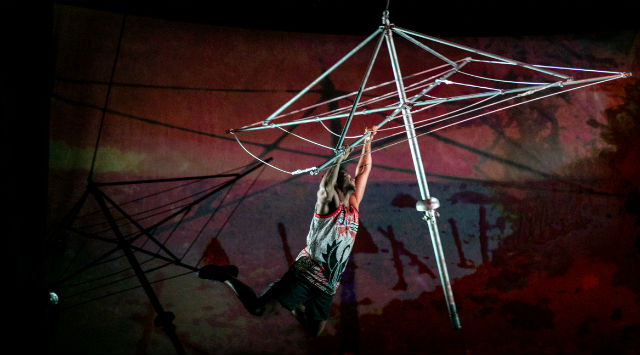
At one point in the show, the protagonist declares that she has MS, but of what we are able to observe, Kimberly exhibits no symptoms of multiple sclerosis. We are nonetheless, tempted to pathologise her, to interpret all her absurd behaviour as evidence of some kind of mental disorder, to label her crazy. Nick Coyle’s The Feather In The Web is a tale of obsessive love, but one that is grounded in little reality. It is doubtful if audiences in general will be able to find points of meaningful connection with the play’s outlandish situations, but its wild imagination is certainly entertaining.

Director Ben Winspear’s creation is highly sophisticated, marvellously polished, and very funny indeed. It is a thoroughly engrossing production, full of mystery and always bursting with energy, featuring dynamic and seamless collaborations from an excellent design team. Sophie Fletcher and Mic Gruchy work wonders for a series of backdrops and projections that are as whimsical as they are functional. Lights by Trent Suidgeest are versatile and unpredictable, able to traverse mundane and surreal with ease, and sound by Steve Toulmini is bold and humorous, powerful in its control over the audience’s emotional responses.

The magnificent Claire Lovering is dazzling as Kimberly, exceptional in her ability to simultaneously deliver uproarious comedy with a grave solemnity. Brilliantly amusing, she sweeps us away to places that are completely nonsensical, but all the while, keeping us keenly aware of the troubling psyche that underlies her character’s strangeness. Lovering’s own vivacity and strength, represents a valuable female presence that offers balance, to moments where the text comes precariously close to misogyny. We are bewildered and upset by Kimberly’s incapacity for agency and self-determination, but are won over by her resolute attitude. Ultimately, we have to let a woman want what she wants.

Three supporting players take on a range of kooky types, with Gareth Davies particularly memorable for his unrelenting propensity for insisting on our laughter; his work is enjoyable no matter the personality he assumes. Michelle Lim Davidson introduces surprising depth in later sections, urging us to shift focus to something considerably more poignant. Tina Bursill’s nonchalant cruelty as Regina is acerbic and accurate, deliciously biting in one of the show’s more believable roles.

The Feather In The Web is often unsettling, because we cannot help but feel disturbed by the abnormality put on display. It is true however, that we have no right to want Kimberly to transform into someone normal and palatable. She is non-compliant and non-conformist, and much to our chagrin, she can think of nothing else but for her affections to be reciprocated. Her heart’s desire may be objectionable, but when we look at the things she has absolutely no interest in; conventionality, respectability, mediocrity, and other markers of social acceptability, Kimberly turns into someone quite remarkable.

www.griffintheatre.com.au