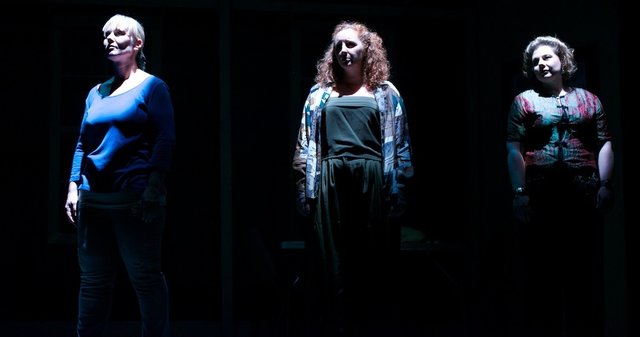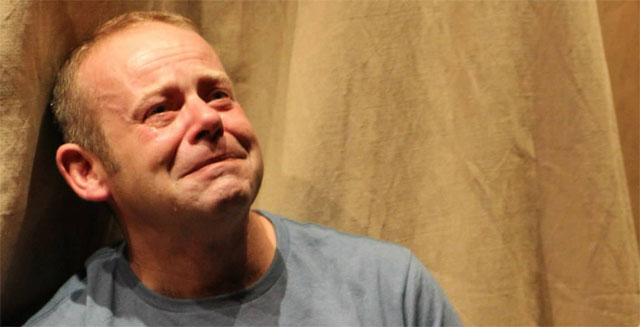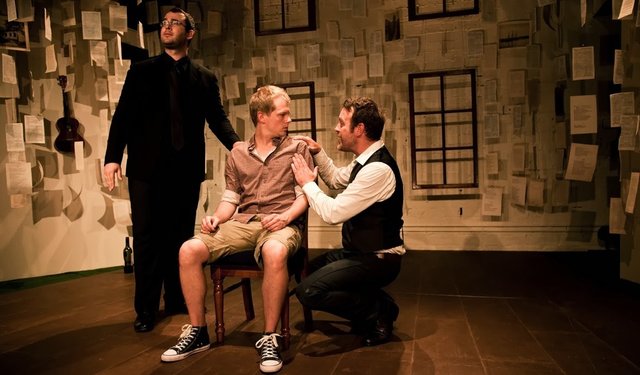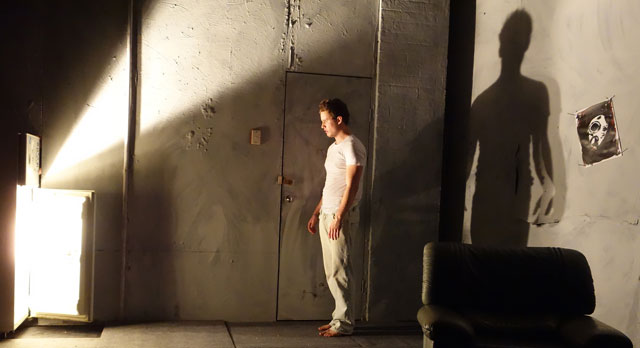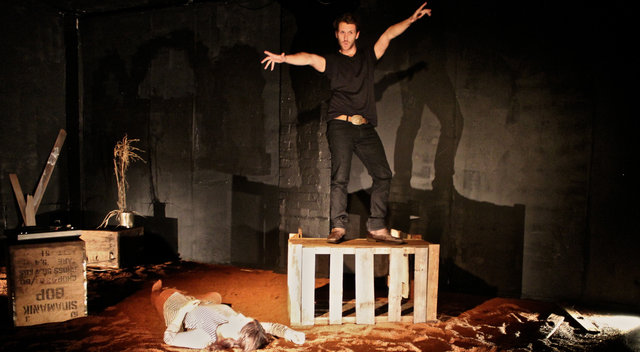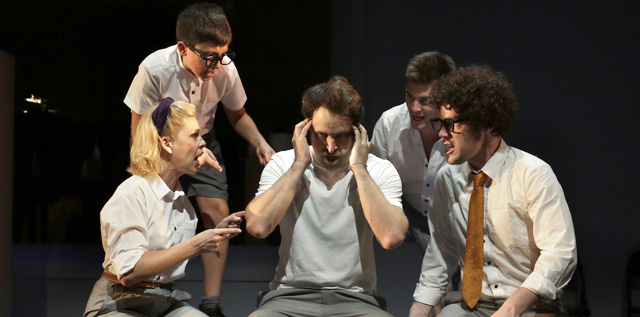
Anaconda (Tamarama Rock Surfers)

rsz_1390679_658422944190319_399168425_nVenue: Bondi Pavilion Theatre (Bondi NSW), Oct 29 – Nov 23, 2013
Playwright: Sarah Doyle
Director: Sarah Doyle
Actors: Damian de Montemas, Simon Lyndon, Leeanna Walsman, Martin Broome

Theatre review
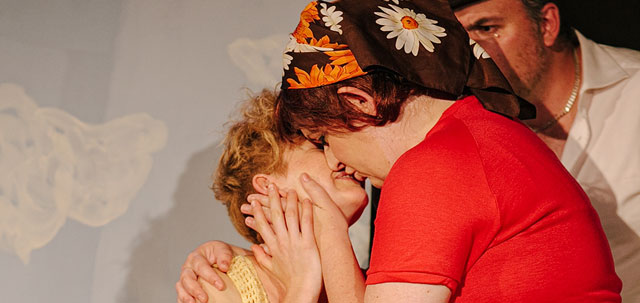
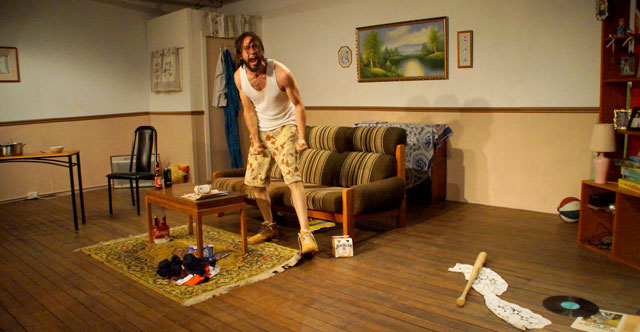
There are stories that appear time and time again in our theatres because they contain evergreen ingredients, but once in a blue moon, a new story emerges that is poignant, interesting and representative of the times we live in. Anaconda is a tale that can only be told in civilisations that have achieved some level of gender and sexual liberation, and where religion is open to scrutiny. Taboos are omnipresent, but they evolve. What was once unspeakable is suddenly given release, and now is the time that themes of sexual abuse, and their many repercussions, are beginning to gain attention in public fora of certain societies.

Sarah Doyle’s script is an important one. It investigates the unraveling of sexual trauma in adult males from different perspectives, and we are provided valuable insight into hidden truths that are buried underneath the surfaces of our daily lives. Revelation is one of the most revered purposes of art. The play does not hold back at exposing gruesome details (although re-enactments are thankfully avoided), and descriptions of those details resonate powerfully with appalling terror.

Less successful however, is Doyle’s direction of her own writing. Characters do not develop as extensively as the story allows, and they come across overly simplified. The dynamics of the wife and husband relationship in particular, lack chemistry and credibility, even though performances are fairly strong. Actors are cast well, and all four bring conviction and gravitas to their roles, but the show requires greater “light and shade” for the dramatics of the script to work more effectively.

The greatest beauty in Anaconda is the way its plot unfolds. Full of intrigue and suspense, it provides great theatricality to what could have been a dreary, depressing experience. This show is a captivating one, and the air of mystery it creates ultimately finds gratification when it divulges its gritty and shocking secrets.

www.rocksurfers.org

An Ordinary Person (Sydney Independent Theatre Company)

anordinarypersonVenue: Old Fitzroy Theatre (Woolloomooloo NSW), Oct 22 – Nov 16, 2013
Playwright: Robert Allan
Director: Julie Baz
Actors: Cherilyn Price, Alexander Butt, Mel Dodge, Jai Higgs, David Jeffrey, Carla Nirella
Image by Katy Green Loughrey

Theatre review
At the heart of An Ordinary Person is an unusual relationship. It is an unconventional marriage not often represented on stage, but it is an entirely believable one. Robert Allan has written an interesting story, and he has crafted characters that are idiosyncratic, curious and memorable. The structure of the plot, however, is a challenging one. The show’s first half is full of intrigue, but not much else. It takes its time introducing the various characters in an air of mystery, but the audience needs a stronger sense of the impending drama for these characters to be compelling. Fortunately, the second half is much more satisfying, with drama bursting at all its seams.

Performing the piece is an ensemble of uniformly strong actors. Cherilyn Price is particularly impressive, playing her character Aggie at two different ages. She switches effectively between the portrayal of a middle-aged woman and her 14 year-old version, without the use of costumes or makeup, relying only on her acting. It is quite an experience to see Price’s method in her subtle but distinct transformations. Carla Nirella plays Fiona, and stands out with the effortless intensity and conviction she brings to the production. Her role is a simple one, but she attacks it with clarity and energy, giving very solid support to the key characters.

The play’s themes are dark and uncommon but Julie Baz’s direction does not exploit them gratuitously. She is careful to depict all characters with compassion, so that we leave the show thinking about our society’s issues in a mirror that reflects the social, rather than the personal. Although fundamentally a singular species, ordinary persons bear infinite differences between each and every separate entity. It is in the meeting of these individuals that extraordinary things happen, good or bad.

www.sitco.net.au

Love Field (Bakehouse Theatre Company)

lovefieldVenue: TAP Gallery (Surry Hills NSW), Oct 22 – Nov 2, 2013
Playwright: Ron Elisha
Director: Michael Dean
Actors: Lizzie Schebesta, Ben Wood
Image by Tessa Tran, Breathing Light Photography

Theatre review
Jackie Kennedy and Lyndon Baines Johnson (the 36th President of USA) feature in this fictional story situated on a jet, immediately after the Kennedy assassination. Ron Elisha’s writing is imaginative and his thoughts are complex. There is a sense of something wild bubbling under his constructed universe, although the surface is deceptively restrained and conventional.

Direction of the production focuses on the creation of a naturalistic environment, and relies heavily on the actors’ lines to convey Elisha’s ideas. This is a tall order, as these concepts are deep and seem to demand more elaborate exploration. On the other hand, what results is an elegant work with a dignified simplicity.

Both actors are gifted with impressive but easy, stage presence. They are naturally fascinating creatures that absorb our attention effortlessly. Ben Wood plays Johnson, with a commanding speaking voice and great conviction. He instils clear character transitions throughout the play, and allows us to perceive several dimensions to his personality in a relatively short time (it runs for approx 75 mins). Lizzie Schebesta’s performance of the newly widowed Jackie Kennedy is beautifully melancholic, but she comes across slightly young for the role, and a little muted in her approach.

Although lacking in extravagant dramatics, Love Field is interesting and engaging. Its attempts at discussing issues of gender and social politics are well-meaning, and because modern times always seem to be in a state of “political turmoil”, the play is a timeless one.

www.bakehousetheatrecompany.com.au

Three Winters Green (Lambert House Enterprises)

threewintersgreenVenue: King Street Theatre (Newtown NSW), Oct 7 – Nov 3, 2013
Playwright: Campion Decent
Director: Les Solomon
Actors: Tom Sharah, Brett O’Neill, Gael Ballantyne, James Wright, Emily Kennedy, Matt Young, Diana Perini

Theatre review
First produced in 1993 (and again in 2003), Three Winters Green arrived at a time when the AIDS epidemic was still a crucial force in galvanising gay communities in the developed world. Campion Decent’s script is a beautiful representation of that generation’s experiences, and his depiction of their struggles is an important documentation that needs to be borne witness time and time again.

The emphasis on Les Solomon’s 2013 direction remains on the devastating effects of the AIDS virus, but other elements in Decent’s writing make the play more than a relic of recent lgbt history. It deals with uniquely queer experiences of family, the closet, and homophobic violence, all of which are hugely relevant themes that resonate strongly, even for the most jaded of contemporary Australians.

Tom Sharah is the lead, and his work is a major factor in the success of this production. Sharah has a thorough and sensitive understanding of the text, and his portrayal of Francis is deeply affecting. He plays the flamboyant character with great humour and delivers a lot of big laughs, but he also cuts through with beautiful, subtle moments that convey truthful character development and heartfelt emotion. It is a heartbreakingly sublime performance. Brett O’Neill is memorable in his supporting role as Andrew. He is naturally charismatic, and impresses with simplicity and authenticity. The restraint in his acting contrasts well with other cast members, and allows him to shine brightly through.

The play concludes with the unfurling of a quilt that was part of the Australian AIDS Memorial Quilt Project, that commemorates and honours those who have lost their lives to the disease. The poignancy of the quilt’s presence, along with the angels and the mourners they leave behind, cannot be understated. George Orwell said, “the most effective way to destroy people is to deny and obliterate their own understanding of their history.” May Three Winters Green return with greater emerald vibrancy at each passing season, and may we never forget the foundations of our shared histories, even if the communities we live in become increasingly fragmented.

www.kingstreettheatre.com.au

Butterflies Are Free (Lambert House Enterprises)

butterfilesVenue: King Street Theatre (Newtown NSW), Oct 7 – Nov 3, 2013
Playwright: Leonard Gershe
Director: Les Solomon
Actors: James Wright, Emily Kennedy, Cheryl Ward, Matt Young

Theatre review
Written by Leonard Gershe in 1969, Butterflies Are Free premiered at virtually the same time as the legendary Woodstock Festival. The work discusses notions of freedom at a time when America was in the depths of the Vietnam War, and when the hippie subculture was at its peak. 44 years on, the resonances in Gershe’s script remain strong, and its story still strikes a chord with contemporary audiences.

Les Solomon’s revival of the play is slightly referential of the 60s, but design elements do not explore the retro aspect too deeply. Instead, Solomon focuses our attention on character development and the themes inherent in the writing. His direction of the piece is confident and passionate. We are treated to perfectly paced comedy, as well as an earnest approach to the deeper and more philosophical sections of the text.

Quality of acting is consistently strong. Emily Kennedy’s portrayal of a free spirit is delightful, and she captivates by shading her character with glimpses of a sombre interior. Her balance of light and dark grounds the show in a space of warmth and truthfulness, and establishes an intimate sense of identification with the audience. Cheryl Ward plays Mrs Baker, the “mother”, bringing a comic quality that is enjoyable yet subtle. Ward’s performance is measured and sensitive, creating probably the most convincing character in the show. It is noteworthy however, that the final quarter of the play seems slightly rushed. The comedy eventually gives way to a fairly serious conclusion packed with meaning and pathos, but the actors seem to remain at the speed of the earlier scenes.

The theme of freedom is one that absolutely everyone can relate to. In Butterflies Are Free, we are presented with a beautiful story and sublime, deeply moving words. This production allows us to savour those words as delivered by a group of impassioned players, and provides an opportunity for its audience to reflect upon the freedoms that exist in our lives and also those that are sadly absent.

www.kingstreettheatre.com.au

Hamlet (Belvoir St Theatre)

hamletVenue: Belvoir St Theatre (Surry Hills NSW), Oct 12 – Dec 1, 2013
Playwright: William Shakespeare
Director: Simon Stone
Actors: Toby Schmitz, Emily Barclay, Luke Byrne, Thomas Campbell, John Gaden, Nathan Lovejoy, Robyn Nevin, Anthony Phelan, Maximilian Riebl, Greg Stone

Theatre review
Shakespeare’s tragedies are vehicles for artists to express the extremities of human emotion and inconceivable psychological torment. When created well, a staging of plays like Hamlet will allow for the most outlandish and ostentatious of acting styles. In Belvoir’s production, Toby Schmitz pushes his portrayal of Hamlet over the edge of sanity, giving us one of the year’s most memorable theatrical performances.

Taking the brave decision to remove the ambiguity of the protagonist’s insanity, director Simon Stone’s version of events presents a Hamlet that is as much about mental disorders as it is about death and betrayal. Consequently, Schmitz’s choices are liberated, and he explores states of grief and madness with great intensity and high-octane drama. It is a delicious performance and the actor is magnetically powerful, while being controlled and considered. Schmitz is as intelligent as he is artistic, and the combination is lethal.

Greg Stone plays Polonius with great flair and confidence. This is an actor who loves Shakespeare’s words and knows how to use them. His performance is a real delight. Robyn Nevin’s role is less substantial, but she delivers what we have come to expect of her. Loads of gravitas and focus, and incredible elegance.

Many liberties are taken in Stone’s work, including a very clever take on the “play within a play” scene in which Lord Hamlet’s death is re-enacted, and some of the best use of incidental music in a long while. Stone displays not just originality and ingenuity, but also a keen sense of playfulness. His Hamlet is surprising, intriguing and taut. It runs slightly over two hours, and every moment is imbued with wonder and tension. This is exhilarating theatre. Stone’s show has a dangerous flirtation with abstraction which adds to its intrigue and seductive quality, but unfortunately becomes overwhelming in the final scenes. The play closes strongly but the journey at the end is slightly rocky. Nevertheless, this slightly abridged Hamlet is a courageous and accomplished work, one that showcases some of the best theatre practitioners and their dedication to, and faith in the art form.

www.belvoir.com.au

The Vehicle Failed To Stop (Version 1.0)

vehiclefailed1Venue: Carriageworks (Eveleigh NSW), Oct 15 – 26, 2013
Devisors: Sean Bacon, Irving Gregory, Jane Phegan, Paul Prestipino, Kym Vercoe, Olivia Stambouliah
Actors: Irving Gregory, Jane Phegan, Olivia Stambouliah

Theatre review
The subject is a heavy one, and the themes are serious. We are shown a side to the Iraq war that is little known, and the evidence provided is scandalous and outrageous. The tone of the production is suitably sombre, but it is a lively show that comprises quick and sharp scenes, holding its audience’s attention from start to end.

Exploration of theatrical techniques and devices are a key interest of this group (the exploding car is wonderful). Using the war story as a backdrop for a wide range of experimentation with sounds, visuals, and all the possibilities of an empty space, this is a highly creative work that is centred on form as much as it emphasises its content. Indeed, both form and content are interesting and thoroughly delved into, but on occasion, they seem to diverge and distract from one another. There are points in the performance where what is being shown on stage is so complex and enthralling, that the story seems to fall by the wayside. The originality of Version 1.0’s theatrical craft is accomplished and important, and so is the message of the story. Fortunately, both manage to get their days in the sun, although not always at the same time.

Aside from three actors, we see on side stage (in this multimedia production), a team of two musicians and a video artist. Their work alternates between providing background effects and featuring heavily at the foreground, but always married perfectly with the stage action. This genre of performance is still unconventional and not always practised successfully, but The Vehicle Failed To Stop is an example of how close collaborative efforts can give birth to something authentic and deliver theatre that is intriguing and unique.

www.versiononepointzero.com

Roberto Zucco (Sydney Independent Theatre Company / Le Théâtre des Assassins)

robertozuccoVenue: Old Fitzroy Theatre (Woolloomooloo NSW), Oct 1 – 19, 2013
Playwright: Bernard-Marie Koltès (translated by Martin Crimp)
Director: Anna Jahjah
Actors: Tim Cole, Lyn Pierse, Gemma Scoble, Sam Dugmore, Adrian Barnes, Neil Modra
Image by Katy Green Loughrey

Theatre review
Subtitled “the journey of a beautiful murderer”, Roberto Zucco is based on events and crimes committed by Roberto Succo in Italy and France in the 1980s. Bernard-Marie Koltès’ script (his final one, written in 1988) has shades of absurdism, but it is thankfully a coherent one that director Anna Jahjah is able to materialise on stage with humour and logic. This is a funny show with solid performances from some of the cast, and it is indeed the comic actors who leave the greatest impression.

Lyn Pierse plays 3 whimsical roles, and she is the consummate scene stealer. The younger players try hard to match up to her abilities, but Pierse owns the stage, and the audience hungers for her every gag and punch line. Neil Modra and Sam Dugmore are a delightful duo, with brilliant comic timing and chemistry. The personalities they create together, and individually, are whacky and wonderful, and both show a level of confidence and pizzazz that works perfectly for the tone of this production. Adrian Barnes takes on the older male characters, and applies wildly different approaches to each of them. He is a delightful presence but it is his performance as the tender, playful and charming “Old Gentleman” that is most interesting.

Design aspects though not particularly appealing, are effective. The construction of two levels on the Old Fitzroy stage adds a visual complexity to the play, and helps the actors emphasise the physicality of their performances. Jahjah’s work demands that her performers are agile and expressive with their bodies and faces, keeping her show consistently fast-paced and fun. Roberto Zucco fascinates with interesting characters and talented players, but ends up being overly light even though murder and rape are central themes. Nevertheless, this is a show that will entertain and amuse, even if the bigger questions are not thoroughly explored.

www.sitco.net.au
www.letheatredesassassins.com

King Lear (Harlos Productions)

rsz_lear0622Venue: Old 505 Theatre (Surry Hills NSW), Oct 2 – 13, 2013
Playwright: William Shakespeare
Director: Scarlett Ritchie
Actors: Gertraud Ingeborg, David Ritchie
Image above from 2006 production

Theatre review
Harlos Productions’ abridged 60-minute version of King Lear comprises key scenes from the play, joined by a narrator’s summary of events in between. The abbreviation of the plot obviously removes a lot of its development of tension and emotional involvement from the original experience, but what is created with just two players, is a theatrical entity that focuses squarely on the art of performance and storytelling. In the hands of Gertraud Ingeborg and David Ritchie, it is clear that the art form in question is a noble one.

Borrowing from Japanese and Chinese performance styles, both actors articulate their parts distinctly, almost operatically. Their stylistic gestures connect them to the audience, as they guide our eyes into the trajectories of the story. They often speak their lines directly into the fourth wall as though in the form of a narrator, inviting us to admire the beauty in their every movement and enunciation. Indeed, Ingeborg and Ritchie present to us, a craft that is effortless, confident, and thoroughly accomplished. Ingeborg in particular is manifestly comfortable and lively in all her roles, taking on each part with enthusiastic ease, and delighting us with a presence that can only be described as riveting.

Scarlett Ritchie’s direction brings out the best in both actors. We are shown the full range of their impressive skill, which gives the show an exciting feel of constant variation, and that variation is elemental in engaging the audience’s emotions. Props and costumes are minimal, but all items are utilised effectively. The director makes us read those inanimate objects in a specific way, and uses them to accurately shape our perspectives.

Even though the end of the piece is emotionally powerful, and Shakespeare’s epic story is ultimately told successfully, it is the art of theatre creation that triumphs in this production. In one hour, we see clearly the meaning of art, and realise the reverence that we must have for serious art makers.

www.venue505.com/theatre

Family Voices (The Cannoli Mob)

familyvoices1Venue: University of Notre Dame (Sydney NSW), Oct 2 – 6, 2013
Playwright: Harold Pinter (adapted by Vivian Tselios)
Director: Vivian Tselios
Actors: Adriano Cianfarani, Frances Attard, Nicola Said, Simon Boileau, Susan M Kennedy

Theatre review
In The Cannoli Mob’s Family Voices, production design plays a big part in conveying a sense of stifling and oppressive gloom. These are characters that exemplify English restraint, and the set, while good-looking, effectively communicates that sense of formality and austerity. It is also provides versatility, giving the play a surprising multi-dimensionality in spite of the small stage.

Vivian Tselios’ direction retains the abstraction in Pinter’s words, which gives the show a slightly surreal quality that is alluring and strangely enjoyable. The actors successfully depict an intriguing universe, even though their individual abilities do vary. Adriano Cianfarani plays the lead role, and brings an interesting “narrator” sensibility as though he is never quite present in his own world, which adds to the surreal feel of the show. Although the play does not seem to explicitly discuss locality, Cianfarani’s accent is distracting, and contradicts with the Englishness of Pinter’s writing. Simon Boileau’s appearance is a gift to the aesthetics of the production. On a visual level, he adds a lot to the sophistication of the work, and his acting is also most accomplished of the group. He has a daring and mischievousness that connects well with the audience.

This is a sensitive work that is quiet and thoughtful. The theme of miscommunication in the play is challenging at times, but it has an unusual visceral kind of beauty that envelopes the theatre while its audience listens in and ponders the nature of relationships and parenthood.

www.facebook.com/thecannolimob