Review: Being Norwegian (Brevity Theatre)

brevityVenue: Old Fitzroy Theatre (Woolloomooloo NSW), Jun 9 – 21, 2015
Playwright: David Greig
Director: Alexander Butt
Cast: Katy Curtain, David Woodland
Image by Pollyanna Nowicki

Theatre review
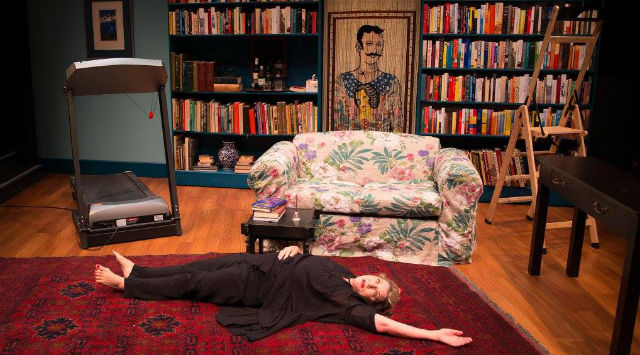
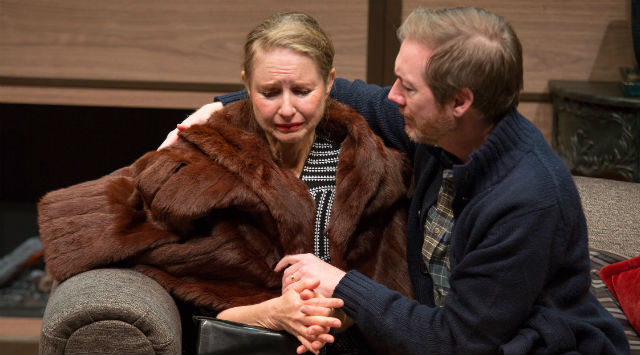
Relationships are “challenging”, to say the least. Lisa and Sean are in Sean’s apartment, after having met in a pub not long before. Both are hopeful for something exciting, and greater than everyday life to happen. The strangers quickly reveal parts of their hidden selves to try to make the night a meaningful one, but they clash. Lisa is assertive, and Sean is disarmed. The awkwardness of creating new relationships is familiar to us all. We crave deep connections, but finding it can be difficult for most. David Greig’s Being Norwegian is a half-hour sojourn investigating that peculiar dynamic when two meet for the first time, both in search of the same but struggling to find commonality.

The natural discomfort of strange encounters is expressed well, under Alexander Butt’s direction. The eagerness for affirmation and the urgent need to gratify primal urges, libidinal and otherwise, are presented with accuracy and good humour. Butt finds pleasure in the cheekiness of the writing, and works at creating laughs through a varied range of methods, which prevents the show from the threat of becoming a one trick pony.

The characters are colourful and amusing, but they require greater complexity and texture for us to find identification, in order that their narratives and jokes may cut deeper. Katy Curtain and David Woodland are polished performers with strong presences that captivate with ease. Their comedic chemistry is confident, although the sexual energy they manufacture can feel hesitant. The work is often exaggerative in tone, but the players manage to portray a surprising authenticity in a way that only dedicated show folk can. Curtain and Woodland are at home on the stage, and we are delighted to be in their company.

www.oldfitztheatre.com | brevitytheatre.com.au

Review: Love (Shut The Front Door)

shutthefrontdoorVenue: PACT Theatre (Erskineville NSW), June 2 – 6, 2015
Playwright: Patricia Cornelius
Director: Sean O’Riordan
Cast: Kimberly Kelly, Ebony Halliday, Ford Sarhan

Theatre review
Art can tackle any subject matter, but when it ventures into the more obscure parts of life, artist and viewer must both find a way of communication that achieves some level of resonance. Patricia Cornelius’ Love features three young drug addicts and their aimless existences. Nothing they experience is more than fleeting pleasures, except for the romantic love that they may, or may not, have found. Cornelius’ use of language is an interesting exploration into the speech of young Australians from the low rungs of life’s echelon. They speak plainly, but their words do not express depth of thought and emotion. The best they can manage is frustration, which is perhaps a true representation of youth. For many theatregoers, the characters’ lives are distant and objectionable, and although Sean O’Riordan’s direction translates plot lines well, we struggle to find any common ground. Horrible things happen but finding empathy is challenging.

The performers begin the piece with insufficient passion, but eventually find their feet to portray more genuine sentiments in the latter half. The play is about love and romance, but we are rarely able to be convinced of the relationships on stage, which unfortunately makes the production quite precarious at many points. Ford Sarhan provides good support as Lenny, with a natural comic ability that can deliver laughs at will. Even though the actor can feel like the show’s saving grace, his style of performance does not always find cohesion with his colleagues, and the tone he introduces, although delightful, seems to run contrary to intentions of the text. Leading ladies Kimberly Kelly and Ebony Halliday are less charming, but both manage to provide strong focus and poignancy at the end.

For some, the only thing worth living for are the relationships they foster. Those less fortunate might have nothing but a string of pointless moments interrupted only by emptiness. Creating a life with meaning does not come easy, but with education and age, enlightenment is always within reach for those of us in the developed world. Love asks us to think of the young and how we treat them. Our prejudices are put to test, but converting fundamental beliefs is a difficult task, and compassion proves not to come spontaneously in all cases.

www.facebook.com/shutthefrontdoortheatre

Review: Venus In Fur (Darlinghurst Theatre Company)

darlo1Venue: Eternity Playhouse (Darlinghurst NSW), May 29 – Jul 5, 2015
Playwright: David Ives
Director: Grace Barnes
Cast: Anna Houston, Gareth Reeves
Image by Helen White

Theatre review
The bedroom is not for thinking about politics, if sexual pleasures are to be had. This statement reveals the wealth of meanings that are embedded into our desires and the way we satisfy them. David Ives’ Venus In Fur is a brilliant exploration into the manifestations of our sexualities, and an examination of impulses that might run contrary to our intentions and the kinds of people we wish ourselves to be. The quality of autonomous irrepressibility of our sexual appetites often betray the public personae we convey to the world. Ives’ writing is supremely complex, but truthfully so. It is highly intellectual but never pretentious or overly academic. It is a rare articulation of the way our problematic sexual selves resist suppression and tempering, and it looks at the implications of those deeper meanings that our sex seem to express. Through a context of sado-masochism, the play investigates the chasm between private and social, how we are able, or unable, to understand our true selves, and the impact that sex can have on the rest of one’s life. Also, Venus In Fur is some of the wittiest and most outrageously entertaining theatre one can ever wish to experience.

Direction by Grace Barnes is completely masterful, with a firm grasp on all the script’s themes that constantly and unpredictably fluctuate, thus representing the inconvenient and devious ways human nature can manifest. Barnes’ work pays attention to the most minute of nuances, and turns them into poignant, sometimes formidable statements, but she also creates flamboyant sequences of theatricality that are nothing short of edge-of-your-seat stuff. There are loud political messages being said here, and there is a delicious assertiveness that accompanies them, even (or maybe, especially) if they do come into conflict with one another. When art wants to get at the truth of something, the results are often antagonistic, and in this case, the incessant exposure of our humanly contradictions is exciting and at times, rapturously so. It is an acknowledgement of all our strengths and weaknesses, and a celebration of our determined exertion to become better.

Anna Houston is magnificent as Vanda, an enigmatic character written so vast, she seems destined to embody all of womanhood. It is an impossible idea, but Houston’s work is boundlessly passionate and versatile, and she exceeds all requirements of the hugely demanding text. The actor is dynamic at every moment, always keeping us entertained with a bold comic sensibility, and challenging our mental capacities with a range of subtexts so acerbic and provocative, that we cannot help but be entranced. The wildness of her approach is informed by a powerful impetus that can be emotional, political, or libidinous, depending on what she wishes to portray. Houston is a captivating performer full of drama and depth, perfectly formed for this show, and the kind who can shine in any other role on any stage. Her colleague Gareth Reeves is less vibrant in the role of Thomas, but equally solid and compelling. Reeves’ depiction of sexism from a male perspective is honest and surprisingly delicate. The authenticity of his work is key to the show’s intellectual effectiveness. The presentation of sexism as convoluted and inextricable gives the production an immense feeling of texture and an impression of interminable layers that plays on our minds relentlessly. Reeves’ commitment and focus gives the show an air of confidence, which allows us to lose ourselves in the plot, and let the players take us on a ride of extremes.

Design elements are understated but necessarily so. Sound and lights contribute greatly to psychological dimensions that are always in play. Aside from a few thunderous roars and purposefully abrupt light changes, Sian James-Holland (lighting designer) and Jessica James-Moody (composer and sound designer) work quietly to add to tensions and atmosphere without drawing attention to themselves. Realistic costume design by Mel Page also serves plot and characters beautifully without too much embellishment, although some fetishistic leather items do seem to have an ebullient effect on some members of the audience.

Telling stories about the other, inevitably makes one an easy target for criticism. Men writing plays about the subjugation of women can never escape chastisement, but an artist stepping into a minefield provides opportunities to reflect on the worst and most rarely visited recesses of our being. David Ives’s perspectives are unique and refreshing in contemporary discourse on issues of gender and sex. It takes a lot of sophistication to get into discussions that flow erratically like experimental jazz music, but Venus In Fur‘s consistent resonances assure us of the validity of its many controversial ideas. There are few things more valuable in art than its analysis of repressed or forbidden subjects, especially when they address the fundamentals of all human life, like love, sex, and the struggle for who gets to be on top.

www.darlinghursttheatre.com

Review: This Boy’s In Love (Red Line Productions)

TBIL 1Venue: Old Fitzroy Theatre (Woolloomooloo NSW), May 26 – 31, 2015
Playwright: Adriano Cappelletta
Director: Johann Walraven
Cast: Adriano Cappelletta
Musical Director: Daryl Wallis

Theatre review
With any luck, Adriano Cappelletta’s This Boy’s In Love is going to be the last great play about gay life in Australia before same-sex marriage is made legal. Ado’s experiences and perspective as a gay man in Sydney are beautifully, and extremely honestly, documented in this one-man show reflecting life for thousands of individuals from a city in its final throes of inequality and bigotry. Ado is hungry for love like everyone else, but his desires face obstacles unique to metropolitan gay lives. Emerging from periods of oppression and persecution, Ado’s community suffers from dysfunctions, tragic and funny, many of which are fluently articulated in the work.

The piece breaks from conventional monologue formats to provide a theatre that is full of variety, in order to engage, entertain and indeed, educate. It takes frequent detours into sub-genres like cabaret, stand up and dance, and adopts hints of the absurd, so that its ninety minute duration never loses a moment of vibrancy. Director Johann Walraven identifies brilliantly, the many nuances in the text to create moments of surprising poignancy, and to make us fall for the protagonist more and more as the show progresses. As its performer, Cappelletta is generous in spirit, and unbelievably warm, striking a rapport with his crowd so solid, that we cannot help but be enthralled. The level of dynamism in his work is astounding at points, and we get completely absorbed into all his stories, silly or serious.

This Boy’s In Love is as perfect as a monologue can get for small theatre. The only way one can envision this production improved, is with greater investment and imagination into its design elements. Technical enhancements can make the show even stronger, but with what this team is able to assemble, it conveys its intentions perfectly. Love is hard to define. It can mean many different things, but starving anyone of it is cruel and certainly evil. For centuries, love has been defined in narrow heteronormative and religious forms, and in that process, many of us have suffered senselessly. Times have changed, and everyday, more are able to find emancipation. May the day come when sexual bigotry of all kinds in all places be eradicated.

www.oldfitztheatre.com

Review: Neighbourhood Watch (Illuminate Educate)

illuminateVenue: Bondi Pavilion Theatre (Bondi NSW), May 28 – Jun 6, 2015
Playwright: Lally Katz
Director: Susanna Dowling
Cast: Skyler Ellis, Gertraud Ingeborg, Steven Kreamer, Odile Le Clezio, Andrew Lindqvist, Linden Wilkinson, Anne Wilson

Theatre review
In Lally Katz’s Neighbourhood Watch, two women find a special but unexpected connection, and their bond helps them grow into individually stronger persons. The relationship gives their lives greater meaning, and their story is a reminder that the social aspects of our being is crucial to the way we evolve and progress. Ana and Catherine are women who have needed time to find independence and self-worth, and Katz’s writing makes no bones about using them to inspire girls and women. We often define ourselves in relation to men, in fiction as well as in reality, and the play brings focus to how we let that transpire, and then how we can find emancipation.

Direction of the work by Susanna Dowling is very polite. There is a quietness to the production that hinders the wit of the writing, but although energy levels are low, its main characters are vivid enough for the audience to absorb all that the show wishes to impart. The play is set in many different locations, so scene changes are tricky, and not always handled with enough elegance. Spacial use requires greater inventiveness to prevent distractions and plot confusion. On a brighter note, music is beautifully utilised in the production, with composer Steven Kreamer’s work adding a sophisticated and emotional dimension to proceedings

Lead characters are performed well, although disappointingly restrained. The story is about intimacy, but there is insufficient vivacity between personalities, and they never feel close enough for the narrative to become poignant. Ana is played by Gertraud Ingebors, whose dry sense of humour charms the audience. Her work is convincing and evocative, but the actor seems to have trouble finding enough chemistry with colleagues. Anne Wilson is a likeable Catherine, with a warm and tender presence, but some of her depictions of heavier emotions call for greater authenticity. Like Wilson, Skyler Ellis is immediately endearing in the supporting role of Ken. The part is considerably lightweight by comparison, but Ellis steps up to the mark at every opportunity to showcase his excellent comedic abilities.

The characters in the story connect, but the production feels distant. There is enough lucidity for everything to make sense, but in a cool and slightly detached manner. The shattered dreams and broken hearts in Neighbourhood Watch do not translate with great passion and urgency. Although we hear the message, we want also to understand how it feels to be the people on stage. The live medium of theatre bears the right circumstances to affect its captive audience like no other art form can, and it needs to use that rare and uniquely exciting proximity to spark something visceral, so that its revelations can impress even deeper.

www.illuminateeducate.com.au

Review: Educating Rita (Ensemble Theatre)

ensembleVenue: Ensemble Theatre (Kirribilli NSW), May 21 – Jun 28, 2015
Playwright: Willy Russell
Director: Mark Kilmurry
Cast: Catherine McGraffin, Mark Kilmurry
Image by Clare Hawley

Theatre review
Willy Russell’s Educating Rita makes a case for aspirations, but not in capitalistic terms or in the form of the all too common middle-class pipe dream. He talks about the importance of culture and choice in all our lives, and suggests that the greatest value of life resides in the active pursuit of self-betterment. The very act of finding greater meanings and knowledge, is the key to enriching one’s existence. The effectiveness of Russell’s narrative relies on the obstructions that we face, especially repressive forces in our surrounds that hold us back and prevalent apathetic attitudes of our communities. Frank is an alcoholic, who is all but resigned from hopes, dreams and ambitions. He has removed the clock from his office wall and hides it along with the secret bottles of booze that occupy the back of bookshelves, so that he can deny the fact that time is passing him by, while he drinks his days away. Through his education of Rita, we observe all that Frank has to offer the world, but he does not acknowledge his own talents, and lets himself flounder and descend towards oblivion.

Direction of the work by Mark Kilmurry is beautifully executed, and very moving. Both characters are engaging and solidly established, so that we feel an instant familiarity that helps us become quickly invested in their stories. Kilmurry has created an environment where both actors collaborate intimately with little ego in the way of storytelling, and what they present often resonates with extraordinary authenticity, and we relate to the play from very personal and deep perspectives. As a performer, Kilmurry is lively and multifarious. His work is vivid, with remarkable clarity in intention and expression, but his character evolution as Frank is insufficiently dramatic in latter scenes for tensions to sustain beyond the show’s very exciting first half. Catherine McGraffin is an effervescent Rita, with the right variety and amount of charisma to let her role translate powerfully and emotionally. Through her heartfelt approach to the material at hand, we are able to examine our own lives, and to think about the parallels between Rita’s experiences and the choices we have made for ourselves. McGraffin’s intuitive and unrestrained style of performance takes hold of our empathy at will, but Rita’s progression later in the piece becomes unnecessarily subdued, resulting in the play seeming to lose steam over time.

Rita’s thirst for knowledge and her eagerness to lift the veil on secrets of the big, wide world is an inspiration, and Frank’s tragedy is a cautionary tale perhaps, of the increasingly parochial ways we live. Interaction with culture requires broad minds, but affluent societies are complacent. We spend time and energy chasing pleasures, but neglect the more challenging and meaningful parts of life. As we make our communities more wealthy and stable, interesting ideas become dangerous and we shut them out. It is difficult to be progressive in 2015 Australia, where fear is becoming a virtue, and we become increasingly protective against enemies real and imagined. The theatre might be a safe and sometimes conservative space where risky thoughts are contained, but at least they (theatre and risky thoughts) are both still thriving, and patrons can always leave with some degree of choice as to the freedoms they will allow themselves.

www.ensemble.com.au

Review: The School For Scandal (New Theatre)

newtheatreVenue: New Theatre (Newtown NSW), Apr 29 – May 30, 2015
Playwright: Richard Brinsley Sheridan
Director: David Burrowes
Cast: Tel Benjamin, Richard Cotter, Sasha Dyer, Peter Flett, Emma Harvie, Rhys Keir, Chantel Leseberg, Moreblessing Maturure, Lillian Silk, Marty O’Neill, Nick Rowe, Billie Scott, Eleanor Stankiewicz, Samantha Ward, Jacob Warner, Madeleine Withington
Photography © Matthias Engesser

Theatre review
Money makes the world go round, but it is also the root of all evil. No ordinary person is able to escape the claws of modern economy, and we all have to define our existences in, at least, partially monetary terms. The School For Scandal is about greed, and our ability to be blinded by wealth. Richard Brinsley Sheridan’s script is a wickedly funny one, and his outstanding wit has ensured that his story about deception and decadence is still well-regarded 238 years later.

Direction by David Burrowes is ambitious and visually striking, with a very contemporary rendering that draws inspiration from the nouveau riche of Australia’s more brazen social set. The work is wildly energetic, and comedy is always being created around the text, but less attention is paid on the nuances of the writing. The resultant work is flamboyant and amusing, but the actual story is often a secondary aside. Plot is sacrificed for effect, and while the experience is not always satisfying, there certainly is a lot that is remarkable in terms of the generous amount of creativity being featured. Isabella Andronos’ set and costume designs are mischievous and refreshing, adding to the Sydney theatre landscape an exciting aesthetic that is reflective of a particular generational and cultural segment. The representation of dominant social tribes is important in the understanding of our selves, and Andronos’ contribution is an acute study of the way things are, for some of us, in the absolute now.

All performances in the show are strong. The cast is committed to Burrowes’ vision of creating something extravagant, and to keep us entertained. Rhys Keir as Charles Surface is a quirky combination of sex appeal and clownish tomfoolery. The actor’s larger than life presence is determined to captivate, and his comedy is quite irresistible. Keir’s sharp instincts and confident timing make his joyful showmanship a real pleasure to witness, and his ability to manufacture chemistry with colleagues demonstrates a natural flair of someone born for the stage. Equally gifted is Madeleine Withington who plays Lady Teazle, a shrewd young lady with an impetuous, ditzy edge. Withington’s style feels unfettered, but there is an exacting focus to her manoeuvres that help provide a clarity to a plot that often gets lost in the incessant pandemonium. There is noteworthy work by two of the show’s smallest roles, played by Emma Harvie and Moreblessing Maturure, but it must be said that there is more than a little discomfort in watching the only actors who are not of Caucasian appearance, take on the parts of servants.

Theatre can do many things, but an audience will always concentrate on story if one exists, and treat other elements as subordinate. This production of The School For Scandal has a fierce experimental spirit that resides in every corner, but although undeniably passionate in approach, much of the effort does not translate as anything more than embellishment. Sheridan’s work is solid, and it resists obfuscation. There is much to admire in the show, but what we crave is something deeper and more substantial, something quite the opposite of surface.

www.newtheatre.org.au

Review: (Extra)ordinary, (Un)usual Episode III (The Monologue Project)

themonologueprojectVenue: New Theatre (Newtown NSW), May 13 – 27, 2015
Playwright: Pete Malicki
Director: Pete Malicki
Cast: Debbie Neilson, Glenn Wanstall, Luke Reeves, Matt Friedman, Raechel Carlsen, Rosemary Ghazi, Tiffany Hoy, Yannick Lawry, Miss Suzie Q

Theatre review
The production comprises eight monologues, all written and directed by Pete Malicki. His writing is mainly concerned with the ordinariness of Australian lives, but he delves into fantastical inventions on occasion, to create stories that aim to entertain and amuse. Malicki finds the small and mundane parts of existence and places them in the spotlight. His characters all seem neurotic, as their solitude allows them to reveal their deepest idiosyncrasies. The programme is a light-hearted one, with little room for gloom or poignancy, but it does offer social observations through sarcastic jabs and slapstick comedy.

Malicki’s direction is not particularly versatile, but he ensures that each segment is energetic and vibrantly quirky. He has a knack for extracting confident and quite wild performances from his cast, all of whom appear to bubble with excitement when placed centre stage. Glenn Wanstall’s performance in That Time Harold Borgenstein Went Speed Dating And Got Taken Over By All Of The Greek Gods, is impressively athletic and irresistibly funny. The actor’s intuition is remarkably precise, and the level of conviction he displays is entirely captivating. The piece is somewhat pointless, but it serves as a secure platform for Wanstall to present some of the most outrageous and flamboyant spectacles one is likely to encounter.

Artists often need boundaries to instigate the creative flow, and in Malicki’s case, the short monologue format is a framework that he is clearly very comfortable in. His ability to find tension and humour within his preferred structure is well-honed, but like the faces in his cast, greater diversity is required. Presenting eight works together is an appealing idea, and as much as it is a showcase of one’s strengths, it is able also to unwittingly expose one’s weaknesses. Malicki may not speak universally, but he is certainly an expert in his chosen field.

www.monologues.com.au

Review: Ali McGregor’s Alchemy (Hayes Theatre Co)

alimcgregorVenue: Hayes Theatre Co (Potts Point NSW), Apr 21 – 26, 2014
Musical Director: Sam Keevers
Cast: Ali McGregor

Theatre review
Ali McGregor has the kind of talent that we all wish to have. She is a singer who can sing anything across every genre, and she does them all incredibly well. In Alchemy, she showcases her frankly amazing ability at opera, rap, pop, rock, and all shades of jazz. There is nothing her voice is incapable of, and everything sounds authentic. Switching from musical theatre torch songs to hip hop à la Salt-N-Pepa is entirely effortless for McGregor. We never feel that the performer is more comfortable in one style than another, and the confidence she presents with each number is thoroughly enthralling and quite overwhelming.

When the diva sings, we are captivated and suspended in a timeless space; we lose ourselves and all our cares evaporate. McGregor says that Alchemy is about turning trash to treasure. The set list includes well known chart hits from the 80’s and 90’s, but rearranged to fit a jazz cabaret mode featuring Sam Keevers on the piano, Jonathan Zwartz on double bass and Tim Firth on drums. The programme is beautifully paced and constantly surprising, with an enjoyable juxtaposition of the familiar with the unexpected, providing amusement and delight. McGregor is a keen entertainer who engages her crowd with gestures and glances, and a lot of talking between songs. She is without question, a funny lady, and uses comedy well to create contexts for song choices, but unlike the music, her style and content of her chit-chat can become repetitive. She also shies away from more serious moments, frequently introducing a self-deprecating humour that is sometimes charming, but can also be disruptive. McGregor is capable of a lot of beauty with her presence and performance, and should allow more of her sublime qualities to resonate, instead of reverting to a persistent display of modesty and down-to-earthness.

It must be noted that lighting design for the show is inventive and very dynamic, transforming the simplest of stagings into something quite visually stunning. Sound however, does not show off McGregor’s range with enough effectiveness. The singer sounds impressive through the venue’s speakers for most of the duration but when she belts the bigger notes with her extraordinary power, the technical facilities seems to falter, losing dimension at these crucial points. Fortunately, the star’s determination and infallibility smooths over every flaw, and we cannot help but stay in love with her until the very end.

www.hayestheatre.com.au

Review: Deathtrap (Darlinghurst Theatre Company)

darlinghursttheatreVenue: Eternity Playhouse (Darlinghurst NSW), Apr 10 – May 10, 2015
Playwright: Ira Levin
Director: Jo Turner
Cast: Timothy Dashwood, Drew Fairley, Sophie Gregg, Andrew McFarlane, Georgina Symes
Image by Helen White

Theatre review
In Ira Levin’s Deathtrap, the chief ingredient for a hit theatre show is thought to be the script on which a production is based. The characters scheme and struggle to find a golden ticket that would lead to fame and fortune on Broadway, believing that nothing is out of bounds in that pursuit. Murder and betrayal are but part of the process in their creation of a smash manuscript. Levin’s own writing is witty and wild. His comedy is derived from an enthusiasm for irony, which finds its way through the entire text. Nothing can be taken seriously, yet everything rings with a hint of truth.

Jo Turner’s direction of the production is suitably morbid, and in spite of its outlandish contexts, he ensures that the personalities we meet are always believable. The plot makes good sense under his guidance, but tension never quite reaches a feverish pitch, and the humour is oddly subtle. Mystery and thriller elements are more effectively manufactured, with substantial assistance from composer and sound designer Marty Jamieson whose work here is unquestionably outstanding. Also delightful is Michael Hankin’s set, which introduces a sophisticated aesthetic to the stage, and establishes a very elegant solution to the show’s many entrances and exits.

Leading man Andrew McFarlane owns the stage with a larger than life presence as the conceited celebrity playwright, Sidney Bruhl. McFarlane works beautifully with the cynical tone of Levin’s writing to acknowledge the theatrical self-awareness of the play and to invite us along to its in-joke style of presentation. He is ably supported by Timothy Dashwood who brings energy and conviction to his role as the young apprentice writer, Clifford Anderson. The cast connects on a level of narrative accuracy, but there is little comic chemistry to be found. There is a flamboyant spirit at the heart of the material that its actual execution does not always live up to.

Scripts are often the starting point of a show, but no amount of genius writing can guarantee an impressive live experience. Deathtrap seems to have all the qualities of a gripping and intelligent comedy/thriller, but what actually happens on stage, although amusing, is not very powerful. The play talks a lot about ambition, and the team that has put this version together is clearly aiming at something quite spectacular, but its landing spot is not quite as planned.

www.darlinghursttheatre.com