Review: Oedipus Doesn’t Live Here Anymore (ATYP)

Venue: ATYP (Walsh Bay NSW), Jun 7 – 24, 2017
Playwright: Daniel Evan (after Sophocles)
Director: Fraser Corfield
Cast: Caitlin Burley, Jeremi Campese, Mia Evans Rorris, Joshua McElroy
Images by Tracey Schramm

Theatre review
The story of Oedipus and his mother/wife Jocasta has remained in our consciousness over the centuries. The resonance that it provides, whether emotional, moral or simply shocking, is unquestionably deep, but in Daniel Evan’s rendition, it is the tangents departing from the classic narrative that are its real concern. In Oedipus Doesn’t Live Here Anymore, the familiar tale of taboo and tragedy, provides the framework for a passionate and somewhat erratic theatrical experience. Less drama, more experimentation, Evan’s elaborate embellishments reflect a barrage of contemporary ideas that give an unmistakable impression of rejuvenation, although the sense of turmoil so characteristic of Sophocles’ creation is certainly missed.

Director Fraser Corfield uses the intricacies of the text, to formulate a dynamic staging memorable for its quick and vibrant episodes, featuring a host of colourful and surprising characters. The cast of four demonstrates extraordinary focus and conviction, along with an exciting inventiveness that gives their show texture, dimension and depth. Caitlin Burley and Jeremi Campese are confident players who connect effortlessly with the audience, both actors charming and entertaining with the diverse range of personality types they put forth. Mia Evans Rorris and Joshua McElroy provide stable grounding to the production, sensitive and considered in their approach to the many roles they inhabit.

The show is remarkably well designed. The formidable set, evocative of urban dilapidation is as dazzling as it is dangerous; Melanie Liertz’s transformation of the challenging space is quite an achievement. Emma Lockhart-Wilson’s lights address the play’s unrelenting movement of time and space, with excellent certitude and power. Sound by Steve Francis and Chrysoulla Markoulli’s music, give the show a splendid sophistication and cohesion.

It is not a particularly poignant retelling of Oedipus’ life, but we certainly come away gratified by the evidence of a successful collaboration, that showcases some very significant talent.

www.atyp.com.au

Review: The Village Bike (Cross Pollinate Productions)

Venue: Old Fitzroy Theatre (Woolloomooloo NSW), Jun 7 – Jul 8, 2017
Playwright: Penelope Skinner
Director: Rachel Chant
Cast: Kate Bookallil, Sophie Gregg, Jamie Oxenbould, Rupert Reid, Gabrielle Scawthorn, Benedict Wall
Image by Andre Vasquez

Theatre review
Becky is unable to get laid because her husband has irrational fears regarding the baby in her womb. Increasingly frustrated, she finds herself seeking gratification elsewhere. Penelope Skinner’s very riveting The Village Bike makes a powerful statement about marriage and monogamy, and the ways in which these age-old institutions and ideologies continue to form restraints, allowing society to control the lives of individuals, women especially, from the most intimate levels.

It plays almost like a revision of the Aga saga; that genre of slightly camp, English middle-class country life drama. The characters are familiar, and their stories are set, invariably, in an unassuming domesticity. Certainly, the work is critical of the way we conceive of a respectable woman. It challenges the unquestioned rules dictating what is acceptable, and objectionable, of a woman’s sexuality, and also the language we use that gives definition, and weight, to those restrictions.

In mocking that romantic and pedestrian style of storytelling, we see the wildness of Becky’s narrative resist the confines of form. Our protagonist is not playing by the rules, so the rules quickly become visible. In breaking the illusion of happily ever after, we are compelled to study her situation, and because we can relate to Becky’s desires so completely, we have to interrogate the systematic failures that we all have to operate under.

Although political and intellectual, the production is equally stimulating on other fronts. Rachel Chant’s direction ensures each personality we meet is distinct and vividly manifested, so we know exactly what it is that makes them tick (and how they contribute to the play’s tragic circumstances). Sequences oscillate between comedy and drama effortlessly, with moments of breathtaking sexual tension giving an excellent sense of texture and dimension to what we see, hear and feel. Persistent issues with spacial use however, detract from an otherwise polished and very well-rehearsed presentation that is as engaging as it is titillating.

Gabrielle Scawthorne stars as the woman who fucks up. Honest and vulnerable, she keeps us in love with Becky through every transgression. Scawthorne is sensational in the part, thoroughly psychological and physically detailed, turning a confronting role into a beautifully empathetic creature full of charm and disarming authenticity. Supporting actors too, are impressive, each one complex and humorous, all bringing a delicious, and rare, boldness to the telling of an uncompromisingly sexual tale.

By play’s end, Becky is rendered powerless. Entrapped by a world that permits only narrow definitions of motherhood and marriage, she has nowhere to go, but to accept her subjugation. Some have said that bicycling had contributed immensely to the emancipation of women in the 1890s, but today, calling a woman a bike, is to call a woman a harlot, whore, slut, skank; a common and convenient means of suppressing female sexuality, in order that the myth of the weaker sex is perpetuated. There is no greater threat to the patriarchy than a sovereign womanhood that rejects the Madonna/Whore dichotomy. When our sex is no longer tethered to imagined virtues in concordance with family, society and culture, is when a greater liberty can be found, for all the genders.

www.crosspollinate.com.au

Review: The Clean House (New Theatre)

Venue: New Theatre (Newtown NSW), Jun 6 – Jul 8, 2017
Playwright: Sarah Ruhl
Director: Rosane McNamara
Cast: James Bean, Colleen Cook, Mary-Anne Halpin, Alice Livingstone, Keila Terencio
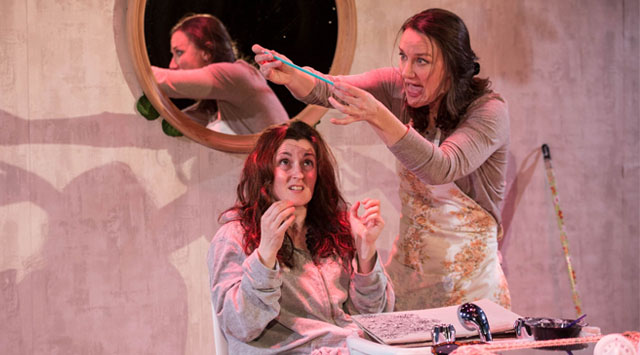
Image © Bob Seary

Theatre review
In Sarah Ruhl’s The Clean House, sisters Lane and Virginia are exemplary women who spend their days obsessing over having to do the right thing. One pursues a fabulous career in medicine, and the other indulges in an irresistible urge to clean houses. Both live in accordance with values our societies deem admirable and righteous, but neither are rewarded with enduring happiness. In fact, the only incidents of true elation in the play, are accompanied with certain death.

The perpetual state of tension between order and chaos, is a succinct way of describing all of human existence. In our desire to put things into structures of subjective logic, we come into conflict with nature, or a conception of nature, that is separate and external to the supreme beings we think ourselves to be. It seems we are the only creations of Mother Earth that insist on agendas that run contrary to the will of all else that makes up the universe.

Ruhl’s magical realism has a feeling of unassuming banality, delivered through its unmitigated look at our relationship with domesticity, yet its imaginative explorations into the often overlooked quirks of simply being, turn the everyday into something endlessly fascinating. The greatest purpose of art, is that it can re-contextualise humanity, so that the unseen is made visible, in order that we may gain new knowledge of the infinitely mysterious self. The Clean House places us firmly inside normalcy, and then reveals what lies beyond its superficial veneers.

The writing is gloriously funny, and under Rosane McNamara’s direction, Ruhl’s humour, along with an undeniable poignancy, are given full illumination. Rich with meaning and amusement, the play is captivating, thoroughly inquisitorial, and McNamara’s subtle approach with its messaging, keeps us keenly intrigued.

The actors tell the story with excellent clarity and conviction, but performance rhythms require finessing for their presentation to communicate at a tighter pace. The impressive Dr Lane is played by Mary-Anne Halpin, focused and decisive with motivations, but slightly lacking in complexity with the interpretations brought to her character. Alice Livingstone is delightful as the decidedly sad Virginia, outstandingly acerbic, and scintillating with irony. The cleaning lady, and aspiring comedian, Matilde is a vivacious presence in Keila Terencio, who delivers impressive theatrical energy, and a powerful sense of purity essential to the work’s ideology.

The personalities in The Clean House are shown for their flaws, but we know that these people cannot help themselves. We can try, and we should try, to be better people, but there is nothing that can turn us invincible. Feelings will be hurt, mistakes will be made, no matter how much we dream up safeguards and assurances. We make it a habit to act as though we are the sole determinants of fate, but there is no certainty to be found in how life wishes to pan itself out. There is however, tremendous satisfaction to be had in the experience of kindness, as we see at the show’s end, and the way acts of compassion are always able to defy regret, is one comfort we can hold on to.

www.newtheatre.org.au

Review: How To Build A Home (Ever After Theatre)

Venue: Balmain Uniting Church (Balmain NSW), Jun 1 – 3, 2017
Contributing Writer: Emily Dash
Directors: Natalie Rose, Alice Osborne, Marnie Palomares
Cast: Kerrie Ann Bezzina, Christine Blanche, Matthew Cutmore, Emily Dash, Glennen Fahey, Sophie Grivas, Tom Hancock, Emma Plant, Roddy Salinas

Theatre review
The idea of a dream home is explored by differently abled performers in How To Build A Home. An opportunity for all to reflect upon concepts such as personal limitations and aspirations, social obligations and privacy, the often abstract work may leave a lot to our imagination, but there is no mistaking the statement it makes about the importance of security and care that we all need in order to have fulfilling lives.

The show is full of spirited whimsy, with an enthusiastic cast offering up vim and vigour, along with a genuine vulnerability that is quite captivating. A collaborative segment featuring Emily Dash reciting a poignant monologue, alongside Tom Hancock on piano establishing an atmosphere of sombre drama, is beautifully, and hauntingly, rendered. Also memorable is Sophie Grivas’ idea of a house with three disco rooms, reminding us that our bodies, whether moving or stationary, are to be loved and pampered.

Visual design by Mirabelle Wouters, and James Brown’s work on sound and music, give the production an excellent sense of polish. The space they have created is glamorous yet unpretentious, a homely environment we find to be simultaneously comfortable and inspiring.

As long as we are alive, every individual has a right to space, and that space must be treated with respect. The home is both mundane and sacred, and recognising it as such, encourages us to honour every breath taken and every second that ticks past. Life is too short for any of us to be perfunctory about the time that we have been gifted. When we realise that every here and now is special, each moment experienced, and its corresponding place, has the possibility to nourish and fulfil, as though always at home, sweet home.

www.everaftertheatre.com

Review: This Is Not Mills And Boon (Glorious Thing Theatre Co)

Venue: Old 505 Theatre (Newtown NSW), May 23 – Jun 3, 2017
Playwright: Erica J Brennan
Director: Richard Hilliar
Cast: Alison Bennett, Emma Chelsey, Gabe Fancourt, Lynden Jones
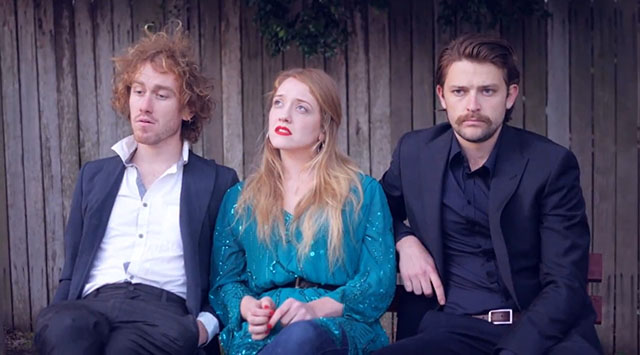
Image by Liam O’Keefe

Theatre review
When we first meet Abby, she surprises us with her prudishness. We think of sex as being universally appealing, and in this day and age, talking about sex is certainly de rigueur, if not interminable, so we wonder what problems Abby is struggling with, that makes her so uncomfortable with the topic.

The story unfolds as Abby begins reading, in secret, a collection of erotic stories. Written by her boyfriend’s mother, Nikki Sex’s book is titillating and wild, but also deeply cheesy and frequently nonsensical. We watch as the far-fetched tales begin to unravel the riddle surrounding Abby’s mystifying sexual nature.

Erica J Brennan’s This Is Not Mills And Boon is a smart, ambitious piece that deals with a young woman’s sexual awakening, or more accurately, it is about Abby’s self-discovery beyond the indoctrination and traditions that our young are subject to. There is good attempt at depicting sexuality as being individualistic and idiosyncratic, and hence, a fundamentally deviant feature of what we consider to be human nature, but Brennan’s characters remain bound to an ideal of monogamy and heteronormativity, which prevents the play from foraging deeper into its philosophical interests, thus losing an opportunity to be truly subversive, or edifying, with its declarations.

Director Richard Hilliar introduces a wanton sense of humour to fantasy sequences that makes the show very enjoyable, but a tendency to be overly earnest with our protagonist’s central predicament, can make its naturalistic scenes needlessly severe. Abby needs to lighten up, as does the show.

Funny lady Alison Bennett delivers laughs in all of her extravagant guises. Sharply intuitive, and wonderfully campy, it is a very bawdy performance that pushes all the right buttons (look out for some physical work featuring Bennett’s extraordinarily dexterous tongue). Also very comedic is Gabe Fancourt as the endearing boyfriend Sol, whose unabashed approach to the portrayal of sex object, is as refreshing as it is hilarious.

Although Emma Chelsey’s interpretation of a plain and reserved personality can often feel too literal and hence lacklustre, her Abby is dignified and honest, with a sincerity that makes the whole exercise convincing. The troubling relationship between Abby and her father is a crucial part of the narrative, and Lynden Jones is strong in that role. His lines are perhaps not written with sufficient elegance, but Jones demonstrates excellent conviction even when the dialogue turns precarious.

The show makes fun of “Fifty Shades Of Beige”, but is itself shy with its own interrogations. It may not be Mills and Boon, but it is certainly no Marquis de Sade either. There is a naivety in how it thinks about sex, but its fervent need to reject convention in favour of a self-determined experience of sexuality and of identity, must be celebrated.

What makes each person feel good, is rarely the same, but what makes us all the same, is the need to discover the truth that lies within. It is human to want to poke and prod, to find something that feels resolutely at the core of our existence. Whether through art or through fucking, we can get to the thing that resides deep at the centre, that holds the meaning of life.

www.gloriousthingtheatreco.com

Review: Mr Burns (Belvoir St Theatre)

Venue: Belvoir St Theatre (Surry Hills NSW), May 19 – Jun 25, 2017
Playwright: Anne Washburn
Music: Michael Friedman
Lyrics: Anne Washburn
Director: Imara Savage
Cast: Paula Arundell, Mitchell Butel, Esther Hannaford, Jude Henshall, Brent Hill, Ezra Juanta, Jacqy Phillips
Image by Brett Boardman

Theatre review
There are three distinct acts in Mr Burns: A Post-Electric Play. First, we discover that the world has gone to hell in a handbasket; it is the apocalypse, and we have run out of electricity. A small group of survivors huddle together, trying to keep themselves sane by retelling episodes of The Simpsons. They each contribute fragments, but memory, like all human ability, proves to be considerably less than infallible.

Over the next decades, this compulsion to hark back to when things were better, grows in magnitude. The act of storytelling becomes grander, so do the increasingly fabricated remembrances of how things had been, back in the day. Eventually, we see that The Simpsons is turned into a kind of origin story that no longer accurately recreates the real thing.

Anne Washburn’s play is wildly imagined, but not always successful in its ability to aid our suspension of disbelief, as is necessary for all styles of science fiction. At each step of the narrative, we are bothered by questions left unanswered, that create an expanding sense of implausibility to the narrative. It is appropriate then, that the show turns progressively extravagant, until in Act Three, where we are presented with something that looks no different from standard Broadway musical fare.

The production begins dour, perhaps understandably so, but its long and enduring dullness marks a disappointing start for a crowd that has clearly amassed for that very particular Simpsons sense of humour. Satisfaction eventually arrives with Act Two, as the tone turns quirky and playful, and stimulating philosophy is introduced to its existentialist explorations.

The first musical number appears, quite unexpectedly, weaving American pop references into a kind of campy postmodern mash-up, to excellent effect. We see the characters desperately trying to hold on to all things bright and shiny from the past, much like the conservatives in our real life, unable to come to terms with their new circumstances. Entertainment continues to be dispensed henceforth, but we discover that the show had reached its peaked too soon. It all comes to a somewhat underwhelming conclusion.

It is a proficiently designed production. Mr Burns’ black sequinned catsuit by Jonathon Oxlade is very fabulous indeed, an unforgettable vision for the theatrical annals. Oxlade’s sets are appropriate to each sequence, but the show offers only a few surprises with its imagery, presumably restrained by its context of resource depletion.

Mitchell Butel leads an endearing cast of enthusiastic and colourful performers. As Mr Burns, Butel’s gangly limbs attempt to steal the show with their incredible animated dexterity, but the actor’s comedic capacities are impressive, and a real asset to this tenaciously serious creation.

It really is no joke, that we refuse to adequately address our energy crisis. Those with a stake in industries that are bringing devastation to the environment, like the villainous Mr Burns, continue to be allowed to plunder and destroy. We have to keep optimistic in order to be of any effect as opposition to their corruption, but the prevailing state of confused democracy seems to be getting us nowhere. Knowing right from wrong, is no longer sufficient in mobilising power and generating action, in our current climate of fake news, alternative facts, and insatiable greed. If history teaches us anything, it is revolution that will shift paradigm, but there is no hint even of burgeoning insurgency, in this age of despondent complacency.

www.belvoir.com.au

Review: The Ham Funeral (Siren Theatre Company)

Venue: SBW Stables Theatre (Kings Cross NSW), May 17 – Jun 10, 2017
Playwright: Patrick White
Director: Kate Gaul
Cast: Andy Dexterity, Eliza Logan, Carmen Lysiak, Johnny Nasser, Jane Phegan, Sebastian Robinson, Jenny Wu
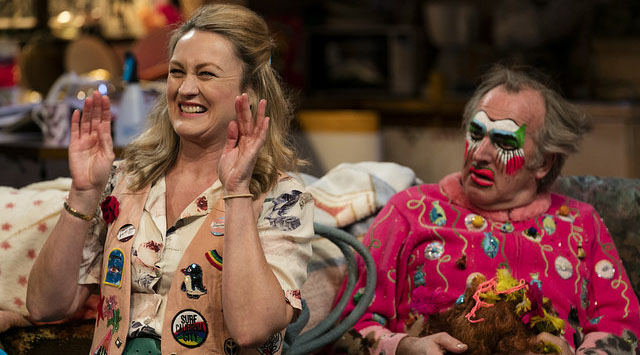
Image by Lucy Parakhina

Theatre review
At the centre of The Ham Funeral is a Young Man without the certainty of a name. Unsure of his own identity, interpretations of what goes on around him is correspondingly ambiguous. Patrick White’s surrealist work is not one to rely on for narrative pleasure, but as a platform for theatrical delight, it swells with possibilities.

Director Kate Gaul identifies the extremities in the play, whether they be comedic, dramatic, grotesque or celestial, and turns them into sequences of sheer and intense pleasure. There is a cohesive whole, but the primary enjoyment of this staging is in the savouring of all its deeply fascinating moments. A vague logic does exist, but our senses, beyond those that comprise the rational mind, are fired up and called upon to engage, in a visceral way that can only happen within a live setting.

It is a waking dream in which we find ourselves immersed. Nothing looks real, but we know that everything points to something authentic. We are gripped by its mystery, and the hypnotic ambience so expertly manufactured by its team of daring creatives. Hartley T A Kemp lights the space so that everything seems to float in an abyss of subconsciousness, and Nate Edmondson’s sensational sounds of ringing and rumbling take over our nervous system, directly manipulating our moods and responses.

Gleefully infectious, the wonderful cast looks and feels to be made up of all those voted most likely to run off and join the circus. Idiosyncratic and profoundly eccentric, we are persuaded to relate to the show in a manner that is perhaps unusual for many. Eliza Logan is the magnificent leading lady, completely enthralling as Alma Lusty; wild, depraved and primal, yet impressively precise with the design and execution of all her choices. Intelligent and inventive, Logan’s performance in the flamboyant, mad world of The Ham Funeral is truly unforgettable. The nameless Young Man is played by Sebastian Robinson with a physical proficiency that adds exceptional beauty to the production’s visual emphasis. Also remarkable is Johnny Nasser, deliciously exaggerated while maintaining a measured sensitivity, in both of his contrasting roles.

A century has past since the dawn of Dada, and all things surreal or absurd may no longer be thought of as immediately relevant, but art must never shy away from conversations that exist at the outer limits of rationality and reason. If we talk only about the things we know, the chance of us meaningfully expanding consciousness is meagre. To break free from incessantly repetitious dialogue that has become a habit of modern living, it can only be beneficial to indulge in something radically new, especially when getting to the point, is not the point of it.

www.sirentheatreco.com

Review: Guru Of Chai (Indian Ink / Belvoir St Theatre)

Venue: Belvoir St Theatre (Surry Hills NSW), May 16 – Jun 4, 2017
Playwright: Justin Lewis, Jacob Rajan
Director: Justin Lewis
Cast: Jacob Rajan
Image by Brett Boardman

Theatre review
The story begins at the Bangalore City railway station. We meet Kutisa at a street stall selling chai, a vivacious man who cannot help but tell us a wondrous story about himself, a parrot, and a family of orphaned sisters whom he adopts into his care. Supernatural beings and high drama ensue, accompanied by extravagant emotions surrounding birth, death and betrayal. Guru Of Chai is gripping, made even more compelling by the work of a masterful performer full of drive, and magnificently skilled.

Jacob Rajan is scintillating in this one-man show. Almost like magic, his presence takes over the theatre, and we fall under his spell. Playing what seems to be an endless number of characters, Rajan is crystal clear with each manifestation, weaving the most vivid of narratives through his immense talent and artistry. It is a real pleasure to be able to submit to an expert guiding hand, and perceive the confidence in the actor and in ourselves, that the play can only progress flawlessly.

Direction by Justin Lewis ensures that the story is told at great detail and precision, with great care put into showcasing the best of his actor’s abilities. Gentle assistance from Cathy Knowsley’s lights and David Ward’s music, provide us with deeply evocative suggestions that transform a black box into the busy, sweltering streets of India. It is a small production that unfolds before us, but what we are made to see in our minds, is infinitely bigger.

There is something about Guru Of Chai that feels like a fairy tale, even though its characters encounter only the brutal realities of hardship and poverty. By removing us from the here and now, into a space far away, experiencing Kutisa’s world is as though we have stepped into a dream. When art meets us in reverie, the capacity of our minds turn boundless, and we can learn great things about the universe that are unimaginable in our insular everyday. We connect with other lives, no matter how dissimilar from what we are used to, and discover that which is unambiguously human, or perhaps something like a soul, that keeps us from feeling isolated, that gives us a glimpse of the eternal.

www.belvoir.com.au

Review: Who’s Afraid Of Virginia Woolf? (Ensemble Theatre)

Venue: Ensemble Theatre (Kirribilli NSW), May 11 – Jun 18, 2017
Playwright: Edward Albee
Director: Iain Sinclair
Cast: Darren Gilshenan, Genevieve Lemon, Claire Lovering, Brandon McClelland
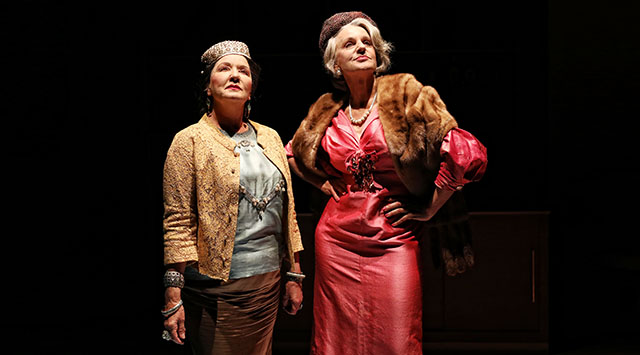
Image by Prudence Upton

Theatre review
It is a nondescript living room but a great deal happens in it. Edward Albee’s wild imagination is let loose in Who’s Afraid Of Virginia Woolf, a modern classic that seems to be about a marriage breaking down, but the volume of themes and philosophical ideas it explores over a three-hour duration, extends beyond a person’s mental capacities within that one sitting. The incredible richness of Albee’s writing, and his insistence on disobeying conventions of literary coherence, produces something sensationally anti-naturalist, at times very strange, for all its misleading construct of a realist family drama. It all comes together beautifully, the ending result is quite sublime, but it is the disparate elements and divergence of meanings in all its interminable suggestions, that makes it a unique, rarely paralleled work.

Therefore, finding a focus becomes challenging for any production. Director Iain Sinclair uses the play’s absurdist qualities to his advantage, manufacturing a black comedy that not only delivers laughs but also, through its emphasis on uncomfortable contradictions, help draw attention to the many levels of meaning that the text implies. The show is often entertaining, but in spite of the great emotional upheaval that its characters experience, we remain at a distance, always at close observation, but from the outside. Visually pleasing, the staging draws inspiration from 1960s Americana, Michael Hankin’s set design and Sian James-Holland’s lights create a performance space that feels an accurate representation of the era, while establishing a sense of stifling oppressiveness crucial to the psyche of Who’s Afraid Of Virginia Woolf.

Four actors conspire with unmistakable simpatico, to form a fascinating piece of theatre. Their personalities are individually distinct, but together they are harmonious, one engrossing organism that drives us through unexpected twists and turns. At the centre is Genevieve Lemon as Martha, ebullient and dedicated, determined to maintain a liveliness in the show even during its darkest troughs. The actor may not be able to sufficiently depict the rage crucial to the story, but there is no mistaking the turbulent existence Martha has to endure. Her husband George is played by Darren Gilshenan, who journeys into bleaker terrain more successfully, but who will be remembered for the mischievous approach he applies to the play’s cynical and sinister complexions. Effortlessly funny, Gilshenan is an engaging presence that keeps us fascinated at every audacious revelation. Similarly alluring is Claire Lovering, whose comedic confidence assures us that the tricks hidden up her sleeve are worth our anticipation. Honey is a small role, but the performer takes every opportunity to shine. Brendon McClelland brings out a complexity in Nick, a deceptively plain upstart, and surprises us with transformations that we never could see coming.

It is about marriage, it is about the way exercise control over one another, it is about the way we build meaning into our lives, it is about the futility of our pursuits. What a viewer will deduce from Who’s Afraid Of Virginia Woolf could be a great many things, but there is no denying the nihilistic pessimism of Albee’s creation. In art we can find the truth, and it is without doubt that life can leave us bitter and hopeless. It is also true, that conflicting truths can co-exist, and whether one can perceive light through the darkness, is sometimes about luck, and sometimes about choice.

www.ensemble.com.au

Review: Homeroom Series (ATYP)

Venue: ATYP (Walsh Bay NSW), May 10 – 19, 2017
Images by Tracey Schramm

Girls Like That
Playwright: Evan Placey
Director: Robert Jago
Cast: Annika Bates, Claire Giuffre, Ella Hosty-Snelgrove, Rashie Kase, Michelle Khurana, Molly Kyriakakidis-Costello, Miranda Longhurst, Emily Longville, Natasha Pontoh-Supit, Cara Severino, Emily Simmons, Lucy Valencic, Lara Wood

Michael Swordfish
Playwright: Lachlan Philpott
Director: Tamara Smith
Cast: Ashutosh Bidkar, Eden Bradford, Fergus Finlayson, Jason Hartill, Tim Kenzler, Louis Nicholls, Angus Powell, Daniel Steel, Gus Watts

Theatre review
Two plays about teenagers in high schools, both utterly contemporary, and equally relevant to the Australian experience. Evan Placey’s Girls Like That makes a powerful statement about feminism for the young, and Lachlan Philpott’s Michael Swordfish offers unconventional observations about teenage masculinity. Uncompromisingly complex, they each offer an unusual opportunity to explore adolescence in ways that might be surprising, through themes that are confronting but pertinent to all our lives. We watch the young, and learn about ourselves.

Robert Jago’s exquisite direction of Girls Like That is powerful, deeply engaging and thrilling in its combativeness. Michael Swordfish takes a gentler approach, with director Tamara Smith offering a poetic perspective to our young men’s lives. Designers, too many to mention, do an excellent job for an impressive pairing of shows that look and sound as vibrant as they are polished.

The actors are uniformly compelling and enthusiastic, with many displaying very fine potential for serious careers in performance. Cara Severino’s ebullience is unforgettable, while Rashie Kase has an unshakeable authenticity that can convince us of anything. Louis Nicholls portrays his character with a sense of creative freedom and adventure, and Gus Watts captures our attention with a confident hand at subtle comedy. These fledgling artists, all 22 of them, should feel greatly encouraged by the outstanding quality of work here.

The characters are in their formative years, so what they acquire now, could well stay with them for the rest of their days. What happens to them, and how they react, are depicted in both plays with a degree of honesty, that does not allow us to detach. For their contexts of juvenility, it is easy to diminish these experiences and consider them trivial, but contained within their microcosms, are truthful interrogations about our shared existence. Through these kids, we discern right from wrong, and decide how we must evolve.

www.atyp.com.au