Review: A Westerner’s Guide To The Opium Wars (Thirty Five Square Theatre)

Venue: M2 Gallery (Surry Hills NSW), Oct 25 – 30, 2017
Playwright: Tabitha Woo
Director: Kevin Ng
Cast: Tabitha Woo

Theatre review
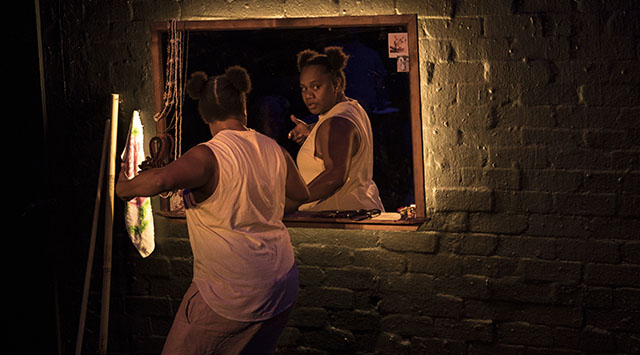
In Tabitha Woo’s mostly autobiographical work A Westerner’s Guide To The Opium Wars, it is not the historical event in China mid-1800’s that takes our focus. The conflict between East and West that Woo is concerned with, is a personal one. Being of both Asian and European heritage, Woo’s understanding of her own Australian identity can be a complicated one, shaped by our society’s persistent rejection of affiliations with neighbouring cultures.

As Woo traces her lineal descent, through Tasmania, Malaysia and China, we begin to gain a greater understanding of our collective character as a singular yet diverse nation. We think about the meanings of migration, and the tension between having to leave behind that which is unsatisfactory, and the need to remember where we come from. In the construction of new identities as we flee from one place to another, a deliberate renunciation occurs, of things and memories best left behind, but the nature of time requires that we return eventually, usually momentarily, for a more honest evaluation of states of being.

The show is often fascinating in the way it uncovers decades and centuries of information behind Woo’s smiling exterior. Its juxtapositions of cultural influences from all over the world makes for a rich experience, although transitions between the theatrical forms it explores, could be handled more imaginatively. As performer, Woo makes up for her reticent presence with clarity of thought and intention, always ensuring that our understanding of her work is accurate and comprehensive.

Each person carries with them, ghosts from generations past, yet we can only regard our acquaintances with a sense of egalitarian homogeneity. We have no choice but to make assumptions of uniformity in how we deal with the world, but in relation to the self, a thorough authenticity is necessary or existence can turn unbearable. How a person wakes up every morning, depends on how much they respect the mind and body that is being nourished. The better we know ourselves, whether as individuals or as communities, the better a life we can create.

www.thirtyfivesquare.com

Review: She Rode Horses Like The Stock Exchange (Rocket Productions)

Venue: Kings Cross Theatre (Kings Cross NSW), Oct 20 – Nov 11, 2017
Playwright: Amelia Roper
Director: Nell Ranney
Cast: Nikki Britton, Tom Anson Mesker, Matilda Ridgway, Dorje Swallow
Image by Clare Hawley

Theatre review
A couple attempts to have a pleasant Sunday picnic, but investment banker Amy’s mind is preoccupied with work. She obsesses about money and power, unable to enjoy her day in the park, even as she is immersed in the glorious sunshine, with her beau Henry by her side.

Amelia Roper’s She Rode Horses Like The Stock Exchange examines our propensity to dwell on materialism and narcissistic conceptions of success, whilst ignoring the better things in life. Its characters pursue hollow dreams, making big sacrifices that amount to nothing. For all of us who participate in societies defined by commodification and consumption, that inability to find fulfilment and happiness can only ring true.

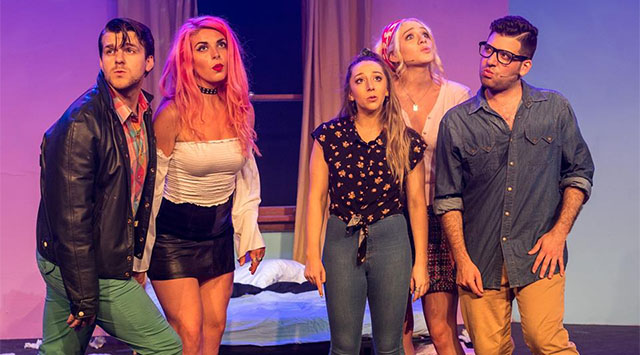
For all its pessimism, the play is humorously written, in a style that charms with its idiosyncrasy. Speech patterns are a delight in Roper’s piece. The production, helmed by director Nell Ranney, is correspondingly quirky, made memorable by Isabel Hudson’s attractive set and costume design. Early moments struggle to resonate, but the show recovers wonderfully when a second couple joins the stage.

Nikki Britton and Dorje Swallow are a vivacious pair, bringing necessary acerbity to the black comedy being performed. Their housewife and executive stereotypes are personalities we want to laugh at, and the actors allow us that opportunity by presenting those roles in a crisp, uncomplicated manner.

Tom Anson Mesker and Matilda Ridgway have more complex concerns, and although less funny with their interpretations, what they bring to the table is equally meaningful. Ridgway is especially effective in moments when we deal directly with issues of professional sexism, cuttingly salient with what she wishes to impart.

Amy and Sara may have diverse strategies in surviving patriarchy, but both are serving and preserving its dominance. The career woman plays by every rule at work, but finds herself discarded. The wife does all that is expected of her at home, then loses everything. They wager all that they have, on systems designed to fail them, and remain oblivious to the quandary that has them confined. We are taught to be good, and we spend years of our lives behaving appropriately, until a day comes when we realise our own freedom to establish a personal sovereignty.

http://www.kingsxtheatre.com

Review: As You Like It (Sheshakespeare)

Venue: Muse Clinic (Darlinghurst NSW), Oct 24 – Nov 4, 2017
Playwright: William Shakespeare
Director: Shelley Casey
Cast: Courtney Bell, Michelle Cameron, Rebecca Day, Lauren Dillon, Amy Hack, Prudence Holloway, Sonya Kerr, Lana Kershaw, Emma Louise, Cassady Maddox, Kelly Robinson, Charlotte Tilelli
Image by Lauren Orrell

Theatre review
Drag kings can be thought of as women who overtly reject rules of social behaviour as they pertain to femininity, and thus represent the ultimate symbol of resistance against sexism, or we can think of cross-dressers, as women performing gender in a way that would elevate these individuals most effectively, in immoral structures that champion and venerate masculinity.

In director Shelley Casey’s rendition of As You Like It, a cast of twelve women play all the roles, female and male. It is a display less about the content of the piece, than it is about making a statement on the gendered imbalances pervasive in the state of our art and of our society. Shakespeare’s writing can only be considered misogynist by today’s standards, so the need to find a way to seek redress always seems urgent, but it remains an issue, that unquestioned and perpetual reverence for this great exemplar of Western theatre. It would be remiss to think that the absence of women of colour on this Australian stage, is simply a coincidence.

Tradition and feminism do not make a convenient pairing. The production is an experiment in the negotiation of a space between the progressive and the conservative. It succeeds when making fun of macho stereotypes (actors Prudence Holloway and Charlotte Tilelli are endlessly amusing, with their extravagant mockery of hypermasculinity), and when it blurs the representation of heterosexuality, the results are thrilling, but the production is awkwardly respectful of the original text. We have to wonder what it is that it wants to protect and preserve, so vehemently.

If one is able to set aside politics, this is a Shakespeare comedy that can always be relied on to delight. Casey’s two-hour version is fast and funny, with a comforting warmth that draws us in. In the role of Rosalind is Amy Hack, fabulously expressive, and determined to entertain with her dexterous creativity and captivating effervescence. Also impressive is the use of live music, cleverly composed to bring a sense of enchantment to the setting.

It is debatable whether well-behaved women can make history. This production of As You Like It is made of sugar and spice, possibly a little too nice for those of us seeking something radical. If we wish to be rid of the old guard, our actions need to be more than symbolic. The atmosphere is ripe for a brave and audacious movement, that will bring subversion to two-and-a-half centuries of violation on this land. Only those in direct participation, will know that the revolution has begun.

www.sheshakespeare.com

Review: The Big Meal (The Depot Theatre)

Venue: The Depot Theatre (Marrickville NSW), Oct 18 – Nov 4, 2017
Playwright: Dan LeFranc
Director: Julie Baz
Cast: Cormac Costello, Emily Dreyer, Angus Evans, Suzann James, David Jeffrey, Tasha O’Brien, Brendan Paul, Kaitlyn Thor
Image by Katy Green Loughey

Theatre review
Things happen very quickly in Dan LeFranc’s The Big Meal. Nicole and Sam meet at a restaurant, and their lives flash before our eyes, from courtship and marriage, through to childbirth, sickness and death. The play is not about the peculiarities of any of the characters we meet. In some ways, it is about the insignificance of the individual existences we believe ourselves to inhabit. Taking the “circle of life” approach, LeFranc attempts to chart the journey of a human being, from beginning to inevitable end.

It is the idea of a “typical” person that The Big Meal is concerned with, but it cannot go unnoticed, that it is strictly an American middle class heterosexual paradigm that it is interested in depicting. In the play, the people do little but give birth, raise children, and repeat. It is not the intention of the work to include a wider scope of what these characters are capable of, or indeed the other responsibilities that they doubtless will have. We see only one facet of their worlds.

The Big Meal means to speak universally, but the experiences therein are, to many, exclusionary. Nonetheless, it is a dynamic piece of writing that will facilitate very vibrant stage activity, and director Julie Baz makes sure that her show is an exuberant one. Scenes unfold before us, fast and furious, in a race to the end. We think about mortality, as though a delicious meal that must only be finite. It is noteworthy that Mehran Mortezaei’s lights take us efficiently through each of the play’s dramatic leaps across time, with minimal hassle in the transitions between.

Performances are generally strong, by a crew of actors clearly delighted by the wide range of personalities that each is called upon to undertake. Their transformations are a joy to watch. Cormac Costello and Suzann James are particularly memorable in the final moments, with a tenderness and an emotional authenticity that has us captivated, and touched. Also impressive is Brendan Paul, who plays innumerable boys and men over the course of 100 minutes, proving himself to be an engaging, disciplined and passionate presence.

Talking about death is important. The acceptance and awareness that our lives come to an end, extends our consciousness beyond the self. It frees us to be better people, kinder and more generous in all our dealings. To understand that we are all transient in the bigger scheme of things, could wake us to our duties as custodians of the planet, or at least remind us of the inconsequential nature of all the things we may struggle with, in our day to day. One should be moved to think about legacy, and find inspiration to leave behind something wonderful, or simply to depart having caused no harm.

www.thedepottheatre.com

Review: The Kitchen Sink (Ensemble Theatre)

Venue: Ensemble Theatre (Kirribilli NSW), Oct 14 – Nov 18, 2017
Playwright: Tom Wells
Director: Shane Bosher
Cast: Ben Hall, Huw Higginson, Duncan Ragg, Contessa Treffone, Hannah Waterman
Image by Prudence Upton

Theatre review
The story happens in a working class household, north of England. Kath and Martin are regular people with regular concerns; they worry about job security, and try their best to provide for their children. Sophie and Billy are on the precipice of adulthood, but yet to find their own wings.

There is no big drama in Tom Wells’ The Kitchen Sink, only an intimate authenticity to its depiction of family life that most will find deeply charming. The characters connect in a simple but profoundly honest way, and whether or not our circumstances are similar, it is in Wells’ acute observations of those ties that bind, that the play allows us to empathise.

A remarkable warmth pervades the stage, and it moves the audience. For the production’s duration, we are all embroiled in the daily lives of these ordinary people, who have very quickly, and magically, become our kin. Director Shane Bosher manufactures a space that puts us at immediate ease, ready to get involved in every domestic exchange that occurs. Simultaneously sensitive and robust, Bosher’s approach not only makes The Kitchen Sink an affecting experience, it is also memorably and delightfully funny.

Thoroughly rehearsed and finely considered, a cast of five quite extraordinary performers, present a work of impressive art and entertainment. As Kath, Hannah Waterman’s passion, charisma and infallible sincerity, anchors the show in a place that always feels genuine and benevolent. She exemplifies all that is good about the maternal instinct, and we in turn, become generous ourselves, in how we receive the show.

Duncan Ragg and Contessa Treffone play a young couple, close but not yet committed. Both are intricate in approach, with ingenious inventions that enrich the personalities they create so convincingly. Ben Hall and Huw Higginson are father and son, each actor extremely likeable, and we find ourselves persuaded by all that they bring to the stage.

The Kitchen Sink begins and ends at home. Whatever our individual lives may become, those of us who have a home to return to, must count ourselves lucky. Stars will rise and fall for every existence, but to have unwavering love and security from those we count family, is invaluable. We rightly put great attention on things like money and careers, but there is no fault greater than neglecting the sacred.

www.ensemble.com.au

Review: Miracle City (Sydney Opera House)

Venue: Sydney Opera House (Sydney NSW), Oct 12 – 29, 2017
Books & Lyrics: Nick Enright
Music & Concept: Max Lambert
Director: Darren Yap
Cast: Missy Higgins, Josie Lane, Lara Mulcahy, Gus Murray, Liam Nunan, Anthony Phelan, Kelly Rode, Jessica Vickers
Image by Branco Gaica

Theatre review
The Truswells are American televangelists who make commerce out of religion, by commodifying faith and targeting herds of desperate souls. They put on a weekly TV show, promising inspiration, redemption and salvation, in exchange for cash from their loyal viewers. Behind the scenes however, the family is going broke, as they try unsuccessfully to fulfil ambitions of expanding their operations.

Miracle City depicts an absurd slice of life, but the production is rarely funny. The plot trudges along, offering no surprises and only few instances of amusement. In the absence of humour, we search instead for poignancy, which disappointingly and quite bewilderingly, never arrives. It is fortunate then, that the show features excellent singing and a pleasing score of Christian gospel music.

The cast works hard, with leading lady Kellie Rode bringing a valuable sense of vibrancy and polish to the show. Gus Murray cuts an imposing figure as Reverend Truswell, but it is a portrayal that seems insufficiently sinister in this tale of crushed dreams and broken morals. A trio of choristers provide some stunning powerhouse vocals that lift the mood, thankfully, at very regular intervals. Missy Higgins, Josie Lane and Lara Mulcahy play subsidiary characters, but their voices are the highlight of a musical that is otherwise strangely passionless.

We pay businesses to satisfy our needs, but we want them to be transparent in our dealings. Religion can give a lot to individuals, but the magic that they perform, often relies on obfuscation and mystery. We need to be in touch with the sacred, but we do not wish for access to the venerable be contingent on trade. Those who peddle in the divine, are therefore deceptive and hypocritical, whether on trash TV or in our more hallowed institutions.

www.thetheatredivision.com

Review: No End Of Blame (Sport For Jove Theatre)

Venue: Seymour Centre (Chippendale NSW), Oct 12 – 28, 2017
Playwright: Howard Barker
Director: Damien Ryan
Cast: Akos Armont, Angela Bauer, Danielle King, Sam O’Sullivan, Monroe Reimers, Lizzie Schebesta, Amy Usherwood, Bryce Youngman
Image by Kate Williams

Theatre review
In No End Of Blame, Howard Barker creates a hero out of political cartoonist Bela Veracek, who begins his life in Hungary at the end of the 19th century, and ends up in England decades later, after a stint in Lenin’s Russia. It is a man’s search for truth, through decades of war and social unrest, and an artist going against every grain to make sense of the world.

First published in 1981, the piece is stylistically representative of English male playwrights of the time, angsty and very wordy. Thatcher had become Prime Minister, and the righteous had much to fight for; Barker is certainly argumentative in No End Of Blame. Damien Ryan’s production updates the work from the punk era to something altogether more earnest and refined.

Projected on a large, white backdrop, are drawings by Nicholas Harding, David Pope and Cathy Wilcox, who bring an extraordinary dimension of artistry, constantly pulling our attention back to the actual medium being celebrated. Also remarkable is Alistair Wallace’s sound design, utilising a meticulous selection of music that takes us to places far away and sublime.

There is a lot of excellent acting to be enjoyed. Akos Armont is the charismatic and passionate lead, dependably convincing even though Bela’s emotions seem always to be operatic in scale. Supporting roles are all vibrantly rendered, with Danielle King especially memorable in a range of small parts, and highly effective as newspaper editor Stringer, delivering a tremendous sense of poignancy at show’s end.

As commentators of our world, cartoonists have the noble responsibility of pointing their finger at all that is wrong. This usually means that it is the powerful that come under the pencil’s attack, and it is necessary for us all to be cognisant of how those powers will try to quash their naysayers. Bela’s story came before the internet age, but even though we no longer have the same reliance on the print industry to provide a battle ground for democracy, those same dynamics exist today in how we use our phones and computers. The bad guys are able to control our freedoms, in some ways easier than before, and our resistance must remain vigilant and tenacious.

www.sportforjove.com.au

Review: Monopoly (Hot Room Theatre Group)

Venue: Petersham Bowling Club (Petersham NSW), Oct 13 – 14, 2017 with performances at other venues thereafter
Playwright: Steven Hopley
Director: Steven Hopley
Cast: Jasper Garner Gore, Benjamin Kuryo, Diego AR Melo, Alison Lee Rubie, Emilia Stubbs Grigoriou

Theatre review
It makes sense to write a play about Sydney people playing Monopoly. We are obsessed with property prices, and cannot stop talking about it. Living in a metropolis requires that each of us has a certain level of aspiration, even just to survive this dog-eat-dog world. The characters in Steven Hopley’s Monopoly are competitive, though to varying degrees. Aside from one white cishet male, born with a silver spoon in the mouth, the other board game participants have limitations, in their race to the top.

At its best, the piece discusses the idea of privilege and by the same token, systematic disadvantage, as we understand them to exist in Australia today. Arguments are made about the kinds of people who benefit most from the way our society is structured, while others are regularly left behind. It is noteworthy that issues of poverty and sexism are given some focus, while other aspects of our inequity, such as sexuality and race, are left conspicuously neglected.

An exuberant ensemble drives the piece, with each actor demonstrating a good grasp of the material. There are portions that become convoluted, when they become deeply involved in a game that the audience can only ever have a peripheral appreciation for, but Hopley’s direction is always careful to provide a sense of urgency to sustain our attention. It is a well-rehearsed show, entertaining, if slightly hesitant in its efforts to provoke thought.

The Monopoly game requires that competitors amass houses, or face decimation. It is not quite the same in real life. The need to own property is rarely questioned, an archetypal Australian dream that is ubiquitous yet only vaguely justified. The characters in Monopoly are a true reflection of the Sydneysider. We all want to possess a piece of this land, when all we should ever be content with, is having the right to live here.

www.facebook.com/…

Review: Buyer And Cellar (Ensemble Theatre)

Venue: Ensemble Theatre (Kirribilli NSW), Oct 6 – Nov 12, 2017
Playwright: Jonathan Tolins
Director: Susanna Dowling
Cast: Ben Gerrard
Image by Prudence Upton

Theatre review
In her book My Passion For Design, Barbra Streisand reveals a private shopping mall in the basement of her property in Malibu, California. Playwright Jonathan Tolins imagines what it must be like to find yourself the sole employee of that strange place, in his 2013 one-man play Buyer And Cellar.

Unsurprisingly, the work overflows with camp and frivolity, but Tolins anchors the fun with a genuine interest in human nature, building his narrative around our fascination with the rich and famous, and taking a look into the limitlessness of ambition, and our insatiable need for affirmation.

In Buyer And Cellar, we are presented a version of Streisand, semi-fictional, who thinks herself never beautiful enough, successful enough, or admired enough. Alex, the aforementioned shop boy, is the everyday person, positioned in close proximity, to make us examine the different lives, and to consider our own values as they relate to the meanings of accomplishment, happiness and love.

The play is witty, very creatively conceived. It will appeal to much more than fans of Streisand, but a passing familiarity with the entertainment icon, and with American pop culture, is required. A specific kind of gay sensibility, of the family-friendly flavour (more “Just Jack” than John Waters), determines the comedy style, and actor Ben Gerrard is sensational in the show.

For 90 minutes, he is bewitching, so precise and energetic, that we all find ourselves hopelessly immersed in the story, whether or not we give two hoots about Streisand and her ridiculous closets. There is a tendency for Gerrard to outshine the actual material being shown, but it is for certain that we emerge thoroughly, and fabulously, entertained. His partnership with director Susanna Dowling, is clearly a match made in heaven.

Appropriately, design is marvellous in this production of Buyer And Cellar. Alexander Berlage’s lights and Marty Jamieson’s sounds are particularly effective, as we find ourselves transported to a Hollywood dreamland. Both artists are adventurous and meticulous in what they bring to the stage. Charles Davis’ set is simple, in the most elegant way, but probably slightly understated for the Streisand brand.

It is not fair that some people should have so much, while the rest of us are deprived of ever experiencing that level of wealth, but if we believe that everything comes at a cost, it might be some consolation thinking about the things that have to be given up in order to arrive at that state of abundance. There is no such thing as a free lunch, and although Streisand has traded in huge talent and hard work, we also see the emotional deficiencies she suffers, that form the propulsive force resulting in her eminent glory. The woman we see in Buyer And Cellar is dissatisfied and often unhappy, but as the playwright keeps reminding us, this is a work of pure fantasy.

www.ensemble.com.au

Review: Hypnagogism (Balter Theatre Co)

Venue: The Factory Theatre (Marrickville NSW), Oct 4 – 14, 2017
Playwright: Frankie
Directors: Luke Beattie, Frankie
Cast: Kate Allison, Bretany Amber, Daniel d’Amico, Brielle Flynn, Lachlan Mcnab, Vonne Patiag, Ash Sakha, Tivy Siripanich
Image by Margaret Grove

Theatre review
Michelle goes to acting school everyday, where teachers tell her to dig deep for emotions worthy of display. Trauma is fetishised, but little care is given to the young adults who find themselves in a constant state of vulnerability, with open wounds that are left to their own often inadequate devices. Michelle suffers from a history of sexual assault and finds herself encouraged to exploit those very painful memories.

Frankie’s Hypnagogism portrays with striking persuasiveness, the neglect of mental health in some of our less proficient institutions. Although lacking in polish and maturity, the play makes salient points about how we train our actors, by drawing attention to problematic practises that are usually hidden from the public eye.

It is essentially a work of dark comedy, with a strong tendency to turn very melodramatic in its efforts to maintain emphasis on Michelle’s struggles. Directors Luke Beattie and Frankie herself, use the stage with commendable imagination, but edits could be made at more than a few junctures, to achieve a considerably crisper result. Playing Michelle is the confident Bretany Amber, one of an impressively well-rehearsed and cohesive team of young talents. Flamboyant actors Brielle Flynn and Daniel d’Amico are memorable in comedic roles, both bringing exuberance and excellent entertainment value.

The infinitely multi-faceted nature of art, allows for participation by artists of all kinds. It is easy to identify the ones who go to extremes, but more than a few level-headed individuals have found success on their own terms. In the process of art however, the extant discovery of self and environment is fundamental, meaning that limits and boundaries must always be explored. Where and when one chooses to transgress, is perhaps how art is best able to get involved, in the creation of meaning.

www.baltertheatre.com