Review: The Walworth Farce (Workhorse Theatre Company)

Venue: Kings Cross Theatre (Kings Cross NSW), May 18 – Jun 9, 2018
Playwright: Enda Walsh
Director: Kim Hardwick
Cast: Rachel Alexander, Laurence Coy, Robin Goldsworthy, Troy Harrison
Images by Clare Hawley

Theatre review
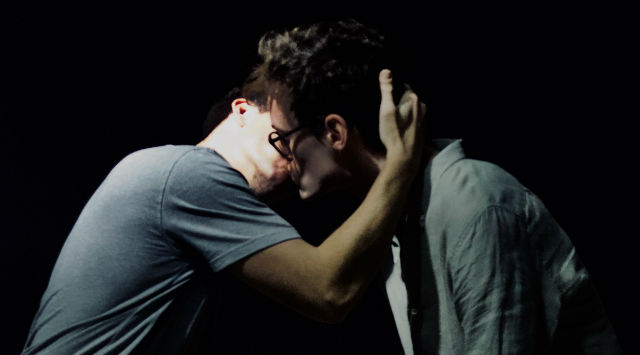
Inside a small London apartment, Dinny and his adult sons spend every day acting out a complicated farce, so that the best performer may win a trophy, and that Blake and Sean may remember their early days in Ireland, but only in a way that Dinny permits. It is an account of events that is absurd and dense, designed so that his sons’ memory of their collective biography, is doctored and confused.

Dinny has a lot to hide, and because Blake and Sean are a part of his confections, they are kept under strict control, even if both have well and truly arrived at adulthood. This is a story about parenting, and about the diaspora of cultures that every city experiences. It is about the relationships between countries, and the way individuals are affected by the boundaries we draw in the demarcation of national differences. Enda Walsh’s The Walworth Farce is unquestionably meaningful, but some of the play’s more culturally specific aspects, can prove impenetrable and tedious.

It is a tenaciously exuberant production, directed by Kim Hardwick who leaves no stone unturned in this complex work. There is a lot that goes on in every moment, and Hardwick’s eye for detail demands that we engage with her show in a way that is complex and nuanced. The very lively cast gives a generous performance, energetic and rich with spirit and inventiveness. Troy Harrison is particularly wonderful as Sean, the older brother on the precipice of discovering a new life. It is a plethora of emotions that emerge from the actor, conflicting yet distinct, allowing us to decipher the fundamental underlying truths that are in operation, amidst the constant vociferous hullabaloo.

As immigrants, we often find ourselves having to create narratives when required to explain how we have come to be. The tales that we weave are seldom the complete story, because the action of moving from one’s hometown, to somewhere entirely new, will always involve layers of intricacies that seem impossible to encapsulate in a convenient way. How we think of the past, is key to how the future looks. When we are unable to be honest about the journey before today, what happens hereafter, can only be fraudulent.

www.workhorsetheatreco.com

Review: Gypsy (Hayes Theatre)

Venue: Hayes Theatre Co (Potts Point NSW), May 18 – Jun 30, 2018
Book: Arthur Laurents
Music: Jule Styne
Lyrics: Stephen Sondheim
Director: Richard Carroll
Cast: Blazey Best, Laura Bunting, Anthony Harkin, Mark Hill, Rob Johnson, Matthew Predney, Jessica Vickers, Jane Watt, Sophie Wright
Images by Phil Erbacher

Theatre review
Probably the most well-known story about a stage mother, Gypsy is a highly-regarded biographical musical, that charts the early years of legendary American burlesque performer Gypsy Rose Lee, with particular focus on her mother Rose’s overzealous efforts at attaining stardom for her two daughters. The show is a fascinating character study, but also thoroughly entertaining, with a structure that seems to include every ingredient necessary for a sure-fire hit.

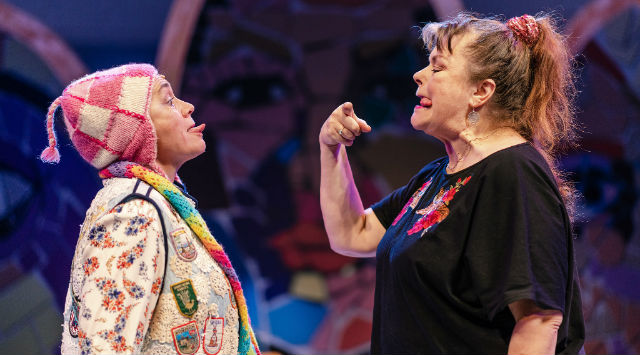
The production, directed by Richard Carroll, is inviting and warm, especially sensitive in its depiction of family dynamics. The narrative is conveyed with emotion and depth, but some of Gypsy’s theatricality is lost in the realism that it cultivates; both its humour and drama can occasionally feel underplayed, perhaps too understated in approach for a form that honours all things larger than life.

Rose is very convincing here, as the “momager” with good intentions. Played by Blazey Best, her maternal qualities are irrefutable, but parts of the character that are nefarious and abhorrent, are softened as a result, and dramatic tensions never quite reach beyond the adequate. Laura Bunting impresses in Act II, as we watch the performer take little Louise through a breathtaking transformation, into the international sensation that was Gypsy Rose Lee. As the character begins to find her strength and power, we become accordingly captivated, relieved to experience a brighter side to the mournful tale. Supporting actor Jane Watt chews the scenery as Cratchitt and again as Tessie Tura, delivering some truly marvellous moments of joyful laughter, whilst demonstrating extraordinary comic ability and presence, in a very unexpected coupling of roles.

Also memorable is scenic design by Alicia Clements, romantically evocative of auditoriums from the early twentieth century, complete with ornamental proscenium arches and velvet curtains. Scene changes are impeccably executed by a very attentive and efficient team, headed by Cara Woods, the stage manager who rises to the challenge of a very technically involved show.

When successes come to bear, past transgressions tend to turn easily forgiven. It is true that Gypsy’s fame and fortune had come, partially, as a result of Rose’s unconscionable behaviour, but there must be no denying the depravity of her ways. The cliché that “everything happens for a reason” is useful in helping people move forward, and although there is no virtue quite as awe-inspiring as forgiveness, Rose should only be seen as a villain, whether or not one is able to perceive her redeeming features. Parents are simply never allowed to violate the sanctity and responsibility, of nurturing and protecting their offspring, no matter what riches are at stake. Contemporary parallels to the Gypsy story abound, with the Kardashians, Jenners and Hadids currently most conspicuous. It can seem a fine line between love and exploitation, but the matter of parenting has no room for ambiguity.

www.hayestheatre.com.au

Review: The Colour Orange (Flaming Howard Productions)

Venue: Giant Dwarf (Redfern NSW), May 19, 2018
Book and lyrics: Oli Cameron, Sophia Roberts
Music: Oli Cameron
Director: Oli Cameron, Sophia Roberts
Cast: Kirralee Elliott, Liam Ferguson, Gabi Kelland, Zach Selmes, Zara Stanton, Victoria Zerbst
Image by Alex Smiles

Theatre review
Pauline Hanson is one of our most famous politicians, a celebrity the media never seems to tire of, who is constantly in our airwaves with some variety of outrageous concoction. We are in an age where people are encouraged to behave poorly, so that they can be turned into clown-like characters, for our daily consumption of current affairs. There are consequences of course, to this morbid fascination and promotion of unsavoury types, but their ability to prevail within our cultural consciousness in undeniable.

The Colour Orange is a musical by Oli Cameron and Sophia Roberts, that tracks the rise and fall, and rise again of Hanson. Before the ubiquity of influencers and the twitterati, Hanson was a legitimate oddity. Cameron and Roberts are fascinated by the early years of her fame, spending much of their 60 minutes recalling what can only be described as an embarrassing portion of Australian political history. There is no questioning the colourful, and hence highly entertaining quality of those times, but little is made of our current climate and her persistent relevance to those who are so resolutely behind her.

The songs are thoroughly amusing, cleverly devised to deliver maximum comedic effect, although its satire seems to dwell most comfortably on the tried and tested. Hanson is presented as a walking cliché, and the audience laps it up. Although lacking in fresh perspectives, there is plenty to make fun of, and like its closing number says, “isn’t it fun to laugh,” repeatedly so it seems, at this bugbear that refuses to go away.

It is a raw production, but the talent on display is significant. The band, known as The Flaming Howards, is cohesive and effervescent, with Cameron as their spirited leader, bringing an appropriate amount of camp to proceedings. Six performers play a range of roles, all individually impressive, each one memorable in their own right. All players are given the opportunity to take on the lead role at different moments, but it is somewhat disappointing that none have taken up the challenge of impersonating Hanson’s very distinct speaking voice. There is however, enough derision already taking place, to keep us satisfied.

What Hanson represents, requires little decipherment; we have known her for over two decades, and her playbook never changes. The Colour Orange all but neglects the meanings of her resurgence, even though it is more than worthwhile to try and understand what it is in our community today, that allows that particular brand of hatred, prejudice and the thoughtless persecution of our own kind, to raise its ugly head. It has been demonstrated time and time again, that the presence of people like Hanson, feeds an insidious appetite for destruction, that when left unchecked, will not hesitate to precipitate one catastrophe after another.

www.facebook.com/flaminghowardproductions

Review: Blackie Blackie Brown: The Traditional Owner Of Death (Sydney Theatre Company)

Venue: Wharf 2 Sydney Theatre Company (Walsh Bay NSW), May 12 – Jun 30, 2018
Playwright: Nakkiah Lui
Director: Declan Greene
Cast: Ash Flanders, Megan Wilding
Images by Daniel Boud

Theatre review
Dr Jacqueline Brown is a mild-mannered archaeologist, who spends her days looking for evidence of the Australian past. Aboriginal histories are often kept buried, so it only makes sense that she should take matters into her own hands, in order that the primal urges to connect with her cultural heritage could find gratification. Learning that some of one’s family had been subject to genocide however, will have quite extreme effects on any person’s psyche. Nakkiah Lui’s Blackie Blackie Brown: The Traditional Owner Of Death charts the rise of a new superhero. A parody of blaxpolitation and Hollywood superhero films, the play depicts the underdog’s ascent and revenge, in a wildly fantastical setting typical of those genres.

Inspired by 70s blaxploitation tropes, antagonists in Blackie Blackie Brown are characterised as the white establishment, but more radical is its requirement that we see regular white folk, those we are conditioned to think of as “ordinary Australians”, as the enemy. In our heroine’s audacious mission to kill 400 white people, each individual’s sins and transgressions fade into irrelevance, and we have to confront instead, the legacy of illegitimate occupation, and the ongoing usurping of space and privilege, by the ruthless project of white supremacy, to which this nation has fallen prey over the last two-and-a-half centuries.

The message is a hard one to swallow, for the predominantly white audiences who will find themselves directly and personally castigated, but as with all good works of comedy, it is the humour that provides magical mollification, as though its sense of absurdity provides relief from the harsh truth. The laughter that Blackie Blackie Brown delivers, is relentless and uproarious. Lui’s very astringent jokes are cutting, sometimes controversially so, offering its players plentiful opportunity to raise temperatures in the auditorium.

Megan Wilding is a mesmerising leading lady, effortlessly alternating between the earnest vulnerability of Dr Brown and her alter ego Blackie Blackie Brown’s extravagant vivacity. The character’s barbarous adventures could easily have us turning against her, but Wilding is impossible to dislike. Full of charm, and with a striking presence, we devour all that she brings, whether madcap, or profoundly authentic. In accompaniment is the high camp stylings of Ash Flanders, equally endearing in a range of screwball guises, each one hilarious and wonderfully inventive.

The pair is well-rehearsed, for an intricate production that involves extensive use of visual projections (animated by Oh Yeah Wow, designed by Verity Hampson), allowing the show to leap across spaces, geographical and metaphysical, with great efficiency. Filmic influences, particularly in relation to the cartoonish violence being portrayed, are cleverly incorporated in this live meets video amalgamation, by director Declan Greene, whose vision seems boundless in its daring and grandness. Also marvellous is the work on sound by Nate Edmondson and Steve Toulmin, who keep adrenaline pumping for the duration of the piece, having us under control with an exquisite blend of sounds that seems to have direct authority over our viscera. Technical aspects although not entirely flawless, are complex and precise, and there is no denying the scale of ambition necessary for this show to come together; the stage management team is worthy of commendation.

There are few places where minorities can speak freely about their own oppression. The nature of the beast determines that those under the thumb, are well-behaved and polite in the presence of their oppressor, or risk having to suffer even greater abuse. Art has the ability to let all voices be heard. A society that believes in art, will allow a space for a kind of honesty that other spheres are unable to withstand. Art encourages communication in ways that are truthful, and compensate where regular language proves deficient. To kill 400 innocent white people is a ridiculous proposition that anyone would disregard, but to be able to understand the idea beyond the literal, would bring us deep into a discussion that Australians need to have.

www.sydneytheatre.com.au

Review: Priscilla Queen Of The Desert (Capitol Theatre)

Venue: Capitol Theatre (Sydney NSW), May 13 – Jul 19, 2018
Book: Stephan Elliott, Allan Scott
Director: Simon Phillips
Cast: Lena Cruz, Euan Doidge, Robert Grubb, George Holahan-Cantwell, David Harris, Adèle Parkinson, Emma Powell, Tony Sheldon
Images by Ben Symons

Theatre review
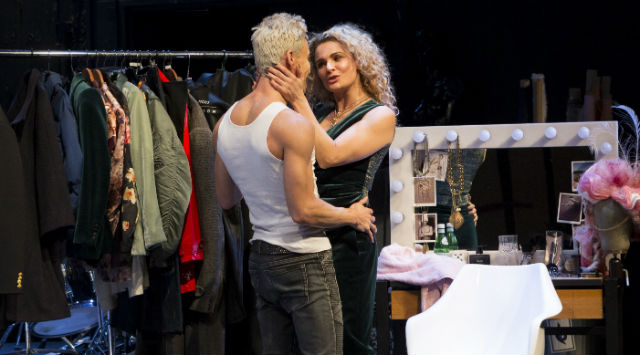
Priscilla Queen Of The Desert is an iconic work about homophobia, or more accurately, the resilience of LGBT people in Australia, who have managed to grow from strength to strength against all odds, in the face of pervasive, persistent and severe prejudice. The bus takes our three protagonists across the breadth of half the continent, encountering abuse and humiliation at every stop. To watch spirited people triumph over obstacles and injustice, is always gratifying, but to see it all happen in a musical with shiny twentieth-century pop tunes, is quite the sensation.

There is much to love about the show. Brian Thomson’s production design, Tim Chappel and Lizzy Gardiner’s costumes and Ben Moir’s wigs, are all spectacular and unabashedly flamboyant, a real feast for the eyes, in a theatrical moment that provides an escape from our beige humdrum. The central story that reunites a gay man with his young son, is thoroughly moving, a soulful addition to the already poignant and universal narrative, of having to live out one’s own truth. The original film, on which the musical is based, is however, well over two decades old, and the baggage of its sexist and racist dimensions have only become more pronounced with time. Theatre, unlike the format of the motion picture, is capable of endless evolution. It is understandable that the biggest gags of the film have to be retained, but their political incorrectness require a degree of modulation or better yet, radical revisions, which the production conveniently disregards.

One can think of many women, bankable stars of the stage, who would be perfect for the role of Bernadette, but Tony Sheldon is once again cast as the Sydney local trans legend. He is precise and polished, an incandescent presence, but we are now in a new age of trans identities, and misgendering of this nature, is distracting, and certainly no longer acceptable. Euan Doidge is interminably effervescent, and breathtakingly beautiful, as Felicia the younger drag queen who learns things the hard way. His abilities as singer and dancer are thrilling to witness, and there is no denying the relief in seeing a person of colour as a lead, in a show known for its history of excruciating ethnic representations. The infamous ping pong scene is kept intact, but Lena Cruz’s feisty performance as Cynthia has us cheering for the character’s sense of liberated and vibrant autonomy.

David Harris cuts through the noisy glitz as Tick, impressive in his ability to convey emotional intensity, for several scenes that help prevent the show from disintegrating into meaningless froth. The father-son chemistry in later sequences are unforgettable, with fabulous child performer George Holahan-Cantwell offering the perfect balance, especially moving in the “Always On My Mind / I Say A Little Prayer” number, delivering a genuine instance of delicacy, in the midst of all things bold and brassy.

The show opens in Sydney officially, and auspiciously, on May 17, International Day Against Homophobia, Transphobia and Biphobia 2018. This year, same-sex couples in Australia are finally able to marry, and the gay rights movement finds itself approaching the culmination of its objectives. In Priscilla, the prejudices on display that are most agonising, are no longer about gay men. It is time to look at the behaviour on the Australian stage, towards trans people and ethnic minorities. These may just be unintended sub-plots of a show that bears our national pride, but the passage of time can turn things from well-meaning to wilful neglect. We all wish to belong, and those who are no longer the pariah, should know to work for a bigger expanse of inclusivity and unity.

www.priscillathemusical.com.au

Review: Hamlet At The Bottle-O (Blood Moon Theatre)


Venue: Blood Moon Theatre (Potts Point NSW), May 15 – 26, 2018
Playwright: Pat H Wilson
Director: Adrian Barnes
Cast: Nick Mercer
Image by Marek Wojt

Theatre review
Like most of us who pursue careers in the arts, Nick is an actor who has to hold down a “real job” to pay the bills. Managing a bottle shop may not be his favourite occupation, but he does it well, in between sneaky practice sessions for imminent auditions. There are five short scenes in Pat H Wilson’s Hamlet At The Bottle-O Or The Wineshop Monologues, with Nick relaying amusing but inconsequential stories about colourful personalities and quaint occurrences at his workplace.

The one-man show features actor Nick Mercer, charismatic and highly energetic in a simple work that demands little more than an enthusiastic familiarity with the text. Mercer proves himself an engaging presence, but the material is limiting in terms of character development, and the proficiency that we encounter never progresses beyond its somewhat basic requirements. The cordial man behind the wineshop counter has a simple job ringing up your purchase, and the performer too, on this occasion, needs only be pleasant, and he passes with flying colours.

We are more than the jobs we do, but often it is how we are employed that determines our identity in the eyes of the world. People can be useful to society in a myriad ways, and it is what we contribute that allows others to form an understanding of who we are. It is however, equally important that the individual knows the self beyond the face that they present on the outside. Most know Nick as the affable bottle-o guy, but Nick knows that he is capable of very much more.

www.bloodmoontheatre.com

Review: Kiss Of The Gallery Guard (Scene Theatre Sydney)

Venue: Sydney Philharmonia Choirs Hall (Walsh Bay NSW), May 11 – 26, 2018
Playwright: Carol Dance
Director: Murray Lambert
Cast: Justin Amankwah, Jesse Northam, Chloe Schwank, Cara Severino
Images by John Leung

Theatre review
After making the local news in less than dignified fashion, Amber leaves her rural town in shame, and lands a job in a city art gallery. Carol Dance’s Kiss Of The Gallery Guard asks if it is possible for the leopard to change its spots, and through its own discussions about the ever evolving meanings of art, the play looks at the constantly mutating quality of human nature, in relation to art objects that are characterised as stable and inanimate.

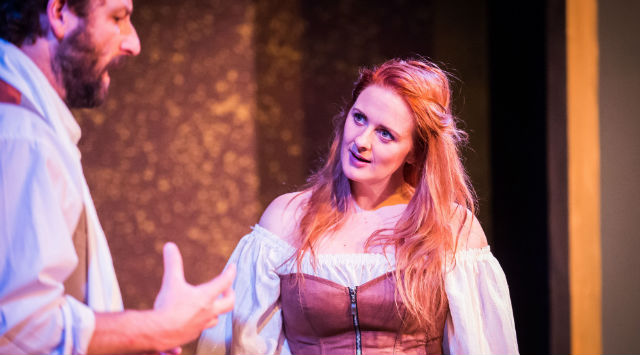
It is a concept worthwhile of exploration, but Kiss Of The Gallery Guard has a plot structure that tends to be overly tangential, with a writing style that mature audiences will find too expositional. Performers for the show are not short of conviction, although their exaggerated approach can interfere with the authenticity that they attempt to bring to the narrative. Cara Severino is a delightful presence as Amber, impressive with the detail she brings to the role, even if the excessively animated mode of presentation is a blemish.

The ephemeral nature of theatre, is what sets it apart from other art forms. A work can always be revisited, revised and remounted, and no two shows can ever be exactly the same. People will grow, and artists will transform. Much as we are inclined to hold unshifting opinions about others, we also know that the world is a surprising place, and people will always have the potential to evade underestimations.

www.kissofthegalleryguard.net.au

Review: Good Cook. Friendly. Clean. (Griffin Theatre Company)

Venue: SBW Stables Theatre (Kings Cross NSW), May 4 – Jun 16, 2018
Playwright: Brooke Robinson
Director: Marion Potts
Cast: Fayssal Bazzi, Tara Morice, Kelly Paterniti
Images by Brett Boardman

Theatre review
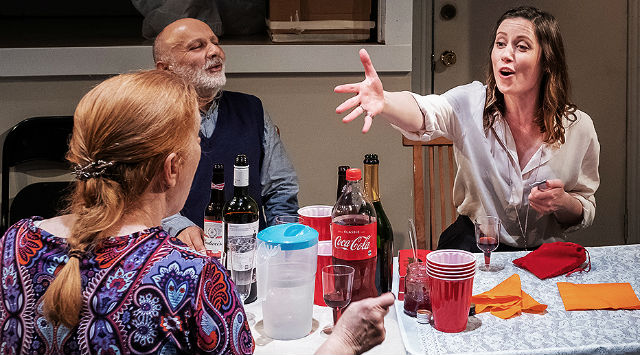
Sandra says and does everything right, but ends up failing at every housemate interview, unable to find a place to live. Brooke Robinson’s Good Cook. Friendly. Clean. features a heartbreaking series of scenes depicting Sandra at those interviews, being rejected for no ostensible reason, other than the fact that she is a middle aged woman battling cancer. This is what we, as a people, have come to. The play is a fierce indictment of Sydney, and cities like it, where inhabitants have allowed money, and access to property, turn us into monsters that spend our entire lives trying to devour real estate and accumulate wealth, without any consideration for those among us who have basic needs yet to be fulfilled.

All Sandra needs is a home. Her budget although modest, is reasonable, but we discover, quite literally, that no one wants her. Playwright Robinson has identified something so ugly but so accurate, about modern Australia, and the reflection she offers up through the mirror of her play, is so hideous, it is almost unbearable to watch. We do of course, find ourselves mesmerised by the car crash scenario, a human catastrophe unfolding before our eyes, powerfully directed by Marion Potts who never once lets us off the hook. Potts shows us not only that the system is broken, but the individuals who operate within said system, people like us, are revealed to be the degenerates that we often are; selfish, uncaring and cruel, participants in a rat race that will inevitably deliver more losers than winners.

In the central role is Tara Morice, who retains for Sandra a sense of dignity, whilst telling a compelling story of desperate despondency. It is a splendid performance, rigorously gauged to provoke just the right response from her audience, not only of compassion, but also a more deliberate and contemplative one, involving the way we think about our interactions with the needy in real life, and also to picture what it would be like, should we one day, find the shoe on the other foot. Fayssal Bazzi and Kelly Paterniti play a variety of roles, mostly unsavoury types, to excellent effect. Whether eccentric or plainly despicable, the pair keeps us attentive, always anticipating the worst, but masochistically enjoying the black comedy that inevitably arises. It is a tight trio on this stage, confident and sleek with a presentation that is as entertaining as it is hard-hitting.

The negative byproducts of our capitalism are evident, but it seems we are too far gone, to be able to imagine a radical turn around. It is a system that demands pragmatism, leading us to act only with self-interest and greed. Sandra is not a home owner, maybe by choice or maybe by circumstance, and we watch her being punished for not playing by the rules. We are all required to want the same, and any deviation can mean disaster, yet the competition that we are all meant to participate in, is predicated on the dispossession of many. This is part of a very big debate that has gone on for decades. Words will continue firing from all sides, but efforts to find solutions that will make life better, for the greatest number of people, will also persist. Kindness may no longer cost us nothing, but it is a price we must be willing to pay.

www.griffintheatre.com.au

Review: Shirley Valentine (Ensemble Theatre)

Venue: Ensemble Theatre (Kirribilli NSW), May 3 – Jun 9, 2018
Playwright: Willy Russell
Director: Mark Kilmurry
Cast: Sharon Millerchip
Images by Anna Kucera

Theatre review
It was only 30 or so years ago, that millions of women had lived like Shirley Valentine; lonely housewives who spoke to walls at home, subsisting with no real purpose, and suffering from the ill effects of misplaced self-esteem from years of marriage and motherhood. After decades of obeying rules of society and religion, id est to wed a man and fall pregnant, and then realising that the second half of their lives could easily turn meaningless, when their assigned function in procreation expires at middle age.

Willy Russell’s 1986 monologue Shirley Valentine can seem a relic, about a type of repressed womanhood, which has disappeared from our new century, but even though that particular archetype no longer occupies front of our minds, Shirley’s challenges remain resonant. Many of us adhere to the expectations of others, trusting in the promises of tradition and convention, rather than determining for ourselves, the constituents of a personally fulfilling life. The argument of course, is that it is never too late to start living, although to break free of one’s own shackles, is always easier said than done.

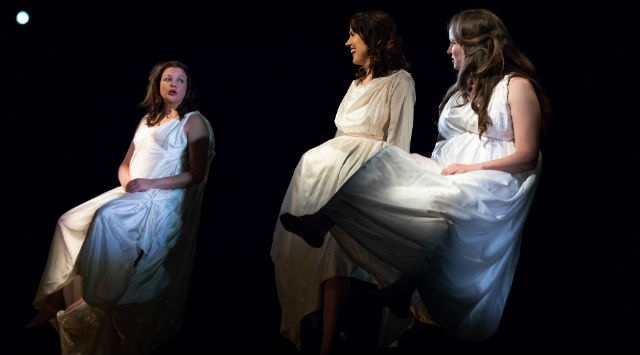
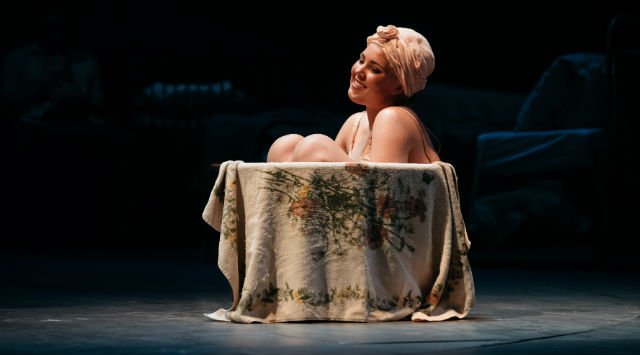
Even though the play is no longer the breath of fresh air that some remember, Mark Kilmurry’s direction ensures that its ageless pertinence is kept pronounced and pervasive. Alongside the highly entertaining whimsy of Shirley’s personality, is an ever-present sense of profundity accompanying all phases of the joyful evolution that we watch her undergo. Full of charm and airy wit, it is an engaging show from start to end, with actor Sharon Millerchip’s charisma proving irresistible, tenaciously so, as we observe her transformations, from strength to strength. Millerchip invites us, with exacting resolve, to root for her character, and we feel as though we take the journey together, with her as captain and us the motor that propels her forward. Shirley’s successes need to be witnessed, and we are there, happily, for her.

Shirley Valentine is a vaguely feminist piece, showing little resentment for power structures determined to keep women subjugated, but celebrates instead, its protagonist’s ability to fight for her own emancipation. The play ends where a new chapter is about to begin. That ambiguity is an accurate representation of many who dare to rise up and reclaim power. For a moment at least, the individual will have to come face to face with opposing forces, that had been hitherto dormant and appeased. Once materialised, this re-positioning of status and relationships, is an unknown quantity, that may lead to a new equilibrium, or more likely, cause ruptures that if sufficiently substantial, will deliver a greater sense of independence and self-determination. To achieve what is fair and just, often involves significant sacrifices that are initially inconceivable. Shirley wants her cake and eat it too. We can only keep our fingers crossed.

www.ensemble.com.au

Review: The Readers (Belvoir St Theatre)

Venue: Belvoir St Theatre (Surry Hills NSW), May 5 – 19, 2018
Playwright: Scott Smart
Director: Elizabeth Nabben
Cast: Anni Finsterer, John McNeill, Scott Smart
Images by Clare Hawley

Theatre review
It is tempting to judge ourselves by things we read in the news. The extremities of society, whether the great successes or our dismal failures, give a powerful impression of the people we are, but routinely neglected are the smaller stories of millions of individuals, those that offer a more accurate picture of daily Australian life. Scott Smart’s The Readers puts focus on those who make up the regular working class, the ones who rarely make the papers.

Peter and Lachlan read electricity metre boxes for a living, going about their business with little fuss or drama. They are two white men who seem to suffer no disadvantage, but their lives are not without challenges. In our current state of accelerating capitalism, what were once perfectly respectable jobs, are gradually turned humiliating. The play shows the insidious nature of how money is allowed to compromise the dignity of our workers. Peter and Lachlan have rules to abide by, but not all of them are reasonable.

The production is elegantly directed by Elizabeth Nabben, who manifests a quiet charm around her characters and situations. It seems society has accepted that employers will, by some degree, infringe upon their staff, and The Readers embodies a quality of nonchalance that reflects that reality. Working for someone does not mean that one becomes a stakeholder, one simply becomes an instrument of functionality, and will have to accept a certain amount of dehumanisation within their prescribed responsibilities. It is the profit motive that takes precedence, rather than the welfare of our communities.

John McNeill and Scott Smart play the key roles, both subtle but strong with their humour, delivering excellent nuance for this gentle piece of theatre. They form an amusing duo, comedic but also poignant, without having to reach for creative choices that may be too obvious. The third wheel Annie, a flimsy character with arguably unconvincing traits, is performed by Anni Finsterer who plays up the silliness to great effect, for moments of extraordinary hamminess that prove surprisingly delightful.

In The Readers, we see that the only thing trickling down from top to bottom, is the anxiety of business ownership. Profits, on the other hand, remain exclusively within the upper crust. Managers do not hesitate to exert pressure on those who have to put in the hard yards, but only shareholders stand to gain monetary wise. Peter and Lachlan never complain. Like most of our work force, people accept their lot, accustom to the feeling of disempowerment. We are taught to work hard, to grin and bear it, in order that rewards may be delivered. That belief is not a lie, but it is clearly not the entire truth.

www.belvoir.com.au