Waiting For Godot (Sydney Theatre Company)

godotVenue: Sydney Theatre at Walsh Bay (Sydney NSW), Nov 12 – Dec 21, 2013
Playwright: Samuel Beckett
Director: Andrew Upton
Actors: Richard Roxburgh, Hugo Weaving, Philip Quast, Luke Mullins

Theatre review
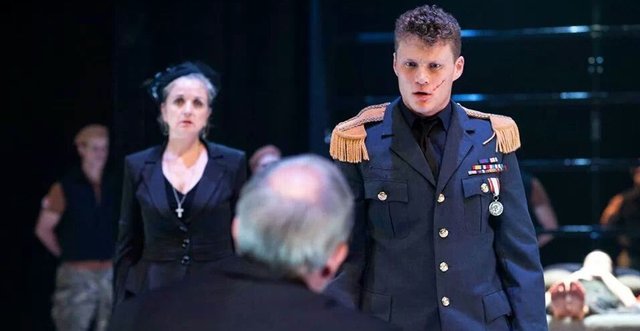
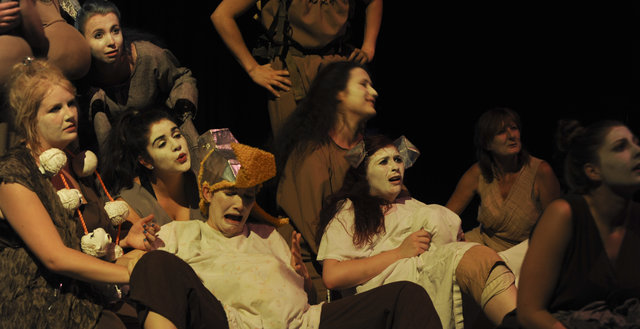
Andrew Upton was brought in last minute to direct Sydney Theatre Company’s production of Waiting For Godot. The original director had taken ill, so the company’s artistic director steps up to the challenge, and, like a blessing in disguise, presents to us a skilfully crafted rendition of Samuel Beckett’s masterpiece. The script’s absurdist nature, along with its surreal elements are retained, but the work lays emphasis on psychological validity, which allows for a more accessible reading and indeed, a very entertaining night at the theatre. Upton’s interpretation of Beckett’s words encourages his audience to reflect upon existentialist themes, such as death, memory, isolation, time, and of course, life itself. One would argue that Beckett’s script might be legendary, but when in the wrong hands, those themes easily become muddled and obtuse, In this case however, his ideas are intriguing and thought-provoking. There is still a sense of abstraction in Upton’s version of events, but the show provides excellent inspiration for a good intellectual work out.

The star studded cast does a great job of luring huge numbers of punters into the theatre, and they do more than their fair share of pleasing the crowds. Hugo Weaving and Richard Roxburgh are truly brilliant. Their genius fills the auditorium, and we are privileged to witness their craft in motion. Of course, having such a rich text to play with does provide them with a solid platform on which to showcase the depth of their abilities, but they are both able to bring out so much life and meaning from it, and the level of poignancy they create in a single show is a remarkable achievement. Roxburgh is a surprisingly funny performer. His comic timing is impressive, and the laughter he creates prevents the show from developing overly dark. Weaving has the uncanny ability to make every utterance sound profound, and his use of silence and stillness to drive a point through is simply masterful.

Sydney Theatre Company’s Waiting For Godot is a hit. As a theatrical production, it entertains and inspires; and as a work of art, it challenges and confounds. It gives you a guiding hand to hold on to, but will not give away all its secrets and mysteries. It strikes the balance between accessibility and wonderment, and leaves us with a better, more open (and thinking) mind.

www.sydneytheatre.com.au

Tiny Stadiums Theatre Double Bill (PACT)

friendshipbluewizardVenue: PACT (Erskineville NSW), Nov 13 – 23, 2013

Friend Ship
Devisor: Kenzie Larsen
Actor: Kenzie Larsen

Blue Wizard
Devisor: Nick Coyle
Actor: Nick Coyle

Theatre review (of preview performance, Nov 13)
Tiny Stadiums this year presents a double bill at the PACT theatre, comprising two pieces by two artists, both quirky, and both working around concepts of loneliness.

Kenzie Larsen’s Friend Ship is a thoroughly funny exploration into the nature of human connection. Larsen is an unusual but strong performer with a sense of fearlessness, and uncanny comic timing. She reads her audience well, and is able to pull us into her eccentric world quickly and effectively. Her use of multimedia is intelligent and measured, even though the visuals do not attempt to be polished or sophisticated. The short films interspersed throughout her performance are as comical as the woman herself, and they are woven effortlessly into the live action. Larsen’s material is not particularly poignant, but it is extremely playful and the level of whimsy she achieves on stage is truly delightful. Her voice is a unique one, and must be encouraged to develop even further.

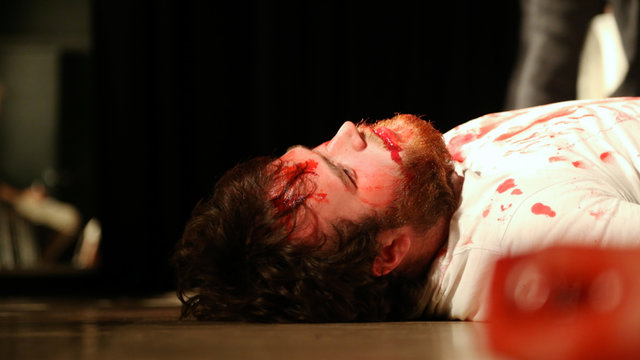
Blue Wizard features Nick Coyle playing a Windex-drinking intergalactic wizard who babysits and breast feeds a baby alien. The show commences with Coyle singing extravagantly to announce his arrival on Earth. His performance style suits the cabaret genre well, but unfortunately, no further songs are introduced into the show. Coyle has endearing idiosyncratic traits that suit the live stage well, and his material bears an uncommon queer sensibility. His skills do need refining, but there are glimpses of genius evident in his work.

www.pact.net.au
www.kenzielarsen.com.au
www.twitter.com/nickcoyles

The Maintenance Room (King Street Theatre)

rsz_a_maint_room_gs_-_124_lowVenue: King Street Theatre (Newtown NSW), Nov 7 – 30, 2013
Playwright: Gerry Greenland
Director: Allan Walpole
Actors: Kim Knuckey, Lynden Jones
Image by Geoff Sirmai

Theatre review
Every show is a collaborative effort comprised of many disciplines and disparate elements, but in The Maintenance Room, the actors’ performances are so fine that it is hard for the audience to focus beyond their spectacular work. Gerry Greenland’s script has an excellent plot that never gives room for any predictability, and its every twist and turn keeps us engaged and fascinated. The story might not be particularly interesting, but Greenland’s storytelling is calculatedly clever. However, his depiction of the two women characters (who we hear a lot about but do not appear on stage) disappointingly utilises the madonna and whore dichotomy, which is convenient and somewhat regressive.

Allan Walpole is director and set designer, and he does both jobs marvelously. The set is complex, realistic and believable, providing a wide variation of levels and spaces for movement and activity during performance. Walpole’s work as director is much more subtle. He wields an invisible hand through the show, but we see extraordinary chemistry between the actors, and their many dialogues are timed to perfection. It is impossible to divorce the actors abilities from Walpole’s direction, but he must be given credit for the liveliness they bring from start to finish, even when the scenes are quiet and sorrowful.

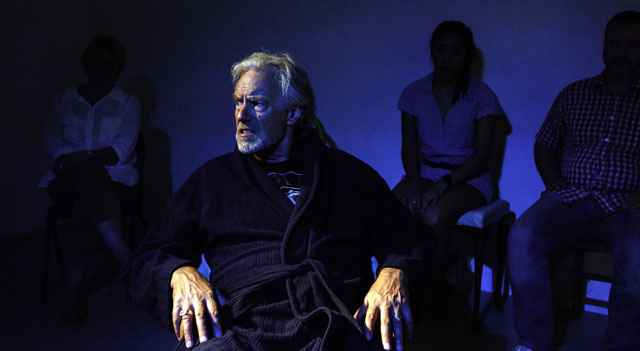
The Maintenance Room is really about the actors, Kim Knuckey and Lynden Jones. Their portrayals of the complicated experience of human suffering, and the constant shifting of emotions in that space of grief and fear, are incredibly real and compelling. Jones masterfully manipulates physical performance and internal authenticity, accurately balancing emotional realism with theatricality. Knuckey’s work impresses with the remarkable believability of his character. The being he creates on stage is palpable, and the rawness of his crisis is felt as undeniable as the flesh and blood right before our eyes.

Theatre is about many things, but when it is about stunning performances, the experience is immensely rewarding. Most of us are likely to remember that when we fell in love with the stage, it was the work of actors who first drew us in. Great acting is divine, and The Maintenance Room is magnificent because of it.

www.kingstreettheatre.com.au

Cristina In The Cupboard (Subtlenuance)

cristinainthecupboard1Venue: TAP Gallery (Darlinghurst NSW), Jul 4 – 14, 2013
Playwright: Paul Gilchrist
Director: Paul Gilchrist
Actors: Sylvia Keays, Stephen Wilkinson, Alice Keohavong, Helen Tonkin, Peter McAllum, Kelly Robinson, Sonya Kerr, Sinead Curry

Theatre review
Cristina is spending time in her cupboard, and she invites us in to witness her thoughts as she searches for explanations and meanings of life. Surrounding her are a host of friends and family who live unexamined lives, and we see exactly what she is retreating from. Paul Gilchrist’s script is poignant and beautiful. Cristina’s philosophising is gentle but true, and the ideas being discussed delve deeply into crevices of our minds that we know exist but do not often acknowledge. Gilchrist’s excavation into the human psyche is a creative process but he is guided by honesty, which is the key to his writing being accessible to all.

Leading lady Sylvia Keays is earnest and full of conviction. She gives her character a childlike quality, and that innocence encourages her audience to listen with the same wide eyed wonder and openness. Helen Tonkin plays Cristina’s mother Gwen with soulfulness and warmth, and is memorable in several moving scenes that highlight family dynamics. Sinead Curry’s performance as the minxish Belinda gives the play a cheery vibrancy, and her comedic talents help a great deal with the entertainment value of the show.

In fact, all performances are strong and effective, but direction of the work tends to rely heavily on the words, with visual aspects sometimes left under-explored. There is a lot of space in the script for more imaginative expression and adventurous flights of fancy but instead the actors are often left in contexts of realistic dialogues, and their lines are sometimes drowned out by even more lines. On occasions where breathing space is provided, Gilchrist’s genius lines really do ring through the air with their strong resonances. Cristina In The Cupboard is a timeless work that speaks with intellectual and emotional clarity, and should be staged every place there is a thinking audience.

www.subtlenuance.com

Apples And Pears (Barestage Theatre)

applespears1Venue: Old 505 Theatre (Surry Hills NSW), Nov 6 – 24, 2013
Playwright: Sean O’Riordan
Directors: Sean O’Riordan, Deborah Jones
Actors: Sean O’Riordan, Deborah Jones, Geoff Sirmai, Eleanor Ryan
Image by Ahron Eisman

Theatre review
The show opens with a fascinating monologue, featuring lead character Max in his extraordinarily dilapidated home (set design is very successful). Sean O’Riordan’s writing immediately impresses with wit, colour and suspense. The play has a simple premise, but its characters are full of vigour and intrigue.

Geoff Sirmai is perfectly cast as Max. He performs the script’s broad comedy style with flair and conviction, and creates a character that is complex yet relatable. In addition to writing and directing the play, O’Riordan appears admirably in the second half as the villain, but does not generate as much menace and cruelty as the story requires. Deborah Jones is co-director, but proves herself to also be a delightfully vibrant actor. She brings a great deal of energetic flamboyance to the show, and the bawdy quality of her performance is outstanding in her opening scenes.

This is an enjoyable show with a plot filled with playful farce and dark humour. Jones and O’Riordan put the emphasis of their direction squarely on entertainment value, which ensures Apples And Pears to be a real crowd-pleaser.

www.venue505.com/theatre

Spoil Your Love Life (The Newsagency)

spoilVenue: The Newsagency (Marrickville NSW), Oct 29 – Nov 9, 2013
Performer and devisor: Michelle Pastor
Musical director: Alison Avron

Theatre review
Michelle Pastor and her show Spoil Your Love Life are above all else, quirky. Pastor’s brand of endearing silliness is amplified in one of the smallest venues in Sydney, The Newsagency. This 40-minute comedy cabaret piece is not the most ambitious of creations, and it springs forth from the simplest of premises, but “small theatre” like this can certainly amuse and entertain.

Pastor is a performer with great conviction and natural charm. The songs for her show are well-chosen, and Alison Avron’s arrangements are pleasantly structured. Pastor has some tuning issues that are exposed by the intimacy of the room, but her phrasing is strong, and she uses the songs well to tell her character Hanna’s story.

Hannah has a deep infatuation for movie star Hugh Jackman, and the glitzy Hollywood lifestyle he represents. The elusiveness of “the big time” is a theme of the show, but it is a comforting idea that emerging Australian theatre practitioners like Pastor are able to showcase their work, irrespective of clout or stardom.

www.michellerose.com.au

An Ordinary Person (Sydney Independent Theatre Company)

anordinarypersonVenue: Old Fitzroy Theatre (Woolloomooloo NSW), Oct 22 – Nov 16, 2013
Playwright: Robert Allan
Director: Julie Baz
Actors: Cherilyn Price, Alexander Butt, Mel Dodge, Jai Higgs, David Jeffrey, Carla Nirella
Image by Katy Green Loughrey

Theatre review
At the heart of An Ordinary Person is an unusual relationship. It is an unconventional marriage not often represented on stage, but it is an entirely believable one. Robert Allan has written an interesting story, and he has crafted characters that are idiosyncratic, curious and memorable. The structure of the plot, however, is a challenging one. The show’s first half is full of intrigue, but not much else. It takes its time introducing the various characters in an air of mystery, but the audience needs a stronger sense of the impending drama for these characters to be compelling. Fortunately, the second half is much more satisfying, with drama bursting at all its seams.

Performing the piece is an ensemble of uniformly strong actors. Cherilyn Price is particularly impressive, playing her character Aggie at two different ages. She switches effectively between the portrayal of a middle-aged woman and her 14 year-old version, without the use of costumes or makeup, relying only on her acting. It is quite an experience to see Price’s method in her subtle but distinct transformations. Carla Nirella plays Fiona, and stands out with the effortless intensity and conviction she brings to the production. Her role is a simple one, but she attacks it with clarity and energy, giving very solid support to the key characters.

The play’s themes are dark and uncommon but Julie Baz’s direction does not exploit them gratuitously. She is careful to depict all characters with compassion, so that we leave the show thinking about our society’s issues in a mirror that reflects the social, rather than the personal. Although fundamentally a singular species, ordinary persons bear infinite differences between each and every separate entity. It is in the meeting of these individuals that extraordinary things happen, good or bad.

www.sitco.net.au

Dirty Rotten Scoundrels (Theatre Royal)

dirtyrottenscoundrelsVenue: Theatre Royal (Sydney NSW), Aug 14 – Sep 1, 2013
Writer: Jeffrey Lane (based on the 1988 film)
Music and lyrics: David Yazbeck
Director: Roger Hodgman
Choreographer: Dana Jolly
Performers: Tony Sheldon, Matt Hetherington, Amy Lehpamer, John Wood, Anne Wood, Katrina Retallick
Image by Kurt Sneddon

Theatre review
The “Broadway Musical” genre is hugely popular, with productions travelling across continents everyday. They represent the ultimate in live entertainment, and consistently provide incredible inspiration to everyday folk by showcasing unimaginable artistic skill and talent.

Dirty Rotten Scoundrels is an excellent example of a show that ticks all the boxes. It is an engaging and amusing story, peppered with uproariously funny sequences, and a clever plot driven by beautifully written songs. Design elements are of the finest quality. The stage in Theatre Royal is slightly tight, but the venue looks exceptionally elegant and glamorous on this occasion. Performances are beyond “world class” with an Australian cast that can only be described as brilliant.

Matt Hetherington as Freddy Benson is a perfect fit; one can hardly imagine any other actor more suited for the role. Hetherington is the proverbial “triple threat” incarnate, with a killer singing voice, impressive command of choreography, and seriously hilarious comic abilities. His star shines irresistibly bright in this production.

Amy Lehpamer is an absolute delight as Christine Colgate. Her masterful vocals are quite literally perfect, and coupled with her fervency in the comic content of the show, she is completely impressive and a very wonderful musical theatre actor indeed. Like Hetherington, Lehpamer has star quality in spades, and together, they are a surety that this is one production that will never have an “off night” in its entire season. Also noteworthy is Katrina Retallick who has a smaller role as the pistol wielding Jolene Oakes. She earns some of the biggest laughs of the show, and while appearing only in a couple of scenes, they are thoroughly memorable ones.

This is a musical characterised by its vivacious humour. There is an irreverent sensibility that many would love, but others might find challenging. For those of us who enjoy a dose of naughtiness, and are not averse to a little scoundrelly wit, this is a show that will leave an enduring impression for many years to come.

www.dirtyrottenscoundrels.com.au

Three Winters Green (Lambert House Enterprises)

threewintersgreenVenue: King Street Theatre (Newtown NSW), Oct 7 – Nov 3, 2013
Playwright: Campion Decent
Director: Les Solomon
Actors: Tom Sharah, Brett O’Neill, Gael Ballantyne, James Wright, Emily Kennedy, Matt Young, Diana Perini

Theatre review
First produced in 1993 (and again in 2003), Three Winters Green arrived at a time when the AIDS epidemic was still a crucial force in galvanising gay communities in the developed world. Campion Decent’s script is a beautiful representation of that generation’s experiences, and his depiction of their struggles is an important documentation that needs to be borne witness time and time again.

The emphasis on Les Solomon’s 2013 direction remains on the devastating effects of the AIDS virus, but other elements in Decent’s writing make the play more than a relic of recent lgbt history. It deals with uniquely queer experiences of family, the closet, and homophobic violence, all of which are hugely relevant themes that resonate strongly, even for the most jaded of contemporary Australians.

Tom Sharah is the lead, and his work is a major factor in the success of this production. Sharah has a thorough and sensitive understanding of the text, and his portrayal of Francis is deeply affecting. He plays the flamboyant character with great humour and delivers a lot of big laughs, but he also cuts through with beautiful, subtle moments that convey truthful character development and heartfelt emotion. It is a heartbreakingly sublime performance. Brett O’Neill is memorable in his supporting role as Andrew. He is naturally charismatic, and impresses with simplicity and authenticity. The restraint in his acting contrasts well with other cast members, and allows him to shine brightly through.

The play concludes with the unfurling of a quilt that was part of the Australian AIDS Memorial Quilt Project, that commemorates and honours those who have lost their lives to the disease. The poignancy of the quilt’s presence, along with the angels and the mourners they leave behind, cannot be understated. George Orwell said, “the most effective way to destroy people is to deny and obliterate their own understanding of their history.” May Three Winters Green return with greater emerald vibrancy at each passing season, and may we never forget the foundations of our shared histories, even if the communities we live in become increasingly fragmented.

www.kingstreettheatre.com.au

Butterflies Are Free (Lambert House Enterprises)

butterfilesVenue: King Street Theatre (Newtown NSW), Oct 7 – Nov 3, 2013
Playwright: Leonard Gershe
Director: Les Solomon
Actors: James Wright, Emily Kennedy, Cheryl Ward, Matt Young

Theatre review
Written by Leonard Gershe in 1969, Butterflies Are Free premiered at virtually the same time as the legendary Woodstock Festival. The work discusses notions of freedom at a time when America was in the depths of the Vietnam War, and when the hippie subculture was at its peak. 44 years on, the resonances in Gershe’s script remain strong, and its story still strikes a chord with contemporary audiences.

Les Solomon’s revival of the play is slightly referential of the 60s, but design elements do not explore the retro aspect too deeply. Instead, Solomon focuses our attention on character development and the themes inherent in the writing. His direction of the piece is confident and passionate. We are treated to perfectly paced comedy, as well as an earnest approach to the deeper and more philosophical sections of the text.

Quality of acting is consistently strong. Emily Kennedy’s portrayal of a free spirit is delightful, and she captivates by shading her character with glimpses of a sombre interior. Her balance of light and dark grounds the show in a space of warmth and truthfulness, and establishes an intimate sense of identification with the audience. Cheryl Ward plays Mrs Baker, the “mother”, bringing a comic quality that is enjoyable yet subtle. Ward’s performance is measured and sensitive, creating probably the most convincing character in the show. It is noteworthy however, that the final quarter of the play seems slightly rushed. The comedy eventually gives way to a fairly serious conclusion packed with meaning and pathos, but the actors seem to remain at the speed of the earlier scenes.

The theme of freedom is one that absolutely everyone can relate to. In Butterflies Are Free, we are presented with a beautiful story and sublime, deeply moving words. This production allows us to savour those words as delivered by a group of impassioned players, and provides an opportunity for its audience to reflect upon the freedoms that exist in our lives and also those that are sadly absent.

www.kingstreettheatre.com.au