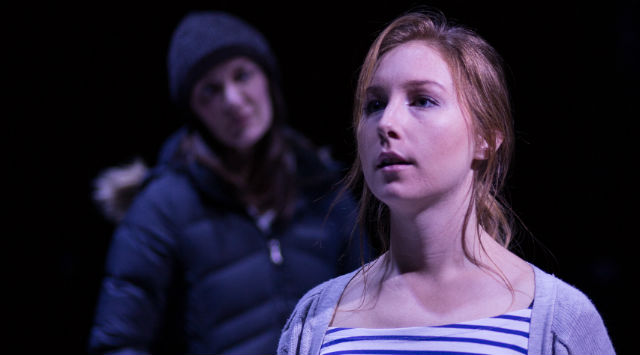
Review: Leaves (Bakehouse Theatre Company)

kxtVenue: Kings Cross Theatre (Kings Cross NSW), Jul 9 – 23, 2016
Playwright: Lucy Caldwell
Director: Rachel Chant
Cast: Harriet Gordon-Anderson, Bobbie-Jean Henning, Poppy Lynch, Simon Lyndon, Amanda Stephens-Lee

Theatre review (of a preview performance)
When news broke several months ago that a 10 year-old Aboriginal girl had taken her own life in Western Australia, our nation was stunned into a moment of grief and rare self-reflection, searching for reasons to help us understand what had happened. We knew that it was the fault of a wider community, but struggled to find a way to take responsibility for the deeply unfortunate incident. In Lucy Caldwell’s Leaves, a teenager attempts suicide and we must again investigate the causes of her calamity. The play takes place in Lori’s home, where everything is healthy and normal, bringing us to the conclusion that family is unable to shield us from all the failings of society. It is a tender script, confidently quiet but with subtle fluctuations in tone that provide unexpected hints of drama and comedy.

Situations in Leaves are volatile, so corresponding emotions are kept under tight containment by director Rachel Chant for a work that is elegant, melancholic and extremely thoughtful. It is a production full of nuance, aided by the considerable talents of music composer Nate Edmondson and lighting designer Sian James-Holland, both providing unobtrusive but essential elements of movement and tension to the piece. A strong cast provides the show with a cohesive and unique flavour (too rich and ephemeral to put to words), with each actor compelling in their respective parts. Poppy Lynch is especially memorable playing a 12 year-old, adorable and authentic in her emulation of childlike qualities, but complex in the relationships she harnesses with co-actors. Bobbie-Jean Henning plays the feisty Clover, rebellious in demeanour but innocent by nature. The actor is convincing and dynamic in her characterisations, effectively adding sprightliness to a largely sombre production.

Places have problems, and sometimes leaving is the best answer. Forming attachment with community is human, but where we call home might not be nurturing or gratifying. The grass is greener on the other side, but when given the opportunity, we must make the effort to discover the truth in what was once only imagined. Taking chances can mean win or lose, but to truly live requires motion. When Lori chose to give up on life, she gave in to stasis and hopelessness. The solution for her problems may not be concrete or certain, but the only way to find it is to get moving.
www.kingsxtheatre.com

Review: Singin’ In The Rain (Sydney Lyric Theatre)

singinintherainVenue: Sydney Lyric Theatre (Sydney NSW), Jul 7 – Aug 28, 2016
Music & Lyrics: Nacio Herb Brown, Arthur Reed
Screenplay: Betty Comden, Adolph Green
Director: Jonathan Church
Cast: Grant Almirall, Robyn Arthur, Mike Bishop, Jack Chambers, Rodney Dobson, Erika Heynatz, Gretel Scarlett
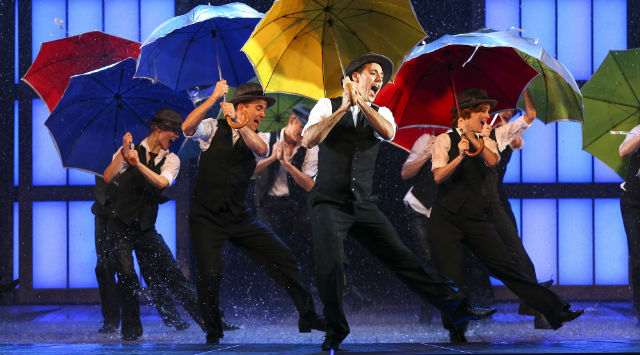
Image by Hagen Hopkins

Theatre review
Regarded by those in the know to be the greatest movie musical of all time, Singin’ In The Rain takes place in Hollywood in the late 1920’s, when sound had begun to disrupt the silent film industry. This theatre production, based on the 2012 London revival, is similarly lighthearted, with a simple storyline that provides justification for a lot of song and dance in a style that harks back to the golden age of cinema.

Performers Jack Chambers and Erika Heynatz are called upon to provide the laughs in distinct comic sequences that showcase their talents appropriately, but the production suffers from a lack of exuberance that maintains an unfortunate muted tone over proceedings. Visual and sound design elements seem to be overly subdued, resulting in a show that often feels distant and lifeless. In the role of Don Lockwood is Grant Almirall, no less skilled and technical than Gene Kelly in the original film, but his very nifty footwork does not make up for the shortfall of charisma that we have come to expect of a Broadway style leading man.

Gretel Scarlett’s best efforts as supporting character Kathy Selden bring memorable moments of theatrical brilliance, leaving an excellent impression with polished execution of choreography and sublime vocals. Equally accomplished are the ensemble players, who present magnificent dance sequences that form the strongest feature of the production. Andrew Wright’s contribution as choreographer is outstanding, and almost compensates for the show’s minor but noticeable imperfections. Much excitement surrounds the heavy rain that pours on stage for the eponymous number; unquestionably gimmicky but also spectacular and beautifully realised. We go to musicals of this genre for amusement, and Singin’ In The Rain certainly does offer entertainment and escape, as well as bucket loads of nostalgia for the more romantic among us.

wwww.singin.com.au

Review: Forbidden (Blood Moon Theatre)

bloodmoonVenue: Blood Moon Theatre (Potts Point NSW), Jul 6 – 23, 2016
Playwright: Visakesa Chandrasekaram
Director: Neil Khare
Cast: Dimitri Armatas, Neil Khare, Belinda Maree

Theatre review
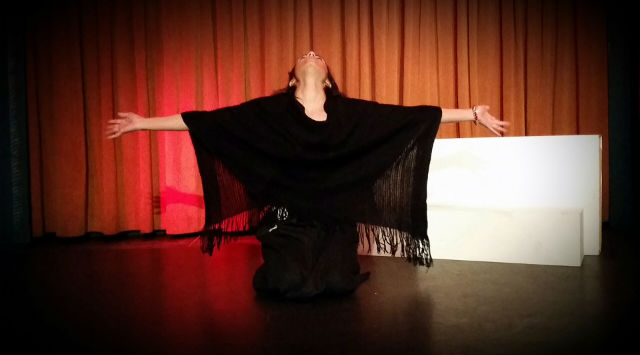
Terrorism ranks atop our most pressing issues of the day, and we argue endlessly to find explanations and remedies for the actions of enemies that we seem never to be able to find an understanding of. Visakesa Chandrasekaram’s Forbidden is the story of one Sri Lankan woman’s personal struggle as we find her on a journey towards oblivion with a militant Tamil separatist organisation.

Chandrasekaram’s script is romantic, colourful and emotional, offering unique insight into a mystifying world. It does not make excuses for the abomination that takes place, but seeks to expand our understanding of a hidden microcosm. Where things are forbidden, there are secrets. The play may not be biographical or even factual, but it inspires a wider conception of an otherness, dissolving a threatening enigma to reach an understanding of what is always and essentially a shared humanity.

The production is a simple one, and too basic in approach for a highly imaginative text that features a non-chronological timeline and supernatural influences. Acting style tends to be overly dramatic for the very intimate space, but strong commitment by the cast helps us find meaning in the story. Each actor is clearly invested in their respective roles, but chemistry is lacking, which can make relationships confusing and events incoherent. The show needs more time to mature, in order that greater depth can be discovered in all areas and for its message to sing with better clarity.

Urmila’s reasons for adopting drastic measures are as personal as they are political. We forget the individual experiences of soldiers from all sides, choosing to conflate every disaster of war into the purely ideological. In Forbidden, the suicide bomber is given a name and her identity is exempt from simplification. To know even one sacrificed life is a powerful antithesis to the faceless apathy that we have come to accept as daily normalcy. No single work of art will solve the problems of the world, but an opportunity to broaden minds exists in every creation, and every bit of wisdom gained is an existence grown stronger.

www.facebook.com/bloodmoontheatre

Review: Hurt (White Box Theatre)

old505Venue: Old 505 Theatre @ 5 Eliza St (Newtown NSW), Jul 5 – 23, 2016
Playwright: Catherine McKinnon
Director: Kim Hardwick
Cast: Ivan Donato, Meredith Penman, Gabrielle Scawthorn

Theatre review
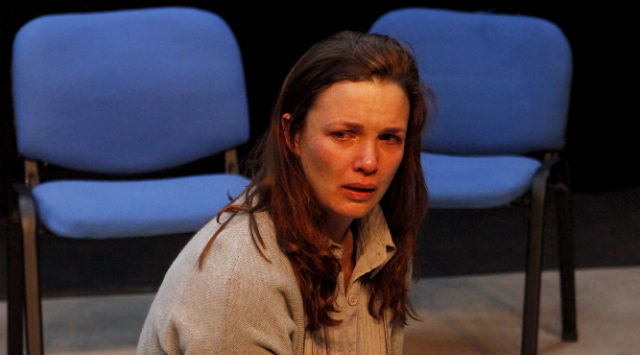
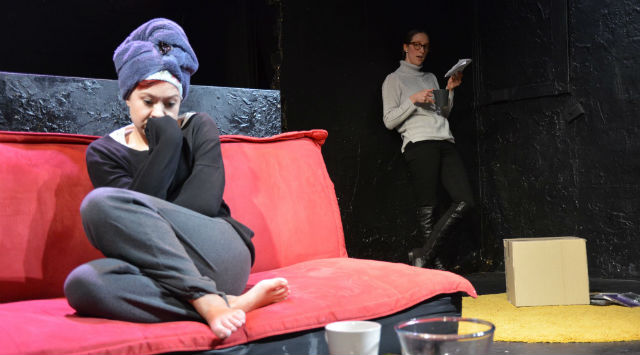
A horrific road accident brings the breakdown of a relationship to its accelerated boiling point. Surrounded by trauma, Mel and Dom are in a state of anguished disintegration, trying to make sense of marriage and family amidst the smithereens. Catherine McKinnon’s Hurt is ruthless in its depiction of human frailties. Through themes of parenthood and misfortune, her play illustrates life at its most difficult moments, asking us to consider the importance of empathy and compassion, not only for others but also for ourselves. There is a complexity to the writing that demands of us, deep analysis as well as a humane response, bringing attention to the nature of our collective ethics and values. Hurt is both controversial and mundane, exposing highly contentious issues within a context of common occurrences, to orchestrate great dramatic tension for the theatre, and to challenge the ways we think about life and the way we treat one another.

Director Kim Hardwick brings a lethal combination of operatic emotionality and psychological acuity to a production that enthrals from start to finish. The interplay of characters constantly fluctuates to keep us mystified and on edge, but a sense of truth prevails no matter which way the show’s tone oscillates. An unrelenting and dark intensity drives the plot through its surprising revelations, with a seductive force, impossible to resist, drawing us further and further into its agonising quagmire. Production design adheres to Hardwick’s powerful but subtle aesthetic approach. Set design by Isabel Hudson, lights by Martin Kinnane, and Katelyn Shaw’s soundscapes provide the cast with elegantly effective backdrops against which their magic happens.

Meredith Penman plays Mel, the troubled mother of two, with a delicious daring that complicates our need to sympathise and deride. Resisting the temptation to turn her character into a convenient victim, Penman’s ability to portray convincing fallibility is key to the show’s brilliance. No parent can ever be perfect, but we hold them to a certain standard that Mel’s story shows to be impossible for many. The role of Alex is performed by the very impressive Gabrielle Scawthorn, whose work in Hurt is nothing short of spectacular. Perfectly measured and delicately balanced, Scawthorn’s creation is simultaneously brutal and tender, displaying an extraordinary vulnerability in her undeniably painful process. Ivan Donato provides excellent support as Mel’s husband Dominic, with a focused conviction that helps sustain the protracted and mesmerising hysteria of Mel’s world.

When it all comes tumbling down, we are faced with the choice of surrender or struggle. We watch the people in Hurt fight through incredible hardship, and worry if their spirit can pull them through. We want to believe that our fortitude can surmount anything, but the truth is that weakness co-exists with strength, and can sometimes be the element that defeats. It is in trauma, that one’s mettle gets tested, and even though every successful attempt to overcome must be celebrated, it is necessary that our failures are afforded forgiveness.

www.whiteboxtheatre.com.au

Review: Henna Night (Mercury Theatre)

mercuryVenue: Old Fitzroy Theatre (Woolloomooloo NSW), Jul 5 – 9, 2016
Playwright: Amy Rosenthal
Director: Glen Hamilton
Cast: Jane Angharad, Romney Stanton

Theatre review
Two women are brought together by their love of one man. They are not particularly inspiring people, but theatre does not have the responsibility to only give us role models. Judith and Ros are in a confrontation, both projecting their resentments onto the other, eventually finding commonality in their romantic dissatisfaction that allows them to discover a bond, unexpected of themselves, but completely predictable for their audience. They languish in all the imperfections of their love lives, but never question the futility of their efforts. Amy Rosenthal’s Henna Night is a story about desperation that shows an unflattering picture of what we look like when feeble and fallible.

It is a mildly comical work, with an emphasis on naturalism that tends to subdue the funnier lines of the script. The clash of rivals is conveyed with insufficient theatricality, but the show has a coherence that communicates logically in the absence of great dramatic tension. Actors Jane Anghard and Romney Stanton are convincing in their portrayals, if a little lacking in dynamism. The production’s shifts in mood and atmosphere could be more amplified for better sensory variation to keep us engaged further with nuances of the piece. Director Glen Hamilton attempts to unearth the truth in these women’s experiences, and is successful in bringing an honesty to the stage, but he requires more spice to accompany this overly polite creation, laden with too much sugar.

It is arguable if nice girls always finish last, but in Henna Night, we yearn for Judith and Ros to throw punches and smash vases. We want to see them lash out, because our own angers and frustrations need a safe space to experience a moment of salvation. Thespians are given the license to behave badly in their worlds of make belief, so that we can benefit from that exorcism of our shared demons. The people in the play have a message for us, but they appear gently and disappear too quietly, leaving little more than a dent in our memory.

www.facebook.com/…

Review: The Viagra Monologues (Off The Avenue Productions)

offtheavenueVenue: Blood Moon Theatre (Potts Point NSW), Jun 16 – Jul 2, 2016
Playwright: Geraldine Brophy
Director: Samuel Allen
Cast: Tom Matthews, John Molyneux, Meynard Penalosa

Theatre review
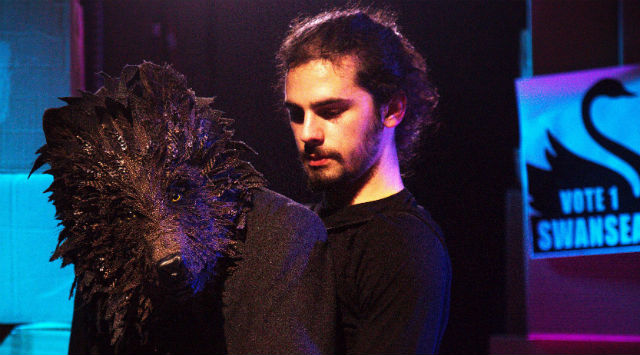
Three male actors present a series of small episodes offering perspectives on life and humanity, through experiences of male sexuality. Like its very famous feminine predecessor, characters in The Viagra Monologues centre their stories on their genitalia. The pharmaceutical referenced in the title does not make frequent appearances, but its presence is a conspicuous metaphor figuring alongside ideas of masculinity and emasculation, which form the play’s main focus. An erect penis alone does not maketh the man, and we explore what it is that today’s man needs in order to find strength and spirit for his existence. Geraldine Brophy’s script is appropriately diverse in scope, with an admirable objective of portraying vulnerability within its very wide range of personality types. Virtually everything we see in the theatrical landscape involves men, but it is not a regular occurrence to see them only at their most vulnerable, stripped of every macho pretence.

Director Samuel Allen does well to create on the stage, distinct scenes and people who appeal in differing ways. The use of space has a tendency to be too basic and repetitive (and lighting design leaves much to be desired), but Allen’s attention to detail in performances provides an effective realism to all the stories we hear. It is an accomplished cast, balanced and cohesive in their efforts but each with their own idiosyncrasies. Tom Matthews entertains with a flamboyant edge to each of his depictions, John Molyneux is charismatic especially when playing young children, and Meynard Penalosa is captivating in his portrayals of emotional intensity. There are inconsistencies in their ability to delve into the fragility of each sequence, but when successful, the monologues take on a powerful poignancy that speaks deeply about the way we are, and how we treat each other.

These are stories about men, but written by a woman. The best of feminism benefits all, and it is the acknowledgement of the destructive qualities of manhood in these stories that make them meaningful. We observe a series of male characters in varying stages of intimate vulnerability, each exposing themselves in a way that real life (outside of the theatre) disallows. The men are beautiful when they bare all under this spotlight, but these are moments of imagination that, although truthful, are rarely encountered face to face, even with the ones we love. We make our men resilient, powerful and hard, as a matter of course, without stopping to think about the sacrifices involved. They soldier on, with all their softer sides buried and suppressed, but dark monsters manifest when we fail to take care.

www.offtheavenue.com.au

Review: Godface (Matriark Theatre)

matriarkVenue: 107 Projects (Redfern NSW), Jun 28 – Jul 10, 2016
Playwright: Robert den Engelsman, Murray Lambert
Director: Scott Parker
Cast: Murray Lambert, Emily McGowan, David Molloy, Jesse Northam, Sam Flack
Image by Alinta Haydock-Burton

Theatre review
In Godface we find a familiar reflection of our scepticism and distrust of government and the adversarial political system. There is an accuracy to the way Robert den Engelsman and Murray Lambert’s writing represents our feelings about politicians and their operations, but its insights and perspectives on the subject are hardly unusual. It shares our disillusionment with all things political, featuring characters that need little introduction, for a simple tale of corruption and exploitation.

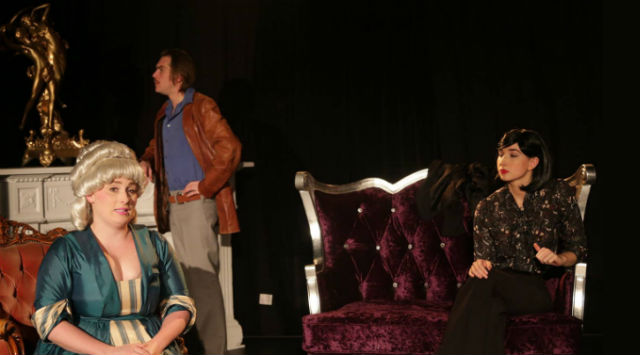
Scott Parker’s enthusiastic direction brings to the stage a liveliness that many will enjoy, using puppetry and techniques of commedia dell’arte to spark our imagination as it forms a commentary on the state of the world. Delightfully performed by a unified cast of actors, the production is memorable for its sense of variety, established by a keen interest in a non-naturalistic mode of expression. Sam Flack leaves a remarkable impression in a range of characters including the head of the New God Party, a wolf gangster and a pair of opinionated giraffes. The actor is vibrant and humorous, with excellent charisma that gives each of his transfigurations considerable appeal. Designer Aleisa Jelbart’s work on puppets, props and set is especially noteworthy, with an exceptional eye for detail and refinement that provides touches of stylistic elevation to the production.

At the 2013 elections, 739,872 informal votes were recorded. There is little hope to be found in Godface, for good reason, and we see clear as day, the alienation felt by many of our population. Modern democracy is deeply flawed, but remains the only system we deem acceptable. It is a conundrum that we learn to live with, and on occasions such as this weekend’s federal elections, we have no alternative but to indulge in a moment of delusion that the world might just be ready to make a change for the better.

www.matriarktheatre.com

Review: No Exit (Throwing Shade Theatre Company)

throwingshadeVenue: The Factory Theatre (Marrickville NSW), Jun 23 – 25, 2016
Playwright: Jean-Paul Sartre
Director: Andrew Langcake
Cast: Harley Connor, Courtney Powell, Darcie Irwin-Simpson

Theatre review
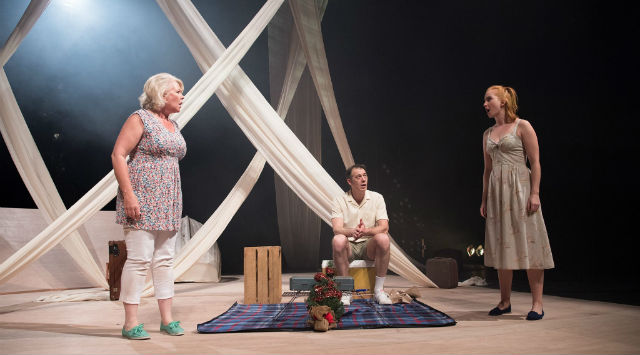
Sartre’s 1944 play No Exit is about three people coming to grips with their new existence post-mortality. The famous line “hell is other people” is heard late in the piece, and like the myriad ways in which it can be interpreted, the play is abstract, to be given meaning as one wishes. The concept of hell is a powerful one, considering its uncompromising permanence. Life may not be much more pleasant than hell for some, but hell’s eternal inescapability is truly terrifying.

The staging, directed by Andrew Langcake, is a simple rendering that attempts to bring realism to the absurdist piece, with an emphasis on finding character coherence over philosophical expression. Sound and lighting are strangely neglected, resulting in a supernatural realm that is unfortunately devoid of atmosphere. Performances are committed, and each personality is distinctly shaped by a cast of spirited actors, but chemistry is often lacking. Relationships are key in No Exit, and unable to portray them with enough clarity and dynamism, the production struggles to communicate beyond the superficial.

Individuals experience life from perspectives we know to be personal, but it is debatable if anything is ever unique in how we each see the world. We can only understand things from our singular positions, but in every transaction that we inevitably conduct with other beings, we become transformed, objectified and absorbed into another consciousness. The self is unable to remain separate, and meaning can only come from that act of concurrence, voluntary or involuntary. If other people will give you hell, they are also your only source of pleasure. How much the self can do to manipulate the other will always be limited, but happiness is always best managed within one’s own hermitage.

www.throwingshade.com.au

Review: Away (Sport For Jove Theatre)

sportforjoveVenue: Seymour Centre (Chippendale NSW), Jun 22 – 25, 2016
Playwright: Michael Gow
Director: Damien Ryan, Samantha Young
Cast: Angela Bauer, George Banders, James Bell, Michael Cullen, Danielle King, Berynn Schwerdt, Georgia Scott, Lizzie Schebesta, Christopher Stalley, Christopher Tomkinson, Eloise Winestock, Amy Usherwood, Sarah Woods
Image by Marnya Rothe

Theatre review
Michael Gow’s Away is about ordinary lives and their hidden struggles. The action takes place in 1967 Australia, but the problems faced by its characters are of a personal nature and therefore eternal in their resonance. Social turbulence evolves with each era, and although we think of the world as being a different place with different challenges through time, Gow’s play demonstrates the constancy of our inner struggles. We can imagine ourselves existing in any period, but human mortality is the basis of how we conceive of ourselves; the awareness of death’s inevitability tells us what we want from each day and what we wish to leave behind.

Away is not essentially of an operatic scale, and its many intimate qualities are lost in the very vast theatre space. The production is attractively designed, sleek and refreshing in its simplicity, but the set has an asymmetry that causes the play to project to approximately two-thirds of the auditorium, leaving remaining seats cold. Direction is similarly negligent of this spacial imbalance. Actor Sarah Woods is a clear stand out for her deliberately exaggerated performance, gripping the audience with an over-the-top entrance, and keeping us engaged with her dramatic flourishes as her character Gwen proceeds to reveal her surprising complexities.

The text has an interest in the dark and messy sides of life but the show has a sterility that disconnects from its intentions. The story might be conveyed well to the better seats in the house, but its message is not delivered with sufficient power. We congregate at the theatre to listen, and those on stage have the responsibility to reach out to all who have made the effort to participate. The room can be packed full through commercial brilliance, but the night proves to be fruitless if people leave with emptiness.

www.sportforjove.com.au

Review: Back At The Dojo (Belvoir St Theatre)

belvoirVenue: Belvoir St Theatre (Surry Hills NSW), Jun 18 – Jul 17, 2016
Playwright: Lally Katz
Director: Chris Kohn
Cast: Fayssal Bazzi, Dara Clear, Catherine Davies, Harry Greenwood, Brian Lipson, Natsuko Mineghishi, Luke Mullins, Shari Sebbens
Image by Brett Boardman

Theatre review
Lois lays in a hospital bed, with her husband Dan by her side waiting for her to gain consciousness. Their granddaughter Patti appears unannounced and drugged out, after disappearing for two years working on her gender transition. Dan and Patti take time to mend their bond, and in the process we witness parallels between Dan’s life in the late sixties, becoming his own man through the discovery of karate, and Patti’s own frustrations in her journey into womanhood. Back At The Dojo by Lally Katz is an emotional work, but gently so. It does not create big scenes of heightened family drama, taking its time instead to build on our involvement with its characters and their stories. Through excellent humour and a moving depiction of relationships, we gradually become invested in the people before us, although its slow burn may prove to be too demanding of some audiences. Katz’s writing is amusing and colourful, with an undeniable poetic beauty, but the play takes a long time to get to its point, resulting in a plot that can feel somewhat aimless before we arrive at its later, more poignant sequences.

The decision to cast a male actor in the role of Patti is a distasteful one that reflects a surprising callousness, given the impressive level of sensitivity evident throughout the rest of the production. Patti’s is one woman’s story, but due to the rarity of transgender representation in our theatres, it is also every trans person’s story, and no trans woman would ever want to see herself portrayed by a man, on any stage or screen. We do not see Patti’s early days in masculine expressions of gender, so to choose a male actor over a female one (trans or cis), only goes to demonstrate the production’s inability and refusal to accept Patti’s gender as she now presents. To be misgendered is one of the most appalling things any trans person could experience, and Back At The Dojo‘s misgendering, deliberate or unintentional, is an unacceptable transgression.

It must be said however, that Luke Mullins’ performance as Patti is a captivating one, and very powerful. He is obviously unable to convincingly depict the physical transformations that his character has had to endure, but there is a beautiful psychological accuracy in his work, in addition to the passionate yet nuanced drama that he sustains in every stage moment. Director Chris Kohn extracts very believable performances from all his actors. It is essentially a simple tale, with few opportunities for a more ostentatious approach, but every personality and relationship feels meticulously refined, with a palpable omnipresence of truthfulness and vulnerability that gives the show an enchanting soulful quality. The role of Dan is played by Brian Lipson, a gentle giant, full of strength and tenderness in his mesmerising interpretation of an older man dealing with immense loss, that will touch the hardest of hearts. Natsuko Mineghishi steals many scenes as the dojo Sensei, a real-life action hero with thrilling karate showmanship, lethal comic timing and a spectacular singing voice.

A profound connection exists between generations, but modern life seems to prevent many of us from experiencing and reaping its rewards. The disintegration of the family unit, and the ever rising regard for individuality means that few of us maintain significant intergenerational relationships. In Back At The Dojo, a distraught woman finds purpose and meaning by learning about her grandfather’s own obstacles in life, and by recognising her kinship responsibilities. We come to a realisation that both Patti and Dan are sinking under the weight of loneliness, and that the frailty of their existences are to be salvaged by the perennial tie that binds. They are fortunate to have one another, like we all have our own families, but how we value them is what the play brings into question.

www.belvoir.com.au