Review: An Alternative Fact (Woolf Ensemble)

Venue: 107 Projects (Redfern NSW), Aug 29, 2017
Playwrights: Sam Anderson, David Margulies, Lucy Prebble, John Patrick Shanley, Frederik Stroppel, Liam Williams, John J Wooten
Directors: Meg Alexandra, Christine Greenough, Georgina Holt, Valentin Lang, Lauren Lloyd-Williams, Izzy Stevens
Cast: Sam Anderson, Megan Bennets, Isabel Dickson, Karli Evans, Thomas Filer, Christine Greenough, Haydan Hawkins, Lara Lightfoot, Amanda Marsden, Jamie Meyer-Williams, Claire Oehme, Jessica Saras, Johann Silva
Image by Clare Hawley

Theatre review
Seven short pieces, including one-act plays and select scenes from longer works, are presented in a series named An Alternative Fact. Featuring white lies, half lies, and complete falsifications, the production is a simple one, barely disguising its singular intention of providing a showcase for actors. The stories are not always well told, but we can certainly see all the work that is put into acting. David Mamet once wrote audaciously, that theatre requires only actors and no directors, but in An Alternative Fact, it is clear that for an audience to be involved in ideas, we need to be provided something that is over-and-above the witnessing of actors in labour over their craft.

Much of the production is raw, feeling almost impromptu in its approach, but there is no shortage of conviction on this stage. The players try to convince us, of their skill and talent, and of the material they have taken responsibility for. Truth is the nature of this beast, not just with its thematic concern, but as an exercise that draws attention so closely to the art of acting, we watch to see if each of the cast is able to be impervious, with that integral quality of honesty in their portrayals.

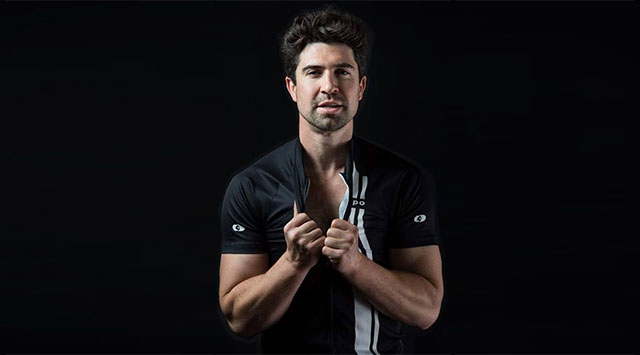
As Tristan in Lucy Prebble’s The Effect, Thomas Filer is a rigorous, persuasive presence. Simultaneously theatrical and natural, it is a captivating performance that allows us to perceive the levels of reality that could be manufactured for an audience. Most memorable of the night however, is Sam Anderson in an extract of his own one man show, Bi-Cycle. Polished yet intuitive, and thoroughly nuanced, it is the only segment that has us invest in its narrative. The piece is playful but earnest, finely calibrated to utilise Anderson’s charisma, to win us over.

It is all make believe, but theatre means little without authenticity. There is no guaranteed avenue to achieving that all-important resonance with an audience on every venture, but time will aid that process. Art is about experimentation, repetition and refinement. Artists need to hone their craft, and those who work on the stage, will have to go through the experience of a spectacular failure in full public view, every once in a while. Those who can bear it, will return for more, and those unable to endure that lack of security, will move on to pursuits that offer greater certainty, in fields less artistic.
www.facebook.com/woolfensemble

Review: Godface (Matriark Theatre)

matriarkVenue: 107 Projects (Redfern NSW), Jun 28 – Jul 10, 2016
Playwright: Robert den Engelsman, Murray Lambert
Director: Scott Parker
Cast: Murray Lambert, Emily McGowan, David Molloy, Jesse Northam, Sam Flack
Image by Alinta Haydock-Burton

Theatre review
In Godface we find a familiar reflection of our scepticism and distrust of government and the adversarial political system. There is an accuracy to the way Robert den Engelsman and Murray Lambert’s writing represents our feelings about politicians and their operations, but its insights and perspectives on the subject are hardly unusual. It shares our disillusionment with all things political, featuring characters that need little introduction, for a simple tale of corruption and exploitation.

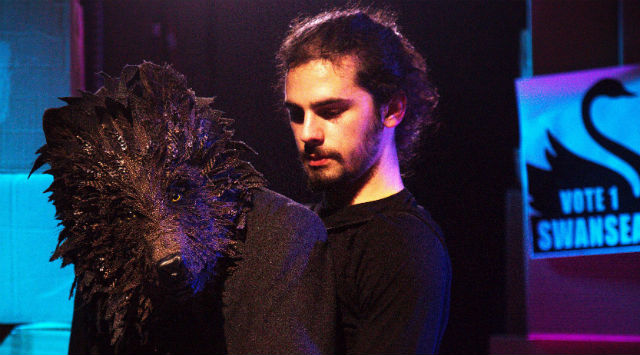
Scott Parker’s enthusiastic direction brings to the stage a liveliness that many will enjoy, using puppetry and techniques of commedia dell’arte to spark our imagination as it forms a commentary on the state of the world. Delightfully performed by a unified cast of actors, the production is memorable for its sense of variety, established by a keen interest in a non-naturalistic mode of expression. Sam Flack leaves a remarkable impression in a range of characters including the head of the New God Party, a wolf gangster and a pair of opinionated giraffes. The actor is vibrant and humorous, with excellent charisma that gives each of his transfigurations considerable appeal. Designer Aleisa Jelbart’s work on puppets, props and set is especially noteworthy, with an exceptional eye for detail and refinement that provides touches of stylistic elevation to the production.

At the 2013 elections, 739,872 informal votes were recorded. There is little hope to be found in Godface, for good reason, and we see clear as day, the alienation felt by many of our population. Modern democracy is deeply flawed, but remains the only system we deem acceptable. It is a conundrum that we learn to live with, and on occasions such as this weekend’s federal elections, we have no alternative but to indulge in a moment of delusion that the world might just be ready to make a change for the better.

www.matriarktheatre.com

Review: The Forest Unyielding (Self Help Arts)

selfhelpartVenue: 107 Projects (Redfern NSW), May 24 – 28, 2016
Director: Margot Politis
Cast: Taryn Brine, Grace Partridge, Margot Politis, Lauren Scott-Young, Claire Stjepanovic, Lucy Watson
Image by Sarah Emery

Theatre review
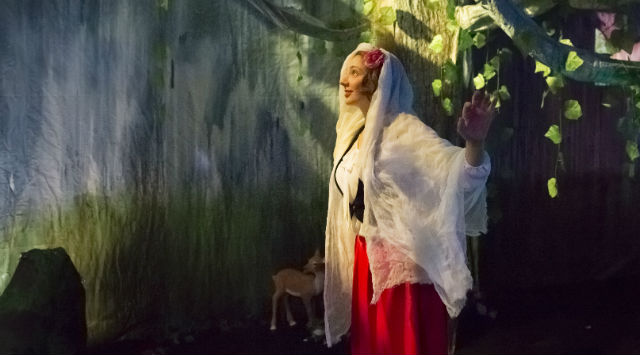
The Forest Unyielding is a dynamic new study of mental health, set in a dark forest space representing the inside of a brain.” It might be considered a performance art piece, comprising six actors each demonstrating her own isolated corner of dysfunction. Some are in perpetual motion, and others are caught in modes of stasis. No words are spoken, but there is a potency of intent and presence that is inescapable.

Dylan Tonkin’s sensational set design keeps our eyes fascinated with a enigmatic blend of colours (with Emma Lockhart-Wilson’s lights) and textured surfaces providing an affecting approximation of a mystical fairyland, in which we roam and explore. Sound is thoughtfully orchestrated to provide tension to the ethereal environment, with a mixture of drone and spiritual elements by Thomas Smith controlling our visceral responses to the work.

Without the use of a narrative, The Forest Unyielding requires that we interact with its abstract displays instinctively. Each of the women are trapped in a repetitious cycle of activity and emotion. We observe them from a state of initial curiosity to varying degrees of understanding or perplexity, with director Margot Politis’ use of time requiring of us reflection and perseverance before we are able to encounter the depth of what is being represented. The space moves, but is non-changing for its 50 minutes, and it is the audience that experiences a transformation within.

The show is not always an easy journey, and its ending could be executed with greater flair, but the experience it delivers is unexpectedly satisfying. It relies on our selves to make the most of what envelopes us, and it is that investment of personal energy and thought that leads to an appreciation of the work. Passivity will not get one very far in this forest. We are used to being told what to think at the theatre, but on this occasion, our own devices are put to the test.

www.facebook.com/SelfHelpArts

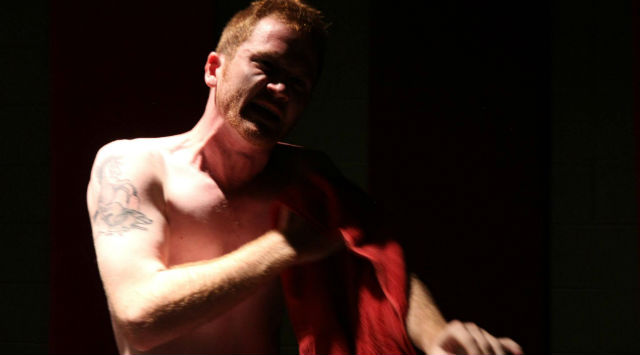
Review: Blink (Mercury Theatre)

mercuryVenue: 107 Projects (Redfern NSW), Apr 20 – 24, 2016
Playwright: Phil Porter
Director: Oleg Pupovac
Cast: Jane Angharad, James Smithers
Image by Jade Jackson

Theatre review
It is a love story about two unusual people. In truth, each person walking the earth is a unique creature, yet we often think of romance as a singular invariable experience. Sophie and Jonah’s relationship in Phil Porter’s Blink feels like a strange union, but only because we have come to expect little from depictions of intimacy. When taking time to observe the way people are and how we connect, we come to realise the infinite permutations of the human bond. The play feels theatrical and dramatised, but we perceive an unmistakeable honesty in its unconventional narrative. The characters are damaged, as we all are, so of course they are going to conduct their lives in slightly obscure ways. This is no Barbie and Ken fairytale, but a realistic representation of our freedom to love, and an insightful expression of how we should apply our own rules to our own intimacies.

The work is fast-paced, almost frantic in its energy, which although entertaining, can detract from more meaningful lines that require time to reverberate. Director Oleg Pupovac creates an endearing connection between the two on stage, affectionate yet distant at the same time. There is inventive use of physicality that engages us visually but more detailed work on light and sound design would enhance the presentation further. Performers are charming and enthusiastic, with strong presences that hold attention. Jane Angharad’s emotional restraint gives a sophistication to Sophie, and the gentleness with which she approaches her work translates into an effortless believability. James Smithers’ is the more vibrant of the pair, endearing with a very quirky edge to his constitution. There is an adventurous spirit to the way he explores the text that keeps us drawn into Jonah’s way of looking at the world.

There is little that can be cherished of a lonely life. Romance may not be available to all, but the need for human contact is undeniable. Sophie and Jonah find ways to make sense of their union, and although strange from the outside, their continuous redefinition of the form that their relationship takes, demonstrates the way organic beings must strike a balance as things change. Love means a myriad different things, probably because of the infinitely different needs of each individual. We may all breathe the same air, but what fills our heart is as varied as wavelengths in a spectrum of visible light.

www.facebook.com/…

Review: The Big Bruise (Montague Basement)

montagueVenue: 107 Projects (Redfern NSW), Apr 5 – 16, 2016
Playwright: Saro Lusty-Cavallari
Director: Saro Lusty-Cavallari
Cast: Samuel Brewer
Image by Omnes Photography

Theatre review
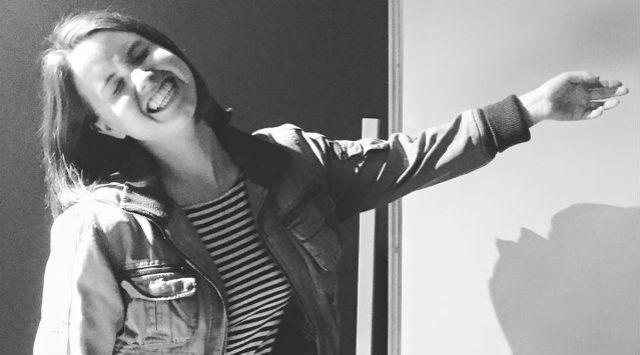
A young man is contemplating suicide. At work, at play and at home, it is all that he thinks about. Saro Lusty-Cavallari’s meditation on the subject is neither emotional nor intellectual, but what he does present in The Big Bruise is an honest representation that many are able to recognise. It is a work about the lightness and indeed meaninglessness, that life can appear to possess. The character in the play is lost and aimless, with only the temptation of death offering him a true force of gravity. In comparison, everything else is inconsequential and impotent, so he hangs on to his obsession and the certainty it provides.

Performing that strange amalgamation of angst and frivolity is Samuel Brewer, an engaging actor whose confident presence is called upon to give solid grounding to the piece. Brewer is an energetic performer, whether playing brash or subdued, with an audacious power to his delivery that keeps us transfixed. The one-man show is beautifully placed on a raw stage, thoughtfully designed by Lusty-Cavallari to convey the calm but troubled state of being in which his creation resides. Improvements could be made for a more absorbing experience, but its visceral and surprisingly sensual qualities leave a strong impression.

The protagonist in The Big Bruise wants so much of life, but spends all his efforts at ending it. It is true that identifying one’s passions can be the biggest challenge a person can face, for what happens thereafter is simply to follow that calling. For some, that revelation never arrives, but for most, it is only a matter of time. We can wait for that divine moment in passivity or we can be constructive and find ways to speed up that process. If all else fails, one should simply stop the narcissistic act of perpetual introspection and look beyond the individual, for much of the world is in need of love and care, if only we could shift our fruitless vanity onto something altruistic and altogether more selfless.

www.montaguebasement.com

Review: Quarter Life Crisis (The General Public Theatre Company)

generalpublicVenue: 107 Projects (Redfern NSW), Sep 17 – 20, 2015
Playwright: Courtney Ammenhauser
Director: Lakia Pattinson
Cast: Courtney Ammenhauser

Theatre review
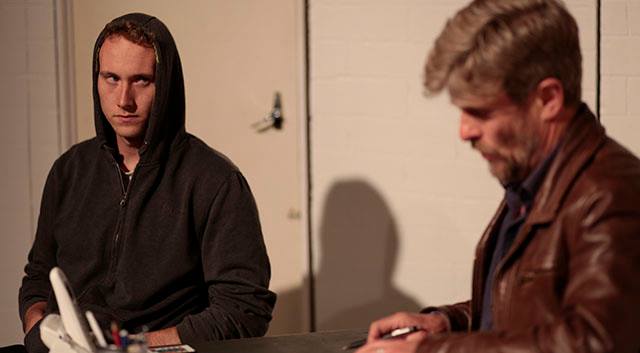
Steph is turning 25, and is having a bit of a meltdown. She has done the responsible and conventional thing of getting a regular job that pays a regular wage, but is now restless about the futility of a life that does not offer more than stability and predictability. Like many of us, the real problem is that Steph knows only what she does not want, and what she truly desires remains elusive. This leads to a series of frivolous, funny, and charming exploits that depict a hollow existence, guided by a pursuit of pleasure that ultimately leads to unabashed emptiness. The one-woman play runs for under an hour, comprising genuinely amusing scenes that deliver many laughs. It begins with a moment of deep reflection on the meaning of life, but loses its poignancy as the show progresses, along with Steph’s dignity, which gradually erodes away with each sip of alcohol.

Courtney Ammenhauser’s script is honest and brassy, as is her performance. Marvellously exuberant and unrestrained, Ammenhauser presents a show that captivates and entertains, putting on display the aimlessness of youth in Australia that comes from a place of privilege and complacency. Where there is no urgent compulsion and need for anything, it seems humans can only indulge in the obvious and convenient. Steph does not challenge herself, but Ammenhauser’s efforts on stage are certainly committed. Along with director Lakia Pattinson, the duo’s creation is energetic, fun and surprisingly nuanced. There is a sensitivity and flair in their approach to comedy that sharpens their simple concept for an enjoyable show. We wish for Steph to find some degree of enlightenment, or to realise the errs of her ways, but like in real life, it is much easier to get swept up by mundane and destructive trivialities.

www.facebook.com/events/…

Review: Retrograde (The Sandking Collective)

12026466_10153178590912683_932214705_nVenue: 107 Projects (Redfern NSW), Sep 16 – 27, 2015
Playwright: Peter-William Jamieson
Director: Michael Yore
Cast:  Peter-William Jamieson, Mark Lee
Image by Michael Yore

Theatre review
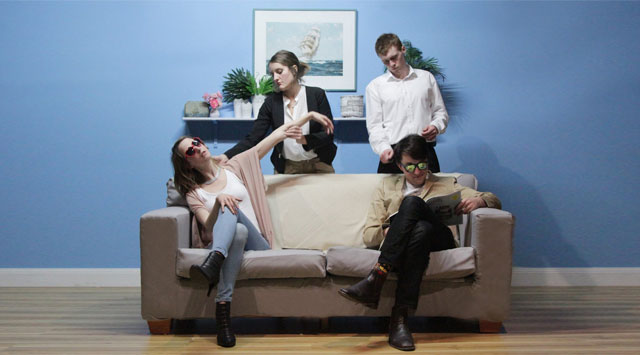
One of the things about gender is that we make the quality of vulnerability inaccessible to the sterner sex. Damage to mind, body and soul follow, all of which are hard to unravel. Peter-William Jamieson’s Retrograde looks at two men, through a series of psychotherapy sessions, to explore the hardened emotional landscapes that reside in half of our population. Both characters are realistically drawn out. They are familiar archetypes, a young criminal and a semi-retired counsellor, who we investigate at depth, as the play ventures to bring illumination to the mystery behind the often impenetrable surfaces maintained by the male of our species. The writing is straightforward, with clear intentions, but its style is simple and sometimes too obvious. The narratives are dramatic, but the plot’s predictability prevents intrigue from taking hold. There is a sensitivity to the way each scene unfolds, as more of the characters are being revealed, but none of it is surprising. We feel one step ahead of the game, and resist the tension that the production tries to build.

Michael Yore’s direction is faithful to the directness in Jamieson’s writing. There are few embellishments, except for the frequent use of video footage that is a key and clever component to the play. Unfortunately however, the poor quality of projected images prevents us from engaging sufficiently with the performance therein. Mark Lee does splendid work as Earl, the older and wiser of the two, but who struggles with addiction and an unresolved past. The actor is powerfully present and accurately detailed in his portrayal. His work is consistent and sharply focused, and is the unequivocal highlight of the production. Playwright Jamieson is cast as the wayward Sonny, a young man trying to escape the remains of a bruised childhood. His performance is committed and studied, but too restrained and not always believable. The voice and physicality that he creates does not match our imagination and experience of that personality type, and some of his depictions of emotion require greater authenticity, in order that we may identify more closely with Sonny’s plight.

The themes in Retrograde are valuable points of discussion. Problems associated with our obsession with masculinity are pervasive, and the importance of articulating and dealing with them cannot be understated. We need to redefine socially, what it is to be a man, so that we can identify truer virtues and shift prominence to them. Silence in the play is a cancer, a force that destroys individuals and relationships, and it is the opposite of that silence that can heal us all.

www.sandkingcollective.com

Review: Great Island (Beside Ourselves Productions)

besideourselves1Venue: 107 Projects (Redfern NSW), Jul 29 – Aug 9, 2015
Playwright: Pierce Wilcox (after Pierre de Marivaux’s L’Île des esclaves)
Director: Pierce Wilcox
Cast:  Anna Chase, Rob Johnson, Harrison Milas, Eleni Schumacher, Nicholas Starte
Image by Isabella Andronos

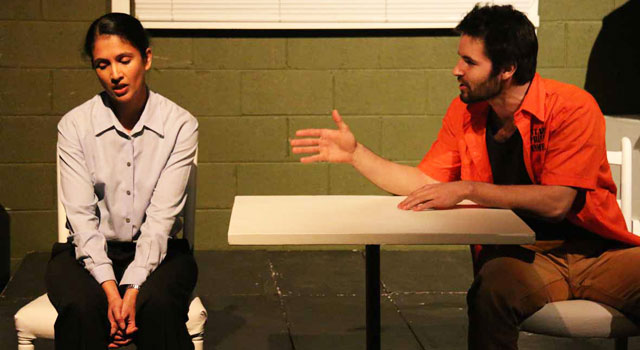
Theatre review
Absurdity is often used on stage to communicate ideas of a political nature. The exaggeration of circumstances helps us understand forces at work in society that might be too guileful for our anesthetized senses. Pierce Wilcox’s Great Island discusses capitalism through a series of very broad comedy sequences that sees very energetic and inventive performances, and although mirthful in general, its obscure humour delivers few laughs, and only ambiguous meaning can be derived from its wild constructs. Nevertheless, the work remains a fascinating one with a mischievous edge that keeps viewers engaged.

Although not uniformly strong, the cast of five is a spirited one that has a surprisingly cohesive approach to the material at hand. Nicholas Starte plays the King with a disciplined command of physicality and voice, and an easy confidence that endears him to the crowd. The actor has a natural eccentricity that suits the style of the production, and a cheeky effervescence that many will find impressive. Also accomplished is Rob Johnson who brings a necessary polish to the chaotic stage, and a conviction that gives a dimension of gravity to the show’s themes. It is not an easy task elevating a piece that has a tendency to come across frivolous, but the team’s commitment is evident.

Discussions about alternatives to capitalism are always interesting. None of us can escape the economy’s influence, and we should all participate in finding solutions to flaws that inevitably arise in any socio-political environment. There has never been a perfect system that satisfies every community it manages, and all we can do is to find refinement and improvement at every available opportunity. There is good promise at Great Island, but it reveals that we are still at primitive stages in the evolutionary process.

www.facebook.com/besideourselvescollective

Review: Rhymes With Silence (Improvising Change)

rhymeswithviolenceVenue: 107 Projects (Redfern NSW), May 16 – 24, 2015
Playwrights: Alex Broun, Jane Cafarella, Joy Roberts, Kate Rotherham, Loueen Winters, Natalie Banach, Pete Malicki, Suzy Wilds, Vee Malnar
Directors: Chrissy deSilva, Garreth Cruikshank, Glen Pead, Glenn Groves, Kaye Lopez, Lisa Eismen, Margaret Barnaby, Natasha McDonald, Uma Kali Shakti, Vee Malnar, Wayne Mitchell
Cast: Alex Gercsov, Ali Aitken, Angela Gibson, Bendeguz Daniel Devenyi-Botos, Debbie Tilley, Dede Attipoe, Elisa Cristallo, Eliza St John, Garreth Cruickshank, James Belfrage, Joanna Kedziora, Karina Bracken, Katherine Richardson, Katrina Papadopoulos, Kerrie Roberts, Lisa Hanssens, Liz Harper, Liz Hovey, Lynda Leavers, Matt Cowey, Melissa Day, Rebecca Van-Hek, Ros Richards, Sarah North, Tommy Deckard, Veena Sudarshan
Image by John Tsioulos

Theatre review
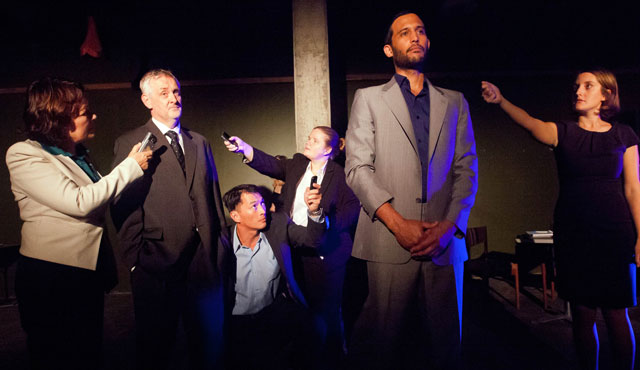
The programme comprises 13 short plays, unified by the theme of domestic violence against women and girls. The event aims to bring attention to a problem that struggles to find articulation, due to the unthinkable horror of being attacked within the most intimate of relationships. The perpetrators we hear about in Rhymes With Silence are husbands, lovers, fathers. Men who are meant to be our protectors have failed to provide the shield from harm, and their betrayal of trust is of the most severe and devastating kind. Without a doubt, the stories being shared here are dark and often harrowing. There is certainly no shortage of gravitas in spite of the casual presentation style, which simply moves from one basic staging to another with minimal fuss.

Some of the pieces can feel too obvious in their approach, and there is a repetitiveness to the proceedings that makes the two-and-a-half hours slightly challenging, but the earnest and direct way the artists deal with their difficult subject matter is a refreshing experience. The level of honesty we encounter is intimidating, but we are compelled to learn more. The scenarios are shocking but never unbelievable. Joy Roberts’ Regret is one of the few opportunities to hear from a male character, and the revelations of a wolf in sheep’s clothing is enlightening and exasperating. Also intriguing is Good Men Do Bad Things by Suzy Wilds, which features two mothers-in-law in dialogue after the son is sent to prison for killing the other’s daughter. The extraordinary context is fertile ground for explosive interchanges, and the script explores the possibilities beautifully. All the complex emotions are authentic and we relate effortlessly to every plea and confrontation. More than other stories in the collection, this work holds the greatest promise for a very interesting full length iteration.

The inordinately large number of cast members is evidence of the growing concern we have for the issue at hand. Some of the performances might be of an amateur level, but all are committed and serious in attitude. More polished actors include Karina Bracken, who shines in Whirlpools by Alex Broun. Bracken’s style is still but powerful, and her quiet confidence allows us to connect with the works she puts into her character’s thought processes. The fluidity in her interpretation provides a humanity that feels familiar and genuine. Also impressive is Melissa Day in Tara Weldon and Vee Malnar’s I Just Want My Little Family, whose energetic depiction of the single, low-income mother of an infant is as heartbreaking as it is threatening. The actor has a precision that is entertaining to watch, and a unique earthiness that gives her play a strong and individual flavour.

Theatre gives voice to the silent, and the formation of narratives allows us not only to share our experiences, but also works as a vehicle for individual catharsis. The healing process for the most gravely damaged is one that lasts a lifetime, and the artistic journey is also one with no end. The most enduring work comes from a place of truth, and unpacking emotional injuries requires an interrogation into the human condition that has no tolerance for pretence or triviality. There is nothing good that can come out of domestic violence, but many of the worst things that occur can be transposed into a new creativity, so that life can be be reconsolidated along with the art forms being built.

www.improvisingchange.com/

Review: Dead Time (Lace Balloon)

laceballoon1Venue: 107 Projects (Redfern NSW), May 20 – 29, 2015
Playwright: Fleur Beaupert
Director: Fleur Beaupert
Cast: Paul Armstrong, Lara Lightfoot, Abi Rayment, Robert Rhode, Melissa Kathryn Rose, Eleni Schumacher, Barton Williams
Image by Phyllis Wong

Theatre review
Stories about the underdog hold a tenacious appeal. Fleur Beaupert’s Dead Time is based on the events surrounding Dr Mohamed Haneef’s arrest and subsequent release in 2007, at a time when the Australian government was placing threats of terrorism front and centre in the national consciousness. The post-9/11 era has allowed public life (including politics and media) to encroach upon individual liberties in the name of vigilance, and our collective paranoia is used to justify racist persecutions in place of sound legal processes. The script is partly verbatim, and it makes a conscious effort to depict events with accuracy. Consequently, moments of heightened drama are few, even though tension is effectively manufactured with relative consistency. Haneef’s ordeal is rightly portrayed as institutionalised exploitation, and the play’s purpose is to give voice to the oppressed. In the case of contemporary Australia, people of the Muslim faith are especially relevant to this discussion. Beaupert’s work as writer and director is not always elegant, but what she has created, is a compelling and stirring statement against our gradually increasing acceptance of injustice in the name of national security. It is a touchy subject, and the show elicits our emotional involvement effortlessly, and for many, its protestations are representative of how we feel about the world today, and the passion on display is reflective of our attitudes about the themes at hand.

Performances are uneven, but leading man Robert Rhode is entirely captivating. The actor’s presence and instincts are a real pleasure to witness, and his easy confidence allows us to empathise with his character at every point of his journey. His interpretation of innocence is authentic, and he builds just enough complexity into Haneef’s victimisation so that we identify intimately with his predicament and his fears. The production is a showcase for Rhode’s talent, which seems scarcely trained, but in its rawness, we observe a natural flair that emanates, and recognise in it, a fragility that makes the cruel mistreatment suffered by Haneef all the more upsetting.

Dead Time is not a polished work, but the clarity and importance of its message makes it a standout in a landscape of bourgeois concerns that characterises our lucky country. The land of the fair go has become delusional in its self identity, refusing to come to grips with its evolution into a Western power that has little capacity for compassion. We insist on seeing ourselves as earthy, sincere and wholesome. We think us better than our corrupt siblings of United States and Europe, but in fact our dealings in regional issues are shameful. Our eagerness to vilify, intimidate and abuse those in need is an extension of the way we have maltreated Aboriginal communities since 1788. Australia’s European history refuses to learn from its own mistakes, and we are now in the middle of a new cycle of violence that is heading towards a repeat performance of its very worst.

laceballoon.wordpress.com