Review: Moby Dick (Sport For Jove Theatre)

Venue: Seymour Centre (Chippendale NSW), Aug 9 – 25, 2018
Playwright: Orson Welles (based on the novel by Herman Melville)
Director: Adam Cook
Cast: Danny Adcock, Rachel Alexander, Mark Barry, Badaidilaga Maftuh-Flynn, Jonathan Mill, Wendy Mocke, Thomas Royce-Hampton, Francesca Savige, Vaishnavi Suryaprakash, Bryden White-Tuohey
Images by Marnya Rothe

Theatre review
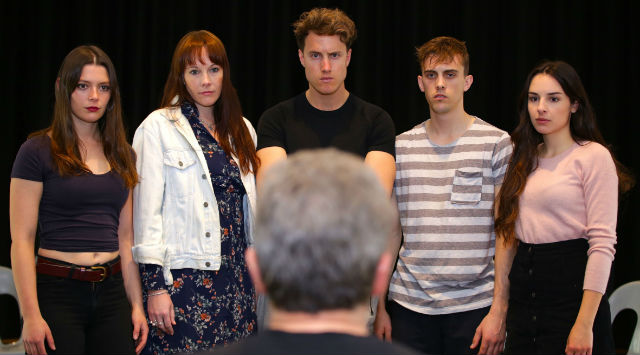
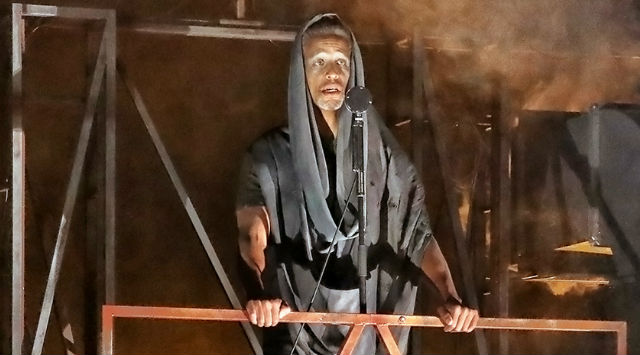
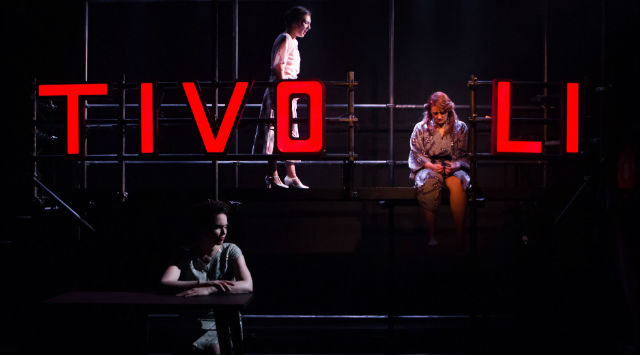
Ahab’s war on nature in Moby Dick seems altogether too familiar yet tragic. The eternal discord between humankind and our environment, is the site on which we can examine the disquiet of who we are as a species, especially in relation to our curious inability to be at one, and in peace, with nature. We are determined to extricate ourselves, always asserting a superiority that can never be. Orson Welles’ adaptation of Herman Melville’s classic, is abstract, often impenetrably so, but its concerns about our adversarial relationship with nature lay appropriately at its centre.

It is essentially a fight with the self that Ahab has to go through, and our vantage point allows his story to function as a sort of introspective interrogation, in order that we may recognise that futile struggle that we too, resolutely participate in. Director Adam Cook’s show is a vibrant cornucopia of activity that brings to energetic life, the whaling obsession that Ahab and his crew of sailors embark on. Their dialogue may confuse, but the production is a rich tapestry from which our creative minds can detect symbols, decipher language and find meanings.

A very accomplished merger of design talents help sustain a sense of magical fascination. Set and costumes by Mark Thompson are handsome, evocative and grand. Lights are industriously assembled by Gavan Swift, who manufactures a surprising beauty for the story. Sound designer Ryan Patrick Devlin keeps things lively with exciting music, much of which is thrillingly performed on stage by percussionist and actor Tom Royce-Hampton.

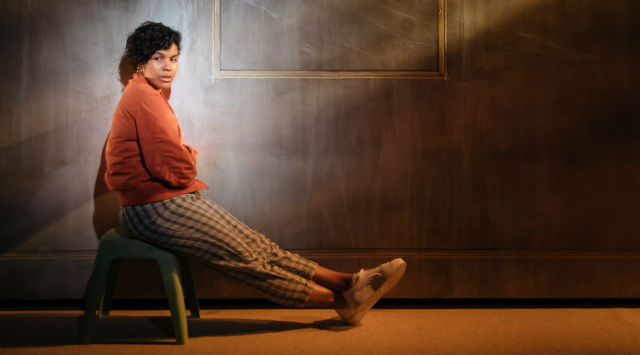
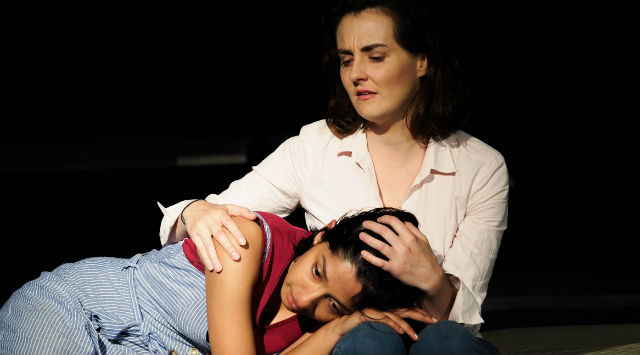
Danny Adcock leads the cast, suitably rhapsodic as Ahab, with an impressive presence that proves to be highly persuasive, in this mad man’s tale. Rachel Alexander is compelling as Pip, particularly memorable in a powerful scene with Ahab discussing things political and esoteric, then proclaiming with theatrical histrionics, “death to whiteness”. The role of Queequeg is beautifully portrayed by Wendy Mocke, who introduces valuable glimpses of emotional authenticity to a slightly too distant universe.

We send rockets out into the ether looking for life, trying to find points of connection with all that we deem to be alien. Back on earth, we go to great pains to alienate ourselves, in a never-ending project of division and of segregation. We have convinced ourselves that we are inexorably distinct from flora and fauna, and further, have formed an interminable habit of creating power structures and hierarchies within all our human societies. The albino whale swims in peace; its violence is only ever a result of provocation.

www.sportforjove.com.au

Review: Nell Gwynn (New Theatre)


Venue: New Theatre (Newtown NSW), Aug 8 – Sep 8, 2018
Playwright: Jessica Swale
Director: Deborah Jones
Cast: Lloyd Allison-Young, Kate Bookallil, Debra Bryan, Steve Corner, Aimee Crighton, Susan Jordan, Simon Lee, Naomi Livingstone, Steven Ljubovic, Peter Mountford, Genevieve Muratore, Rupert Reid, Eleanor Ryan, Shan-Ree Tan, Adam Van den bok, Bishanyia Vincent
Images by Chris Lundie

Theatre review
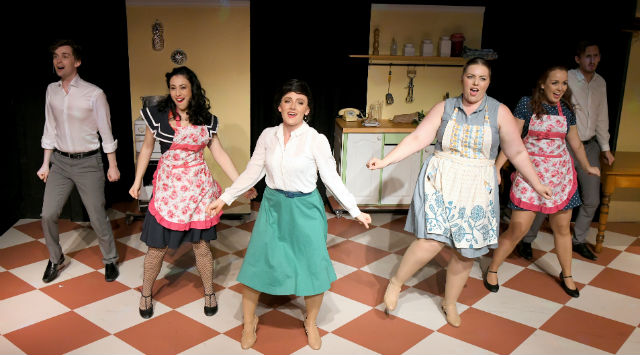
Jessica Swale’s Nell Gwynn tells the rags to riches story of its eponymous 17th century English actress, charting her rise from common prostitute to becoming one of the first women to ever take to the professional stage, and eventually finding her way into the courts as King Charles II’s most favoured mistress. It was a short but eventful life, that Swale takes great care to frame as a modern feminist parable, featuring a young woman who uses beauty and brains, to battle against all odds, and make it all the way to the glass ceiling. Fascinating biographical information is transformed into effective drama, placed alongside contemporary observations and commentary about womanhood.

Actor Bishanyia Vincent is marvellous in the title role, spirited and intelligent, for an interpretation that is as inspiring as it is entertaining. There is a lightness to the character that endears, but Vincent takes every opportunity to imbue complexity and depth, offering insights that are emotional, or sometimes political, making Nell Gwynn a tale that is unmistakably relevant to our times. Equally memorable is Lloyd Allison-Young as the king, wonderfully flamboyant in his comical expressions that represent perfectly, our perspectives of the aristocratic classes. Both are deeply charming personalities, who insist on keeping us delighted at every turn. It is a strong cast overall, with each performer proving themselves accomplished and inventive in their individual parts.

Musical aspects of the show are whimsical and amusing; Laura Heuston as musical director and Clare Heuston as music consultant, bring a gratifying effervescence to their interludes. Virginia Ferris delivers lively but simple work as choreographer, in clever accompaniment to direction by Deborah Jones that focuses earnestly, on the craft of acting. Visual elements are raw, slightly too basic, or perhaps too straightforward, in configuration and imagination.

As a woman of the lowest class, Gwynn was able to rise through the ranks, with a serendipitous combination of talent and luck, to reach heights that had allowed her a taste of greener pastures. She was never liberated of course, from that dependence on men and their libido, and ultimately succumbed to syphilis, but there is no denying that she was able to ensure wealth and status for all her subsequent generations. Womanly wiles are still a currency today, but for most of us, how we transact is now chiefly a matter of our own discretion.

www.newtheatre.org.au

Review: King Of Pigs (Old Fitz Theatre)

Venue: Old Fitzroy Theatre (Woolloomooloo NSW), Aug 1 – Sep 1, 2018
Playwright: Steve Rodgers
Director: Blazey Best
Cast: Mick Bani, Wylie Best, Christian Byers, Ashley Hawkes, Ella Scott-Lynch, Kire Tosevski
Images by John Marmaras

Theatre review
Actor Ella Scott-Lynch plays several characters, in this work about men’s violence against women. She embodies different personalities, but what they encounter in Steve Rodgers’ King Of Pigs, are essentially the same. The current climate of fervent interrogation into matters relating to gendered abuse, requires the male of our species to confront hard truths about their behaviour. It is a time of reflection and re-evaluation, and the play speaks directly to their conscience, asking them to examine the imbalances inherent in heterosexual dynamics.

It is an earnest work, perhaps too simplistic and obvious in style, but the urgency to make a point is certainly evident. Stories in King Of Pigs are very familiar, and although predictable, they still are able to have an impact. Direction by Blazey Best is suitably grave in tone, with a meticulousness to its naturalism that holds our interest. Isabel Hudson’s set and Verity Hampson’s lights collude to offer a sense of theatricality for the intimate situations under scrutiny, both effective in conveying a quality of ominous danger to the plot.

Scott-Lynch is convincing in all of her roles, each one thought-provoking, with little reliance on sentimentality. Kire Tosevski and Wylie Best provide strong partnership in family scenes that offer momentary consolation, through their warm rendering of a loving home, placed precariously alongside damaging relationships. Mick Bani, Christian Byers and Ashley Hawkes play the three perpetrators, each with memorable instances of character vagaries that point to pertinent questions about masculinity.

It is never easy to have those who hold power understand the depravity that results from their dominance. For sexism to be quelled, men have to participate in the feminist project, which although ultimately benefits all, many will perceive to be a threatening relinquishment of power. A world without the problems of gender requires a great number of processes, all of which can only be initiated by epiphanies derived from opportunities like King Of Pigs.

www.redlineproductions.com.au

Review: Torch Song Trilogy (Darlinghurst Theatre Company)

Venue: Eternity Playhouse (Darlinghurst NSW), Aug 1 – 26, 2018
Playwright: Harvey Fierstein
Director: Stephen Colyer
Cast: Hilary Cole, Simon Corfield, Imraan Daniels, Tim Draxl, Stephen Madsen, Kate Raison, Phil Scott
Images by Clare Hawley

Theatre review
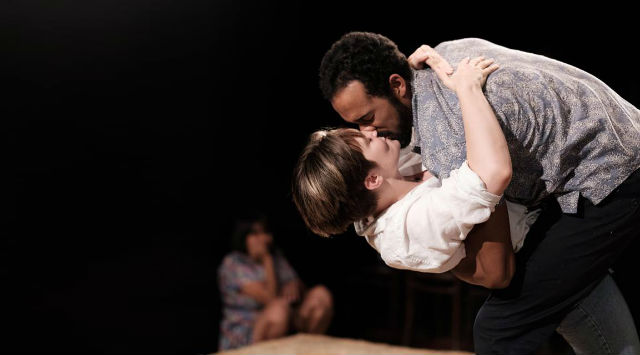
It is the perfect time to revisit Harvey Fierstein’s Torch Song Trilogy. The play premiered in New York 1982, right before the AIDS crisis crippled the LGBT community. Fierstein’s vision was full of hope, daring to see queer people break into the mainstream, with portrayals of gay men in serious monogamous relationships, thriving in family units that incorporate legally adopted children.

Almost immediately after the completion of this work, the LGBT movement experienced a setback of at least thirty years, finding itself in a new fight, in many ways even harder than before, with the world laying the blame of AIDS entirely on us. What had been a burgeoning era of equality post-Stonewall was all but decimated. Today’s revival is an appropriate resumption of progress; much of the West has now succumbed to the demand for marriage equality, and that discussion about marginalised identities gaining parity not only of rights, but also respect, can now once again be sincerely salient.

Actor Simon Corfield plays Arnold, a gay Jewish New Yorker, whose resilience forms the centrepiece of this saga. Corfield’s performance is often very moving; his depictions of suffering are absolutely enthralling, ensuring that the show’s politics remain foregrounded. Comedy aspects, however, are less consistently rendered. Kate Raison offers a redemptive energy boost, with her potent entrance in the third act as Arnold’s mother, restoring lustre to the play’s humour. Incidental songs are magnificently presented by Hilary Cole and Tim Draxl, accompanied by Phil Scott’s exquisite piano playing. Both singers use music to their magical advantage and leave remarkable impressions, enhanced by strong acting in their roles as Laurel and Ed.

The production can at times be insufficiently ebullient, but an authentic soulful quality permeates, and sustains, all the action. It is a visually sumptuous staging, boldly lit by Benjamin Brockman, whose extravagant approach for Torch Song Trilogy imbues it with a captivating sense of theatricality. There is a beautiful melancholy to director Stephen Colyer’s style that adds a richness to the play’s concerns; Arnold never dwells on his pain, but Colyer insists that we see all of it.

Back in the day, the idea that gay men could start their own normative family lives, was a completely subversive notion. Today, it can still be a surprising thought, although some of us are more taken aback, by the fact that any queer person would choose an existence that seems so ordinary. For LGBT people in places with adequate legal protection, our choices are broader than ever before. Some want to emulate their parents, others wish to break new ground, and most would probably find their peace somewhere in between the extremes. The whole point of this long battle, is so that people can become whomever they desire. Love thy neighbour as you love thyself, no matter how different they appear to be.

www.darlinghursttheatre.com

Review: Hell’s Canyon (The Old 505 Theatre)

Venue: Old 505 Theatre (Newtown NSW), Aug 1 – 11, 2018
Playwright: Emily Sheehan
Director: Katie Cawthorne
Cast: Isabelle Ford, Conor Leach
Images by James John

Theatre review
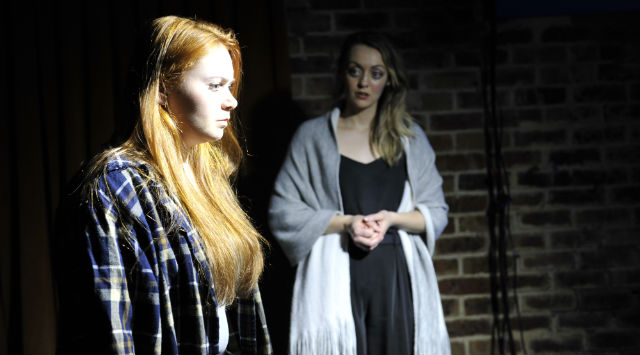
Caitlin and Oscar are close friends, but things have been challenging lately and their relationship is suffering a moment of discord. When they meet to patch things up, the friction in between instigates a flurry of unexpected activity, revealing the troubles that are consuming each of the young characters. Hell’s Canyon by Emily Sheehan is an intriguing representation of our youth, particularly memorable for the authenticity of its dialogue. Speech patterns, as well as the psychology that it showcases, bear an admirable sense of accuracy, but the story can feel deficient in parts, as we try to find explanations for their behaviour. There is a whimsy to its approach that appeals, and an interest in the supernatural that gives the play an added dimension of theatrical flamboyance.

Actors Isabelle Ford and Conor Leach are engaging personalities, both absolutely persuasive and likeable, in this portrait of teenage angst. Ford demonstrates a strength that gives substance to Caitlin’s rebellious edge. Leach’s blend of vulnerability and ebullience makes for a charming Oscar. There is a sadness to the story that seems elusive in their performance, but the splendid chemistry that they harness, keeps us attentive. There is an enjoyable intensity and vigour to director Katie Cawthorne’s work, even when it falls slightly short of the emotional depths required of Hell’s Canyon‘s depictions of trauma.

We all know how it is to feel misunderstood, but the real danger is when we begin to believe in other people’s fabrications about ourselves. When Caitlin and Oscar find themselves ostracised, that rejection is all-consuming, and they lose sight of themselves, hence unable to find a way to arrive at a sense of peace. The two are intimate but there is no harmony, only confusion and self-doubt. Reaching self-acceptance can be a huge undertaking, one that requires at least as much introspection as it does an understanding of one’s environment. Caitlin and Oscar have to wade through the noise, to get to something real. This can happen in an instant, or it can be a lifetime’s drudgery.

www.old505theatre.com

Review: The Widow Unplugged Or An Actor Deploys (Ensemble Theatre)

Venue: Ensemble Theatre (Kirribilli NSW), Jul 26 – Sep 1, 2018
Playwright: Reg Livermore
Director: Mark Kilmurry
Cast: Reg Livermore
Images by Prudence Upton

Theatre review
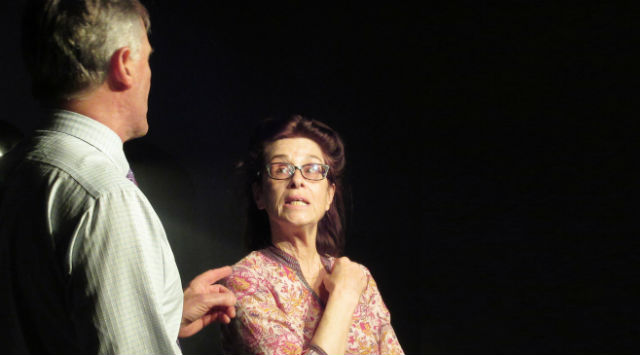
Arthur Kwick fancies himself a performer but possesses no discernible talent. Nevertheless he does persist with his passion and has devoted his entire life to finding opportunities to jump on a stage, and make a fool of himself. Reg Livermore’s The Widow Unplugged Or An Actor Deploys is a work about an actor, by an actor. It is also a meditation about approaching the end of life, and whether one should go quietly, or to resist the notion of complete retirement. It is not a biographical work, but the parallels are absolutely clear.

The show bears a tone of abstraction, requiring its audience to work hard to decipher whatever it is that is being presented. There is a chance that the incoherence we encounter has more to do with Livermore’s current abilities, than with any artistic intention to confuse its audience in a purposeful or meaningful way, but that of course shall remain a mystery. The comedy is extremely corny, incessantly so, and would probably appeal only to the star’s devotees. Jokes about Chinese people eating their pets, and a Chinese laundry’s success being due to not using any MSG, are only the tip of the iceberg, in two large sections where he decides, with very poor judgement, to lampoon a Chinese woman character in Mosman. There may not be a substantial number of Asian patrons at Livermore’s show, but it still astounds that such insensitivity could find a place in Australian theatre today.

One of the allures of acquiring power, is that those who wield it, suffer little consequence for their actions. We make heroes of people, forgetting that they too are capable of failure, and we find ourselves at a loss when they cause offence using the very platforms we had gifted. Big names and great reputations are intrinsic to our social nature. We want to see people do well, and we want to raise them up as glorious examples of humanity at its best, but every person makes mistakes, and when luminaries disappoint, communities must acknowledge the new epiphanies.

www.ensemble.com.au

Review: The Almighty Sometimes (Griffin Theatre Company)

Venue: SBW Stables Theatre (Kings Cross NSW), Jul 27 – Sep 8, 2018
Playwright: Kendall Feaver
Director: Lee Lewis
Cast: Penny Cook, Brenna Harding, Shiv Palekar, Hannah Waterman
Images by Brett Boardman

Theatre review
Anna started medication for mental illness at the age of 8. Ten years later, and no longer a child, she decides, on her own accord, to suddenly discontinue the drugs. The repercussions are dire, of course, and as she unravels, her relationships convulse and deteriorate, revealing the social value of those pharmaceuticals. In Kendall Feaver’s The Almighty Sometimes, we see sickness from the perspective of the one personally afflicted, as well as the wider reverberations of what is usually considered an isolated condition. Much of what the play conveys is not new information, but its characters are extraordinarily conceived, each one authentic and rich in their depiction, with very persuasive scenes of conflict that provide The Almighty Sometimes its excellent sense of drama.

It is a fiery piece of theatre, featuring high stakes and big emotions, that director Lee Lewis integrates powerfully for a tense, affecting experience. The play features a lot of fighting, but it is really the intense love underscoring the strife and angst, that we connect with. Actor Brenna Harding is marvellous as Anna, complex but precise in her interpretation of a difficult personality, allowing us to comprehensively understand and empathise with her plight. Whether delicate or savage, Harding is full of enthralment, and we luxuriate in the diligence she brings to the stage.

Similarly captivating is Hannah Waterman, who plays Renee the long-suffering mother, with an impressive nuance, delivering a realistic and moving portrait of a woman at wits end, but who remains determined to do her best. The resilient spirit being presented is embodied, very convincingly, by Waterman’s compelling presence. Penny Cook and Shiv Palekar offer excellent support, both creating intriguing roles that give the issues at hand, unexpected dimensions, for a show memorable for its intricacy. Also noteworthy is work on music and sound by Russell Goldsmith, who keeps us on tenterhooks, with subtle and steady manipulations to atmosphere that prove to be immensely potent.

We look to medical professionals to fix us, often forgetting that there is no one ideal for how we should live. When discussing mental health, our subjective opinions have to find ways that can accommodate both the patient’s well-being and its impact on the wider community. If what is best for society is incongruous, with what individual sufferers consider to be best for themselves, that negotiation will turn persistently fraught. Anna’s sickness consumes herself, along with all who come in close contact. The Almighty Sometimes demonstrates unambiguously that mental health is a social issue, and if we are unable, as a nation, to focus on both cure and prevention, it will be a failure to truly be ashamed of.

www.griffintheatre.com.au

Review: Yarramadoon The Musical (Aya Productions)

Venue: Belvoir St Theatre (Surry Hills NSW), Jul 25 – Aug 11, 2018
Book: Eliza Reilly, Hannah Reilly
Songs: Matthew Predny, Eliza Reilly, Hannah Reilly
Directors: Eliza Reilly, Hannah Reilly
Cast: Matthew Predny, Eliza Reilly, Hannah Reilly
Images by Indiana Kwong

Theatre review
Shelly might only be sixteen, but she has had enough of her country town. The bright lights of big city Sydney beckons, but first, Shelly has to deal with forces at home determined to keep her from the freedoms of the metropolis. Eliza Reilly and Hannah Reilly’s Yarramadoon is about a girl daring to dream; a diamond in the rough on her way to discovering her full potential. There is admittedly nothing extraordinary in that well-worn narrative, but the Reillys’ idiosyncratic comedy style proves irresistible, in this joyful take of the musical theatre genre.

Strictly for urban audiences, Yarramadoon is a scathing satire of life in the many backwater corners of Australia, where big mouths and narrow minds reign supreme. Songs by Matthew Predny and the Reillys are exuberant and effectively concise. It is a jaunty show, consistently witty, with many instances of inventiveness that truly delight. Lighting designer Martin Kinnane brings an excellent sense of dynamism to the plot, moving us between dimensions with great efficiency. The cast’s approach to performance is highly mischievous, and we get hopelessly swept up in their very compelling shenanigans. Eliza Reilly is particularly memorable as Shelly, confident in her extravagant sense of humour, and surprising with the depth she is able to convey, in what initially seems to be an unexceptional role.

When Shelly eventually lands in Sydney, there is no guarantee that she will find everything she had longed for, but the satisfaction that will come with her new autonomy is unequivocal. If we tell our girls that the world is their oyster, they must also be encouraged to explore the wilderness. The grass may or may not be greener on the other side; the key is to have the gumption to go and find out.

www.belvoir.com.au

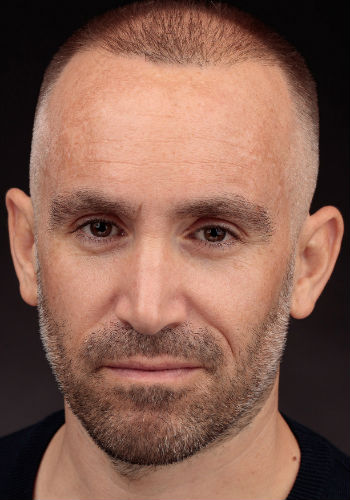
5 Questions with Shiv Palekar and Hannah Waterman

Shiv Palekar

Hannah Waterman: What made you want to become an actor?
Shiv Palekar: I was a pretty silly child, I was naughty, I’d always play the fool and get in trouble lots. I think I recognised it for the first time when my cousins would ask me to pretend to be Mr. Bean, because I realised that doing something performative or out of the ordinary could make people happy or have some kind of effect on them. So I think I always was performative in some kind of way, I wanted to be a musician throughout high school until I got cast in a school play when I was in year 10. My mum forced me to go in and audition for it and I was hesitant and almost didn’t show up, but during rehearsals for that show I realised that I loved playing slightly outside of reality and I could get paid to essentially keep being a naughty boy.

What drew you to this play?
I hadn’t worked all year, and I really wanted a job. I was sick of being a waiter and so that’s what initially drew me to it. I served Lee Lewis a few times at the cafe I worked at and so maybe that’s why I was asked to audition. That’s the honest first part of my answer. But of course I read the play and fell in love with it and what it says and all the rest of the things that an actor would usually say. But for real, Kendall has written an incredibly beautiful story of a young woman and how she navigates her life with mental illness and that made me want to be a part of this great new Australian work. I’ve also wanted to work with Lee for ages.

Is this the first time you’ve worked at Griffin?
Yes and hopefully not the last.

Do you think the industry needs to change in regard to casting people of more diverse backgrounds?
Yes.

Where do you see yourself in 10 years?
Hopefully not being a waiter. Maybe I’ll have a child?

Hannah Waterman

Shiv Palekar: What music have you been listening to lately? Have you used it as an ‘in’ for the play?
Hannah Waterman: I tend to listen to whatever is in my library whilst cooking. It’s more of a relaxation thing and a release than an ‘in’. Although I do always have a character perfume!

What’s your favourite food? Do you eat before or after a show?
Cheese, I’m essentially a rodent. I eat before as I’m a type one diabetic and this means I have time to digest and for my blood sugars to settle before hitting the boards.

What makes you laugh?
My family. Not always in a good way, mostly though.

A memorable meal your Mum cooked you?
Mum’s lasagna was a favourite as a child and is now one of my sons favourite meals so the tradition continues.

What’s it like being a working mum? Advice for actors who are thinking of being parents?
Being a working mum is tough in any profession and I think we have a long way to go yet in making theatre and television more accessible for working mothers. Luckily the Griffin team is very sensitive and accommodating and recently allowed my 7 year old to come to rehearsal. It would be wonderful if one day that became the norm. Don’t let being an actor put you off becoming a parent. The industry is moving in the right direction and ultimately kids are pretty portable and fairly adaptable, at least when they’re young!

Shiv Palekar and Hannah Waterman are appearing in The Almighty Sometimes, by Kendall Feaver.
Dates: 27 July – 8 September, 2018
Venue: SBW Stables Theatre

Review: Which Way Home (Ilbijerri Theatre Company)

Venue: Seymour Centre (Chippendale NSW), Jul 4 – Aug 4, 2018
Playwright: Katie Beckett
Director: Rachael Maza
Cast: Katie Beckett, Kamahi Djordon King
Images by Snehargho Ghosh

Theatre review
Tash and her father are on a road trip to Lightning Ridge. Even though Tash is the one behind the wheel, she is jittery and hesitant, while her father is at peace, completely trusting that they are going to reach their destination with no troubles at all. Katie Beckett’s Which Way Home is a tender work about the father-daughter relationship, and a look at the ageing process. Young and old are placed in contrast with one another, for an appreciation of the way we mature, and for the value that elders embody in our communities. At its best, the play contains profound observations about family that are rarely articulated in our art, but a tendency to mollify the harder questions about kinship, results in a reduction of poignancy with what is being delivered.

Directed by Rachael Maza, the show feels warm and buoyant, and whether or not we are able to identify with its characters, an effortless charm from both actors keeps us engaged in their journey. Beckett takes on the role of Tash, proving herself a detailed performer adept at telling stories with remarkable clarity. Kamahi Djordon King is an affable presence, with an inviting sense of humour that wins us over. A more naturalistic approach to acting would provide a more authentic experience, but the pair brings a beautiful energy to the piece that many will find reassuring.

Life’s lessons require time. Words of wisdom can be spoken but they are not always heard. It is perhaps our greatest weakness, that the young are doomed to repeat the mistakes of the past, but nature will have its way and insist that we let it take its course. Tash learns all she can from her father, but she can only take things at her own pace. We all have a duty to leave this a better place than how we had found it, and the older we get, the more salient that notion becomes. The children must be taught the best we know how, and we can all but hope that things do keep getting better.

www.ilbijerri.com.au