Review: Cyprus Avenue (Empress Theatre)

Venue: Old Fitzroy Theatre (Woolloomooloo NSW), May 15 – Jun 8, 2019
Playwright: David Ireland
Director: Anna Houston
Cast: Lloyd Allison-Young, Roy Barker, Branden Christine, Jude Gibson, Amanda McGregor
Images by Yure Covich

Theatre review
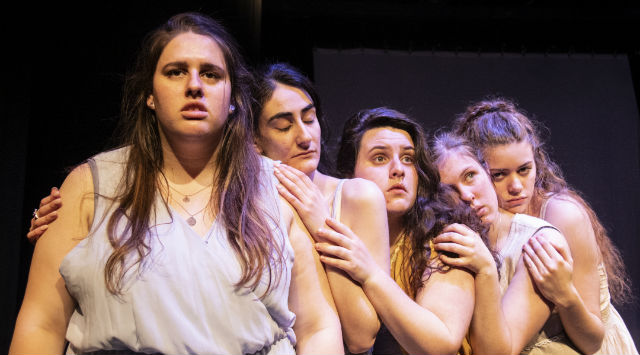
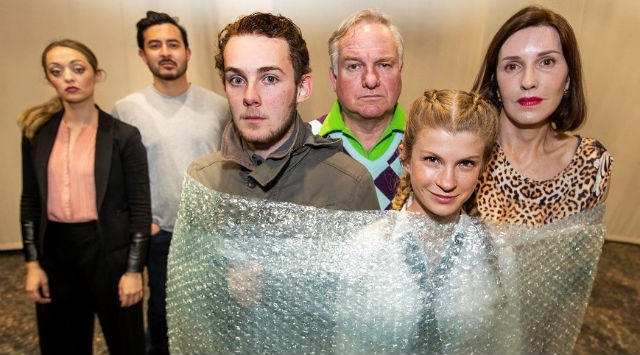
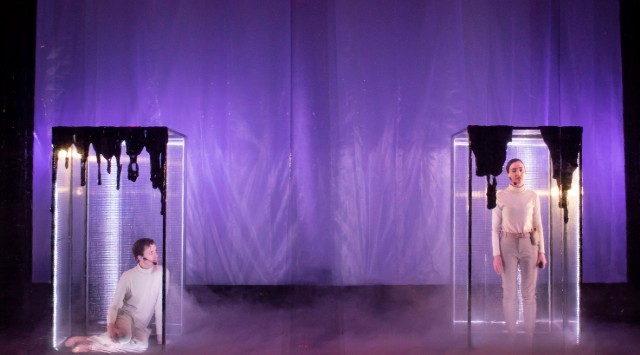
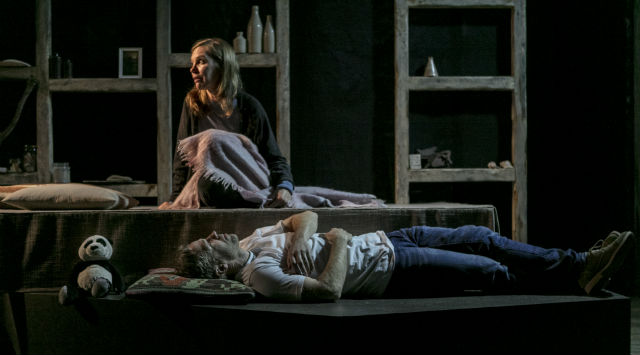
Even though Eric does not run around in a white conical hood, and he takes every opportunity to make grand declarations that he is not a racist, there is no question that our protagonist is the worst kind of bigot. David Ireland’s Cyprus Avenue is a confronting, if slightly exploitative, play about a sad old man trapped in the traumatic days of The Troubles. Habitually putting everyone in identity categories, his hate for “the others” seems to know no bounds; even his five-week old granddaughter is not spared. Playwright Ireland makes a powerful statement about prejudice, with his flamboyantly brash approach offering a style of theatre that is full of dramatic tension, as well as ample opportunity for intellectual stimulation.

Direction by Anna Houston appropriately emphasises the quirky quality of Cyprus Avenue‘s comedy, bringing valuable balance to its otherwise brutal nature. Difficult concepts are left undiluted, so that the audience cannot help but examine its challenging provocations. Leading man Roy Barker embodies beautifully, contradictory dimensions of Eric. He is deplorable, but also charming; tender yet full of evil. Unfortunately, the actor’s constant stumbling over lines puts a damper on proceedings, with the disruptions of speech rhythms causing considerable distraction. Other cast members are much more polished with what they present, each remarkable in their respective roles, all of them compelling with what they bring to the stage.

There is profoundly objectionable behaviour in Cyprus Avenue that we must attempt to analyse. The show’s controversial situations make it an imperative that we find ways to process, not only the violence that happens in Eric’s fictitious world, but also the equally heinous hate crimes, of all descriptions, in real life. People will have justifications for every horror they commit, but as a society, we will always have to weigh up compassion and punishment, in our strategies for prevention. Eric has been driven mad by circumstance, and as a result, he perpetuates grievous harm, in a circle of violence that tempts us to keep shifting blame from one to another. There are no easy answers in Cyprus Avenue, perhaps no answers at all, but it allows us to see, in what feels to be a thoroughly honest way, how terrifying humans can be. What we do with that information thereafter, is anybody’s guess.

www.empresstheatre.com.au | www.redlineproductions.com.au

Review: American Psycho (BB Arts & Two Doors Productions)

Venue: Hayes Theatre Co (Potts Point NSW), May 10 – Jun 9, 2019
Book: Roberto Aguirre-Sarcasa (based on the novel by Bret Easton Ellis)
Music & Lyrics: Duncan Sheik
Director: Alexander Berlage
Cast: Blake Appelqvist, Erin Clare, Shannon Dooley, Ben Gerrard, Eric James Gravolin, Amy Hack, Loren Hunter, Julian Kuo, Kristina McNamara, Liam Nunan, Daniel Raso
Images by Clare Hawley

Theatre review
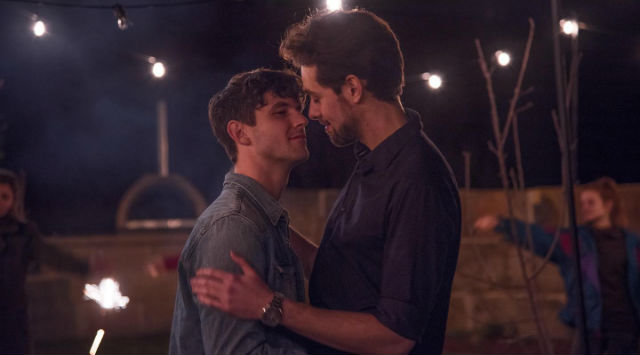
Bret Easton Ellis’ seminal 1991 novel American Psycho encapsulates a kind of sickness that had emerged from 1980’s capitalism. The story of exemplary yuppie Patrick Bateman was a wild indictment of Western culture at the time, one obsessed with prestige and facade, centred around the mythical Wall Street model of success. Evil personified, he served as an icon of all that had hitherto gone wrong, a monster materialising not from supernatural realms, but borne out of economic reality. The book’s detailed and extreme violence sparked great outrage, but the unassailable truths behind Ellis’ extravagant depictions, have made it a classic that remains pertinent three decades on.

Roberto Aguirre-Sarcasa and Duncan Sheik’s musical version is understandably much more tame in comparison, but thanks to the extraordinary characters and narrative it inherits, the show is still able to captivate, even if Sheik’s original songs are at best mediocre. It must be noted however, that musical direction by Andrew Worboys succeeds masterfully, at elevating these show tunes, turning very average melodies and lyrics into genuinely exciting numbers. Visual design too, is remarkable. Isabel Hudson’s revolving stage and butchers-style strip curtains are high gloss and very sexy, and even though slightly noisy at times, their theatrical effect is truly marvellous. The stage management team, headed by Brooke Verburg must be congratulated for their super smooth execution of mind-boggling logistics, most obviously in terms of performers’ complicated entrances and exits, all flawlessly enacted to quite magical results. Choreographer Yvette Lee demonstrates exceptional attention to detail and a highly sophisticated style, that bring the stage to flamboyant life.

Director Alexander Berlage’s lighting design is suitably sleek, and highly evocative. Along with Mason Browne’s costumes, they establish an aesthetic that is as much about contemporary fashion as it is about the 80’s; alluring, colourful and ostentatious, and ambitious like Patrick. Berlage’s direction of the piece certainly corresponds with his protagonist’s love of the surface. First half is all frothy and camp, a queer interrogation into toxic and hyper masculinity, that sits well within the musical genre. American Psycho‘s notoriety means that we know the tale to be terrifyingly macabre, but the production’s obsession with portraying a vacuous culture, can feel more bubblegum than menacing, although at no point is it ever less than fabulously entertaining. Second half becomes much more satisfying, as things get sinister, as we approach the true horror of the story.

Performer Ben Gerrard may not be entirely convincing as the demonic American, but the intelligent commentary he infuses into every line and lyric, every glance and gesture, ensures a resonance that communicates on levels beyond the obvious. We are repulsed by Patrick, but Gerrard’s charm keeps us attentive. Without a moral to its story, American Psycho is only obscene, and our leading man’s admirable efforts at driving home the message, represents the show’s beacon of integrity. Memorable supporting players include Liam Nunan whose turn as Luis, the closet homosexual, proves to be as comical as it is heartbreaking. Loren Hunter has the unenviable task of playing Jean, the dowdy secretary who falls in love with Patrick, a difficult role that she, quite miraculously, makes believable and empathetic.

Patrick, at twenty-seven, is a big fan of Donald Trump. The role models we choose, are a direct reflection of our values. Unable to see past the superficial glamour of the rich and powerful, Patrick invests his entirety to the pursuit of money and status. Morality is irrelevant. Today, Trump is President. It would be erroneous to imagine that all 63 million who had voted for him are devoid of morality, but these numbers tell a symptom that we would be remiss to ignore. Over the course of time, virtues are constructed, and re-constructed. In 1991, American Psycho controversially appeared as a cautionary tale of sorts. In 2019, the yuppies are nowhere to be seen yet we only have to look in the mirror to wonder, if resistance against greed is always futile.

www.bbartsentertainment.com | www.hayestheatre.com.au

Review: Made To Measure (Seymour Centre)

Venue: Seymour Centre (Chippendale NSW), May 16 – Jun 1, 2019
Playwright: Alana Valentine
Director: Tim Jones
Cast: Tracy Mann, Sam O’Sullivan, Megan Wilding
Images by Lisa Tomasetti

Theatre review
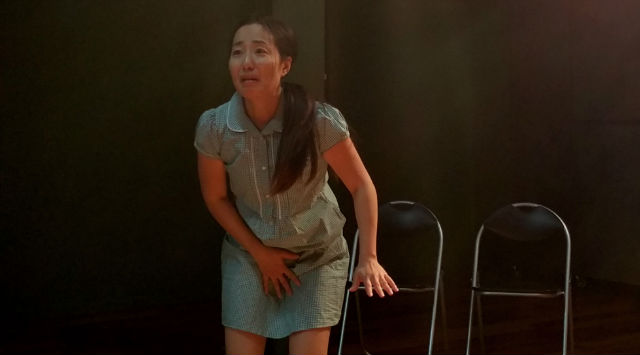
Society’s hatred for fat bodies is placed under scrutiny, in Alana Valentine’s Made To Measure. Ashleigh, our protagonist, is preparing for her wedding, and the process of getting a gown made, is provoking tremendous anguish and frustration. Her dress designer Monica is nice enough, but it seems neither is able to talk about Ashleigh’s large figure, without turning it into a problem. We see an insidious prejudice in operation, a pervasive attitude of disrespect that constantly subjects fat people to criticism and chastisement. Not only does Monica struggle to avoid comments that make her client feel bad, Ashleigh herself often believes those degrading remarks to be true. Society is her worst enemy, but Ashleigh’s own opinions about her own body, are not much better.

The playwright’s elucidations are detailed and often very powerful. With an important agenda to push, Valentine’s play has a tendency to be didactic and slightly dry, but Made To Measure is ultimately highly effective, in pointing out the objectionable nature of our fatphobia, and may even succeed, over its ninety minutes, to change the way we think and act. The production is beautifully assembled, with Melanie Liertz’s set and Verity Hampson’s lights particularly delightful and well-considered. Director Tim Jones’ straightforward approach imbues the work with a sense of integrity, but a more imaginative use of space could provide an improved theatrical experience.

Leading lady Megan Wilding brings to the stage, an exceptional vulnerability that does at least as much as the writing, to help us understand the gravity of the issue at hand. Her depiction of pain is thoroughly convincing, with a potency that defies any audience member to regard the play with even a minutiae of scepticism. Also impressive is Tracy Mann, whose multi-faceted interpretation of Monica prevents the show from oversimplification. It is an authentic performance that encourages us to appreciate the story’s themes with complexity and humanity. Sam O’Sullivan plays a variety of roles with admirable gusto, able to represent both the best and worst of our community, with charm and humour.

It seems that very few of us in capitalist societies are able to be satisfied with our physical appearance. The free market takes aim at our self-esteem, relentless in its attempts to make us insatiable consumers, by ensuring that we feel eternally inadequate. The issue is not whether there is anything wrong with Ashleigh’s body. The problem is that we think we have a right to an opinion about it. We routinely remove bodily autonomy from fat people, always allowing that transgression to occur under the pretence of concern and compassion. When we know to bestow genuine kindness upon one another, differences between persons fade away. When there is no capacity for kindness, even the most perfect creature can be made a monster.

www.seymourcentre.com

5 Questions with Janet Anderson and Joshua McElroy

Janet Anderson

Joshua McElroy: When did you first know you wanted to act?
Janet Anderson: I think because I was lucky enough to grow up in New York I was, in a way, immersed in the top brass of the theatre world. After that I think it was inevitable. I come from a very (and I mean very) large extended family and grew up singing and performing with all of them. So I think it was kind of born into it. Fun Fact: A Star Is Born is actually based on my life. What really cemented it for me was going to Newtown High School of the Performing Arts (as did Meg Clarke and Jack Walton) and being surrounded by so much talent and passion made me realise that that was the career for me.

Is there anything about this show that scares you?
Absolutely. When I first read the play I remember having to physically put it down and hide under my covers for a breather. There is a particularly gruesome and shockingly graphic depiction of the Kennedy assignation that put a few knots in my stomach. As well I think because Philip Ridley leaves a lot of the play vague, it leaves the audience wondering and jumping to the worst conclusions they can come up with. But after digesting the play a bit and getting past the surface level shock, Philip Ridley has really masterfully and in some ways beautifully used language to show how this world is collapsed into basic human instincts. In the end of it all, the play is essentially about this make-shift family trying to learn how love, and learn what family means in this absolute shit-show which Southend London has become. The truly scary part is that the plot is not far fetched at all, the kinds of language and acts depicted are a reflection of what truly happens when a society reaches boiling point. We saw it in Rwanda, in Guernica, in Vietnam. I think it should scare us all.

Do you have any pre-show rituals?
None that come to mind. Maybe I just haven’t done enough shows to develop one. I try to get more zen then hyped I find. With a show as visceral and emotionally draining as Mercury Fur though, I think the cast should begin by shotgunning a red bull, or taking an ice bath while simultaneously being tasered in the chest, something to that effect. And not just the cast. Im advocating that the audience come prepared with a paper bag and a defibrillator just to be on the safe side.

How many stars out of 5 would you give yourself as an actor?
6/5. I would say 7 but modesty is one of my many talents.

How many stars out of 5 would you give yourself as a person?
2/5. Would not recommend.

Joshua McElroy

Janet Anderson: Why is this play important in the social climate we’re in now?
Joshua McElroy: Mercury Fur is straight up offensive which I think is great. I’ve always delighted in watching people become outraged. Call me sick but ever since being a little kid watching people who have the luxury of taking offence (aka my parents whom i love) squirm at “swear words”, “unnecessary” violence or sex would always bring me great pleasure. I guess I never understood why? In all honestly I still don’t understand. The classics are full of this stuff. King Lear pulls his eyes out. Medea slaughters her own children. Incest etc. KXT has a great fire escape if someone sets the theatre on fire I reckon most of us would survive. Maybe not Meg (Naz) but then again… she’s expendable 😉

What is your character motivation in the play? How does he fit into the piece?
I don’t want to give too much away but I am looking to fulfil a dream. Loose myself for a night. To immortalise a moment that is at the highest corner of the human experience. He is the final and most horrifying piece of the hideous jigsaw puzzle.

What is the favourite role you’ve played?
I like playing bad guys.The most fun I have ever had playing a role was in a development of show called Follow Me Home which featured a hyper aggressive abusive young man who was looking for his girlfriend on a train carriage at 2am.

What do you hope audiences will take away from the play?
As the heart is home to love, so does it house evil.

How would you survive the apocalypse?
What kind of apocalypse? I reckon for most types of apocalypses the first thing I would do would be grab my compound bow and knife. Steal my roommates motorbike because… fuck him he has a car. Wiz around and make sure a few mates who aren’t Meg and my family were okay and then fang it out west to the farm. Grab a big supply of tinned food, vegetable seeds, magnifying glass, bells and fishing line. Then head up into the mountains after grabbing some ammunition and a gun and set up camp on a hillside plateau near a natural spring. Set up a perimeter from there with the fishing line and the bells. Live off the the land. BOOM. COME AT ME APOCALYPSE.

Janet Anderson and Joshua McElroy can be seen in Mercury Fur, by Philip Ridley.
Dates: 24 May – 8 Jun, 2019
Venue: Kings Cross Theatre

Review: Folk (Ensemble Theatre)

Venue: Ensemble Theatre (Kirribilli NSW), May 3 – Jun 1, 2019
Playwright: Tom Wells
Director: Terence O’Connell
Cast: Libby Asciak, Gerard Carroll, Genevieve Lemon
Images by Phil Erbacher

Theatre review
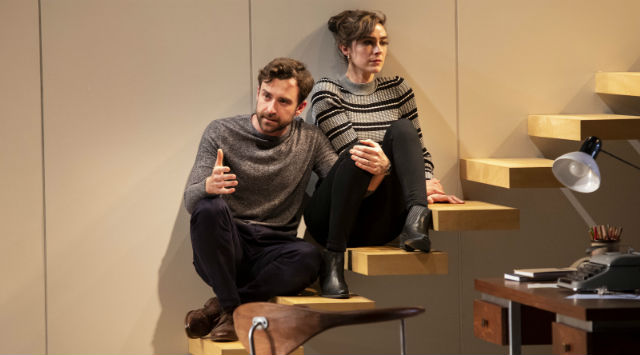
Sister Winnie is planning a folk music night, and enlists Stephen and Kayleigh to help out. We see the nun orchestrating a connection, not only for the purposes of staging an event, but also for the two misfits to form a support network, with and without herself at its centre. Tom Wells’ Folk takes place in Yorkshire, more than ten thousand miles away from Sydney. It may seem that there is little that we have in common, and what should feel sentimental or moving, struggles to translate into much more than something quaint and quite foreign. Its themes are clearly universal, but its characters and language feel overly idiosyncratic, even distant at times.

Terence O’Connell’s direction does not help the work transcend our differences, and even though the viewing experience can often seem sedated, the charming cast is able to sustain our attention, particularly impressive during the play’s several musical numbers. As Winnie, Genevieve Lemon is appropriately kooky and spirited. Libby Asciak performs convincingly the part of teenager Kayleigh, with playful flourishes that reflect an irrepressible creative streak. The musical talents of Gerard Carroll are wonderfully showcased in the role of Stephen, as is his ability to portray an innocence rarely seen in the middle age man.

Winnie is not a preachy nun, but she embodies godliness in the way she conducts her relationships. Her ability to love is admirable, but it is also unremarkable. Without the usual piousness, her personality becomes one that we can readily identify with, and we recognise that love is not only sacred, it is easy. The effortlessness with which she takes care of people, and the significance she places on human connection, are only common sense from the audience’s vantage point, yet we understand that much of Winnie’s modus vivendi, are missing in our daily lives.

www.ensemble.com.au

Review: Playlist (PYT Fairfield)

Venue: Sydney Opera House (Sydney NSW), May 16 – 19, 2019
Director: Karen Therese
Cast: Mara Knezevic, Tasha O’Brien, Neda Taha, May Tran, Ebube Uba
Images by Daniel Boud

Theatre review
Five young women from Western Sydney take the stage, talking about themselves, driving home the point that their stories are not only valid, they are essential, should we wish to examine our lives as egalitarian Australians. For too long, these voices have been subsumed. Not white enough, not middle class enough, and not masculine enough, they have long been relegated to secondary importance in the way our national identity is construed and represented. This is not about a faded mythology; Ned Kelly, Don Bradman and Crocodile Dundee they are not. In Playlist, we encounter a devised work of theatre, that offers a refreshing and pertinent reflection of who we are, in the here and now. It is about creating a new vision of a future that addresses the social imbalances, and injustices, that have plagued us since European settlement. In Playlist, we see ourselves learning to become unapologetic women, more spice than sugar, able to occupy any space we deem appropriate.

The personalities bond through music and dance. It is a cultural discussion that requires each to talk about heritage. With roots in various continents, they gather to connect with traditions that are unfamiliar, and find commonality in popular music, alongside their shared experience of misogyny. Their bodies contain a multitude of meanings, and in Playlist, intersectionality is explicitly discussed, in words and in movement, to interrogate who we are as women, so that we may form progressive and propulsive intentions, to get us, collectively, somewhere better.

Larissa McGowan’s work as choreographer is invaluable in making the show dynamic and entertaining. She allows the expression of spirit to occur powerfully within structures that look disciplined but that feel simultaneously organic. Director Karen Therese does marvellously to bring cohesion to a diverse group of performers, with disparate styles and individual principles. An inspiring sisterhood is established through the harnessing of both similarity and difference, effective in conveying the possibilities that could arise from unions of this nature.

An extraordinarily well-rehearsed cast takes us through an entirely unpretentious theatrical exploration of a modern feminism, one that is useful today, for all Australians. They are humorous, but also disarmingly earnest with their propositions. There is great honesty on this stage, and as a consequence, we regard all they say with open hearts and minds. An immense energy pervades, physical and soulful, aided by a team of designers that join in on the conspiracy of a political presentation. Lights by Verity Hampson, and sound by Gail Priest and Jasmine Guffond ensure that Playlist makes its point every time, whether it chooses to hit us hard or to persuade gently. Also noteworthy are costumes and set by Zanny Berg, whose contemporary simplicity proves effective in helping us elicit a sense of visual resonance, to reach a deeper understanding of the nuances on display.

As migrant women of colour, we have learned to compromise our true essence, in efforts to survive a system that has us positioned low on its hierarchy of priorities. We have had to set aside our authenticity, in order that we can turn ourselves nonthreatening, and be deemed tolerable by the mainstream. In our maturity, we discover that these sacrifices have paid few dividends, so when Playlist stakes its claim on a self-determined womanhood, we can only respond with joy. These artists show us who they are, and in their revelations, we find answers to our own conundrums.

www.pyt.com.au

Review: Winyanboga Yurringa (Belvoir St Theatre)

Venue: Belvoir St Theatre (Surry Hills NSW), May 4 – 26, 2019
Playwright: Andrea James
Director: Anthea Williams
Cast: Roxanne McDonald, Tuuli Narkle, Angeline Penrith, Tasma Walton, Dalara Williams, Dubs Yunupingu
Images by Brett Boardman

Theatre review
A group of Koori women are in the bush, gathered together for a camping trip on the bank of a great river. In Andrea James’ Winyanboga Yurringa, six city slickers take time off to get in touch with one another, with nature, and with tradition. They are a family, but individuals grow apart, and we watch the effort required, to firm up those bonds again, and to rediscover that which is truly important.

The play begins with a sense of ambiguity, very gradual in the way it divulges its raison d’être. The playwright insists that the audience too, takes time off from our hustle and bustle, to fall into a plot that is languid, perhaps slightly disorientating, but trusting that the journey will ultimately be a rewarding one. When its climax arrives, we are surprised by the depth of its poignancy.

Director Anthea Williams’ approach is not obviously sentimental, but she catches us unawares with a quiet power, to deliver a moving work about our Australian heritage. The show communicates differently to people of varying backgrounds, but it is evident that whether or not one is indigenous to this land, Winyanboga Yurringa says a lot that is meaningful about our relationship with it.

Lights by Verity Hampson emanate a disarming warmth, and along with Isabel Hudson’s evocative set design, the familiarity of our landscape is intuitively established on this stage. It is a romantic vision, perfectly partnered by music and sound design from Steve Francis and Brendon Boney, who are called upon to introduce a dimension of melancholic soulfulness to the production. The cast is uniformly accomplished, with Roxanne McDonald particularly impressive as Neecy, the maternal figure through which the play dispenses all its wisdom. McDonald is a sublime performer, with a potency and an intricacy to her style that has us enthralled and firmly won over.

In Winyanboga Yurringa we are reminded that there is so much to love about this place we call home. Regardless of our sins, this terra is and always will be divine; we can cause harm to it, and to one another, but it is the human race that will ultimately and certainly face extinction, before the earth can ever succumb. On Aboriginal land, it is Aboriginal knowledge that is our surest hope for sustainability, yet those voices are routinely subdued and trivialised, in a colonised culture that refuses to listen to solutions that exist right on our doorstep. The characters in Winyanboga Yurringa are the eponymous women of the sun, but they will only shine their light when invited. If we choose to dwell in darkness, the price is ours to pay.

www.belvoir.com.au

5 Questions with Tel Benjamin and Jennifer Rani

Tel Benjamin

Jennifer Rani: Tell me about a work of art you’ve experienced, of any art form, that changed you in some way.
Tel Benjamin: Lord, there are so many but three jump out as having had particularly profound effects on my life. Jim Carrey’s seminal 1994 classic The Mask was the first film I watched (on repeat) that triggered the realisation that being an actor was an actual occupation and you could do it for a living. I used to do a bunch of the musical numbers and scenes from that film and others at the bus stop with my mum or dad and it was kind of like ‘Damn, you can do this for work? Why isn’t everyone doing this?’. Steppenwolf’s 2010 production of August, Osage County at STC completely blew my mind. It raised the bar immensely for my expectations of what theatre could be and got me thinking more critically about stage craft than I had in the past. I still remember how I felt leaving that theatre. Finally, Cormac McCarthy’s short novel Child Of God opened me up to how prose can have a musical quality and rhythm and how line breaks, punctuation and breaking the rules of those conventions can elicit an emotional response. I try to remember that in any prose style writing I do for film treatments or the like. Blood Meridian is also a must read. You asked for one, I gave you three, I’m sorry!

The play’s title is Extinction Of A Learned Response. What is a learned response you’ve developed at some time in your life that would save you in an apocalypse?
Okay. Are we talking zombies? Or just a regular old Nuclear winter? If it’s zombies, you definitely want me in your colony because I’ve read Max Brooks’ Zombie Survival Guide. Did you know, one of the most important items to have in a zombie apocalypse is ear plugs, because the incessant moaning from the undead can drive you mad? I did. Cos I read the book. But reading a book isn’t really a learned response is it. I’m a pretty good mediator and have some decent leadership skills so I could probably keep morale up and stop the group from eating each other. No promises.

Describe a creative work you haven’t yet made that is closest to your heart.
I’ve had quite a colourful upbringing, growing up in housing commissions with a rich close family history of addiction and crime. There’s a project I’m usually thinking about and often come back to that delves into and explores that world. It’s still very early development but it’s either an hour long format crime drama series or a feature film. I think it’s set in the inner west of Sydney during the heroin boom of the 90s, probably in and around a housing commission. Maybe spans to Cabramatta and involves a group of young teens who find a gun and don’t know what to do with it? I’ll make it one day. Get me on the hotline bling, SBS!

So you’re an actor, award winning screenwriter and director. Following a creative path can be a hard life to navigate, what keeps you coming back to it and do you ever lose faith?
It can be tricky right? This career is a vocation for me, I don’t really consider a life without it. I know that might sound a bit, whatever, but you really need to need to be an actor because it requires immense commitment and can be, as you say, hard to navigate and quite exhausting. I read a couple of years ago that T.S Elliot said “For us, there is only the trying. The rest is not our business”. That resonated because, for me, the lack of control in an actor’s career is the hardest part. Your path is often at the behest of casting directors, producers etc which can leave you feeling kind of helpless. All you can really control is how hard you work, so that’s what I come back to. That’s part of why I started writing and directing film, I think there’s more autonomy in those pursuits. I’m also reminded of why I do it almost every time I’m in a rehearsal room or on set. After our first reading of Extinction I kind of floated home and couldn’t sleep, I was giddy. Not much else does that for me.

Your character in the play could be described as having questionable ethics. If you were sent to jail, what crime would it be for?
Classic Marlow, passing the buck. You’re in on these questionable ethics too! It would be a crime of passion, for sure. I like to think it would be a Robin Hood, steal from the rich and give to the poor type situation. Or like, an overexuberant romantic gesture. Egging bigoted far right-wing politicians feels like a crime worth going to jail for to be honest.

Jennifer Rani

Tel Benjamin: Um, so your Showcast says you are ‘‘Highly skilled in Military culture including: weapons handling; combat training; marching drill.’ Can you please explain how you came to gain those very specific set of skills and if you could utilize them in any action franchise, which would it be?
True! Secret past revealed! I was in the Army and am a highly trained military operative: think SAS Who Dares Wins– lots of running and shouting and “breaking through pain barriers”. It was more a social experiment; it was such a hidden world. I mean, what did the Australian military really do? Where was it like for women? As a young woman of colour navigating a specific, isolated and predominantly male environment was… challenging. Great fodder for character study though and I reckon I’d be right at home in Terminator, Mad Max or Indiana Jones. You’d definitely want me on your team if the world were ending.

Extinction deals with memories and the way they shape your current place in the world. Is there a specific memory from your life that you remember being the catalyst for wanting to be an actor and work in the arts?
I distinctly remember stepping into the streets of Singapore, my mother’s birthplace, for the first time. The smells, the colours the noise and languages, there was something deeply familiar and comforting about it. It felt like home, I’d never had that sort of visceral experience with Australia. So that kinda blew my mind. It was such a relief knowing those ethnic markers were intrinsic to me, even though they weren’t necessarily prevalent during upbringing. It wasn’t the catalyst for wanting to be an actor but it was pivotal to me understanding that story was a way in which I could unravel that experience, that I could create a narrative that I hadn’t previously felt a participant in. The question of whose and what stories we tell, and what they say about our national psyche, underlies this.

You’re a first generation Australian who grew up in Tasmania. Is there a story or aspect of your culture and background that you’re interested in creating work from and exploring as an artist?
Absolutely. My experience growing up in a regional Australian city was like a ‘101’ in cultural confusion – I was one of only two Asian kids at my school! Theatre and the arts opened worlds of possibilities that weren’t available in my everyday, especially the diversity on the art and creative I saw when living overseas. The potential impact of the arts, that it can shift something seismic in you and create space for you is a driving motivation for me. Don’t write off regional cities. Take work there. Support regional artists. Seek them out. Australian stories exist all over the country. Currently I’m developing my maternal ancestral history, traversing South East Asia, England and Wales to Tassie. I hope that this can help deepen my understanding of my heritage and what ‘belonging’ and ‘homeland’ actually look like to me. That experience in Singapore particularly was a stimulant to connecting with my cultures as a first-generation Australian.

How weird are auditions! Got any pre audition rituals or sage advice you’ve been given to keep you focused and in a good headspace?
Weird, but they can also be warm and creative. Nah man, just be prepared and chill. There is so much I can’t control so focusing on my work and managing nerves and expectations is key. Be present, be open and trust yourself – I’ve discovered excellent things in the room by being flexible in my approach. It’s all practice for the right gig. Then chuck the script out.

If you could have dinner with anyone living or dead, who would it be and what would you eat?
Mate. This question. Um. Monty Python. I’d make us all toasted cheese and caramelised leek sandwiches and I’d react all the scenes from all the films and we’d have so many laughs. And so many sandwiches.

Tel Benjamin and Jennifer Rani can be seen in Extinction Of The Learned Response, by Emme Hoy.
Dates: 7 – 25 May, 2019
Venue: Belvoir St Theatre

Review: Small Mouth Sounds (Darlinghurst Theatre Company)

Venue: Eternity Playhouse (Darlinghurst NSW), May 3 – 26, 2019
Playwright: Bess Wohl
Director: Jo Turner
Cast: Amber McMahon, Sharon Millerchip, Yalin Ozucelik, Jane Phegan, Justin Smith, Dorje Swallow, Jo Turner
Images by Robert Catto

Theatre review
The story takes place at one of those spiritual retreats, where people spend days not talking, trying to access a state of deep meditation. Six characters in Bess Wohl’s Small Mouth Sounds gather at one such facility, each with their own set of problems, seeking prodigious revelations that could mean an instant moment of salvation, to release them from considerable pain. These personal tragedies, with all their human vulnerability and desperation, form the basis of Wohl’s comedy. Cynical but also honest, the play is distinctive for its scant dialogue, relying instead on actors’ physical capacities to chart a journey, through their amusing presentation of sequences that alternate between absurd and meaningful.

The show is often funny, always intriguing with its creative renderings of a unique theatrical concept. A clever cast works exhaustively for our entertainment, offering up personalities that are endearing, familiar and believable. While a cohesive team, each performer delivers their own memorable nuances, for a result that is surprisingly textured. Slightly less effective is Jo Turner’s voice playing the part of the unseen Guru, perhaps a tinge too obvious with his humour. As director, Turner’s enthusiasm is more well placed. There is an effervescence to the production that appeals, even if it does take some time to turn persuasive. Early sections have a tendency to feel forced, but our engagement improves incrementally over time, and when it wins us over, Small Mouth Sounds proves an enjoyable ride.

Jeremy Allen’s set and Jasmine Rizk’s lights make for a visually vibrant staging, but it is Tegan Nicholls’ work as sound designer and composer that truly impresses. In the absence of the usual voices that occupy our auditory attention, Nicholls fills ninety minutes with an intricate mix of sounds from nature, as well as an assortment of music and effects, to help manufacture a rich and magical experience of theatre. Our imagination is guided by her detailed ear, for subconscious manipulations that take us through a gamut of emotional responses.

The seekers in Small Mouth Sounds have big issues to wrestle with, but there is little poignancy to be found in their respective narratives. No great transformations occur as a result of their fleeting commitment in the countryside. It is a realistic conclusion to the tale, one that can feel somewhat empty, although its insistent refusal of a happy ending in the form of outlandish miracles, is admirable. There is great value in keeping silent and looking inward, but to expect enlightenment in an instant, is naive. When we hope to heal, we think about returning to an idealistic state of being, before the infliction of damage. It may be however, that all we can ask for, is to be able to move forward, with the minimum of encumbrance, even whilst bearing a soul full of scars.

www.darlinghursttheatre.com

5 Questions with Lloyd Allison-Young and Branden Christine

Lloyd Allison-Young

Branden Christine: You’ve played an Irish character before, was that a blessing or a curse in developing your character for Cyprus Avenue? 
It’s a little from column A and a little from column B! Last year I had the chance to play Padraig in a production of The Lieutenant Of Inishmore; considering the tonal similarities between David Ireland and Martin McDonagh, slipping back into that world was an absolute blessing; the rebellion, the desperation and ideology-through-paramilitary, it’s all been very enjoyable to revisit. On the other hand, wrangling the dialect has been a battle. Slim is a die-hard northern unionist; unlearning the lilting, lyrical southern and wrapping my mind around the more brash and broad northern has been a fantastic challenge.
 
Were any unexpected political or social aspects of Cyprus Avenue revealed during the rehearsal process?
I’m surprised by how broadly and wholeheartedly I’ve always accepted the story of the Republican Irish as the total Irish meta-narrative. That is to say, when I think of Irish cultural identity, sure it may conjure all the tropes and clichés associated with the Emerald Isle, but part and parcel of those ideas are those of ‘the freedom fighter’ and ‘liberation armies’, the rebel songs and the glory of fighting the unfair oppression of northern occupation. I’d never bent an ear in any significant way to the perspective of the Unionists. I’d always subconsciously cast them as the villains. This play has given me a terrific excuse to really dive into the finer motivations of this ‘other side’ and it has been most illuminating.
Slim actually explores this idea of this narrative ownership on stage and it is absolutely one of my favourite moments in the play.
 
This play employs a unique balance of absurdity, tragedy, and comedy. Did any of these themes in particular attract you to this play?
All three! David Ireland has written play that manages to intertwine all three together so closely, and each scene is written with such agility that more often than not I find myself toeing the line between two or more major thematic elements. And this is the mark of a brilliantly written play! Each moment reflecting and refracting through other moments. The lines that are the funniest are often the most heartbreaking, the situations that are the most absurd are the most revealing.

I found the need for both objectivity and emotional investment from my character quite challenging. Did any juxtaposing traits come up for your character? 
Without going too deep into the philosophy of Slim, I’m compelled by his particular hierarchy of values, which are as rigid and as furious as they are convenient. A violent and volatile scholar of film and philosophy, with a romantic nostalgia for a truly terrible time in his country’s history he never had the opportunity to experience. 
 
During the arduous rehearsal process of Cyprus, did you rely on any specific food groups to get you through?
Fuji apples, almonds, black tea!

Branden Christine

While preparing for the role, you had the opportunity to spend time with a forensic psychologist. Can you describe one or some of the more surprising/insightful takeaways?  
Getting the inside scoop from a forensic psychologist was fascinating for many reasons. For one thing I was quickly made aware of all my preconceived notions based on watching too much Criminal Minds and Law And Order (my personal fave) and thought being judicious and scientific when portraying a psychologist would be a way in. I came to find out, it’s those things but so much more. A criminal psychologist’s job is also about building a relationship, being open to possibilities, and staying curious — a kind of empath who takes on other people’s feelings and energy, while also being still objective and scientific. This insight gave me a nuanced motivation with which to shape my character.  

You play the character of Bridget, a psychiatrist tasked with treating the play’s prejudiced protagonist Eric. Are there any particular qualities that you recognise in Bridget that you would like to integrate into your own life? 
Totally! Bridget has a kind of courageousness that I would love to be able to embrace in my own life. To do the kind of work she does, working with extreme forms of pathology, she must be self-assured enough to let go of ego, i.e., her own beliefs in order to take the plunge and walk hand in hand with Eric down the path of recovery. Although she’s just as fallible as any other character, and is not always successful, the effort alone requires an enormous amount of confidence to face the dark sides of humanity and ask questions that I personally would find too confronting.  

What was the most surprising thing you learned about the conflict in the Northern Ireland while exploring and researching for this production? 
I went in somewhat ignorant about the conflict in Northern Ireland and had a bit of a learning curve in rehearsal. What primarily astounded me in the process, despite the particulars of this story, is the universality and insidious toxicity of nationalism, prejudice, and ideology. I’m from the U.S. so these themes are very present at the moment and hugely relevant given our current political leadership or lack thereof in the States and many parts of the world. 

What are some of the best experiences you’ve had in a theatre over the last twelve months? 
I haven’t been to many shows lately, but I have a good excuse, a new baby and the being in the cosiness of motherhood. So, I’m going to be cheeky and say that working with the wonderful creative team on Cyprus Avenue is the best theatre experience I’ve had in years, let alone the last twelve months. 

Favourite line from the show? 
“How can a baby have a beard?”

Lloyd Allison-Young and Branden Christine can be seen in Cyprus Avenue, by David Ireland.
Dates: 15 May – 8 Jun, 2019
Venue: Old Fitz Theatre