Review: Artwork (Carriageworks)

carriageworksVenue: Carriageworks (Eveleigh NSW), Aug 5 – 8, 2015
Artists: Branch Nebula

Theatre review
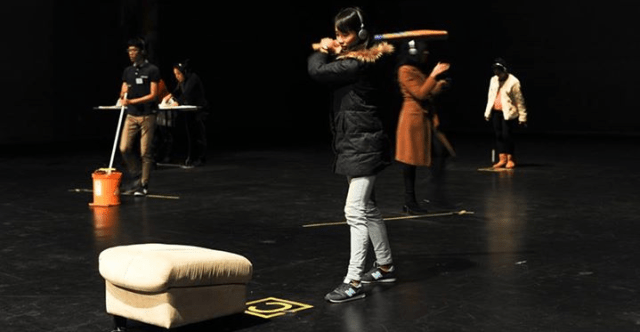
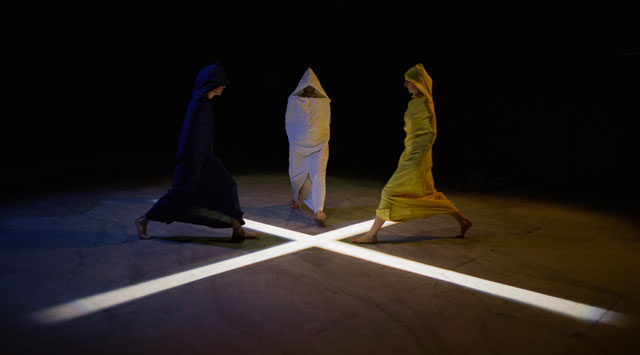
In Branch Nebula’s Artwork, eight members of the general public respond to a job advertisement and are put on stage at short notice. They follow prompts and instructions provided in a variety of ways, and become the performers of a theatrical piece before our eyes. The results are stunning. Our senses are skilfully engaged by a talented team that includes Mirabelle Wouters (set and lighting design) and Phil Downing (sound design), who create a highly sophisticated atmosphere wherein the cast carries out tasks that become the content of the show unfolding.

The range of activities is plotted shrewdly. Even though stories and narratives are never manufactured in a conventional sense, the audience is forced to establish meaning from personal perspectives based on the collection of symbols that arise from the work’s very articulate abstractions. In addition to machinations of the actual artwork occurring on stage, our attention is drawn to further themes about work and of art in general, which it explores at varying levels of subtlety. In the realm of work, ideas about the economy and capitalism relating to individual volition and the objectification of the disadvantaged, make for the show’s most pointed moments. Concepts about artistic intention also resonate with power, as we witness the “workers” carrying out mindless undertakings, as we formulate for ourselves, streams of meanings and consequences independent of their subjective processes and experiences.

Artwork is a gentle exploration into democracy and social equity. It looks at the state of our societies as they exist, and implicates its audiences and participants into the ways our world is allowed to function. The piece places us in the position of privilege, in order that we may achieve greater awareness about the failures of social and political systems, of which our involvement cannot be refused. In the stillness of Artwork, we are confronted with the fractures of our humanity, but we also discover its inherent and invulnerable strength, and a precarious hopefulness that we cannot help but embrace.

www.branchnebula.com | www.carriageworks.com.au

Review: Seventeen (Belvoir St Theatre)

Venue: Belvoir St Theatre (Surry Hills NSW), Aug 1 – Sep 13, 2015
Playwright: Matthew Whittet
Director: Anne-Louise Sarks
Cast: Peter Carroll, Maggie Dence, John Gaden, Genevieve Lemon, Barry Otto, Anna Volska
Images by Brett Boardman

Theatre review
It is the last day of school, and five seventeen year-olds are celebrating the milestone with great happiness and too much booze. Performed by actors in their seventies, the play promises to offer refreshing perspectives of a rite of passage that most of us are familiar with. Matthew Whittet’s script for Seventeen explores teenage life at its later stages, when adolescents begin to think about the future, and the choices they inevitably have to make. The writing’s approach is a gentle one that shows a mainstream idea of youth that does not use its characters to shock or sensationalize. The group seems thoroughly regular, and it is worthwhile giving them a voice, without requiring them to be controversial or achieving anything particularly extraordinary or dramatic. Their concerns and interests are revealed with honesty, and the play derives its dynamism from the colourful optimism of its teenage personalities, but challenges exist in dealing with what is essentially quite pedestrian experiences. The text has enough vibrancy and surprises peppered through its plot, but if it is to be performed by age appropriate actors, one can imagine the work to lack a sense of theatricality, and come across too ordinary. If casting much older players is the only way the play gains its edge, it can be interpreted that the manoeuvre is somewhat gimmicky, but the production does manage to use the age discrepancy in fascinating ways at many points.

The comedic components of the show are effective and very memorable. Watching these seniors mimic the physical and verbal expressions of persons much younger is a joy, and we never tire of the immediate and awkward juxtaposition of behaviour against body, young against old. Director Anne-Louise Sarks introduces that humorous sense of contemporariness into much of the piece, and the cast executes them with triumphant results, no matter how juvenile or, at times, embarrassing. Less successful however, are the many scenes of quite serious conversations in the latter half, where its characters indulge in romantic squabbles, and the performances loses its ironic charm. The tone of the show turns earnest, and as it moves away from comedy, it simultaneously loses energy and tension, and the strong focus placed on puppy love shifts the production from a thoroughly amusing one, to something altogether less involving.

At the centre of Seventeen is a meditation on how we conceive of the future, at different stages of life. A particularly moving scene involves Tom declaring his feelings about leaving his town and his friends, at the conclusion of his high school education. Actor Peter Carroll performs the scene with outstanding sensitivity and intuition, communicating the duality of his character’s sadness, and the undeniable poignancy of an older man saying goodbye to the mortal world. Carroll’s power on stage comes not only from his ability to tug at our heartstrings but also from his amazing agility that defies our beliefs about ageing. Equally magnetic is Barry Otto as the kooky and childlike Ronny, a character on the periphery, unpopular but undefeated, always exuberant and full of kindness. The role needs better integration into the play’s main narratives, but his presence is a touch of innocent tenderness that provides a balance to the boisterous and libidinous goings on that gives cohesion to the stories. Genevieve Lemon plays the very cheeky and adorable fifteen year-old Lizzy with expert comic timing and a very pronounced stage presence. We welcome each of her entrances and anticipate every one of her hilarious punchlines.

Time may not always be linear, but in Seventeen, we are reminded that turning back the clock is impossible, and that the desire to do so, is misguided. The elderly are able to contribute so much to society that cannot be matched by the young. Of course, the reverse is also true, but wisdom that comes from age and experience cannot be replaced or surpassed. What we witness in the show are stories about the very immature of our communities, presented by a group with centuries worth of combined insight and intelligence. They do not say very much more than what is asked of them, but we are glad to have them in our midst, putting on display their talent and skill, all for our benefit.

www.belvoir.com.au

5 Questions with Debora Krizak and Wayne Scott Kermond

Debora Krizak

Debora Krizak

Wayne Scott Kermond: You have interesting and diverse talents in show business, what do you enjoy most as a performer?
Debora Krizak: I enjoy hearing an audience laugh. I wondered for years what it was that I loved most about being on stage and then I started getting a few comedic roles and there was no doubt in my mind that this is what I wanted to do more of. Life’s too short not to laugh so laugh out loud, peeps. I also love a good spontaneous adlib. We have so many great ad-libbers in Anything Goes. I only wish I got more stage time with Wayne and Todd. That could be dangerous.

How did you get started in this business we call show?
I started out as a young four-year-old at a local suburban dance school in Adelaide. They used to put on amateur concerts and from the age of 11 they put us all around a piano and bashed out “As Long As He Needs Me” from Oliver. I think I might have been the only eleven-year-old there that day that could naturally pick up the melody and remain in tune. So the role was mine. It was a great learning experience. My mum would buy me all the soundtracks and videos and I would just try to mimic them all. I’ve always had a knack for mimicking. My first professional music theatre break came when I was cast in Mel Brooks’ The Producers. I was lucky enough to understudy Ulla and learnt a lot from that experience. Prior to music theatre, I toured the country in rock bands. That’s a book in itself. I saw the big banana, the big pineapple, the big ….the big… Yeah that was a decade of my life I’ll never get back sitting in the back seat of a Tarago van.

You are relatively a tall lady, do you like working alongside short men, or does it bother you they are constantly looking at your boobs.
I’m tall but not as tall as people think. I’m five foot ten. Girls are getting taller thankfully and hopefully more roles will become available to tall women in Australia! The comedy of a tall woman/short man has been around for years and I love working alongside Wayne. Yes he has to look at my boobs but I am juggling them in his face. They have their own spotlight and show. The things we do!

You are living 2 lives, during Anything Goes. Deb the performer, and Deb the wife and mother, how do you juggle the two so successfully.
I’m lucky that I have a wonderful husband who can work from his office at home in Sydney when needed which gives me the flexibility to skip a few school pick ups. I have 7 year old boy/girl twins who are in their second year of school. Touring is harder as the kids are in school and I don’t like up rooting them too much. I usually don’t like locking myself into run of play contracts that open in another city. Short contracts in each city can work as I have an arrangement with the kids school that they can travel with me for four weeks of a term and I home school them. It’s tough and exhausting but I’d rather that than spending too long away from them. As it is we’ve had to spend two weeks apart here in Brissy and it breaks my heart to be missing important things like their athletics carnival and gymnastics concert. Those days are hard. I’m lucky though that when the kids are with me, they will often come to work with me and sit in my dressing room and just take it all in. It helps to know where mum is and have an understanding of what I do so its not so inferior to them. I love being a mum and am also grateful for these extraordinary performing opportunities. I think being a parent gives you a whole different perception on life and a whole new layer as an actor. Gee it’s exhausting being the best version of yourself with both hats on though!

What are your plans for the future, after Anything Goes.
I’m very fortunate to have been offered a short contract in another wonderful show that I’m very excited about. It hasn’t been announced yet so I can’t say what it is but it will be fun. I start the very next day Anything Goes finishes at the opera house! What a year. Three shows back to back. How lucky am I?

Wayne Scott Kermond

Wayne Scott Kermond

Wayne Scott Kermond: You’re from a prominent show biz family, what was your first experience in the theatre?
Debora Krizak: I was first carried onstage for a bow with my parents at the tender age of two-and-a-half weeks old. My first musical appearance was playing a Tap Dancing Sailor in the production of Gypsy at Sydney Her Majesty’s Theatre starring Gloria Dawn and then Toni Lamond.

Where did you learn the art of slapstick and who do you get inspiration from?
Being a fourth generation performer it was passed on to me by my family. My grandfather and his 2 brothers (The Kermond Brothers) were physical comics, hoofers, acrobats, eccentric dancers, they and my Mum and Dad taught me the skills. Also growing up watching other acts and performing with my parents, I was always inspired by the funny guy, like Donald O’Connor, Buster Keating, Abbott & Costello, I learned I could make people laugh by falling over or walking into a door. Particularly for the girls when I was at school. Now I do it for a living.

You are a relatively short man. Do you like working alongside tall women or do they scare you?
When you’re my height everybody is taller than me. I love tall women, I’m married to one, she is a dancer. But as she says to me, it’s all the same lying down.

Do you have a favourite musical comedy performer?
No, as comics, I love and am inspired by Robin Williams, Jerry Lewis, Gene Wilder, Peter Sellers, Lee Evans and Jim Carrey, great physical and verbal comics and more importantly their pathos. They make me laugh and cry.

What’s been the best part of the Anything Goes experience for you so far?
I love playing the role of Moonface Martin, it allows me to perform my love for comedy and more importantly bring back the art of physical comedy to the older generation but more importantly introducing a new generation to the old style of physical comedy. Audiences still love a pie in the face.

Debora Krizak and Wayne Scott Kermond will be appearing in Anything Goes with Opera Australia.
Dates: 5 Sep – 11 Oct, 2015
Venue: Sydney Opera House
Review: What Is The Matter With Mary Jane? (Seymour Centre)

seymourcentreVenue: Seymour Centre (Chippendale NSW), Aug 4 – 8, 2015
Playwright: Wendy Harmer, Sancia Robinson
Director: Sancia Robinson
Cast: Gabrielle Savrone
Image by Jodie Hutchinson

Theatre review
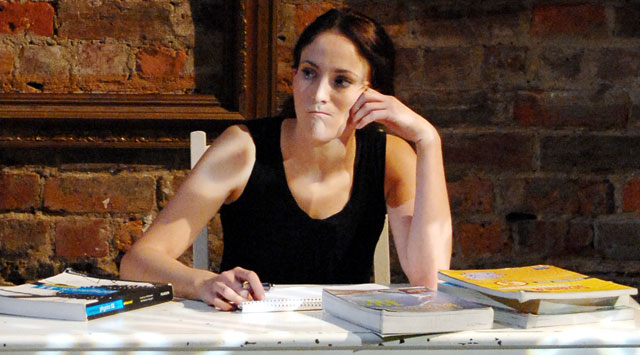
Wendy Harmer and Sancia Robinson’s What Is The Matter With Mary Jane? gives exposure to the experiences of patients who suffer from acute eating disorders. It is a passionate work with clear intentions of informing society about lives that are often shrouded in the secrecy and shame of anorexia and bulimia nervosa. The play has a desire to improve awareness and perhaps inspire political action that will help with healing or eradicating these horrific diseases from our communities, which results in a text that is full of enthusiasm but also clinical at times. The work focuses on the processes involved in, but not the reasons behind its protagonist’s affliction, so that it can represent a wide range of experiences unified by manifestations of the illness. The play acknowledges that the causes of these disorders vary widely, but the omission of psychological insight or analysis of specific events that have contributed to its unfortunate circumstances, is a significant decision that prevents the show from engaging with its audience more deeply. Sentimental dramatics might not always be elegant, especially in profoundly personal disclosures, but they are often necessary in helping our heads and hearts in becoming more involved with the story and its message.

In directing her own biography, Robinson brings to the stage an intimacy and truthfulness that can only come from having lived through the ordeal very personally. There are some shocking revelations, but the authenticity in her style of presentation disallows any room for doubt, and important facts from Robinson’s recollections are imparted in the process. Gabrielle Savrone’s portrayal of pain is accurate and moving. We are convinced of her character’s divulgements, and she satisfies the purpose of the work by alerting us to the nature of the problem from personal and societal perspectives. The lighter portions of the play are less effectively performed, but the actor’s conviction is strong, and her work develops with more power as the play progresses.

Self-image is an integral part of every individual’s being. How we live depends largely on how we see ourselves, and for many, physical appearance is a component that can turn into an all-consuming preoccupation, which is actually symptomatic of an impairment that lies deeper than skin. What Is The Matter With Mary Jane? demonstrates an extreme consequence of untreated emotional difficulties that requires our vigilance. Compassion towards others, and having a healthy attitude towards other people’s bodies is a good, and necessary start, that will quickly evolve into the same generosity that we must afford our selves.

www.seymourcentre.com

Review: Great Island (Beside Ourselves Productions)

besideourselves1Venue: 107 Projects (Redfern NSW), Jul 29 – Aug 9, 2015
Playwright: Pierce Wilcox (after Pierre de Marivaux’s L’Île des esclaves)
Director: Pierce Wilcox
Cast:  Anna Chase, Rob Johnson, Harrison Milas, Eleni Schumacher, Nicholas Starte
Image by Isabella Andronos

Theatre review
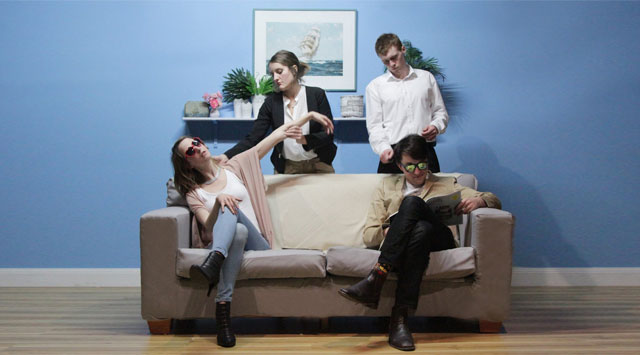
Absurdity is often used on stage to communicate ideas of a political nature. The exaggeration of circumstances helps us understand forces at work in society that might be too guileful for our anesthetized senses. Pierce Wilcox’s Great Island discusses capitalism through a series of very broad comedy sequences that sees very energetic and inventive performances, and although mirthful in general, its obscure humour delivers few laughs, and only ambiguous meaning can be derived from its wild constructs. Nevertheless, the work remains a fascinating one with a mischievous edge that keeps viewers engaged.

Although not uniformly strong, the cast of five is a spirited one that has a surprisingly cohesive approach to the material at hand. Nicholas Starte plays the King with a disciplined command of physicality and voice, and an easy confidence that endears him to the crowd. The actor has a natural eccentricity that suits the style of the production, and a cheeky effervescence that many will find impressive. Also accomplished is Rob Johnson who brings a necessary polish to the chaotic stage, and a conviction that gives a dimension of gravity to the show’s themes. It is not an easy task elevating a piece that has a tendency to come across frivolous, but the team’s commitment is evident.

Discussions about alternatives to capitalism are always interesting. None of us can escape the economy’s influence, and we should all participate in finding solutions to flaws that inevitably arise in any socio-political environment. There has never been a perfect system that satisfies every community it manages, and all we can do is to find refinement and improvement at every available opportunity. There is good promise at Great Island, but it reveals that we are still at primitive stages in the evolutionary process.

www.facebook.com/besideourselvescollective

Review: Blonde Poison (Strange Duck Productions / Red Line Productions)

BP2 CREDIT MARNYA ROTHEVenue: Old Fitzroy Theatre (Woolloomooloo NSW), Jul 28 – Aug 15, 2015
Playwright: Gail Louw
Director: Jennifer Hagan
Cast: Belinda Giblin
Image by Marnya Rothe

Theatre review
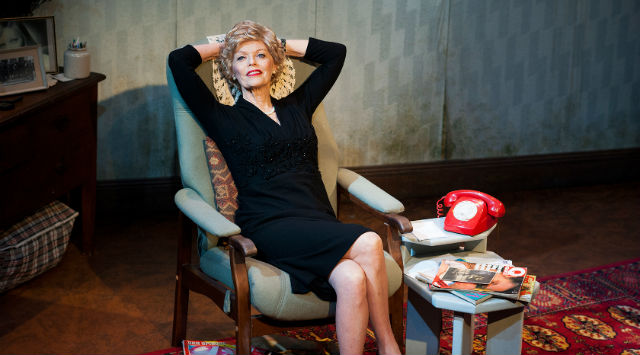
Stories of Jewish experiences during World War II continue to appear on our stages and screens with an urgency that refuses to be eradicated. The sheer volume of narratives means that there is a tendency for characters, emotions and perceptions to be conflated into a certain uniformity, providing impressions and understandings of a time that seem to vary little. Gail Louw’s Blonde Poison is a true story based on the life of Stella Goldschlag, a provocative character with incredible complexity, and whose involvement with Nazi Germany offers a powerful and controversial extension to our increasingly superficial memories of those horrific times. Louw’s writing however, fails to live up to the scintillating potentialities of the protagonist’s tales. The use of a realistic monologue format seems to restrict the amount of tension and drama that lies dormant in Goldschlag’s recollections. The shocking and duplicitous nature of her history holds the promise of a much more explosive presentation than Louw’s plot structure allows.

Direction of the work is a conservative one that dares not to depart from the script and its flaws. Jennifer Hagan’s faithfulness to the text leads to a thorough illustration of the author’s ideas, but greater gumption is required to fill in the blanks, and to elevate a play that needs more flair. Performance of the piece however, is marvellously captivating. Goldschlag is played by Belinda Giblin who is completely masterful on this stage. Her clarity of intent, along with her intelligence and agility (both mental and physical), deliver an impressive portrayal that is equal parts dynamic and intimate. Her emotions are expansive, immediate, and highly legible, but the decision to refrain from eye contact with the audience, along with the staidness of the script, prevents the work from making a connection that matches the poignancies of the actual events in discussion.

Humanity is at its most striking when revealed with its contradictions and imperfections. There is much ugliness in Blonde Poison that expose us to our own fallibilities, but it is too quick to forgive. We need to feel the gravity and realise the repugnance of the dark sides of our selves, before the light can resonate. Villains are indispensable, for they show us the truths within that we fail to acknowledge. Stella Goldschlag ultimately did arrive at confrontations with her own demons, and in those moments of malevolence on stage, poison tastes sweet, and we want more.

www.oldfitztheatre.com | www.facebook.com/strangeduckproductions

Review: Metafour (Glorious Thing Theatre Co)

gloriousthingVenue: PACT Theatre (Erskineville NSW), Jul 30 – Aug 15, 2015
Playwright: Samuel Beckett
Director: Erica J Brennan
Cast: Aslam Abdus-Samad, Bodelle De Ronde, Victoria Greiner, Sophie Littler, Pollyanna Nowicki, Gideon Payten-Griffiths
Image by Stephen Godfrey

Theatre review
Encompassing four short plays by Samuel Beckett; namely Quad, Rockaby, Come And Go, and Catastrophe, this exploration into Beckett’s experimental work is a daring venture into some of the most abstract writing for the theatrical space. Whether entirely composed of stage directions or of barely coherent dialogue, this is a collection of pieces that requires an examination of a practitioner’s relationship with conventions and ingenuity. Beckett uses time and space as language, without the aide of stories, to find a mode of communication that necessitates original thought from all participants. We confront the nature of theatre, and of art, to contemplate how the stage operates, and also how our psyches and senses work in the creation and reception of art.

The only certainty in theatre should be the very presence of an audience in a space that is activated in any capacity by artists. Beckett’s writing is interested in the essence of that connection, and the creative mechanisms that become available when people converge at showtime. Erica J Brennan’s direction embraces the ephemeral quality inherent in the text, to create an experience that compels us to pay attention to the erratic movement of time in the production, through fascinating sequences, bewildering moments, and periods of boredom. The work is a risky one that can alienate, but the discovery of theatrical qualities beyond entertainment and sentimentality, in its sophisticated deconstructed form, is valuable. The encounter is often meditative, hypnotic and mesmeric. Our approach as spectators is an unusual and stimulating one, and even though the discomfort and challenges it presents can be disarming, what endures is striking imagery and unique sensations that are rarely encountered.

Being present is key to the appreciation of Metafour, and being there is its main point. The meanings that the show imparts are difficult to articulate, but their subliminal existence is powerful. There are forms of art independent of words, and it is their visceral effects that demonstrate their relevance. At its best, this presentation of Beckett’s work opens minds and advances cultural milieus. At its worst, it numbs our senses, but we cannot resist returning to the impressions it leaves behind, for a repeated experience of their mystery. Time is made elastic, and the show continues to linger.

gloriousthingtheatreco.wordpress.com

Review: Rosie, Ruth, & Susan (Smoking Gum Theatre)

smokinggum1Venue: M2 Gallery (Surry Hills NSW), Jul 29 – Aug 3, 2015

Playwrights: Finn Davis, Charlie O’Grady, Lucinda Vitek
Director: Lucinda Vitek
Cast: Finn Davis, Charlie O’Grady, Lucinda Vitek

Theatre review
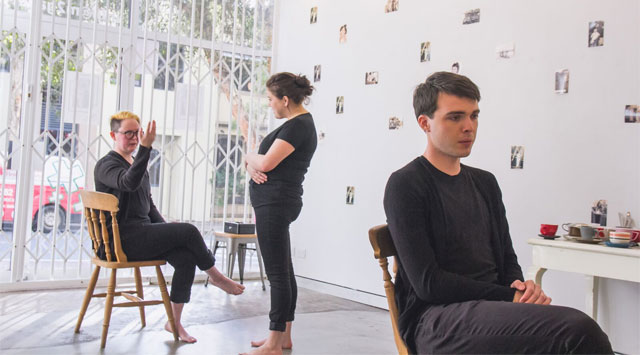
The idea is simple.Three artists create a verbatim work of theatre from interviews with a grandmother. The temptation is to lead the conversations to specific points of interest or contention, and then manufacture tension and drama as you would a conventional work of fiction. Rosie, Ruth, & Susan resists those expectations, and lets the conversations be, with minimal embellishment introduced into the resulting script.

Staging the work in an art gallery allows an intimate proximity that produces an unusual theatricality. We are encouraged to observe the performers from a more active perspective than one would normally adopt in an auditorium type setting. Our focus shifts between tepid tales and the delicate presences recreated by the cast. It is widely believed that elderly women are among the most invisible of society, and the sensation of sharing space with their vitality so tenderly portrayed is unusual for many. Finn Davis’ performance is particularly captivating as Rosie, who looks back at her younger days as a university student and doctor in the early-mid twentieth century. There is no mistaking the sincerity of the piece, but it is needlessly mild, and opportunities for more obvious applications to socially important concepts like feminism and ageism could be expressed more powerfully.

We must always listen to our elders, because their wisdom is invaluable and irreplaceable. The youth can often be preoccupied with arrogant pride, and mistakes are made because of that all-too-common know-it-all attitude. On personal levels, we may make erroneous decisions about careers and relationships, but on a larger scale, nations go to war and commit the same aberrations as previous generations had done. Technological progressions give the illusion that humans are constantly advancing, but we are clearly unable to prevent similar atrocities from repeating at every era. “Careful the things you say, children will listen,” Stephen Sondheim advises, but when we stop listening, the consequences are dire.

www.smokinggumtheatre.com

Review: Space Cats (Brevity Theatre)

brevityVenue: Bondi Pavilion (Bondi NSW), Feb 25 – Mar 7, 2015

Book: Samantha Young
Lyrics: Samantha Young
Music: Matthew Predny, Emele Ugavule
Director: Samantha Young
Cast: Olivia Charalambous, Skyler Ellis​, Gautier Pavlovic-Hobba, Aaron Tsindos, Samantha Young

Theatre review
Laika the dog, left Russia in a spacecraft and finds himself on a planet where the Queen Cat reigns supreme. She is on a mission to rid her world of everything undesirable, and has slaughtered everyone, except for her minions, Bruno and Mars, and one final offender, Bin Cat, who sits in prison waiting to be executed. Clearly the Queen has no tolerance for any sort of behaviour that may contradict her own, and it is the themes of compassion and understanding that provide this mini-musical its impetus, along with temperate but well-meaning ideas about governance and social diversity.

Samantha Young’s work as writer and director is subversive, but her tone is relentlessly light and joyous. The show is a euphoric application of the musical genre, using its shallow and frivolous propensities to excellent comic effect. Original songs with lyrics by Young and music by Matthew Predny and Emele Ugavule are inventive, always with a cheeky attitude, but they are not uniformly strong. It is understood that this one night presentation is a preview of sorts, with a more refined “end product” to eventuate in the near future. There certainly is a great deal of potential and promise in this outrageously quirky germination of a production that seems to have many effective elements in place, awaiting further development and polish.

The cast of five is a compelling ensemble, with excellent chemistry and a cohesive humour that projects a confidence generously outweighing the prematurity of their material. Aaron Tsindos’s camp sensibility is a highlight at many points, delivering waves of laughter with a Kenneth “Carry On” Williams style of flamboyance in his role of Bruno. Playing Laika is Skyler Ellis who tunes his portrayal of earnestness from sincere to corny with intuitive accuracy, and whose singing voice impresses quite effortlessly. All performances are delightful, with a clever blend of energy and irony for a tongue-in-cheek, and sometimes raunchy, approach that many would find irresistibly amusing. Space Cats is about love, with passion emanating from every one of its facets, and although the production is missing finesse at many points on this particular occasion, we leave the auditorium convinced that love can actually conquer all.

www.brevitytheatre.com.au

Review: Bitch Boxer (Someone Like U Productions)

bitchboxerVenue: District 01 (Surry Hills NSW), Jul 21 – 26, 2015
Playwright: Charlotte Josephine
Director: David Mealor
Cast: Jordan Cowan

Theatre review
Much of the success of Charlotte Josephine’s script is due to our inherent sexism. It is because of the way we conceive of girls and women’s lives that the play takes the form that it has, and for the same reasons, that it is received so powerfully. It makes use of our prejudices to create dramatic tension, and one would garner a guess that if its monologue personality is transposed to male, its overall effect would be quite drastically altered. Hence, we are reminded that genders are not thought of as the same, but in spite of perceived differences, it is the notion of equity that feminism wishes to achieve. The work is not a subversive one, in fact it contains elements that are much closer to the work of Walt Disney than to Germaine Greer’s. The Bitch Boxer in question is Chloe, a young athlete who has obstacles to overcome that are not particularly unique, and whose passion lies in a traditionally male arena. It feels like a princess story, and her efforts at beating the boys at their own game, figuratively, locks Chloe’s narrative firmly into a patriarchal structure that it cannot, or possibly will not, escape.

Execution of the production is brilliantly spearheaded by its star, Jordan Cowan, whose level of conviction on stage matches her role’s fierce ambition in the boxing ring. Her performance is vibrant, exciting and captivating, with a relentless and fearless enthusiasm for involving the audience by addressing us directly at every available opportunity. Her warm and welcoming presence is perfectly suited to the show’s most intimate setting, which director David Mealor is astute in establishing, so that Cowan’s best qualities are the event’s overwhelming strong suit. On the other hand, although Cowan’s ability to portray her character’s mellower sides, such as her sensitivity, tenderness and sorrow, is clearly accomplished, we only witness those moments in quick flashes. The direction of the piece is intent on maintaining a fast pace and keeping things high energy, which makes for a very dynamic encounter (aided by Will Spartalis’ remarkable work on sound and music), but it does not depict sufficient emotional depth for us to identify with Chloe’s experiences at a more contemplative and meaningful dimension.

The artistic community often talks about sport and art as a dichotomous pairing, and artists lament the ubiquity of the other in general Australian discourse. It is truly unfortunate that art is rarely held in the same regard as its incongruous opposition. The social and personal benefits that could be derived from a more prevalent culture of art in our societies is unquestionable, yet we refuse to allow it to flourish. Additionally, the gender imbalance in the sporting world is a blindingly obvious problem that persists and seems never to be resolved. In the theatrical arts however, we can boast of participation from women of all tribes and backgrounds, and the need to make heroes of these talents is an urgent one that cannot be understated.

www.facebook.com/someonelikeUproductions