Review: Masterclass 2 – Flames Of The Forge (Red Line Productions)

redlineVenue: Old Fitzroy Theatre (Woolloomooloo NSW), Jan 12 – 30, 2016
Playwrights: Gareth Davies, Charlie Garber
Directors: Gareth Davies, Charlie Garber
Cast: Gareth Davies, Charlie Garber

Theatre review
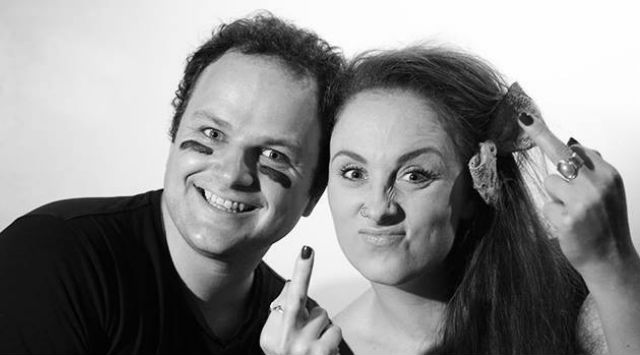
In order for artists to embark upon a creative endeavour, they have to locate a certain level of self-belief. This may or may not be justified, or even essentially real, but a kind of confidence needs to be present for potent expression to occur, and actors especially, must be able to cultivate a layer of thick skin in order that they may present their work to the public with any conviction at all. Some have to try harder than others to attain that quality of egotism, but in Masterclass 2, Gareth Davies and Charlie Garber put on unhinged arrogance to provide comical insight into the theatrical process, and behind that false bravado, allow themselves to manufacture an hour of amusing and intelligent reflections on their art form.

The piece has a playful and silly façade, but there is something covertly sophisticated about their approach. Surprising nuance and obtuse concepts betray their unassuming style of delivery. There is a genuine spirit of adventure in Masterclass 2 that makes it more meaningful and elevated than what it claims to be; there is a lot of self-deprecation in how the characters articulate themselves, but seeing through that sense of modesty will reveal thoughtful and intriguing ideas.

The live experience that Davies and Garber provide is full of chemistry and dramatic tautness. Along with Ross Graham’s lights, the show is compelling and always humorous, with captivating sequences that keep our senses bemused and our minds invigorated. It may be difficult to find personal affiliations with their subject matter, but strong performances ensure that we remain interested, at least for the duration.

Davies and Garber half-pretend to be geniuses in their field, and with that calculated and transparent mockery, their true talents are able to shine through. To get to the truth of experience, theatre uses falsities and deception so that we may come to a genuine understanding of our lives and our worlds. The comedy of Masterclass 2 points to something bigger and better than the things it chooses to talk about. Looking beyond its obfuscations is where the real rewards lie.

www.oldfitztheatre.com

Review: The Fantasticks (Wooden Horse Productions)

woodenhorseVenue: Hayes Theatre Co (Potts Point NSW), Jan 11 – 31, 2016

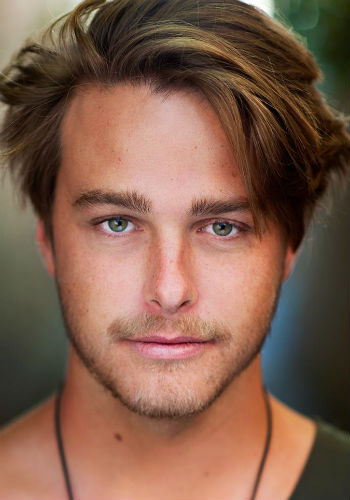
Book and lyrics: Tom Jones
Music: Harvey Schmidt
Director: Helen Dallimore
Cast: Laurence Coy, Martin Crewes, Bobbie-Jean Henning, Jonathan Hickey, Garry Scale
Image by Marnya Rothe

Theatre review
Every day everywhere in the Western world, groups of enthusiasts come together to stage intimate productions of well-known musicals. Their shows are invariably minuscule versions of big budget monsters that had found success on Broadway and the West End. Many are able to prove that money has little to do with the enjoyment and appreciation of a great work, but many more reveal the musical format to be heavily reliant on bells and whistles that can only be acquired by exorbitant sums of cash.

There is a meaningful story in The Fantasticks about the nature of life and love, and the value of emotional pain as children grow into adulthood. Along with beautiful songs that stand the test of time, it is no wonder that this 56 year-old piece is being revived for a Sydney season. In the absence of elaborate sets and other visual wizardry, director Helen Dallimore relies on her excellent cast of five to tell a story of young love and its disappointments. Their talent is undeniable, but the performers are often left to their own devices, and we feel an inadequacy resulting from that lack of support. The stage seems to need more action. On this occasion unfortunately, simply having strong actors do their best on a bare (but pretty) stage does not quite cut it.

Music is also extremely minimal, with only Hayden Barltrop on keyboards and Glenn Moorhouse on guitars, but their work is effective. A surprising and delightful consequence of the quiet accompaniment is that the vocals are beautifully prominent, which is not usually the case at this particular auditorium. Sound Designer Jeremy Silver has clearly done an exceptional job for this production. Also wonderful are Bobbie-Jean Henning and Jonathan Hickey who play the teenage love-birds, both committed and compelling, with sensational voices and irresistible charm. The duo is endearing from the start, and believable until the very end, but the show depends too heavily on their magic, and we see them struggle with some of the heavy lifting in concluding scenes.

It must be noted that the controversial number “Rape Ballet” is kept intact. One cannot imagine a song like it to be written today, so the decision for its inclusion is a problematic one. We should not be a society that disallows any subject matter in our art, taboo or otherwise, but sensitive topics need to be treated with extra care. The word “rape” seems to be on the verge of joining an increasingly long list of words that are to be avoided at all costs in the public domain, but art must not abide by this rule of convenience. It is art’s responsibility to unpack the prohibitions of society, and use its ingenuity to present these issues in ways that will mean progress and enlightenment. This instance of the “Rape Ballet” might be offensive to many, but its omission would have been cowardly. A better solution is to invest immense thought and sensitivity into the matter, and whether or not the creators have done sufficiently here, is entirely debatable.

www.hayestheatre.com.au | www.woodenhorseproductions.net

5 Questions with Jordan Cowan and Tim Franklin

Jordan Cowan

Jordan Cowan

Tim Franklin: What about Tender Napalm drew you in?
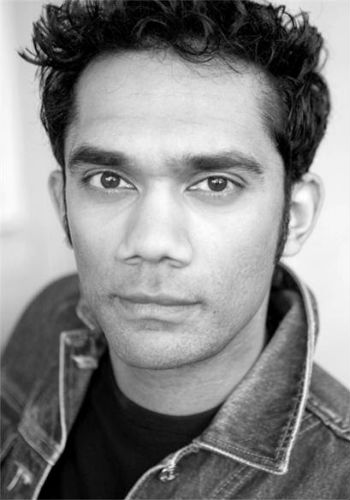
Jordan Cowan:The way in which Phillip uses language is so powerful and beautiful. There is something about the way he uses heightened language in such a domestic way that took me by surprise. It’s really fucking honest and intimate and doesn’t shy away from the hard stuff and I really dig that.

How do you find the Sydney theatre scene compared to your home town Radelaide?
I love the Sydney theatre scene, it is a lot more diverse and there seems to be a lot more companies just doing what they do best and finding an audience for that. I love Adelaide don’t get me wrong but there simply isn’t as many people so it’s hard for indie companies to get off the ground.

How are you feeling about performing in such an intimate space like the Old Fitz?
I love the Fitz, there is something so magical about the space it is simple and honest and won’t hold anything but the truth and I love that. It’s the perfect space for the show and I’m excited to just be able to talk to people and tell this beautiful story. That’s what theatre is all about right?

What is your favourite line in the play?
Ahhh there are so many but I think, “My cry of grief was so loud it created a black hole in the universe” is pretty beautiful.

What was it like working with the amazing Tim Franklin?
I would like to say how much of a loser he is BUT he is one of the most generous actors I have ever worked with and I couldn’t imagine doing the show with anyone else. He is as honest as they get. Oh, and a total goob.

Tim Franklin

Tim Franklin

Jordan Cowan: What do you love most about Tender Napalm?
Tim Franklin: At the moment I’m having a serious love affair with the poetic nature of Phillip Ridley’s writing. The play has such a dark subtext but the chinks of light that break through are blindingly beautiful.

What has been the most challenging part of the rehearsal process?
I hate to say it but it’s the answer to the age old, “how did you learn all those lines?” I usually say something like “its how you do anything, you do it again and again until you get it” but fuck me there are a lot of lines! My brain is leaking.

What do you think the audiences will love about the show?
I think the audiences will love the fantastical imaginary world that we will create in this extremely intimate space. Hopefully they will like the way we say the words and how our face moves too.

What is your favourite line in the play?
That’s a hostile question. I can’t choose, I wont choose, I refuse to choose. So I’m going to pick three.

“Oh her eyes! Its like gazing into a universe, I see stars and dinosaurs and whales and skeletons and spaceships.” Yummy

“I remember… at one point, as we were struggling with him on the bed, dad’s eyes sort of locked with mine and it was like… like gazing into a million years of stuff.” Ahhhh that one makes my heart hurt.

And last but not least

“your cunt…. Its such a precocious thing”

….yep

Three words that best describe the show?
Fantastical. Poetic. Tragic.

Jordan Cowan and Tim Franklin can be seen in Tender Napalm by Phillip Ridley.
Dates: 19 – 30 January, 2016
Venue: Old Fitz Theatre

Review: Disco Pigs (Throwing Shade Theatre Company)

throwingshadeVenue: The Factory Theatre (Marrickville NSW), Jan 7 – 9, 2016
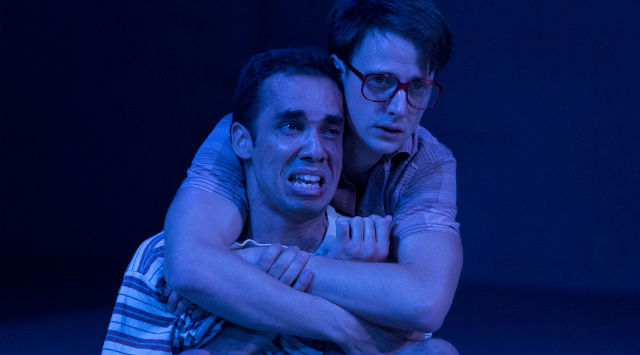
Playwright: Enda Walsh
Director: Andrew Langcake
Cast: Jeff Hampson, Courtney Powell

Theatre review
Enda Walsh’s Disco Pigs is a very specific story. It deals with a very particular time in a teenager’s life, and the set of circumstances surrounding its characters is culturally unique. The play does not aim to be universally appealing, but in its passionate exploration of something anomalous, an essence emerges that can reveal aspects of life that we can all recognise. Walsh’s language and narratives are interested in the marginalised youth of Western societies. We are presented with a state of being that needs to be understood, but is often ignored. It deals with the consequences of modernity, and how our young negotiates the dangerous meaninglessness of life at a time when everything can be reduced and diminished. With the commodification of everything in pervasive economic rationalisation, we experience chaotic shifts in ethics and values, and what we impart to our youth is consistently but disappointingly dubious.

Pig and Runt make their own rules. They have accepted that money is out of reach, and coupled with a disrespect of social mores, their lives are guided by the pleasure principle, with intoxication and violence forming the core of their existence. In their failure to see greater meaning in life, time is spent on the base and visceral, and we wonder how the appetite for progress, advancement or even aspiration have come to be in most of our lives. Direction of the work by Andrew Langcake is simple, but energetic. While not hugely imaginative, the staging is mindful of creating a sense of aliveness for the author’s words, in order that we can reach a more intimate perspective of the characters’ somewhat unusual world through their construction of action, sound and atmosphere. Actors Jeff Hampson and Courtney Powell are well-rehearsed and thoughtful in their approach, but execution can be more precise and confident. These are wild stories being told, and even though they make good attempts at depicting the grittiness of their Irish city, finding authenticity for that harrowing environment proves to be quite a challenge.

Artists must be encouraged to create mountains out of molehills, so that the unusual can be seen. As long as truths can be found, all artistic expression is valid. We don’t have to care about the people in Disco Pigs but they do have something to offer anyone who wishes to listen. When the moral of the story is unclear, the captive audience will find for themselves what they most need to hear.

www.throwingshade.com.au

Review: Jasper Jones (Belvoir St Theatre)

belvoirVenue: Belvoir St Theatre (Surry Hills NSW), Jan 2 – Feb 7, 2016
Playwright: Kate Mulvany (based on the novel by Craig Silvey)
Director: Anne-Louise Sarks
Cast: Tom Conroy, Kate Mulvany, Matilda Ridgway, Steve Rodgers, Guy Simon, Charles Wu
Image by Lisa Tomasetti

Theatre review
Laura is found dead, and although not wrapped in plastic, the stories in her town of Corrigan bear many similarities to those at David Lynch’s Twin Peaks. Burgeoning adolescence, secret lovers, hidden sanctuaries, sexual abuse and a creepy man that holds the key to mysteries. Jasper Jones acknowledges the debt it owes to Harper Lee’s To Kill A Mockingbird and Truman Capote’s In Cold Blood, and there is certainly more than a sense of familiarity in the way Laura’s murder is explored, but the play provides a fresh look at Australia’s own troubled experience of race relations, which remains under-represented in our artistic landscape. Unlike the Americans for example, we have shied away from the truths of our racism, both historical and current, so works such as Jasper Jones that place attention on our indigenous and immigrant cultures are deeply important, not only for the development of our theatrical heritage, but also for a wider benefit to society in general. Healing can only come from understanding, and the ugly sides of our histories must be recognised if we are to find meaningful progress as a unified nation.

Kate Mulvany’s witty and highly amusing script portrays a small rural community that is familiar on the surface, but surprising and dark underneath. It is concerned with the duality of the Australian memory of a friendly, unpretentious past, and the cruel prejudice suffered by refugees and Aboriginal peoples through the years. Under Anne-Louise Sarks’ direction, characters in the show are idiosyncratically palpable, and every scene is replete with dramatic and comedic tension. Sarks’ show excels in keeping us engaged and emotionally invested, but the central issue of its title role’s adversities seem underwhelming. Jasper is an Aboriginal teenager accused of Laura’s murder, but his struggles do not provide the strongest resonances in the piece. We are distracted by other more pleasurable details in the plot, and like in real life, tend to overlook the serious plight of our country’s first peoples. Jasper Jones is entertaining, dynamic and extremely likeable, but its gravity is not sufficiently manifested, resulting in a production that is not as thought-provoking as it should be.

Playing 14-year-old Charlie is (adult actor) Tom Conroy, who depicts purity with incredible accuracy and charm. His performance is entirely believable, and we follow his coming-of-age journey with tremendous interest. Conroy provides the anchor on this stage, with an endearing nature that ensures that we care for his town and all that happens in it. Equally captivating is Charles Wu as Jeffrey, a young son of Vietnamese immigrants and Charlie’s best friend. The actor displays splendid humour, and a natural exuberance that injects energy with every entrance. His irresistible comedy ranges from subtle to slapstick, but no matter his approach, we greet it with uncurbed laughter.

There is much to love in Jasper Jones (including Michael Hankin’s versatile set and Matt Scott’s tender lighting design), but it involves subject matter that requires greater impact. We talk about social injustices frequently, and we become blasé about them, if only as a defence mechanism against issues that seem insurmountable, so stories need to pack considerable punch to have real effect. Jasper’s suffering in 1965 cannot be divorced from his ethnicity, and fifty years on, we have to examine the nature of that prejudice and continue to seek a solution to that preposterous violation of Aboriginal communities that refuses to go away. No single play can bring about a complete revolution, but every attempt should bring us closer.

www.belvoir.com.au

Review: The Magic Flute (Opera Australia)

Venue: Sydney Opera House (Sydney NSW), Dec 30, 2015 – Jan 16, 2016
Music: Wolfgang Amadeus Mozart
Libretto: Emanuel Schikaneder (English translation by J D McClatchy)
Director: Matthew Barclay (based on the original production by Julie Taymor)
Cast: Taryn Fiebig, John Longmuir, Samuel Dundas, Hannah Dahlenburg, Daniel Sumegi, Jane Ede, Sian Pendry, Anna Yun, Katherine Wiles, Kanen Breen, Adrian Tamburini, Malcolm Ede, Jonathan McCauley, Dean Bassett, Clifford Plumpton, Jack Kleem, Justin Chen, Ben Johnston
Images by Branco Gaica

Theatre review
Julie Taymor’s reinvention of The Magic Flute first appeared at New York’s Metropolitan Opera in 2004. Whimsical and colourful, Opera Australia’s presentation of Taymor’s work with Matthew Barclay at the helm, speaks to audiences of all creed and ages. The story’s darker elements and its mischievous sexuality are left intact, but interpreted in a gentle manner that poses no threat to young minds and delicate sensibilities.

Marvellous use of puppetry and masks, along with animated performance styles ensure that we are captivated and constantly amazed. The extraordinary spectacle created by elaborate sets and costumes is the centre of our attention, and music becomes secondary for most of its duration. There are exceptions of course, most notably the arias by the Queen of the Night, thrilling and beautiful under Hannah Dahlenburg’s masterful execution. Technical brilliance and unbridled passion of the diva’s voice brings elevation to our spirit, and the mythological aspects of The Magic Flute become markedly resonant. The trio of young boys Justin Chen, Ben Johnston and Jack Kleem are memorable as adorable child-spirits, joined at the hip and perfectly harmonious with their delicate singing. Another trio of performers Jane Ede, Sian Pendry and Anna Yun create a humorously malicious gang of ladies who appear throughout the show quite out of the blue, effectively manifesting a sense of the supernatural for this magical opera.

If this is pantomime, then it is the most sophisticated that one could wish to see. There is artistic excellence at every turn that will satisfy any theatrical aficionado, and even though its emotional and intellectual capacities are moderate at best, this is a production that has extremely wide appeal, perhaps surprisingly so for its genre. In The Magic Flute, evil is banished and lovers unite with solace and happiness. The simple tale will never grow old, especially at this level of innovation that artists can tell it. The spirit of adventure and invention is alive in Mozart’s 225 year-old masterpiece.

www.opera.org.au

5 Questions with John Anthony and Craig Meneaud

John Anthony

John Anthony

Craig Meneaud: What attracts you to perform?
John Anthony: Escaping and becoming what often feels like the more authentic me! I’ve been playing and singing music since I was 9 and have often felt more comfortable on stage.

What’s the best thing about creating the world of Wind In The Willows?
The joy it brings young families. The excitement for the kids and the wonderful quirky charm of all the characters.

Have you ever been boating on a river and how did you find the experience?
Did the Hawkesbury River on a house boat one New Years with some nearest and dearest. It was amazing fun.

Who is your favourite childhood hero and why?
Ulysses! He was this amazing 80’s cartoon hero who looked like a cross between Han Solo and Jesus! He had a laser/light saber and I love him still! He has strong family values and a gentle nature with the ability to kick ass when needed!

Describe yourself in 3 words or less.
Silly. Passionate. Intense.

Craig Meneaud

Craig Meneaud

John Anthony: Why are you doing Willows?
Craig Meneaud: I’ve had a bit of an enduring relationship with the play Wind In The Willows. I remember seeing a puppetry version of the story when I was about5 or 6 years old (our school took us on an excursion) – I was utterly entranced with the story and the performers.

I’ve since been cast in the play when in drama school at Theatre Nepean; later on I had the chance to direct the play for TAFE’s Theatre and Performance course. So I guess I’m doing the play not only because I love
the story (and the almost mythic quality about these characters), but also because the play seems to be calling out to me in a strange kind of way.

Who’s your favourite character?
My fave character – well that’s pretty tough because they are all so fantastic in their own special way. But it would have to be Ratty – his love affair with the natural world and his sense of loyalty to all his
friends are pretty special and worthy traits.

Who would win in a fight between Badger and Ratty?
Hah! It would no doubt be Badger – well, I think so anyway (in a physical kind of contest at least). Although there is something to be said for deft nimbleness of the body and a certain quickness of mind. Perhaps it wouldn’t be so clear cut after all!

Describe the colour yellow to somebody who’s blind.
The colour yellow is like peaches and custard – or another way to describe yellow would be to say it’s the warmth of the sun on a cold wintry day, and the light that wakes you in the morn to start your day.

What do you think Rabbits dream about?
Rabbits must dream of endless plates of carrot dishes served up in impossibly special and exotic number of ways. And while they sleep, I’m sure Rabbits are devising ways to put tolls on more and more public access
routes – a bit like the Government in the big Wide World!

John Anthony and Craig Meneaud can be seen in The Wind In The Willows with The Australian Shakespeare Company.
Dates: 6 – 23 Jan, 2016
Venue: Royal Botanic Gardens, Sydney

Suzy Goes See’s Best Of 2015

sgs2015b

Another year of 200 shows, with 182 reviewed for this blog. 2015 in Sydney was again an excellent year, and after my first ever visit to New York in May, I’m glad to report that theatre here is nothing less than world class. From independent to main stage, we do the best work that anyone can hope to see, and I am grateful for all the support that my blog receives from the community here. In addition to thanking everyone who has helped make Suzy Goes See a success, I would like to apologise to the lovely people who have put on shows this year that I had not been able to attend. I do wish that I could say yes to every invite, and will try harder next year to exceed that 200 mark! Have a lovely holiday season and a happy new year. Now on to the Best Of 2015 list (all in random order)…

Suzy x

 Avant Garde Angels
The bravest and most creative experimental works in 2015.

 Quirky Questers
The most unusual and colourful characters to appear on stage in 2015.

♥ Design Doyennes
Outstanding visual design in 2015. Fabulous lights, sets and costumes.

♥ Musical Marvels
Outstanding performers in cabaret and musicals in 2015.

♥ Second Fiddle Superstars
Scene-stealers of 2015 in supporting roles.

♥ Ensemble Excellence
Casts in 2015 rich with chemistry and talent.

♥ Champs Of Comedy
Best comedic performances of 2015.

♥ Daredevils Of Drama
Best actors in dramatic roles in 2015.

♥ Wise With Words
Best new scripts of 2015.

 Directorial Dominance
Best direction in 2015.

♥ Shows Of The Year
The mighty Top 10.

♥ Suzy’s Special Soft Spot
From the intimacy of the Old Fitz to the bigger auditoriums of Belvoir and the Opera House, his contribution to Sound Design in 2015 was simply outstanding.

  • Nate Edmondson, Sound Designer

End

Best of 2018 | Best of 2017 | Best of 2016Best of 2014Best Of 2013

Review: The Sound Of Music (Capitol Theatre)

Venue: Capitol Theatre (Sydney NSW), Dec 13 – Jan 17, 2015
Music: Richard Rodgers
Lyrics: Oscar Hammerstein II
Book: Russel Crouse, Howard Lindsay
Director: Jeremy Sams
Cast: Johanna Allen, Lorraine Bayly, Eleanor Blythman, Du Toit Bredenkamp, Nakita Clarke, Savannah Clarke, Cameron Daddo, Jacqueline Dark, Philip Dodd, Louis Fontaine, Erica Giles, David James, Stefanie Jones, Amy Lehpamer, Dominica Matthews, Jude Padden-Row, Marina Prior, Madison Russo
Images by James Morgan

Theatre review
The Sound Of Music premièred on Broadway in 1959, which makes it a reasonable assumption that most of us had grown up with songs from the iconic musical, figuring prominently in each of our own musical education. Maria brought music to the Von Trapps, and also to lives of millions. Our familiarity with the songs in Rodgers and Hammerstein’s masterpiece is quite unparalleled, and although some of the show’s dialogue has long become archaic, its power over our cultural consciousness is second to none.

This manifestation for an Australian touring production is a straightforward one that presents no surprises. The text is unchanged, and all the trappings of a commercial musical are delivered efficiently. Sets transform with military precision, lighting evolves endlessly to take us through every mood change, and the last note to every song decides whether or not its audience should applaud. Everything is thoroughly refined, and the experience is orchestrated to a measured and mechanical perfection, but a cast in live theatre of course, will always be susceptible to some variation, even in the most immovable of productions like this one.

In the role of Maria is Amy Lehpamer, who delivers an impossibly flawless rendition of one of the most popular musical characters of all time. There is no denying the fact that viewers will gauge any actor taking on the part against the legendary film version, but Lehpamer easily meets our expectations, with deeply impressive technical abilities and a presence so warm that every last punter in the nosebleed section cannot help but be won over. She is glorious from prologue to curtain call, with an effortlessness that only a true star of the stage can portray. Similarly fabulous is Jacqueline Dark, whose Mother Abbess is simultaneously commanding and endearing, memorable for her astoundingly powerful singing in “Climb Ev’ry Mountain”. Cameron Daddo’s vocals are thankfully adequate, and while not a scene-stealing performance, his work as Captain Georg von Trapp is often believable and surprisingly moving, aided by a cast of enchanting youngsters who play his children with irresistible cuteness and brilliant conviction.

The anti-Nazi story in The Sound Of Music provides a gravity that helps set it apart from the often excessively frivolous quality of its genre. It is ironic that the entirety of its very large cast is of Caucasian appearance, but the show’s message is unambiguous. We think about the meaning of freedom, and its primary importance in any life. We think about the magic that comes from great music and great art, and how our humanity cannot be divorced from the wonderful capacity of song that brings hope to the darkest of days. When things are not going well, we can find ourselves caged in by fear, but it is our human ability to imagine something better that gives us resilience and ingenuity. In our weakest moments, the simplest of lyrics will lift us up; “Follow ev’ry rainbow till you find your dream.”

www.soundofmusictour.com

Review: They’ve Already Won (Belvoir St Theatre)

theyvealreadywonVenue: Belvoir St Theatre (Surry Hills NSW), Dec 8 – 20, 2015
Playwrights: Harriet Gillies, Pierce Wilcox
Directors: Harriet Gillies, Pierce Wilcox
Cast: Harriet Gillies, Pierce Wilcox
Image by Mitch Lee

Theatre review
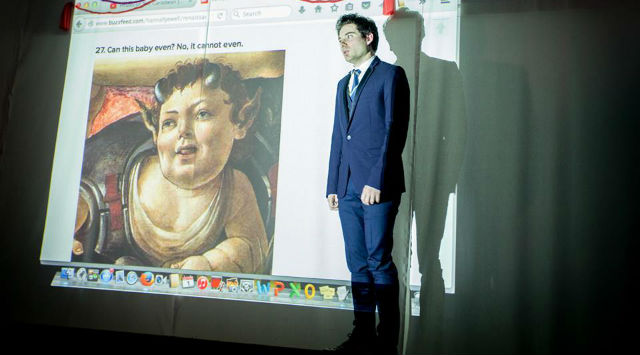
Art can find a way to represent the state of our collective consciousness as it stands, so that we may achieve an understanding of life, while remaining embroiled within. They’ve Already Won is about the now, and how individuals in societies such as ours, deal with the new face of media and its pervasiveness. It explores the interactivity of technology, and exposes the nature of our participation in the digital world, with all its anxieties and intellectual challenges.

As barriers to information and truth begin to crumble, we are forced to encounter pessimism like never before. Harriet Gillies and Pierce Wilcox’s play is about the way we respond to this incessant profusion of bad news arriving through all our screens, and how it dominates and shapes our culture as it stands today. The show addresses us directly, beginning almost like a lecture with Gillies orchestrating visual projections and sound cues, and Wilcox gesturing to illustrate their assertions, but thankfully, things turns increasingly fluid in style as they proceed. The work is beautifully considered and idiosyncratic, with rich content that will ring true and provoke. There are unusual and refreshing modes of expression in its staging, with a string of amusing scenes and surprising concepts. Execution of ideas could be more polished, but the production is ultimately an impressive one that offers a generous serving of food for thought.

They’ve Already Won can be seen as a political work, but it also allows us to be apathetic. It accurately reflects the confusion of modern life, revealing to us that the more we know, the less we know what to do. It is a feeling of helplessness that co-exists with a passion for betterment, an everyday duality that pulls in different directions. We can leave the show determined to be unfazed, but reality is tumultuous and we will be moved regardless.

www.belvoir.com.au