
5 Questions with Laura Djanegara and Danen Young

Laura Djanegara

Danen Young: This production has a cast of 17, how have you found working with such a large group of
actors?

Laura Djanegara: Everyone involved in this production is really fun and easy to work with. Although on
stage, I only really work with a few actors in terms of engaging with them in performance. The few
moments where we’ve had all cast involved, the only thing I needed to work on was being 100% sure where
I needed to be and where I was going to avoid running into people. It took a little while to get to know the performers on this production due to the size of the cast but entering tech week we are all bonding more as an ensemble.

Many scholars regard The Winter’s Tale as one of Shakespeare’s “problem plays”. What have been some of the biggest challenges so far in bringing this story to life?
With quite a lot of Shakespeare productions, and indeed with this one, there are a few cuts to the script to ensure a good running time of the performance. One of the tricky things this leads to is getting the full character arc because you lose moments or dialogue that may have assisted. I think this play has managed to work around that. It means having a really clear understanding of turning points in the script is essential. Knowing what you are doing and why and where you change your mind etc. This should be the case with any show but especially with Shakespeare or heightened language. Understanding the thought process of your character and getting the speed of thought is important.

Your character is Camillo, traditionally a male character. What would you say to those who argue
against the changing of a character’s gender?

In 2017 and among theatre practitioners I can’t really imagine anyone arguing against gender fluidity in
performance. Especially in a Shakespeare, whose performance history is littered with gender changing,
having initially had all characters played by men. If I were to encounter anyone who would oppose I would
be happy to discuss it. I would ask ‘Did you lose the meaning of the play through having that character
portrayed by someone of an opposite gender?’. If anyone still argued against it I would encourage them to
have a more open mind.

Shakespeare’s works are 400 years old. Why do you think he is still so oft performed, and why do
people place such a high value on the importance of his work?

Shakespeare’s writing is just beautiful. 400 years on, he still manages to write in a way that is
accessible even though the circumstances might be so far removed from what we now experience. I think he
is performed because there is still so much we can learn from his writing. It is also crucial to understand, appreciate and respect the history. Shakespeare, for me and I’m sure many others, stands out because of his masterful use of the English language.

What’s your go to easy snack for rehearsals?
I am not much of a snacker to be honest. I’d probably have to say coffee if I had to pick. Can’t function
without my good friend caffeine.

Danen Young

Laura Djanegara: Can you explain the basic plot of The Winter’s Tale without using the letter e (except when in a characters name i.e perdita)
Danen Young: Good pals King Leontes and King Polixenes bond in Sicilia. 9 months pass. A baby is within
virtuous Hermione, Leontes’ Lady. Leontes flips out, angry, and says the baby is Polixenes’. Suspicious of an affair, Leontes throws out the child, and puts Hermione in jail. Leontes grows in confusion and hurt, and bad stuff occurs. 192 months pass. Perdita (Leontes’ banish’d baby) is now grown, living a lowly life with Shepherd and his son Clown in Polixenes’ Kingdom. Perdita wants to marry Florizel, Polixene’s son. A party is had, drinks had, goods sold, songs sung and young luv burns bright. But! Polixenes is not privy to this fact that Perdita is actually King Leontes’ banish’d baby, and so forbids said marrying. Polixenes flips out, and things start falling into… You must go to show to know what flows on from this.

Your character is a troubadour of sorts with a slight case of kleptomania. How do you relate?
Well I love songs for their story telling capabilities. Music and poetry are wonderful vehicles for ideas
and expression, and even more fun when the character is cheeky. As for the kleptomania, mainly I steal
things accidentally. Usually lighters.

Why do you think it is important for audiences to see this play? What universal themes still ring true?
I feel like The Winter’s Tale is not as well known as some of his other plays. It’s an eclectic mix of action, thriller, drama and comedy, with a bunch of very fun and interesting characters. In a way its a sort of coming-of-age story, with Time passing o’er 16 years, and we get to see the long term effect of making heavy decisions on a whim based off an emotional impulse.

This is your second production with Secret House, what are your favourite things about working with this production company?
Secret House are incredible. I only came in late to Cymbeline last year with these guys, but it was clear from the moment I stepped in to the rehearsal room that they were focused on putting on the very best show they could. Jane and James really love bringing theatre to the people in Sydney, and that’s infectious. Also, their sets are incredible!

In Shakespeare’s times all female roles were played by men, if you could play any female character from any of his plays who would you pick and why?
Female role. That’s tough. There are so many strong female roles. I would have say a tie between
Helena or Hermia from A Midsummer Night’s Dream. I’m a huge fan of the Lovers’ scenes from that play, and the girls always stand out for me with their passion and fire, but also how they love and get hurt. For me they would just be a joy to play.

Laura Djanegara and Danen Young can be seen in The Winter’s Tale by William Shakespeare.
Dates: 27 Sep – 7 Oct, 2017
Venue: The Depot Theatre
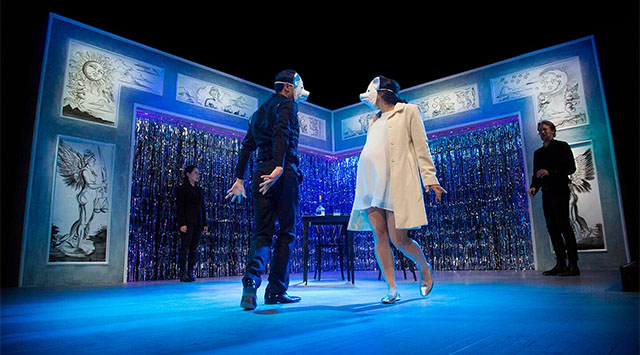
Review: The Winter’s Tale (The Depot Theatre)

Venue: The Depot Theatre (Marrickville NSW), Sep 27 – Oct 7, 2017
Playwright: William Shakespeare
Director: Sean O’Riordan
Cast: Jane Angharad, Alison Benstead, Alana Birtles, Russell Cronin, Laura Djanegara, Alec Ebert, Neil Sun Hyland, Derbail Kinsella, Dave Kirkham, Grace Naoum, Roger Smith, James Smithers, Romney Stanton, Charles Upton, Richard Woodhouse, Emma Wright, Danen Young
Image by Liam O’Keefe

Theatre review
No one can really claim to know Shakespeare’s personal politics, and the further along we progress, the harder it is to investigate with any objectivity, how he would have thought about the way societies should be managed. In The Winter’s Tale however, there is no doubt that modern standards can only judge him deeply misogynist.

Leontes is a king who decides on his own whim, that his pregnant wife is being unfaithful, then proceeds subsequently, to cause the death of both mother and their newborn daughter. Later in the piece, we witness the king becoming consumed by guilt, until the end, where he is unjustly rewarded with their resurrection, in the play’s quite absurd happy ending. Like Leontes, Shakespeare inflicts beastly harm on the two women, in order that his own purposes of creating presumably sensational drama may be served, then summons them back for a tidy and convenient conclusion.

Domestic violence is hugely topical, but The Winter’s Tale is clearly not the right story for our times. There is no need in any contemporary existence, to see an abuser get away with murder, and subsequently be absolved of all his sins.

Nonetheless, the production is an earnestly assembled tribute to the literary great. Isabel Hudson’s meticulous work on set design is laudable, and Liam O’Keefe’s dynamic lights are a crucial element in the many tonal transformations between scenes. Director Sean O’Riordan works closely with his young actors to create opportunities for their talent, where they exist, to be displayed, or at least to demonstrate a sense of exuberance where a natural flair for the stage may be absent. There are issues with blocking, if solved, that could improve the efficacy of what the cast attempts to provide.

Leontes is played by Charles Upton, who although lacks the appropriate level of maturity, is a sturdy and persuasive presence, providing a centrifugal vitality that the play’s narratives rely on to develop. Laura Djanegara is memorable as Camillo, with a confidently naturalist approach that feels authentic and refreshing. Also noteworthy is Russell Cronin who offers excellent timing as the Clown, energetic and adorable, with an unmistakable intuition for performance.

It is appalling that one Australian woman is killed every week by her partner (as reported by the Australian Institute of Criminology), yet our national consciousness continues to struggle with the severity of that fact. We spend inordinate effort on debating things like border protection, while all the real atrocities are happening inside our homes. The inability to see the evil within, is unquestionably harmful. We have to be vigilant with that which is too often taken for granted, including those we consider heroes of our artistic experience.

www.secrethouse.com.au

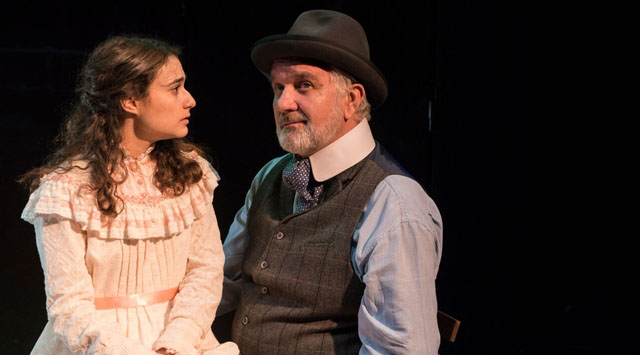
Review: Puntila Matti (MKA Theatre / Doppelgangster)

Venue: Kings Cross Theatre (Kings Cross NSW), Sep 25 – Oct 14, 2017
Playwright: Tobias Manderson-Galvin (after Bertolt Brecht and Hella Wuolijoki)
Director: Tobias Manderson Galvin
Cast: Antoniette Barboutis, Grace Lauer, Tobias Manderson-Galvin
Image by Rupert Reid

Theatre review
We are told that the show’s departure point is Brecht’s 1940 script Mr Puntila And His Man Matti, but not much else can be certain in anyone’s reading of Tobias Manderson-Galvin’s Puntila Matti. Its deliberately bewildering enactment of a chaotic aesthetic, places us in a theatre that is less about stories, and more about experience and experiment, with time as a foregrounded instrument of its artistic practice. We look at a juxtaposition of bodies within time (and space) to garner meaning from any work of theatre, and in the case of Puntila Matti, we are challenged to find a way to appreciate and to comprehend all the riotous action, when its creators intentions seem to be to obfuscate the original narratives on which the show is built.

Manderson-Galvin acknowledges the European history so intimately entangled in the Western art of Australia. If Bertolt Brecht is present in every official form of theatre education disseminated on our land, then this relationship we endure, with a distant past from a faraway region, has to be interrogated. We can try to ignore old Europe’s stifling domination, and pretend to create new voices that are transparently offshoots of that heritage, or we can examine it with irreverence and subversion, as is done in Puntila Matti. Manderson-Galvin reframes Brecht in his own words, then makes them distorted and unintelligible, almost Dadaist in style. This is not a play about dependable dialogue and consistent characters. It is about the establishment, and how we can confront it.

The centrepiece is Manderson-Galvin himself, an imposing figure, wildly energetic and disarmingly intuitive as live performer. A fearlessness in his approach provides assurance of a man in charge, but it also keeps us on our toes, compelled and vigilant in the absence of the fourth wall convention. Grace Lauer provides a sense of anchor to proceedings, a necessary counterbalance that gives texture and dynamism to the presentation. Antoinette Barboutis is on the periphery, playing disoriented narrator with remarkable comedy, consistently, and delightfully, stealing the show from under the key performers.

When we come to recognise the bad in our inheritance, the brave will seek reparation. If our art is broken, it only makes sense that the most innovative of us, will attempt to find solutions. Reacting to the racist, sexist, homophobic, classist (you get the drift) systems in which we have to operate, requires that all participants, practitioners as well as audiences, must learn to face up to the new. It will be awkward, perplexing, even distressing, but those are sensations inherent in any true and radical emancipation. We may never be able to entirely abandon the past, but in rejecting the familiar and the comforting, we know that a genuine progression is in process.

www.mka.org.auwww.doppelgangster.com

Review: The Nether (Seymour Centre)

Venue: Seymour Centre (Chippendale NSW), Sep 13 – Oct 7, 2017
Playwright: Jennifer Haley
Director: Justin Martin
Cast: Danielle Catanzariti, Alan Faulkner, Katie Fitchett, Kim Knuckey, Alec Snow
Image by Ross Waldron

Theatre review
The Nether takes place in a future where people are able to spend as much time as they want, in the virtual reality of an advanced form of the internet, where they can smell the trees and touch the flesh of another. Jennifer Haley’s entertaining and provocative play takes us into an imaginary new frontier of pornography, and has us consider the ethics surrounding online sexual behaviour, beyond rationalisations that pertain to simplified concepts of the consenting adult.

Sims is a paedophile who runs a secret playground that he has invented, designed to satisfy the urges of people who share his egregiously sexual and violent compulsions. The children in his world are however, not creations of artificial intelligence or robotics. Other adults are required to play these roles, destined to be savagely defiled by Sims’ paying customers. The police are investigating this underground community, and Detective Morris is determined to have the mastermind prosecuted.

Cleverly structured, with layers of surprising complexity that has us gripped from the very beginning, The Nether is an edgy and thrilling ride, that appeals to our perpetually conflicted feelings about the ways we regard technology and sex. Justin Martin’s direction is crisp and powerful, keeping us attentive for the entire duration, while we engage with the philosophical and contentious material being presented.

The production is beautifully designed in all its aspects. Pip Runciman’s set, Melanie Liertz’s costumes, and Christopher Page’s lights, are ambitiously conceived and splendidly cultivated, for an appropriately seductive peek into the precarious moralities being explored. Music and sound by the talented duo, James Brown and Tom Hogan, are on hand to enhance dramatic tension, and to facilitate an ominous atmosphere around the disturbing story.

Excellent performances by all five actors deliver a vivid rendition of the play, tightly paced and sharply focused, so that we find ourselves completely mesmerised by its extraordinary narrative. Pseudo child Iris is convincingly portrayed by Danielle Catanzariti, whose deftly exaggerated infantile femininity is a constant reminder of the artifice being represented, whilst maintaining an impressive emotional realism that allows us access to a genuine humanity that lies behind the illusion. Equally memorable is Kim Knuckey as Sims, the dubious character we find ourselves vacillating between hating and wishing to protect. Knuckey’s ability to let us see the good and bad that co-exist in his character, gives the show a level of sophistication that is quite remarkable.

It can be argued that The Nether contains some glaring plot holes in its sci-fi manifestation that require some finessing, but there is no question that this is theatre that will tantalise. We have not reached the future that it depicts, but we already share that same potent sense of guilt in our current reliance of technology. To posit real and virtual worlds as binary oppositions is increasingly suspect, and to argue that the organic is essentially better or more important than the synthetic is no longer easily persuasive, but we certainly do find ourselves giving pause here.

www.catnipproductions.com

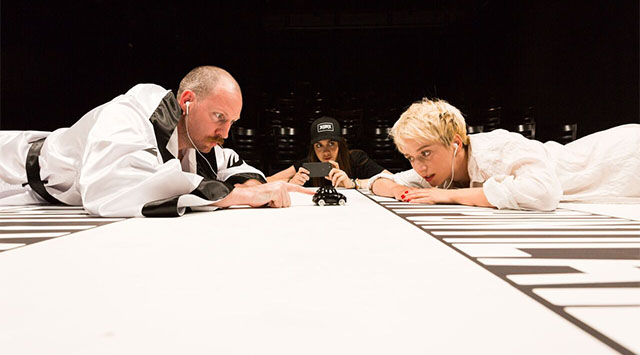
Review: The Library Of Babel (Sydney Fringe Festival)

Venue: HPG Festival Hub (Erskineville NSW), Sep 26 – 30, 2017
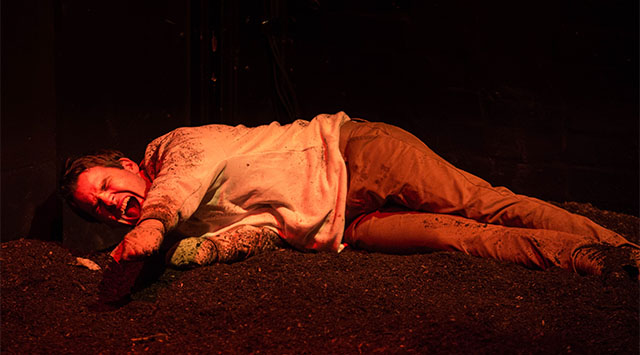
Concept: Claudia Osborne, Emma White
Director: Claudia Osborne
Cast: Evan Confos, Isabella Debbage, Vincent Grotte, Emily Haydon, Holly Friedlander Liddicoat, Anna Hedstrom, Sally Lewis, Amanda Lim, Sean Maroney, Beth McMullen, Sasha Mishkin, Joseph Murphy, Gemma Scoble, Eliza Scott, Isabella Tannock, Rosie Thomas
Image by Philip Erbacher

Theatre review
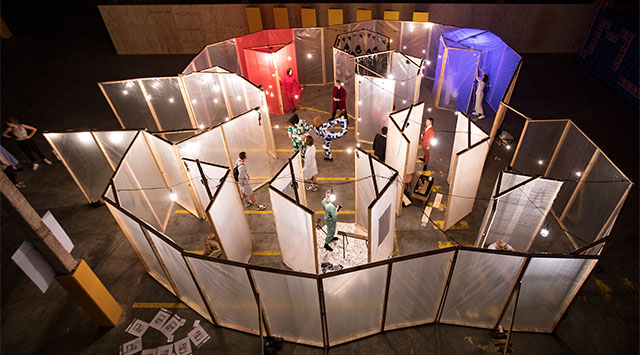
The Library Of Babel takes the form of one big theatrical space, with seven small rooms located within. 16 artists present incongruous and deliberately perplexing pieces of performance art, as we wander through the maze, looking at, and sometimes interacting with, these otherworldly creatures.

In their manufacturing of something that is beyond immediate comprehension, each performer reaches for ideas outside of our shared prosaic existence. To be in contact with inspiration, is to extend consciousness to strange places. Our mind will attempt to form meanings from these disparate encounters, but its tendency to usurp time and space, can be resisted.

It is important that this theatrical experiment insists on the participation of our bodies. The Library Of Babel makes us move around, to forage with our limbs, in addition to the usual deployment of ears, eyes and nervous system. We absorb the experience, and for the hour or so, confusion and disorientation make friends with fascination and intrigue. Trying to achieve an understanding of the work as a conventional theatrical entity, is futile. Intellect should be made secondary, at least temporarily, as it can only be an obstruction to the appreciation of the strange expressions taking place.

The world remains a riddle, no matter how much human interpretation is imposed onto it. We try to shape it into our image, but it always outsmarts us and has the last laugh. In our efforts to become masters of the universe, we get entangled in internal monologues, and lose the ability to find a state of peace, with the greater environment that accommodates us. In The Library Of Babel, we share space and focus on the now. We hold each other in mutual presence, perfectly tangible in our flesh and blood, and we allow time to take on a quality of irrefutable authenticity.

www.kleinefeinheiten.com

Review: Cleansed (Montague Basement)

Venue: PACT Centre for Emerging Artists (Erskineville NSW), Sep 20 – 23, 2017
Playwright: Sarah Kane
Director: Saro Lusty-Cavallari
Cast: Sam Brewer, Lucy Burke, Alex Chalwell, Kurt Pimblett, Jem Rowe, Michaela Savina, Annie Stafford
Image by Clare Hawley

Theatre review
Tinker is a figure of authority at a hospital, and the sadist antagonist in Sarah Kane’s Cleansed. She is all-powerful, able to wield any form of torture she pleases. The patients are trapped, unjustly and unexplained, subject to a range of inhumane violations, in scenes of terror that constitute the savagery of Kane’s play. Also prominent are instances of nudity and sexual activity, that accompany pervasive themes of gender and sexuality, all presented as the main agents of instigation, for the brutality that we see. Everyone in Cleansed is being punished for their sex, and we wonder if the hospital functions as an allegory for the wider world.

Director Saro Lusty-Cavallari’s gore is heightened and viscerally affecting. His show recalls films from horror and exploitation genres, but the effect of shock here, is thought-provoking and never meaningless. Long scene changes prevent our anxiety from ever reaching a boiling point. Our minds are given space to work for clarity, during these moments of emotional release, but an opportunity for a more thrilling experience that could result from the manufacture of a truly suffocating atmosphere, is sacrificed. Live video projections are incorporated for an adventurous commentary on current states of technological voyeurism, and are used along with bold approaches to light and sound, to enhance dramatic qualities of the production.

The provocative material is brought to life by an impressive cast of actors with great conviction and nerve. The very scary Tinker needs a bigger, more foreboding presence, but Annie Stafford’s restraint allows our imagination to explore freely into the psyche that is at work here. Jem Rowe is outstanding as Robin; the fear and desperation he portrays seems thoroughly authentic, and the spectacle he creates around his role is brilliantly captivating. Sam Brewer and Alex Chalwell play gay lovers, memorable for the poignancy of their relationship and the remarkable intensity at which they tell that story.

There is no underestimating how much we control each other with sex. The essentially social nature of our genders and sexualities, have opened us up to evaluation and persecution from all corners. The fear of being labelled deviants, and the understanding of that consequence, are indicative of attempts to keep us adhering to an intolerable straight and narrow. Even Tinker is herself consumed by her self-diagnosed perversion, and proceeds to exercise her hypocrisy in the most destructive ways possible. Consenting adults are frightening. They can threaten the very fabric of a society that lives by rules that are arbitrary, cruel and profoundly wrong.

www.montaguebasement.com

Review: Beautiful The Carole King Musical (Sydney Lyric Theatre)

Venue: Sydney Lyric Theatre (Sydney NSW), Sep 17 , 2017 – Jan 21, 2018
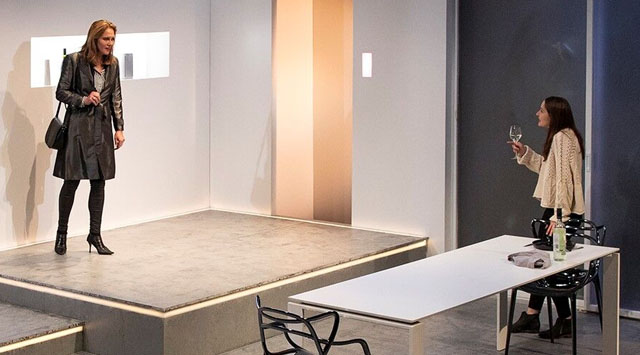
Book: Douglas McGrath
Music & Lyrics: Gerry Goffin, Carole King, Barry Mann, Cynthia Weil
Director: Marc Bruni
Cast: Jason Arrow, Stephanie Caccamo, Doron Chester, Barry Conrad, Andrew Cook, Marcus Corowa, Julia Dray, Akina Edmonds, Esther Hannaford, Amy Lehpamer, Cameron Macdonald, Nana Matapule, Mike McLeish, Lorinda Merrypor, Joseph Naim, Ruva Ngwenya, Josh Piterman, Naomi Price, Rebecca Selley, Sean Sinclair, Angelina Thomson, Mat Verevis, Anne Wood, Chloé Zuel
Image by Joan Marcus

Theatre review
It was 1958 when 16 year-old Carole King sold her first song to Dimension Records, thus beginning her career as a trailblazing female of the music industry. Featuring her hits, and others of the era, Beautiful the musical charts King’s early years as a songwriter, depicting personal and professional challenges that had come her way, as she evolved into the legendary figure we have come to know.

Douglas McGrath’s book is tender, gently but effectively sentimental, and memorable for its surprising humour. The soulful songs are arresting, with an immediacy of appeal derived from the unabashedly catchy style of 3-minute hit factories typical of the time. Powerfully nostalgic, there is no other way to respond to the music than to gush with excitement, at the beginning of each familiar tune.

Esther Hannaford is deeply endearing in the lead role, effortlessly sassy but with a startling quality of earthy humility that closely approximates our impression of the woman herself. Hannaford’s voice is scintillating in ballads and in numbers that convert easily to the musical theatre format, but grittier fare like “Natural Woman” and “I Feel The Earth Move” expose the rift in genres that remains to be ameliorated.

It is a large and talented cast, with moments of brilliance emerging from each member, to our immense delight, as the show progresses. Beautiful is a simple story, but rich with theatrical pleasures. Director Marc Bruni’s creation seems always to be perfectly gauged. It fulfils predictable requirements of a conventional Broadway show, but is fundamentally elegant in all its approaches. There are bells and whistles everywhere we look, but nothing ever goes overboard.

It is not a regular occurrence on stage, that a tale is told of a woman who reaches great heights of success, without her having to make enemies, or to lose integrity. Beautiful is about women making it in showbusiness, without demeaning themselves or anybody else. The show is unquestionably enjoyable, and it delivers all the frivolous fun one asks of the format, but its quiet representation of a sovereign womanhood, is the reason for our elation.

wwww.beautifulmusical.com.au

Review: In Real Life (Darlinghurst Theatre Company)

Venue: Eternity Playhouse (Darlinghurst NSW), Sep 15 – Oct 15, 2017
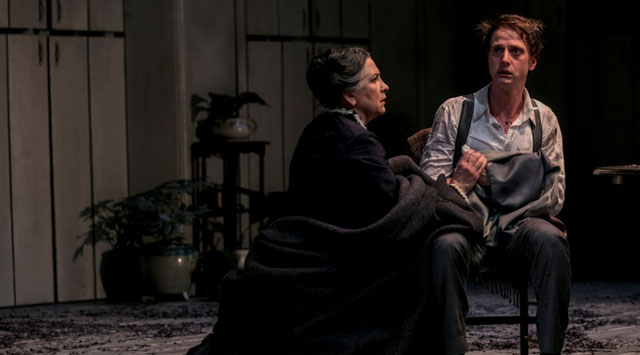
Playwright: Julian Larnach
Director: Luke Rogers
Cast: Anni Finsterer, Elizabeth Nabben
Image by Philip Erbacher

Theatre review
Although a completely natural state of being, we think of emptiness as a kind of malady. It is that sense of lack, that so often drives us to action. At our best, we are productive and inspired, but at our worst, it is our decisions that can cause unimaginable harm. In Julian Larnach’s In Real Life, we meet Theresa, a highly successful entrepreneur and innovator, whose own emptiness moves her to create two entities that define her life. Her invention Drum is a technological device that has captivated the world and is used by 2 billion people. Eva, her daughter, is the other source of pride.

The play deals with the dichotomy of organic versus synthetic, and the increasing conflation of the two in today’s lives. It explores our fears of technology, as innumerable others have, but provides space for its audience to determine independently, the morality, of its characters and of its narrative, within which we are inexorable participants. Larnach’s work is valuable in its timeliness, as it is vitally important that we discuss phenomena as they occur, but its concepts, although pertinent, are not always presented with sufficient salience, to be effectively engaging.

The two actors however, provide clear commentary on motivations and emotions represented by each character. Anni Finsterer is operatic in approach, telling Theresa’s story with great panache. We recognise all her psychological states, and the plot is made satisfying as a consequence, but it is a relentlessly intense performance that can seem deficient in authenticity. Elizabeth Nabben plays Eva, along with a host of secondary characters, demonstrating excellent focus and versatility. The two-hander is directed by Luke Rogers, who ensures that a sense of theatricality always accompanies the show’s intellectual interests. It is a well designed production, if slightly too literally rendered, with Sian James-Holland’s lights proving memorable in their playful liveliness.

Theresa constantly reaches outside of herself to seek answers for her anxieties. Even though there is no denying the greatness she has achieved, it is the profound sorrow of which she is architect, that remains. That singular desire, arising from an ineffable emptiness, has delivered both the best and worst of her existence. It is true, that our choices are good and bad. Regrettable decisions should be regarded as such, so that errors are not repeated. Regret, and disappointment, are crucial to how a person grows. Perhaps this is also how we can view our relationship with technology. Movement is inevitable, but trajectory and velocity can always be manipulated, in accordance with the lessons we learn.

www.darlinghursttheatre.com

Review: Ghosts (Belvoir St Theatre)

Venue: Belvoir St Theatre (Surry Hills NSW), Sep 16 – Oct 22, 2017
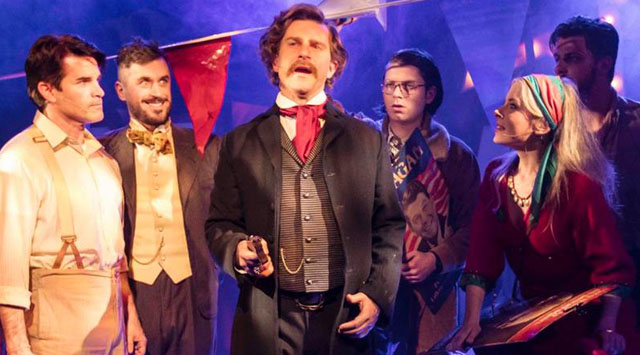
Playwright: Henrik Ibsen (adapted by Eamon Flack)
Director: Eamon Flack
Cast: Tom Conroy, Taylor Ferguson, Robert Menzies, Colin Moody, Pamela Rabe
Image by Brett Boardman

Theatre review
It is late 19th century, and the widowed Mrs Alving is building an orphanage so that her dead husband’s money can be released from her conscience. She is still unable to find peace, even though her poisonous marriage is now over, after having suffered in silence for decades. Ibsen’s Ghosts is about the incontrovertible links between past and present. It looks at how we are controlled by beliefs, events and decisions of days gone by, and the unconscious ways in which we keep ourselves and one another bound to societal rules and conventions.

Mrs Alving understands that a better life is possible, yet she persists with misery. Director Eamon Flack prompts us to question the nature of our protagonist’s volition, whilst simultaneously placing emphasis on external forces that insist on her compliance. From all our personal experiences, we know the tension that lies inevitably between others and the will of the self. The concept of a self-determined existence is an attractive one, even though none of us can lay claim to have fashioned an entirely independent state of being.

Ghosts is an inherently challenging work, and with the passage of time, its narrative has turned predictably archaic, leaving only its central philosophies to speak with pertinence. Tradition and religion no longer hold the same power, so the Alving family’s story is in many ways only a relic, but Flack’s ability to turn the essence of Ibsen’s writing into a resonating force for his show, is certainly admirable.

Pamela Rabe’s performance as Mrs Alving has an understated charm, that shifts the play’s old melodramatic quality to something that is altogether more elegant and naturalistic. It is quite extraordinary, the way Rabe sublimates obsolete details into her very convincing storytelling. All the actors are worth their salt, successful in bringing invigoration and surprising nuance, to some very dry material. Equally remarkable are Nick Schlieper’s lights, especially noteworthy in the final act, when imagery turns breathlessly sublime, and we see baroque paintings come to life.

Artists need knowledge of the past, in order that they may forge new ground, but like characters in Ghosts, their work is constantly under threat of being undermined by the reverence we so often attribute to the historical. The continual resurrection of dead white males like Ibsen can be considered necessary, but it can also be thought symptomatic of problems that the Australian artistic landscape faces. Our art means little if it hinges so strongly on traditions of olden Europe. The Alving patriarch might be dead and buried, but those he had left behind are doomed to perpetuate his agony. We want them to renounce those burdens and henceforth, prosper with the current of their own autonomy, but it seems easier said that done.

www.belvoir.com.au

Review: Assassins (Hayes Theatre)

Venue: Hayes Theatre Co (Potts Point NSW), Sep 16 – Oct 22, 2017
Book: John Weidman
Music & Lyrics: Stephen Sondheim
Director: Dean Bryant
Cast: Laura Bunting, David Campbell, Connor Crawford, Martin Crewes, Kate Cole, Bobby Fox, Hannah Fredericksen, Jason Kos, Rob McDougall, Maxwell Simon, Justin Smith
Images by Philip Erbacher

Theatre review
Australia does not believe in capital punishment, and we certainly never condone murder under any circumstance, but this principled conception of the world relies entirely, on a justice system that convinces us of its adequacy. If men in high places get off scot-free after committing egregious acts of immorality, we begin to think in terms of vigilantism. In Stephen Sondheim and John Weidman’s Assassins, a congregation of women and men remembered for the dubious accolade of having attempted to shoot and kill American presidents, are gathered for a history lesson, that talks about the phenomenon of political assassinations, and the meanings it represents in our modern democracies.

It is a great joy to be able to take pleasure in a work of musical theatre, that is not frivolously romantic, or twee, or excessively sentimental with its concerns. Some might argue that its topic is of particular relevance in 2017, but Assassins is thematically pertinent as long as our governments are a thing of contention, and for true democracy to exist, that sense of discordant anxiety must surely be ever-present. Whether or not the leader is to your tastes, there will always be a substantial portion of the population that is against them, if we are to uphold the fundamental doctrines surrounding our shared understanding of freedom.

Brilliantly conceived for the Sydney stage by director Dean Bryant, who balances spectacle with nuance, to deliver a show that is as entertaining as it is meaningful. In perpetual and harmonious motion, Bryant and choreographer Andrew Hallsworth, have created a sophisticated interpretation of Assassins, that addresses the genre’s need to tease and dazzle, whilst maintaining an air of gravity to proceedings. The production is a visual delight. Alicia Clements’ set and Ross Graham’s lights continually steal the show, with surprises that unfurl through every scene, splendid and ravishing from beginning to end.

An impressive ensemble takes charge of the material. Although not evenly skilled, their spirited cohesion makes for a performance that is firmly captivating. David Campbell is compelling as John Wilkes Booth, the man responsible for Lincoln’s death. Fabulously gifted in voice, and delicately studied with his acting, Campbell may not be a leading man on this occasion, but proves himself to be the unequivocal star of Assassins. Justin Smith’s marvellous acting chops too, make a fascinating Samuel Byck, the all too familiar loony who would very likely be a regular caller on talkback radio if alive today. Also memorable, is Martin Crewes, whose passionate singing and radiant presence, are reliable, as always, for adding vibrancy to the presentation.

There is always a temptation to imagine a world suddenly better, after a terrible tyrant is killed, but history has proven time and time again, that the removal of a head, does not automatically bring peace to the body politic. If there is anything worth celebrating about our Western democracies, it is our ability to argue for the greater good to prevail. As long as our conscience leads the way, harm can be minimised, but by the same token, the imperfections of our societies will remain salient. Murder can be sweet revenge, but it solves nothing, serving only to prolong the torment of injustice.

www.hayestheatre.com.au