Review: Joan (Seymour Centre)

Venue: Seymour Centre (Chippendale NSW), Feb 16 – 18, 2018
Playwright: Lucy J Skilbeck
Director: Lucy J Skilbeck
Cast: Lucy Jane Parkinson
Image by Robert Day

Theatre review
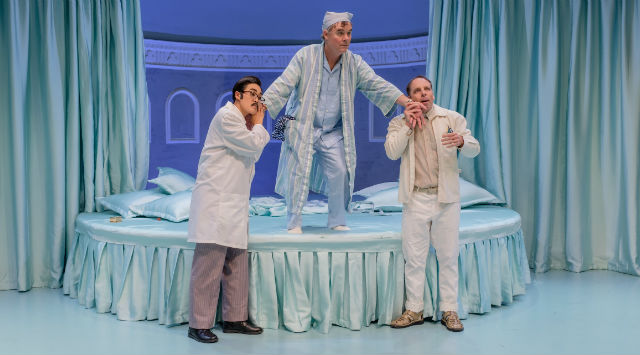
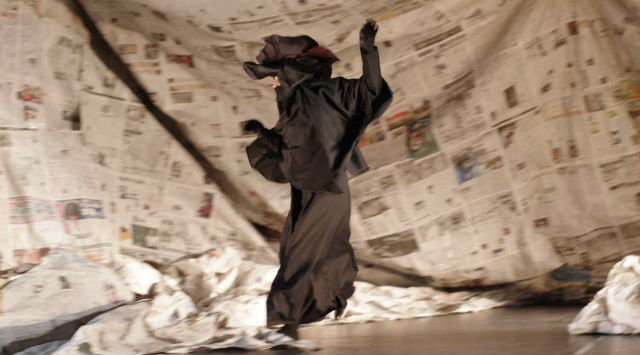
When they burned Joan of Arc to death at the age of 19, it was punishment for the charge of heresy, of dressing in men’s clothes. In Lucy J Skilbeck’s Joan, we acknowledge the warrior as a queer figure, finally indulging in the highly probable idea that the hero was in fact transgender. For those whose gender identities are never a complicated matter, this might seem a little like making mountains out of molehills, but for many LGBTQI individuals, Joan’s story of persecution is one that needs to be recognised for what it is.

In Skilbeck’s revised account of events, we sometimes see Joan as a lesbian in love with Saint Catherine, sometimes a drag king, but mostly we are encouraged, finally, to regard Joan as a person unable to comply with age-old rules of gender. The masculine armour was not merely an instrument of practicality for the fighter. We now know those struggles to be commonplace, that trans people exist everywhere, and that we always were. The restoration of queer and trans perspectives in our legends and histories is crucial to the way we think about ourselves, and represents an urgent demand that society validates all our contributions to the world; past, present and future.

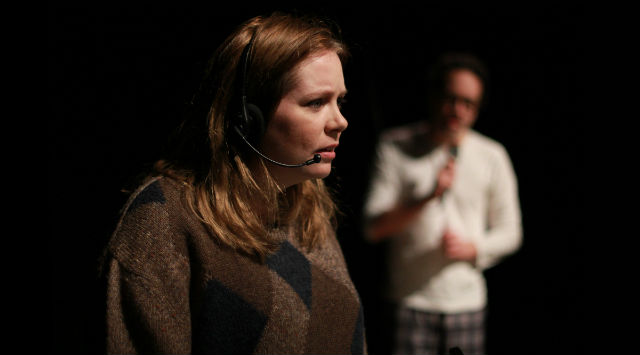
Lucy Jane Parkinson showcases a wealth of talents, as performer of the one-person show. A captivating presence, versatile and confident in their effortless vacillation between goofy and sentimental, Parkinson presents a character determined to steal our hearts one way or another. Their ability to maintain a personal connection with all of the audience, for the show’s entire duration, is a stunning feat, achieved through an intense sense of vulnerability and a precise, exhaustive familiarity with the work.

Joan of Arc’s legend was always about gender, yet for centuries, that story was told with a major obfuscation at its very core. When society refuses trans people the freedom to be ourselves, by misgendering us, and by forcing us to adhere to its narrow definitions of gender, that cruelty and injustice will invariably have reverberations beyond the immediate, and the damage caused is always greater than any of us would be ready to admit. This is why reinstating Joan’s truth in our historical memory, for the benefit of LGBTQI generations hereafter, is important. The meaning of gender is little more than the imposition of restrictions, to manufacture a system of control over individuals. It benefits few, yet virtually all of us participate in its fictions. We can dream to demolish these beliefs, but before we reach that point of enlightenment, all these rules have to be loosened, if only to salvage what is left of our humanity.

www.milkpresents.com

Review: Single Asian Female (Belvoir St Theatre / La Boite Theatre Company)

Venue: Belvoir St Theatre (Surry Hills NSW), Feb 16 – Mar 23, 2018
Playwright: Michelle Law
Director: Claire Christian
Cast: Emily Burton, Lucy Heffernan, Patrick Jhanur, Alex Lee, Courtney Stewart, Hsiao-Ling Tang
Image by Dan Boud

Theatre review
Social status in Australia is ordered, always with the married white man at the top. Michelle Law’s Single Asian Female is therefore quite instinctively, a play about the experience of being deemed inadequate, in at least three different ways. The lead characters have to contend with the notion that their marital status, ethnicity and gender are problems, in a story about perfectly normal, or more accurately, complete people who can never quite be good enough. Pearl and her two daughters try to get on with life, but they face challenges every day for being unmarried, for being women, for being “ethnic”. Fortunately, the Wong ladies are talented, resourceful and resilient, so we see them coping well, or perhaps it is their sense of humour that keeps them afloat.

It may be a narrative that is concerned with adversity, but the show is joyful, and laugh-out-loud funny from start to end. The portrayal of family dynamics in Single Asian Female is lovingly crafted, to elicit warm and fuzzy feelings that we cannot help but luxuriate in. Director Claire Christian introduces passion and playfulness into every scene, with gloriously snappy exchanges that are as entertaining as they are convincing. Effective and lively use of space, on designer Moe Assaad’s colourful set, makes two-and-a-half hours go by in a flash.

Brought to vibrant life by a group of extraordinarily charming and confident actors, Single Asian Female features excellent performances and some blistering chemistry that is unequivocally enthralling. Hsiao-Ling Tang is very animated as Pearl, not particularly naturalistic in approach, but a consummate storyteller, remarkably powerful and authentic with all that she brings to the stage. The sisters are played by Alex Lee and Courtney Stewart, both exquisitely detailed and ingeniously creative, delivering some of the most riveting characters of Australian theatre in recent years. Supporting roles too are beautifully concocted. Emily Burton is effortlessly and persistently hilarious, Lucy Heffernan embodies obnoxious types worryingly well, and Patrick Jhanur invents an alluring new masculinity with beguiling quantities of sweetness. This formidable cast of six is likely the best company one could have on any given night.

Unlike Europe, we are but a stone’s throw away from Asia, yet our cultural and national identities are stubbornly thought of as Western. We conveniently disregard Aboriginal and Torres Strait Islander cultures, and similarly, people of colour with migrant histories are routinely relegated to a lower class. Rightful owners of this land are indisputable, but the way privilege is organised and distributed in this country clearly still favours, in very aggressive fashion, its colonisers. All the people in Single Asian Female are, regardless of colour, as Australian as one another, but the playing field on which we all have to exist, needs to even out.

www.belvoir.com.au | www.laboite.com.au

Review: Top Girls (Sydney Theatre Company)

Venue: Sydney Opera House (Sydney NSW), Feb 12 – Mar 24, 2018
Playwright: Caryl Churchill
Director: Imara Savage
Cast: Paula Arundell, Kate Box, Michelle Lim Davidson, Claire Lovering, Heather Mitchell, Helen Thomson, Contessa Treffone
Image by Brett Boardman

Theatre review
Caryl Churchill’s Top Girls exposes our discomfort with stories that talk of societal problems, without the service of convenient villains. We have a hard time thinking about structures that have proven themselves unacceptable, without being able to place blame on individuals or archetypes. Churchill encourages us instead, to examine the ways in which those systems insist on our acquiescence at every turn, making us complicit some or all of the time, often keeping us ignorant of our participation in the damage being caused.

Angie has two role models at home, each representing dichotomous extremes of how we perceive the economy, society and our womanhood. It is Thatcher’s Britain in 1982, and the world seems to have split into simple distinctions of certain people deserving privilege, and others who are not. Angie thinks that emulating her aunt, Marlene, would deliver a more rewarding life, but what she sees, is only the surface of how things operate. She buys into the notion that success looks a certain way, and to attain it, one only needs to take certain steps of action. Churchill exposes, through Angie’s naivety, and in extremely subtle ways, the lies that are sold to us, and that we perpetuate every day.

Director Imara Savage’s faithful presentation of Churchill’s feminist declarations, keeps Top Girls as unconventional as ever. Its non-linearity and contradictory complexities seem to make for a show that is eternally refreshing. It confronts how we discuss gender, through a sustained reliance on symbolism over declarative language, for a more accurate depiction of the insidious nature of capitalistic corruption and deprivation. David Fleischer’s functional, unobtrusive set design allows little distraction from the important matters at hand.

The production succeeds in using what is in many ways a difficult text, to create a captivating work of theatre. The intellectual stimulation it provides, is challenging and unrelenting, but ultimately gratifying. Even though statements in the plot are made with a sense of ambiguity, our interpretations are never permitted to diverge from its political position. Actor Kate Box is particularly effective as Angie’s mother, Joyce, a woman defined by failure, who Box argues for, with great dignity and zeal.

It is a very impressive ensemble that takes the stage, featuring more than a few moments of brilliance from each performer. The luminous Helen Thomson brings excellent irony to Marlene’s fragile image of the woman who has it all, assisted wonderfully by Renée Mulder’s incisive costume designs and Lauren A. Proietti’s humorous wigs. Claire Lovering and Heather Mitchell are both memorably acerbic with their comedy, while Paula Arundell and Michelle Lim Davidson bring nuanced gravitas to the complicated souls that they inhabit. The youthful innocence of Angie is astutely portrayed by Contessa Treffone who proves herself a compelling presence, simultaneously measured and effervescent.

2018 is an exciting time to embrace feminism, but as long as opposition forces exist, implementing acts of feminism will always be difficult. To identify, attack and destroy unjust structures that are pervasive and normalised, is a task unspeakably enormous. To take on the interrogation and diminishment of things believed to be incontrovertibly true, is thankless to say the least, but of course, the best of us will persist. Tolerating subjugation may be easier for many, but for others, the compromise to integrity is unbearable.

www.sydneytheatre.com.au

Review: Mamma Mia! (Capitol Theatre)

Venue: Capitol Theatre (Sydney NSW), Feb 11 – May 6, 2018
Music and Lyrics: Benny Andersson, Björn Ulvaeus, Stig Anderson
Book: Catherine Johnson (originally conceived by Judy Craymer)
Director: Gary Young
Cast: Josef Ber, Jessica Di Costa, Alicia Gardiner, Alex Gibson-Giorgio, Sam Hooper, Phillip Lowe, Stephen Mahy, Sarah Morrison, Natalie O’Donnell, Monique Sallé, Ian Stenlake, Jayde Westaby
Image by James D. Morgan

Theatre review
The Mamma Mia! musical is approaching twenty years old, and although not particularly advanced in age, the work could benefit from a major refresh. The downside from having success on such a major scale, is the show’s inability to provide any surprises to a crowd waiting to be entertained. It delivers what it promises, and nothing else.

Every facet of this production feels no more than adequate, with safe artistic choices evident in every corner. In spite of all the predictability, it is unlikely that anyone would leave disappointed, although a hint of underwhelm might linger afterwards. The familiarity of Mamma Mia! is perhaps comforting, for those who come to the theatre seeking something slightly old-fashioned.

It is a well-rehearsed cast, uniform in skill and likeability. Leading ladies Sarah Morrison and Natalie O’Donnell are charming enough as the immortal mother-daughter pairing, both bringing a nice glowing warmth to the stage. There is accomplished but unremarkable singing by all, but the funnier performers make good use of comedic moments to leave an impression. Alicia Gardiner and Jayde Westaby are fun, flirty and glamorous as middle age besties who unleash a sense of vibrancy onto the sleepy town of Kalokairi. Ian Stenlake, Phillip Lowe and Josef Ber are suitably handsome and mischievous, playing the three potential fathers just how we have come to expect.

A wonderful thing about Mamma Mia! is the positive light in which all its characters are portrayed. There are no villains, no rivalries, and no one has to face punishment in order that its story of happily ever after can proceed. It is a perfect picture of the sisterhood, with good men providing colour and support; a strangely rare occurrence on any stage. No wonder it refuses to go away.

www.mammamiathemusical.com.au

Review: Love, Me (The Old 505 Theatre)

Venue: Old 505 Theatre (Newtown NSW), Feb 13 – 17, 2018
Playwright: Joseph Brown
Director: Joseph Brown
Cast: Danny Ball, Oliver Crump, Enya Daly, Ariadne Sgouros, Annie Stafford
Image by Jasmin Simmons

Theatre review
Christmas is by any definition, a special day for Australians. It is imperative for many to convene with those who are closest, but with closeness comes a level of trust that seems to allow a certain irregular level of liberty in how we communicate. Fighting at festive seasons is almost de rigueur. We let loose on those we love, knowing that forgiveness is assured. Joseph Brown’s Love, Me sees a group of young adults celebrate Christmas, for the first time, without parents and immediate family. It is their chosen family that has now become priority, even if the way they connect might suggest otherwise.

The five Millennials are, true to form, capable individuals yet to find their footing. Without ambition or responsibilities, their emotions take precedence over pragmatic concerns. The characters in Love, Me, like most of our young, spend too much time and energy seeking affirmation, from friends and lovers, constantly hungry for gratification from vanity. They do little for others, obsessed only with trying to find people that could make themselves feel complete. The playwright captures those experiences and perspectives well, and his dialogue is crafted skillfully, although a more critical or ironic approach would give the work a broader appeal.

There is a peculiar lack of energy to the staging, with much of the portrayals kept too interior and quiet. The actors work hard to present authenticity, but the show requires greater power in the nuances they try to articulate. More memorable are Danny Ball and Ariadne Sgouros who offer exuberance, both to be commended for their gregarious approach to storytelling.

“If you can’t love yourself, how the hell you gonna love somebody else,” the drag icon RuPaul often says. It is completely natural that we seek to be loved, but that desire seems only to operate as a force that projects externally. There is an undeniable feeling of emptiness that compels us to look for fulfilment by others, yet evidence shows that the truer, more enduring form of contentment has to be derived independently. What happens thereafter, can only be delightful.

www.old505theatre.com

5 Questions with Markesha McCoy and Madison McKoy

Markesha McCoy

Madison McKoy: How did you come to be involved in The View Upstairs?
Markesha McCoy: I flew to Sydney to be a part of Trevor Ashley’s new panto The Bodybag. It was a hilarious parody based off of the cult classic The Bodyguard. One of the producers for The View Upstairs, Gus Murray, played our strapping bodyguard and asked me if I wanted to stick around and be a part of the show. I’m so glad he did because I’m having an amazing time.

What’s challenging about bringing this script to life?
Teaching the audience about the tragic events that took place and the inequality we still face today while still making them laugh as well.

How is your character similar to and/or different from you?
We are very similar. We both love hard but keep a stone cold face. Hard to trust but once we do, we’ll do anything for anyone we’ve brought into our lives. The only difference I feel we have is our sexual preference haha.

Without giving anything away, what is your favourite line of dialogue from the show?
“I’m not just a basic bitch, another wannabe nouveau riche tipping toward a breakdown.”

If you had a magic wand, what role/show would you do next?
Aida in Aida.

Madison McKoy

Markesha McCoy: What’s your favourite colour?
Madison McKoy: My fave colour is purple. Yellow is a close second.

If you could have dinner with three of your favourite celebrities, dead or alive, who would it be?
Janet Jackson: I’ve loved her music and performance since primary school.
Barak Obama: I’d love to chat with him about life in general.
Suzanne Vega: The lyrics and melodies to her folk-style music are wonderful. I was turned on to her by a mate back in the 80s. Actually, we probably wouldn’t eat. We’d just sing. 🙂

What has been your favourite role to play?
I played Jim in the musical Big River some years ago. I thoroughly enjoyed the whole experience. It’s def a role I’d like to play again.

So you’re originally from America, whats something you miss from the States?
Yes. I’m originally from North Carolina and migrated to Australia in 1994. My family is the main thing I miss. I used to miss Oreo biscuits, I mean, cookies but you can get them in Oz these days. When I first arrived, they were only available in gourmet food stores. Yes, I actually paid $15.00 for a bag of Oreos, ha ha ha.

What can you learn from your character Willie in The View Upstairs?
Willie is a man of the world. He’s definitely seen some things! Some of his top advice is to keep living, keep trying to better yourself, and be kind to others.

Markesha McCoy and Madison McKoy can be seen in The View Upstairs the musical.
Dates: 8 Feb – 11 Mar, 2018
Venue: Hayes Theatre

Review: The View Upstairs (Hayes Theatre)

Venue: Hayes Theatre Co (Potts Point NSW), Feb 8 – Mar 11, 2018
Book, Music & Lyrics: Max Vernon
Director: Shaun Rennie
Cast: Henry Brett, Thomas Campbell, Nick Errol, Ryan Gonzalez, Martelle Hammer, Anthony Harkin, David Hooley, Markesha McCoy, Madison McKoy, Stephen Madsen
Image by John McCrae

Theatre review
Wes is an obnoxious brat, a twenty-something social media star escaping New York, for the less competitive town of New Orleans. The View Upstairs by Max Vernon imagines a hallucinatory haze, in which our protagonist encounters the inhabitants of a local gay bar circa 1973. It is a musical in which the gay Millennial travels over time and space to meet his cultural forebears, for historical lessons about those whose shoulders he stands on. In 2018 we have finally arrived at a time, when many young queers of Western civilisations are oblivious to the arduous journey required, to attain our current state of equality and tolerance. Wes takes things for granted and lives a reckless life, until he comes face to face with stories he never knew would resonate at such depth.

The View Upstairs is an undoubtedly well-meaning piece of writing, with beautiful sentimentality and a pervasive warmth, but its songs and narrative structure bear a derivative quality that is less than inspiring. Director Shaun Rennie focuses cleverly, on bringing heart and soul to the production, keeping us emotionally engaged in spite of the meandering, lacklustre plot. Isabel Hudson’s colourful set design is appropriately humorous; effective in its recollection of a period remembered for being less than aesthetically sophisticated, but infinitely more genuine in the way communities interact.

A charming cast performs the show, impressively well-rehearsed and with great ardour. Leading man Henry Brett is eminently convincing as Wes, bringing a wonderful intensity to the more dramatic scenes, and consistently bowling us over with some truly sensational singing. Similarly gifted is Markesha McCoy, whose voice is capable of bringing any house down, and on this occasion, we are grateful to be audience to her magnificence. Martelle Hammer and David Hooley are memorable for contributing a dimension of vulnerability to the story, both striking in the authenticity they deliver through their portrayals of the underclass.

Without the knowledge of how things have come to be, so much of daily life can seem meaningless. The immense achievements of the gay rights movement are enjoyed by so many of us in the West today, but it is becoming increasingly evident, that those who benefit most, are least aware of the sacrifices required to arrive at this point of evolution. LGBTQI elders had all wished for brighter futures, but few had imagined that with the eradication of prejudice, comes the blind ignorance of entitlement. The best qualities of humanity, whether compassion, resilience or ingenuity, are often derived from great adversity. When life becomes easy for our children, we have to worry about the virtues they fail to cultivate.

www.hayestheatre.com.au

Review: Metamorphoses (Apocalypse Theatre Company)

Venue: Old Fitzroy Theatre (Woolloomooloo NSW), Feb 8 – Mar 10, 2018
Playwright: Mary Zimmerman
Director: Dino Dimitriadis
Cast: Claudette Clarke, Deborah Galanos, Jonny Hawkins, David Helman, Sam Marques, Bardiya McKinnon, Diana Popovska, Hannah Raven, Sebastian Robinson, Zoe Terakes
Images by Robert Catto

Theatre review
Mary Zimmerman’s Metamorphoses is a retelling of Greek tales; a collection of short stories from ancient times that continue to fascinate, in this epoch of secular pragmatism. Celestial beings and supernatural events that defy explanation, yet instinctively comprehensible, and resonant with our natural appreciation for the magical, conspire as though to impart moral lessons. It is uncertain if we can learn anything new from these antiquated recurring tales, but as a work of art, what Metamorphoses does achieve, supersedes the traditional functions of mythologies.

All the great passions we associate with Aphrodite, Eros, Orpheus, et al. are retained in the production, to serve as vehicle for director Dino Dimitriadis’ exhilarating investigations into themes of gender, sex and beauty. The penises and breasts of performers are ascribed, as though at random, to characters with intractably gendered pronouns, confronting our beliefs about the woman-man binary. When Myrra appears with a penis, and Midas with an ample bosom, we cannot help but question these visions. We know the experience of gender to be real, but Metamorphoses presents them as hallucinatory, urging us to expand our understanding of the relationship between human anatomy and human nature. Its persistent queering of these origin stories, again and again, works with the plasticity of our minds, to help us dismantle and defeat useless and quite harmful restrictions, so that a process of intellectual and intuitive transformation may occur for us all.

Featuring an impossibly attractive cast, including David Helman and Hannah Raven who beguile us with their extraordinary physique and sensational burlesque expertise, adding an unexpected dimension of decadent performativity to an atmosphere that is already disarmingly sensual. Deborah Galanos and Jonny Hawkins bring us some very big personalities, so deeply satisfying in this rare occasion of exquisite flamboyance. Sam Marques, Diana Popovska and Sebastian Robinson deliver memorable sequences of dramatic poignancy, utilising both god-given and cultivated talents to connect with our desire for meaning and inspiration. Claudette Clark, Bardiya McKinnon and Zoe Terakes are soulful presences with delicate vulnerabilities that draw us in. These heavenly bodies are positioned on stage, inviting us to embrace all the wonder and horror that we are, in the most liberating, poetically earthy way.

Extravagantly imagined, and expertly manifested, the design of Metamorphoses offers a level of aesthetic engagement that is at least as thrilling as the text from which it germinates. Jonathan Hindmarsh’s work on set and costumes represents a lethal combination of resourcefulness and sophistication that is as fabulously enchanting as it is impressive. Lighting designer Benjamin Brockman really goes to town for this show, with a fervent sense of creative freedom irrepressibly evident in every change of illumination, subtle or vivid. Some of Brockman’s images are truly breathtaking. Music may not always be playing prominently, but Ben Pierpoint’s compositions are crucial to how our attention is brought to focus for each scene. The quality of transcendence he is able to introduce to these otherworldly spaces, is thoroughly remarkable.

The language of beauty is being spoken in Metamorphoses. Much of what the show communicates, resides beyond the capacity of words, and its success as an entity of fine art, makes it an exemplary work of modern Australia theatre. We gather in these communal spaces to address a need, but we rarely know the nature of that appetite. Often, we find ways to verbalise the results, but when we see great art, the gravity of what is left unsaid, must never be underestimated, and on this occasion, it is the complex feelings that keep evading explanation, that hold its true value.

www.apocalypsetheatrecompany.com

Review: Visiting Hours (Kings Cross Theatre)

Venue: Kings Cross Theatre (Kings Cross NSW), Feb 7 – 17, 2018
Playwrights: John Harrison, Constantine Costi, Michael Costi
Directors: John Harrison, Michael Dean
Cast: Keiren Brereton, Tara Clark, Rose Costi, Laura Djanegara, Sarah Evans, Cheyne Fynn, Jasper Garner Gore, Richard Hilliar, Derbail Kinsella, Sheila Kumar, Yannick Lawry, Kianah Marlena, Suz Mawer, Tom McCracken, Jim McCrudden, Joshua McElroy, Rebecca Claire Moret, Mansoor Noor, Heather Prowse, Monica Sayers, Katherine Shearer, Emma White, Elijah Williams, Nicole Wineberg, Arisa Yura
Image by Clare Hawley

Theatre review
The people who work in hospitals are among some of the best human beings we have, but the experience of visiting medical institutions is often harrowing. We are at our most vulnerable, quite literally putting our lives in the hands of others. The immersive theatre production Visiting Hours, written by John Harrison, Constantine Costi and Michael Costi, investigates that very notion of having to submit to health experts and authorities, of being in a situation where one’s mortality is constantly under threat and question. We venture through ten or so spaces, guided by strange or menacing personalities, never knowing what is to come.

The experience is often terrifying, but in a humorous, often childlike way, where we engage in the sensation of fear, understanding that no real danger is ever present. The spaces are marvellously designed to deliver a sense of nightmarish foreboding, whilst stimulating all our senses in a range of unexpectedly pleasurable ways. Benjamin Brockman’s lights are almost inappropriately sexy, in their many spectacular evocations of tension and anxiety. Production design by Anna Gardiner offers spatial configurations that constantly surprise and amuse. Tegan Nicholls’ sounds are powerfully hypnotic, in how they coax us into strange realms of fantasy.

Visiting Hours is a thrilling show, and its demands of us as active participants in the story, are rich enough to elicit genuinely complex reactions, without ever crossing any lines. The first half involves a high level of interactivity, delivering intensely fascinating sequences that captivate all our senses and intellect. As it progresses however, we are released into more conventional and passive modes of audienceship, and even though we continue to be gripped by its continual atmospheric fluctuations, our minds struggle to focus on the show’s sudden reliance on spoken text. Our minds and bodies remain preoccupied with the multidimensional appeal of spaces, and can only listen sporadically to the words being said. Nonetheless, there is no question that the work is beautifully performed, by a huge cast of 26 actors, all convincing, charming and playfully provocative with their individual roles.

We all have to live inside power structures that keep us subjugated. Being at the bottom of the pile is sometimes involuntary, sometimes complicit. Visiting Hours challenges us to think about compliance and choice, and to examine the meaning of free will, when society seems to have a persistent appetite for deception and oppression. False gods in white coats can often appear to be all we have, but the ability to think for oneself and the courage to obey one’s own intuition, are always on hand.

www.kingsxtheatre.com

Review: Fucking Men (New Theatre)

Venue: New Theatre (Newtown NSW), Feb 6 – Mar 10, 2018
Playwright: Joe DiPietro
Director: Mark Nagle
Cast: Jackson Blair-West, Michael Brindley, Stanley Browning, John Michael Burdon, Anthony Finch, Ray Mainsbridge, Tom Marwick, Nick Pes, Anton Smilek, Pete Walters
Image by Bob Seary

Theatre review
Replace all the women with men in Arthur Schnitzler’s 1897 play La Ronde, and we have Joe DiPietro’s Fucking Men, about men having sex with other men. It is now the 21st century of course, and although the concept of monogamy is still an interesting matter of discussion, there is something awkwardly regressive about watching gay men struggle with sexual conformity, at a time when their rights are finally being protected at equal measure by the law. With hackneyed issues of fidelity and coming out as its main areas of concern, the work can easily be mistaken for being of an earlier era of gay liberation, some thirty years or so ago.

Fucking Men is strictly about gay culture in the West, and this production features a big cast of white men speaking in Australian accents, in case we misinterpret its intentions and try to imagine the action taking place in some third-world nation. It is true, that these stories remain real to gay men in developed countries, but audiences would be hard pressed to find anything new in DiPietro’s depiction of gay identities that have not already been represented time and time again.

Mark Nagle’s direction of the work has some exuberance, and its embrace of the play’s frequent requirements of partial nudity is inevitably entertaining, but the show fails to escape the fundamentally prudish essence of the text. It wants our feathers to be ruffled by all the promiscuous goings on, but it all grows tiresome quickly, without a more radical or refreshing approach to discussing sex. Performances are uneven, with a big range of acting abilities, from the obviously amateur to some quite accomplished, but the cast shows a good sense of dedication to the staging, in spite of the unfortunately banal material.

It is valuable to have art talk about minority issues, to its own communities. There are no women, and no straight men in Fucking Men. It centres everything on the gay experience, and addresses its audience from that particular perspective, without concessions or compromise. There is integrity in a theatre that chooses an audience that is less mainstream and less commercial, for we all need to be reminded that our place in the world does matter.

www.newtheatre.org.au