Review: Jack Data (The Old 505 Theatre)

Venue: Old 505 Theatre (Newtown NSW), Feb 6 – 11, 2018
Playwright: Ruth Bell
Director: Ruth Bell
Cast: Richard Cotter, Christine Greenough, Elly Hirani Clapin, Mathias Olofsson, Julian Rumandi, Amelia Tranter

Theatre review
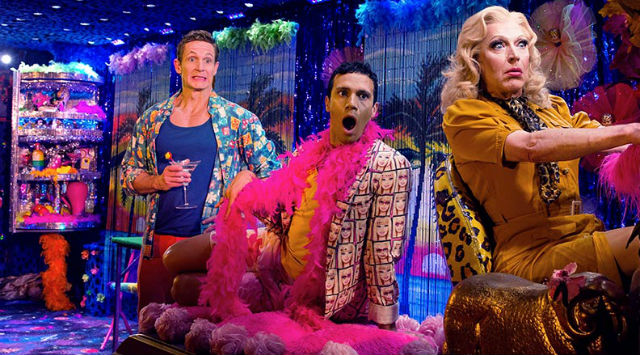
Exasperated by their daughter’s persistent independence, Alice’s parents decide to buy her a robot. Jack is not only a sex machine with the ability to help women procreate, he is a passionate housekeeper, a slave to Alice’s every need. Ruth Bell’s Jack Data imagines a future where artificial intelligence has well and truly penetrated the inner sanctum of human existence. Predictably, the play takes a technophobic position, with the well-worn attitude of deep scepticism about radical progress, that is unfortunately under examined. Alice’s resistance of a creation that is by all accounts “the perfect man”, requires greater exposition. In today’s climate of intimacy via smartphone, Alice’s unqualified dismissal of Jack, can be regarded as too convenient. The idea that humanity and nature are necessarily and unquestionably better than anything synthetic, has long been proven to be false.

The futuristic premise of robotic lovers is a deeply appealing one. Jack Data creates a fantasy in which we meditate on the meanings of love, relationships and families, in a way that forces our rationality to escape the cliché. It helps us interrogate our very existence, through concepts as far reaching as the delusion of our anthropocentrism. We begin to wonder if we can even conceive of humans as anything other than the very supreme occupants of earth, a clearly erroneous idea that we have become so used to. It is indeed a challenging but rewarding exercise, to try and not see our place on this planet as preeminent, to look square in the face at all the damage we cause, and come to an honest judgement on this humanity that we want to only think of as sacred.

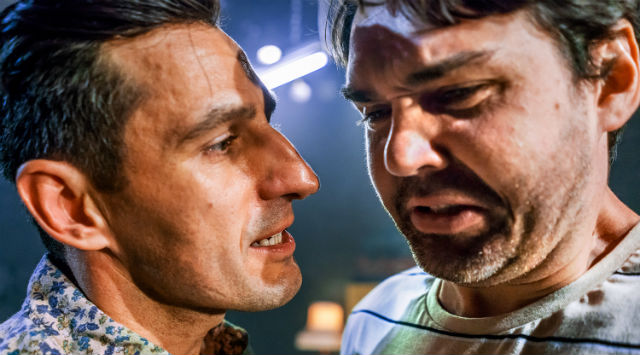
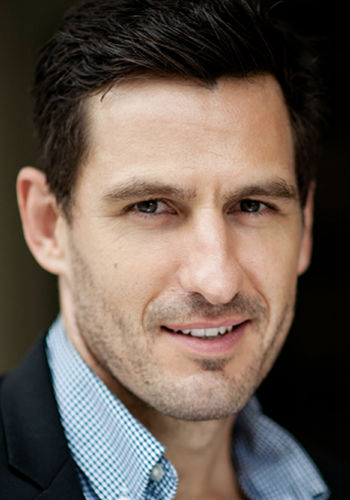
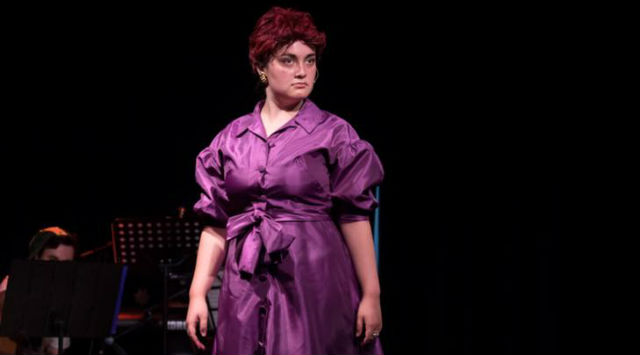
The production is rough around the edges, with performances that are only occasionally convincing. There is some troubling illogic that gets in the way, such as, the complete plot inconsistency of having robots widely available to all of the public, yet having characters act like they had never seen robots before. Actor Mathias Olofsson is however, very delightful as Jack, with fabulous physical expressions that communicate with great dynamism. He makes us see robots as superior beings, as technology invented precisely to address the many faults of our organic selves. There needs a revision to our prejudices as they pertain to the increasingly arbitrary divisions between synthetic and organic, natural and technological. For those more religiously inclined, “for in Him all things were created,” and for the rest of us, we all are one.

www.old505theatre.com

Review: An Act Of God (Darlinghurst Theatre Company)

Venue: Eternity Playhouse (Darlinghurst NSW), Feb 2 – 25, 2018
Playwright: David Javerbaum
Directors: Mitchell Butel, Richard Carroll
Cast: Mitchell Butel, Alan Flower, Laura Murphy
Image by Phil Erbacher

Theatre review
The Christian God comes to deliver a new set of ten commandments in David Javerbaum’s An Act Of God. It is an intriguing proposition, that God would admit to being imperfect. He remains omnipotent, fret not, but this version of the Almighty concedes he had made some very big mistakes, and has decided that it is perhaps time, finally, to rectify two millennium worth of erroneous beliefs.

The play is a fascinating evaluation of religion, and its impact on all of us, regardless of where our faiths reside. It shapes our values, as they stand today, in contrast with outdated precepts that many still insist on upholding. The transformation of God into something closer to a modern day being, as opposed to a purely idealistic creature of fantasy, pushes Javerbaum’s humanist arguments with great efficacy, although the humour of An Act Of God can be inconsistently compelling. Directed by Mitchell Butel and Richard Carroll, the show is relentlessly effervescent, with a flamboyance that sustains our attention confidently, but the writing offers punchlines that seem overly polite within its raucous atmosphere.

Leading man Butel is near faultless in his portrayal of the big man himself, meticulous in approach, with expert timing in his delivery of every line, even when the jokes struggle to meet their comedic objective. Exposed and vulnerable, Butel has nothing to hide behind, in this very immediate staging of God’s presence, and the actor emerges triumphant with a brilliant display of sheer skill and grit. Also noteworthy are the many significant adaptations to the script, in its transposition from America to Australia. Presenting an Aussie version of the Lord above is a shrewd decision, proving so popular, one could hardly imagine any viable alternative.

An Act Of God does not attempt to change our minds about His existence, but it urges us to take responsibility for life on earth regardless. It wants us to give up any notion that the faults of the world are of hallowed design; we have to take charge no matter what we believe about prayer. There may not be any controversial or new ideas in the play, but it provides clarity to secular and religious conceptions of our being, that are often entangled and rarely identified with sufficient veracity. Whatever we wish to happen in the hereafter, our part in the now can never be taken lightly. If humanity is made in God’s image, what we are able to accomplish, must never be underestimated.

www.darlinghursttheatre.com

5 Questions with Anika Bhatia and Margaret Thanos

Anika Bhatia

Margaret Thanos: What is something you admire most about the theatre?
Anika Bhatia: It allows us to think differently. There are constantly new ideas being discovered and explored and old ideas being recreated in new ways. It’s not just a form of entertainment. It is the most visceral art form. It allows us to vicariously see the truth to our own selves and reflect, evaluate and learn and even sometimes laugh or cry during the process.

If you could meet one famous theatre person who would you choose and why?
Damien Ryan from Sport for Jove Theatre. I attended two of his lecture programs for my HSC on The Crucible and Julius Caesar and I was just so impressed and started fan-girling a lot. He’s incredible.

Why is it important that we talk about young people issues?
Because young people are the future?! The struggles of beauty expectations, masculinity, isolation, cyberbullying, the pressure to conform and have sex permeate throughout the play. The decisions that young people make in the face of these struggles become defining moments of their life so it’s important to understand how we make them.

Tell me a little fun fact about you.
Well, I was born in India and moved to Sydney when I was 5. My mum said that we had some connections to the King of Rajasthan at one stage! Fun stuff!

What is something that you have learnt over the course of rehearsals for Intersection 2018: Chrysalis.
It’s been really fun to uncover the truth behind the texts and experience that with Rachel Chant and the creative team. I also learnt a lot from being able to talk to Gretel Vella, the writer of one of the scenes I’m in and understand and discuss the characters and her inspirations for them. From both Rachel and Bec, the assistant director, I’ve learnt that taking risks is really important in the rehearsal process and being able to trust myself and stay committed to my creative decisions.

Margaret Thanos

Anika Bhatia: What is your favourite line/moment in the play? 
Margaret Thanos: “You got bitten by that strange duck that followed you home.” – Blood On Bloody Blood Ladder. It’s not a line that I say, but it’s still glorious! 

How do you get into character? 
I think a lot about whatever has happened just before the scene, so I have the mindset to go into the situation as they would. I think about how they feel about what has just happened and what I want to get out of this scene. I also pace around in the physical way that my character does, so I get a sense of their body and the way that they carry themselves. It helps to remind my brain and body that I am not being Margaret in that moment, but I am someone else in their own life. 

Are there any similarities or differences between you and your character Jess from Victoria’s Secret Angel Virgin/Bakerz Delight?
Well, Jess and I are very different on so many levels! She really allows the opinions of what other people say to get to her, and worries about what other people will think, regardless of her own feelings and I think that is where we are most different. She also talks a mile a minute and basically spills out any thoughts that come into her head, while I tend to take more time with what I say. However, there are definitely similarities too! We are both 17, and I love how she has an awareness of the social issues in town, she sometimes builds things up in her mind to be bigger than what they need to be, and I think I do that too, and she gets annoyed at people interrupting her education – which is definitely a trait of mine! 

What is it like working with Rachel Chant?
Honestly, it is SO AMAZING. I am truly blown away by her insight into the play, the intricate meaning in every moment and her attention to detail. The crew and cast on this production is so fabulously talented and I am so grateful to have been a part of Intersection 2018: Chrysalis

What makes this show great for young people and adults alike? 
As a 17 year old you are really on the precipice of your life, waiting for it to start almost, while completing a really stressful period of school. You are also constantly thinking about the future so there are a lot of conflicted and confused ideas running around in your head and I think this show captures that really well. I truly believe that many young people who watch this show will resonate with at least one of the short plays. I think it’s great for young people that so many awkward situations that are typical for 17 year olds are being shown through this play, to show that these fears and desires that they have are not individual to them, but that so many others are going through the exact same experience. For adults, especially ones that have young people in their lives, I think that this show really looks into the teenage condition and all the great and terrible moments being 17 brings with it, and I think that is something really important for adults to understand and empathise with. 

Anika Bhatia and Margaret Thanos are appearing in Intersection 2018: Chrysalis.
Dates: 31 January – 17 February, 2018
Venue: SBW Stables Theatre

Review: The Backstories: Moya Dodd (Contemporary Asian Australian Performance)

Venue: Carriageworks (Eveleigh NSW), Feb 2 – 3, 2018
Playwright: Moya Dodd
Directors: Annette Shun Wah, William Yang
Cast: Moya Dodd
Image by William Yang

Theatre review
It is, sometimes, good to blow one’s own trumpet. In The Backstories: Moya Dodd, our eponym presents an autobiography with no trauma, no sensationalism and no great drama. Her life is peaceful, with so many proud successes that one might be tempted to call her lucky. The fact remains however, that Dodd is of Asian heritage, a woman, and a lesbian in Australia. The cards are clearly stacked against her, so even though she rejects the portrayal of herself as victim in any form of subjugation, it is important that we perceive that her achievements as real, and not a circumstance of chance. Dodd does not discuss hardships, but we already know the kind of world that we share.

Dodd speaks gently; her voice is calm, almost mesmeric in quality, but it is a defiant statement that she makes. Her accomplishments, personal and professional, are by all measures extraordinary. In the face of white, heteronormative, patriarchal forces that try to rule everything, and that will attempt to sublimate any story that contradicts their control of narratives, proclamations like Dodd’s are hugely important. For the majority of Australians who are routinely told that we are second class, a life well lived, and being public about it, is the best retaliation.

The script is well constructed, with smatterings of humour and pathos to accompany Dodd’s thoughtful assemblage of memories. Her delivery is wonderfully warm and therefore captivating, although a teleprompter or some similar system, would make for a more enjoyable experience. Musician Gareth Chin provides effective accompaniment on keyboards, and assists with Dodd’s recalling of the text. Two screens featuring photography through the years from the Dodd family, enhance immeasurably the production’s ability to engage our emotions. Direction by Annette Shun Wah and William Yang is incredibly delicate, and the result is something remarkably elegant, with a a quiet poignancy that proves to be quite haunting.

In free countries like Australia, it is true that we can be whatever we want to be, but the importance of role models must never be underestimated. We can only become what we can imagine, and our imaginations need sustenance. Moya Dodd’s backstory sets an example for masses of outsiders, all of us who sometimes fall into the misbelief that things are beyond our reach, or that entitlement belongs only to others. Spaces are evolving, and we have to understand our right to inhabit them.

www.caap.org.au

Review: Chrysalis (ATYP)

Venue: SBW Stables Theatre (Darlinghurst NSW), Jan 31 – Feb 17, 2018
Playwrights: Joseph Brown, Pippa Ellams, Harry Goodlet, Liz Hobart, Alexander Lee-Rekers, Madelaine Nunn, Julia Rorke, David Stewart, Phoebe Sullivan, Gretel Vella
Director: Rachel Chant
Cast: Brenton Bell, Anika Bhatia, Caitlin Burley, Jeremi Campese, Claire Crighton, Ben Tarlinton, Clare Taylor, Margaret Thanos
Image by Tracey Schramm

Theatre review
The delicate allure of a butterfly in full glory, is always under threat. The idea of a pupa however, is infinitely more satisfying, with its imminent beauty promising only majesty and wonder. This collection of ten short plays by young Australians may be named Chrysalis, but not only does it feature talent brimming with awesome potential, it showcases some surprisingly mature work that is already soaring with splendour. To witness such youthful triumph is indeed breathtaking.

An unequivocal highlight is a trio of remarkable and exhilarating monologues for the teenage girl. Writers Pippa Ellams, Julia Rorke and Phoebe Sullivan each deliver pieces that are playful, poignant and powerful, all giving extraordinary voice to female characters we routinely underestimate. Joseph Brown and Harry Goodlet show us in their respective segments, starkly different ways our boys behave with each other, but both are unabashedly tender in their depiction of affection and kindness, a refreshing change from the all too familiar rowdy machismo we have come to expect, of narratives concerned with Australian men and their mateship.

Director Rachel Chant does outstanding work in helping us find a sense of cohesion for the disparate plays, through her exquisite calibration, from story to story, of tone and style. Also impressive is her work here with the brilliant cast of eight. Every actor in Chrysalis is compelling and persuasive, all of whom are sensational with the incredible depth and authenticity they put on display. A sophisticated sense of humour further elevates the production, giving us some very smart laughs in addition to its many moving moments.

It is so marvellous seeing our young talk about their need for anywhere but here. Ambition is admirable, and when coupled with aptitude, the sense of optimism it provides is truly invigorating. The life of an artist is not an easy one, and many will fail to cut the mustard, but those who persist will be greatly rewarded, although rarely in accordance with early expectations. We must all grow up, and to choose to grow alongside the practise of art, is at once noble, and brave.

www.atyp.com.au

Review: Debris (Blood Moon Theatre / LZA Theatre)

Venue: Blood Moon Theatre (Potts Point NSW), Jan 30 – Feb 10, 2018
Playwright: Dennis Kelly
Director: Liz Arday
Cast: Aslam Abdus-samad, Lana Kershaw
Image by Zaina Ahmed

Theatre review
It was only several weeks ago, at the very beginning of 2018, that we first heard about the shocking case of the Turpin family in California, where 13 children were discovered to have been held captive and tortured by their own parents. In Dennis Kelly’s 2003 play Debris, we meet Michelle and Michael, teenage siblings neglected, abused and exposed to horrific conditions at home. Under the care of adults who are perhaps insane, or simply evil, the atrocities that we witness are the stuff of nightmares.

The play is intense and confrontational, possibly exploitative in its relentless depictions of trauma. Director Liz Arday establishes an enticing style and mood for her production, informed by cabaret traditions, complete with microphone stands and tinsel curtains, but there is a repetitious quality to the way its scenes are carried out that can wear thin. Nonetheless, Debris is memorable for excellent design work, with Arday’s own sensitive work on sound and Liam O’Keefe’s adventurous lights, both in collusion to manufacture a sense of electrifying theatricality and macabre decadence.

Two powerful actors bring the characters to life, on a stage that they imbue with frenzied savagery. Aslam Abdus-samad is a captivating presence, delivering spectacle after spectacle, with his penchant for the extravagant. Also very glamorous is Lana Kershaw, who proves herself the consummate storyteller, able to convey depths of meaning and emotion, in addition to her splendid recital of Kelly’s ostentatious words.

Art allows us to delve into the good and bad of humanity, but some behaviour it seems, will forever be beyond comprehension. The best that Debris can do, is to convince us of the depravity that we are capable of, and even though we hunger for an understanding of the origins of these extremities, we should probably be grateful that such abomination exists outside of our personal consciousness. The fact remains that we are capable of terrible things, and societies need to prevent them from occurring, whether or not we know how they come to be. The protection of children, especially, requires no justification. We only need to be aware of the dangers they are susceptible to, and look after them with unflagging vigilance.

www.lza-theatre.xyz | www.bloodmoontheatre.com

Review: Blind Tasting (The Old 505 Theatre / Subtlenuance)

Venue: Old 505 Theatre (Newtown NSW), Jan 30 – Feb 3, 2018
Playwright: Paul Gilchrist
Director: Paul Gilchrist
Cast: Sylvia Keays
Image by Liam O’Keefe

Theatre review
To thoroughly experience this mysterious thing called life, we have no real alternative but to dive into it head first. In Blind Tasting, Sophie learns the ropes as she goes along. Unlike her colleague Kirstie, who is determined to control everything, Sophie realises instinctively, the futility of that fussy perfectionist approach. Of course, mistakes are made, and heartache ensues, but there is no doubting Sophie’s self-determined way to a richer and wiser existence.

As we sip the wine that Sophie offers, we notice the thrill of the unknown and observe how essential it is to have an appreciation for the precarious and insecure qualities of our being. The wine may or may not be delicious, but it is only in the tasting of it, that one can be certain. No other opinion can ever take the place of that subjective participation.

Written by Paul Gilchrist, Blind Tasting is potent with its sense of joyful optimism, expressed through the playwright’s penchant for a poetic language that is remarkably luscious and evocative. The one-woman show is performed by Sylvia Keays, a presence that is gentle but persuasive, especially effective in the play’s moments of melancholy. The production is an engaging one, refreshing in its use of wine tasting as situation and analogy, but its delivery of drama requires greater gumption, for us to have a firmer identification with its narrative, and for its point to be made with stronger resonance.

Connoisseurs occupy themselves with the grading and sparring, of every wine bottle that they come across. It is human nature to compare and categorise the things we make contact with, but the deeper we get, into games of “finding the best”, the narrower our perspectives become, and the smaller our worlds devolve. With every label that we put on things, we also cast upon them, the restriction of possibilities. Sophie learns not to accept the pigeonholes that people want for her, and we wish for her to break the rules, as and when they find her.

www.old505theatre.com | www.subtlenuance.com

5 Questions with Claudette Clarke and Diana Popovska

Claudette Clarke

Diana Popovska: Which character do you most relate to in Metamorphoses and why?
Claudette Clarke: I am not sure which character I most relate to in Metamorphoses but I have researched Aphrodite the most because she is the main character I play and some of these qualities are parts of my personality. Aphrodite is mischievous, angry and revengeful to mortals who refuse to fall in love. Goddess of love, sex and procreation; beauty, seduction, pleasure and happiness. Antithesis curses for non-compliance of the laws of love are: Sexual repulsion; Unnatural desires (incest, bestiality, etc.); Love unreciprocated; Ugliness. Some of these curses are played out in Metamorphoses.

This is your second time working with Dino, how is it different?
I worked with Dino many years ago in his very memorable production of To Kill A Mockingbird. Almost the entire season was booked out and people still talk about the production. The plays are both “classics” and here Dino is directing a queer reading of Zimmerman’s modern adaptation of Ovid’s verse to reflect current times. I am really enjoying working with him again. I love the way he pushes boundaries. As an actor of African Caribbean decent, I immediately identified with the topic of black and white in Mockingbird whereas it was interesting for me to think in more depth about gender mixes. Although I have always readily accepted difference, this reading pushed me to think further. This production reinforces my belief that, as humans, all we ask is to be respected and loved for who we are.

What has been your favourite moment in rehearsals so far?
My favourite moment in rehearsals came when Johnny Hawkins joined the cast. He has a way of playing and having fun with the characters, exploring possibilities, which is what is required.

Why do you believe this queer reading of ‘Metamorphoses’ is particularly important for the queer community to see?
I think that it is particularly important for the queer community to see this queer reading of Metamorphoses because these poems from Ovid were probably completed around AD 8. It may be reassuring to learn that stories of broader sexual and gender identities have existed for so long.

What excites you most about the staging of this play?
A cast of 10 actors on a tiny stage the whole time promises to be all-encompassing for an intimate audience to experience. The Old Fitz Theatre is one of the most intimate creative theatre spaces in Sydney.

Diana Popovska

Claudette Clarke: What parts of your personality as a human does your parts bring out?
Diana Popovska: I feel like this production and the parts I have been cast in bring out my playfulness as a human more than anything else. It has been such a beautiful experience introducing ‘play’ into the rehearsal room from day one. This has allowed me to connect with the text, our queer reading of the text and my fellow actors in a way which has been visceral and raw. This production has also brought out my queerness and sensual energy, and highlighted how fabulous I feel as a queer woman making theatre.

How does the “queer reading” of Metamorphoses impact on your interpretation of your parts?
I think it is important to understand that these stories are universal. For me, the several characters that I play in this production all experience various human emotions such as grief, love, heartache, lust and so on… This “queer reading” if anything allows me to celebrate more than ever these characters and their experiences, as well as stand there and fight for them and their right to be represented on an Australian stage.

What made you interested to be part of this production of Metamorphoses?
I have always wanted to work with Dino Dimitriadis as a director and when I found out that he was doing Metamorphoses I wanted in because I was incredibly interested to see what he would do with a text so colossal. As a queer identifying woman, I wanted to represent my community on stage during Mardi Gras. I mostly wanted to do this production because I knew it would be a celebration of queerness, a celebration of ‘difference’ and a celebration of the unwavering and all enduring human spirit in the face of hardship.

What kind of kid were you at school?
I was a little bit of a nerd / a little bit cool. I loved playing cards at lunch time and I was even on the debating team for a while. Drama class was my favourite, but I also really enjoyed playing sport too. I feel like I was super friendly with everyone in my year, we had a pretty tight year. I was pretty confident and ‘cool’, except for when it came to telling my high school crush, Katie that I liked them. I was super bashful around her and other girls I liked, and you know what they say, “you snooze, you lose!”.

How do you envisage theatre changing since ‘same sex marriage’ became legal in Australia?
I am hoping that far more companies will open their doors to allow for queer stories to be staged. I am hoping that this will allow for more queer identifying artists and creatives to create work and to see themselves represented in others work far more rapidly. If anything, the arts in Australia have been behind ‘same sex marriage’ for a long while now, it’s actually our government that has needed to pull their finger out. But now that the horrible plebiscite is over, I hope for love and inclusiveness for all queer identifying people and their allies both on and off stage.

Claudette Clarke and Diana Popovska are appearing in Metamorphoses, by Mary Zimmerman.
Dates: 8 February – 10 March, 2018
Venue: Old Fitz Theatre

Review: Darlinghurst Nights (Hayes Theatre)

Venue: Hayes Theatre Co (Potts Point NSW), Jan 4 – Feb 3, 2018
Book: Katherine Thomson (based on the book by Kenneth Slessor, and original concept by Andrew James)
Music: Max Lambert
Director: Lee Lewis
Cast: Baylie Carson, Andrew Cutcliffe, Natalie Gamsu, Abe Mitchell, Billie Rose Prichard, Sean O’Shea, Justin Smith
Image by Brett Boardman

Theatre review
For many who reside in Sydney, the Darlinghurst area marks the heart of our city. It may not be the official “central business district”, but its spirit represents how we think of home, at our most wistful moments. Darlinghurst Nights, the musical and the locale alike, are a little tawdry and decadent, always seedy but romantic, full of melancholic nostalgia. The story by Katherine Thomson, based on Kenneth Slessor’s 1933 book, is a bittersweet embodiment of the bohemian essence we love associating with Sydney and the Kings Cross area, inventively devoid of the bourgeoisie.

Colourful characters and their dramatic stories are brought to the stage by Lee Lewis’ passionate direction, offering dreamy and ghostly tribute to lives that continue to gloriously disgrace the area. Historical tales are accompanied by Lee’s modern sensibility, allowing for a convergence of past and present, so that we relate intimately with the action unfolding before us. The production is cleverly designed by Mason Browne, whose set and costumes help to tell the story with remarkable sophistication and minimal fuss. Lighting designer Trent Suidgeest is especially noteworthy with his very thorough and imaginative work, in introducing a sense of poetic evanescence to all that we see, persistently exploring ideas for emotional landscapes that keep us firmly engaged with the show.

The cast is strong, a well-rehearsed bunch admirable for their restrained approach to the musical format. Each personality is convincingly portrayed, and whether raspy voiced or vividly sparkling in tone, every song is performed with great conviction. There is exceptional beauty in Max Lambert’s music for Darlinghurst Nights. Crossing over from classical to jazz and pop, Lambert has the intricately conceived entirety blended into one seamless work, that feels so marvellously accurate in its sonic representation of this city.

Ultimately, it is all illusory of course, our sentimental fantasy of this Sydney that has no big business, no bureaucracy and no black history. In Darlinghurst Nights, the truth is not allowed to get in the way of a good story, but as this nation strives to move towards a stronger future, a greater honesty needs to inform the way we think and talk about ourselves. We can no longer afford to leave buried, all our hard and inconvenient truths.

www.hayestheatre.com.au

Review: Mother (Belvoir St Theatre / If Theatre)

Venue: Belvoir St Theatre (Surry Hills NSW), Jan 24 – Fe 11, 2018
Playwright: Daniel Keene
Director: Matt Scholten
Cast: Noni Hazlehurst
Image by Brett Boardman

Theatre review
Christie’s misfortune is deeper than any we have ever encountered. Having lost everything, she is on the streets with only memories of trauma, to while the days away, like a waking recurring nightmare. Daniel Keene’s Mother is about the hardest life a person can bear, a shocking Greek tragedy made real and salient for our times. It goes beyond an examination of mental health deterioration, to create a portrayal of the person underneath the illness, with all her humanity intact.

Keene is fascinated by the monster or, more accurately, the social pariah, but is interested in reaching a compassionate understanding of what we usually and conveniently regard as abhorrent. Mother insists that we connect with its subject. Countless moments of disarming poignancy, make us identify with this strange creature. It rejects our impulse to think of Christie as alien and disposable, insisting that we walk a mile in her shoes.

The role is magnificently performed by Noni Hazlehurst, who proves that perfection in art, is attainable and not just an abstract construct. She presents her one-woman show with flawless technical brilliance, leaving us in awe of the superhuman feat that is under way, whilst keeping us firmly locked into the narrative of Christie’s utter destitution. Hazlehurst being at the top of her game, allows us to see so clearly, what it is like for a woman languishing at the very bottom of the heap. The actor’s capacity for persuasion is extraordinary. The sense of authenticity that Hazlehurst is able to convey, feels boundless; there seems no delineation between the suffering of actor and character. She tells a tale of pain, and we are shaken by it, no matter where we think the anguish comes from.

It is an exceedingly elegant piece of direction by Matt Scholten, whose minimal approach is impressive in its confidence, but it is questionable if the staging adequately addresses Belvoir’s comparatively large auditorium. The production is a dynamic one that oscillates deftly between states declarative and poetic, with the quieter scenes tending to wane slightly in the big hall. Sound design by Darius Kerdijk is inventive and effectively evocative, and Tom Willis’ lights add an ephemeral beauty to the potent melancholy he establishes for the space. Costume designer Kat Chan ensures that Christie looks every bit the vagrant we pretend not to see in every Australian city.

A tremendous sadness permeates the play, and we are moved to consider our relationship with the homeless. Whether or not we wish to make personal connections, it is of fundamental importance that we are cognisant of our responsibilities regarding all the neighbours who surround us, no matter how they reside. Humanity is worth nothing, if we choose not to care for those in need. Christie, like any human being, is not blameless, but the moment we give up on trying to bring improvements to her life, is when we have to seriously interrogate our priorities as a first-world society.

www.belvoir.com.au