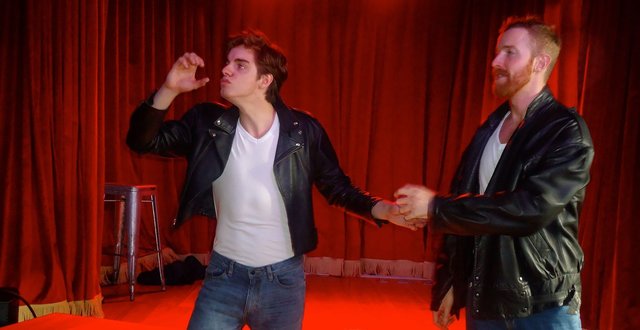
Spoil Your Love Life (The Newsagency)

spoilVenue: The Newsagency (Marrickville NSW), Oct 29 – Nov 9, 2013
Performer and devisor: Michelle Pastor
Musical director: Alison Avron

Theatre review
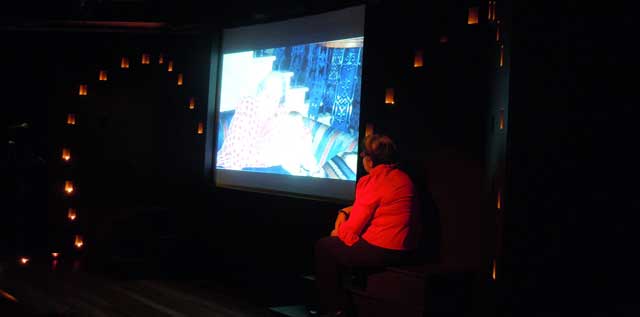
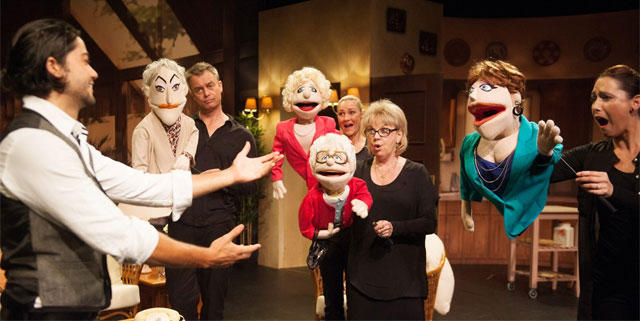
Michelle Pastor and her show Spoil Your Love Life are above all else, quirky. Pastor’s brand of endearing silliness is amplified in one of the smallest venues in Sydney, The Newsagency. This 40-minute comedy cabaret piece is not the most ambitious of creations, and it springs forth from the simplest of premises, but “small theatre” like this can certainly amuse and entertain.

Pastor is a performer with great conviction and natural charm. The songs for her show are well-chosen, and Alison Avron’s arrangements are pleasantly structured. Pastor has some tuning issues that are exposed by the intimacy of the room, but her phrasing is strong, and she uses the songs well to tell her character Hanna’s story.

Hannah has a deep infatuation for movie star Hugh Jackman, and the glitzy Hollywood lifestyle he represents. The elusiveness of “the big time” is a theme of the show, but it is a comforting idea that emerging Australian theatre practitioners like Pastor are able to showcase their work, irrespective of clout or stardom.

www.michellerose.com.au

An Ordinary Person (Sydney Independent Theatre Company)

anordinarypersonVenue: Old Fitzroy Theatre (Woolloomooloo NSW), Oct 22 – Nov 16, 2013
Playwright: Robert Allan
Director: Julie Baz
Actors: Cherilyn Price, Alexander Butt, Mel Dodge, Jai Higgs, David Jeffrey, Carla Nirella
Image by Katy Green Loughrey

Theatre review
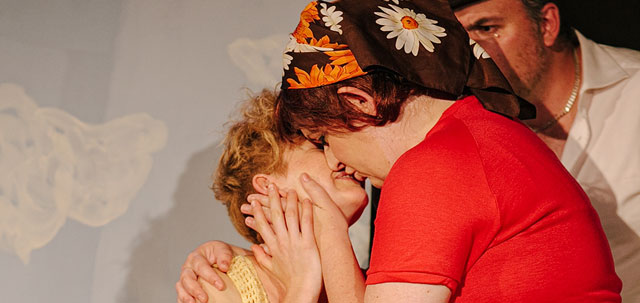
At the heart of An Ordinary Person is an unusual relationship. It is an unconventional marriage not often represented on stage, but it is an entirely believable one. Robert Allan has written an interesting story, and he has crafted characters that are idiosyncratic, curious and memorable. The structure of the plot, however, is a challenging one. The show’s first half is full of intrigue, but not much else. It takes its time introducing the various characters in an air of mystery, but the audience needs a stronger sense of the impending drama for these characters to be compelling. Fortunately, the second half is much more satisfying, with drama bursting at all its seams.

Performing the piece is an ensemble of uniformly strong actors. Cherilyn Price is particularly impressive, playing her character Aggie at two different ages. She switches effectively between the portrayal of a middle-aged woman and her 14 year-old version, without the use of costumes or makeup, relying only on her acting. It is quite an experience to see Price’s method in her subtle but distinct transformations. Carla Nirella plays Fiona, and stands out with the effortless intensity and conviction she brings to the production. Her role is a simple one, but she attacks it with clarity and energy, giving very solid support to the key characters.

The play’s themes are dark and uncommon but Julie Baz’s direction does not exploit them gratuitously. She is careful to depict all characters with compassion, so that we leave the show thinking about our society’s issues in a mirror that reflects the social, rather than the personal. Although fundamentally a singular species, ordinary persons bear infinite differences between each and every separate entity. It is in the meeting of these individuals that extraordinary things happen, good or bad.

www.sitco.net.au

Love Field (Bakehouse Theatre Company)

lovefieldVenue: TAP Gallery (Surry Hills NSW), Oct 22 – Nov 2, 2013
Playwright: Ron Elisha
Director: Michael Dean
Actors: Lizzie Schebesta, Ben Wood
Image by Tessa Tran, Breathing Light Photography

Theatre review
Jackie Kennedy and Lyndon Baines Johnson (the 36th President of USA) feature in this fictional story situated on a jet, immediately after the Kennedy assassination. Ron Elisha’s writing is imaginative and his thoughts are complex. There is a sense of something wild bubbling under his constructed universe, although the surface is deceptively restrained and conventional.

Direction of the production focuses on the creation of a naturalistic environment, and relies heavily on the actors’ lines to convey Elisha’s ideas. This is a tall order, as these concepts are deep and seem to demand more elaborate exploration. On the other hand, what results is an elegant work with a dignified simplicity.

Both actors are gifted with impressive but easy, stage presence. They are naturally fascinating creatures that absorb our attention effortlessly. Ben Wood plays Johnson, with a commanding speaking voice and great conviction. He instils clear character transitions throughout the play, and allows us to perceive several dimensions to his personality in a relatively short time (it runs for approx 75 mins). Lizzie Schebesta’s performance of the newly widowed Jackie Kennedy is beautifully melancholic, but she comes across slightly young for the role, and a little muted in her approach.

Although lacking in extravagant dramatics, Love Field is interesting and engaging. Its attempts at discussing issues of gender and social politics are well-meaning, and because modern times always seem to be in a state of “political turmoil”, the play is a timeless one.

www.bakehousetheatrecompany.com.au

Dirty Rotten Scoundrels (Theatre Royal)

dirtyrottenscoundrelsVenue: Theatre Royal (Sydney NSW), Aug 14 – Sep 1, 2013
Writer: Jeffrey Lane (based on the 1988 film)
Music and lyrics: David Yazbeck
Director: Roger Hodgman
Choreographer: Dana Jolly
Performers: Tony Sheldon, Matt Hetherington, Amy Lehpamer, John Wood, Anne Wood, Katrina Retallick
Image by Kurt Sneddon

Theatre review
The “Broadway Musical” genre is hugely popular, with productions travelling across continents everyday. They represent the ultimate in live entertainment, and consistently provide incredible inspiration to everyday folk by showcasing unimaginable artistic skill and talent.

Dirty Rotten Scoundrels is an excellent example of a show that ticks all the boxes. It is an engaging and amusing story, peppered with uproariously funny sequences, and a clever plot driven by beautifully written songs. Design elements are of the finest quality. The stage in Theatre Royal is slightly tight, but the venue looks exceptionally elegant and glamorous on this occasion. Performances are beyond “world class” with an Australian cast that can only be described as brilliant.

Matt Hetherington as Freddy Benson is a perfect fit; one can hardly imagine any other actor more suited for the role. Hetherington is the proverbial “triple threat” incarnate, with a killer singing voice, impressive command of choreography, and seriously hilarious comic abilities. His star shines irresistibly bright in this production.

Amy Lehpamer is an absolute delight as Christine Colgate. Her masterful vocals are quite literally perfect, and coupled with her fervency in the comic content of the show, she is completely impressive and a very wonderful musical theatre actor indeed. Like Hetherington, Lehpamer has star quality in spades, and together, they are a surety that this is one production that will never have an “off night” in its entire season. Also noteworthy is Katrina Retallick who has a smaller role as the pistol wielding Jolene Oakes. She earns some of the biggest laughs of the show, and while appearing only in a couple of scenes, they are thoroughly memorable ones.

This is a musical characterised by its vivacious humour. There is an irreverent sensibility that many would love, but others might find challenging. For those of us who enjoy a dose of naughtiness, and are not averse to a little scoundrelly wit, this is a show that will leave an enduring impression for many years to come.

www.dirtyrottenscoundrels.com.au

Three Winters Green (Lambert House Enterprises)

threewintersgreenVenue: King Street Theatre (Newtown NSW), Oct 7 – Nov 3, 2013
Playwright: Campion Decent
Director: Les Solomon
Actors: Tom Sharah, Brett O’Neill, Gael Ballantyne, James Wright, Emily Kennedy, Matt Young, Diana Perini

Theatre review
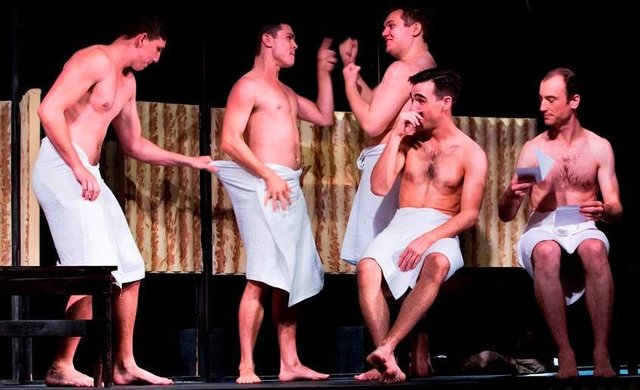
First produced in 1993 (and again in 2003), Three Winters Green arrived at a time when the AIDS epidemic was still a crucial force in galvanising gay communities in the developed world. Campion Decent’s script is a beautiful representation of that generation’s experiences, and his depiction of their struggles is an important documentation that needs to be borne witness time and time again.

The emphasis on Les Solomon’s 2013 direction remains on the devastating effects of the AIDS virus, but other elements in Decent’s writing make the play more than a relic of recent lgbt history. It deals with uniquely queer experiences of family, the closet, and homophobic violence, all of which are hugely relevant themes that resonate strongly, even for the most jaded of contemporary Australians.

Tom Sharah is the lead, and his work is a major factor in the success of this production. Sharah has a thorough and sensitive understanding of the text, and his portrayal of Francis is deeply affecting. He plays the flamboyant character with great humour and delivers a lot of big laughs, but he also cuts through with beautiful, subtle moments that convey truthful character development and heartfelt emotion. It is a heartbreakingly sublime performance. Brett O’Neill is memorable in his supporting role as Andrew. He is naturally charismatic, and impresses with simplicity and authenticity. The restraint in his acting contrasts well with other cast members, and allows him to shine brightly through.

The play concludes with the unfurling of a quilt that was part of the Australian AIDS Memorial Quilt Project, that commemorates and honours those who have lost their lives to the disease. The poignancy of the quilt’s presence, along with the angels and the mourners they leave behind, cannot be understated. George Orwell said, “the most effective way to destroy people is to deny and obliterate their own understanding of their history.” May Three Winters Green return with greater emerald vibrancy at each passing season, and may we never forget the foundations of our shared histories, even if the communities we live in become increasingly fragmented.

www.kingstreettheatre.com.au

Butterflies Are Free (Lambert House Enterprises)

butterfilesVenue: King Street Theatre (Newtown NSW), Oct 7 – Nov 3, 2013
Playwright: Leonard Gershe
Director: Les Solomon
Actors: James Wright, Emily Kennedy, Cheryl Ward, Matt Young

Theatre review
Written by Leonard Gershe in 1969, Butterflies Are Free premiered at virtually the same time as the legendary Woodstock Festival. The work discusses notions of freedom at a time when America was in the depths of the Vietnam War, and when the hippie subculture was at its peak. 44 years on, the resonances in Gershe’s script remain strong, and its story still strikes a chord with contemporary audiences.

Les Solomon’s revival of the play is slightly referential of the 60s, but design elements do not explore the retro aspect too deeply. Instead, Solomon focuses our attention on character development and the themes inherent in the writing. His direction of the piece is confident and passionate. We are treated to perfectly paced comedy, as well as an earnest approach to the deeper and more philosophical sections of the text.

Quality of acting is consistently strong. Emily Kennedy’s portrayal of a free spirit is delightful, and she captivates by shading her character with glimpses of a sombre interior. Her balance of light and dark grounds the show in a space of warmth and truthfulness, and establishes an intimate sense of identification with the audience. Cheryl Ward plays Mrs Baker, the “mother”, bringing a comic quality that is enjoyable yet subtle. Ward’s performance is measured and sensitive, creating probably the most convincing character in the show. It is noteworthy however, that the final quarter of the play seems slightly rushed. The comedy eventually gives way to a fairly serious conclusion packed with meaning and pathos, but the actors seem to remain at the speed of the earlier scenes.

The theme of freedom is one that absolutely everyone can relate to. In Butterflies Are Free, we are presented with a beautiful story and sublime, deeply moving words. This production allows us to savour those words as delivered by a group of impassioned players, and provides an opportunity for its audience to reflect upon the freedoms that exist in our lives and also those that are sadly absent.

www.kingstreettheatre.com.au

Daisy Pulls It Off (The Genesian Theatre)

daisypullsitoffVenue: The Genesian Theatre (Sydney NSW), Oct 18 – Nov 16, 2013
Playwright: Denise Deegan
Director: Mark Langham
Actors: Anna Hitchings, Amylea Griffin, Bianca Bradey, Laura Genders, Anita Donovan, Monica Smithers

Theatre review
Originally staged in the 1980s, Denise Deegan’s Daisy Pulls It Off is a modern parody of adventure stories from the early twentieth century about English boarding schools. With the passage of time, Genesian’s production has the difficult task of referencing those old adventures that have all but faded from our memories. On the bright side, director Mark Langham and his cast have crafted a crisp and well-rehearsed piece of light entertainment that accommodates audiences aged 8 to 80.

Amylea Griffin’s performance as Trixie Martin is by far most memorable. Her portrayal of an adorable and playful youngster is vibrant and extraordinarily effervescent. She brings a great sense of fun to the proceedings, and keeps the show lively whenever she appears. Laura Genders is one of the funnier actors in the show, who performs the postmodern elements of the comedy most effectively. She demonstrates that realism has very little place in Deegan’s writing, and it is in the madcap and absurd, that her humour is found.

Langham is very strong with his details in the construction of the play, and even though the laughs are not always riotous, Daisy Pulls It Off is filled with wonderment and good old-fashioned cheer, which are of course the hallmarks of the great Genesian Theatre.

www.genesiantheatre.com.au

Hamlet (Belvoir St Theatre)

hamletVenue: Belvoir St Theatre (Surry Hills NSW), Oct 12 – Dec 1, 2013
Playwright: William Shakespeare
Director: Simon Stone
Actors: Toby Schmitz, Emily Barclay, Luke Byrne, Thomas Campbell, John Gaden, Nathan Lovejoy, Robyn Nevin, Anthony Phelan, Maximilian Riebl, Greg Stone

Theatre review
Shakespeare’s tragedies are vehicles for artists to express the extremities of human emotion and inconceivable psychological torment. When created well, a staging of plays like Hamlet will allow for the most outlandish and ostentatious of acting styles. In Belvoir’s production, Toby Schmitz pushes his portrayal of Hamlet over the edge of sanity, giving us one of the year’s most memorable theatrical performances.

Taking the brave decision to remove the ambiguity of the protagonist’s insanity, director Simon Stone’s version of events presents a Hamlet that is as much about mental disorders as it is about death and betrayal. Consequently, Schmitz’s choices are liberated, and he explores states of grief and madness with great intensity and high-octane drama. It is a delicious performance and the actor is magnetically powerful, while being controlled and considered. Schmitz is as intelligent as he is artistic, and the combination is lethal.

Greg Stone plays Polonius with great flair and confidence. This is an actor who loves Shakespeare’s words and knows how to use them. His performance is a real delight. Robyn Nevin’s role is less substantial, but she delivers what we have come to expect of her. Loads of gravitas and focus, and incredible elegance.

Many liberties are taken in Stone’s work, including a very clever take on the “play within a play” scene in which Lord Hamlet’s death is re-enacted, and some of the best use of incidental music in a long while. Stone displays not just originality and ingenuity, but also a keen sense of playfulness. His Hamlet is surprising, intriguing and taut. It runs slightly over two hours, and every moment is imbued with wonder and tension. This is exhilarating theatre. Stone’s show has a dangerous flirtation with abstraction which adds to its intrigue and seductive quality, but unfortunately becomes overwhelming in the final scenes. The play closes strongly but the journey at the end is slightly rocky. Nevertheless, this slightly abridged Hamlet is a courageous and accomplished work, one that showcases some of the best theatre practitioners and their dedication to, and faith in the art form.

www.belvoir.com.au

Grease (Lyric Theatre)

grease1Venue: Lyric Theatre (Sydney NSW), from Oct 13, 2013
Based on the original by: Jim Jacobs, Warren Casey
Performers: Rob Mills, Gretel Scarlett, Stephen Mahy, Lucy Maunder, Todd McKenney, Bert Newton, Anthony Callea

Theatre review
Grease (1978) is one of Australia’s most loved films of all time. Our relationship with its songs and characters is an intimately familiar one, and this familiarity ensures that the staging of its musical version for Australian audiences is a safe bet. This theatrical presentation is a faithful adaptation of the cinematic version, and aims at providing entertainment and nostalgia, both of which are delivered in dazzling abundance.

Danny Zuko is played by Rob Mills, who has carved a career out of incredible charisma, and an impressive, consistent improvement in his stage craft. Now ten years in the public eye, Mills’ performance in Grease is a turning point in his career. The leading man’s voice is today at its most vibrant and versatile, and while not always known to be a great dancer, he attacks all choreography with gusto and flair, proving himself once and for all to be a formidable player in the musical arena.

Todd McKenney is Teen Angel (the fairy godfather), and steals the show with his only appearance in the eminently memorable “Beauty School Dropout” sequence. McKenney shows himself to be the proverbial Mr Showbiz, all sparkling toothy smiles and nifty footwork. The way his physical prowess owns the stage is mesmerising, and he absolutely exemplifies all we love about musical theatre. Also a stand out is Stephen Mahy who elevates Kenickie from a run-of-the-mill bad boy to one with impressive showmanship and great comic timing. He also happens to be dashingly handsome.

The Sandy in this production is, however, miscast. Gretel Scarlett has a stunning singing voice, but lacks the pop sensibility that is associated with Olivia Newton-John’s legendary recordings. Scarlett is a statuesque beauty and the perfect visual match with her leading man, but her interpretation of the wholesome girl from down under comes across slightly bland. It is bewildering also, that her two key moments (her solo, and her penultimate transformation) are not supported by stronger stage effects for greater dramatics.

The overall excellent cast, along with the brilliant band, and big budget set and costume design, all conspire to materialise a “real life” version of a celluloid dream we have all cherished through the years. The joy Grease represents and all the memories it evokes is invaluable, and much more than what we have come to expect of commercial musical theatre.

www.greaseistheword.com.au

The Vehicle Failed To Stop (Version 1.0)

vehiclefailed1Venue: Carriageworks (Eveleigh NSW), Oct 15 – 26, 2013
Devisors: Sean Bacon, Irving Gregory, Jane Phegan, Paul Prestipino, Kym Vercoe, Olivia Stambouliah
Actors: Irving Gregory, Jane Phegan, Olivia Stambouliah

Theatre review
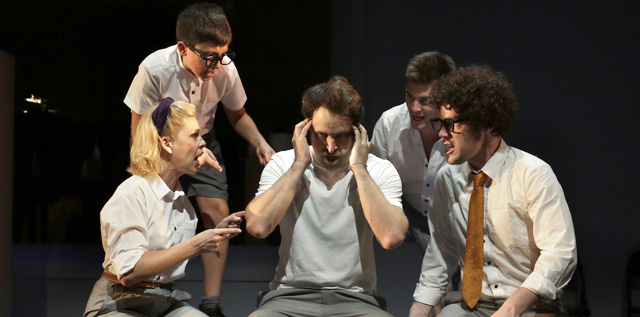
The subject is a heavy one, and the themes are serious. We are shown a side to the Iraq war that is little known, and the evidence provided is scandalous and outrageous. The tone of the production is suitably sombre, but it is a lively show that comprises quick and sharp scenes, holding its audience’s attention from start to end.

Exploration of theatrical techniques and devices are a key interest of this group (the exploding car is wonderful). Using the war story as a backdrop for a wide range of experimentation with sounds, visuals, and all the possibilities of an empty space, this is a highly creative work that is centred on form as much as it emphasises its content. Indeed, both form and content are interesting and thoroughly delved into, but on occasion, they seem to diverge and distract from one another. There are points in the performance where what is being shown on stage is so complex and enthralling, that the story seems to fall by the wayside. The originality of Version 1.0’s theatrical craft is accomplished and important, and so is the message of the story. Fortunately, both manage to get their days in the sun, although not always at the same time.

Aside from three actors, we see on side stage (in this multimedia production), a team of two musicians and a video artist. Their work alternates between providing background effects and featuring heavily at the foreground, but always married perfectly with the stage action. This genre of performance is still unconventional and not always practised successfully, but The Vehicle Failed To Stop is an example of how close collaborative efforts can give birth to something authentic and deliver theatre that is intriguing and unique.

www.versiononepointzero.com