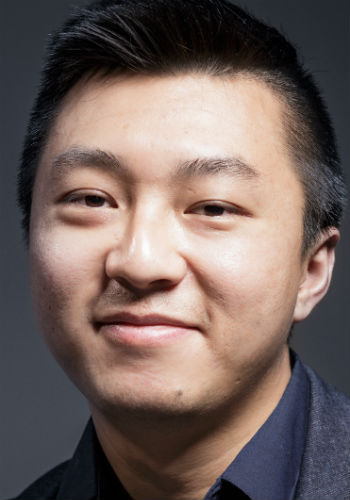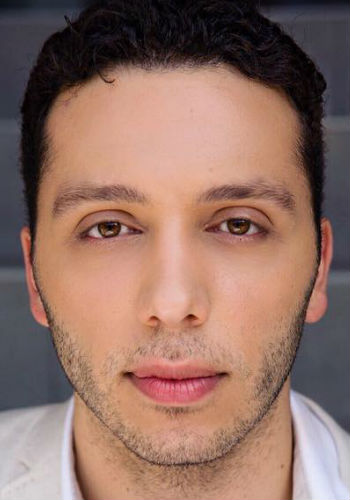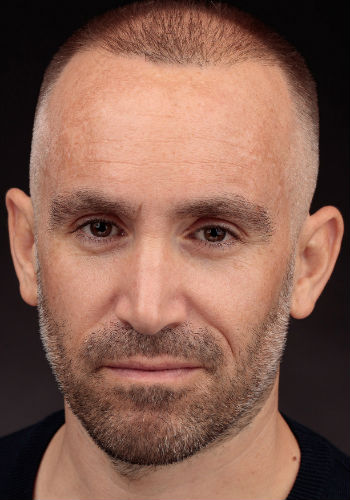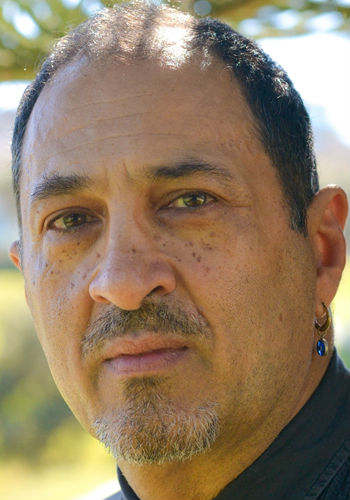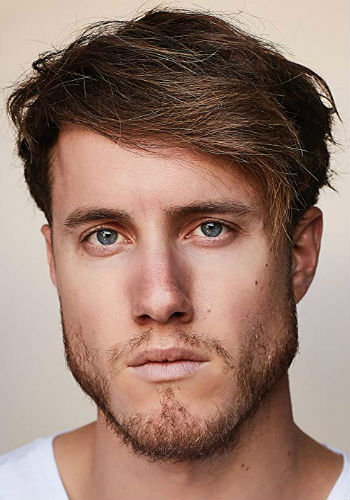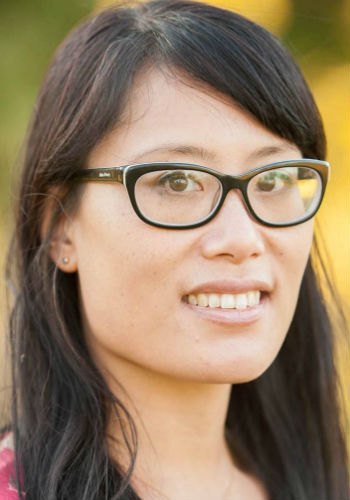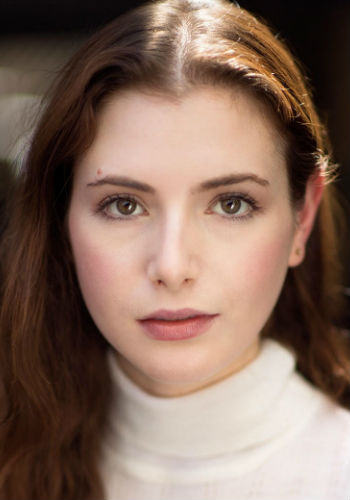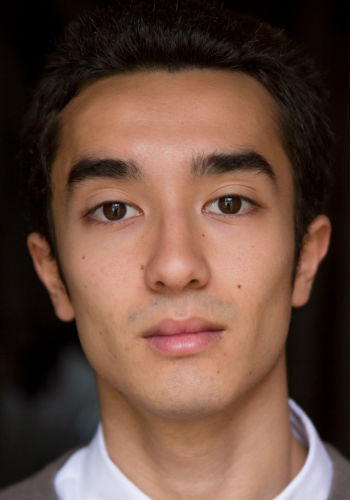
5 Questions with Phoebe Grainer and Jill Nguyen

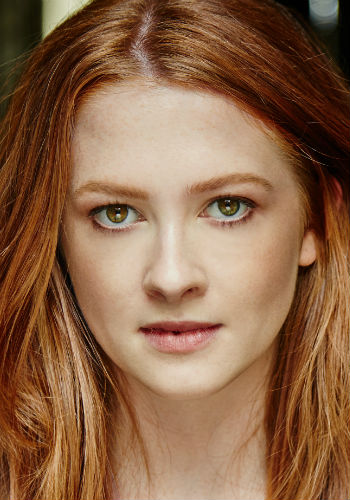
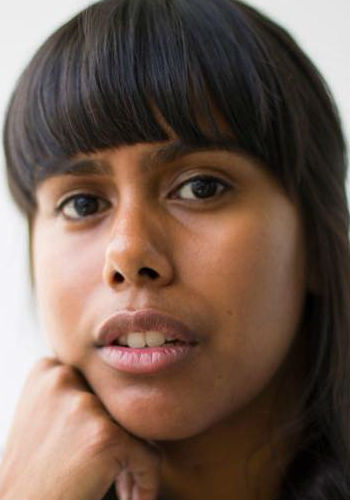
Phoebe Grainer

Jill Nguyen: What kind of legacy do you want to leave behind as an artist, actor, writer? How do you want to be remembered?
Phoebe Grainer: I don’t care for words like legacy or how I want to be remembered. I want to live my life creating work and doing things that are meaningful, that I am empowering and uplifting my mob, the Kuku Djungan people and other Indigenous and non-Indigenous communities.

What was the first play that captivated you and in some way defined you?
When I was in high school up in Broome, I went and seen a rehearsal of a play called Jandamarra. I’m not sure how I found out about it or even if I was allowed to go watch but I was there. Jandamarra is a legend of the the Bunuba people up that way, he is a warrior and a leader who defends his country, his mob. When I saw this rehearsal, all Aboriginal cast, talking language. It was beautiful. I had never seen anything like it. I just remember thinking wow, I want to do that.

What’s been the biggest learning lesson so far in your journey with The Serpent’s Teeth?
I think it’s been a reminder of how hard you need to work for things you want to do.

Favourite pre, during and post rehearsal snacks?
I have been eating so much Thai fried rice and chicken nuggets!

As an Indigenous Australian artist, what advice can you give for the next generation of young Indigenous people who want to pursue creative dreams?
Speak to the old people, Elders, your grandparents and parents. Culture is important and we need to keep it strong. Always know why you do the things you do, creatively, professionally and in everyday life, give back to your community. Critically think about the world. Know that you can do the things that you want to do.

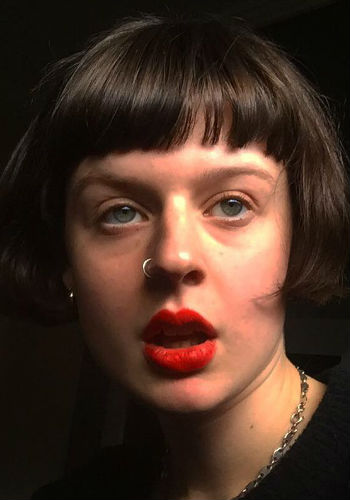
Jill Nguyen

Phoebe Grainer: What was your experience like growing up as a Vietnamese-Australian woman in Melbourne?
Jill Nguyen: As a kid, I never felt that different to anyone else. The inner west of Melbourne where I grew up was super diverse, which was wonderful. Asian, black, white, everyone. It wasn’t until I went to university at 18, that I was quite shocked by how little some people knew about Asians in general. I did do Arts at Melbourne Uni, which was pretty white. I’ve experienced racism of all kinds, ranging from subtle to downright overt, and it’s only made me more resilient. In saying that, I am so lucky to have grown up in Melbourne. It’s my home.

How did you get into acting?
After 3 years of higher education, working full time at the bank and travelling overseas for a year and having my soul crushed in between, I came to my senses and decided to follow my dream. I started taking acting classes 2 years ago and I haven’t looked back since! I just jumped into the deep end and worked really, really, really hard to get myself out there. It doesn’t happen overnight.

Who did you look up to on your journey to becoming an actor?
Honestly, I didn’t have too many Asian females to look up to, but I always loved Marilyn Monroe a lot. In recent years, I have felt really empowered by Gong Li, Michelle Yeoh and Gemma Chan, all power houses in their own right. They light my fire.

Has the Vietnamese-Australian community reacted to your work, if so how? And how has the wider Australian community reacted to your work?
I guess my journey has just begun in some ways and I’m really excited for Viets all over the world to see my work. I was recently cast in Justin Kurzel’s True History Of The Kelly Gang, as Molly Kane. I act alongside Nicholas Hoult, George McKay and Thomasin McKenzie. I’m hoping a young and impressionable Vietnamese girl sees me in this feature and somehow has the confidence to follow her dreams too.

What does it mean for you to be a woman of colour in the arts?
It means everything to me. When people say things like “oh race doesn’t matter”, I feel an invisible slap in the face. Well, of course it matters. My heritage is Vietnamese, Chinese. I’m not going to run away from that. People of colour have been historically marginalised, purely based on the colour of their skin. I think my presence and contribution to the arts in film or theatre is political in its’ own right. I won’t stop creating, fighting and hustling. For so long, the realm of the art world and film, in the western world has been exclusively white, male dominated and right now, is the best time to change it up, completely. I feel a sense of solidarity with other women of colour artists too.

Phoebe Grainer and Jill Nguyen can be seen in The Serpent’s Teeth by Daniel Keene.
Dates: 9 – 24 Nov, 2018
Venue: Kings Cross Theatre
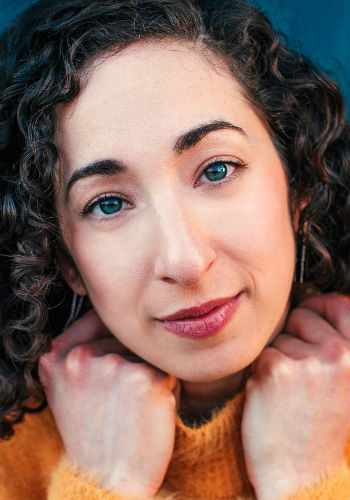
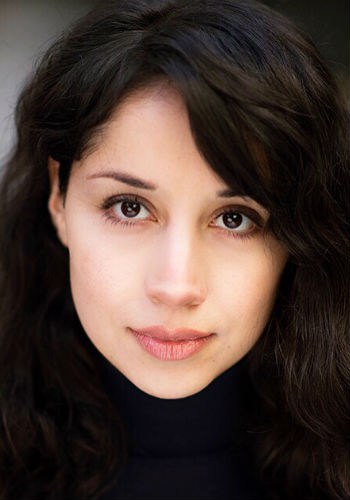
5 Questions with Violette Ayad and Mary Soudi

Violette Ayad

Mary Soudi: What’s your favourite part about playing Lilian (Lilo)?
Violette Ayad: I love that I got to name this character myself. In fleshing out the character, the director and I decided that we wanted her to have a name that was a little ambiguous in relation to her cultural background. A name that could belong to someone from a Middle Eastern background (like myself), but was not specifically Middle Eastern (much like my own name). So, I named her after one of my aunties, Lilian, who everyone in the family calls ‘Lilo’ for short.

What’s something that has really surprised you during the creation of Blame Traffic?
The ease with which we’ve moved from reading and workshopping the script to finding the scenes on the floor. It has been a real reminder that when the time is taken to get the script, the foundation, right, everything else can be built on that with clarity and specificity. Part of the joy of having a writer who is also the director was that we could stop and identify problems in the script, and fix them in the script, rather than trying to gloss over them in the performance of it.

What main idea do you think will stay in the minds of audience members in the hours/days after they see the show?
I’d like to think that people’s responses to this play are very varied based on their own experiences of coincidence and serendipity in their lives. But ultimately, I would love everyone to consider a little deeper the amazing moments of chance and luck that make up life. In a world that moves further away from institutional religion every day, finding joy in these chaotic and random encounters feels like a pretty comforting way to live.

What’s your craziest traffic-related experience?
Oh, so many. I was one of those terrible young drivers you always fear is around the corner. I got my license in West Australia before the introduction of the mandatory L plate waiting period and with only 25 driving hours required. This is terrible, but I once lost 4 demerits and $600 in a 24-hour period when I was 19. Find me in the foyer and I will tell you how. Don’t worry, I don’t own a car in Sydney or drive very often, and definitely take road safety more seriously now that I’m older.

Why are you passionate about this production?
This production began as a way to bring together all of my favourite class mates and friends from the training institutions I’d studied at, and show the world how it’s done! Every decision in this production represents what I love seeing and what I believe in. At the core, we have a well-written story that engages the heart and mind equally. Add to that a cast of incredibly different performers that share an ability to contribute, generously, to a whole production, beyond their own specific part. And finally, a contemporary and innovative design team, making funky beats and a simple, but beautiful, stage design.

Mary Soudi

Violette Ayad: What is your favourite thing about the Blame Traffic script?
Mary Soudi: The humour that’s sprinkled throughout it! One scene in particular cracks me up every single time – I won’t reveal it, but I will say that Emma O’Sullivan plays a teenage boy behind a wheel of a car, and it is just so, so hilarious. 

What makes this project so exciting for you?
I’m excited by this project because I think Michael is one of the brightest young writers in Australia, and Blame Traffic is his best work yet. Being able to bring this brilliant story of his to life alongside so many brilliant creative minds is pretty darn magical.

Having just finished the Bell Shakespeare tour of The Players, how much driving do you think you’ve done in the past year?
Probably a billion hours. Those long drives were the best way to see this gorgeous country and fully take in just how huge it is. And I must say, I’ve truly surprised myself with my ability to park a giant Kia Carnival (mini-van/small spaceship) in so many cramped little parking lots all around Australia. Believe in yourself, folks!

What have been the benefits of working with people you’ve trained with?
Is there anything better than making art with your favourite humans? Knowing each other inside and out is a huge benefit, because after all the years we’re trained together we end up knowing exactly where each other’s creative genius lies, and can bring it out of each other. And all the endless love and tomfoolery!

Without giving anything away, what do you think is a moment people will really respond to in the play? 
A gorgeous moment of realness between a boy and his uncle, where self-doubt transforms into self-belief. Come see it to find out what I’m talking about!

Violette Ayad and Mary Soudi can be seen in Blame Traffic by Michael Andrew Collins.
Dates: 13 – 24 Nov, 2018
Venue: Old 505 Theatre

5 Questions with Alex Mau and Olivier Rahmé

Alex Mau

Olivier Rahmé: If you could play any one role in the show, which one would it be?
Alex Mau: Queenie, of course! Who doesn’t want to play a blonde? Queenie is such a wonderful, three-dimensional female role, something we could do with more of in theatre! When the party is lit, Queenie is living her best life, sassing it up with her BFF Kate, throwing shade at the grand dame Dolores and killing it with her signature dance move, the “Black Bottom”. Come dawn, Queenie breaks it down with the most poignant and touching ballads in the show, alongside the gorgeous hunk Black. Queenie has so much light and shade, it would be so amazing to play her but, fortunately for you, I won’t be doing that and, instead, you’ll have triple threat and all-round superstar, Georgina Walker, portraying this once-in-a-lifetime role!

Which role excites you most in the rehearsal room? Why?
The director! I am in awe of how our director, Alexander Andrews, always does unique and refreshing takes on classics, such as Little Triangle’s inaugural production of Sunday In The Park with George and its sophomore production of Merrily We Roll Along. He encourages the cast to bring themselves to the characters, creating really interesting and fully-developed interpretations of characters that could otherwise be simple caricatures. I couldn’t stress enough than audiences should see this production of The Wild Party – not only is it a rarely produced musical in Australian theatre, you’ll definitely want to see what Alexander Andrews does with this amazing material!

What’s a funny/crazy/interesting thing you’ve picked up on in the rehearsal room?
The Chorines are like the bubbly and hilarious Greek Chorus of The Wild Party (portrayed by Victoria Luxton, Matilda Moran, Sophie Perkins, Jordan Warren & Rosalie Neumair). Being incredible dancers, our fabulous choreographer, Madison Lee, has given them heaps of intense and electric choreography that it feels like they’re doing full-body workouts throughout the entire show! It’s crazy how effortlessly they smash that chorey and then go on to belt those group numbers like they eat dissonant harmonies for breakfast – #goals. Keep an eye out for what I think is one of their funniest dance moves (in the spirit of 1920s vaudeville), which I would describe as a cross between the spread eagle from Chicago and squats in the air – yes, I can see you trying to picture it, but you’ll just have to come and see it for yourself!

What is the wildest party you’ve ever been too?
What happens at The Wild Party, stays at The Wild Party.

What do you think the audience’s reaction to The Wild Party will be?
Michael John LaChiusa (composer and lyricist for The Wild Party) is well-known for writing complex theatre scores so I think audiences will be expecting some very challenging, intellectual theatre. Alexander Andrews has taken an interesting and refreshing interpretation of bringing out and focusing on the human connections between the characters so, while the music is still technically difficult (which, as a pianist, I love!), I think audiences will be surprised by the humanity and rawness of the story and the characters. Prepare for side-splitting laughter and tear-jerking moments, it’s gonna be a WILD PARTY!

Olivier Rahmé

Alex Mau: Describe The Wild Party in five words?
Olivier Rahmé: Hilarious. Crazy. Shocking. Thrilling. Eye-opening.

What drew you to The Wild Party and why should people see it?
A lot of my friends have worked with Little Triangle before, so I was thrilled, humbled and so excited to be a part of such a reputable company. People should come to the show because of the impact a show like this can have on you – that’s what I love about theatre. As actors we hope the audience members gain something from the performance; to leave with something to think about & to be impacted. I truly believe The Wild Party succeeds in doing this.

What surprised you most about The Wild Party and what do you think will surprise audiences the most?
I love how meaty some of the roles are and how the actor has so much to play with. The script offers a lot and doesn’t box any character into being one thing. Many of us show all sorts of colour, which I love. I think the audience will be surprised by the level of talent – So. Many. BEAUTIFUL. Actors! And the voices are really shown off. My hat goes off to the production team for their casting.

Tell us a little about your character Eddie and how your approach to the character has changed over time.
When I first started reacting to the energies the other actors were giving me and read the script, I thought… Eddie is awful. What an awful man. Perfect. I can do that! But exploring his journey more and trying to figure out why Eddie does some of the things he does, I’ve now realised; Eddie isn’t a bad person. He is a defeated person who does a horrific and unforgivable thing. He struggles a lot with his identity and doesn’t quite know how to be happy – constantly masking his unhappiness and failures by blaming how life turned out on his beautiful wife Mae (Emily Hart). Sidenote: Emily’s belt may or may not be a solid and definite reason you need to see this show).

Tell us a little about the most challenging thing about the role.
The most challenging this I find is the final scene with Eddie towards the end of the show when he abuses everybody both verbally and physically. Emotionally and physically this section is exhausting for me as the actor. I definitely feel my body and mind tiring out after a few runs of this scene!

Alex Mau is répétiteur/pianist and Olivier Rahmé plays Eddie in The Wild Party, the musical.
Dates: 15 – 24 Nov, 2018
Venue: Seymour Centre

5 Questions with Yannick Lawry and Nicholas Papademetriou

Yannick Lawry

Nicholas Papademetriou: How confident would C S be today in a theological debate?
Yannick Lawry: I reckon Jack (apparently he hated the name Clive and used the name Jack all his life!) would have a decent answer for most theological questions. Even in our age of ‘hyper enlightenment’. The thing I’m less sure about is how he’d cope with debating in an age where it’s so easy to offend and apologies are rarely accepted..

If Lewis could date any modern celebrity of today who would it be and why?
In the context of Freud’s Last Session, Freud suggests Lewis was attracted to older, virtuous women after losing his mother at a young age. His wife, Joy Davidman, was an American poet and – like Lewis – converted to Christianity later in life. So a mature, devout, artistically minded woman from the other side of the Pacific. Unlikely to be anyone we know from the pages of OK! magazine!

What are you enjoying most as an actor about working on this production?
Our rehearsal process is somewhat intense. I’ve never had to work so hard to make using archaic props like pocket watches, gas masks and transistor radios look quite so natural, and I’m loving watching Nico as a master of character acting bring life and depth to Freud.

If Lewis actually met God what’s the first thing you think he would he ask him?
“Why this great test of life on earth before the great reward of heaven?”

Are you finding the play is making you question any of your own beliefs or theories?
Yes. Outing myself as a believer here, Freud’s arguments about theologians hiding behind their ignorance and creating a God-of-the-gaps where their explanations run dry still rings true in 2018, and has been one of my biggest difficulties with faith. Though I’ve equally enjoyed learning and absorbing Lewis’s many rational arguments for faith in the God of the Bible. Between Freud and Lewis on stage, I still don’t know who wins the argument in the show. Maybe we should give our audiences a scorecard each night!

Nicholas Papademetriou

Yannick Lawry: You’re playing Sigmund Freud, the father of psychoanalyis. To what extend does Freud’s Last Session portray him as the definition of sanity?
Nicholas Papademetriou: I think in today’s world he’ll come across as an eccentric but intelligent cuckoo. Although perhaps he was perceived as that in his day as well. He’s a combination of nerd, grumpy old man and nutty German psychoanalyst so he may not seem entirely sane, but he’s slightly insane in a good way.

What’s the most controversial thing Freud says or does in the show?
I suppose the most controversial thing he says is his comment about people’s sexuality – for the time, he was quite sensational. His open acceptance would have made him an absolute darling of the LGBTI community.

What’s the most controversial thing you’ve said or done personally (that you’re comfortable sharing with me)?
I have done and said so many controversial things in my life, the list would be far too long to list here (including being a stand-in for a hooker one night). But is that controversial or sensational? Or just plain stupid?

Theatre is a dying art, apparently. What do you reckon is ‘in’ theatre, both for audiences and artists?
I think theatre that is unpretentious, entertaining and easy to connect with is what really makes it for me. If symbolism, plot, message or themes need to be explained to me, then that is what would make theatre a dying art for me. Freud’s Last Session is definitely in!

Fart jokes, or highbrow humour?
I like my fart jokes to be highbrow. And my highbrow to be like dainty farts.

Yannick Lawry and Nicholas Papademetriou can be seen in Freud’s Last Session by Mark St. Germain.
Dates: 29 October – 10 November, 2018
Venue: Seymour Centre

5 Questions with Sarah Greenwood and Alex Rowe

Sarah Greenwood

Alex Rowe: What made you want to be an actor?
Sarah Greenwood: I was eight and the soccer season had finished so I needed something to do on my weekends. I started workshops at the Brisbane Arts Theatre on Petrie Terrace, the most haunted building in Brisbane, and I was hooked. I worked with them, and anyone else who would take me, for the next ten years until I was accepted into the WAAPA Acting course. I love the people you meet. I love the excitement in anticipating of an opening night. I love the joy of discovering a character. What’s not to love?

From graduating drama school and settling in Sydney, how has the journey been so far?
I haven’t been here very long. I moved here in January 2017. I was lucky, as a WAAPA graduate there is an enormous community here to help you settle in. Nearly my entire class moved over from Perth as well. We’ve all had different journeys but it made it easier to have my friends here to commiserate and drink red wine. I miss Brisbane but it’s nice to be out of uni and getting my stride.

What’s been the biggest challenge and biggest joy of the rehearsal process so far?
The juggling act is always a challenge. I have a terrible habit of over committing myself but I always seem to find the energy to do everything! I have found great joy in acting out the creative process in this play within a play. It’s a little tongue in cheek and it’s always fun to laugh at yourself.

This play involves some confronting and terrifying experiences for the characters, how has it been acting in these particular scenes?
As my character Meg would say, I was acting! Isn’t that what we were supposed to be doing? Acting?

Will you invite your grandparents to this play?
I wouldn’t have been able to stop my Nanna from coming although I’m not sure she would have approved of some of the content. She used to take me to shows all the time. My Grandma on the other hand is waiting until she sees me in TV Week!

Alex Rowe

Sarah Greenwood: What was your first impression of the script when you read it?
Alex Rowe: My first impression was that even though this was written by an American and debuted in the year 2000, these issues and characters are prominent in Australia today. The writer, Nancy Hasty has successfully captured the different types of actors and also the submissive nature towards people with ‘power’ in the industry.

As a play within a play, what has The Director taught you about your own creative process?
It’s been interesting to play an actor in rehearsals, whilst being an actor in rehearsals. What this play has made me think about is James Dean’s relationship with his directors. I read a few of his biographies and he was known to argue with directors about his craft, that he thought actors were treated like puppets, told what to say, when to say it, where to say it and how to say it. I think actors now, at a time when everyone wants to be in the spotlight, are reluctant to speak up and will go with the director’s choice with the utmost trust, as jobs are far and few between and they are cautious of being blacklisted. In no way am I suggesting that I will wait in my caravan “until I’m ready to work”, which James Dean allegedly did, but it’s made me think about an actors job and their relationship with the director.

How have you found the Sydney scene after living in Melbourne?
The biggest change is obviously the weather, I’ve really enjoyed not dressing like I’m going to the snowfields during winter. Also, my family are based in Sydney, so it’s been really nice being around them and my nieces and nephew.

What is your favourite line from the play?
When Peter, the director referred to in the title of the play, asks my character John “Where’s Sally?” and John responds “I locked her out on the roof”; I find this funny and endearing that John thought by locking Sally on the roof he was really “pushing the boundaries” to hopefully impress Peter.

In the play Peter wants to ‘break through barriers’ to reality, have you seen a performance that made you forget you were watching an act?
An Australian actor who continues to impress me with his performances is Ben Mendelsohn. One of his most recent films Una starring the also incredible Rooney Mara, was one that stands out in regards to profound naturalistic performances.

Sarah Greenwood and Alex Rowe can be seen in The Director by Nancy Hasty.
Dates: 25 Oct – 10 Nov, 2018
Venue: Actors Pulse Theatre

5 Questions with Alison Benstead and Katie Regan

Alison Benstead

Katie Regan: How did you find rehearsing by yourself for so long?
Alison Benstead: It was definitely challenging, as Ignus’ purpose in the play is to help others. I was quite literally ‘waiting’ to meet everyone, so in that way, I think I was absolutely feeling the way Ignus would have.

What do you think Ignus did when she was living?
I have a theory. When I took on the character, there wasn’t a great deal of backstory that had already been decided, except that she died in the 1950s of some kind of internal haemorrhaging. I have been playing with the idea that she was a housewife, perhaps in a somewhat controlling marriage, and didn’t have a great deal of control over what her purpose was. I believe that she was a loving wife and wanted more than anything to be a mother, and that the haemorrhaging was caused by a miscarriage. There’s a lot of empathy and compassion in her, and I really get to play with the notion that she swings between being motherly towards the others, and seeing them all as a puzzle to solve.

How has your interpretation of the character changed over time?
It has changed a lot. I think I began rehearsals seeing her as this really magical archetype, and as we’ve developed her through rehearsal, I see far more human qualities. No character in this play is perfect; they’re all flawed in their own ways and that really is a gift for an actor to be able to explore.

All the characters experience time in the waiting room. How long do you think you would wait there until you searched for answers?
Not very long. I’m not a very patient person at the best of times, and my imagination would run wild with ideas and theories. The answers wouldn’t be as fun in the end.

Regret is heavily featured in the play. If Ignus had her time over again, how do you think she would have lived?
If she had her time over again, I think she would have lived a more empowered life. I see her being an Erin Brockovich kind of figure: fighting for what she believes in, and doing it with a big heart and a lot of grace.

Katie Regan

Alison Benstead: After reading the text, what was your first impression of Estelle, and what challenges did you anticipate when taking on this role?
Katie Regan: I found Estelle to be incredibly close to some of the people in my life. I think lots of people know an Estelle – she’s your friend, neighbour, co-worker. Outwardly she is relatively put together and follows the vein of most 20-somethings looking for fulfilment but, on the inside, she is entirely a drift with little to no real connection to the ‘real’ world. I knew it would be challenging to portray a character with very real and defined depression whilst also straddling the fine line of optimism she hides away inside herself.

How do you think you would personally react, waking up in the waiting room as Estelle did?
If I were to wake up in the waiting room like Estelle, I would immediately start looking for answers or an exit. I think my fight or flight would kick in very soon and, the first door I saw, I’d look for someone to talk to.

If Estelle had have carried on living, how do you think she would have lived her life?
I like to think that she became a visual artist or musician, channelling her experiences into something tangibly good for the world.

Why is this story important and relevant for audiences today, and what do you want your audiences to take away from this play?
I believe that this story is about the importance of choices: people can choose to be good or bad or apathetic but in actuality it’s the people we meet who change us. Because of the people Estelle meets in the waiting room, she is given another choice/chance at life. I want audiences to take away a sense of hope for the future and the choices that shape us.

In Waiting heavily features two strong female characters. Explain how their relationship and bond is instrumental to the story, and what they represent for each other.
Estelle and Ignus’ relationship represents the story coming full-circle, but it also shows the closing of a large chapter in both of their lives, or afterlives as it were. They are quite similar in that they both search for answers and are forces to be reckoned with. In terms of what they represent to each other, I think that they are both the final solution to each of their dilemmas. Nothing can move forward until they do together.

Alison Benstead and Katie Regan can be seen in In Waiting by Liviu Monsted.
Dates: 11 – 19 Oct, 2018
Venue: Blood Moon Theatre

5 Questions with Melissa Lee Speyer and Rose Marel

Melissa Lee Speyer

Rose Marel: Are the 90s your favourite decade? Why did you decide to set TickTickBoom within this particular era?
Melissa Lee Speyer: Every decade is my favourite decade. I chose the 90s mainly for the millennium New Year’s Eve countdown. A single second that splits two millennia, according to an arbitrary marker in time. Also, they’re fun and nostalgic. I love nostalgia. I get nostalgic over every time and everything. I get nostalgic over two months ago. I build moments of future-nostalgia into my day. There is probably something real deep in that, like living in the past to avoid the future, or fearing change. Whatever. I probably shouldn’t ever say yes to time travel.

Which character in TickTickBoom is most similar to you and why?
Whoever is being the most awkward at any given moment. Not limited to my plays. Because, have you met me?

What’s the most exciting thing and the scariest thing about having your play being transformed from page to stage?
It’s all exciting and it’s all scary. I get nervous, wild-eyed, clumsy, sweaty. If there are stairs, watch me trip on them. I like feeling an audience listen. The communal experience. I love seeing what other artists bring to this thing I gave them. The communal act of creation. Foyer chat is terrifying. Mainly because I only remember people’s names on the train on the way home. My brain is allergic to names. Even my own.

What was your high school experience like? Love it or hate it?
I was a nerd, but not intelligent – intellectually, socially or emotionally. High school is always fraught. It’s life’s first social crucible, where you test out who you are and who might be.
Suddenly, the people who mean the most to you don’t have to love you unconditionally. I hated it at the time, and for years after. Now I’m glad I didn’t peak too early. All of life is high school, in some way. Ahhh. Nostalgia.

Who are your favourite playwrights?
Anyone who finishes. Writing is hard! It’s hard to play “favourites”. But you asked, and you’re great, and the full list is too long,
so here are three who are important to me. No order. Caryl Churchill, Nakkiah Lui, Michele Lee.

Rose Marel

Melissa Lee Speyer: How do you remember all those lines? Seriously. I don’t and I wrote them.
Rose Marel: You probably don’t because no one is expecting you to act out both characters 😉 For me, lots and lots of study – going over the lines; reading them out; rehearsing with other actors; speed runs; writing them down; working through the script methodically. Plus, really understanding it and analysing it. Once you figure out the intentions, the thoughts and images behind the lines, I find that it all starts crystallising.

Who was Rose Marel in high school and which clique were you in? Be honest.
I was a good old floater. (I like to think) I got along with everyone reasonably well, but I did drift around throughout the years and have close friends from various cliques. Although, I was also someone who also enjoyed – or found myself – floating around in her own world.

Can new Australian theatre compete with Netflix, and if so, how?
It’s tough. No doubt people love staying home these days – that idea of relaxing in their own space and ‘bingeing’ on shows – which is absolutely great, but I think in terms of accessibility, a lot more people, regardless of whether or not they’re involved in the arts, turn to Netflix. Less people are willing to, or aware of, all the incredible independent shows in Sydney / Australia. But it can be such a fantastic night out – grab a couple of friends or a date, have some dinner, go see a show, and then hopefully engage in great conversation about the themes and ideas that it brought up. Theatre is arguably a more visceral and raw experience for the audience members, so in that way it can definitely have the edge. 

Ultimately, they’re such different mediums, but at the same time, there’s potential for them to complement each other. Netflix has some incredible content, and is pushing the boundaries in so many ways conceptually and thematically that it can only be a good thing in terms of the wider arts community and also society in general.

Tell me about the first time you fell in love. 
The few times I’ve felt on the precipice of love, I’ve later realised that ‘that’ wasn’t it. The first, more mythical time, was back in junior school, when I clapped eyes on an elf called Legolas in Lord Of The Rings. For the next, who knows how long, I existed somewhere in the cross-zone between obsession, love and delusional infatuation. As in, I would research Orlando Bloom facts, had over 300 pictures of him on my wall, would count the pictures as a hobby and did a speech on him for a school speech competition. It was the first time I considered the possibility of ‘love’ and what that could feel like. God help me. 

Living your life: are you aiming to be here for a long time or here for a good time? Which is better? Is that actually 7 questions?
Do they have to be mutually exclusive? I’d like to say a healthy combination of the two. It can be really difficult to seize the moment, and capture that freedom and adventurousness within ourselves, especially as you get older and  encumbered with more responsibility, but I think it’s certainly a balance. One of my favourite quotes that encompasses this is from Buddha: “Do not dwell in the past, do not dream of the future, concentrate the mind on the present moment.” Something that I really admire in Clara (the character I play in TickTickBoom) is her gratitude of, and openness to the present moment. She’s a soul who’s certainly alive and receptive to the potential of the world in ‘now’. 

Rose Marel can be seen in TickTickBoom by Melissa Lee Speyer.
Dates: 10 – 20 Oct, 2018
Venue: Actors Pulse Theatre

5 Questions with Jeremi Campese and Meg Clarke

Jeremi Campese

Meg Clarke: If you could be any animal what would it be and why?
Jeremi Campese: My dog, Bobbie (genuinely his name). I guess domestic dogs in general; who wouldn’t? Everything’s covered: food, water, food, love, bed, cuddles, exercise and cuddles.

What would you like the audience to take away and learn from Yen?
Without insisting that the audience feel a certain way, it’d be great if they feel conflicted, particularly about the boys. They’re endearing in so many ways, but are the exact opposite in others; so I hope people will find themselves wanting to appreciate all their nuances. How our society raises boys is at the heart of the play, and I’d really like audiences to see that the way we meet them isn’t just on account of their choices, but is far more comprehensive than that. It’s a result of broader social perceptions of sex, women, and violence that they’ve internalised so quickly.

As a man do you feel any differently about men in society after this play? And what have you learnt about your own masculinity?
Certainly boys. In playing someone like Bobbie and researching boys in these contexts, you see how malleable and easily influenced they are by their circumstances. With the wrong role models and the wrong exposure, awful things happen. For me, I’m only 20. I’m still developing, learning and growing. So much of this play (apart from being an incredible piece of theatre) has been both cautionary tale and one of the most profound exercises in empathy.

What is your favourite sound and most hated noise?
Favourite sound is probably Cynthia Erivo singing. That woman’s vocal chords were crafted by angels. But my most hated noise is definitely my alarm clock… it is cruel; full of sound and fury.

What’s your favourite line in Yen?
So many to choose from! Anna is so good at bringing lines back throughout the show in different contexts. The one I think she does best is, “Family’s important, don’t you think?”

Meg Clarke

Jeremi Campese: What’s your biggest guilty pleasure?
Meg Clarke: It’s very hard to think of the biggest because I feel like I have a lot. Like any well adjusted 20 something year old, I’ve wasted many hours eating sloppy food in my bed and re-watching Gossip Girl and The O.C. probably about 16 times now (and that includes season 4 after Marissa dies… embarrassing but true). Sometimes I truly believe that the Black Eyed Peas are the most underrated musical phenomenon of all time and I really get into watching hours of YouTube footage of people falling over and injuring themselves in bike accidents… that last one really makes me sound sinister.

What was your reaction when you first read Yen?
It was a bit of an emotional roller coaster to be honest. I laughed my way through the first half, I cried somewhere in the middle and by the end felt incredibly ill. I also felt a very overwhelming desire to play the character of Hench, but now I can’t imagine anyone but the beautiful Ryan Hodson in that role. Halfway through the first page I knew I wanted to be a part of the production. I think it’s such an important piece of writing to be showing in the current climate and the content hits really close to home for me. I thought ‘thank god someone wrote a play about this!’ But I don’t want to give too much away! To be honest, the only apprehension I had on my first read was “how on earth do you do a Welsh accent?!” 

What do you love most about Anna Jordan’s writing?
Anna’s writing is so incredibly nuanced and delicate. It’s hyper realistic. I love how honest it is, no frills! Which makes it so much easier as an actor because every time you’re in doubt about your intention or how your character is feeling, the answers are all right there in the script. I’m also impressed by how well she can write completely from the inner truth of four very different people. 

Who is Jenny in 3 words?
Number 1: Empath (most empathetic person I know) 
Number 2: Fierce (I want to say fearless, but nobody really is) 
Number 3: Un-prejudiced 

What’s your favourite smell?
Jeremi’s mums cooking, haha. But also Basil, basil is ultimate smell joy. If it was socially acceptable to walk around with basil shoved up your nose, I’d be the face of that movement. In fact when Yen closes… 

Jeremi Campese and Meg Clarke can be seen in Yen by Anna Jordan.
Dates: 27 Sep – 13 Oct, 2018
Venue: Kings Cross Theatre
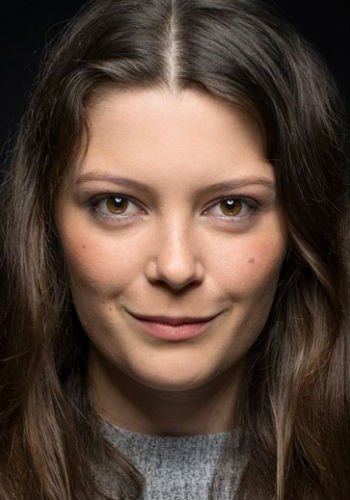
5 Questions with Mara Aplin and Andrew Guy

Mara Aplin

Andrew Guy: When did you first realise that you weren’t just a gender, what was happening during this experience?
Mara Aplin: I think at around age 16, when I first started coming to terms with my sexuality I found myself really drawn to androgynous people. This kind of forced me to assess my own gender expression: I think androgynous people are beautiful, but I don’t express myself as such. I began to question why I feel so comfortable with femininity, and began to experiment with expression etc. I shaved my head last year which made me realise that expressing my femininity is important to me, but I’ve come to realise that my own beauty and appeal does not depend on typical feminine expression. My sexuality also has allowed me to explore the irrelevance of gender, I try not to put any label on my sexuality because even bisexual seems limiting and like I owe a kind of consistency in my relationships that I just can’t guarantee. I have come to realise that, when it comes to choosing partners, gender is as relevant as hair or eye colour, I notice it but it’s not make or break, I can appreciate it (in whatever way it’s expressed) but it doesn’t really play a part in how I feel about people. Even in the LGBT+ Community, I think there’s a lot of stigma surrounding bi/pansexuality because we are still so stuck on gender, I’ve had queer women tell me they wouldn’t date me just because of my interest in men or male presenting people, like there’s some kind of stain on me because I’m not a “pure” lesbian. This strange sense of reverence that surrounds gender pervades all corners of society, which I find so strange and limiting.

What’s your favourite colour combination on yourself?
I just love wearing colour. Red, yellow and green are my favourites to wear but often not together. I often try to combine loads of colours if I can, but I like going for warm tones together and cool tones together. Red and orange or pink, orange and yellow are popular choices, but I never really know until I put it all together. I love bold patterns and colours in general, whatever I can get my hands on.

Describe a moment you took your power back while working in the industry?
I just don’t work with people who I don’t feel respect me and my work, particularly if that work is unpaid. I left a theatre company I was involved in because the director was asking us to workshop a script he’d written and would use our ideas and then claim them as his own when we did showings for feedback. He was also pretty sleazy and just didn’t know how to work with women, I had to stand up for myself and other women in the company a lot and it just got to a point where I couldn’t justify doing free work for someone who didn’t respect me in any way. I think maintaining your own power in this industry is not letting yourself be used. My work is valuable and it means something, so I deserve respect and credit where its due.

Does gender have a place in art?
I think it does because we’re so obsessed with it as a society. Gender plays a role in power, relationships and identity in present society, and art is meant to reflect society, but also to criticise it. I think art about gender makes us think about gender and whether it really means anything.

What is your definition of gender?
This one is hard. I think if you find comfort in a gender identity, that’s a great thing, but if you don’t that’s also fine. I think we’re so obsessed with putting names on everything, which can be so harmful because so many things cant be put in a box or behind a label. I think gender is just a scale of masculinity and femininity and how these are expressed, regardless of physical sex. I think we’re taught to assign femininity to female biological sex, and masculinity to male biological sex, but it doesn’t have to be that way. elements of both these traits are useful in understanding your own identity.

Andrew Guy

Mara Aplin: How has your own expression of gender benefited you? How has it hindered you?
Andre Guy: I’m sorry I can’t answer this question as gender has never been a forthright expression I have taken control of, it’s always in my experience just happened or been placed upon me.

Do you think gender plays some kind of positive role in society or should it be completely eradicated?
Gender plays a positive role in society I think if those playing the role they’ve been given (or chosen) are happy with what that role entails intrinsically. In short this rarely happens as people use the gender construct for all sorts of special “access exclusive area” games which excludes, oppresses, abuses and ultimately creates and reinforces human disconnection.

Eradicating it would be interesting to see, my greatest fear is that we’d turn into pleasant-ville sameness characters on a spinning rock in space, fear of the exposure of stepping into an expression that’s been soaked into our sense of self since the day we became human. People also like a box to fit into if they’re insecure in who else they know themselves to be (who am I if I’m not my gender?), so it has a place still, in short “man up everyone, be brave” so we can be done with this as a box on a form!

What are your thoughts on the use of labels in terms or gender, sexuality etc?
I think it serves individuals questioning their identity and how they feel the best feel accepted in society. Some like to be placed into their box. I personally try to exist each day with as little interactions with the terms as possible. Though saying that, I chose to medically transition for the social acceptance and the affirmation of being seen and treated as male by others. I’ve fallen victim to the social conditioning of others in society because my instincts tell me that’s what’s going to make you feel best. Any sway from that is futile to my existence, so actually maybe the terms are the most important thing in keeping me on this planet (biggest note of hypocrisy yet! 🙂 Thank you very much X.

Does gender have a place in art?
Whether I think it has a place or not, it’s palpable and used as part of the skeleton of a lot of work everywhere, find me a script or a piece of work without the use of pronouns and names where we don’t know who or what the genders are …

What is your definition of gender?
I don’t know any more, from travelling along a spectrum from one end to another (as the construct suggests and exists as), I forget its there and I no longer know how to live with in it as many do. Take me away into an oblivion where I can give you only feminine or masculine energy away from any form, as this bunch of molecules understands.

Mara Aplin and Andrew Guy are appearing in Genderification, by The Leftovers Collective.
Dates: 27 September, 2018
Venue: Surry Hills Library

5 Questions with Alana Birtles and Eleni Cassimatis

Alana Birtles

Eleni Cassimatis: What compelled you to audition for Everyone I’ve Ever Loved Or Slept With Or Both?
Alana Birtles: I decided to apply to audition for Everyone because I thought the title was very intriguing. I also liked the idea of investigating relationships and how people ‘mark’ or ‘stain’ us. Those particular words stood out to me.I also think the Sydney Fringe is a great festival and I jumped at the opportunity to be a part of it.

The process has been quite unusual, as we’ve been devising all while using a script. Can you explain what the process has been like for you?
It’s been a really interesting process devising and collaborating on this script. I’ve never worked in this way professionally before. I feel like it gives you a lot more room to play and discover, and I feel like it brought us closer as an ensemble. As each interpretation of this work will be unique, this will be the only time this version will be performed which is also a really cool thought.

Can you explain to everyone what “cup casting” is, and why we’ve been doing it?
Cup casting is this magical process by which we put ‘character names’ into a cup (a very particular cup mind you) and we each pull one out to see who we will be playing. It’s actually worked out amazingly as we all got characters/scenes that we had originally said resonated with us.

Have any moments or scenes from the play resonated strongly with you?
Yes there’s one scene in particular that I felt strongly about. Without giving anything away I’ll say that the scene is a complex one in its emotional variations but also the concept behind it. This is an instance where the magic cup casting worked because I actually ended up being allocated that scene. Otherwise, I believe the play presents a multi-faceted view of relationships that is relatable to everyone. Dissecting the play, the entire ensemble has related to particular experiences in the play or known someone that has had a similar experience.

We’ve been having a weekly guac comp during the rehearsal period… got any hot tips for a killer guac?
Ah the guac comp; one of the highlights of my Saturday’s. I am an avid avocado fan and pride myself in my guac-making abilities. I believe lots of flavour and freshness is key. I like to add a bit of raw garlic and Spanish onion, but I think you shouldn’t be afraid to utilise a decent amount of lemon, salt and pepper. I’m not usually a fan of coriander but I’ve been converted when used in guac. Coriander with a bit of tomato adds freshness.

Eleni Cassimatis

Alana Birtles: How are you enjoying working as part of a democratic ensemble?
Eleni Cassimatis: The collaborative nature of our democratic ensemble has been a lot of fun. As we are devising our way through a new text, it has meant we can basically pave our own way through it. Our cast and creative team are made up of a wonderful group of artists who all have a brilliantly diverse range of experience in various acting/theatre-making forms, meaning what each person brings to the table is a different wealth of knowledge, and therefore the experience of each scene or ‘vignette’ in the play has been injected with a variety of storytelling forms. On top of this, our cup casting has meant some scenes have been cast completely out of control, and then we’ve had the fun job of making it make sense!

What’s been the most challenging part of the process for you so far?
The most challenging part of the process for me was probably in the initial phases of staging the play – making myself succumb to the fact that we were going to have no idea what exactly the play was, or how exactly we were telling this story, and allowing myself to just play and create with no clear ending. St Clair’s text has been left so open for us, which at first seemed daunting, but gave us an abundant amount of delicious possibilities.

St Clair’s rejected a masculine story arch in her writing. How have you found working on a play that’s structure is more cyclical than linear?
The play’s structure, being more cyclical than linear, means that there isn’t a defined start point and end point to the story, and that where the play begins and where it ends could actually be anywhere in this order of experiences. In rejecting the traditional masculine story arch, Saint Clair has created an experience for the audience that gets ‘left hanging’ and doesn’t have a clear resolution, but what could instead be a new beginning. I’ve found working on this structure to be full of discoveries, because each time we would work out what one scene could be, we would find that it would open up hundreds more possibilities for what the preceding and subsequent scenes could be. I think it let us be more ok with pieces not directly connecting to each other, because they were still part of the inherent circling motion of the entire play, and thanks to the brilliant writing we were able to step back and trust that all the pieces connected and linked to form their own version of the traditional storyline.

Everyone explores intimacy and human connection in abstract fragments, which isn’t unfamiliar content in the theatre. How does this production present this universal experience in a different light?
I think the best way to talk to this is that in Everyone, we get to see little slices of life, which are short (or sometimes longer) glimpses into the relationship between couples or groups of people. These transactions explore many different assets of human connection and intimacy, are transient, and over the course of the play will hopefully resonate with and reflect experiences that everyone can relate to! The play breaks these concepts open and addresses them as the characters live out their experiences in front of the audience, and by allowing the characters to passionately try to work things out & make sense of things for themselves, pulling the audience in and along with them on the way.

There are 400 shows playing as part of the Sydney Fringe. Why should people come see Everyone?
Firstly – the title. Come on guys, how can you not be wanting to know more? Second – what a crew and cast I get to work with – working with Liz has been incredible, the guys at Revolving Days are amazing, and the 5 other actors I have got to spend this last six weeks with have been an absolute blast. I am so proud of the work we’ve created, I love the idea that no other version of this play will ever be the same, and love that I got to play part in putting St Clair’s work on it’s feet in the public for the first time.

Alana Birtles and Eleni Cassimatis can be seen in Everyone I’ve Ever Loved Or Slept With Or Both by M Saint Clair.
Dates: 4 – 8 Sep, 2018
Venue: Blood Moon Theatre