Review: Metamorphoses (Apocalypse Theatre Company)

Venue: Old Fitzroy Theatre (Woolloomooloo NSW), Feb 8 – Mar 10, 2018
Playwright: Mary Zimmerman
Director: Dino Dimitriadis
Cast: Claudette Clarke, Deborah Galanos, Jonny Hawkins, David Helman, Sam Marques, Bardiya McKinnon, Diana Popovska, Hannah Raven, Sebastian Robinson, Zoe Terakes
Images by Robert Catto

Theatre review
Mary Zimmerman’s Metamorphoses is a retelling of Greek tales; a collection of short stories from ancient times that continue to fascinate, in this epoch of secular pragmatism. Celestial beings and supernatural events that defy explanation, yet instinctively comprehensible, and resonant with our natural appreciation for the magical, conspire as though to impart moral lessons. It is uncertain if we can learn anything new from these antiquated recurring tales, but as a work of art, what Metamorphoses does achieve, supersedes the traditional functions of mythologies.

All the great passions we associate with Aphrodite, Eros, Orpheus, et al. are retained in the production, to serve as vehicle for director Dino Dimitriadis’ exhilarating investigations into themes of gender, sex and beauty. The penises and breasts of performers are ascribed, as though at random, to characters with intractably gendered pronouns, confronting our beliefs about the woman-man binary. When Myrra appears with a penis, and Midas with an ample bosom, we cannot help but question these visions. We know the experience of gender to be real, but Metamorphoses presents them as hallucinatory, urging us to expand our understanding of the relationship between human anatomy and human nature. Its persistent queering of these origin stories, again and again, works with the plasticity of our minds, to help us dismantle and defeat useless and quite harmful restrictions, so that a process of intellectual and intuitive transformation may occur for us all.

Featuring an impossibly attractive cast, including David Helman and Hannah Raven who beguile us with their extraordinary physique and sensational burlesque expertise, adding an unexpected dimension of decadent performativity to an atmosphere that is already disarmingly sensual. Deborah Galanos and Jonny Hawkins bring us some very big personalities, so deeply satisfying in this rare occasion of exquisite flamboyance. Sam Marques, Diana Popovska and Sebastian Robinson deliver memorable sequences of dramatic poignancy, utilising both god-given and cultivated talents to connect with our desire for meaning and inspiration. Claudette Clark, Bardiya McKinnon and Zoe Terakes are soulful presences with delicate vulnerabilities that draw us in. These heavenly bodies are positioned on stage, inviting us to embrace all the wonder and horror that we are, in the most liberating, poetically earthy way.

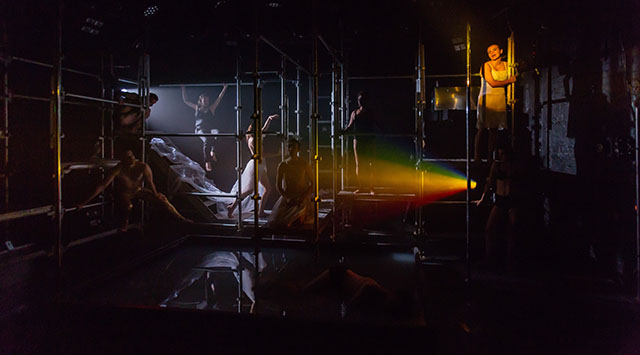
Extravagantly imagined, and expertly manifested, the design of Metamorphoses offers a level of aesthetic engagement that is at least as thrilling as the text from which it germinates. Jonathan Hindmarsh’s work on set and costumes represents a lethal combination of resourcefulness and sophistication that is as fabulously enchanting as it is impressive. Lighting designer Benjamin Brockman really goes to town for this show, with a fervent sense of creative freedom irrepressibly evident in every change of illumination, subtle or vivid. Some of Brockman’s images are truly breathtaking. Music may not always be playing prominently, but Ben Pierpoint’s compositions are crucial to how our attention is brought to focus for each scene. The quality of transcendence he is able to introduce to these otherworldly spaces, is thoroughly remarkable.

The language of beauty is being spoken in Metamorphoses. Much of what the show communicates, resides beyond the capacity of words, and its success as an entity of fine art, makes it an exemplary work of modern Australia theatre. We gather in these communal spaces to address a need, but we rarely know the nature of that appetite. Often, we find ways to verbalise the results, but when we see great art, the gravity of what is left unsaid, must never be underestimated, and on this occasion, it is the complex feelings that keep evading explanation, that hold its true value.

www.apocalypsetheatrecompany.com

Review: Visiting Hours (Kings Cross Theatre)

Venue: Kings Cross Theatre (Kings Cross NSW), Feb 7 – 17, 2018
Playwrights: John Harrison, Constantine Costi, Michael Costi
Directors: John Harrison, Michael Dean
Cast: Keiren Brereton, Tara Clark, Rose Costi, Laura Djanegara, Sarah Evans, Cheyne Fynn, Jasper Garner Gore, Richard Hilliar, Derbail Kinsella, Sheila Kumar, Yannick Lawry, Kianah Marlena, Suz Mawer, Tom McCracken, Jim McCrudden, Joshua McElroy, Rebecca Claire Moret, Mansoor Noor, Heather Prowse, Monica Sayers, Katherine Shearer, Emma White, Elijah Williams, Nicole Wineberg, Arisa Yura
Image by Clare Hawley

Theatre review
The people who work in hospitals are among some of the best human beings we have, but the experience of visiting medical institutions is often harrowing. We are at our most vulnerable, quite literally putting our lives in the hands of others. The immersive theatre production Visiting Hours, written by John Harrison, Constantine Costi and Michael Costi, investigates that very notion of having to submit to health experts and authorities, of being in a situation where one’s mortality is constantly under threat and question. We venture through ten or so spaces, guided by strange or menacing personalities, never knowing what is to come.

The experience is often terrifying, but in a humorous, often childlike way, where we engage in the sensation of fear, understanding that no real danger is ever present. The spaces are marvellously designed to deliver a sense of nightmarish foreboding, whilst stimulating all our senses in a range of unexpectedly pleasurable ways. Benjamin Brockman’s lights are almost inappropriately sexy, in their many spectacular evocations of tension and anxiety. Production design by Anna Gardiner offers spatial configurations that constantly surprise and amuse. Tegan Nicholls’ sounds are powerfully hypnotic, in how they coax us into strange realms of fantasy.

Visiting Hours is a thrilling show, and its demands of us as active participants in the story, are rich enough to elicit genuinely complex reactions, without ever crossing any lines. The first half involves a high level of interactivity, delivering intensely fascinating sequences that captivate all our senses and intellect. As it progresses however, we are released into more conventional and passive modes of audienceship, and even though we continue to be gripped by its continual atmospheric fluctuations, our minds struggle to focus on the show’s sudden reliance on spoken text. Our minds and bodies remain preoccupied with the multidimensional appeal of spaces, and can only listen sporadically to the words being said. Nonetheless, there is no question that the work is beautifully performed, by a huge cast of 26 actors, all convincing, charming and playfully provocative with their individual roles.

We all have to live inside power structures that keep us subjugated. Being at the bottom of the pile is sometimes involuntary, sometimes complicit. Visiting Hours challenges us to think about compliance and choice, and to examine the meaning of free will, when society seems to have a persistent appetite for deception and oppression. False gods in white coats can often appear to be all we have, but the ability to think for oneself and the courage to obey one’s own intuition, are always on hand.

www.kingsxtheatre.com

Review: Fucking Men (New Theatre)

Venue: New Theatre (Newtown NSW), Feb 6 – Mar 10, 2018
Playwright: Joe DiPietro
Director: Mark Nagle
Cast: Jackson Blair-West, Michael Brindley, Stanley Browning, John Michael Burdon, Anthony Finch, Ray Mainsbridge, Tom Marwick, Nick Pes, Anton Smilek, Pete Walters
Image by Bob Seary

Theatre review
Replace all the women with men in Arthur Schnitzler’s 1897 play La Ronde, and we have Joe DiPietro’s Fucking Men, about men having sex with other men. It is now the 21st century of course, and although the concept of monogamy is still an interesting matter of discussion, there is something awkwardly regressive about watching gay men struggle with sexual conformity, at a time when their rights are finally being protected at equal measure by the law. With hackneyed issues of fidelity and coming out as its main areas of concern, the work can easily be mistaken for being of an earlier era of gay liberation, some thirty years or so ago.

Fucking Men is strictly about gay culture in the West, and this production features a big cast of white men speaking in Australian accents, in case we misinterpret its intentions and try to imagine the action taking place in some third-world nation. It is true, that these stories remain real to gay men in developed countries, but audiences would be hard pressed to find anything new in DiPietro’s depiction of gay identities that have not already been represented time and time again.

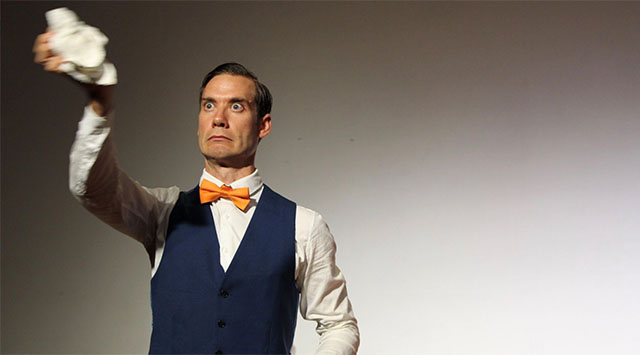
Mark Nagle’s direction of the work has some exuberance, and its embrace of the play’s frequent requirements of partial nudity is inevitably entertaining, but the show fails to escape the fundamentally prudish essence of the text. It wants our feathers to be ruffled by all the promiscuous goings on, but it all grows tiresome quickly, without a more radical or refreshing approach to discussing sex. Performances are uneven, with a big range of acting abilities, from the obviously amateur to some quite accomplished, but the cast shows a good sense of dedication to the staging, in spite of the unfortunately banal material.

It is valuable to have art talk about minority issues, to its own communities. There are no women, and no straight men in Fucking Men. It centres everything on the gay experience, and addresses its audience from that particular perspective, without concessions or compromise. There is integrity in a theatre that chooses an audience that is less mainstream and less commercial, for we all need to be reminded that our place in the world does matter.

www.newtheatre.org.au

Review: Jack Data (The Old 505 Theatre)

Venue: Old 505 Theatre (Newtown NSW), Feb 6 – 11, 2018
Playwright: Ruth Bell
Director: Ruth Bell
Cast: Richard Cotter, Christine Greenough, Elly Hirani Clapin, Mathias Olofsson, Julian Rumandi, Amelia Tranter

Theatre review
Exasperated by their daughter’s persistent independence, Alice’s parents decide to buy her a robot. Jack is not only a sex machine with the ability to help women procreate, he is a passionate housekeeper, a slave to Alice’s every need. Ruth Bell’s Jack Data imagines a future where artificial intelligence has well and truly penetrated the inner sanctum of human existence. Predictably, the play takes a technophobic position, with the well-worn attitude of deep scepticism about radical progress, that is unfortunately under examined. Alice’s resistance of a creation that is by all accounts “the perfect man”, requires greater exposition. In today’s climate of intimacy via smartphone, Alice’s unqualified dismissal of Jack, can be regarded as too convenient. The idea that humanity and nature are necessarily and unquestionably better than anything synthetic, has long been proven to be false.

The futuristic premise of robotic lovers is a deeply appealing one. Jack Data creates a fantasy in which we meditate on the meanings of love, relationships and families, in a way that forces our rationality to escape the cliché. It helps us interrogate our very existence, through concepts as far reaching as the delusion of our anthropocentrism. We begin to wonder if we can even conceive of humans as anything other than the very supreme occupants of earth, a clearly erroneous idea that we have become so used to. It is indeed a challenging but rewarding exercise, to try and not see our place on this planet as preeminent, to look square in the face at all the damage we cause, and come to an honest judgement on this humanity that we want to only think of as sacred.

The production is rough around the edges, with performances that are only occasionally convincing. There is some troubling illogic that gets in the way, such as, the complete plot inconsistency of having robots widely available to all of the public, yet having characters act like they had never seen robots before. Actor Mathias Olofsson is however, very delightful as Jack, with fabulous physical expressions that communicate with great dynamism. He makes us see robots as superior beings, as technology invented precisely to address the many faults of our organic selves. There needs a revision to our prejudices as they pertain to the increasingly arbitrary divisions between synthetic and organic, natural and technological. For those more religiously inclined, “for in Him all things were created,” and for the rest of us, we all are one.

www.old505theatre.com

Review: An Act Of God (Darlinghurst Theatre Company)

Venue: Eternity Playhouse (Darlinghurst NSW), Feb 2 – 25, 2018
Playwright: David Javerbaum
Directors: Mitchell Butel, Richard Carroll
Cast: Mitchell Butel, Alan Flower, Laura Murphy
Image by Phil Erbacher

Theatre review
The Christian God comes to deliver a new set of ten commandments in David Javerbaum’s An Act Of God. It is an intriguing proposition, that God would admit to being imperfect. He remains omnipotent, fret not, but this version of the Almighty concedes he had made some very big mistakes, and has decided that it is perhaps time, finally, to rectify two millennium worth of erroneous beliefs.

The play is a fascinating evaluation of religion, and its impact on all of us, regardless of where our faiths reside. It shapes our values, as they stand today, in contrast with outdated precepts that many still insist on upholding. The transformation of God into something closer to a modern day being, as opposed to a purely idealistic creature of fantasy, pushes Javerbaum’s humanist arguments with great efficacy, although the humour of An Act Of God can be inconsistently compelling. Directed by Mitchell Butel and Richard Carroll, the show is relentlessly effervescent, with a flamboyance that sustains our attention confidently, but the writing offers punchlines that seem overly polite within its raucous atmosphere.

Leading man Butel is near faultless in his portrayal of the big man himself, meticulous in approach, with expert timing in his delivery of every line, even when the jokes struggle to meet their comedic objective. Exposed and vulnerable, Butel has nothing to hide behind, in this very immediate staging of God’s presence, and the actor emerges triumphant with a brilliant display of sheer skill and grit. Also noteworthy are the many significant adaptations to the script, in its transposition from America to Australia. Presenting an Aussie version of the Lord above is a shrewd decision, proving so popular, one could hardly imagine any viable alternative.

An Act Of God does not attempt to change our minds about His existence, but it urges us to take responsibility for life on earth regardless. It wants us to give up any notion that the faults of the world are of hallowed design; we have to take charge no matter what we believe about prayer. There may not be any controversial or new ideas in the play, but it provides clarity to secular and religious conceptions of our being, that are often entangled and rarely identified with sufficient veracity. Whatever we wish to happen in the hereafter, our part in the now can never be taken lightly. If humanity is made in God’s image, what we are able to accomplish, must never be underestimated.

www.darlinghursttheatre.com

Review: The Backstories: Moya Dodd (Contemporary Asian Australian Performance)

Venue: Carriageworks (Eveleigh NSW), Feb 2 – 3, 2018
Playwright: Moya Dodd
Directors: Annette Shun Wah, William Yang
Cast: Moya Dodd
Image by William Yang

Theatre review
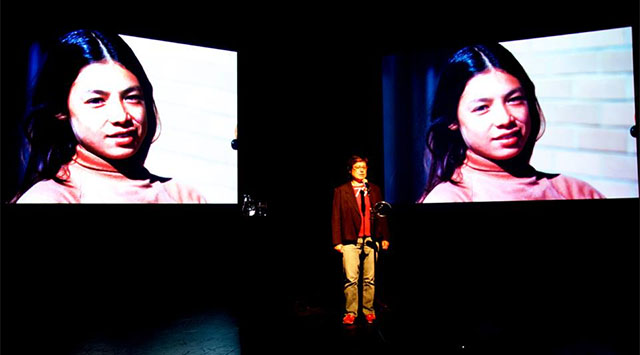
It is, sometimes, good to blow one’s own trumpet. In The Backstories: Moya Dodd, our eponym presents an autobiography with no trauma, no sensationalism and no great drama. Her life is peaceful, with so many proud successes that one might be tempted to call her lucky. The fact remains however, that Dodd is of Asian heritage, a woman, and a lesbian in Australia. The cards are clearly stacked against her, so even though she rejects the portrayal of herself as victim in any form of subjugation, it is important that we perceive that her achievements as real, and not a circumstance of chance. Dodd does not discuss hardships, but we already know the kind of world that we share.

Dodd speaks gently; her voice is calm, almost mesmeric in quality, but it is a defiant statement that she makes. Her accomplishments, personal and professional, are by all measures extraordinary. In the face of white, heteronormative, patriarchal forces that try to rule everything, and that will attempt to sublimate any story that contradicts their control of narratives, proclamations like Dodd’s are hugely important. For the majority of Australians who are routinely told that we are second class, a life well lived, and being public about it, is the best retaliation.

The script is well constructed, with smatterings of humour and pathos to accompany Dodd’s thoughtful assemblage of memories. Her delivery is wonderfully warm and therefore captivating, although a teleprompter or some similar system, would make for a more enjoyable experience. Musician Gareth Chin provides effective accompaniment on keyboards, and assists with Dodd’s recalling of the text. Two screens featuring photography through the years from the Dodd family, enhance immeasurably the production’s ability to engage our emotions. Direction by Annette Shun Wah and William Yang is incredibly delicate, and the result is something remarkably elegant, with a a quiet poignancy that proves to be quite haunting.

In free countries like Australia, it is true that we can be whatever we want to be, but the importance of role models must never be underestimated. We can only become what we can imagine, and our imaginations need sustenance. Moya Dodd’s backstory sets an example for masses of outsiders, all of us who sometimes fall into the misbelief that things are beyond our reach, or that entitlement belongs only to others. Spaces are evolving, and we have to understand our right to inhabit them.

www.caap.org.au

Review: Chrysalis (ATYP)

Venue: SBW Stables Theatre (Darlinghurst NSW), Jan 31 – Feb 17, 2018
Playwrights: Joseph Brown, Pippa Ellams, Harry Goodlet, Liz Hobart, Alexander Lee-Rekers, Madelaine Nunn, Julia Rorke, David Stewart, Phoebe Sullivan, Gretel Vella
Director: Rachel Chant
Cast: Brenton Bell, Anika Bhatia, Caitlin Burley, Jeremi Campese, Claire Crighton, Ben Tarlinton, Clare Taylor, Margaret Thanos
Image by Tracey Schramm

Theatre review
The delicate allure of a butterfly in full glory, is always under threat. The idea of a pupa however, is infinitely more satisfying, with its imminent beauty promising only majesty and wonder. This collection of ten short plays by young Australians may be named Chrysalis, but not only does it feature talent brimming with awesome potential, it showcases some surprisingly mature work that is already soaring with splendour. To witness such youthful triumph is indeed breathtaking.

An unequivocal highlight is a trio of remarkable and exhilarating monologues for the teenage girl. Writers Pippa Ellams, Julia Rorke and Phoebe Sullivan each deliver pieces that are playful, poignant and powerful, all giving extraordinary voice to female characters we routinely underestimate. Joseph Brown and Harry Goodlet show us in their respective segments, starkly different ways our boys behave with each other, but both are unabashedly tender in their depiction of affection and kindness, a refreshing change from the all too familiar rowdy machismo we have come to expect, of narratives concerned with Australian men and their mateship.

Director Rachel Chant does outstanding work in helping us find a sense of cohesion for the disparate plays, through her exquisite calibration, from story to story, of tone and style. Also impressive is her work here with the brilliant cast of eight. Every actor in Chrysalis is compelling and persuasive, all of whom are sensational with the incredible depth and authenticity they put on display. A sophisticated sense of humour further elevates the production, giving us some very smart laughs in addition to its many moving moments.

It is so marvellous seeing our young talk about their need for anywhere but here. Ambition is admirable, and when coupled with aptitude, the sense of optimism it provides is truly invigorating. The life of an artist is not an easy one, and many will fail to cut the mustard, but those who persist will be greatly rewarded, although rarely in accordance with early expectations. We must all grow up, and to choose to grow alongside the practise of art, is at once noble, and brave.

www.atyp.com.au

Review: Debris (Blood Moon Theatre / LZA Theatre)

Venue: Blood Moon Theatre (Potts Point NSW), Jan 30 – Feb 10, 2018
Playwright: Dennis Kelly
Director: Liz Arday
Cast: Aslam Abdus-samad, Lana Kershaw
Image by Zaina Ahmed

Theatre review
It was only several weeks ago, at the very beginning of 2018, that we first heard about the shocking case of the Turpin family in California, where 13 children were discovered to have been held captive and tortured by their own parents. In Dennis Kelly’s 2003 play Debris, we meet Michelle and Michael, teenage siblings neglected, abused and exposed to horrific conditions at home. Under the care of adults who are perhaps insane, or simply evil, the atrocities that we witness are the stuff of nightmares.

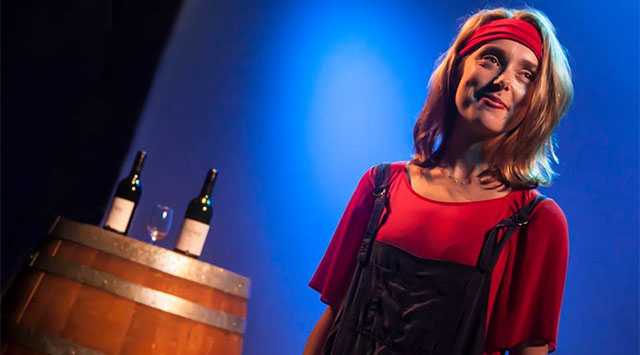
The play is intense and confrontational, possibly exploitative in its relentless depictions of trauma. Director Liz Arday establishes an enticing style and mood for her production, informed by cabaret traditions, complete with microphone stands and tinsel curtains, but there is a repetitious quality to the way its scenes are carried out that can wear thin. Nonetheless, Debris is memorable for excellent design work, with Arday’s own sensitive work on sound and Liam O’Keefe’s adventurous lights, both in collusion to manufacture a sense of electrifying theatricality and macabre decadence.

Two powerful actors bring the characters to life, on a stage that they imbue with frenzied savagery. Aslam Abdus-samad is a captivating presence, delivering spectacle after spectacle, with his penchant for the extravagant. Also very glamorous is Lana Kershaw, who proves herself the consummate storyteller, able to convey depths of meaning and emotion, in addition to her splendid recital of Kelly’s ostentatious words.

Art allows us to delve into the good and bad of humanity, but some behaviour it seems, will forever be beyond comprehension. The best that Debris can do, is to convince us of the depravity that we are capable of, and even though we hunger for an understanding of the origins of these extremities, we should probably be grateful that such abomination exists outside of our personal consciousness. The fact remains that we are capable of terrible things, and societies need to prevent them from occurring, whether or not we know how they come to be. The protection of children, especially, requires no justification. We only need to be aware of the dangers they are susceptible to, and look after them with unflagging vigilance.

www.lza-theatre.xyz | www.bloodmoontheatre.com

Review: Blind Tasting (The Old 505 Theatre / Subtlenuance)

Venue: Old 505 Theatre (Newtown NSW), Jan 30 – Feb 3, 2018
Playwright: Paul Gilchrist
Director: Paul Gilchrist
Cast: Sylvia Keays
Image by Liam O’Keefe

Theatre review
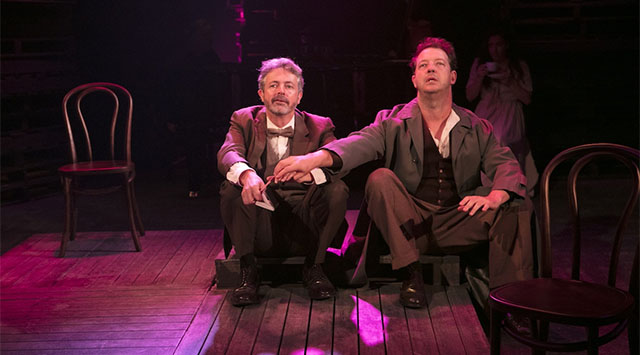
To thoroughly experience this mysterious thing called life, we have no real alternative but to dive into it head first. In Blind Tasting, Sophie learns the ropes as she goes along. Unlike her colleague Kirstie, who is determined to control everything, Sophie realises instinctively, the futility of that fussy perfectionist approach. Of course, mistakes are made, and heartache ensues, but there is no doubting Sophie’s self-determined way to a richer and wiser existence.

As we sip the wine that Sophie offers, we notice the thrill of the unknown and observe how essential it is to have an appreciation for the precarious and insecure qualities of our being. The wine may or may not be delicious, but it is only in the tasting of it, that one can be certain. No other opinion can ever take the place of that subjective participation.

Written by Paul Gilchrist, Blind Tasting is potent with its sense of joyful optimism, expressed through the playwright’s penchant for a poetic language that is remarkably luscious and evocative. The one-woman show is performed by Sylvia Keays, a presence that is gentle but persuasive, especially effective in the play’s moments of melancholy. The production is an engaging one, refreshing in its use of wine tasting as situation and analogy, but its delivery of drama requires greater gumption, for us to have a firmer identification with its narrative, and for its point to be made with stronger resonance.

Connoisseurs occupy themselves with the grading and sparring, of every wine bottle that they come across. It is human nature to compare and categorise the things we make contact with, but the deeper we get, into games of “finding the best”, the narrower our perspectives become, and the smaller our worlds devolve. With every label that we put on things, we also cast upon them, the restriction of possibilities. Sophie learns not to accept the pigeonholes that people want for her, and we wish for her to break the rules, as and when they find her.

www.old505theatre.com | www.subtlenuance.com

Review: Darlinghurst Nights (Hayes Theatre)

Venue: Hayes Theatre Co (Potts Point NSW), Jan 4 – Feb 3, 2018
Book: Katherine Thomson (based on the book by Kenneth Slessor, and original concept by Andrew James)
Music: Max Lambert
Director: Lee Lewis
Cast: Baylie Carson, Andrew Cutcliffe, Natalie Gamsu, Abe Mitchell, Billie Rose Prichard, Sean O’Shea, Justin Smith
Image by Brett Boardman

Theatre review
For many who reside in Sydney, the Darlinghurst area marks the heart of our city. It may not be the official “central business district”, but its spirit represents how we think of home, at our most wistful moments. Darlinghurst Nights, the musical and the locale alike, are a little tawdry and decadent, always seedy but romantic, full of melancholic nostalgia. The story by Katherine Thomson, based on Kenneth Slessor’s 1933 book, is a bittersweet embodiment of the bohemian essence we love associating with Sydney and the Kings Cross area, inventively devoid of the bourgeoisie.

Colourful characters and their dramatic stories are brought to the stage by Lee Lewis’ passionate direction, offering dreamy and ghostly tribute to lives that continue to gloriously disgrace the area. Historical tales are accompanied by Lee’s modern sensibility, allowing for a convergence of past and present, so that we relate intimately with the action unfolding before us. The production is cleverly designed by Mason Browne, whose set and costumes help to tell the story with remarkable sophistication and minimal fuss. Lighting designer Trent Suidgeest is especially noteworthy with his very thorough and imaginative work, in introducing a sense of poetic evanescence to all that we see, persistently exploring ideas for emotional landscapes that keep us firmly engaged with the show.

The cast is strong, a well-rehearsed bunch admirable for their restrained approach to the musical format. Each personality is convincingly portrayed, and whether raspy voiced or vividly sparkling in tone, every song is performed with great conviction. There is exceptional beauty in Max Lambert’s music for Darlinghurst Nights. Crossing over from classical to jazz and pop, Lambert has the intricately conceived entirety blended into one seamless work, that feels so marvellously accurate in its sonic representation of this city.

Ultimately, it is all illusory of course, our sentimental fantasy of this Sydney that has no big business, no bureaucracy and no black history. In Darlinghurst Nights, the truth is not allowed to get in the way of a good story, but as this nation strives to move towards a stronger future, a greater honesty needs to inform the way we think and talk about ourselves. We can no longer afford to leave buried, all our hard and inconvenient truths.

www.hayestheatre.com.au