Review: Orphans (Old Fitz Theatre / Red Line Productions)

oldfitzVenue: Old Fitzroy Theatre (Woolloomooloo NSW), Apr 14 – May 9, 2015
Playwright: Lyle Kessler
Director: Anthony Gooley
Cast: Danny Adcock, Aaron Glenane, Andrew Henry
Image by Rupert Reid

Theatre review
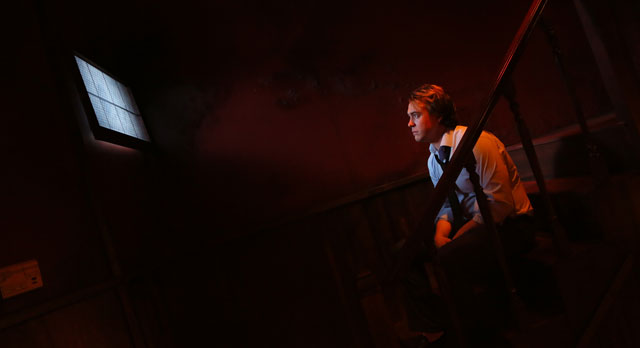
Many have likened love to air, associating both with an absolute necessity for survival. Unlike air however, love can manifest in many unpredictable ways, and in Orphans, we see how the best of intentions can become cruel behaviour responsible for untold suffering. Phillip and Treat are brothers who have grown up without parents. They share a close mutual reliance, but without any guidance, their instincts have created young men who are dysfunctional together and apart. Beneath the boisterous tone of Lyle Kessler’s writing, is a tender depiction of relationships that has the potential to move and to connect with every person’s experiences of difficult family dynamics. We all have an understanding of the imperfections that exist in our homes, and the accuracy at which the brothers’ problematic and insular world is explored, allows for thorough identification and empathy.

The production is directed well by Anthony Gooley, who ensures that characters are complex and fascinating, with an amplified realism that provides a sense of familiarity even though the circumstances being staged are fairly extreme. It is an unusual and unpredictable story, relayed with vigour and heightened drama, but we do not perceive a great sense of purpose to the director’s work, other than to establish an atmosphere of enthrallment for the duration of the play. We are gripped for its entirety but leave without discovering great insight that matches the gravity of what is seen. The character of Harold is a father figure who destabilises the brothers’ cozy dwelling, performed by Danny Adcock with excellent conviction and strength, but the role is positioned neither enigmatic enough nor believable enough. Harold’s presence does not always make sense in the narrative, and our questioning of his authenticity is an unfortunate dissuasion.

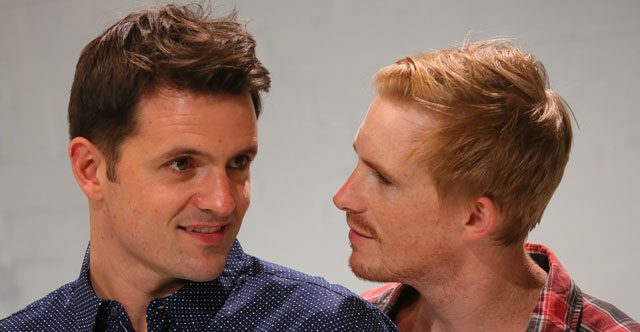
Aaron Glenane turns in a magnificent performance as the younger brother, Phillip. The actor is marvelously nuanced in his intensity, expressing with great efficacy an exhaustive range of psychological possibilities and physical attributes, completely captivating in a beautifully embellished characterisation of damaged innocence. Glenane’s approach is adventurous and playful, but also sensitive and studied. He understands chemistry instinctively, and fosters a strong bond with colleagues and audience that keeps us invested in Phillip’s plight. Offering a macho and manic counterbalance is Treat, the older brother played by Andrew Henry with a threatening and exuberant energy that keeps us anxiously seduced. The largeness of his personality keeps us on the edge, tense in anticipation of his next outburst of trespass or feelings. It is a powerful performance, but Henry’s final scene requires further finessing. A transition of emotion occurs too suddenly and unexpectedly, taking lustre away from the Orphans‘ concluding moment of piquancy.

We encounter strangers every day, but letting new people into our lives is a rare occurrence. The desire for a sense of permanence and security means that we prevent new influences from infiltrating, whether positive or negative. Phillip and Treat had made a habit of their suffering, unaware that a better way of life was within their grasp. Inspiration resides everywhere, and we must be able to welcome it in when the right ones present themselves, so that life can be lived to the fullest, and with any luck, be survived by a legacy of something good.
www.oldfitztheatre.com

5 Questions with Aaron Glenane

aaronglenaneWhat is your favourite swear word?
Recently I’ve been using “dodo” as in “Get it together ya bloody dodo!” “Ning nong” is up there also.

What are you wearing?
My man beard, basketball shorts, John Deer t shirt.

What is love?
Honesty.

What was the last show you saw, and how many stars do you give it?
Masterclass at The Old Fitz and I give it 10/10 as Charlie Garber and Gareth Davies are ridiculously hilarious. I also saw Foo Fighters playing to 57,000 people in Melbourne and Dave Grohl had us in the palm of his hand. 11/10 (Spinal Tap style)

Is your new show going to be any good?
Danny Adcock was in character 2 months ago so I think it’ll be sweet!

Aaron Glenane‏ is appearing in Orphans by Lyle Kessler.
Show dates: 1 Apr – 9 May, 2015
Show venue: The Old Fitzroy Hotel

Review: Freak Winds (Old Fitz Theatre / Red Line Productions)

redline3Venue: Old Fitzroy Theatre (Woolloomooloo NSW), Mar 10 – Apr 11, 2015
Playwright: Marshall Napier
Director: Marshall Napier
Cast: Anna Bamford, Marshall Napier, Ben O’Toole
Image by Tim Levy

Theatre review
Marshall Napier’s very Hitchcockian Freak Winds has all the suspenseful intrigue, perverse humour and subversive eroticism that keeps an audience simultaneously repelled and seduced by its story. Unlike Hitchock, Napier’s work is of the twenty-first century, with much less censorial restrictions, so what we get is an update for the genre and style. It does not resort to gore and constant bloodletting, but it delivers thrills and creates tension with a rather more explicit incorporation of sex, murder and terror. Napier’s lines are quirky and cheekily controversial, and the structure of his play is unpredictable, with an edgy sense of danger at every turn.

Direction of the piece is sharp and dramatic, with beguiling characters that feel enigmatic, but always able to reveal just enough for their plot to work its magic on the audience. Aside from a couple of unexplained touches like the mysterious appearance of a wheelchair at the start of Act 2, and a bizarre moment involving a red light at the conclusion, Napier shows himself to be a director with an untameable creative flair and a knack for conveying complex, multi-dimensional narratives that could be read in a variety of ways by different viewers. His style is elegant, but brave. There is no hesitation in exploring absurdist territory when appropriate, and a distinct eagerness to tantalize with taboo subjects that really satisfies (except for the unveiling of a disappointingly modest dildo after quite a substantial build up).

Ben O’Toole plays Henry, a young and ambitious insurance salesman in the middle of a living nightmare. The role is comparatively simple, but O’Toole works through it aggressively, with an energy that can only be described as exuberant. His entertaining performance is a necessary contrast to the mysterious and somber quality of the show’s other elements, and the actor leaves a strong impression characterised by excellent commitment and passion. In the role of the very creepy Ernest is Napier himself, who brings experience and an intelligence that keeps us on our toes. His work is efficient, often impactful without needing to push very hard at all, but the performer’s eyes seem to always evade our gaze, rejecting our appetite for the truth in Earnest’s world. The play’s third character is Myra, thoroughly weird and unquestionably mad. Anna Bamford is feisty enough for the part, but her interpretation feels repetitive where we expect extremes coming from all sides. Nevertheless, the unorthodox and precarious sexual atmosphere created by Bamford’s chemistry with her cohorts is an unexpected delight for any theatrical space.

Freak Winds is beautifully designed by a creative team that has addressed every aspect of sight and sound with good taste and sensitivity. Nate Edmondson’s sound design rumbles beneath our feet to taunt us into a space of horror, and along with Alexander Berlage’s lights, the small venue is dissected into a hundred different spots, adventurously explored in all their possibilities. The highly effective set and costumes by Lisa Mimmocchi provide a strong context with immediate visual signifiers that help tell the story almost on a subconscious level, from curtains up to the very bitter end.

Freak Winds‘ macabre comedy mixes with spine-tingling gothic influences and dark erotica to spawn an unusual piece of theatre, yet scary tales seem to have been with humanity since time immemorial, existing in different forms in all our cultures. They remind us of our mortality, and of the arbitrary membrane that keeps us separate from harm. We rely on rules and regulations, laws and legislation, but mostly, we count on the kindness of strangers so that we can live unhindered or protected, but all it takes is one person losing their mind for catastrophe to engulf another, such is the fragility of our existence.

www.oldfitztheatre.com

5 Questions with Ben O’Toole‏

benotooleWhat is your favourite swear word?
Favourite swear word is definitely cunt. Great word.

What are you wearing?
At the moment I’m wearing jeans and thongs with a t-shirt, but in the show my character wears a suit the whole time. Insurance salesman style.

What is love?
Love is a chemical imbalance in the brain, brought upon typically by another person. Pretty magic really.

What was the last show you saw, and how many stars do you give it?
The last show I saw was Cock at the Old Fitz, and I would give that show a 4 stars. Brilliant stuff.

Is your new show going to be any good?
I should hope so!

Ben O’Toole‏ is appearing in Freak Winds by Marshall Napier.
Show dates: 10 Mar – 11 Apr, 2015
Show venue: The Old Fitzroy Hotel

Review: Cock (Old Fitz Theatre / Red Line Productions)

redline2Venue: Old Fitzroy Theatre (Woolloomooloo NSW), Feb 3 – Mar 6, 2015
Playwright: Mike Bartlett
Director: Shane Bosher
Cast: Brian Meegan, Matt Minto, Matilda Ridgway, Michael Whalley
Image by Tim Levy

Theatre review
John is caught between a man and a woman. These relationships cannot co-exist, because the three people believe that the nature of love is monogamous, and more than that, love requires resolute sexual identities. Mike Bartlett’s Cock is essentially a play for the post-gay era. It makes us look at the boundaries and definitions that have come to rule our lives, and to consider their arbitrariness despite their unadulterated and pervasive presence. John has to decide if he is gay or straight, and as the pressure escalates, we become increasingly aware of the absurdity of his circumstance. There are few things in the LGBT world more controversial and dangerous than saying that sexuality and gender are choices that can be made by conscious adults. Cock makes reference to the need for manufactured concepts that serve political purposes, which may not be legitimately applicable to all individuals that they try to protect, and would disintegrate when its purpose is served. Of course, we can understand that no one would choose to be gay in a world that discriminates and persecutes those who deviate from heteronormativity, but if society has progressed far enough, then maybe making a conscious choice to become the “other” is no longer a threatening proposition (if the “other” can still exist in that progressive civilisation). What is discussed in Cock suggests the redundancy of sexuality labels in how we live, even how we love.

Shane Bosher’s direction strips the production of all sets and props. The actors do not make any costume changes, so all they have are words and ideas, bodies and space. The theatre-in-the-round configuration encourages constant movement, and coupled with scenes of incessant fight and struggle, the atmosphere is often electric. Bartlett’s writing is energetic and bold, with humour and drama bulging at the seams, but it is clear that Bosher’s affinity with the play’s graver portions is stronger. Tension on this stage is omnipresent, but jokes are hit and miss. The leading men give exciting performances but lack the versatility to flow persuasively between the light and dark of the writing.

Michael Whalley is John, the young man stuck in a state of confusion. Whalley embodies the frustration and weakness of his character with great clarity, and the play’s difficult themes find a surprising resonance through his performance, but John needs to be more affable in order for the dramatics to have greater efficacy. John’s male lover is played by Matt Minto, who is delightfully flamboyant, but repetitively so. The character is a stubborn one, and we eventually grow tired of his unchanging voice and mannerisms. Conversely, the female lover shows a great range of intellectual and emotional states, and those transformations make Matilda Ridgway’s performance a gripping one. She finds authenticity in a script that is more conceptual than real, and creates the only character we are able to empathise with, even though we are baffled by her devotion to John, the non-hero. Brian Meegan is a last minute replacement for the male lover’s father, so it is entirely understandable that he is yet to have all his lines down, but he does a superb job in later scenes to consolidate the play’s plot and philosophy.

LGBT communities in the West have invested decades to create cultures and identities, in order that oppression may be resisted and subverted. Once those objectives are fulfilled, however, a new stage of evolution will commence. In Australia, that time has not yet come, so John will continue to be forced into conceding an invariable sexual preference, whether it rings true to his personal experiences, or not.

www.oldfitztheatre.com

Review: Bad (Old Fitz Theatre / Red Line Productions)

redline2Venue: Old Fitzroy Theatre (Woolloomooloo NSW), Jan 14 – 31, 2015
Director: Scott Witt
Cast: Penny Greenhalgh, Kate Walder
Image by Yael Stempler

Theatre review
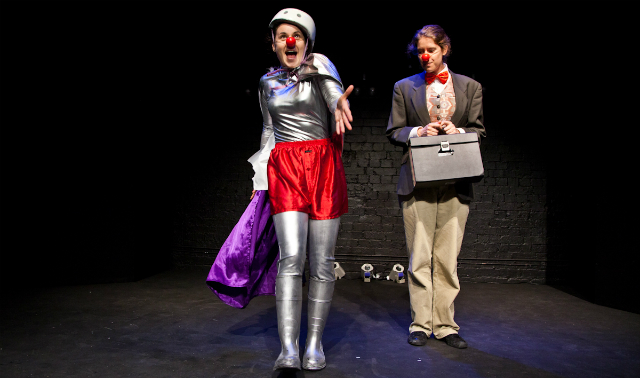
Bad is a show performed by clowns about acting (amongst other things). Along with director Scott Witt, performers Penny Greenhalgh and Kate Walder have devised a work that uses clowning traditions and influences from Commedia dell’arte, to deliver a theatrical experience that is slightly left of centre. Their show is more amusing than it is funny, and their ideas are familiar rather than original, but there is an earnestness and purity to their approach that can be quite charming.

Walder is the “stunt woman” clown who speaks with a French accent, toddling around in a pair of tap shoes. Insisting that she is Cate Blanchett, the Hollywood and theatre star, she goes on to present a show entitled ‘Where’s My Bucket, Mom?’, enlisting the help of Greenhalgh, “philosopher” clown who gradually warms to the idea of being Geoffrey Rush (another star of stage and screen). The plot and story are chaotic and random, but we are always brought back to the theme of performance. Walder and Greenhalgh explore the nature of the theatrical space and the experience of acting using their unconventional methods, with mixed results. The pair is well rehearsed, but the play’s frenzied style and structure require more intense energy levels to provide a sense of abandonment and absurdity to match its concepts. Both actors seem fairly cautious, creating a space that feels safe, where we would prefer a sense of danger and unpredictability.

Not every actor is a clown, but all clowns act. They give us something unique, that can be found in their license to transgress. Clowns do not speak much, because they communicate in better ways. They reach out to us in realms that are beyond words, so that we understand the world from a different perspective. When done right, they impart a kind of wisdom that brings unexpected enlightenment. Bad is not always good, but what’s worse is doing things the same way over and over again. There is a courage at play here, and we need more of it.

www.oldfitztheatre.com

Review: Masterclass (Old Fitz Theatre / Red Line Productions)

redlineVenue: Old Fitzroy Theatre (Woolloomooloo NSW), Jan 14 – 31, 2015
Playwrights: Gareth Davies, Charlie Garber
Directors: Gareth Davies, Charlie Garber
Cast: Gareth Davies, Charlie Garber
Image by Marnya Rothe

Theatre review
Two actors collaborate on a work for the stage, talking about what they know best. Gareth Davies and Charlie Garber’s Masterclass is about the craft and experience of acting, and all the anxieties associated with it. They take the art of self-mockery to great heights by depicting versions of themselves that are flamboyantly theatrical and deeply cynical, to interrogate the nature of their creative beast. An extreme self-consciousness manifests itself in a persistent need to make light of their art form, which delivers gales of laughter effectively, but its attempts to demystify and deconstruct the psychology and process of the actor takes irreverence to a sometimes uncomfortable place, and one begins to question the exasperating disquiet that Davies and Garber seem to feel about their profession. We see their resistance against taking any of their craft seriously, but we see them exploring this iconoclasm, with impressive commitment and skill.

There is a distinct, almost stubborn sense of humour at play, but the pair manipulates pace, rhythm, and plot dynamics to give the work variations in tone that keep us engaged, despite its very simple premise. Garber has a quiet confidence that allows him to portray the wild comedy of Masterclass with relative restraint. His style is often deadpan, but the clarity of intent he brings to every moment gives a surprising coherence to his unorthodox part, and a convincing strength to his punchlines. Davies’ approach is wider in range, and his comedic choices are decidedly riskier. The man’s energy is the foundation of the piece, and his control over spatial atmosphere and his audience’s responses is quite marvellous. We do not necessarily empathise with every idea Davies expresses, but there is certainly a lot to be admired of his ability to entertain, while conveying concepts that can be quite obscure.

Technical design is a crucial element to the structure and timing of this comedy production. Uncredited work on sound and Benjamin Brockman’s lights add much needed sophistication to an otherwise aesthetically challenged show. The play’s context allows for imaginative use of sets, props and costumes, but no investment is placed on those areas, and Brockman is called upon to provide all visual embellishment in the black box to admittedly satisfying results. Also noteworthy is stage manager Nick Foustellis’ precise and elegant execution of cues and changes.

The play concludes with a hint of poignancy that arrives after a long wait. The two young men prove themselves to be brilliant at light entertainment, but they seem to shy away from the inevitable gravitas that any theatrical piece requires. Not every story needs to give you something to think about, but when careless, jokes can leave you feeling empty. The sweet taste of success is for delighting in, and young talent should learn to embrace their gifts, even in the land of tall poppies.

www.oldfitztheatre.com

5 Questions with Shane Bosher

shanebosherWhat is your favourite swear word?
There are three that regularly vie for #1 spot: bullcrap, fuckpuppet and cunting. All almost unspeakable.

What are you wearing?
I go for a simple look: black t, classic blue jeans, black Nike trainers. Consider it my contemporary take on the classic 1970s director garb: black skivvy, leather jacket, cigarette.

What is love?
Love is a wonderful predicament which has been destroying and enriching people’s lives since forever. It’s simplicity, it’s courage, it’s vulnerability, it’s difficulty, it’s joy – it is all of the things. Without it, stories would be rubbish and I’d be out of a job.

What was the last show you saw, and how many stars do you give it?
A touring version of The Sound Of Music in New Zealand. I left after the Mother Superior had climbed every mountain. A gruelling trip up into the Alps with wobbly vibrato and wobblier sets. 2 stars. Am seeing Tabac Rouge tomorrow, so am holding out all hope for that to restore the faith.

Is your new show going to be any good?
It’s a whole lot of crash bang love. Great play, top notch cast, stellar production team and the Old Fitz as you’ve never seen it before. I reckon so.

Shane Bosher is directing Cock by Mike Bartlett.
Show dates: 3 Feb – 6 Mar, 2015
Show venue: The Old Fitzroy Hotel

5 Questions with Gareth Davies

garethdaviesWhat is your favourite swear word?
Swearing is the refuge of thieves and louts, a thinking man with a moderate grasp of the English language needs not swear to display his displeasure. Although the word ‘cunt’ is pleasing to yell out of bus windows.

What are you wearing?
Hopes, dreams, and some loose thai fisherman’s pants.

What is love?
Love, huh? It’s a warm bicycle seat, paella on the barbecue. It’s a short gasp and a long goodbye. Long fingers. Smooth skin. Sticky hearts. Jewels from a dragons trove. It’s smart casual. But what would I know, right? I’m just one more sucker who looks good in a dinner jacket.

What was the last show you saw, and how many stars do you give it?
I don’t see shows because I might pick up bad habits, so, I guess my own? Five stars.

Is your new show going to be any good?
Not our problem.

Masterclass, by Gareth Davies and Charlie Garber.
Show dates: 14 – 31 Jan, 2015
Show venue: The Old Fitzroy Hotel

5 Questions with Charlie Garber

charliegarberWhat is your favourite swear word?
Swear words. My favourite. Hmmm. Well, I’ve always liked *&%^*$$@#%Y. But then there’s *&^. I suppose I’d have to go with ).

What are you wearing?
What am I wearing? What am I wearing?! Jesus! You know, I’ve just trawled Facebook for the last ten minutes. The world is a truly sorrowful place. What am I wearing??!! 2014 has been a ragged year of war, lies, paedophilia and greed… Grey Bonds briefs and a blue and white striped Vanishing Elephant T, all piled languorously on a teal linen doona cover.

What is love?
Love is the chill of a demon baby’s breath glimpsed from an antique pram on a frozen park lake.

What was the last show you saw, and how many stars do you give it?
The last show I saw was Cyrano de Bergerac at STC. I give it five bags of popcorn and five bags of soda.

Is your new show going to be any good?
Masterclass is the show and it’s a steaming pile of garbage.

Masterclass, by Gareth Davies and Charlie Garber.
Show dates: 14 – 31 Jan, 2015
Show venue: The Old Fitzroy Hotel