Review: Extinction Of The Learned Response (Glitterbomb / 25A Belvoir)

Venue: Belvoir St Theatre (Surry Hills NSW), May 7 – 25, 2019
Playwright: Emme Hoy
Director: Carissa Licciardello
Cast: Tel Benjamin, Sarah Meacham, Eddie Orton, Jennifer Rani
Images by Jasmin Simmons

Theatre review
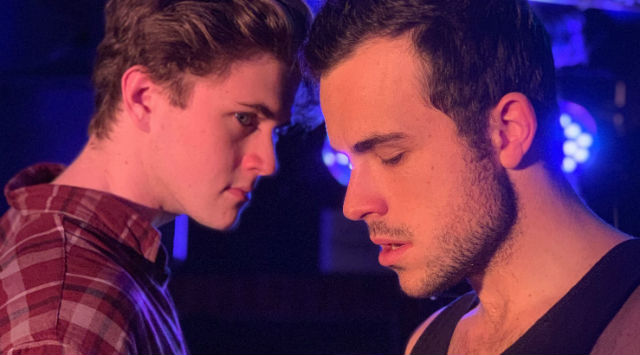
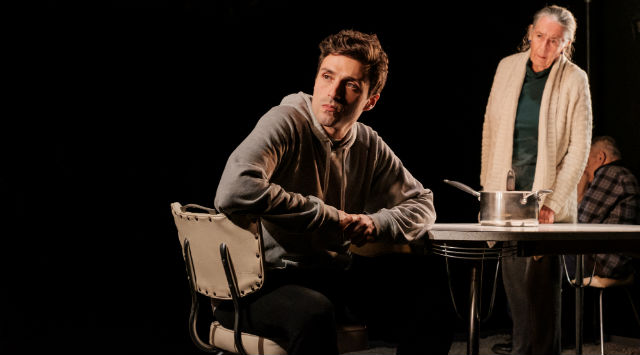
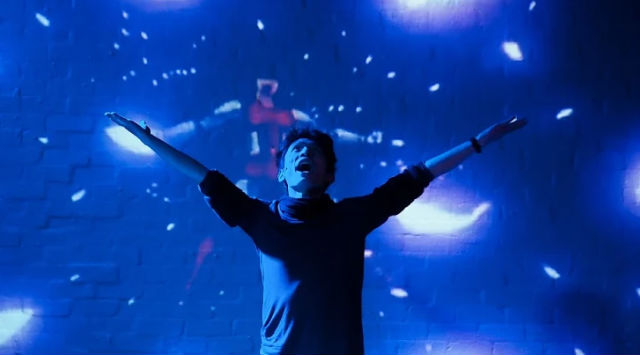
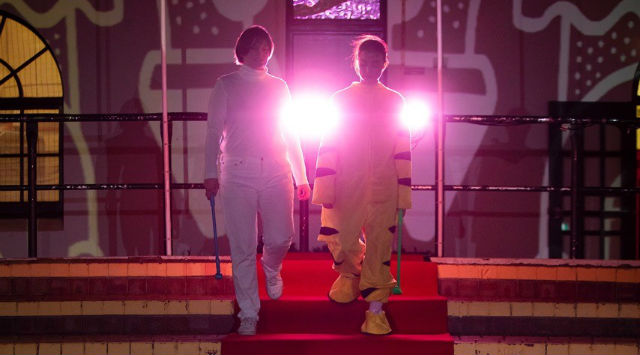
Duncan and Marlow are running an unauthorised, and unethical, experiment. They have two mysterious subjects held captive in their laboratory, undergoing a gruelling training regime to appear more convincingly human. Rachel and Wells have problems mastering the most basic of social skills, and we are kept wondering about their natural form; they may look human, but the playwright Emme Hoy wants us to look deeper into who these people are inside, or if indeed, they are people at all. Essentially a work of science fiction, Extinction Of The Leaned Response does ultimately ask some worthwhile questions, but its intrigue is too mild, and its plot too hesitant, to be sufficiently provocative.

The show is moody, and adequately suspenseful, thanks in large measure to Ben Pierpoint’s genre specific sounds and Kelsey Lee’s adventurous lights. There is however a circumvention of the bizarre and absurd, in favour of naturalism, by director Carissa Licciardello, that seems a missed opportunity. An air of placidity provides sophistication to proceedings, but the story’s cruel circumstance calls for something more heightened that could make for a more satisfying theatricality.

Actors Sarah Meacham and Eddie Orton are fascinating as the test subjects, both effective in engaging our imagination. Undeterred by the abstruseness of their material, Meacham and Orton find ways to vitalise their parts, making Rachel and Wells memorable, and strangely charming. Tel Benjamin and Jennifer Rani play the dubious researchers, with excessive restraint perhaps, but are nevertheless entertaining performers with excellent conviction.

As humans, we are eternally enthralled by our own nature. Always seeking to define humanity, we constantly find new ways to understand ourselves, not only because of an indubitable narcissism, but also as a means to interact with the larger universe. When one wishes to make the world a better place, it is necessary to know deeply the self, before one should begin imposing on others. In their efforts to discover bigger truths however, the researchers in Extinction Of The Leaned Response commit transgressions that are horribly egregious. There can be no end to knowledge, but to recognise right from wrong, is a fundamental principle that must not be compromised.

www.dasglitterbomb.com | www.belvoir.com.au

Review: Blood On The Cat’s Neck (Montague Basement)

Venue: Kings Cross Theatre (Kings Cross NSW), May 22 – Jun 1, 2019
Playwright: Rainer Werner Fassbinder (translated by Denis Calandra)
Director: Saro Lusty-Cavallari
Cast: Alex Chalwell, Jack Crumlin, Jemwel Danao, Deng Deng, Laura Djanegara, Deborah Galanos, Alice Keohavong, Emma Kew, Brendan Miles, Annie Stafford
Images by Zaina Ahmed

Theatre review
Phoebe Zeitgeist is an alien. She arrives disguised as a human, infiltrating what we might consider normal life, and learns to assume our behaviour. Rainer Werner Fassbinder’s Blood On The Cat’s Neck from 1971 might also be seen as a work about artificial intelligence, with Phoebe Zeitgeist a kind of technology, a robot perhaps, who disrupts our existence, gradually forming sentience within our midst, and eventually able to outsmart us. There is undeniable anxiety in Blood On The Cat’s Neck, whether relating to a certain perilous quality of our social interactions, or that increasing unease about being overcome by technology.

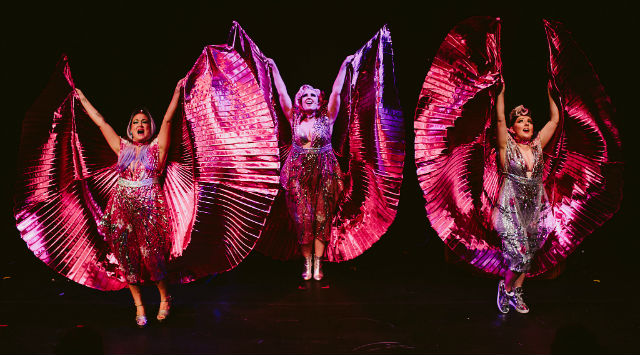
The abstract nature of Fassbinder’s writing provides a basis on which director Saro Lusty-Cavallari builds an immersive experience for his rendition of Blood On The Cat’s Neck. In the decadent surrounds of a bordello themed bar, we find ten performers scattered, as we are, floating in space with no designated stage and few allocated seats to keep us anchored. Scenes unfold one at a time, and we trace the action, eavesdropping in plain sight as though we too are aliens, scrambling to make heads and tails out of information dispensed mid-conversation, with little context for convenient comprehension.

The 70-minute show does however bear a coherent structure; a beginning, a middle and an end for a familiar flow that offers a sense of security. Hints of drama throughout help to sustain our interest, but its middle section feels repetitive and long, and we find ourselves occasionally disengaging from the artists, perhaps choosing instead to observe the more general goings on. As Phoebe Zeitgeist examines one character after another, we are on the outside, secretly scrutinising fellow audience members, as though all are curious.

A strong cast is assembled for the piece, with each personality bearing a distinct individual essence that accrue an air of gravity, that gives fortification to the production’s experimental style. Sophie Pekbilimli’s lighting design is a highlight, sensual and stealthy, rendered with a light touch that demonstrates artistic confidence. Costumes by Grace Deacon are cleverly coordinated, to depict character types, and to deliver charming imagery. Lusty-Cavallari’s sounds keep us on the right track, so that our interpretations are kept within parameters, as is our visceral experience of his unique kinetic theatricality.

Phoebe Zeitgeist’s convincing otherness is derived from her fictitious-ness. Technology on the other hand, cannot be divorced from its creator; it and us are one. The post-human story contained in Blood On The Cat’s Neck is frightening, because we know the worst of ourselves, and it requires no great stretch of imagination to see it manifested in robots. If artificial intelligence does eventually overwhelm us, we will recognise ourselves in them, and perhaps come to an understanding that evolution will take us on its natural course, and move us beyond a biology that will conceivably turn defunct. Mainstream culture has little appreciation for notions of everlasting life, but maybe we will grow smarter, and develop a new consciousness where we can find heaven, even if it lives inside a machine.

www.montaguebasement.com

Review: Prima Facie (Griffin Theatre Company)

Venue: SBW Stables Theatre (Kings Cross NSW), May 17 – Jun 22, 2019
Playwright: Suzie Miller
Director: Lee Lewis
Cast: Sheridan Harbridge
Images by Brett Boardman

Theatre review
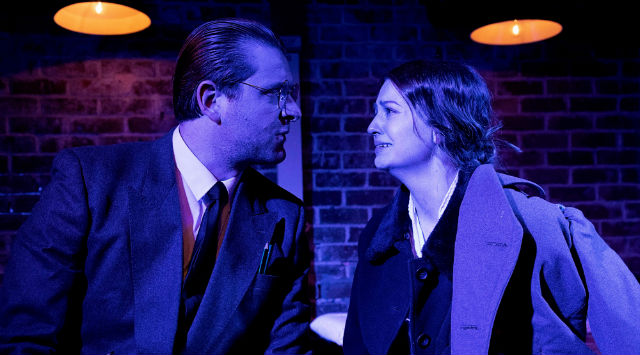
Tessa is proud of her success as a criminal defence barrister, and when we first meet her in Suzie Miller’s Prima Facie, her faith in the legal system seems a matter of course, for a young woman going places in the field of law. When the tables turn however, and Tessa finds herself on the prosecution side as a victim of rape, she discovers severe fallibility in the way we serve justice, especially in cases of sexual assault. Miller’s breathtaking new work is full of passion, propelled by an urgent need to bring change to these deeply problematic processes, that are patently incapable of providing appropriate redress to plaintiffs who are almost exclusively women.

Miller is precise and thorough, in her careful storytelling. She engages our hearts and minds, for a stirring theatrical experience, perfectly suited to our current climate of #MeToo heightened social consciousness. Prima Facie makes its arguments convincingly, and crystal clear, and we leave sharing in the passionate intensity of its perspectives. Actor Sheridan Harbridge holds us captive for the entire 100 minutes, of her spellbinding one-woman show. It is an extraordinary achievement, with Harbridge able to convey authenticity at every stage, whilst keeping us zealously engaged with the issues being presented. She is entertaining, confident, and persuasive, fabulously well-rehearsed in what is clearly an immense challenge for any performer. Her memory seems a freak of nature, but it is her ability to make us care so deeply that is truly marvellous.

It is a meticulously rendered production, by director Lee Lewis who maintains a minimal surface, and then channels all her intelligence and energy into making every subliminal dimension of the show communicate with a tremendous power. Subtle design elements offer inconspicuous manipulations, to ensure that we respond appropriately with the play’s intentions. Renée Mulder’s set and costumes are chic and suitably severe. Trent Suidgeest’s unassuming lighting transformations help us perceive nuances in the text, and Paul Charlier’s music keeps our pulses fluctuating in accordance with the show’s varying emotional states.

Our democracy has failed women on many fronts. We operate within systems created by a powerful few, believing in the promises and lies that it dispenses. We follow its rules, thinking that all are being treated with justice and fairness; we behave ourselves and we work hard, indoctrinated into thinking that doing the right thing will always be rewarded. Tessa finds out the hard way, that without enough women at the top, those of us at the bottom will only ever be violated. It is hard to imagine a hierarchy that works for everyone. As long as there are powerful people, there will be those who are left powerless. Essentially, Prima Facie asks for the patriarchy to be smashed, but what its replacement looks like, is still as yet undecided.

www.griffintheatre.com.au

Review: Cyprus Avenue (Empress Theatre)

Venue: Old Fitzroy Theatre (Woolloomooloo NSW), May 15 – Jun 8, 2019
Playwright: David Ireland
Director: Anna Houston
Cast: Lloyd Allison-Young, Roy Barker, Branden Christine, Jude Gibson, Amanda McGregor
Images by Yure Covich

Theatre review
Even though Eric does not run around in a white conical hood, and he takes every opportunity to make grand declarations that he is not a racist, there is no question that our protagonist is the worst kind of bigot. David Ireland’s Cyprus Avenue is a confronting, if slightly exploitative, play about a sad old man trapped in the traumatic days of The Troubles. Habitually putting everyone in identity categories, his hate for “the others” seems to know no bounds; even his five-week old granddaughter is not spared. Playwright Ireland makes a powerful statement about prejudice, with his flamboyantly brash approach offering a style of theatre that is full of dramatic tension, as well as ample opportunity for intellectual stimulation.

Direction by Anna Houston appropriately emphasises the quirky quality of Cyprus Avenue‘s comedy, bringing valuable balance to its otherwise brutal nature. Difficult concepts are left undiluted, so that the audience cannot help but examine its challenging provocations. Leading man Roy Barker embodies beautifully, contradictory dimensions of Eric. He is deplorable, but also charming; tender yet full of evil. Unfortunately, the actor’s constant stumbling over lines puts a damper on proceedings, with the disruptions of speech rhythms causing considerable distraction. Other cast members are much more polished with what they present, each remarkable in their respective roles, all of them compelling with what they bring to the stage.

There is profoundly objectionable behaviour in Cyprus Avenue that we must attempt to analyse. The show’s controversial situations make it an imperative that we find ways to process, not only the violence that happens in Eric’s fictitious world, but also the equally heinous hate crimes, of all descriptions, in real life. People will have justifications for every horror they commit, but as a society, we will always have to weigh up compassion and punishment, in our strategies for prevention. Eric has been driven mad by circumstance, and as a result, he perpetuates grievous harm, in a circle of violence that tempts us to keep shifting blame from one to another. There are no easy answers in Cyprus Avenue, perhaps no answers at all, but it allows us to see, in what feels to be a thoroughly honest way, how terrifying humans can be. What we do with that information thereafter, is anybody’s guess.

www.empresstheatre.com.au | www.redlineproductions.com.au

Review: Folk (Ensemble Theatre)

Venue: Ensemble Theatre (Kirribilli NSW), May 3 – Jun 1, 2019
Playwright: Tom Wells
Director: Terence O’Connell
Cast: Libby Asciak, Gerard Carroll, Genevieve Lemon
Images by Phil Erbacher

Theatre review
Sister Winnie is planning a folk music night, and enlists Stephen and Kayleigh to help out. We see the nun orchestrating a connection, not only for the purposes of staging an event, but also for the two misfits to form a support network, with and without herself at its centre. Tom Wells’ Folk takes place in Yorkshire, more than ten thousand miles away from Sydney. It may seem that there is little that we have in common, and what should feel sentimental or moving, struggles to translate into much more than something quaint and quite foreign. Its themes are clearly universal, but its characters and language feel overly idiosyncratic, even distant at times.

Terence O’Connell’s direction does not help the work transcend our differences, and even though the viewing experience can often seem sedated, the charming cast is able to sustain our attention, particularly impressive during the play’s several musical numbers. As Winnie, Genevieve Lemon is appropriately kooky and spirited. Libby Asciak performs convincingly the part of teenager Kayleigh, with playful flourishes that reflect an irrepressible creative streak. The musical talents of Gerard Carroll are wonderfully showcased in the role of Stephen, as is his ability to portray an innocence rarely seen in the middle age man.

Winnie is not a preachy nun, but she embodies godliness in the way she conducts her relationships. Her ability to love is admirable, but it is also unremarkable. Without the usual piousness, her personality becomes one that we can readily identify with, and we recognise that love is not only sacred, it is easy. The effortlessness with which she takes care of people, and the significance she places on human connection, are only common sense from the audience’s vantage point, yet we understand that much of Winnie’s modus vivendi, are missing in our daily lives.

www.ensemble.com.au

Review: Playlist (PYT Fairfield)

Venue: Sydney Opera House (Sydney NSW), May 16 – 19, 2019
Director: Karen Therese
Cast: Mara Knezevic, Tasha O’Brien, Neda Taha, May Tran, Ebube Uba
Images by Daniel Boud

Theatre review
Five young women from Western Sydney take the stage, talking about themselves, driving home the point that their stories are not only valid, they are essential, should we wish to examine our lives as egalitarian Australians. For too long, these voices have been subsumed. Not white enough, not middle class enough, and not masculine enough, they have long been relegated to secondary importance in the way our national identity is construed and represented. This is not about a faded mythology; Ned Kelly, Don Bradman and Crocodile Dundee they are not. In Playlist, we encounter a devised work of theatre, that offers a refreshing and pertinent reflection of who we are, in the here and now. It is about creating a new vision of a future that addresses the social imbalances, and injustices, that have plagued us since European settlement. In Playlist, we see ourselves learning to become unapologetic women, more spice than sugar, able to occupy any space we deem appropriate.

The personalities bond through music and dance. It is a cultural discussion that requires each to talk about heritage. With roots in various continents, they gather to connect with traditions that are unfamiliar, and find commonality in popular music, alongside their shared experience of misogyny. Their bodies contain a multitude of meanings, and in Playlist, intersectionality is explicitly discussed, in words and in movement, to interrogate who we are as women, so that we may form progressive and propulsive intentions, to get us, collectively, somewhere better.

Larissa McGowan’s work as choreographer is invaluable in making the show dynamic and entertaining. She allows the expression of spirit to occur powerfully within structures that look disciplined but that feel simultaneously organic. Director Karen Therese does marvellously to bring cohesion to a diverse group of performers, with disparate styles and individual principles. An inspiring sisterhood is established through the harnessing of both similarity and difference, effective in conveying the possibilities that could arise from unions of this nature.

An extraordinarily well-rehearsed cast takes us through an entirely unpretentious theatrical exploration of a modern feminism, one that is useful today, for all Australians. They are humorous, but also disarmingly earnest with their propositions. There is great honesty on this stage, and as a consequence, we regard all they say with open hearts and minds. An immense energy pervades, physical and soulful, aided by a team of designers that join in on the conspiracy of a political presentation. Lights by Verity Hampson, and sound by Gail Priest and Jasmine Guffond ensure that Playlist makes its point every time, whether it chooses to hit us hard or to persuade gently. Also noteworthy are costumes and set by Zanny Berg, whose contemporary simplicity proves effective in helping us elicit a sense of visual resonance, to reach a deeper understanding of the nuances on display.

As migrant women of colour, we have learned to compromise our true essence, in efforts to survive a system that has us positioned low on its hierarchy of priorities. We have had to set aside our authenticity, in order that we can turn ourselves nonthreatening, and be deemed tolerable by the mainstream. In our maturity, we discover that these sacrifices have paid few dividends, so when Playlist stakes its claim on a self-determined womanhood, we can only respond with joy. These artists show us who they are, and in their revelations, we find answers to our own conundrums.

www.pyt.com.au

Review: Winyanboga Yurringa (Belvoir St Theatre)

Venue: Belvoir St Theatre (Surry Hills NSW), May 4 – 26, 2019
Playwright: Andrea James
Director: Anthea Williams
Cast: Roxanne McDonald, Tuuli Narkle, Angeline Penrith, Tasma Walton, Dalara Williams, Dubs Yunupingu
Images by Brett Boardman

Theatre review
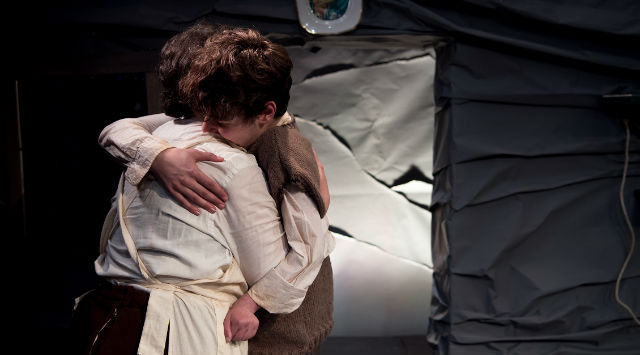
A group of Koori women are in the bush, gathered together for a camping trip on the bank of a great river. In Andrea James’ Winyanboga Yurringa, six city slickers take time off to get in touch with one another, with nature, and with tradition. They are a family, but individuals grow apart, and we watch the effort required, to firm up those bonds again, and to rediscover that which is truly important.

The play begins with a sense of ambiguity, very gradual in the way it divulges its raison d’être. The playwright insists that the audience too, takes time off from our hustle and bustle, to fall into a plot that is languid, perhaps slightly disorientating, but trusting that the journey will ultimately be a rewarding one. When its climax arrives, we are surprised by the depth of its poignancy.

Director Anthea Williams’ approach is not obviously sentimental, but she catches us unawares with a quiet power, to deliver a moving work about our Australian heritage. The show communicates differently to people of varying backgrounds, but it is evident that whether or not one is indigenous to this land, Winyanboga Yurringa says a lot that is meaningful about our relationship with it.

Lights by Verity Hampson emanate a disarming warmth, and along with Isabel Hudson’s evocative set design, the familiarity of our landscape is intuitively established on this stage. It is a romantic vision, perfectly partnered by music and sound design from Steve Francis and Brendon Boney, who are called upon to introduce a dimension of melancholic soulfulness to the production. The cast is uniformly accomplished, with Roxanne McDonald particularly impressive as Neecy, the maternal figure through which the play dispenses all its wisdom. McDonald is a sublime performer, with a potency and an intricacy to her style that has us enthralled and firmly won over.

In Winyanboga Yurringa we are reminded that there is so much to love about this place we call home. Regardless of our sins, this terra is and always will be divine; we can cause harm to it, and to one another, but it is the human race that will ultimately and certainly face extinction, before the earth can ever succumb. On Aboriginal land, it is Aboriginal knowledge that is our surest hope for sustainability, yet those voices are routinely subdued and trivialised, in a colonised culture that refuses to listen to solutions that exist right on our doorstep. The characters in Winyanboga Yurringa are the eponymous women of the sun, but they will only shine their light when invited. If we choose to dwell in darkness, the price is ours to pay.

www.belvoir.com.au

Review: Small Mouth Sounds (Darlinghurst Theatre Company)

Venue: Eternity Playhouse (Darlinghurst NSW), May 3 – 26, 2019
Playwright: Bess Wohl
Director: Jo Turner
Cast: Amber McMahon, Sharon Millerchip, Yalin Ozucelik, Jane Phegan, Justin Smith, Dorje Swallow, Jo Turner
Images by Robert Catto

Theatre review
The story takes place at one of those spiritual retreats, where people spend days not talking, trying to access a state of deep meditation. Six characters in Bess Wohl’s Small Mouth Sounds gather at one such facility, each with their own set of problems, seeking prodigious revelations that could mean an instant moment of salvation, to release them from considerable pain. These personal tragedies, with all their human vulnerability and desperation, form the basis of Wohl’s comedy. Cynical but also honest, the play is distinctive for its scant dialogue, relying instead on actors’ physical capacities to chart a journey, through their amusing presentation of sequences that alternate between absurd and meaningful.

The show is often funny, always intriguing with its creative renderings of a unique theatrical concept. A clever cast works exhaustively for our entertainment, offering up personalities that are endearing, familiar and believable. While a cohesive team, each performer delivers their own memorable nuances, for a result that is surprisingly textured. Slightly less effective is Jo Turner’s voice playing the part of the unseen Guru, perhaps a tinge too obvious with his humour. As director, Turner’s enthusiasm is more well placed. There is an effervescence to the production that appeals, even if it does take some time to turn persuasive. Early sections have a tendency to feel forced, but our engagement improves incrementally over time, and when it wins us over, Small Mouth Sounds proves an enjoyable ride.

Jeremy Allen’s set and Jasmine Rizk’s lights make for a visually vibrant staging, but it is Tegan Nicholls’ work as sound designer and composer that truly impresses. In the absence of the usual voices that occupy our auditory attention, Nicholls fills ninety minutes with an intricate mix of sounds from nature, as well as an assortment of music and effects, to help manufacture a rich and magical experience of theatre. Our imagination is guided by her detailed ear, for subconscious manipulations that take us through a gamut of emotional responses.

The seekers in Small Mouth Sounds have big issues to wrestle with, but there is little poignancy to be found in their respective narratives. No great transformations occur as a result of their fleeting commitment in the countryside. It is a realistic conclusion to the tale, one that can feel somewhat empty, although its insistent refusal of a happy ending in the form of outlandish miracles, is admirable. There is great value in keeping silent and looking inward, but to expect enlightenment in an instant, is naive. When we hope to heal, we think about returning to an idealistic state of being, before the infliction of damage. It may be however, that all we can ask for, is to be able to move forward, with the minimum of encumbrance, even whilst bearing a soul full of scars.

www.darlinghursttheatre.com

Review: Cat On A Hot Tin Roof (Sydney Theatre Company)

Venue: Roslyn Packer Theatre at Walsh Bay (Sydney NSW), Apr 29 – Jun 8, 2019
Playwright: Tennessee Williams
Director: Kip Williams
Cast: Addison Bourke, Tristan Bowes, Peter Carroll, Harry Greenwood, Emily Harriss, Jye McCallum, Josh McConville, Zahra Newman, Pamela Rabe, Holly Simon, Nikki Shiels, Lila Artemise Tapper, Arie Trajcevski, Hugo Weaving, Anthony Brandon Wong, Jerra Wright-Smith
Images by Daniel Boud

Theatre review
Characters in Tennesse Williams’ Cat On A Hot Tin Roof suffer immense anguish. Regardless of where they happen to reside in the hierarchy of their social order, powerful or powerless, Maggie, Brick and Big Daddy are each unable to escape a torturous existence. A result perhaps of the family’s wealth, or maybe the American deep south in 1950s had truly been indiscriminately stifling, or life is simply unbearable no matter one’s choices and orientations; the beauty of Williams’ play is that it explains little. In its exhaustive excavations of human emotion however, we identify the truths of our beings at their deepest, but Williams leaves us to draw our own conclusions, on the causes of, and the resolutions for, all the pain that inevitably befalls us.

There is a lot that is sublime in director Kip Williams’ vision. A momentary glimpse of sitting Vice President Mike Pence on Brick’s television set, is a powerful suggestion of the play’s timelessness. Oppressive aspects of Western values, rooted in white patriarchy, is the undercurrent disquiet that drives the action. The production manifests a sense of hopelessness appropriate to the playwright’s pessimism, one that is masochistically gratifying, as is typical of classic melodrama, but also undeniably thought-provoking.

Brick and Maggie’s bedroom is sleek and modern in style, with dark colours and hard edges representing a masculine space in which Maggie’s lack of status is evident. Designed by David Fleischer, the stage is visually seductive, but arguably ineffectual with invisible doors, for a play that repeatedly involves itself with notions of intrusion. Stefan Gregory’s music takes its cues from film noir, nostalgically evocative and very pleasurable. Lights by Nick Schlieper are cold, almost menacing in their depiction of emotional torment. The many instances of fireworks in Act II are controversially manufactured, each time overwhelming our senses for several seconds, with their cacophonous, and repetitive, disruptions into Brick and Big Daddy’s long confrontation.

Actor Zahra Newman is entirely splendid as Maggie, dejected but determined, a broken woman hanging on to the little that she has, to turn a living hell into something coherent. Newman’s extraordinary instinct and artistic inventiveness, along with an uncompromising vigour, make Act I of Cat On A Hot Tin Roof a personal tour de force that has us hopelessly exhilarated. Big Daddy is masterfully performed by Hugo Weaving, who although brings to the role nothing that is unexpected, demonstrates his unparalleled stage presence and a searing conviction that absolutely captivates. The exaggerated theatricality he employs is riveting, with a psychological accuracy that allows us to perceive complicated dimensions of human nature, as we luxuriate in the sumptuousness of his delivery. Also very resonant, is Harry Greenwood as Brick, who overcomes his physical dissimilarity to the character, for a convincing portrayal of a defeated man who retreats into self-abuse. Greenwood’s approach is restrained by comparison, but he adds dynamism and texture to how the story is conveyed, on what is often a very loud stage.

Brick’s indulgence in alcoholism looks as though he is willing himself to die. Maggie on the other hand, who has much less to live for, can be seen maniacally scrambling for survival at every moment. Those are the extremes of how we can be, when facing the worst. The people in Cat On A Hot Tin Roof are all left to their own devices. Although under one roof, this is a family whose bonds are weak, with relationships built on mendacious foundations (the word “mendacity” is mentioned multiple times). Unable to locate anything honest and real, what they have can only feel empty; distracted by material riches, it is loneliness that is left unnoticed and festering. We see no love in this household, and realise that no peace or happiness could ever come their way.

www.sydneytheatre.com.au

Review: Sensitive Guys (Cross Pollinate Productions)

Venue: Kings Cross Theatre (Kings Cross NSW), Apr 30 – May 11, 2019
Playwright: MJ Kaufman
Director: Blazey Best
Cast: Natasha Cheng, Nancy Denis, Alex Malone, Shell McKenzie, Samm Ward
Images by Clare Hawley
Theatre review
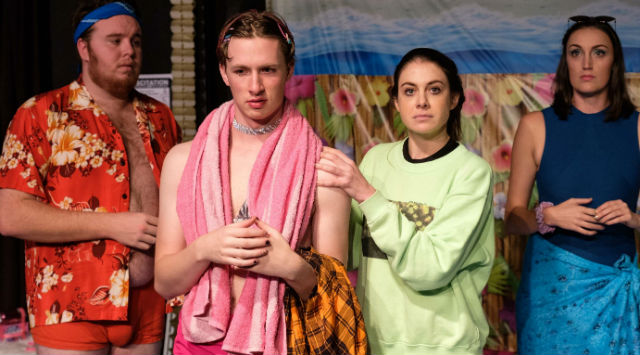
We meet two small groups of students at an American college. One is a Men’s Peer Education Group, and the other a Survivor Support Group comprised of women victims of sexual assault. MJ Kaufman’s 2018 play Sensitive Guys looks at young men grappling with sexual politics, at a time when boundaries seem to be shifting, as the traditionally subjugated learn to push back against injustices of many kinds. In the story are what we might term woke men, but we discover that thoughts and actions do not necessarily correspond, for those who claim to know better. There is excellent humour in Kaufman’s writing, and although didactic in nature, its clarity of intention makes for a political work that feels immediate and digestible.

It is a passionate production, cohesively designed by an efficacious team of creatives, to facilitate a simple depiction of contemporary concerns. Directed by Blazey Best, the show offers an accurate representation of our hopes and anxieties as they stand today, in relation to the development of discussions around sexual misconduct. The show is a consolidation and reiteration of recent ideas from the Twitterverse, no longer fresh but still pertinent. An excellent ensemble of five actors deliver a well-rehearsed performance, earnest but also comical, able to keep us amused as they take on the responsibility of expounding some valuable lessons.

The young men in Sensitive Guys have much to unlearn; their understanding of sex and gender is revealed to be more damaging than they had ever imagined. There is a pleasure in watching bad boys flagellate themselves on stage. We want to see them punished, as well as see them become better people. The moral of this story is incredibly basic, but the truth is that we keep imparting to our children, old values that are harmful to many and beneficial to few. How we teach masculinity and femininity must come under scrutiny, as do our reasons for insisting on those binaries.

www.crosspollinate.com.au