5 Questions with Geraldine Hakewill and Amy Ingram

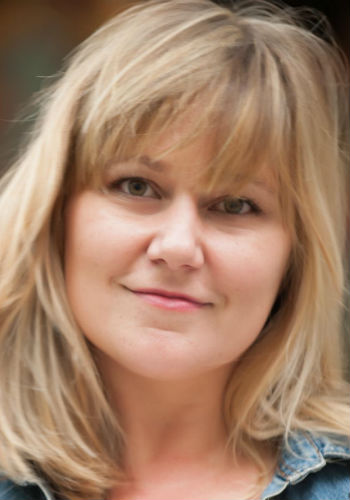
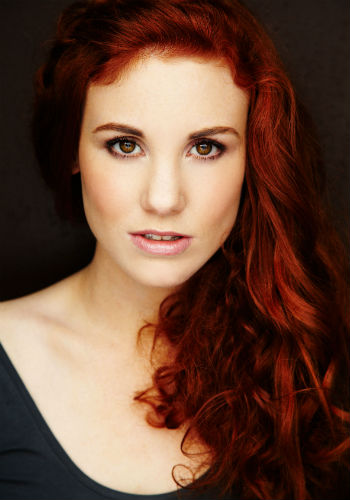
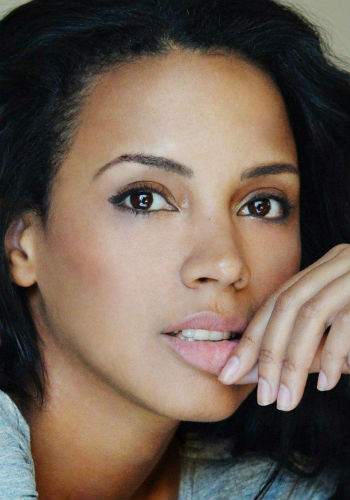
Geraldine Hakewill

Geraldine Hakewill

Amy Ingram: This play explores the friendships and relationships of women and how they view each other and themselves. Do you recognise yourself in any of the women or the relationships they share?
Geraldine Hakewill: I recognise myself in all three women, and I’ve definitely experienced the sorts of relationships they share: the jealousy, the awkwardness, the passive-aggressive conversations, the solidarity, the depth of love and affection, the fragility, the dangerous unpredictability and the profound trust. I think most women will recognise it all too. That is the brilliance of this play and why it still works. I really get Mary’s over-analysis and anger at the world. I completely identify with Jo’s self-loathing coupled with positivity. And Celia is basically me, on crack. Not really. (But really).

Feminism seems to be making its way back into the forefront of social media, how do you think this play looks at feminism in today’s current political climate?
I think what is fascinating about us doing this play right now is that so little has changed since Claire McIntyre wrote it back in 1989. That’s very frightening. Beauty is still the strongest currency in this world, and women are still afraid when we walk down the street at night because we might get attacked, simply for being female. This isn’t OK. What has changed is that it feels like social media has been taken up as a tool to unite feminists around the world, be they male or female, and allow people to have a voice in order to educate and to argue and to discuss. I think that’s brilliant. As much as the anonymity of Twitter and Facebook allows for trolling and abuse, it also allows people who aren’t public figures and who never thought they could participate in a public discussion, to share their stories and create awareness. This production has been updated by Justin (Martin, our director) so that we are referencing this shift. We aren’t changing Claire’s words, but we are bring her text into this era of modern technology and we’re trying to explore how media and technology has changed feminism and the discussion around it- for better and for worse. It feels more immediate and relevant than almost any other play I’ve ever done.

Your character is very particular about her routine and products. If you could take one of those products and make it do anything in the world what would it do?
Well, what if my ocean fresh exfoliating shower gel could somehow make me invisible? I think that’d be pretty amazing. I’m such a secret snoop, and I’ve always loved the idea of being a spy. This would be really helpful. Even if it was just 45 minutes worth of invisibility. Plenty of time for spy-stuffs. And well worth the $5.99.

If you met Celia out at a bar what do you think she would be doing? What would you two get up to in the course of the night?
I think she’d be waiting for a Tinder date. She’d be looking pretty hot. She’d be nervous-sweating but she would have worn extra strong antiperspirant and so she’d still smell fresh. She’d be sitting alone at the bar. I’d be with a group of friends at a booth after a day of rehearsals. I use hippy deodorant so I would not be as fresh as her. Her date is two hours late but she’s stubborn. She waits. She’d look forlornly over to our group as we laughed too loudly at some private ‘actor’ joke that no one else will ever find funny. I’d go to buy a round of drinks and she’d comment on my jeans. They fit well. Thanks, I’d say. It’s really hard to find the perfect jean. She’d agree. By the end of the night we are singing Celine Dion karaoke together at 4am and promising to be best friends for life. We never see each other again. But, I’ll always be impressed that she knew all the words to “It’s All Coming Back To Me.”

If your life was a midday movie what would the title be?
“It’s All Coming Back to Me.” It’d just be a series of musical flashbacks and dream ballet sequences. You can be in it Amy, if you like. We can do a pas de deux.

Amy Ingram

Amy Ingram

What was so special about this role that made you want to come down from Brisbane to do it?
First off it was more about working with Kate as I had not seen her in ages and always thought it would be great to work with her. She seemed so excited about the project I was immediately intrigued. Then I read the script and laughed out load at so many points I knew that was a good sign. I am extremely interested in roles where women are the central focus and their character journey is more than a supporting role for some 40 year old dudes mid life crisis. The fact that this show also looks how we view ourselves in the world meant I was basically hooked! On a side not it is always exciting to work with new people, in new places and venues – I think it makes you a better artist.

The play was written and is set in the 80s in England. Do you think we’re managing to do a good job of setting it in 2016 in Australia? And how?
Unfortunately most of the conversations we have now about equality and how women are objectified to the point of violence are exactly the same. All that has changed is the context and medium or lens used. The rise of social media and the fact that more and more women are moving into higher positions of power (HURRAHHHH!) means that we are some cases seeing the extent to sexism in a much clearer light. So basically – Yes – I think we are doing a good job of it because the world is often doing a shit job of shutting sexism down. When I first read the script I was surprised at how old it was and I think you can’t help but put a contemporary context on it because we are living here and now and our lives and experiences fuel our choices on stage

What do you think the title, Low Level Panic refers to?
Welcome to the everyday world people. We are in a constant fret about our appearance , what people think about us, what we think of ourselves. This is not exclusive to women. But you add onto that the fear some women face everyday in their own homes. The simple choice of trying not to walk home when it is dark. Asking yourself if the dress you are wearing is going to invite negative attention, crossing the road when you run because because you don’t want to get heckled . And I know some people reading this will say I’m blowing it out of proportion and #notallmen. And that’s true. It’s absolutely true . But then why does what I mention still happen more frequently than you’d think and why do we still feel this way?

What’s your favourite thing about being Amy Ingram?
Now why would I give away that info for free? Come to the show and have a drink with me afterwards and find out for yourself…

You really don’t like wearing pants, but if you had to wear pants every day of your life, describe your ideal pair. They can be magical.
Pants that make me fly. Or time travel. Pants that can take me to some tropical island whenever I wish. Now those are pants I can get around. Also pants that whenever I reach into the pockets there are wads of money inside. I’d bloody never take them off.

Geraldine Hakewill and Amy Ingram can both be seen in Low Level Panic by Clare McIntyre.
Dates: 12 July – 12 August, 2016
Venue: Old Fitz Theatre

5 Questions with Danielle Baynes and Pip Dracakis

Danielle Baynes

Danielle Baynes

Pip Dracakis: What are the similarities between Lady and Danielle?
Danielle Baynes: I’m similar to who the Lady becomes at the end of the play. At the beginning I share her curious, romantic and cautious side. She’s very naïve though, I’m much more cynical. After a certain experience she has in the middle of the show we definitely become kindred spirits. She’s more talented than me but we’re both hilarious. We sort of look the same, except her face is much bigger.

What do you enjoy most about performing in live theater?
If it can only be one thing, then I’d say the audience. The shared experience, the instant feedback, the mixture of being completely in control and totally out of control at the same time. Nothing compares.

What is the most ridiculous thing a director has asked you to do in rehearsal?
Look I won’t name and shame, BUT Michael Dean once had a group of us running around a dodgy, empty car park late at night in Parramatta yelling “red alert”.

Who inspired you in the creation of the mysterious male character in Bicycle?
Oh Pip, the question you’ve been dying to ask all this time… I won’t go into detail about the personal inspiration, but I was inspired by an author named Bram, and a little bit inspired by Mads Mikkelson.

What’s your guilty pleasure?
At the moment it’s binge watching crime shows in bed until 3am. I also indulge in too much soft cheese. But Nigella Lawson said, “I don’t feel guilty about any pleasure. I think you should only feel guilty if you don’t feel pleasure”, and I try to take on that attitude as well.

Pip Dracakis

Pip Dracakis

Danielle Baynes: If you and I were musical instruments, what would we be?
Pip Dracakis: You would be a Steinway and I would be a Stradivarius.

You are a brilliant Actor Musician, what’s unique about this type of performer and how did you approach your role in Bicycle?
I see my role in Bicycle as a storyteller and try to serve the story and text in all my musical and physical choices. It’s great to be able to work on a show where you can think as an actor and communicate through music.

What’s the strangest thing someone has said to you after a performance (any performance)?
During one of our post-show Q&A’s for Merchant of Venice with Sport for Jove, we were asked how we all knew each other. The kid was in year 7. I think he was struggling with all the other questions about dealing with a racist play in the 21st century.

What was the process in creating the score for Bicycle?
I listened to a lot of different repertoire but most of my musical ideas were inspired by the text and born out of the organic rehearsal process. Lots of trial and error, seeing what enhanced the script and what moments were best left without any musical underscoring. In some scenes, the music is totally improvised and in others, there are prescribed excerpts by Bach or Bartok, for example.

And finally, if someone was to make a movie of your life, who would play me?
Fran Fine.

Danielle Baynes and Pip Dracakis can both be seen in Bicycle.
Dates: 21 June – 2 July, 2016
Venue: Old Fitz Theatre

Review: Bicycle (Lies, Lies And Propaganda)

liesliespropagandaVenue: Old Fitzroy Theatre (Woolloomooloo NSW), Jun 21 – Jul 2, 2016
Playwright: Danielle Baynes
Director: Michael Dean
Cast: Danielle Baynes, Pip Dracakis

Theatre review
It is one woman against the world in Danielle Baynes’ Bicycle. The odds are stacked against our 19th century protagonist as she discovers not only her life’s passion, but also the injustices that women face when trying to carve out a self-determined existence. Coming of age in Baynes’ play means realising the discrimination that is systematically entrenched in a world that had previously seemed innocent. An awakening of desires demands that her eyes are open to truths, and her story of tragic enlightenment is told in a way that disallows us from denying its persisting relevance. The nameless Lady’s feelings and experiences, her perspective of the world, and her hunger for what is right, all find connection with our 21st century sensibilities, and shock us into seeing the intimate parallels between what we had considered to be bygone history and what we continue to retain. It is a passionate piece of writing, insightful and brilliantly elucidating through a narrative that is at once personal and universal. At the core of its many colourful permutations of form, is its unmistakeable feminist advocacy that many will find irresistibly inspiring.

Baynes plays the Lady in the hour-long monologue, with Pip Dracakis providing an added female omnipresence with her person and violin. Space is restrictive, and the production relies squarely on the leading lady’s ability to keep our attention and imagination engaged, which she accomplishes remarkably well. Scenes are thoughtfully demarcated and given distinct flavour by director Michael Dean, but some sequences are more effective than others, resulting in a plot trajectory that can feel uneven in its resonance. Dracakis’ live music gives the show a dynamism that works seamlessly alongside Baynes’ actorly endeavours for a powerful statement about art, and the struggles in its creation.

Sex and art are linked in Bicycle, both are appetites ferocious in nature and indomitable. The Lady’s liberties are completely usurped by a patriarchy that is determined to diminish her wishes and talents. We live in a world where powerful people go to great lengths to maintain the status quo, for their position necessitates the subjugation of many. This seems to be part of human nature, never to change, but processes where disenfranchised groups work to destabilise and subvert oppressive forces are always ongoing. Not all will succeed, but the battle continues for the human spirit is at its most potent when the downtrodden are left with nothing else to lose. Her rights as a sexual being and an artist, are a threat to her father and his conspirators, who do all they can to disempower her, but we are glad to see her fight to the end, whether or not she comes out on top.

www.liesliesandpropaganda.com

5 Questions with Francesca Savige and Damien Strouthos

Francesca Savige

Francesca Savige

Damien Strouthos: Do you scrunch or fold your toilet paper?
Francesca Savige: I scrunch-fold. It’s a metaphor for my whole life.

What has been your worst moment on stage in a past show?
General dire moments of insecurity aside, I had one incident of corpsing on stage that was was so inappropriate and unprofessional that I’m too embarrassed to go into detail. I regularly laugh in rehearsals (Anthony Gooley is making me giggle a lot in rehearsals at the moment) but I usually pull myself together for performance. This unspeakable occasion was out of control.

Who do you think will win Origin 1 next week?
Whether you mean football, electricity or Darwin, I lose.

What excites you about our production of Inner Voices?
The play, the director, the cast, the design the venue. Pretty much everything. That’s not me pimping for publicity, it’s fact. But if I had to pick one thing, it’s the brain stimulus. I’m loving good theatre that’s prompting discussions lately. I’m still reeling from Sport for Jove’s Taming of the Shrew, and this play is giving me plenty of delicious food for thought.

Where do you find the humanity in our show where there are no plain ‘good’ or ‘bad’ characters?
John Bell was the first director of Inner Voices in 1977, and in his intro to the Currency Press script, he writes that “There is a compassion in the play – not for Ivan himself but for his situation”. I think that’s the humanity in the whole play- we can all relate to the destruction of innocence, to abandonment and isolation… At least those of us who have been lost in shopping centres and put on leash. (Yep. Me too, Damien)

Damien Strouthos

Damien Strouthos

Francesca Savige: Having been on tour quite a lot over the past few years with Henry V and Romeo And Juliet for Bell Shakespeare, do you have a best and worst tour memory?
Damien Strouthos: Best and worst memory are probably one. Henry V 2014, performance in Sale, Victoria. A viral corpsing moment that effectively stopped the show (standard) during the last scene thanks to a Mathew Backer line fluff. 7/10 actors uncontrollably convulsing with laughter isn’t the best way to end a 2.5 hour Shakespeare. Or maybe it is. I had my fist half way down my throat trying to stop whilst we were meant to be signing a 3 part harmony of “I vow to thee my country”. To this day, mention to any of the actors from that company the phrase ‘Sale, Henry V‘ and you’ll get a good yarn.

What are you most enjoying about rehearsals at the Old Fitz at the moment?
$3 beers and working with some people I really admire.

Have you previously encountered Louis Nowra on page, stage or in person? And if so, what was that experience like?
I’ve read a few of his plays, never performed in one. Which is odd as Inner Voices is arguably his most obscure. The experience on working on it so far has been totally challenging in a good way. I haven’t met him but he hangs out at the Fitz a lot so I hopefully will get the opportunity to ask him why he put a bloke in a bear suit in scene 7.

Can you draw on any personal experience for your current role as the Russian infant King who was kept imprisoned for 23 years, with minimal human contact and communication?
My mother lost me a in a shopping centre once when I was too young to describe who I belonged to. I was also one of those kids who wore a child leash (there’s not really a better name for that?) so yeah, I totally understand oppression and isolation.

To be honest, I tend not to use my life in my work too much unless I’m really not hitting something emotionally. Just being informed by the given circumstances and using the words on the page and trying to be truthful. Without knowing it, your life informs your work I think.

If you could speak only one word for 23 years, what would it be?
I’ll just pop that there.

Francesca Savige and Damien Strouthos are appearing in Inner Voices by Louis Nowra.
Dates: 15 June – 9 July, 2016
Venue: Old Fitz Theatre

Review: Inner Voices (Don’t Look Away Theatre Company)

dontlookawayVenue: Old Fitzroy Theatre (Woolloomooloo NSW), Jun 15 – Jul 9, 2016
Playwright: Louis Nowra
Director: Phil Rouse
Cast: Annie Byron, Julian Garner, Emily Goddard, Nicholas Papademetriou, Anthony Gooley, Francesa Savige, and Damien Strouthos
Image by Ross Waldron

Theatre review
Ivan VI lived 23 short years in Russia, but in Louis Nowra’s Inner Voices, his destiny is transformed dramatically to tell a story about how kings are made, and how countries are ruled. Originally published in 1977, Nowra’s words in the play remain fresh and humorous, and although its political edge seems to have worn with time, Inner Voices‘ punk sensibility is still evident today in its iconoclastic characterisations and anti-authoritarian outlook.

It is a very exuberant production that Phil Rouse has directed. Notwithstanding our unfamiliarity with its context, the unrelenting and spirited acerbity of his style keeps us engrossed. The thoroughness at which the text’s comedy is explored, is not only endlessly amusing, it also helps provide depth of meaning to an outlandish narrative. Thoughtfully designed, the production’s aesthetic values are textured and powerful. Anna Gardiner’s set and Katelyn Shaw’s sound design are especially remarkable in the degree to which they are able to consistently add surprising dimension to the play.

Inner Voices‘ cast of seven is an exceptionally dynamic bunch. Ivan is played by Damien Strouthos, whose uncanny ability to portray eccentricity is a perfect fit for the quirky role. The actor takes the opportunity to showcase excellent range in a part that goes through several significant transformations, and we see various facets to Strouthos’ talents, all equally accomplished. Anthony Gooley is absolutely memorable as Mirovich, with razor sharp wit and a flamboyant theatricality that knows no bounds. Enthralling and hilarious, Gooley is outstanding on this stage and we are kept amazed by the genius inventiveness he injects into every line of dialogue.

It is the eve of another federal election in Australia, and we think about the likely candidates who will rule us for another three years. Inner Voices reflects our prevailing cynicism, and exposes the falsities associated with the state of our politics and governments. We want truth and honesty from those who represent us, but we have become all too aware of the hypocrisies and cunning that are required for people to attain positions of power. If good people cannot win in a broken system, all we have are at best, compromised and substandard. Nowra’s play does not offer us any solutions, but it certainly is a reminder that we should want to do better.

www.facebook.com/dontlookawaytc

Review: Belleville (Mad March Hare Theatre Company)

madmarchhareVenue: Old Fitzroy Theatre (Woolloomooloo NSW), Apr 30 – May 12, 2016
Playwright: Amy Herzog
Director: Claudia Barrie
Cast: Josh Anderson, Taylor Ferguson, Chantelle Jamieson, Mansoor Noor

Theatre review
Whether or not one believes in “happily ever after”, there is little doubt in the truth that relationships are never completely smooth-sailing. When people are bonded together, what keeps them from breaking up are not always snowdrops and daffodils. Amy Herzog’s Belleville is about the poison that can fester in romantic unions, observed through a married American couple, Abby and Zack, disquieted and displaced in Paris. We see them trying to make things work, but the only thing they share is a chronic anxiety about being together, the causes of which the playwright keeps concealed until the end. In our efforts to explain the mystery of their circumstance, we access our own understandings of how things can go awry between two people who have grown so close, thereby reflecting an unfortunate universality of the experience.

It is a play full of intrigue and danger, brought to the stage by director Claudia Barrie who creates a disarming tension from the unrelenting but subtle details of the couple’s relationship collapse. Their unnamed dysfunction is made palpable by Barrie’s flair for manufacturing suspense, and our minds are kept racing in response to the mysterious plot. The production is confidently designed by a team who taps into the undercurrents and subtexts of the writing, to address the less deliberate parts of our consciousness. The characters struggle to say what they mean, but their feelings are manifest in the atmosphere that we share. Performances are committed and thoughtful, with all actors proving to be dynamic and entertaining, although some moments could be less tentative. Abby is played by Taylor Ferguson who does a marvellous job of expressing physically what her role is unable to put in words, and Josh Anderson’s volatility as Zack keeps us on tenterhooks, wondering if and when he is going to reach a point of nervous breakdown.

Paris is the city of love, and many dream of its enchanting and exotic perfection, without ever having stepped foot in it. Indeed, Paris represents a kind of quixotic approach to romance that is fundamental to its appeal. We want what we have never experienced, certain of the fulfilment it will deliver without knowing what it actually contains and entails. Abby and Zack arrive at their point of difficulty because of decisions made on a basis of weakness, conformity and resignation. They went after something they knew nothing of, and find themselves stranded in a space of destruction and hopelessness. If they get out of it alive, they can leave ignorance behind and head into the future with brighter minds, but if they remain trapped, the end can only be calamitous.

www.madmarchtheatreco.com

Review: Orphans (Seeker Productions)

seekerproductionsVenue: Old Fitzroy Theatre (Woolloomooloo NSW), Apr 19 – 30, 2016
Playwright: Dennis Kelly
Director: Richard Hilliar
Cast: Liam Nunan, Jacki Mison, Christopher Morris

Theatre review
In Dennis Kelly’s Orphans, we look at violence and its origins. Liam is a young man who encounters unspeakable brutality. His world is one of turbulence and confusion, the nature of which was established years ago as an orphaned child, that he unfortunately sustains through to the present day. Helen is his caring sister who although similarly traumatised, is determined to create normalcy in their lives. Their story is a moving one, but presented with additional dimensions of a thriller and some very black comedy. The conflict between Helen’s order and Liam’s chaos presents tensions that serve the play well, with a skilfully designed escalation of stakes that draws us in deeper and deeper into its drama.

The very compelling characters in Orphans are played by three excellent actors who showcase their remarkable talents in a work that presents some colourful extremities to show off their thespian muscles. Director Richard Hilliar opens up every opportunity for the players to shine, and the thoroughness at which each personality is explored and portrayed, is the show’s strongest feature. Liam Nunan’s depiction of his role (also named) Liam’s trauma is unrelenting yet textured. The level of focus and emotional power he puts on display is a marvellous sight that provides a sense of edginess appropriate for the confronting nature of the material. Equally intense is Jacki Mison who gives Helen an intriguing sense of complexity that is almost hypnotic in its appeal. The more she reveals, the more we wish to discover, and the authenticity she is able to introduce along with the character’s strangeness keeps us engrossed in Helen’s quandary. Christopher Morris has a more subtle approach but is no less dynamic as Helen’s husband Danny, whose surprising transformations through the plot are crafted with great instinct and precision. The outlandish narrative is offered balance by the actor’s quiet but confident presence, allowing us breathing space within its profusion of aggressive energy.

There is also good work to be found in Liam O’Keefe’s lighting design and Tegan Nicholls’ efforts on sound. Atmosphere is generally modulated well for transitions between scenes, although visual cues do not provide enough certainty about the married couple’s socio-economic status, which becomes increasingly relevant. Similarly ambiguous are the play’s comic qualities. The darkness of its themes notwithstanding, clearer indication of humour would garner better responses to the production, and provide a greater variance in tonal shifts over its duration.

Trauma in childhood is perhaps inevitable. At varying degrees, each of us would have felt violated or betrayed in our time as small, vulnerable creatures navigating the environment, but how we develop from that tainted moment, is a real concern that Orphans investigates. We think about the process of growing up, and question the practicability of becoming happily stable adults. Some of us discover the fallacy of “happy ever after” early on but many others cling to the belief that ideals exist and a life of perfection is within reach. The truth is that things do get better, but whether we believe that there can ever be an end to personal struggle, would depend exclusively on each individual’s outlook.

www.facebook.com/…

5 Questions with Chantelle Jamieson and Mansoor Noor

Chantelle Jamieson

Chantelle Jamieson

Mansoor Noor: What role would you love to play that you haven’t yet?
Chantelle Jamieson: I’d love to play Beatrice in Much Ado About Nothing. Who wouldn’t love to be that witty.

What is a show you would never do again?
Unfortunately, Derek Walcott’s Caribbean version of The Odyssey. We did it at drama school and I think everyone involved would happily forget it. I was playing Athena and the only memory of the role I have is of putting more and more glitter on every night to try and distract from what was happening on stage.

What is something that you know now that you wish you knew when you were first starting out as an actor?
No matter how much glitter you wear, you can’t fix a bad performance.

What have you enjoyed the most about working on Belleville?
I know it’s sucky but, Claudia, our director. It’s been amazing to work with such a passionate gifted young female director. It takes so much out of you holding a team together over the journey of a show, but her indomitable attitude is infectious. Also the cast are pretty great. You’re welcome, Mansoor.

Any tips on speaking French?
When you see an ‘r’ in a word, forget about rolling it, think about clearing your throat. Comprenez vous? That means “do you understand?”… I had to use Google translate for that.

Mansoor Noor

Chantelle Jamieson: If a film was made about your life who would you want to play you and who would really get the part?
Mansoor Noor: Daniel Day Lewis or Meryl Streep. So transformational. Let’s face it though, it would probably be Dev Patel. Or Joel Edgerton, #diversity

What is the most valuable experience you’ve gained from working on Belleville?
Probably having to learn lines in another dialect. I already speak a second language so I didn’t think it would be this challenging but the slightest mispronunciation can change everything. My mother actually lived in Paris for 6 years. She didn’t help me at all.

You’re also a photographer, which do you get most enjoyment out of?
Being on stage is certainly one of the most thrilling things you can experience. I think as artists we sometimes forget that not everyone gets to have the feeling of walking around on stage pretending to be other people in front of complete strangers. But I also love shooting actors’ head shots. Is this your way of asking me to shoot you some new head shots Chantelle?

Favourite thing to say in French?
It’s actually one of the words you get to say in the play. Incredible or rather, in-croy-a-ble!
I’ve started using it in my everyday vernacular.
“How is your dating life Mansoor?”
“Oh! Incroyable… bad.”

What’s the first memory you have of performance?
My debut performance was in a production of Billy Goat Gruff And The Baby Troll in Grade 6. And I think it’s safe to say I stole the show with my unintentionally Middle Eastern sounding Billy Goat.

Chantelle Jamieson and Mansoor Noor can be seen in Belleville by Amy Herzog.
Dates: 13 April – 12 May, 2016
Venue: Old Fitz Theatre

5 Questions with Jacki Mison and Liam Nunan

Jacki Mison

Jacki Mison

Liam Nunan: If you could have the career of any other actor, who would that be?
Jacki Mison: Sigourney Weaver because I was a huge sci-fi fan growing up and Ripley was my idol! She’s tough, funny, smart and able to move across genres, stage and screen.

As a producer and actor, what drew you to putting on Orphans?
I had seen a fantastic production of Orphans done a few years ago by the Queensland Theatre Company and it was one of those shows that really stayed with me for a long time. The intensity of it, Dennis Kelly’s particular style of dialogue and the moral dilemma at the core of it, for my character Helen, led me to try and secure a production. It was also in a completely different ballpark to the last show I had produced, which was an American comedy, so it felt right to switch things up.

Tell us about Helen. What excites you most about playing her?
I love the fact that she is a survivor. She is one of those people who are capable of doing the things that need to be done. But the personal cost, while not always evident, eventually bubbles up. She’s incredibly complex and has a fascinating arc throughout the play.

If, when you died, you could come back as any character in theatre, who would it be?
Would love to be one of the witches from Macbeth!

What character or production in your body of work are you most proud of?
My Subway commercial…

Liam Nunan

Liam Nunan

Jacki Mison: Dennis Kelly has written an intense, fast-moving play with Orphans. What has been your biggest challenge with the role of Liam so far?
Liam Nunan: Understanding Liam’s thought process. The play is written in a sort of chaotic frenzy of interrupting dialogue and if the rhythm isn’t spot on, the whole thing can come crashing down. You need to be hyper aware of what words trigger your impulse to launch over the other characters’ lines. Liam also changes his thought process faster than he has time to verbally articulate it. So he very often doesn’t finish his thoughts at all and talks himself in circles. So to answer your question; the acting bit.

Do you choose particular underpants for each character you play?
Great question, Jacki. Not by myself. I like to think it’s a collaborative process. I prefer to get the designers input early on before rehearsals begin and have some renderings sketched up to put forward to the director. If we can’t come to an agreement I usually get my agent involved. Surprisingly, most of the time, no one but me cares.

Who are the actors that most inspire you?
I’m inspired by actors that allow themselves to be inspired. I don’t know who said ‘Don’t be interesting. Be interested’ (or something like that) but the same can be said here. I love watching and working with actors that are open and ready to be inspired. They allow themselves to be changed by you and respond so organically, you can’t help but be changed by them.

What’s been your most embarrassing moment on stage so far?
In drama school we had just finished our first production open to the general public, The Winter’s Tale. We ran on for our curtain call, bowed, and ran off. In the wings everyone turned and ushered me to run back on to lead a second curtain call. ‘That makes sense’, I thought. ‘The audience have just sat through 3 and a half hours of 2nd year student actors doing Shakespeare whilst dressed as cowboys with southern American accents. It’s likely the best thing they’ve seen this year. I sure think it is. Of course they want more’. So I bounded back on stage. Half the audience were already making there way up the aisle. I look around, and of course I’m alone, dressed as Old Shepherd. The cast laugh. The audience look back and they laugh. Everyone laughs.

There was also the time in year 12 I had a testy blow out while I was singing ‘Maria’ in West Side Story.

If you had a choice of any role, stage or screen, what would it be?
Believe it or not, Liam in Orphans by Dennis Kelly. I’ve wanted to do this play for a while now. I saw a brilliant production of it at QTC a number of years back. I was absolutely shaken by it. I picked it up and read it maybe a year later and I was still just as moved. I thought ‘I must play this role’. I jumped at the opportunity and I’m thrilled I’ve been given the chance to play with such a complex character.

Jacki Mison and Liam Nunan can be seen in Orphans by Dennis Kelly.
Dates: 19 -30 April, 2016
Venue: Old Fitz Theatre
Review: Kayak (Cross Pollinate Productions)

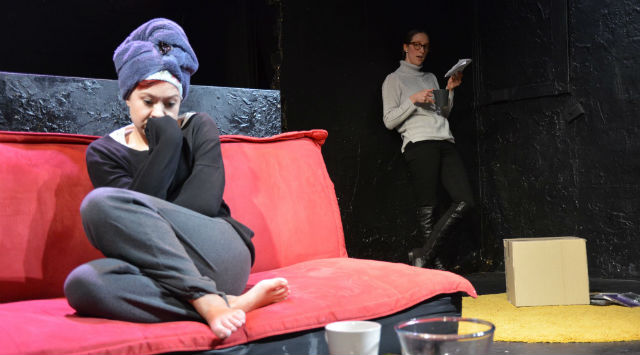
crosspollinateVenue: Old Fitzroy Theatre (Woolloomooloo NSW), Mar 29 – Apr 9, 2016
Playwright: Katherine Thomson
Director: Adam Cook
Cast: Matthew Cheetham, Matilda Ridgway, Francesca Savige
Image by Mansoor Noor Photography

Theatre review
Desperate people do desperate things, and in Kayak, their actions are certainly outrageous. Katherine Thomson’s dark comedy features three characters, all lonely and lost, grasping at whatever crosses their paths that may contain salvation. Morals and ethics vanish when the going gets tough, and it is that process by which a person loses their mind, that provides the play with its biting humour. Thomson’s characters and dialogue are delightfully perverse and although they do not seem to make perfect psychological sense, it does provide sufficient contextual logic for us to connect with the increasingly wild stories that unfold.

Director Adam Cook’s interpretation of the work is full of energy, with attention placed on creating a lively and vibrant show. The narrative is conveyed with appropriate comedic levity, and each character is clearly defined, but the all-important humour of the production relies heavily on the cast, who do not always deliver the jokes with as much complexity as the material calls for. Matilda Ridgway is strongest, and very clever with the way she enacts the many surprises written for her character Wen. It is a charming performance, with an exaggerated quirkiness that is both theatrical and captivating. All players are passionate and determined to portray intense emotion, but the show lacks a certain melancholy. There are lots of tears, but we do not feel their sadness, and it is that sadness that is central to all the high jinks that transpire.

Wen, Ruth and Luke are dysfunctional people, crippled by misfortune. We identify with their pain because the causes of their troubles are all familiar. At the root of their many shenanigans are setbacks and misery that have descended upon us at one time or another, and while we may not express our grief in such dramatic fashion, the fantastical events they go through somehow ring true, perhaps relating to the fears we have about not being able to spring back, of not having enough resilience to cope with life. They crumble and fall into disaster, and we watch knowing that we are the lucky ones, if only for the moment, because disaster does happen, and people do break.

www.crosspollinate.com.au