Review: Straight (Brilliant Adventures)

brilliantadventuresVenue: Kings Cross Theatre (Kings Cross NSW), Jun 16 – Jul 2, 2016
Playwright: D.C. Moore
Director: Shane Bosher
Cast: Danielle Cormack, Sean Hawkins, Simon London, Madeleine Jones

Theatre review
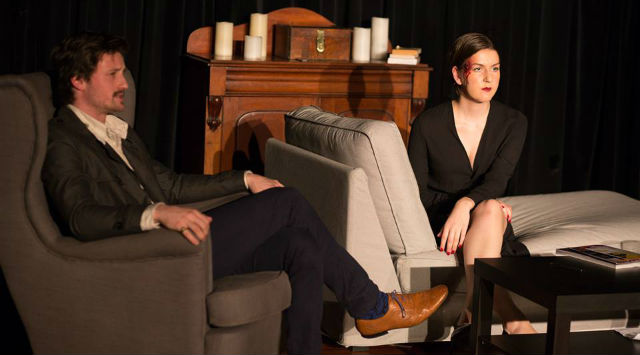
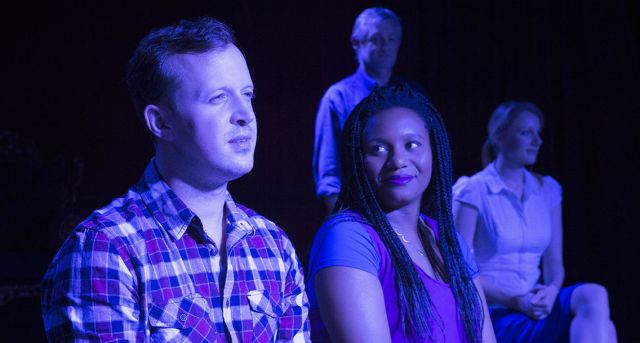
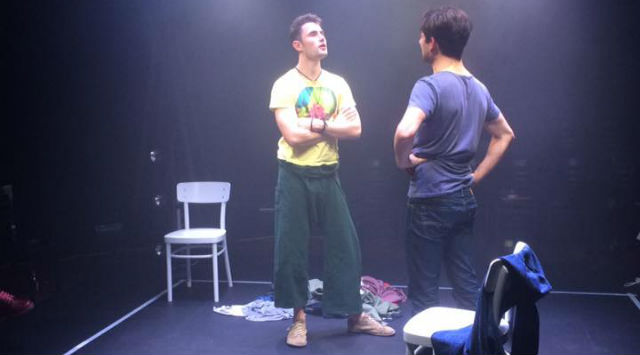
Lewis and Waldorf are old friends from university days, reunited several years after their lives have taken different turns. While intoxicated, they decide to make an amateur porn film with each other. Lewis is married, with a history of just 2 sexual partners, and the happily single Waldorf is more experienced with 71, but neither have had encounters with men. Based on the 2009 film Humpday by Lynn Shelton, D.C. Moore’s Straight is about transgression. It explores issues around the constraints of sexual identity, along with an investigation into boundaries of friendship, and takes a look at the rules of monogamy in modern marriages.

Taboos are confronted with a vehement directness in Straight, which locates our cosy assumptions of human sexuality and puts them through a series of thorough and provocative interrogations. The script is a gripping one, made even more enthralling by director Shane Bosher’s very effective delivery of plot tension and believability for what is actually an absurd context. A brilliantly awkward sense of humour permeates Moore’s consistently nuanced writing, but the production has an air of unrelenting seriousness that compromises its potential for comedy. The mischievous Danielle Cormack delivers the biggest number of laughs as Steph, and leaves an excellent impression even though the actor only appears once in an early scene. Also noteworthy is Madeleine Jones who performs the role of Morgan with excellent psychological accuracy and a sharp intuition.

Lead role Lewis is played by Simon London whose thoughtful and intelligent approach creates a character that we are able to connect with, in spite of his quite incredible decisions. Sean Hawkins is the charming Waldorf, who keeps proceedings buoyant with an unpredictable and aggressive energy. The two turn up the sexual heat in the show’s crucial moments, creating an exceptionally libidinous stage that many will find titillating, while some others will be left embarrassed. Their work demonstrates pure conviction, but it is the ambiguity of their characterisations that inspire the biggest questions.

Art is eternally preoccupied with sex as a topic because it is universal, and one that can be examined extensively, and ceaselessly. The diversity of individual experiences and the plurality of our beliefs mean that new perspectives can always be added to the ever-expanding discussion and hence, comprehension of the nature of sex. We however, live in societies that suppress these interchanges, so we become accustom to presuming an uniformity in our hidden sexualities. We fool ourselves into thinking that we know how other people do sex, and furthermore we often place those same limitations on our own individual sex lives. Straight is about people who give themselves a chance, and who dare to go into the unknown, in the voyage of self-discovery that we call life. It is about defining identities by first experiencing what one is not, before settling on what one is.
www.facebook.com/…

Review: Smudge (The Kings Fools)

thekingsfoolsVenue: Kings Cross Theatre (Kings Cross NSW), May 27 – Jun 11, 2016
Playwright: Rachel Axler
Director: Stephen Lloyd-Coombs
Cast: Danielle Connor, Kieran Foster, Nick Hunter
Image by Liam O’Keefe

Theatre review
The curve balls that we encounter make life frustrating, and sometimes unbearable. We cannot exist without envisioning the future, but nature insists on disrupting our plans to make destiny something that we can never truly be masters of. In Rachel Axler’s Smudge, Colby and Nick give birth to a severely disabled baby. As the young couple tries to come to terms with the unexpected turn of events, we witness their struggles and disappointment, and measure them against a new life that we have little understanding of but whose rights are unequivocal. It is a brutal set of circumstances, but the play takes a less than obvious approach, avoiding melodrama at all costs in its exploration of relevant issues and of human behaviour.

The play is quirky and often comedic, with director Stephen Lloyd-Coombs maintaining a sensitive, delicate tone over proceedings, but the show is most effective at its darkest moments when characters are intense and irrational. Danielle Connor and Kieran Foster work well at creating believable presences and convincing emotion, but the production’s mildness of demeanour restricts how much it is able to convey on a visceral level. It is a story of considerable gravity, and although powerful in parts, Smudge can seem slightly detached from its own sorrow.

Accomplished work by Liam O’Keefe on lights and sound by Michael Toisuta give tension to the piece, and both conspire to add a dimension of supernaturality and of horror when appropriate. Theatrical pleasure is derived from a quality of surrealness created by O’Keefe and Toisuta’s atmospheric manipulations, and along with Elia Bosshard’s set, leave a strong impression with the show’s aesthetic and technical proficiencies.

We do not talk enough about disability. There is little understanding in mainstream communities about what people’s needs may be, when living with unique challenges. Colby and Nick are isolated, left to nurture a baby that is of them but also radically different from their realm of reality. Their story is an allegory about every person’s conflict with the unpredictability of life, but the specific experience of disabilities, physical and otherwise, must not be overlooked. Conversations needs to be had in order that societies can work towards becoming more inclusive, and we must learn about disadvantages that exist in our communities to bring about equity for all. The new family in Smudge are unable to cope on their own, but with our support, things can only get better.

www.facebook.com/…

Review: Black Jesus (Bakehouse Theatre Company)

bakehouseVenue: Kings Cross Theatre (Kings Cross NSW), Apr 29 – May 21, 2016
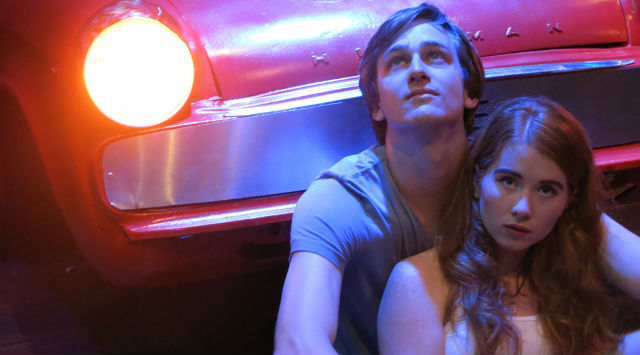
Playwright: Anders Lustgarten
Director: Suzanne Millar
Cast: Jarrod Crellin, Belinda Jombwe, Dorian Nkono, Elijah Williams
Image by Nick McKinlay

Theatre review (of a preview performance)
Parochialism is a problem that many of us can fall into, no matter where we live. We are citizens of the world but rarely acknowledge that fact, choosing instead to identify with narrow constructs of identity, based on immediate interests and geographic restrictions. When we talk about Australian stories, it is easy to make mistaken assumptions about what our collective thinks we are. In choosing to stage Anders Lustgarten’s Black Jesus, the audience’s perspective is broadened. The characters and situations are oceans away, but we cannot divorce ourselves from their concerns. We have to realise that our roots extend to unexpected places, and stories from foreign lands are relevant not only for our migrant histories, but also for the plain fact that humanity is ultimately unifying, even if man insists on perpetual combat.

After every war, people find themselves picking up the pieces as the dust begins to settle. Black Jesus is about investigations into abuses by the Mugabe government after its fictional fall in Zimbabwe. Gabriel is a young man accused of many atrocities while in a position of leadership, and Eunice is appointed to determine the truths of Gabriel’s story in the midst of confusion and ambiguities. The play explores the vulnerability of innocence in times of trouble, to question the culpability of individuals when fighting to survive. They are all grey areas, even if the bloodshed and brutality is irrefutable.

Lustgarten’s writing is confronting, vivid and often powerful, but plot details are not always clearly defined. Even though it is unnecessary to have a thorough understanding of every context in order to appreciate all its main themes and ideas, it is a challenge not to feel distracted by moments of confusion while trying to follow its narrative. Direction by Suzanne Millar is energetic and very animated. The production is passionately expressive in its portrayal of every personality and their intentions, fuelled by the enchanting live drums of Alex Jalloh.

Leading man Elijah Williams impresses with his immense agility in both physical and emotional terms. It is a vigorous but measured performance, magnetic in its allure, and disarming in its authenticity. Williams’ ability to engross with an extravagant sense of theatricality while keeping us convinced of the psychological accuracy that he depicts, is the highlight of the show and delightfully thrilling to witness. Equally dramatic is Dorian Nkono, full of colour in his interpretation of the unscrupulous government official Moyo. Humorous and deeply charming, Nkono’s confident and creative approach to his work is remarkable, and very entertaining indeed.

As we spend our days fretting over Sydney property prices and closing times of our watering holes, Black Jesus arrives to wake us to a bigger reality. We are grateful to be spared calamities that other nations have to endure, but cannot help but recognise the connections we share as a species regardless of borders and circumstances. Like many tragedies we hear about in our advanced state of information plenitude, we can only respond with despair and helplessness. We may not yet have answers to world peace, but ridding ourselves of ignorance is the crucial starting point.

www.kingsxtheatre.com

Review: Shut Up And Drive (Subtlenuance Theatre)

subtlenuanceVenue: Kings Cross Theatre Kings Cross NSW), Apr 9 – 23, 2016
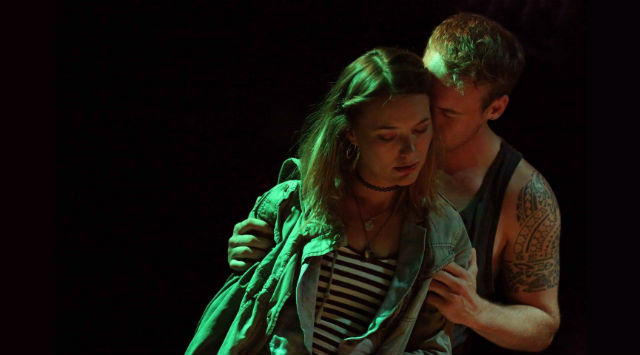
Playwright: Paul Gilchrist, Daniela Giorgi
Director: Paul Gilchrist
Cast: Kit Bennett, Bonnie Kellett, Sam Glissan, Sonya Kerr, Jordie MacKinnon, Maddy McWilliam, Tom Nauta, Robert Roworth, Eli Saad, Michael Smith

Theatre review
It is hard to care for the environment. Lives in developed countries have grown to depend on an exploitation of our planet that now requires much more than giving up aerosol cans and recycling newspapers to offer reparation. Paul Gilchrist and Daniela Giorgi’s Shut Up And Drive talks about our love/hate relationship and dependence on cars, examining the extent at which we have allowed the automobile to become indispensable. It looks at the way we blind ourselves to its negative impact, so that we may indulge in a sordid affair with the metal beast.

Gilchrist and Giorgi’s writing is about social and environmental responsibility, but it comes from a place of generosity that acknowledges human fallibility. It points out the things that we do wrong, but it is forgiving of our actions. It shows us how we can be better custodians of earth, but the choice is ours to make. Shut Up And Drive is often funny, and sometimes touching. Its intents are serious, and can sometimes fall into a didactic tone, but its short scenes and colourful characters ensure that the play always has a sense of intrigue and enjoyment. At every step, the plot provides something to think about, but is also consistently amusing.

Gilchrist does excellent work as director for the show’s many intimate scenes. He establishes strong chemistry between players, and brings a delightful variation in tone between moments to keep us attentive. Liam O’Keefe’s lights make a significant contribution in achieving those atmospheric transitions with great efficacy and minimal fuss.

Actors Tom Nauta and Eli Saad partner up for two memorable sequences that employ their individual and divergent comedic styles. Nauta’s ostentation and Saad’s wryness meet like hot oil and water for riveting and combustible results. Also very funny is Sam Glissan, a quirky individual with an idiosyncratic approach to performance that tickles all the funny bones. On the other end of the spectrum is Kit Bennett who leaves a remarkable impression with her sensitive portrayal of loss and regret. Her work is delicate and understated but disarmingly captivating, with an intense emotional power.

When we talk about environmentalism, conservation and sustainability, we are in fact talking about the future. Shut Up And Drive has a caring heart, and does its best to connect with our conscience. It makes us question how we feel about all this degradation, and presents a test of our selfishness. The car represents comfort, convenience and luxury, but it is also undoubtedly harmful on many levels. Life’s decisions are full of complications, but often, we actually do know right from wrong.

www.subtlenuance.com

Review: Year Of The Family (Tooth And Sinew Theatre)

toothsinewVenue: Kings Cross Theatre Kings Cross NSW), Feb 10 – 20, 2016
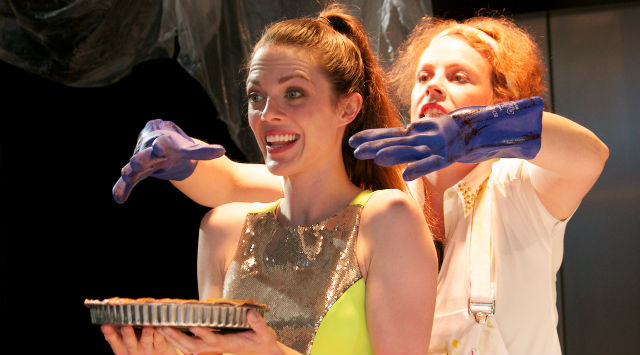
Playwright: Anthony Neilson
Director: Richard Hilliar
Cast: Peter-William Jamieson, Brendan Miles, Brooke Ryan, Nicole Wineberg, David Woodland

Theatre review
Human sexuality is a fascinating subject. Each individual’s bedroom inclinations vary as widely as the way we eat our food. No two appetites are exactly the same, yet we think of sex as a universal experience, and its taboo nature means that we rarely discuss its nitty-gritty at depth, choosing instead to imagine simple paradigms that would apply to every person. In Anthony Neilson’s Year Of The Family, sex is anything but normative. Its characters indulge in secret intimacies, and as we observe the functioning of each libido, connections are made with the unfolding dysfunctions of their family lives. Neilson appropriates the theatrical quality of that relationship between family and sex for a text that is tragic, comedic, and many shades in between, to reveal the repercussions that can occur as a result of familial breakdowns. His writing is playful and dynamic, but also surprisingly delicate. It broaches difficult subjects, but refuses to be exploitative or sensationalist.

Richard Hilliar’s powerful direction brings intensity to a staging that seeks to simultaneously entertain and provoke. There is an adventurous streak reflected in the clever use of space, especially in scene transitions (with the help of Liam O’Keefe’s very effective lighting design), along with a relentless and captivating energy to his creation that makes for compelling viewing. Hilliar’s sensitivity to dramatic tension is the production’s greatest strength, and the results are very satisfying indeed.

The cast is uniformly lively and focussed, but some roles are interpreted with more resonance than others. Brendan Miles provides intrigue and an appropriate restraint to the mysterious Henry. It is an understated, and literally quiet, performance that offers a counterpoint to the other larger than life parts, but Miles leaves a strong impression with the presence and precision he brings to the stage. As the manic Felicity, Nicole Wineberg is responsible for the more euphoric portions of the show. The actor presents a wildness that alternates between comical and terrifying, and provides the production with its delightful yet volatile spirit, but the role could benefit from greater emotional complexity.

The people in the play are troubled. They are trapped in heartache, unable to be released from the past. They form their own re-enactments of broken histories in cathartic attempts to move forward, but are as yet unsuccessful. Nevertheless they continue to strive, even if wallowing is part of the process. It is fact that we do not choose our families, but debatable whether we can be free of them. There is little happiness in Year Of The Family, but it is us who must decide where and how the matter of choice figures in their respective narratives, and then in our own lives, reflect on the ways we are entrapped, voluntarily or otherwise.

www.toothandsinew.com

Review: Roadkill Confidential (Lies, Lies And Propaganda)

liesliesVenue: Kings Cross Theatre Kings Cross NSW), Nov 11 – 28, 2015
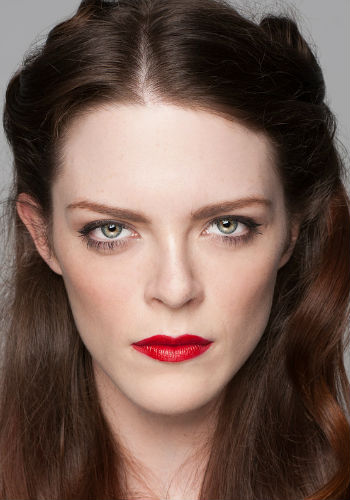

Playwright: Sheila Callaghan
Director: Michael Dean
Cast: Alison Bennett, Sinead Curry, Michael Drysdale, Jasper Garner Gore, Nathaniel Scotcher
Image by Emily Elise

Theatre review
Trevor is not a happy artist. She watches the doom and gloom on the news to stay in touch with things so that her very high profile work in the field of visual art may be relevant to her public. In fact, her studio is highly secretive, maybe she is insecure about the unfinished product, or maybe she is trying to control the reaction to her controversial art. Meanwhile, a government agent is investigating her, and everything begins to look sinister. Sheila Callaghan’s Roadkill Confidential is however, no straightforward cop drama. It is an abstract and often surreal piece of writing that celebrates the dramatic art form by prioritising the stage’s unique abilities of relating to its audience. Beyond the use of a narrative to satisfy, the play features sequences that resonate independent of characters and stories. Its free form allows actors to create moments of wonder, in service of theatre and all its possibilities.

Michael Dean’s exuberant direction is concerned with creating an experience that fascinates and intrigues. The show’s plot is not always coherent, and we leave with uncertainty about the moral of the story, but there is much to get involved with at every step of the way. Lights by Richard Neville and Mandylights, along with Benjamin Garrard’s sound are playful and dynamic elements of a production that is determined to deliver whimsy and extravagance. Creativity is in abundance here, and there is little that holds it back from making its ubiquity felt in every nuance.

Performances are suitably colourful, from a committed ensemble, unified in style and tone. The charming Michael Drysdale plays the unnamed agent with a quirky flair, and a confident physicality that brings life to the stage. His work needs better polish to reflect a more precise grasp of the text, but Drysdale’s execution of the show’s anti-realistic scenes are consistently amusing, and memorable. The artist Trevor is depicted with admirable strength and vigour by Alison Bennett who introduces an alluring severity to the mysterious role. Her piteous neighbour Melanie becomes a force to be reckon with under Sinead Curry’s surprising interpretation. The actor’s flamboyant approach and magnetic presence provide her character with excellent entertainment value, and offers good balance to a show that has a tendency to bewilder.

There is no discussion about whether Trevor’s new work will be understood, yet its effects are gravely anticipated. We need to talk about theatre in a similar way; to allow it to do more than just telling stories. There is no fear of abstraction in this production of Roadkill Confidential because it believes in affecting its audience in a more inventive or perhaps, sophisticated manner. At the theatre, we share a space for a couple of hours, and when we go our separate ways, we will depart having grown a little. It is by that amount of extension that we can measure an artist’s worth.

www.liesliesandpropaganda.com

5 Questions with Sinead Curry and Nathaniel Scotcher

Sinead Curry

Sinead Curry

Nathaniel Scotcher: What animal that would play you in the story of your life?
Sinead Curry: An otter would play me in the movie of the story of my life. It would be called “Call of The Wild: One Otter’s Journey from River Obscurity to Voice Over Success”.

If your character was an ice cream flavour, what flavour would she be?
Melanie would be a double scoop combo of Vanilla and Pralines, served in a children’s-sized cone. She’s watching her weight.

If your character and Nate’s character went on a date, where would you go and what would you say to keep him interested?
Randy, being 14, must surely still be interested in parties; Melanie would take him to a funland playground-cum-bistro, and they would eat fish fingers and talk at length about his fork collection. If Randy could resist his urge to stab, that is.

Do you think Nate’s picture should have been on the postcards instead of yours?
Definitely. Nate’s bone structure is way more alluring and would lead to more ticket sales. Also, Nate’s skin tone is warmer and more welcoming than my pasty hue. Maybe if we had Nate’s face on the Australian currency instead of the Queen the AUS Dollar might improve?

If you could be Nate for a week, what would you do?
I would dance all of the time, and in my breaks from dance, I’d swim the English Channel. I’d also get many tattoos of Rabbits.

Nathaniel Scotcher

Nathaniel Scotcher

Sinead Curry: If Randy was a song, what would it be?
Nathaniel Scotcher: “Living Dead Girl” by Rob Zombie or “Gay Bar” by Electric Six.

What do you know about rabbits?
When I was a young lad I used to breed dwarf rabbits and sell the babies to pet shops. They were very cute and I spent many hours looking after them, however, I’m not sure that I ever really knew them.

If you could give Sinead one piece of career advice, what would it be?
Just be the artist you are and you will continue to shine brighter than the sun. Be true to yourself, coz yourself is marvellous!

What is your favourite piece of Sinead’s clothing?
Sinead has an eclectic assortment of tiny T-shirts that are tricky to decipher, this amuses me when I get bored in rehearsals. She also looks smokin’ in them.

Could Sinead be any more attractive?
I don’t believe she could be any more attractive, especially when she is doing her odd little Kath and Kim dance in the show… so elegant.

Sinead Curry and Nathaniel Scotcher are appearing in Roadkill Confidential, by Sheila Callaghan.
Dates: 11 – 28 November, 2015
Venue: Kings Cross Theatre

Review: Hedda After Hedda Gabler (Robot Sparrow Theatre Company)

robotsparrowVenue: Kings Cross Hotel Theatre (Kings Cross NSW), Sep 22 – 27, 2015

Playwright: Zach Beavon-Collin (after Henrik Ibsen)
Director: Zach Beavon-Collin
Cast: Alice Birbara, Charles Jones, Victor Kalka, Adam Marks, Christie New

Theatre review
In Zach Beavon-Collin’s Hedda After Hedda Gabler, actors and characters try to escape their fates. Henrik Ibsen’s Hedda Gabler is one of the Western world’s most celebrated plays, performed and read the world over every day, with its shocking ending repeated on every occasion. Its characters are miserable, and the playwright’s message is bleak, so it makes good sense to want to formulate a rescue plan that holds brighter promise. Beavon-Collin explores the tension between circumstance and consequence in his radical retelling, along with a fluctuating adherence to the original that negotiates the very nature of adaptation. His script is a charming one, but requires of its viewers a familiarity with Ibsen’s version or not much will make sense. It is an interesting dialogue, with only one side presented.

Staging of the work lacks refinement, but there is a quirky flair that holds the piece together. Performances are mostly adequate, although the greenness of its players is evident. Alice Birbara plays Hedda with excellent concentration, but the intensity of her interpretation communicates little. The actor seems to work hard at the psychology of her role, but not enough is being articulated in her overly introspective approach. Chemistry between actors is mild and hesitant, resulting in a show that offers little beyond artifice and concepts. There are strong passions and wild exploits in the text, but their resonances remain buried.

If we believe that all life is predestined, each with its own inevitable conclusion, then depression could be the only response. Hedda is deeply troubled, but in this rendition, we see her attempting to re-write her fate. The notion of a great heroine fighting for survival is a powerful one, and the uncertainty of her aftermath is equally seductive.

www.facebook.com/robotsparrow

5 Questions with Claudia Coy and Tina Jackson

Claudia Coy

Claudia Coy

Tina Jackson: You’re a bit of a screen personality, what’s the difference between film and theatre acting?
Claudia Coy: For me, it’s all about the audience interaction, especially in comedy. When I’m performing for the camera I have no idea if I’m hitting the right comedic notes until the preview screening, whether as in theatre you’ll know straight away whether or not you’re playing up to your audience and subtly adjust your performance accordingly. For more intense scenes, film sets are safer places because you have time to get to the emotional place that you need to, but that’ll never compare to the fun you can have interacting with your audience live.

The character of Jenny, do you resonate with her at all?
I had a bit of a rough time empathising with Jenny in the first few read throughs. There are similarities in that we’re both young, blonde, students but unlike me, she finds it really difficult to stand up for herself and lets people continually underestimate her without feeling the need to prove them wrong. She’s stronger than she comes across but in the same respect she has a heart of gold so would rather keep the peace than address the real issue. The one thing that really resonated with me, was Jennys territorial nature – she’s happily engaged and planning a wedding but there’s still someone from her past that she considers ‘hers’ and seeing him with someone else completely shakes her world up. I had a very similar experience last year and so I hope that I deliver Jenny in a way that justifies her action.

How has it been revisiting the text and the character after a year?
There’s always a huge low that comes with finishing any production, so when I was asked to reprise my role I absolutely jumped at the opportunity. Having James reprise his role as my fiance meant that I had an immediate source of comfort and familiarity, but having two new actors in the cast brought a lot of new energy and perspective. I’ve found that Tina and Luke’s interpretations of Evelyn and Adam, has dramatically effected the way I perceive Jenny and her role in their friendship group and so my performance has evolved as well.

How do you prepare for roles?
When I auditioned for The Shape Of Things the first time around, a friend suggested I watch the film before I go in. I feel like the worst thing an actor can do is purposely base their own performance on someone else’s artistic choices. To prepare for an audition, I just sit down and get as familiar with the script that I can while thinking of key characteristics and ticks that make my character who they are. To prepare for the actual performance nights, I need to have at least 15 minutes by myself before we go, especially when the rest of the cast have become good friends – you almost need time to shake those friendships off so that you can see them as their characters and interact accordingly.

What can audiences take away from The Shape Of Things?
The Shape Of Things is so multifaceted. The main plot line is incredibly engaging and the big twist always shocks the audience but before that even happens you get a really unique insight into friendship, insecurities, attraction and power. The Shape Of Things has the ability to make an audience empathise with even the nastiest of actions.

Tina Jackson

Tina Jackson

Claudia Coy: This is your first ‘straight’ piece, how different is it to say, a cabaret or musical?
Tina Jackson: Well, for me I’ve always found straight theatre less emotionally accessible – it’s so easy with musical theatre to let the music carry you away before you even delve any deeper to the characters or story. I find this kind of theatre much more intellectual. I go home from rehearsals mentally drained!

You lived in London for a couple of years. What’s the biggest difference to the industry here, and the industry there?
The industry over there is just SO BIG. There are more professional shows being performed at any given time than Australia could hope to produce in years. The fringe scene is also huge over there – there are plenty of fringe festivals and plenty of amazing fringe theatres constantly putting on new work. There also isn’t as much of a divide between “music theatre” and “straight actors” over there – here I’ve found if you come from a music theatre background it is very difficult to get a foot in the casting room for film and tv.

Do you have any dream roles? Regardless of gender and age?
I would love to play Maureen in Rent. Or Bruce Bogtrotter in Hairspray.

What’s your biggest fear as an actor?
I think it’s the same for everyone. Being able to make a sustainable living doing what we do is almost impossible and not being able to set yourself up for the future is pretty scary.

What are your thoughts on the vastly growing musical scene in Sydney?
It was pretty exciting to come back from London and see so much was going on. Companies like the Hayes and Squabbalogic are doing the most beautiful small productions and it’s nice to see hugely successful overseas shows like Matilda and The Book Of Mormon are finally coming here as well.

Claudia Coy and Tina Jackson will be appearing in The Shape Of Things by Neil Labute (part of Sydney Fringe 2015).
Dates: 15 – 20 September, 2015
Venue: Kings Cross Hotel

Review: And Now To Bed (Subtlenuance Theatre)

subtlenuanceVenue: Kings Cross Hotel (Kings Cross NSW), Mar 11 – 22, 2015
Playwrights: Con Nats, Donna Abela, Mark Langham, Sarah Carradine, Margaret Davis, Melissa Lee Speyer, Katie Pollock
Director: Paul Gilchrist
Cast: Paul Armstrong, Shauntelle Benjamin, Erica Brennan, Richard Cornally, Jennie Dibley, Edric Hong, Eleanor Stankiewicz

Theatre review
Sex can reveal all of a person, but awareness of its machinations and psychological implications for any individual is rarely a thorough one. We let our sexualities be, because, contrary to Freudian theories, knowing too much can sometimes be destructive, as pleasures can fade away when they come under excessive scrutiny. Also, it is in our nature to guard our privacies, and self-preservation dictates that we rarely articulate what it is that turns us on. And Now To Bed features seven actors performing their own biographies. Each is teamed up with a writer who creates a text out of their understanding of each subject and their sexual lives. The actor-writer relationship should be an intimate one, but there is no telling how secrets are handled in this process. There are vivid moments, but much of the writing is coy. We cannot be sure if it is the subject or the author who maintains a sense of non-disclosure, but talking about sex requires that we are frank about things, or the purpose is defeated. There is beautiful writing to be found in every segment, but those who choose to be obscure or abstract do not leave the same impression as the ones who confront us more directly. Like in sex, art is at its most meaningful when people connect.

Shauntelle Benjamin and Donna Abela’s partnership is a powerful one. Their explicit depiction of sex acts exposes not only the brutality many people are capable of, but also the quality of masochism that resides in many of our experiences. Benjamin’s enthusiasm for the stage reflects the workings of libido, and its ferocious honesty. Her portrayal highlights the uniqueness that resides in each person, with an idiosyncrasy that rejects notions of simple and universal understandings of sexuality. Jennie Dibley and Margaret Davis create a romantic narrative that traverses decades. Dibley’s maturity in attitude brings to her not unusual story, an unorthodox emotional dimension that encompasses forgiveness and kindness, in place of melancholic drama. We observe the healing quality of time, and a surprising purity that can come with age. Even though there seems a deliberate rejection of angst and sorrow in Dibley’s work, she remains a delightful actor with an endearing and captivating authenticity.

Direction is provided by Paul Gilchrist who is faithful to each of the pieces, allowing his collaborative artists divergent contexts that are required for their individualistic modes of expression. Consequently, the program is colourful in tone, and pluralistic in its approach to the theme of discussion. Gilchrist’s sensitivity to the material can be seen in the confident cast of actors who all bring a warm earnestness to what they are willing to share. The production is eighty minutes long, with segments that would appeal to different tastes, but there is a somewhat bizarre lack of erotic energy indicating an exploration of sex that is a lot about the head, and very little about the body. Talking about sex in public is difficult, for very good reason. Our reluctance to go in too deep is understandable, for only a select few would see the appeal of such vulnerable divulgences, and fortunately for us, they tend to be artists.

www.subtlenuance.com