Review: You Got Older (Mad March Hare Theatre Company)

Venue: Kings Cross Theatre (Kings Cross NSW), Jul 13 – Aug 4, 2018
Playwright: Clare Barron
Director: Claudia Barrie
Cast: Alex Beauman, Harriet Gordon-Anderson, Ainslie McGlynn, Sarah Meacham, Gareth Rickards, Steve Rodgers, Cody Ross
Image by Clare Hawley

Theatre review
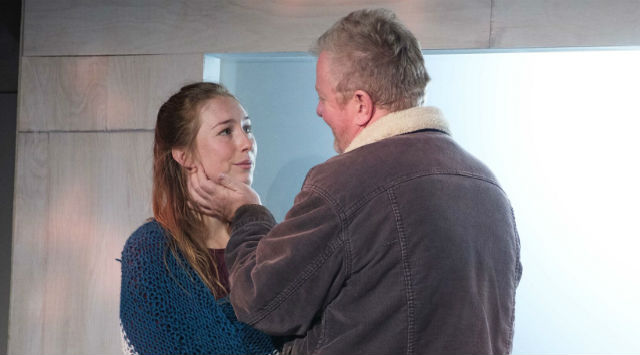
Mae has come home, to care for her father as he undergoes cancer treatment. Clare Barron’s You Got Older is a look at that moment, of suddenly becoming keenly aware of one’s parents’ mortality. In every process of healing, of trying to make someone better, is the salient reminder that life is fragile. Mae is strong for her father, but in the privacy of her own thoughts, anxiety and grief manifest in fantasies of sexual masochism. Role playing is after all, how we are able to get through most of our days.

The subject matter may be heavy, but like the resilience of our human spirit, the show is determined to keep buoyant and optimistic. Director Claudia Barrie brings excellent humour to the production. Although not exactly lighthearted, we are surprised by the delight and joy that the play brings, through its very enjoyable and richly authentic explorations of love and family dynamics. There is no angsty drama here, only a father and his beloved children grappling with the pain of inevitable separation.

A very solid cast takes us through this universal tale. Harriet Gordon-Anderson is entirely convincing as Mae, with all her contradictions and vulnerabilities, but the actor is particularly successful at conveying a strength that is neither heroic nor exceptional, but that is nonetheless profound in its representation of the good that we are capable of. The paternal character is played by a confidently understated Steve Rodgers, who introduces just enough pathos to have us engaged, leaving us grateful that no emotional blackmailing takes place in this presentation. Contributing to the somewhat unexpected elegance of You Got Older are its supporting actors, each one charming and funny, and as a group, perfectly timed and wonderfully captivating.

When someone close is suffering ill health, those on the sidelines might be left feeling helpless, but we also understand that fundamental to the patient’s well-being, is the spiritual care and support we are required to provide. In times of hardship, fear can easily overwhelm, but courage often appears, allowing love to do its job.

www.madmarchtheatreco.com

Review: Dresden (Bakehouse Theatre Company)

Venue: Kings Cross Theatre (Kings Cross NSW), Jun 15 – 30, 2018
Playwright: Justin Fleming
Director: Suzanne Millar
Cast: Thomas Campbell, Renee Lim, Yalin Ozucelik, Dorje Swallow, Jeremy Waters, Ben Wood
Images by Clare Hawley

Theatre review
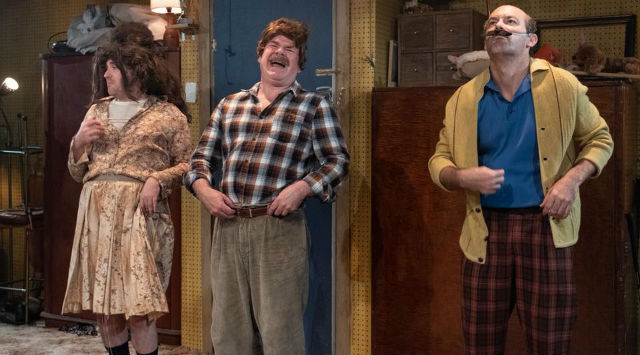
Wagner’s first success was Rienzi, an opera about the rise and fall of a medieval Italian populist leader. Hitler fell in love with the work, years after Wagner’s death, and in Justin Fleming Dresden we see the unexpected and formidable ways in which art can inspire behaviour, good and bad. It also looks at Hitler as a failed artist, and proffers a chicken and egg scenario; questioning the relationship between that infamous abominable nature and his own deficiencies at artistic creation. Even though information about contemporary fascistic regimes seem to remain prominent in our consciousness, the play does not feel immediately relevant, but Fleming’s writing exceeds the story he tells. Against a backdrop monumental and historic, his words sing with an enchanting beauty, imparting observations that are succinctly constructed and very wise indeed.

Opera and a world war, give the play a sensibility that is unavailingly grand, but the small auditorium is ambitiously converted by set designer Patrick Howe to convey the sophistication associated with Wagner’s discipline, as well as the aesthetic severity of Hitler’s Germany. Benjamin Brockman’s lights are relentlessly theatrical, with incessant transformations that move us through dimensions, from miscellaneous days of yore, to those that are even more ephemeral and fantastical. Director Suzanne Millar very deftly negotiates the weaving realms of the play, taking us from real to imaginary, across terrains and timelines, for an impressively lucid telling of tales.

Yalin Ozucelik and Jeremy Waters are the leading men, both enthralling with their respective stage presences, and splendid with the dialogue that they are master of. As Wagner, Waters is spirited yet delicate, and as Hitler, Ozucelik’s depiction of cruel imbecility strikes a perfectly balanced act of dramedy. Also memorable are Dorje Swallow and Thomas Campbell, each supporting player demonstrating excellent versatility, proving themselves to be eminently watchable in any guise.

We often hear, that all publicity is good publicity. If all Hitler had wanted from his extreme brutality, was to be remembered, then the confounding actions of people in power everywhere, can begin to make sense. Most of us wish to leave behind some semblance of a legacy, no matter how minute, so that our time on earth can be seen to be of some value. Some want their names to last, but others prefer that what they had tried to generate in their own lifetime, is able to make permanent improvements into the future. Bad people exist, and as we negotiate existence around them, we must try to stop ourselves from fighting fire with fire. Good can turn into evil in the blink of an eye, when we let our guard down and start to emulate those who wish to trespass against us.

www.bakehousetheatrecompany.com.au

Review: The Walworth Farce (Workhorse Theatre Company)

Venue: Kings Cross Theatre (Kings Cross NSW), May 18 – Jun 9, 2018
Playwright: Enda Walsh
Director: Kim Hardwick
Cast: Rachel Alexander, Laurence Coy, Robin Goldsworthy, Troy Harrison
Images by Clare Hawley

Theatre review
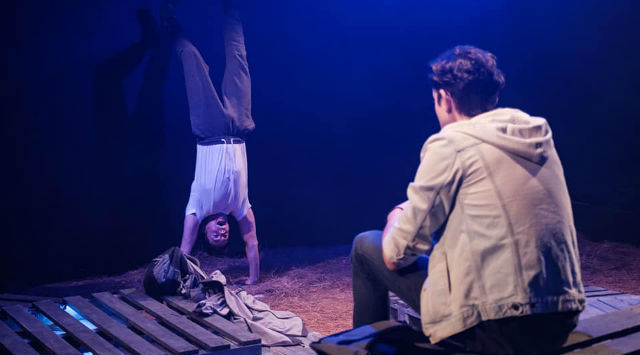
Inside a small London apartment, Dinny and his adult sons spend every day acting out a complicated farce, so that the best performer may win a trophy, and that Blake and Sean may remember their early days in Ireland, but only in a way that Dinny permits. It is an account of events that is absurd and dense, designed so that his sons’ memory of their collective biography, is doctored and confused.

Dinny has a lot to hide, and because Blake and Sean are a part of his confections, they are kept under strict control, even if both have well and truly arrived at adulthood. This is a story about parenting, and about the diaspora of cultures that every city experiences. It is about the relationships between countries, and the way individuals are affected by the boundaries we draw in the demarcation of national differences. Enda Walsh’s The Walworth Farce is unquestionably meaningful, but some of the play’s more culturally specific aspects, can prove impenetrable and tedious.

It is a tenaciously exuberant production, directed by Kim Hardwick who leaves no stone unturned in this complex work. There is a lot that goes on in every moment, and Hardwick’s eye for detail demands that we engage with her show in a way that is complex and nuanced. The very lively cast gives a generous performance, energetic and rich with spirit and inventiveness. Troy Harrison is particularly wonderful as Sean, the older brother on the precipice of discovering a new life. It is a plethora of emotions that emerge from the actor, conflicting yet distinct, allowing us to decipher the fundamental underlying truths that are in operation, amidst the constant vociferous hullabaloo.

As immigrants, we often find ourselves having to create narratives when required to explain how we have come to be. The tales that we weave are seldom the complete story, because the action of moving from one’s hometown, to somewhere entirely new, will always involve layers of intricacies that seem impossible to encapsulate in a convenient way. How we think of the past, is key to how the future looks. When we are unable to be honest about the journey before today, what happens hereafter, can only be fraudulent.

www.workhorsetheatreco.com

Review: Youth And Destination (Manifesto Theatre Company)

Venue: Kings Cross Theatre (Kings Cross NSW), Apr 27 – May 12, 2018
Playwright: James Raggatt
Director: James Raggatt
Cast: Jack Angwin, Georgia Blizzard, Gloria Bose, Julia Christensen, Maree Cole, Skyler Ellis, Alex Malone, Bardiya McKinnon, Nikita Waldron, Ross Walker
Images by Emily Havea

Theatre review
There is no conventional narrative in James Raggatt’s Youth And Destination, only a series of short sequences that offer insight into his young mind. The brevity of scenes allows the playwright to touch on a broad range of topics over the course of an hour, but the format prevents sufficient depth from being reached, aside from occasional dialogue that might inspire a sense of intrigue that encourages us to see beyond the mundane.

There is much to admire in the young; they are often inquisitive, passionate and fearless. Wisdom, although never restricted to the mature, can however be elusive. On this occasion, thoughts expressed are honest and very earnest, but the lack of life experience is evident, and Raggatt’s attempts at circumspection will not be able to satisfy every member of audience. Some nonetheless, will see themselves accurately reflected, in this work by young people, for young people.

An exceedingly pleasant group of actors prove themselves accomplished, with no fiction to perform but instead, putting on stage a convincing semblance of the self. In the absence of more complex story lines, their task is to make compelling, snippets of modernity, whether banal or extraordinary. Star of the show is not an actor, but lighting designer Martin Kinnane, whose aesthetic inventiveness and technical excellence, bring to the production a necessary polish, along with rigorous calibrations of mood, from scene to scene.

The young can tell us so much about the world, but pinning down the meaning of life, is not usually their strongest suit. Youth And Destination is a sensitive work, slightly overcautious with how it wishes to be perceived. Whether young or old, we all have to grapple with how others look upon us; we are so fundamentally social. It is incumbent on the artist however, to be courageous, and to always be revealing of their own truth, especially that which is unique and idiosyncratic in quality. Few can claim to speak for communities, but when we return to the individual in an exhaustive and meticulous way, what we say about the personal can become unimaginably significant.

www.kingsxtheatre.com.au

Review: A Girl Is A Half-formed Thing (Brevity Theatre)

Venue: Kings Cross Theatre (Kings Cross NSW), Apr 6 – 21, 2018
Playwright: Eimear McBride (adapted for the stage by Annie Ryan)
Director: Erin Taylor
Cast: Ella Prince
Images by Clare Hawley

Theatre review
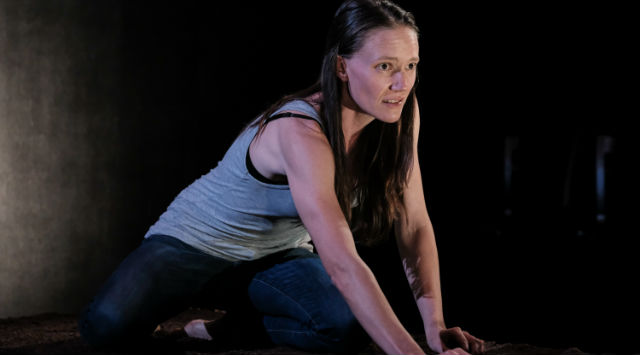
Our destinies are written long before our flesh is are conceived. The unnamed girl in the story was born into an underprivileged Irish family, of a conservative Catholic town where ancient rules are upheld without question or suspicion. Women are allocated their place, but men occupy everything, including the female body. In Eimear McBride’s novel A Girl Is A Half-Formed Thing, violations take the form of rape, physical but also mental, emotional and spiritual. The entirety of the girl’s adolescence is characterised by the abusive imposition of all surrounding characters, determined to prevent any sense of individual agency from developing. She is deemed an object, an empty vessel with which society can do whatever it wishes.

It is a problematic adaptation by Annie Ryan who retains the “stream of consciousness” form of McBride’s book. One actor is designated to play not only the girl, but also every significant personality of her microcosm. Conversations are brief and unanticipated, often leaving us confused about the identities of people being portrayed, although we might as well think of them all as one uniform perpetrator, considering the analogous way in which our protagonist is being defiled. Actor Ella Prince is unable to provide clarity in terms of detail from the difficult text, but her capacity for authenticity and focus are certainly impressive. It is an extremely powerful presence that she brings to the show, and the gravity of the play’s concerns are never compromised under Prince’s depictions. The traverse stage proves challenging, requiring half of the show to be performed with her back to the audience, which proves unsatisfactory for a production that relies so heavily on its star’s facial expressions.

There is however, very fine design work being accomplished here. Isabel Hudson’s sophisticated set makes for a morbid but dramatic evocation of ideas around burial and death. Lights by Veronique Bennett are surprisingly dynamic, whilst administering a relentless austerity that is crucial to the play’s very specific tone. Chilling sounds created by Clemmie Williams ensure that we never deviate from the mournful devastation being analysed.

The girl is defiant, aggressively so, but she holds no power. We watch as she is put through a progression of torment, wondering if a person like this could ever grow into something whole. In places where freedom exists, we can imagine individuals flourishing, beyond the bounds of inevitable social restrictions. We want to believe that each human bears potential that is unique and good, and opportunities are available where against all odds, people can create the best out of their embryonic selves. This may or may not be true, but where there is no freedom, the only certainty is the unremitted spawning of deformed lives.

www.brevitytheatre.com.au

Review: DNA (Last One Standing Theatre Company)

Venue: Kings Cross Theatre (Kings Cross NSW), Mar 15 – 24, 2018
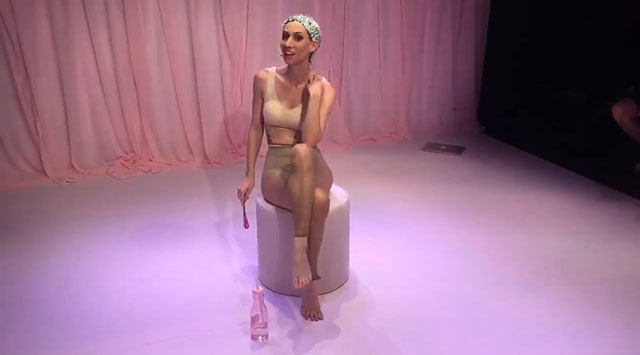
Playwright: Dennis Kelly
Director: Claudia Barrie
Cast: Alex Beauman, Jeremi Campese, Holly Fraser, James Fraser, Jess-Belle Keogh, Alex Malone, Bardiya McKinnon, Liam Nunan, Millie Samuels, Jane Watt, Emm Wiseman
Image by Clare Hawley

Theatre review
A group of teenagers get themselves in deep trouble, but instead of seeking help from adults or officials, their instinct leads them to the alpha male of their pack. Phil is the strong silent type, the intense young man always looking to be deep in thought. He takes on the role of top dog with supreme confidence, and everyone else does as they are told, but we quickly discover this designation to be a case of style over substance. Dennis Kelly’s DNA examines our attraction to masculinity, and its socialised associations with authority and legitimacy.

The play is curiously plotted, with the narrative of a murder mystery interrupted by scenes of Phil with Leah, a girlfriend perhaps, desperate for his attention, but whom he is determined to ignore and belittle. Juxtaposing scenes of urgency with those frankly tedious two-hander moments, may not be dramatically effective, but Kelly’s dialogue is refreshing, with his use of UK vernacular especially fascinating to Australian ears.

The couple is played by Bardiya McKinnon and Millie Samuels, both actors demonstrating a satisfying level of concentration, but unable to turn their characters likeable. There are many colourful personalities in DNA, although not conventionally appealing, and certainly not uplifting or inspiring types that draw us in. It is however, an honest tale that reveals darker shades of our humanity, and director Claudia Barrie makes sure that pertinent meanings of the piece, are conveyed with power and clarity. The big cast features some strong players, and they keep us attentive, even when their youthful folly threatens us with characteristic dreariness.

Sean Van Doornum’s sound design is noteworthy for introducing a wide range of tense ambiences to the space. Along with Liam O’Keefe’s lights and Ella Butler’s set, the production impresses with its polish, although the show’s overall result can be slightly underwhelming. DNA is a cautionary tale, and it does bear repeating, that humans are often very stupid creatures. Allowing us to see ourselves at our worst, is a gift that is almost unique to what art can achieve. How we proceed from having observed our deficiencies, is important, but never ascertainable at the point of conclusion when we consume a work.

www.lastonestandingtheatreco.com

Review: Being Dead (Don Quixote) (MKA Theatre / Unofficial Kerith Fan Club)

Venue: Kings Cross Theatre (Kings Cross NSW), Mar 6 – 10, 2018
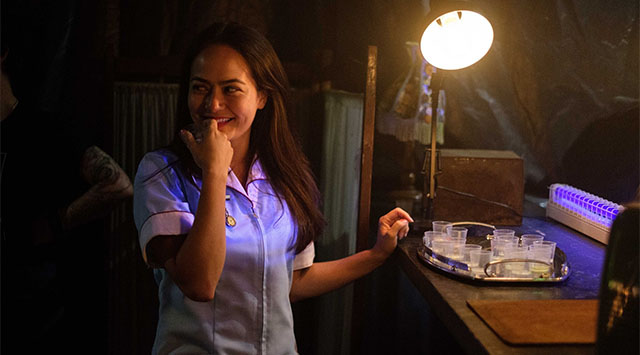
Creation and performance: Kerith Manderson-Galvin

Theatre review
In Being Dead, Kerith Manderson-Galvin is constantly “corpsing”, or “breaking”, unable to commit to the theatrical device known as a character. This is all a ruse of course, in this avant-garde variant of the Don Quixote story. A work of art is to be created, a show is anticipated to be staged, and the accompanying ambitions are, as always, unimaginably grand. Artists needs to be brave; we expect performers to be polished up, ready and flawlessly poised, but that does not mean a negation of their humanly vulnerabilities.

Manderson-Galvin’s presentation embraces qualities normally prohibited. Hesitant, apologetic, confused and very nervous, the actor reveals all that conventional wisdom deems unsuitable for theatrical consumption. These states of being, although negative, are unquestionably authentic, and within the text’s radical employment, they become saliently relevant to its story of wild aspiration. To dream big, one’s weaknesses cannot be ignored. In throwing one’s all into a project, imperfections too require attention.

The character we see, never really knows when their show begins. They are fearful and indecisive, in a perpetual state of procrastination, but for the audience, it is clear that the performance is underway the moment we see the genius Manderson-Galvin pacing on stage, portraying the fear that grips anyone who wishes to accomplish something extraordinary. It is a strange discipline that is being flaunted, an odd coupling of overt awkwardness and concealed deliberateness. It is false bravado turned inside out, for an experience wonderfully unusual and perversely delightful.

Equally enjoyable are its several sequences of sheer beauty, unpredictable and comforting, gestures of kindness perhaps, to release us of its otherwise stubborn edginess. Lights by Jason Crick and sound by Jules Pascoe, keep the production contained and coherent, pleasant elements that we cling to, like a security blanket, amid Being Dead‘s resolve to challenge and disturb.

Unbeknownst to themself, our protagonist succeeds in their search for something magical. Preoccupied with anxiety, they fail to detect all the good that is being created. Fear is a monster, an adversary to be combated with great fortitude and ferocity. Strength will deliver victories, but stillness is necessary, if the rewards are to be appreciated.

www.mka.org.auwww.unofficialkerithfanclub.com

Review: Visiting Hours (Kings Cross Theatre)

Venue: Kings Cross Theatre (Kings Cross NSW), Feb 7 – 17, 2018
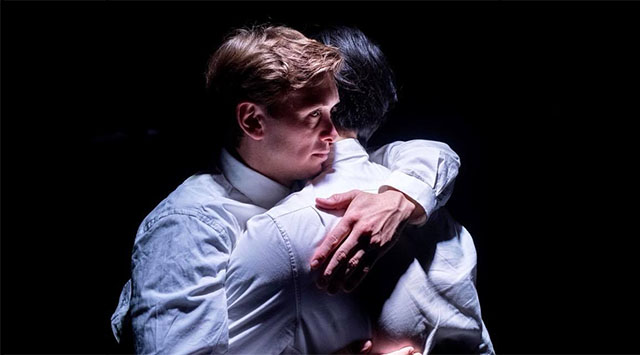
Playwrights: John Harrison, Constantine Costi, Michael Costi
Directors: John Harrison, Michael Dean
Cast: Keiren Brereton, Tara Clark, Rose Costi, Laura Djanegara, Sarah Evans, Cheyne Fynn, Jasper Garner Gore, Richard Hilliar, Derbail Kinsella, Sheila Kumar, Yannick Lawry, Kianah Marlena, Suz Mawer, Tom McCracken, Jim McCrudden, Joshua McElroy, Rebecca Claire Moret, Mansoor Noor, Heather Prowse, Monica Sayers, Katherine Shearer, Emma White, Elijah Williams, Nicole Wineberg, Arisa Yura
Image by Clare Hawley

Theatre review
The people who work in hospitals are among some of the best human beings we have, but the experience of visiting medical institutions is often harrowing. We are at our most vulnerable, quite literally putting our lives in the hands of others. The immersive theatre production Visiting Hours, written by John Harrison, Constantine Costi and Michael Costi, investigates that very notion of having to submit to health experts and authorities, of being in a situation where one’s mortality is constantly under threat and question. We venture through ten or so spaces, guided by strange or menacing personalities, never knowing what is to come.

The experience is often terrifying, but in a humorous, often childlike way, where we engage in the sensation of fear, understanding that no real danger is ever present. The spaces are marvellously designed to deliver a sense of nightmarish foreboding, whilst stimulating all our senses in a range of unexpectedly pleasurable ways. Benjamin Brockman’s lights are almost inappropriately sexy, in their many spectacular evocations of tension and anxiety. Production design by Anna Gardiner offers spatial configurations that constantly surprise and amuse. Tegan Nicholls’ sounds are powerfully hypnotic, in how they coax us into strange realms of fantasy.

Visiting Hours is a thrilling show, and its demands of us as active participants in the story, are rich enough to elicit genuinely complex reactions, without ever crossing any lines. The first half involves a high level of interactivity, delivering intensely fascinating sequences that captivate all our senses and intellect. As it progresses however, we are released into more conventional and passive modes of audienceship, and even though we continue to be gripped by its continual atmospheric fluctuations, our minds struggle to focus on the show’s sudden reliance on spoken text. Our minds and bodies remain preoccupied with the multidimensional appeal of spaces, and can only listen sporadically to the words being said. Nonetheless, there is no question that the work is beautifully performed, by a huge cast of 26 actors, all convincing, charming and playfully provocative with their individual roles.

We all have to live inside power structures that keep us subjugated. Being at the bottom of the pile is sometimes involuntary, sometimes complicit. Visiting Hours challenges us to think about compliance and choice, and to examine the meaning of free will, when society seems to have a persistent appetite for deception and oppression. False gods in white coats can often appear to be all we have, but the ability to think for oneself and the courage to obey one’s own intuition, are always on hand.

www.kingsxtheatre.com

Review: Tonsils And Tweezers (Jackrabbit Theatre)

Venue: Kings Cross Theatre (Kings Cross NSW), Jan 12 – 27, 2018
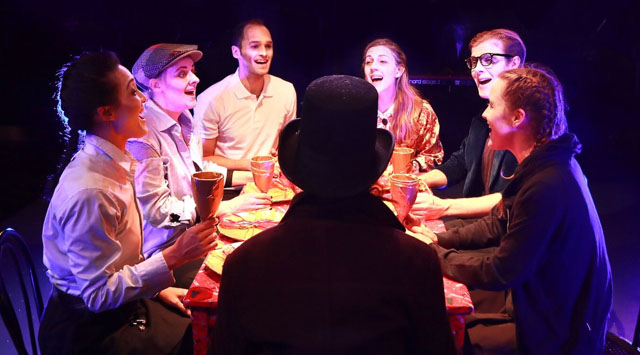
Playwright: Will O’Mahony
Director: Michael Abercromby
Cast: Travis Jeffery, James Sweeny, Megan Wilding, Hoa Xuande
Image by Clare Hawley

Theatre review
Will O’Mahony’s black comedy Tonsils And Tweezers centres itself on two young men, who share not only a very close relationship, but also the unyielding malaise of modern masculinity. We see them bond as outsiders in school, and witness how that relationship shapes the adults that they try to become.

The narrative might be fairly simple, but the plot is a deliberately beguiling one that ends up delivering more confusion than it intends. We sense an emotional crescendo being constructed thoughtfully as each scene progresses, but its inability to have us sufficiently identify with either Tonsils or Tweezers, takes us to a conclusion that never manages to be more than lukewarm.

The actors however, are full of conviction and reliably entertaining. Travis Jeffery and Hoa Xuande are the leads, both authentically present and impressive with the gravity they bring to the stage at crucial junctures of drama. Even more appealing, are supporting players James Sweeny and Megan Wilding, memorable with the scintillating humour they are able to introduce throughout the piece. None of these characters are particularly likeable, but it is a cast that we are glad to have spent time with.

Director Michael Abercromby takes us through the play’s many blunt atmospheric shifts with admirable elegance and efficiency. Lights by Liam O’Keefe and sound by James Yeremeyev have a tendency to work slightly too literally, but are highly effective with the way time, place and mood are calibrated for our subliminal comprehension. Patrick Howe does remarkable well as set designer, creating a space beautifully sleek in its minimalism, whilst portraying a cold brutality that is consistent with emotions relevant to the text.

In Tonsils And Tweezers, the Australian man’s problem with self-expression is, characteristically, looked at, but not looked into. The inability of our boys and men, to articulate and to understand their own feelings is, as the play points out vigorously, clearly detrimental, but how all this transpires, is all but neglected. We know the effects of toxic masculinity, but are yet to examine it in a way that can bring us satisfactory solutions. The dismantlement of old structures that we continue to live within, is necessary but strenuous. Some have begun work on that process, but more will have to come on board, if we wish to truly progress.

www.jackrabbittheatre.com

Review: A Christmas Carol (Lies, Lies And Propaganda)

Venue: Kings Cross Theatre (Kings Cross NSW), Dec 14 – 24, 2017
Playwright: Melissa Lee Speyer (from the Charles Dickens novel)
Director: Michael Dean
Cast: Aslam Abdus-Samad, Dymphna Carew, Bobbie-Jean Henning, Jacqueline Marriott, Monica Sayers, Bishanyia Vincent, Michael Yore
Image by Omnes Photography

Theatre review
The famous Mr. Scrooge is resurrected, in Melissa Lee Speyer’s retelling of A Christmas Carol. The notorious characteristics remain, but his story is updated for our times, with new resonances for the Trump era. This new Scrooge belongs to the tribe that believes in the “trickle-down effect” of conservative politics; the kind of man who tells his employees that they have to work harder, whilst he dreams up new ways to cut their wages. Scrooge’s sin is not that he has an aversion to Christmas, but that he is selfish and unkind. On that one day his workers are away, and he is unable to scheme and torture, ghosts come to haunt him as he faces his own desperate loneliness. On Christmas Day, money proves ineffectual, and he has no recourse but to confront the man in the mirror.

It is a strong adaptation, poignant and accurate with its melancholic observations of contemporary life. Michael Dean’s direction of the piece turns A Christmas Carol into a pantomime for grown-ups, silly in parts, but impressively enthusiastic in the way its message is communicated. Music by Miles Elkington brings a quirky edge, and although not always calibrated to perfection, its function as guide for our emotional responses from scene to scene, is indispensable. The cast is adorable, and very sprightly, with Bobbie-Jean Henning as a captivating, if not entirely convincing, Scrooge. Michael Yore is memorable as the Ghost of Christmas Past, with splendid comic timing and an endearing sense of mischief. Similarly noteworthy is Bishanyia Vincent, especially in the role of Mrs. Cratchit for the production’s most moving sequence, with a contribution surprising in nuance, proving to be remarkably powerful.

When Scrooge is shown the error of his ways, we are reminded of tyrants everywhere who refuse to acknowledge the damage they do, even when presented with incontrovertible evidence. Our cynicism in the age of “fake news” has taught us to expect the worst from men in power, who will deny all their crimes, no matter how plain the truth that is laid out before their eyes. We cannot afford to do nothing and wait for bad men to come to their senses, but their dominance in our world means that we have little at our disposal, in terms of remedy or retribution. It is idealistic, indeed fairytale-like, to wait for the miraculous return of kindness in today’s climate, but on the darkest days, it does seem to be the only thing left. It is perhaps pertinent at Christmas time to remember that Jesus Christ had said, “do not be overcome by evil, but overcome evil with good.”

www.liesliesandpropaganda.com