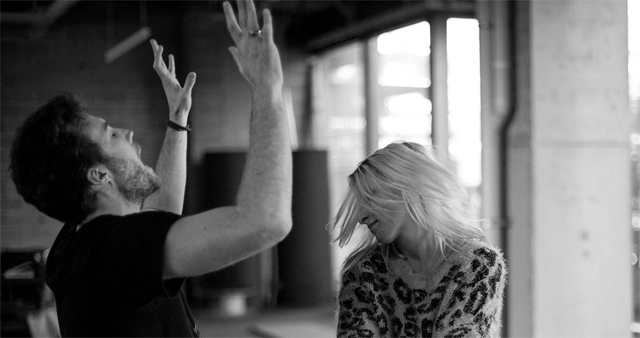
Review: Cain And Abel (Belvoir St Theatre / The Rabble)

rabbleVenue: Belvoir St Theatre (Surry Hills NSW), May 15 – Jun 8, 2014
Creators: Kate Davis, Emma Valente
Director: Emma Valente
Actors: Dana Miltins, Mary Helen Sassman
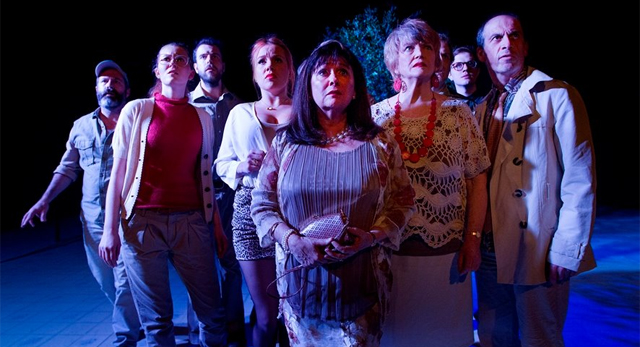
Image by Brett Boardman

Theatre review
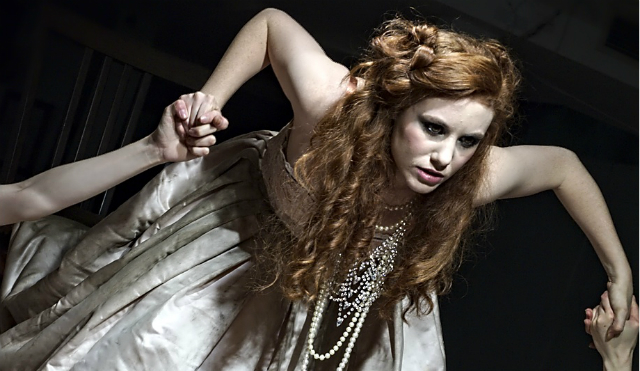
In certain religious texts, Cain and Abel were the first children born of Eve, and Abel was the first human to die. The brothers’ story is one that has undergone much speculation and scrutiny, with Cain’s motives for murder being the key point of contention. In Kate Davis and Emma Valente’s subversive vision, the first children are daughters, so it is a woman who inflicts the first act of violence. They do not investigate the reasons for the infamous slaying, but explore instead, by substituting male for female, meanings and expressions of gender and its social perceptions in relation to human traits and behaviour.

This is a theatrical work that is heavily influenced by fine art. Dialogue is sparse and reliance on words to create and communicate meaning is minimal. Davis and Valente are concerned with arresting the senses and talking viscerally, resulting in a fascinating show that is almost hypnotic in its appeal. Shades of Japanese Noh theatre can be observed in the mesmerising leading ladies, Dana Miltins and Mary Helen Sassman, who work with a grave stillness that has more to do with spirituality and metaphysicality than storytelling. In this Cain And Abel, we are required to read not only with our eyes and ears, but also to engage with its energies and instincts. As an Australian work, it is distinctively original, even within the realm of experimental theatre.

Miltins performs an understated but terrifying aggression. Her Cain is not a femme fatale, as women do not exist as temptresses on this stage. In multiple scenes depicting various imagined manifestations of the fabled carnage, we are forced to witness her sister’s slaughter repeatedly, and to contemplate wildly, our own ideas about the artist’s themes, and beyond. Indeed, the abstraction of the piece resonates strongly, and in the absence of simple narratives, our personal thoughts are taken on adventurous odysseys.

Visual and sound design are not facilitators for something greater, they are integral to the theatrical experience, and executed to perfection. A main feature is an enclosed set made of clear acrylic, that allows for brutality to be contained (along with assorted offending liquids). The creation of distance provides a membrane of psychological protection, so that our minds gain enough detachment and security to indulge in meditations over the blood-letting before us.

Davis and Valente’s work is brave, iconoclastic and important. Religion is deeply rooted in many, and its unchecked authority affects every society. This disruption of the Cain and Abel story is emancipatory, because it encourages an intellectual response that is evolved and compassionate. It asks questions that matter, and it is incumbent upon us to consider them with a pure conscience.

www.belvoir.com.au | www.therabble.com.au

Review: #Three Jerks (Sweatshop)

rsz_sweatshopVenue: Wharf 2 Sydney Theatre Company (Walsh Bay NSW), May 24, 2014
Playwrights: Michael Mohammed Ahmad, Peter Polites, Luke Carman
Director: Roslyn Oades
Performers: Michael Mohammed Ahmad, Peter Polites, Luke Carman
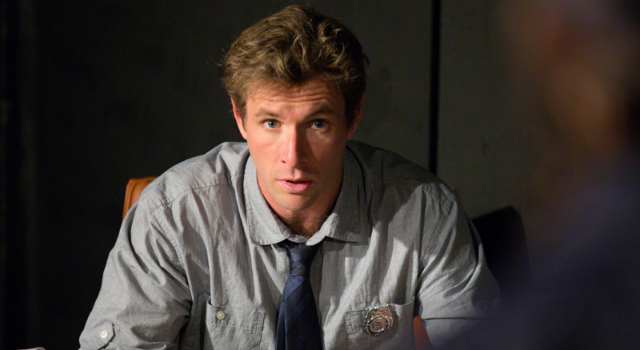
Image from ABC TV

Theatre review
The show takes the form of a rehearsed spoken word presentation. Three authors are positioned with scripts on music stands, and a projection screen behind them bearing the image of an Australian map with the words “Under New Managment (sic)” scribbled across. The men read their own stories, and chime in with the others’ for dramatic emphasis when required. There is very minimal movement involved, and there are no costumes. This production is not in any way elaborate, but the writers work thoroughly with their voices to communicate their vivid and powerful writing.

The script is essentially composed of three soliloquies, interestingly combined, and there is potential for a more conventional theatrical rendering. #Three Jerks is fresh, original, and gutsy, with characters that many will find intriguing. It is a frank representation of young men and teenagers from Western Sydney, and providing them a voice in our cultural landscape is of great importance. The writing is colourful and dynamic, and works well in its current state, but even though the authors’ readings are surprisingly vibrant, the text calls out desperately for actors to memorise the lines, and to deliver them not just verbally but also physically. The liveliness of the stories and the power of its vernacular will provide the right theatrical practitioners with an opportunity for a work that contemporary Australian art has been hankering for.

#Three Jerks offers insight into a slice of Sydney life that seems to exist for mainstream society only in our news media. Self-assertion is necessary to correct misrepresentations of one’s own identity. Dominant cultures will always be in positions of power that uphold systems, whether intentionally or otherwise, that attempt to subjugate minority groups into persistent positions of disadvantage, and it is up to the disadvantaged to effect revolutions, and here is a solid early step.

www.sweatshop.ws

Review: Ghosts (Sydney University Dramatic Society)

suds1Venue: University of Sydney Studio B (Camperdown NSW), May 14 – 24, 2014
Director: Finn Davis
Playwright: Henrik Ibsen, adapted by Monisha Rudhran
Actors: Diana Reid, Sean Maroney, Myles Gutkin, Ella Parkes-Talbot, Joshua Free
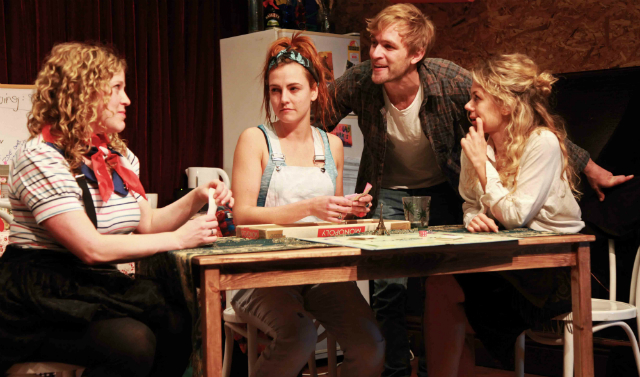
Image by Matthew Webb

Theatre review
This work is an experimentation in naturalist acting. The actors have absorbed Henrik Ibsen’s script and they present on stage a performance that is best described as muted. It is a young team of artists, and their lack of experience is apparent. Their portrayals might work with a camera capturing close ups for the screen, but within the conventions of a live show, communication between stage and audience proves challenging. Plot details are often missed, and the narrative becomes unclear.

Atmospherics, however, are handled well by director Finn Davis. The bleakness being conveyed is severe, and tragically beautiful. Music and sound design by Josie Gibson and Jack Frerer is sensitive and innovative. Kryssa Karavolas’ set design steals the show with its transformation of the usually unimpressive Studio B into something almost majestic in its vision. The backdrop is a Georgia O’Keeffe inspired mural that sits perfectly in the two-storey high construction, and provides a visually stunning element to the show’s conclusion.

Ibsen’s work is about concepts that endure as long as humankind exists. Ghosts is concerned with taboos, morality and our social constructs. It discusses sex from a context that has thankfully evolved over time, but the strength of the master’s writing does not wane. It does however, require maturity and wisdom to help its words speak to audiences of our contemporary cultures. There will never be a time when Ibsen becomes irrelevant, and every production that comes along should be greeted with support and enthusiasm.

www.sudsusyd.com

Review: Scenes From An Execution (Tooth And Sinew Theatre)

toothsinewVenue: Old Fitzroy Theatre (Woolloomooloo NSW), May 13 – 31, 2014
Playwright: Howard Barker
Director: Richard Hilliar
Actors: Lucy Miller, Jeremy Waters, Mark Lee, Katherine Shearer, Nicole Wineberg, Peter Maple, Brendan Miles, Lynden Jones
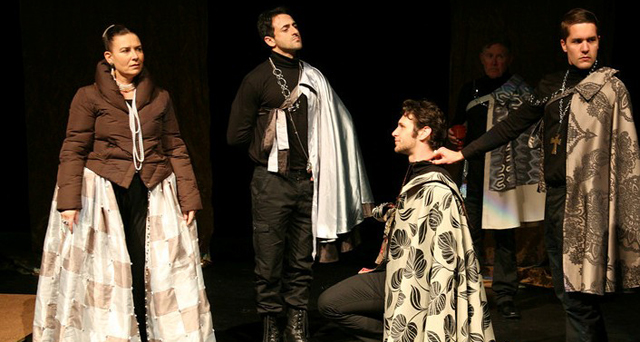
Image by Katy Green Loughrey

Theatre review
There are many pleasures to be found at the theatre but what we seek essentially, is to be fascinated by the unusual talents of live performers, and to satisfy the craving we have for stories that are engaging and meaningful. Howard Barker’s Scenes From An Execution is strangely hypnotic. His tale unfolds slowly, taking unconventional and sometimes uncomfortable diversions, but the promise of a substantial imminence is always palpable, and the conclusion is certainly gratifying. Barker’s writing is poetically beautiful, and his ideas are inspiringly radical. His varied themes include love, war, art, religion, politics and propaganda, covering with depth, many of the big questions that are as relevant today as they had been in Venice 1571, where the play is situated.

A remarkable feature of the work is its extraordinary protagonist Galactia, a painter of note, and a woman with a liberated and unorthodox lifestyle. Our own values are examined through her resolute belief in an artist’s responsibility to uphold truths, even in the face of great adversity and sacrifice. Barker’s heroine is powerful and awe-inspiring. She is a feminist ideal, and sadly, a manifestation that rarely figures in the narratives of our cultures. Galactia’s fearless determination and assertive wisdom is realised on the Sydney stage magnificently by actor Lucy Miller. Miller is convincing, compelling and electrifying. She approaches the character with raging imagination and delivers a performance completely arresting in its meticulousness and unpredictability. Even in scenes lit so dim we can barely see, Miller is riveting, and her creation is a woman on a pedestal that we all must aspire to.

Supporting Miller is an exceptional cast. It is a rare gathering (especially in independent theatre) with all actors displaying astounding talent and impressive experience. It is truly a joy to watch these artists work their magic, all performing with gusto as well as nuance, each carving out many memorable moments for themselves. Mark Lee as Urgentino is energetic and full of passion. Sharply ironic, and fabulously witty, Lee’s command of the script ensures that his scenes are consistently entertaining, and politically cutting. Jeremy Waters brings a complexity to his role of Carpeta that keeps us intrigued and enthralled. His love affair with Galactia is surprisingly dimensioned, and his depiction of an artist under the control of money and power is simultaneously funny and heartbreaking. Waters is an intense and intelligent actor, whose unmissable performance in the closing moments of Act 1 leaves us breathless.

Director Richard Hillier’s obvious talent is his thorough understanding of the craft of acting. He has created all the circumstances required for the cast to unleash their best upon us. Hillier’s sensitivity for spaces, whether mental, emotional or physical, allows him to facilitate all the action that happens between actors, and the connection between stage and audience. Hillier indulges in abstractions, but is careful to provide points of focus to always keep us reeled in. His affinity with the the play’s core message is a strong one, and the authentic clarity at which he voices it is full of flair, and indeed, admirable.

Death and taxes are said to be the only certainties in life. In Scenes From An Execution, a deconstruction of war and of our political leaders gives us an opportunity to gain insight into our part as mere mortals and pawns in a world of deceit and manipulation, rife with the glorification of needless deaths. Hogwash is ubiquitous but where great art exists, we find the eternal and the truth, and we rediscover the divine within.

www.facebook.com/toothandsinew

Review: Something To Be Done (Gabatwa Studios)

rsz_10259032_782336098466784_8926997888061039248_oVenue: TAP Gallery (Darlinghurst NSW), May 13 – Jun 1, 2014
Writer: Gabriel McCarthy
Performer: Gabriel McCarthy

Theatre review
Reminiscent of work by Buster Keaton, Charlie Chaplin and Rowan Atkinson, Gabriel McCarthy’s one-man show communicates without words, relying instead on the actor’s ability to create meaning with his body and face. The story is vague, but its themes are clear. McCarthy’s show is about innocence, mortality, love, and art. There is also a sense of burgeoning manhood being explored by the performer who discovers the universe around him, but within an independence that he manufactures, almost to stake his claim on a personal and self-determined identity.

The show is 75 minutes long, and while it does switch gears often and there is plenty of variety to prevent any hint of self-indulgence, its scenes are not always engaging. The format of the production is challenging, as it requires of its audience, a mode of watching that is acutely different from what is conventional and mainstream. It does what it wants, with admirable eccentricity and idiosyncrasy, but we need something more. Many great works have touched audiences without the use of words, and it is the artist’s responsibility to locate that point of connection.

Erin Harvey is stage manager, and does a splendid job with the minimal technical facilities at hand. The show looks and feels refined, with a set by Christie Kay Bennett that is basic but considered and restrained. The show’s innumerable sound cues are a key feature, and Harvey’s faultless execution is noteworthy. A thorough understanding of the show and its performer is necessary, and the chemistry between tech and talent for this production is beautifully harmonious.

McCarthy is a performer with great skill and presence. He is phenomenally agile and energetic, and his ability to convey concepts and to express intention is remarkable. There are many memorable moments of vigorous gesturing and lively leaping, but the actor is equally effective in significant pauses, unafraid of a more silent approach. There is a sincerity to the man that is endearing, but his story is less captivating. Even though it is not difficult to follow, it is too abstract. We want to connect, but it is too distant. The tale seems personal, but it is also shrouded, and maybe a little elusive with its message.

www.facebook.com/gabatwastudios

Review: Amanda (Old Monk Productions)

oldmonkVenue: TAP Gallery (Darlinghurst NSW), May 13 – 18, 2014
Playwright: Mark Langham
Director: Mark Langham
Actors: Amylea Griffin, Paul Armstrong, Elizabeth Macgregor

Theatre review
Amanda is a new play that asks questions the way an inquisitive small child would. Its persistent wonderment inspires thoughts and ideas that range from the familiar and enduring, to fresh and complex ones that we rarely encounter outside of the world of art. Mark Langham is a brave writer who dares to explore deep and dark recesses of the human condition, even when there is no guaranteed satisfaction or indeed, conclusion. Langham’s approach is philosophical, but his creativity for the stage is savvy and accomplished. Amanda is an intriguing work, with interesting characters that hold our attention. Their provocative lives are richly imagined, and thoroughly engaging.

The protagonist Amanda is a childlike woman, played by Amylea Griffin who brings a necessary gravity to a performance that is intense and energetic. It is noteworthy that the character is not portrayed with weakness even though her story is one of victimhood and injustice. Griffin’s sense of defiance is an important and beautiful ingredient to her work, but there is a lack of levity to her delivery that could have helped craft a more dimensioned characterisation. Paul Armstrong takes on a trio of personalities with good variation and conviction. The actor’s relaxed nature contrasts well with his co-players’ sense of severity, but is also able to inject power and dynamism when required. Elizabeth Macgregor’s characters are colourful and deliciously odd, but her interpretations tend to be fairly subdued. Although missing the opportunity to create something quite eccentric, Macgregor’s portrayals are effective, and sensitive to the plot’s progression.

Langham’s direction does not shy away from expressive dramatics that create a sumptuous texture in the moody script, but the performers’ inconsistent group chemistry is an issue. Virtually every scene involves the actors in collaboration, but they are not always in tune. Early scenes seem to work better, but as complexities accrue, the work starts to lose its persuasiveness. The plot evolves into greater abstraction, with actors seeming to proffer incongruous perspectives of the text, and decipherment becomes difficult.

Amanda might be challenging, but it is not without pleasures. The play is full of intellectual stimulants, and the writer’s lines are pointedly witty. Directing one’s own script is a tall order. Langham tends to place too much trust on the autonomy of his words, but he does an admirable job of materialising his concepts and presenting a show that communicates on emotional and cerebral levels.

www.oldmonkproductions.com.au

Review: Trainspotting (Black Box Theatre)

trainspottingVenue: King Street Theatre (Newtown NSW), May 8 – 24, 2014
Playwright: Harry Gibson (based on the novel by Irvine Welsh)
Director: Luke Berman
Actors: Damien Carr, Taylor Beadle-Williams, Brendon Taylor, Leigh Scully

Theatre review
Irvine Welsh’s Trainspotting is one of the defining cultural landmarks of the 1990s. From novel, to play, and eventually to the blockbusting hit film, its immense popularity and pervasiveness in landscapes the world over is testament not only to the quality of work by artists involved, but also to the way its story has resonated and subsequently appropriated as a sign of the times.

Black Box Theatre’s staging of the 1994 Harry Gibson adaptation seems, on the surface, to be an exercise in nostalgia. It is entirely too predictable to have a group of Gen-Y enthusiasts take on a cult classic that pushes the boundaries of decency, but what they have created is a work that is surprisingly relevant, and very well crafted indeed. Luke Berman’s direction is exciting, colourful and crisp. Scenes move along quickly but clearly, as though injected with adrenaline. The action is heightened and dynamic, but sentiments are always elucidated. Berman has a sensitivity that ensures the text’s many controversial elements are handled circumspectly, with just the right amount of restraint that keeps bad taste from turning unacceptable.

Berman’s cast is truly impressive. They are a fearless and captivating foursome, whose love for the art of performance is absolutely evident. By taking on multiple roles, they all receive significant stage time and are able to showcase creative versatility, but we are not always able to identify the characters being played, although it must be said, that this does not seem to alter the enjoyment of the work. Damien Carr plays Mark, the protagonist and narrator of the piece. The duality of simultaneously narrating the story and performing the scenes being described is fascinating, and Carr does a stellar job of it. He is on stage for virtually the entire duration, and is able to provide a consistently focused energy that keeps us engaged and involved. Taylor Beadle-Williams is magnificent in her roles. There is often a baroque exuberance in her work that articulates perfectly the aesthetic of Welsh’s hallucinatory world, but at the core of her performance is a fixation on truth, which gives all her characters a beautiful empathy that is irresistible.

Drug abuse and the “junkie” subculture is sadly, not a relic of the past. Trainspotting‘s articulation of that underworld satisfies our curiosity, telling us about the fringe dwellers who reside on our peripheries. We are reminded that the world is a shared one, and our beliefs about life are often fundamentally the same. Even when our values diverge, and our judgemental minds divide us, it is our common humanity that allows us to look into the experience of others, drawing parallels where they exist, and discovering through these diversities what is enduring, and what actually matters.

www.blackboxtheatre.org

Review: Arthur’s Place (TAP Gallery)

arthursplace1Venue: TAP Gallery (Darlinghurst NSW), May 7 – 11, 2014
Playwright: Ben Eadie
Director: Ruth Fingret
Actors: Dominic Witkop, Aaron Nilan, Matt Jacobsen, Steve Vincent, Timothy Parsons, Jamie Merendino, Cait Burley

Theatre review
The young Australian man has in recent times become a subject of interest in media and social discourse. Characterised as violent, drunk and disorderly, he is also often considered to be of white and middle class origins. Ben Eadie’s script is concerned with this particular group of “lost souls”. Six characters are created to represent an aimless but troubled segment of our society, each with a distinctive personality type but all are purposeless except for a preoccupation with drugs and alcohol.

Eadie’s efforts at painting a picture of detachment is effective. He gives a clear impression of characters unable to engage meaningfully, but although we are able to relate them with some familiarity to our lived communities, they struggle to evoke empathy or arouse much interest. The fact that they are privileged enough to live a lifestyle that includes no work but a lot of debauchery, prevents us from feeling for them or for dramatic tension to build sufficiently. Not very much seems to be at risk. Some attention is paid on sexual abuse in a couple of the boys’ histories, but those scenes feel like afterthoughts, even if they are clearly well-intentioned.

The pace of the show is exceedingly languid. Much of the acting seems to be based in “real time”, which often comes across too slow for the audience. Dominic Witkop’s performance is slightly too internalised, but his focus and commitment is strong. His character Lance is by far the most convincing one, and the care and measuredness at which he attacks his part is laudable, but introducing a greater sense of vigour would allow him to connect better. Arthur is played by Aaron Nilan who lacks the enigmatic quality required by the script, but his less restrained performance in the second act adds much needed energy and animation to the stage.

Unlike its characters, Arthur’s Place has a purpose. It discusses our social problems, which is one of the most important functions of theatre, but while it tries to push the envelope with its exaggerated use of profanity, more conviction is needed to advance its central message. We do not expect plays to give us solutions, but when art is able to make us care about our worlds, it becomes indispensable.

www.tapgallery.org.au

Review: Thom Pain – Based On Nothing (Sydney Independent Theatre Company)

Auditorium_American-issue_TVenue: Old Fitzroy Theatre (Woolloomooloo NSW), May 5 – 10, 2014
Playwright: Will Eno
Director: Julie Baz
Actor: David Jeffrey

Theatre review (originally published at auditoriummag.com)
Thom Pain (Based On Nothing) is about fear, loss and loneliness. Will Eno depicts a state of sadness that is genuine in its erratic complexity, but also joyful and humorous in its profound observations. Thom Pain is a man who has experienced disappointments, and he knows what betrayal and injustice feels like. Eno’s script expresses the process that one needs to go through in order to emerge renewed and strengthened, but Pain has not yet found that enlightenment.

His struggle is the flesh and blood of this work, and a representation of a condition of being that is too easily forgotten. The human capacity to leave pain behind after it subsides, makes this a valuable piece of rumination. We get over things and move on, but Pain’s very presence demonstrates some of the intricacies of our coping mechanisms, and watching them in action is fascinating. The writing has a rambling incoherence that seems theatrical, but also poignantly realistic. We are rarely clear of mind at troubled times, and Eno utilises that natural inability to make sense of things, to great dramatic effect. Everything is strange yet familiar. The audience observes the peculiarity of Pain’s behaviour, while feeling a close affinity to the character.

Thom Pain (Based On Nothing) is a work of art that cuts deeply and meaningfully, revealing an image of our own humanity through a mirror that is rarely uncovered. It is also a work of excellent entertainment, with performer David Jeffrey providing the one-man show considerable pathos and a very charming whimsy. In spite of his considerable actorly talents, Jeffrey brings a quality of diffidence to the stage that gives his character an authenticity that we not only warm to, but almost feel protective towards. The text’s unconventional structure risks alienating its audience, but we care for the man Jeffrey creates, and he makes us sit and listen intently.

He is very funny, and very wry. He wallows, but he is also self-effacing. He plays with our emotions, taking them on an unpredictable and haphazard journey, to all the spaces we messily label “mixed emotions”. Jeffrey’s achievement however, goes further than succeeding in making us laugh and cry. The actor’s portrayal of melancholy is so charged with vulnerability, it reminds us of feelings we bury deep within. The same ones we can sense in our bodies almost everyday but are rarely allowed to surface. Jeffrey makes that pain emerge with a quiet wonder, and in the safety of the theatre, we encounter the closest friend of all, our own broken hearts.

Melancholia is the overriding tone, and perhaps theme, of the show. Director Julie Baz creates an atmosphere thick with moody pensiveness, and it is seductive. The evocative and beautiful underscoring music is a selection of pieces from Sergey Akhunov’s Big Elegy To John Cage, which contribute greatly to the production’s introspective texture. Melancholy visits us all and people relate to it in different ways, ranging from repulsion to pleasure. Accordingly, the production’s appeal would vary according to tastes, but the liberal amount of comedy intelligently added to Baz’s weighty microcosm, ensures that the work speaks to many.

It is often too easy to overindulge in lengthy well-written passages, putting too much trust on the words to work their own magic. Baz is conscious of the pitfalls of extended monologues and wisely encourages the actor to embellish with movement, both exaggerated and subtle, resulting in a performance that is energetic and optically dynamic. The use of space is similarly active, but stage design is overly minimal due to Eno’s specifications. He believes that “there is a humility about theatre and life in the script; it should be there in the production, too.” This is a persuasive argument, but it is also true that the script could benefit from greater visual flourish and imagination. Pain talks about magic, and there are moments where our eyes wish for something slightly fantastical to materialise.

The view inside Pain’s mind is bittersweet, truthful, and scarred, and therefore beautiful. His story is hopeful, yet he seems oblivious to the good around him, and inside of himself. Blinded by fear and dejection, he is a whirling dervish in search of salvation. For us, his magnificent dance is a spiritual lift, and we desire only the best for him, in the trust that a new dawn is always on the approach.

www.sitco.net.au

Review: Event For A Stage (Carriageworks)

rsz_10296577_10154052802420464_5556522318690470678_nVenue: Carriageworks (Eveleigh NSW), May 1 – 4, 2014
Artist: Tacita Dean
Actor: Stephen Dillane

Theatre review
English visual artist Tacita Dean’s Event For A Stage is her first work in the “live theatre” medium. Unsurprisingly, the piece is not concerned with theatrical conventions, and it certainly places no interest on the fabrication of a narrative. The rectangular stage is surrounded by audiences on all 4 sides, and Dean, the artist sits front row with us, in a darkened corner. A big chalk circle is drawn on the stage, with two people operating a film camera within the circle, and another two people outside of it. A microphone is suspended from the fly bars into the middle of the circle. For the duration of the 45-minute work, the actor Stephen Dillane walks around the stage, usually following the chalk line, but uses regular disruptions to the circular stroll to create a sense of action or to emphasise certain points in his monologue.

Over the course of the performance, Dillane walks up to Dean and obtains, with visible resentment, sheets of theatre and performance theory, which he reads aloud, effectively using them as scripts. The writing is insightful and fascinating, and Dillane’s interpretation of them is thoroughly compelling. In addition to Dean’s sheets of paper, Dillane also gives us coherent and interesting accounts of conversations he has had with the artist, or about events and people from his personal life. Further, he reads sections from a slim novel he keeps in his pocket, and performs extracts from Shakespeare’s The Tempest. The work however, is not about stories. Its main crux deals with the nature of theatre and performance, the sociology of spaces in a theatrical venue, and the relational dynamics between artists and audiences.

There are layers upon layers of ideas that are touched upon in this deconstruction of performative spaces. Things get complex, but Dillane’s supreme ability to connect, keeps us from confusion or perplexity. One of the main themes discussed relates to contrivances that arise from the convergence of creators and spectators. The presence of film cameras helps illustrate the point, while simultaneously adding to the multiplicity of the artist’s concepts in its obvious extension into other televised or filmic media. Dillane also talks about the danger that sits below the surface of theatrical artifices, and his close proximity from us is a constant threat to our presumption of security, with the cameras amplifying the stakes at hand.

Event For A Stage approaches theatre with concepts and conventions from the visual art world, in a collision of forms that is fresh and exciting. It seeks not to emulate familiar precedents, but like all great works of theatre, it enthrals, intrigues and informs, even if its subject matter (its self) is a little haughty.
 

www.tacitadean.net

www.carriageworks.com.au