Review: Oleanna (Sydney Theatre School / Actors Not Feelers)

Oleanna 4 MEDVenue: Sydney Theatre School (Chippendale NSW), Jun 25 – Jul 6, 2014
Writer: David Mamet
Director: Jerome Pride
Cast: Grace O’Connell, Jerome Pride

Theatre review
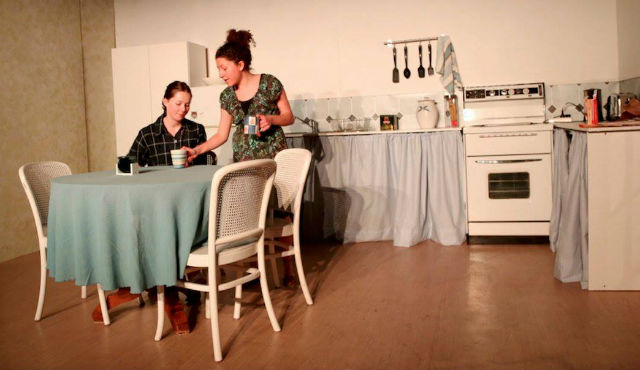
David Mamet’s script is powerful, complex and intellectual. It is an anarchic work about anarchy. It makes its point by shattering conventional paradigms of discourse, and uses theatre to discuss politics in a way that would be challenging for any audience. There are many ways that texts can be interpreted, but Mamet’s Oleanna is resilient, with a message that is unyielding. There might be room for some ambivalence in the plot, but what it wishes to say is clear. Anyone taking it on must capitulate to its structure in order for the characters to make sense, and for dramatics to take effect, or risk a show that is unconvincing and nonsensical.

Jerome Pride’s direction handles the play’s concepts carefully. Reverence is paid to the writing, and the results are manifestly impressive. Controversial and sophisticated ideas are expressed with surprising clarity. Daring propositions avoid the curse of sounding like highfalutin abstraction, and are made credible and real. Both actors enthrall with interesting and dimensioned portrayals. The pace and tone of dialogue are perfectly tuned, so that we are gripped from beginning to end. Design elements however, are neglected. There is no need for very much embellishment but the set and costumes are overly basic. The actors’ work would benefit with a more defined sense of space, especially with the cast’s eagerness for movement.

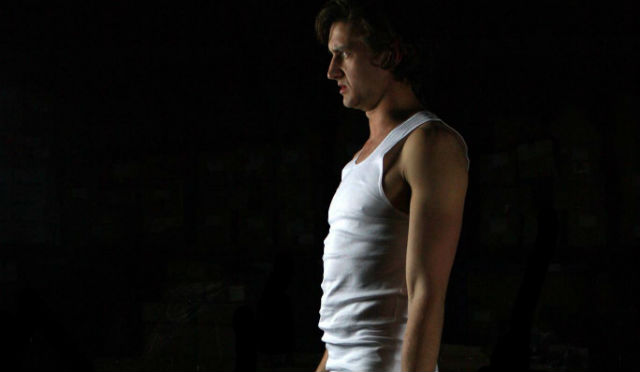
John is played by Pride, who invests in his role, an appealing coupling of impulsiveness and thoughtfulness. We can see him thinking, but we also feel the instinctual timing that he trusts to rely on. The story’s characters are flawed, and we need to be repulsed by them as much as we relate to them but Pride’s creation is endearing, which poses a problem for the production. Perhaps better wardrobe choices could play a part in helping to create a less affable impression.

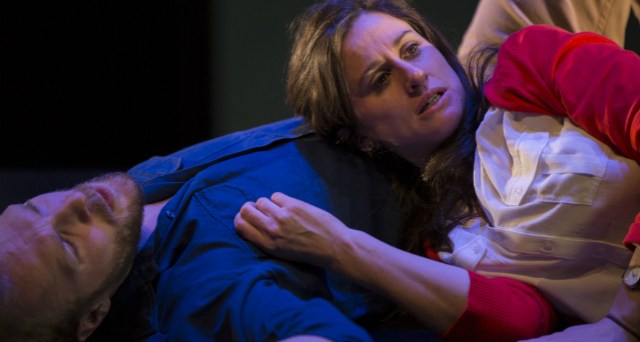
John’s adversary is Carol, whose development over the course of the play is startling. Grace O’Connell’s performance is not entirely convincing. Some of her creative choices lack authenticity, and we come away slightly confused with the character’s evolution. Nevertheless, O’Connell comes to life after the first act. Her energy and conviction is spellbinding. There is a lot to enjoy in this actor’s work, which is robust yet heavily nuanced.

Mamet’s story gives us important and difficult questions, but it is debatable whether answers are to be found therein. Oleanna deals with the injustices in our lives. It talks about systematic oppression and victimhood, but more significantly it talks about the prospect of dismantling those systems and imagines its alternative. The show’s title refers to a failed utopian state. We always want something better, and in some cases, we know exactly what needs to be improved but the question must always be asked about how we get there. Removing the status quo requires a replacement, but it is human nature that seduces and shapes every new status quo into tomorrow’s conundrum.

www.sydneytheatreschool.com

Review: Richard III (Ensemble Theatre)

ensembletheatreVenue: Ensemble Theatre (Kirribilli NSW), Jun 24 – Jul 19, 2014.
Also playing at Riverside Theatres (Parramatta NSW). 22 July – 26 July.
Playwright: William Shakespeare
Director: Mark Kilmurry
Actors: Danielle Carter, Patrick Dickson, Matt Edgerton, Mark Kilmurry, Amy Mathews, Toni Scanlan

Theatre review
Tales about Machiavellian ambition are timeless. The darkest parts of human nature often relate to our ability to compromise morality in order to satisfy the urges of greed and vanity. Political climates seem to evolve, but shades of betrayal and deceit are persistent. As long as the need for kings and leaders remain, the threat of malice at the highest rungs will always be present.

Mark Kilmurry’s direction of Richard III is colourfully creative, but faithful. His playful style ensures that we are consistently involved with his stage (even when the Shakespearean language becomes challenging) but his artistic liberties are careful to keep original intentions intact. Kilmurry’s creation is a rich theatrical experience that explores the collaborative nature of the art form thoroughly. Cast and creatives are allowed freedom of expression, which in turn encourages a level of audience engagement that is sophisticated, intelligent and surprisingly enjoyable. As leading man, Kilmurry is mesmerising, delightful and appropriately repulsive. He invites us to share his love of the text, and everything within it that is genius and delicious. It is a supremely confident performance by a skilled showman who knows how to steer a vehicle, and we are his trusting happy passengers.

Danielle Carter’s portrayal of Queen Elizabeth is enigmatic and very strong. Her impressive presence is utilised effectively, and the solid stillness in her performance contrasts and stands out from a busy production. Carter’s scenes of confrontation with Kilmurry are especially dynamic. The chemistry and timing between both actors are phenomenal, forging moments of gold for fans of high drama. Matt Edgerton plays a total of five characters. This is a tall order, and one of the show’s few misjudged decisions, but Edgerton’s energy and focus are entrancing. This is an adventurous cast with a passion for their work that has elevated a classic play into an event brimming with charm, wit and poignancy. Amy Mathews closes the show with a soliloquy that is heartfelt and starkly genuine, reminding us of the gravity in Richard III‘s story and evils that prevail in our world.

The production’s design and technical aspects are equally accomplished. Set, props and costumes are subtle but evocative, all contributing to the small space an aesthetic that is beautifully au courant. Nicholas Higgins’ lighting and Daryl Wallis’ sound design are sensitively considered, never drawing undue attention to themselves, but consistently adding to the action on stage. Stage manager Rebecca Poulter should also take a bow for the incredibly smooth running of what must be a complicated backstage and control booth, to which we are completely impervious.

Kilmurry is a leader of fabulous talent. His show is brilliantly put together, and everyone he enlists is showcased marvelously. Shakespeare’s work is probably not very much about democracy, but drawing parallels with our own governmental structures is irresistible. It provokes questions about secrecy in high offices, and the trust we lay upon the people we elect. It prompts us to remember the value of irreverence that is so much a part of our national identity, and to cherish our ability in this country to question authority. We must not forget that the bastards do need to be kept honest.

www.ensemble.com.au

Review: My Name Is Truda Vitz (Somersault Theatre Company)

TRUDA13Venue: TAP Gallery (Darlinghurst NSW), Jun 25 – Jul 6, 2014
Writer: Olivia Satchell
Director: Pierce Wilcox
Cast: Olivia Satchell
Image by Julia Robertson

Theatre review (of preview performance)
Olivia Satchell’s work is a personal journey of discovery and invention. It is concerned with family history and Satchell’s link with her ancestral past. Truda Vitz is Satchell’s grandmother, and this show obsessively explores her life from memory, investigation, and rigorous fantasy. It becomes clear that lives today can be hollow without acknowledgment of what had come before. Satchell finds meaning and establishes her own identity by thinking about blood relations. She tries to see what her grandmother might have seen, and feel what would have been felt. From an unexplained longing, she makes a connection with the dead in her writing, acting, and through the music of her cello.

Satchell’s performance is quiet but it contains passion. There is not great sadness or elation, but we see the manifestations of a meditative process that is deeply truthful even though a sense of fiction is always present. As an actor, Satchell’s strongest quality is her presence and confident engagement with her audience. The weakest quality of the production is the overly languid tone that persists from beginning to end. Although it only goes for an hour, one cannot help but wish for greater fluctuations in mood and emotion. The show is sincere and thoroughly authentic, but it grows cool where more power could be fabricated.

The sound of Satchell’s cello is sublime. In the small venue, subtleties are easily magnified, and the musical instrument’s every nuance becomes sensationally beautiful. Widely described as being able to produce sounds that are closest to the human voice, it adds a dimension of dialogue to the one woman play. At certain times, it allows us to feel like Satchell is speaking with herself, and at others it represents a voice from the afterworld. The cello’s resonances are mighty, and its incorporation into the fabric of the work shows good creativity and impressive sensitivity.

Life without romance can prove fruitless, but romance itself often seems absurd. My Name Is Truda Vitz is more sweet than bitter; it is lighter than it is dark. Its melancholy is gentle and mild, perhaps an accurate reflection of the artist’s inspiration and inner world. This is theatre that embraces simplicity, in a time when simplicity might be at its loneliest.

www.somersaulttheatre.com

Review: O.C. Diva (Hayes Theatre Co)

hilarycole1Venue: Hayes Theatre Co (Potts Point NSW), Jun 15 – 29, 2014
Directors: Hilary Cole, Jay James-Moody
Musical Director: Steven Kreamer
Cast: Hilary Cole

Theatre review
Hilary Cole’s cabaret show takes on the familiar structure of a singer with a microphone, and her musical director on piano. The format works well for Cole, whose voice is an absolute delight, and her ability to convey clear stories and emotions through song demonstrates real talent. As is customary, the song list is composed mostly of familiar standards, but unexpected twists are introduced for added dimension as well as comic effect. Blondie’s 1979 hit “One Way Or Another” gets a surprising mash up treatment with Andrew Lloyd Webber’s “Phanton Of The Opera”, delivering laughs as well as an impressive opportunity to showcase Cole’s musical flair and her musical director Steven Kreamer’s prowess as an accompanist. There is also a one-woman “duet” with Cole being joined by her own impersonation of Bernadette Peters, that illustrates her admiration for the Broadway superstar, and reveals an unexpected versatility.

Direction of Cole’s performance is effective in the comic sections. Her punchlines are subtle but defined, and the jokes are well written. The young performer’s level of confidence is still in teething stages, but she manages to connect well in the venue’s intimate setting. Cole does fidget and stroll around excessively, and her eyes often withdraw into an introspective downward glance, but her passion for the stage is vibrant and infectious. There is a significant portion of the show that looks back at Cole’s experience with obsessive compulsive disorder. The performance becomes vulnerable and truthful, but also overly dark and depressing. Balance is lost here, and one is reminded of the work of Sandra Bernhard and Liza Minnelli where melancholic humour is retained when dealing with bleaker subject matter. Sadness does have a place in the cabaret, but a greater sense of show needs to be applied.

Cole is a beautiful performer, both physically and vocally. She is also a quirky personality, which justifies the choice for a show that is slightly unorthodox in tone. Ultimately, O.C. Diva‘s most memorable moments involve Cole’s singing, which proves to be much closer to perfection than she believes it to be. After divulging her anxieties about personal deficiencies, the show ends at a point of catharsis where she confesses the need for trust. It is evident to all in the audience that she can certainly rely on her talents to take her very far indeed.

www.hayestheatre.com.au

Review: Trafficked (Darling Quarter Theatre)

traffickedVenue: Darling Quarter Theatre (Darling Harbour NSW), Jun 13 – 15, 2014
Playwright: Carli Carey
Director: Carli Carey
Cast: Sorcha Harrop, Amy Fisher, Michael Smith, Jace Pickard, Isaac Reefman

Theatre review
The play begins with television news reports from a commercial station about the subject of human trafficking and modern slavery. As is often the case with commercial news, the stories are sensationalist, and the network’s watermarked logo exists almost as a reminder to take everything we see with a grain of salt. Of course, its themes are genuine, but we have learned as a society to remain sceptical about the things we are told, and we demand concrete evidence before outrageous claims can be believed.

Trafficked tells horrific tales of young Australians in captivity and enslaved. They look and sound like any young adult we know, and are even of Caucasian appearance. The play subjects them to incredible cruelty, and tells their stories with earnest fervour. The characters are intertwined and build relationships with each other, but everything they say is addressed directly to the audience. It feels like documentary, but there is absolutely no indication that their words are not entirely fiction. Their stories are unbelievable, and we struggle to be convinced by anyone.

Performances are uneven, but Michael Smith and Sorcha Harrop work hard to make their parts meaningful. They have good focus, and show excellent commitment in tricky moments of melodrama. Smith has a good presence that makes him the most memorable element of the production. Harrop succeeds in encouraging some empathy, and impresses with the stamina she displays for her arduous role.

Technical aspects are very lacking. Light and sound design are poorly judged, and execution seems to go awry from start to end. It is obvious that there is a serious lack of experience in the crew, and it is unfortunate that a more accomplished production manager had not been assigned to assist and nourish this young crew.

Every project in the arts is an opportunity to grow. Director Carli Carey and her team have not created a masterpiece on this occasion, but they have succeeded in turning talk into action. They have put money where their mouths are, and are therefore one step ahead of those who dream but do nothing.

www.traffickedproject.com

Review: The Boat People (Rock Surfers Theatre Company / The Hayloft Project)

hayloftVenue: Bondi Pavilion Theatre (Bondi NSW), May 29 – Jun 21, 2014
Playwright: Benedict Hardie
Director: Benedict Hardie
Actors: Susie Youssef / William Erimya / Emily Rose Brennan / Luke Joseph Ryan
Image by Zakarij Kaczmarek

Theatre review
One of the exciting facets of theatre is the way it is able to deal with social issues. The stage provides a membrane of safety, where artists can venture into dangerous territory, and say things that are controversial, or even, fictional. In this unique space of expression, the audience is able to examine ideas with their own free will, and perhaps have opinions swayed, or maybe come to new realisations about the world.

Benedict Hardie’s The Boat People is a script that we desperately need. It tackles subjects that are prominent in news and politics, but approaches it from an artistic perspective. What results is a discussion about themes that we care passionately about, but unpacked in an unconventional way. Its story and characters present to us a refreshing way at looking at Australia’s obsession with asylum seekers and our ever-changing stance on immigration policies. It is neither journalistic reportage nor realistic documentary. It is imaginative, and in its “what ifs”, we are able to observe and judge our personal responses to some of the ideas brought up by the work. Hardie’s writing is sardonic and sophisticated. There are surprises everywhere, and its characters connect deeply with the way we look at ourselves today. Hardie’s direction however, is slightly lacking. The pace of the piece misses a certain fluidity. There are many gear changes that occur from constant shifts in comic tone, which is conceptually exciting, but experientially, a little awkward. Our emotions and attention are prevented from becoming more deeply invested, which might be intellectually interesting, but in reality, quite frustrating. We like the characters and want to feel more for them.

Susie Youssef’s performance as Sarah is extraordinarily centred and strong. Playing a character that is unable to anchor herself morally, Youssef is surprisingly authentic. She presents a truth that we relate to, one that appeals to our humanity; the part of us that lives in shades of grey, and where life forces us to move within these shades, refusing to let us hold on to black or white regardless of our desire for certainty and convenient truths. The level of conviction in Youssef’s work is impressive. The confidence she brings to a role that is characterised by its power and wealth is very persuasive indeed.

Karl is played by William Erimya, who is memorable for his immense affability. Karl is absolutely adorable, and Erimya’s performance is hilarious, but his final scene attempts to shock, only to leave us bewildered and unconvinced. Melanie is another role who goes through a confusing transition, but Emily Rose Brennan’s performance is engaging and enjoyable. Brennan’s work is precise, with an exquisite polish, and she brings an intense energy that is deceptively subtle. Luke Joseph Ryan is the live wire of the group. He is outlandish, buoyant and effervescent, giving us a lot of silliness that contrasts effectively with the gravity of the work. He does seem to be slightly detached from the ensemble who are comparatively subdued, but we do catch glimpses of great chemistry when situations are conducive.

The production is designed intelligently and efficiently. Michael Hankin’s set is simple but arresting. His construction of “windows” is a stroke of genius. Sound designer and composer Benny Davis makes us laugh with pop music made “ethnic”. Costumes by Elizabeth Gadsby helps tell the story well, and her work for Karl and Melanie are particularly attractive but Sarah’s stature requires further finesse.

The complexity of The Boat People is unapologetic and essential. Hardie’s writing resists simplification, so we are forced to grapple with the difficulty of issues at hand. Art is not always about truths, but this show hits the nail on the head. The accuracy at which it portrays contemporary Australian beliefs is staggering, and the results are not always easy to digest. Theatre must not always be a walk in the park, and on this occasion, the ride is bumpy, for good and bad.

www.rocksurfers.org | www.hayloftproject.com

Review: Winter (Persophia / The Old 505 Theatre)

winter2Venue: Old 505 Theatre (Surry Hills NSW), Jun 7 – 22, 2014
Playwright: Jon Fosse
Director: Jonathan Wald
Cast: Susie Lindeman, Berynn Schwerdt

Theatre review
Extramarital affairs remain a taboo subject in the twenty-first century. Marriage is still considered sanctimonious, and of course betrayal in any relationship will never be greeted with nonchalance. Taboos are by nature difficult to discuss, and language often escapes those who transgress. When one is acting against better judgement, explanations struggle to find logic, and words fail. In the space of impulse and emotion, expression is not always best achieved through speech.

Jon Fosse’s Winter demonstrates those inadequacies in the theatre, with a script that uses words to propel action, and to evoke sentiments, but not to describe motives or to divulge feelings. The nameless characters, a woman and a man, speak in incomplete sentences, and with repetitive words that reveal little. Under Jonathan Wald’s direction, the play is surprisingly digestible. A clear sense of narrative is achieved in spite of the text’s poetic style. Assisted by Stephen Colyer’s expertise as a movement choreographer and an accomplished design team, the dynamic and inventive use of space creates an experience that is visually exciting and charged with sensuality.

Susie Lindeman’s performance is suitably quirky, creating a refreshing character with an intriguing allure. Qualities of desperation and desire are beautifully conveyed. Lindeman introduces a vulnerability that gives the story complexity, and keeps us engaged. Berynn Schwerdt’s presence is genuine and weighty. His style is minimal but effective, which adds an air of sophistication to the production. The actor seeks to build meaning into his character’s silences, with quite powerful results.

Winter makes us see and hear from an alternate perspective. It experiments with the way meanings are formed from all that occurs on stage. It is concerned with convention, and the lack of it, in relation to how our senses and minds function. This is not an emotional work, but it does not leave you cold. It is more about the nature of art than it is about relationships and illicit affairs, and fortunately, art can sometimes be more seductive than the prospect of a secret rendezvous in a fancy hotel room.

www.venue505.com/theatre

Review: Brothers Wreck (Belvoir St Theatre)

belvoir

Venue: Belvoir St Theatre (Surry Hills NSW), May 24 – Jun 22, 2014
Playwright: Jada Alberts
Director: Leah Purcell
Actors: Cramer Cain, Lisa Flanagan, Rarriwuy Hick, Hunter Page-Lochard, Bjorn Stewart
Image by Brett Boardman

Theatre review
Jada Alberts’ play is about family, poverty and depression. It is also a coming-of-age story about masculinity in Australia’s Northern Territory. Alberts’ characters are lively and refreshing, with a vernacular that is rarely heard on our stages, yet it accurately reflects the way many of us speak in daily lives. The play has a charming realism. It makes the familiar seem fascinating, and regular people become interesting.

Lisa Flanagan plays Petra, a vibrant woman of substance. Flanagan’s presence is immediate and robust, and she plays her role with great precision and versatility. Her sharply confident comic timing introduces an excellent levity, and her tears leave a lasting impression. The clear highlight of the show however, is Hunter Page-Lochard’s performance as lead character Ruben. Ruben is an underprivileged young man receiving psychotherapy treatment after becoming embroiled in a traumatic event. Unable to acknowledge and verbalise his emotions, Ruben’s grief manifests in destructive behaviour, resulting in disharmony at home and discord with local authorities. Page-Lochard inhabits his character to astonishing authenticity. His use of voice, movement and facial expressions present a level of believability that is deeply impressive, and powerfully captivating . There is also a sense of drama and tension in his work that demonstrate a natural propensity for the actor to entertain and connect. Page-Lochard is interested in portraying something truthful, but is also mindful of showmanship. To find that fabulous combination in a young indigenous actor is incredibly exciting.

Direction by Leah Purcell places emphasis on the quality of performances. There is an obvious purity and sincerity in the actors’ work, and the ensemble chemistry provides a beautiful closeness to the family being depicted on stage. Purcell, like Alberts, sensitively crafts an effective realism, but the play lacks a certain theatricality to elevate it from our everyday mundanity. The script requires greater tension and suspense, and both director and playwright could experiment with more imaginative devices to engage us more creatively. A great deal of depth is established in the play’s characters and relationships, but a more adventurous approach to telling their stories would give them more dimension and dynamism.

It is important that stories like Brothers Wreck are told. We need to learn about the underclasses and they must always be given a platform to represent their perspectives, and to develop their artistry. Young men like Ruben are damaged not by nature, but by our sociopolitical dysfunctions. It is a most pressing priority for our nation, that their voices be found, and be emboldened.

www.belvoir.com.au

Review: Mojo (Sydney Theatre Company)

mojoVenue: Wharf 1 Sydney Theatre Company (Walsh Bay NSW), May 17 – Jul 5, 2014
Playwright: Jez Butterworth
Director: Iain Sinclair
Cast: Tony Martin, Lindsay Farris, Eamon Farren, Ben O’Toole, Josh McConville
Images by Brett Boardman

Theatre review (originally published at auditoriummag.com)
When boys grow up and begin to find their feet in the adult world as men of stature, the acquisition of masculinity often becomes critically important. The characters in Jez Butterworth’s Mojo seem to spend all their waking moments satisfying that overwhelming and insatiable need to be seen and treated as men of worth, and in the London underground gangland of the late 1950s, this involves unthinkable violence, and outrageous criminality. Butterworth’s daring and extravagantly brutal 1995 script illustrates a world of sex, drugs and rock and roll, where sons are raped, fathers are murdered, and honour is maleficently displaced.

Butterworth’s work starts up in high gear. He gets to the mayhem quickly without setting up thorough introductions for its story. There is a disorientation that occurs in the beginning, and the viewer is required to be alert, in order to decipher manic events while keeping up with the fantastically rich dialogue. Iain Sinclair’s direction in the initial scenes emphasises speed and energy, which can be a challenge for the plot, but a hyper-reality is firmly established for the play’s time and space. We are transported to a past that fits our imagination in part, but also controversial. The play’s rampant drug taking and extreme profanity is a far cry from the innocence of Grease, and the sophistication of Orson Welles’ Touch Of Evil. Sinclair’s work owes more to David Lynch’s 1986 masterpiece Blue Velvet in its handling of ultraviolence and surreal personalities. An air of menace sets in quickly and the pressure it exerts is unrelenting. The production has a magnetic quality in spite of its obscure otherness. It plays like a riddle, glutted with suspense and eccentricity, and we are seduced at every step, desperate to peek around every impending corner.

Indeed, the production succeeds as a piece of narrative-driven entertainment. It is engrossing, amusing and thrilling, with a good amount of shock value thrown in for a sense of gangster authenticity that also gives the show a cool edge. Its themes are not immediately evident, but they resonate afterward. The show does not ask questions directly, but it certainly encourages us to question what had been seen. Sinclair might be comfortable with dramatics that strike like a sledgehammer, but his ability to probe our conscience about bigger issues is as accomplished as it is subtle.

Also displaying excellence is Sinclair’s design team. Visual aspects, including lighting, costumes and sets are adventurously creative and intelligent. Nicholas Rayment’s lights are exhaustively explored, fulfilling functional and aesthetic requirements equally brilliantly. There are moments of beauty that look to be inspired by film noir, and also memorable incidences of dread that are as sinister as a dank lane way in any cosmopolitan city at 3am. Pip Runciman’s set design ingeniously creates spaces out of the usually nondescript Wharf Theatre stage. Levels and doorways are introduced to great effect, and the representation of a nightclub that is attractive in front, and dilapidated behind, is efficiently managed.

Percussionist Alon Ilsar’s work is perhaps the most inventive. He provides accompaniment for most of the scenes, underscoring action by amplifying mood and manufacturing tension. Ilsar’s background sounds are noticeable but not intrusive. When it does come to the fore, it is in the style of experimental jazz, which adds considerable sophistication to the production.

Chemistry in the cast is strong, and mesmerising. The actors are perfectly in tune, and together, they present a microcosm that we find believable in spite of its irrationality, and irresistible even though it is deeply repulsive. Josh McConville is comically frantic as the amphetamine fuelled Potts. His consistent buoyancy gives the play a propelling energy, and prevents the darker sections from becoming too melancholic. There is an enjoyable vibrancy to his performance that keeps an important sense of youth and juvenility in the story. Together with Ben O’Toole’s slightly more innocent Sweet, they portray a couple of young men keen to prove themselves, and to make a mark in their sordid world. Lindsay Farris is enigmatic as Baby, a deranged personality who is central to the play’s interest in maturity and manhood. Farris takes the opportunity to depict his unorthodox character with a liberal measure of offbeat artistic choices, and carves out a fascinating performance that is simultaneously alluring and poignant.

The young men in Mojo are in a state of confusion. We see them exercise the impulse to impress, to emulate, and to succeed, but their role models are severely impaired. Masculinity is highly valued, and in many of our lives, it is through acquiring masculinity that men achieve social acceptance and establish status. The definition of masculinity is then a matter of great concern. Greed, violence, destruction, deception, betrayal and criminality are all inextricably linked with notions of success and fulfillment in Mojo. It is a bleak picture painted of the past, but it seems that the proposition made here is that evolution is illusory, and that boys will be boys.

www.sydneytheatre.com.au

Review: Truth, Beauty And A Picture Of You (Neil Gooding Productions)

hayestheatrecoVenue: Hayes Theatre Co (Potts Point NSW), May 9 – Jun 1, 2014
Book: Alex Broun, Tim Freedman
Music: Tim Freedman
Lyrics: Tim Freedman
Director: Neil Gooding
Musical Director: Andrew Worboys
Cast: Ian Stenlake, Scott Irwin, Erica Lovell, Toby Francis, Ross Chisari

Theatre review
Opera and the stage musical are theatre genres with their own defined song structures. Music is written in a specific way so that the genre works. Tim Freedman’s songs were written not for the stage, but for the world of pop and rock. This “juke box” musical is formed with highlights of his recording career with The Whitlams, and it is debatable how well the selection stands up against compositions tailored for the genre, but there is no question that this premier production of Truth, Beauty And A Picture Of You is effective on many levels.

Freedman and Alex Broun have built around the songs, a story replete with nostalgia and sentimentality, ensuring an emotional experience that audiences expect of the format. Characters and lines are thoughtfully crafted, with scenes between songs sometimes leaving a greater impression than the musical numbers themselves. Neil Gooding’s direction utilises space limitations of the Hayes Theatre to his advantage, evoking wistfully, the grunge of the 1990s and of Newtown, where the action is set, but it should be said that visual design could benefit from being a little more adventurous. The incorporation of live musicians within the space is charming. Gooding allows them to be within sight, but they are never intrusive. Above all, Gooding is a sensitive storyteller. The plot unfolds beautifully, with surprise, laughter and pathos always in the mix. His cast is a strong one, and the conviction of their performances is impressively engrossing.

Ian Stenlake, in the role of Anton, unleashes remarkable charisma. He is not a heroic protagonist, but his confident presence captivates us, and makes us care for all that he goes through. Stenlake’s ability to portray frivolity and an Australian casualness is wonderfully endearing, and his comic timing is a highlight of the show. Scott Irwin plays Charlie, buoyant and optimistic in 1994, but wearied and dejected in 2014. His unbelievable transformation between both eras bears an authenticity that is astonishing. Irwin’s work is subtle but powerful. His depiction of the character’s darker moments are devastating, and it is this gravity that gives the production its soul.

Younger members of the cast might be slightly less accomplished, but their talents are evident. Their vocal abilities in particular are outstanding, and they bring new life to many of the songs. It is unfortunate that the only obvious technical weakness of the production has to do with the way voices are mixed, as the band tends to drown out some of the singing in the bigger numbers. Erica Lovell as Beatrice is delightful and spirited. She is the strongest actor in the young bunch, and turns a somewhat inconsequential character into a memorable one.

Truth, Beauty And A Picture Of You is a moving show about love in its many guises. It tugs at our heartstrings and touches deeply. Like every great musical, it is affecting and entertaining, and it presents an opportunity to showcase some of our greatest talents, in whom we find great joy and sublime inspiration.

www.hayestheatre.com.au | www.goodingproductions.com