Review: What Is The Matter With Mary Jane? (Seymour Centre)

seymourcentreVenue: Seymour Centre (Chippendale NSW), Aug 4 – 8, 2015
Playwright: Wendy Harmer, Sancia Robinson
Director: Sancia Robinson
Cast: Gabrielle Savrone
Image by Jodie Hutchinson

Theatre review
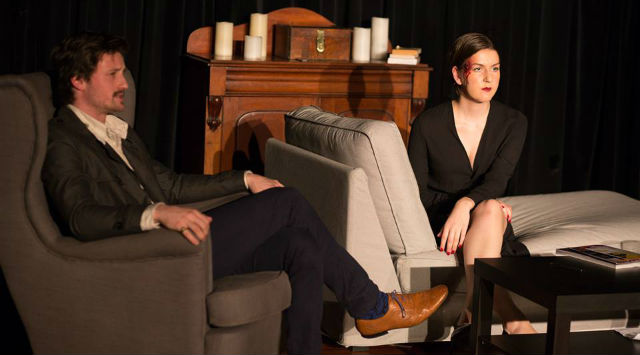
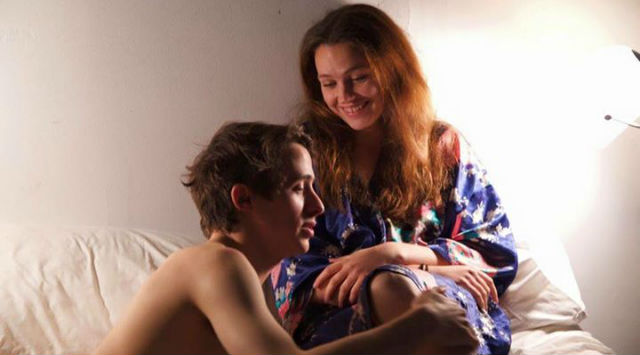
Wendy Harmer and Sancia Robinson’s What Is The Matter With Mary Jane? gives exposure to the experiences of patients who suffer from acute eating disorders. It is a passionate work with clear intentions of informing society about lives that are often shrouded in the secrecy and shame of anorexia and bulimia nervosa. The play has a desire to improve awareness and perhaps inspire political action that will help with healing or eradicating these horrific diseases from our communities, which results in a text that is full of enthusiasm but also clinical at times. The work focuses on the processes involved in, but not the reasons behind its protagonist’s affliction, so that it can represent a wide range of experiences unified by manifestations of the illness. The play acknowledges that the causes of these disorders vary widely, but the omission of psychological insight or analysis of specific events that have contributed to its unfortunate circumstances, is a significant decision that prevents the show from engaging with its audience more deeply. Sentimental dramatics might not always be elegant, especially in profoundly personal disclosures, but they are often necessary in helping our heads and hearts in becoming more involved with the story and its message.

In directing her own biography, Robinson brings to the stage an intimacy and truthfulness that can only come from having lived through the ordeal very personally. There are some shocking revelations, but the authenticity in her style of presentation disallows any room for doubt, and important facts from Robinson’s recollections are imparted in the process. Gabrielle Savrone’s portrayal of pain is accurate and moving. We are convinced of her character’s divulgements, and she satisfies the purpose of the work by alerting us to the nature of the problem from personal and societal perspectives. The lighter portions of the play are less effectively performed, but the actor’s conviction is strong, and her work develops with more power as the play progresses.

Self-image is an integral part of every individual’s being. How we live depends largely on how we see ourselves, and for many, physical appearance is a component that can turn into an all-consuming preoccupation, which is actually symptomatic of an impairment that lies deeper than skin. What Is The Matter With Mary Jane? demonstrates an extreme consequence of untreated emotional difficulties that requires our vigilance. Compassion towards others, and having a healthy attitude towards other people’s bodies is a good, and necessary start, that will quickly evolve into the same generosity that we must afford our selves.

www.seymourcentre.com

Review: Blonde Poison (Strange Duck Productions / Red Line Productions)

BP2 CREDIT MARNYA ROTHEVenue: Old Fitzroy Theatre (Woolloomooloo NSW), Jul 28 – Aug 15, 2015
Playwright: Gail Louw
Director: Jennifer Hagan
Cast: Belinda Giblin
Image by Marnya Rothe

Theatre review
Stories of Jewish experiences during World War II continue to appear on our stages and screens with an urgency that refuses to be eradicated. The sheer volume of narratives means that there is a tendency for characters, emotions and perceptions to be conflated into a certain uniformity, providing impressions and understandings of a time that seem to vary little. Gail Louw’s Blonde Poison is a true story based on the life of Stella Goldschlag, a provocative character with incredible complexity, and whose involvement with Nazi Germany offers a powerful and controversial extension to our increasingly superficial memories of those horrific times. Louw’s writing however, fails to live up to the scintillating potentialities of the protagonist’s tales. The use of a realistic monologue format seems to restrict the amount of tension and drama that lies dormant in Goldschlag’s recollections. The shocking and duplicitous nature of her history holds the promise of a much more explosive presentation than Louw’s plot structure allows.

Direction of the work is a conservative one that dares not to depart from the script and its flaws. Jennifer Hagan’s faithfulness to the text leads to a thorough illustration of the author’s ideas, but greater gumption is required to fill in the blanks, and to elevate a play that needs more flair. Performance of the piece however, is marvellously captivating. Goldschlag is played by Belinda Giblin who is completely masterful on this stage. Her clarity of intent, along with her intelligence and agility (both mental and physical), deliver an impressive portrayal that is equal parts dynamic and intimate. Her emotions are expansive, immediate, and highly legible, but the decision to refrain from eye contact with the audience, along with the staidness of the script, prevents the work from making a connection that matches the poignancies of the actual events in discussion.

Humanity is at its most striking when revealed with its contradictions and imperfections. There is much ugliness in Blonde Poison that expose us to our own fallibilities, but it is too quick to forgive. We need to feel the gravity and realise the repugnance of the dark sides of our selves, before the light can resonate. Villains are indispensable, for they show us the truths within that we fail to acknowledge. Stella Goldschlag ultimately did arrive at confrontations with her own demons, and in those moments of malevolence on stage, poison tastes sweet, and we want more.

www.oldfitztheatre.com | www.facebook.com/strangeduckproductions

Review: Bitch Boxer (Someone Like U Productions)

bitchboxerVenue: District 01 (Surry Hills NSW), Jul 21 – 26, 2015
Playwright: Charlotte Josephine
Director: David Mealor
Cast: Jordan Cowan

Theatre review
Much of the success of Charlotte Josephine’s script is due to our inherent sexism. It is because of the way we conceive of girls and women’s lives that the play takes the form that it has, and for the same reasons, that it is received so powerfully. It makes use of our prejudices to create dramatic tension, and one would garner a guess that if its monologue personality is transposed to male, its overall effect would be quite drastically altered. Hence, we are reminded that genders are not thought of as the same, but in spite of perceived differences, it is the notion of equity that feminism wishes to achieve. The work is not a subversive one, in fact it contains elements that are much closer to the work of Walt Disney than to Germaine Greer’s. The Bitch Boxer in question is Chloe, a young athlete who has obstacles to overcome that are not particularly unique, and whose passion lies in a traditionally male arena. It feels like a princess story, and her efforts at beating the boys at their own game, figuratively, locks Chloe’s narrative firmly into a patriarchal structure that it cannot, or possibly will not, escape.

Execution of the production is brilliantly spearheaded by its star, Jordan Cowan, whose level of conviction on stage matches her role’s fierce ambition in the boxing ring. Her performance is vibrant, exciting and captivating, with a relentless and fearless enthusiasm for involving the audience by addressing us directly at every available opportunity. Her warm and welcoming presence is perfectly suited to the show’s most intimate setting, which director David Mealor is astute in establishing, so that Cowan’s best qualities are the event’s overwhelming strong suit. On the other hand, although Cowan’s ability to portray her character’s mellower sides, such as her sensitivity, tenderness and sorrow, is clearly accomplished, we only witness those moments in quick flashes. The direction of the piece is intent on maintaining a fast pace and keeping things high energy, which makes for a very dynamic encounter (aided by Will Spartalis’ remarkable work on sound and music), but it does not depict sufficient emotional depth for us to identify with Chloe’s experiences at a more contemplative and meaningful dimension.

The artistic community often talks about sport and art as a dichotomous pairing, and artists lament the ubiquity of the other in general Australian discourse. It is truly unfortunate that art is rarely held in the same regard as its incongruous opposition. The social and personal benefits that could be derived from a more prevalent culture of art in our societies is unquestionable, yet we refuse to allow it to flourish. Additionally, the gender imbalance in the sporting world is a blindingly obvious problem that persists and seems never to be resolved. In the theatrical arts however, we can boast of participation from women of all tribes and backgrounds, and the need to make heroes of these talents is an urgent one that cannot be understated.

www.facebook.com/someonelikeUproductions

Review: Listen! I’m Telling You Stories‏ (PACT Centre For Emerging Artists)

pact4Venue: PACT Theatre (Erskineville NSW), July 20 – 25, 2015
Director: Katrina Douglas
Cast: Courtney Ammenhauser, Alicia Dulnuan Demou, Amber Jacobs, Carissa Licciardello, Jessica McKerlie, Tasha O’Brien, Mitchell Whitehead, Steve Wilson Alexander, Dubs Yunupingu
Image by Katy Green Loughrey

Theatre review
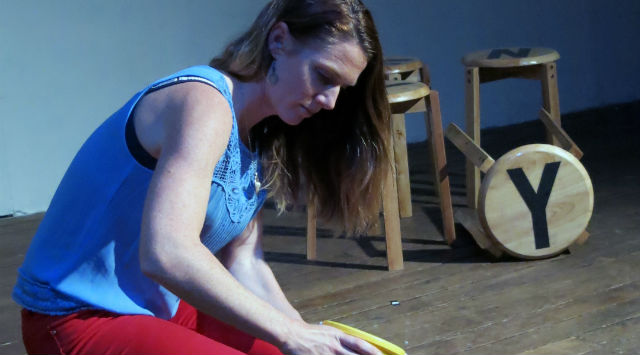
Presented by a group of young artists studying the theatrical arts through the exploration of spacial awareness, physical training and team rapport, Listen! I’m Telling You Stories‏ is an earnest demonstration of their journey as apprentices of performance. Each creates a short vignette offering varying degrees of insight into their life and mind, but it is not the content of what they have to say that is actually fascinating. The show is a cohesive and sensitive amalgamation of nine lives brought together temporally, and we witness their creative energies in motion, all focused on generating something purposeful, at least from their own perspective. What results is a succinct work, under an hour, that is more about practice than communication. Their approach is a sincere one, and although engaging for its duration, no great resonance is sustained beyond the curtain call.

There is a beautiful uniformity in the ensemble’s voice and attitude for the piece. Our attention goes to a singular entity of the whole, even though disparate elements are always present in the work’s intelligent plurality. Direction by Katrina Douglas brings out the strengths of her performers and successfully balances the individual with the group, so that the piece always feels even. The work of designers, Amber Silk (lighting) and Peter Kennard (sound) are prominent features that give the production polish and depth, in the absence of a compelling script. Our eyes and ears are ingeniously and constantly surprised in the show, and the sense of wonder provided by the team is a notable achievement, but there is nothing that seems to be able to connect on a more meaningful, or perhaps emotional, level.

On many levels, Listen! I’m Telling You Stories‏ appears to be experimental, with inventive modes of expression a distinguishing feature. At the same time, there is a safeness to the production’s artistic choices that keeps it from being more exuberant or idiosyncratically memorable. Artists in training need to understand rules and gain skills that will help them attain their visions for the stage, but often it is in the calculated abandonment of those standards that something spectacular can materialise.

www.pact.net.au

Review: Detroit (Darlinghurst Theatre Company)

darlo2Venue: Eternity Playhouse (Darlinghurst NSW), Jul 17 – Aug 16, 2015
Playwright: Lisa D’Amour
Director: Ross McGregor
Cast: Lisa Chappell, Ronald Falk, Claire Lovering, James O’Connell, Ed Wightman
Image by Gez Xavier Mansfield

Theatre review
When people hit “rock bottom”, they are forced to evaluate values, and in the case of Lisa D’Amour’s Detroit, an opportunity to build a new life presents itself at the most troubling of times. Sharon and Kenny are ex-junkies trying to get their act together, but no easy solution exists, and all we see is their struggle to make every day count. The story is one of resilience, about the human ability to make the best out of nothing, and ironically, also about our tendencies at making the worst out of what we do have. The script is a surprising and quirky one, with an unusual sense of humour that begins unassumingly but gains momentum with every scene, leading to an explosive conclusion that ties up the many loose ends that it scatters along the way.

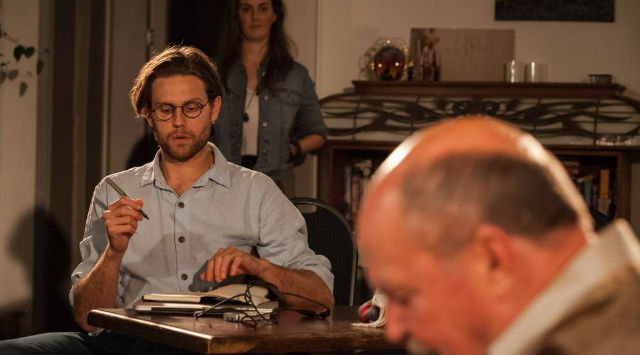
The production begins almost too enthusiastically, with actors keen to entertain while establishing a context that should probably look and feel more pedestrian at that early stage. Performances by the very striking women of the cast are consistently animated, which works well when subtexts are being communicated, but at other times can come across overly farcical. Dark social comedies require a delicate balance, but early comic moments tend to obscure the atmosphere of depression that the play wishes to convey. As the plot progresses into a wild and surreal space, the extravagant performances become congruous, and very engaging indeed. Ed Wightman’s tender portrayal of Ben provides the authentic centre of the production. His plight is readily identifiable, and the actor wins our empathy with a subtle vulnerability that he makes perceivable in between charming interpretations of comic sequences. Addict in recovery, Sharon is played by the exuberant Claire Lovering who is delightfully funny in every scene, but the ambiguity of her character prevents us from achieving an understanding of her circumstances with sufficient depth.

The show is amusing, and unpredictable, with scenes flowing into each other with little indication of what is about to occur next. There is a polish to the production that makes viewing pleasurable, but for all its dramatic events, it does not seem to be able to provoke much thought about its grave themes of poverty and social decay. Detroit, the city, has been going through ruinous transformations, of which great lessons are certainly attainable, and staging a work with the same name only raises expectations for considerable profundity. There is much to be explored in this play named Detroit, but on this occasion, some of it remains uncovered.

www.darlinghursttheatre.com

Review: The Cherry Orchard (The Depot Theatre)

depotVenue: The Depot Theatre (Marrickville NSW), Jul 15 – Aug 1, 2015
Playwright: Anton Chekhov
Director: Julie Baz
Cast: Jane Angharad, Anne Brito, Myles Burgin, Leo Domigan, David Jeffrey, Justine Kacir, Theo Kokkinidis, Dave Kirkham, Emily McGowan, Roger Smith, James Smithers, Cherrie Whalen-David
Image by Katy Green Loughrey

Theatre review
Interest in Anton Chekhov’s plays have not waned over the last century. In Australia, not a year goes by without several productions materialising from his famous scripts, and at every outing, we seem unable to keep from arguing endlessly about them. Chekhov is classic, but he is also divisive. Theatre lovers tend to have strong personal conceptions about the meanings derived from his oeuvre, and when it comes to how his writing should be presented, opinions can get quite strong. Art is many things, and when we try to put restrictions on what it encompasses, we need to be vigilant about what is excluded. So perhaps, art is everything. Replication and imitation are thought of as transgressive in the creation of art, yet originality is hardly ever seen. In the theatre especially, we are constantly making references and quotations, almost to the point where we have given up on the importance of making something new.

Julie Baz’s rendering of The Cherry Orchard is interested in the ideas of the script. It is clear that although those ideas have already been shared many times, this production considers them to still be relevant and significant. There is a considerable chasm however, between Moscow in 1904 and Sydney today, and finding parallels between contexts is a challenge, and slightly tenuous, when the show is presented with a sense of reverence, which seems to aim for an experience that is about recreating and re-enacting, rather than reinventing. The result often looks like an historical artefact, with meanings that are not immediately resonant.

Live performances are most successful when there is an energetic exchange between the action on stage and the illusory passivity of its audience. A show takes into account how it is being perceived, and leaving that to chance is an unwise gamble. Much of this production seems to take place in a bubble. The cast is not uniformly strong, and we often feel kept at arm’s length, either by a lack of confidence or a mistaken notion that performance is a one-way street. Moments of frisson occur when the actors allow themselves a more spontaneous and creative space of expression. David Jeffrey as Lopakhin rejects preconceived notions of “what Chekhov must have been” and plays his role from a more honest point of departure. With the simple intention of portraying a colourful character, and an astute awareness about his part’s contribution to the narrative’s effectiveness, Jeffrey is able to form a strong presence on stage and fosters a connection with the viewer. Also fascinating is Roger Smith, who plays the 87 year-old Firs with charming idiosyncrasy and warmth. His looks to be a vaudeville inspired style of presentation, but it works well for a role that situates slightly outside of the main storyline, and the actor takes every one of his opportunities to entertain.

There is value in creating faithful interpretations of classics, but trying to get things right from a vast distance of time and space is hard, and then making it meaningful to an audience for which it was not intended, is also problematic. The Cherry Orchard is about the changing of times, but the production seems trapped in a past that we have only read about or imagined. It manages to locate moments of truth when Chekhov’s writing turns to diatribe, but it is not consistently genuine. The Buddhists and the New Ageists often prescribe placing focus on the here and now, and that belief is perfectly suited to the theatre. Magic does happen on stage, but we have to be there to set it off.

www.thedepottheatre.com

Review: War Crimes (ATYP)

atypVenue: ATYP (Walsh Bay NSW), Jul 15 – Aug 1, 2015
Director: Alex Evans
Playwright: Angelia Betzien
Cast: Hannah Cox, Holly Fraser, Charlotte Hazzard, Odetta Quinn, Jane Watt
Image by Tracey Schramm

Theatre review
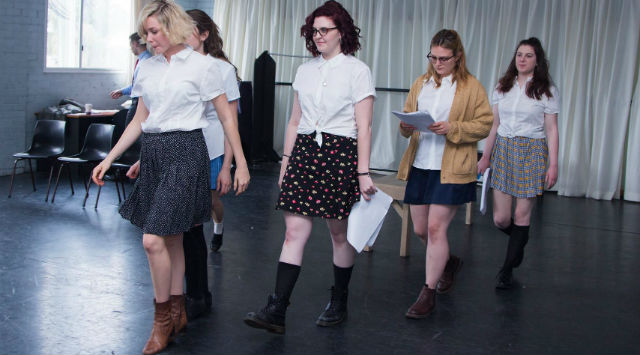
Art allows some of the most sensitive and intelligent of our community a platform to articulate their concerns about the world we share. Discussion on matters of social importance have become increasingly controlled by governing parties and mainstream media, leaving the arts to be one of the few avenues remaining, where ideas affecting us all can be exchanged thoughtfully and generously. Angelia Betzein’s War Crimes is not overtly political, but it is deeply interested in the state of affairs on the land that we share. Through the experiences of 5 young women at the end of their schooling days, we examine life in a regional town and its inhabitants’ troubling relationship with issues of poverty, misogyny, homophobia and racism, the four key controversies in modern discourse. Betzein’s writing draws inspiration from the language of our underprivileged youth but captured within a frame of poetry and emotional luxuriance, it communicates a gritty realism through a familiar theatrical structure that helps us understand the distant microcosm being deconstructed.

Direction by Alex Evans creates a landscape that confronts us with its brutality, but introduces disarming episodes of tenderness that move us, often unexpectedly. Evans is extraordinarily detailed with his portrayal of characters and relationships, and it is the depth and subtlety of the universal human experience being uncovered that is the most enjoyable feature of the production. Although his work with the team of actors is utterly outstanding, his control of atmosphere through collaborative efforts with technical designers should not go unremarked. Lights by Alex Berlage are imaginative and dynamic, creating a vista that is earthy yet sophisticated, and with plenty of variation between scenes to keep our eyes captivated. Tom Hogan’s intuitive sound work embraces the action on stage to help amplify the impact and significance being developed at each moment. Scene transitions rely on Hogan’s ability to manipulate our mood and level of engagement, so that shifts in time and place are established seamlessly.

The performances in War Crimes are impressive. We marvel at the five actors’ ability to appear so powerfully present, and their enthusiasm to share these concepts and stories is gloriously magnetic. Jane Watt is sensational in both her roles; a teenage troublemaker and a middle-aged Iraqi are both vividly portrayed with an exuberance that shows a courageous talent. Watt’s tendency for risky artistic choices is a real joy to behold and her energy is often called upon to bring vibrancy to the stage. One of the play’s most poignant moment comes from Hannah Cox, who as Jordan, professes her love by recreating cave drawings for the object of her desire. The surrender of her self in the hope for Jade’s reciprocation is unbelievably delicate and honest, and within those several seconds of stage time, all eyes are on her quivering facial features while we feel the intensity and clarity of her pure and transcendental love.

In order for our lives to be made better, it is important that we take a good hard look at our problems. It is easy to revel in self-delusion, and to be lied to. We cannot rely on powerful groups to give us the truth, as it is often to their advantage that the plight of the underprivileged is kept under wraps. The ruling and upper classes will maintain the status quo by the continued oppression of others, so we must gather information from alternate sources, such as the participants of independent theatre. War Crimes paints a picture of contemporary Australia that is at once ugly and beautiful. It has a harsh accuracy that can make it a bitter pill to swallow, but if we want the awful truth, this is just the kind of remedy we need more of.

www.atyp.com.au

Review: Edmond (Two Peas)

twopeas1Venue: Old 505 Theatre (Surry Hills NSW), Jul 15 – 26, 2015
Playwright: David Mamet
Director: Glen Hamilton
Cast: Tara Clark, Cheyne Fynn, Naomi Livingstone, Oleg Pupovac

Theatre review
David Mamet’s Edmond is a despicable human being. All the worst qualities a person can have are found in one awful character, who happens to hate everything and everyone, including or maybe, especially, himself. It is a simple premise for a play but a confronting one. Mamet’s conceit is extreme, almost cartoonish in its approach, which is necessary for preventing the play from ever becoming realistic and hence, plainly unbelievable. There is a tendency for the work to portray Edmond as being an everyday person, and for us to be able to identify with characteristics that he displays, but it is arguable whether the context is too alienating for audiences to be able to connect in a meaningful way.

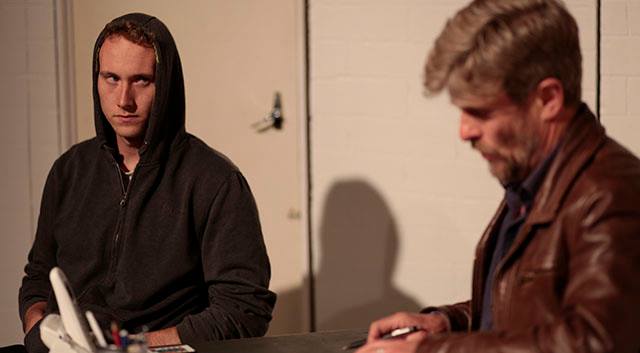
Direction of the production is slightly surreal, and also slightly quirky. It understands the fantastical quality of the text, but does not explore its concepts with enough theatricality to prevent the play from being weighed down by a conventional realism that struggles to provide drama and excitement that could elevate a script that is persistently bleak. The repetitiveness of the plot induces a numbness in our response, which the direction allows to take effect instead of finding ways to shock us with every subsequent scene as the writing intends. In the title role is Oleg Pupovac who shows good conviction and focus, but the decision to play Edmond as an essentially unassuming guy is questionable. One is reminded of Mary Harron’s 2000 film American Psycho, and the effectiveness of its flamboyant style in establishing a quality of enthrallment within the outlandish and disturbing environment being portrayed. Although uncomfortably mild, Pupovac’s interpretation does create an interesting juxtaposition between normalcy and atrocity that is quite remarkable. The rest of the cast is required to play a large assortment of undesirables, which paves the way for a very playful stage, and correspondingly, it is when performances are daring and wild that we become engaged. Naomi Livingstone’s versatility and vibrancy help her breathe life into her characters, and her animated expressiveness strikes a resonant balance with Mamet’s writing to deliver several memorable moments.

Edmond builds to a conclusion that attempts to make sense of its own overwhelming violence and insanity, but the production seems to deflate before that crucial point, and what should have been a significant revelation is lost in an air of ambiguity. Without a pointedly communicated moral, we are left to consult our own values to achieve an understanding of the preposterous situations that had been witnessed, which means that new perspectives are probably not gained by many. Audiences are willing to participate in stories that involve challenging content and ideas, but we expect a greater than usual pay off in their aftermath. There are lots of horrible people in Edmond, and it is undeniable that the same horrible behaviour exists in real life, but encountering them voluntarily at the theatre needs to be more purposeful than catching a glimpse of silver lining.

www.thetwopeas.com

Review: Of Mice And Men (Sport For Jove Theatre)

sportforjove2Venue: Seymour Centre (Chippendale NSW), Jul 9 – Aug 1, 2015
Playwright: John Steinbeck
Director: Iain Sinclair
Cast: Andre de Vanny, Andrew Henry, Anna Houston, Anthony Gooley, Charles Allen, Christopher Stollery, John McNeill, Laurence Coy, Terry Serio, Tom Stokes
Image by Marnya Rothe

Theatre review
Lennie’s intellectual disability in Of Mice And Men reveals the forgotten innocence inherent in all of humanity. His experience of the world is one that everyone can identify with, but the virtuous purity that he exemplifies is utterly absent from our daily adult lives. Unlike Lennie, we have grown too complicated and are often dishonest in the way we treat one another and ourselves. Few of us can remain idealists, and even though John Steinbeck’s play inspires the longing for a simpler and truer existence, the inevitability of its demise is also exposed. We question the corruptness that we allow in, and meditate upon the dynamics in our communities that instigate these unfortunate states of affairs. Most people are good, but when we come together, bad situations easily arise. Of Mice And Men looks at a group of men, bound by poverty and by dreams, and their journey towards a calamitous fate.

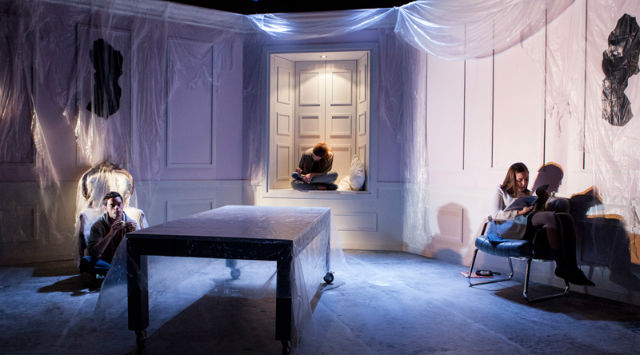
This production, directed by Iain Sinclair, is a near flawless rendering of Steinbeck’s 78 year-old text. Beautifully realised by a brilliant design team (Michael Hankin is production designer, with Nate Edmondson on sound, and lights by Sian James-Holland ), the show feels rich with authenticity and provides our senses with a satisfying approximation of how Northern America must have been at the Great Depression. Sinclair’s consummate control of atmospherics delivers a transportative pleasure that pulls us into the emotions and actions of characters that are a world away from our current realities. Each personality is conveyed with compelling idiosyncrasy, and chemistry between every actor in every scene is calibrated just right, so that stories and events are convincing and splendidly detailed.

The cast is uniformly strong, with a sense of egalitarianism in the ensemble that supports the play’s themes of camaraderie and community. Andrew Henry is sensitive, tender, and unquestionably touching as Lennie. His work is performative but also heartfelt, so that the audience’s engagement with his creation is much more than skin deep. Instead of applying a basic treatment to a simple character, Henry’s approach is meticulously inventive and the results are as entertaining as they are moving. The other leading man of the piece is Anthony Gooley, who fills the stage with charisma and a magnetic energy that is impressively dramatic. In the role of George, his empathy for Lennie is depicted powerfully, which is key to the plot’s effectiveness, but the final scene requires greater pathos from the actor for a more explosive conclusion. Charles Allen and Laurence Coy play smaller roles but are individually captivating. They generate theatrical magic with deeply nuanced interpretations of identity and sentimentality, both enthralling in their moments of eminence.

Classics resonate through the years because they encapsulate something true and universal that time is unable to diminish. Of Mice And Men represents our belief in justice, and the right of all persons to seek improvements for their circumstances. It appeals to our need to define right and wrong, and that desire to understand the differences between. Most of all, it serves as a reminder that we should strive to be better people, and to avoid the complacent and inferior, even if it requires going against every tide.

www.sportforjove.com.au

Review: Grace (Pulse Group Theatre)

GRACE 1Venue: Pulse Group Theatre (Redfern NSW), July 7 – 26, 2015
Playwright: Craig Wright
Director: Billy Milionis
Cast: Joseph Addabbo, Dudley Hogarth, Jeremy Shadlow, Nikki Waterhouse

Theatre review
Fanatically religious people are probably the most grating of all. Their narrow-mindedness and refusal to engage in intelligent conversation are frustrating, and their need to convert others’ beliefs to match their own is most infuriating, and sometimes dangerous. At the centre of Craig Wright’s Grace is Steve, an evangelical Christian man who relies on a blind faith that reveals itself to be nothing more than stupidity. Wright’s story is surprisingly textured, but much of the dialogue comes across cheesey and tends also, to be quite long-winded. His characters are initially interesting, but they prove to be too simple and obvious, and his humour lacks an acerbic bite that the themes require.

The production is not a sufficiently dynamic or imaginative one, but it is clear to see that focus is placed squarely on the craft of acting, and the cast is accomplished on many fronts. Dudley Hogarth appears in only two scenes but is memorable for the intense sentimentality that he moves us with. The performances are intent on finding authenticity, but guided by a need to establish a thorough naturalism, scenes can be uncommunicative even though an atmosphere of honesty is always present. Actors often look like they are performing at each other, and without a more presentational style, the audience is not consistently engaged. There is a lot of effort put into exploring emotions of characters, which often translates with too much self-indulgence. The cast seems to feel their stories powerfully, but they need to include us in those narratives, and not keep those ideas and poignancies to themselves. We might not be written into the text, but the audience is present, and we must be integrated further into the theatrical experience.

Like the “Christian Freaks” of the play, the production is lost in a single-mindedness that prevents us from getting closer. Like the zealots too, there is a passion on this stage that impresses. One of the messages in Grace is about diversity and plurality, and the importance of a generous spirit in our social lives. Congregating at the theatre remains an important element of any civilisation. For an hour or two, we are joined to find a moment of unity and peace, and hopefully leave with greater optimism about the world we temporarily occupy, but it is those on stage who have the greater responsibility of turning the mundane into magic, all in extraordinary style and exceptional grace.

www.facebook.com/PulseGroupTheatreCo