Review: Belleville (Mad March Hare Theatre Company)

madmarchhareVenue: Old Fitzroy Theatre (Woolloomooloo NSW), Apr 30 – May 12, 2016
Playwright: Amy Herzog
Director: Claudia Barrie
Cast: Josh Anderson, Taylor Ferguson, Chantelle Jamieson, Mansoor Noor

Theatre review
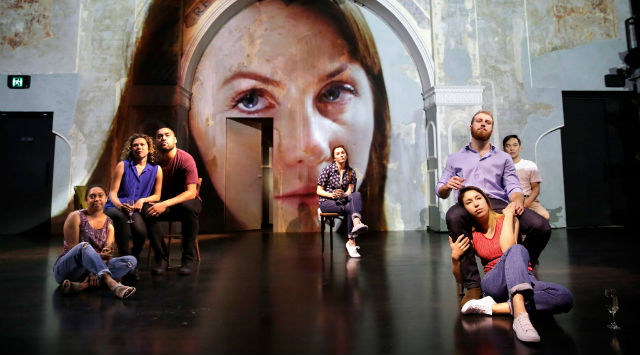
Whether or not one believes in “happily ever after”, there is little doubt in the truth that relationships are never completely smooth-sailing. When people are bonded together, what keeps them from breaking up are not always snowdrops and daffodils. Amy Herzog’s Belleville is about the poison that can fester in romantic unions, observed through a married American couple, Abby and Zack, disquieted and displaced in Paris. We see them trying to make things work, but the only thing they share is a chronic anxiety about being together, the causes of which the playwright keeps concealed until the end. In our efforts to explain the mystery of their circumstance, we access our own understandings of how things can go awry between two people who have grown so close, thereby reflecting an unfortunate universality of the experience.

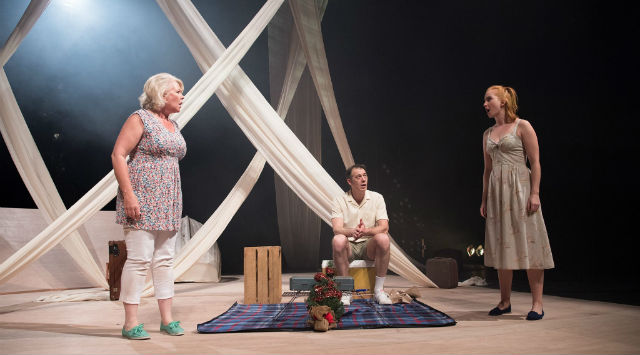
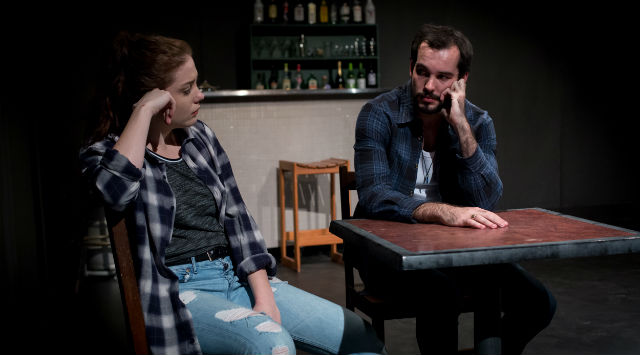
It is a play full of intrigue and danger, brought to the stage by director Claudia Barrie who creates a disarming tension from the unrelenting but subtle details of the couple’s relationship collapse. Their unnamed dysfunction is made palpable by Barrie’s flair for manufacturing suspense, and our minds are kept racing in response to the mysterious plot. The production is confidently designed by a team who taps into the undercurrents and subtexts of the writing, to address the less deliberate parts of our consciousness. The characters struggle to say what they mean, but their feelings are manifest in the atmosphere that we share. Performances are committed and thoughtful, with all actors proving to be dynamic and entertaining, although some moments could be less tentative. Abby is played by Taylor Ferguson who does a marvellous job of expressing physically what her role is unable to put in words, and Josh Anderson’s volatility as Zack keeps us on tenterhooks, wondering if and when he is going to reach a point of nervous breakdown.

Paris is the city of love, and many dream of its enchanting and exotic perfection, without ever having stepped foot in it. Indeed, Paris represents a kind of quixotic approach to romance that is fundamental to its appeal. We want what we have never experienced, certain of the fulfilment it will deliver without knowing what it actually contains and entails. Abby and Zack arrive at their point of difficulty because of decisions made on a basis of weakness, conformity and resignation. They went after something they knew nothing of, and find themselves stranded in a space of destruction and hopelessness. If they get out of it alive, they can leave ignorance behind and head into the future with brighter minds, but if they remain trapped, the end can only be calamitous.

www.madmarchtheatreco.com

Review: The Tragedy Of Antigone (Ninefold / PACT)

ninefoldVenue: PACT Centre for Emerging Artists (Erskineville NSW), Apr 20 – 30, 2016
Playwright: Eamon Flack (after Sophocles)
Director: Shy Magsalin
Cast: Aslam Abdus-samad, Bodelle de Ronde, Dave Buckley, Erica J Brennan, Gideon Payten Griffiths, Kiki Skountzos, Pollyanna Nowicki, Scott Parker, Victoria Greiner

Theatre review
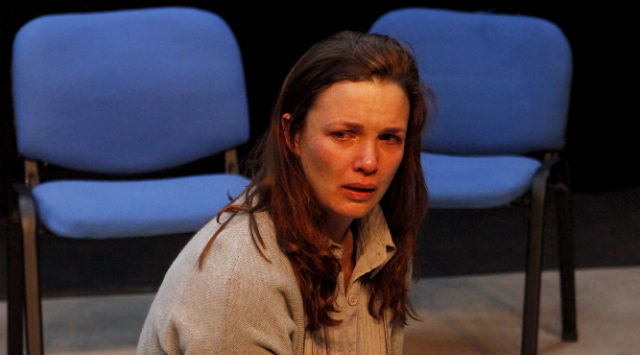
Antigone’s story is about defiance. Motivated by love and duty, she goes against the law of the land to do what she believes to be unquestionably right. Contradicting the wishes of Creon (who is Queen in this rendition), Antigone goes to bury her dead brother believing in the superiority of God’s will over the ruler’s whims. Based on Eamon Flack’s recent adaptation of Sophocles’ classic, The Tragedy Of Antigone is concerned with the place of government in the life of individuals, its impositions on our liberties and the spirit required for an authentic and dignified existence.

Director Shy Magsalin’s work is transcendent, compelling and powerful. Her gloomy atmospherics, beautifully established by Liam O’Keefe’s lighting design, transport us to our protagonist’s living hell where we discover a world of struggle and suffering. Greek tragedies are often less about psychology than they are about principles, and in this case, Magsalin’s ability to connect emotion with her play’s virtuous propositions is key to the production’s effectiveness. Precise and disciplined choreography permeates every movement on the stage, but strong impulses underlie all its physical contrivances for their symbolism to convey with poignancy.

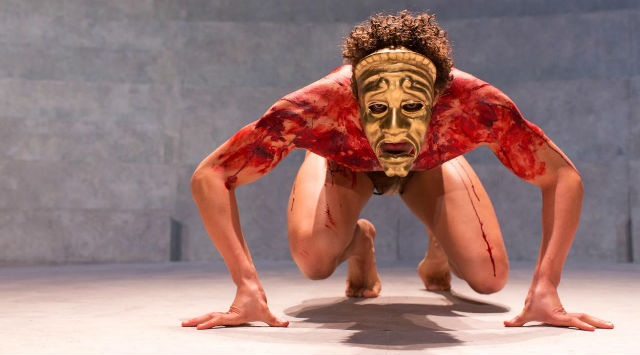
Nine very well-rehearsed performers form an ensemble that does an outstanding job of finding cohesiveness, nuance and energy, for an intriguing interpretation of a meaningful but challenging text. Leading lady Erica J Brennan is full of passion. Attacking her role with impressive accuracy and tremendous focus, the actor’s tough presence provides a remarkable soulfulness to a heroine who is staunch and courageous in constitution. Equally accomplished is Pollyana Nowicki as Tiresias, the blind clairvoyant, equal parts ethereality and gravitas. Nowicki’s portrayal is macabre, mysterious and flamboyant, contributing significantly to the show’s exciting but dark sense of extravagance. It is noteworthy that the use of voice is especially potent in the production, with actors demonstrating excellent versatility and dynamism in the way they wish to be heard.

Love can move mountains, and as we see in The Tragedy Of Antigone, it can make women out of girls. Fearlessness may not be a rare quality in any of our legends, but it is hard to deny the importance of gender representation in Antigone’s tale. In an economy obsessed with action heroes, women characters principally defined by bravery, are desperately few and far between. This is theatre that we need, not to coincide with the current trendiness of feminism, but because it offers a kind of inspiration that would be of benefit to anyone. Believing that women can fight, and must fight, with the best of them, is a form of liberation crucial to people of all genders. Everyone has the potential to achieve the best of humanity. It is whether we allow ourselves and others that freedom, that will determine the extent of our evolution.

www.ninefoldensemble.com

Review: Orphans (Seeker Productions)

seekerproductionsVenue: Old Fitzroy Theatre (Woolloomooloo NSW), Apr 19 – 30, 2016
Playwright: Dennis Kelly
Director: Richard Hilliar
Cast: Liam Nunan, Jacki Mison, Christopher Morris

Theatre review
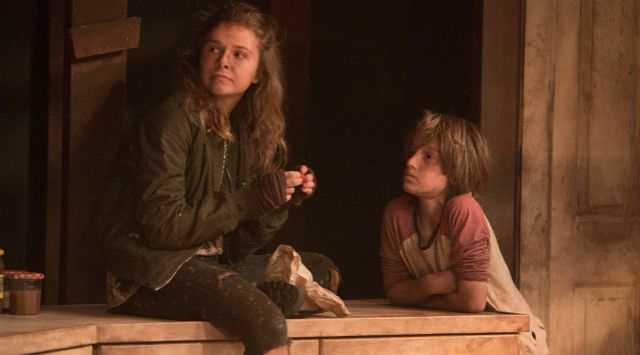
In Dennis Kelly’s Orphans, we look at violence and its origins. Liam is a young man who encounters unspeakable brutality. His world is one of turbulence and confusion, the nature of which was established years ago as an orphaned child, that he unfortunately sustains through to the present day. Helen is his caring sister who although similarly traumatised, is determined to create normalcy in their lives. Their story is a moving one, but presented with additional dimensions of a thriller and some very black comedy. The conflict between Helen’s order and Liam’s chaos presents tensions that serve the play well, with a skilfully designed escalation of stakes that draws us in deeper and deeper into its drama.

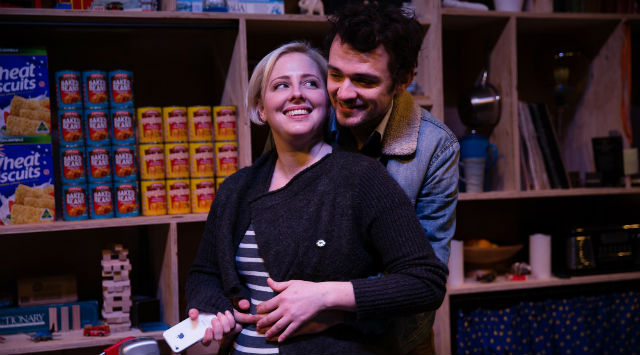
The very compelling characters in Orphans are played by three excellent actors who showcase their remarkable talents in a work that presents some colourful extremities to show off their thespian muscles. Director Richard Hilliar opens up every opportunity for the players to shine, and the thoroughness at which each personality is explored and portrayed, is the show’s strongest feature. Liam Nunan’s depiction of his role (also named) Liam’s trauma is unrelenting yet textured. The level of focus and emotional power he puts on display is a marvellous sight that provides a sense of edginess appropriate for the confronting nature of the material. Equally intense is Jacki Mison who gives Helen an intriguing sense of complexity that is almost hypnotic in its appeal. The more she reveals, the more we wish to discover, and the authenticity she is able to introduce along with the character’s strangeness keeps us engrossed in Helen’s quandary. Christopher Morris has a more subtle approach but is no less dynamic as Helen’s husband Danny, whose surprising transformations through the plot are crafted with great instinct and precision. The outlandish narrative is offered balance by the actor’s quiet but confident presence, allowing us breathing space within its profusion of aggressive energy.

There is also good work to be found in Liam O’Keefe’s lighting design and Tegan Nicholls’ efforts on sound. Atmosphere is generally modulated well for transitions between scenes, although visual cues do not provide enough certainty about the married couple’s socio-economic status, which becomes increasingly relevant. Similarly ambiguous are the play’s comic qualities. The darkness of its themes notwithstanding, clearer indication of humour would garner better responses to the production, and provide a greater variance in tonal shifts over its duration.

Trauma in childhood is perhaps inevitable. At varying degrees, each of us would have felt violated or betrayed in our time as small, vulnerable creatures navigating the environment, but how we develop from that tainted moment, is a real concern that Orphans investigates. We think about the process of growing up, and question the practicability of becoming happily stable adults. Some of us discover the fallacy of “happy ever after” early on but many others cling to the belief that ideals exist and a life of perfection is within reach. The truth is that things do get better, but whether we believe that there can ever be an end to personal struggle, would depend exclusively on each individual’s outlook.

www.facebook.com/…

Review: Disgraced (Sydney Theatre Company)

Venue: Wharf 1 Sydney Theatre Company (Walsh Bay NSW), Apr 16 – Jun 4, 2016
Playwright: Ayad Akhtar
Director: Sarah Goodes
Cast: Paula Arundell, Glenn Hazeldine, Sachin Joab, Shiv Palekar, Sophie Ross
Images by Prudence Upton

Theatre review
We can all agree that everything is not quite coming up roses in the world today, with terrorists blowing up cities everywhere, and people waging war against one another, all in the name of race and religion. There is no denying that at the root of these catastrophes is hate. Hate that comes in a manner of guises and a range of justifications, but ultimately it all boils down to the simple truth that people are prejudiced and destructive. This is difficult to hear, because life is impossible without believing that humanity is good, so we embrace hope with a kind of blind naivety and evade the truth in order that we may get out of bed and be happy.

Ayad Akhtar demolishes those delusions with Disgraced, in which racist hate is served up plain as day. The characters are intelligent, successful and glamorous, tailor-made so that they are irresistible to bourgeois theatregoers, but their ugly sides emerge, increasingly aggressive over time, and we find ourselves in a state of violation, caused by this transgressive mix of seduction and repulsion. It is at the point where we become intimate with protagonist Amir and the people around him that we see their racism. We are unable to dismiss them because we had already submitted trust, having decided that they are good people, so our minds are in conflict, made to juggle the puzzle pieces that refuse to form an easy picture. In that process of confusion, we reach for a new depth of understanding about our nature and how hate resides in our beings, and how it manifests. In the face of Akhtar’s explicit honesty, we are presented a challenge of interpretation. We recognise the reality of the situation, but we have no convenient way of dealing with the information. The big mess of life is truer than the circumscribed narratives we use to arrange our thoughts, and in this play, that chaos is allowed to rear its ugly head, without a false sense of resolution to contain our anxieties. Bad things happen because there are people with hate in their hearts. Getting to know them is important, but not having anywhere to go thereafter is the conundrum.

It is a stunning and explosive script that drops bombs at regular intervals to unnerve, to disarm and most of all, to confront. It is a response to the undeniable horrors around us that involves no sugar-coating, and no rose-tinted glasses. It is a brutal piece of writing, made only more powerful by its ability to tell us the worst while it secures our unwavering attention. Sarah Goodes’ direction delivers that brutality with a blunt but measured force. Her ability to communicate details no matter how subtle, makes this staging an enriching and enlightening experience. She draws attention to nuances that are missed in our daily interaction with the subject matter, dismantling our habit of two-minute sound bites and 140 character tweets, in exchange for a more thorough study on the state of our world.

Amir is among the most important characters to have appeared in recent theatre history. His experience is ubiquitous but virtually never brought to light. There is shame, fear and danger associated with his story, so our impulses tell us to keep it buried, for we are afraid of the controversies he represents, and we worry about the people he offends. Performing the role is Sachin Joab, exhilarating, authentic and alluring in his depiction of the Pakistani-American caught in a moment of crisis. Joab brings extraordinary illumination to the tremendous complexity of his part, presenting a great deal of insight into a psychology that we all need to know. His work is emotional and vulnerable, but the actor is also able to convey an unmistakeable menace that is central to the play’s effectiveness. Joab overwhelms us with his talent and conviction, and leaves an indelible impression with his remarkable grace. Also exquisite is Elizabeth Gadsby’s set design, providing a backdrop of sophistication and class to a tale about social status and division. The configuration of spaces caters cleverly to all seats in the auditorium, offering excellent perspective and a beautiful vista from every angle.

This is a show full of tension, with its drama derived from issues of the day that are usually too unseemly to discuss in frankness. The action happens in an exclusive New York apartment, but we all have a stake in the subject matter. Peace will benefit everyone, but in its pursuance, we all seem to be losers. In the middle of a war, we are never sure if anything that we say or do will contribute to making things better, but regardless of context, art must always reveal the truth. We cannot mend what is broken without knowing its problems and although a bitter pill is hard to swallow, there is no escaping it. In Disgraced, characters have to drop their pretences and acknowledge the cold, hard fact that their world is in turmoil, but whether they can bring about improvements, or revert to their previous delusions, is not a question anybody has a definitive answer for.

www.sydneytheatre.com.au

Review: Lake Disappointment (Carriageworks)

carriageworksVenue: Carriageworks (Eveleigh NSW), Apr 20 – 23, 2016
Playwrights: Luke Mullins, Lachlan Philpott
Director: Janice Muller
Cast: Luke Mullins
Image by James Brown

Theatre review
Many of us hold menial jobs. Things need to get done by people (even in this age of high technology) that require little more than a person’s presence and some physical exertion. Lake Disappointment is a unique story about a man who spends his life being the body double of a film star. His mental capacities are barely involved in the daily operations of his full-time and isolating occupation, so his mind’s energy goes into constant dialogue with himself. With little opportunity for social interaction, he is in a state of perpetual reflection, but with little stimulation or nourishment, his intellect is stunted and his life stagnates. Written by Luke Mullins and Lachlan Philpott, the script is a wonderful look into a weird existence. Through the portrayal of an unusual creature, it offers insightful contemplations about the human condition, and all its egotistical propensities for ambition, jealousy and delusion.

It is a funny piece of writing, with nuanced but easily identifiable humour. We laugh at the character’s vanity and his aspirations, because we recognise those qualities. The desires and emotions in the play are deeply familiar in spite of their obscure context. Direction by Janice Muller establishes a gentle approach to the jokes, but atmosphere is imbued with an intensity from the very start. An unmistakeable swelling of tension progresses slowly through the show, but its scenes are not always dynamic. Mullins plays the role with an abundance of charisma, but the very controlled tone of delivery he chooses for his character eventually becomes repetitive. It is a disciplined performance with a lot of palpable gravitas that needs a healthy dose of oppositional lightness to deliver an even more engaging experience.

Designers for the staging do a marvellous job of creating a work of theatre that is sleek, sensual and surprising. Lights by Matt Cox, along with Michael Hankin’s set design make fabulous use of space, not only to guide our emotional responses, but also to manufacture visual symbols that help develop the story to a richer depth. Sound is managed by James Brown who accesses our impulses through an acute sensitivity, providing revelations beyond the dimension of words and matter.

Life is demanding. We have to be strong and courageous to weather its storms, but no matter how good we become at dealing with life, our individual insignificance in the scheme of things is ultimately undeniable. People want so much, and we try so hard for things that may eventually mean little. The body double in Lake Disappointment talks about himself incessantly but does not question his desires. He works hard at life but does not reflect on any of his actions or thoughts. It is a life unexamined, where the subject conspires with his circumstances to keep himself entrapped, like a hamster on its wheel, running without rhyme or reason, unable to stop, unable to reach any destination.

www.carriageworks.com.au

Review: Shut Up And Drive (Subtlenuance Theatre)

subtlenuanceVenue: Kings Cross Theatre Kings Cross NSW), Apr 9 – 23, 2016
Playwright: Paul Gilchrist, Daniela Giorgi
Director: Paul Gilchrist
Cast: Kit Bennett, Bonnie Kellett, Sam Glissan, Sonya Kerr, Jordie MacKinnon, Maddy McWilliam, Tom Nauta, Robert Roworth, Eli Saad, Michael Smith

Theatre review
It is hard to care for the environment. Lives in developed countries have grown to depend on an exploitation of our planet that now requires much more than giving up aerosol cans and recycling newspapers to offer reparation. Paul Gilchrist and Daniela Giorgi’s Shut Up And Drive talks about our love/hate relationship and dependence on cars, examining the extent at which we have allowed the automobile to become indispensable. It looks at the way we blind ourselves to its negative impact, so that we may indulge in a sordid affair with the metal beast.

Gilchrist and Giorgi’s writing is about social and environmental responsibility, but it comes from a place of generosity that acknowledges human fallibility. It points out the things that we do wrong, but it is forgiving of our actions. It shows us how we can be better custodians of earth, but the choice is ours to make. Shut Up And Drive is often funny, and sometimes touching. Its intents are serious, and can sometimes fall into a didactic tone, but its short scenes and colourful characters ensure that the play always has a sense of intrigue and enjoyment. At every step, the plot provides something to think about, but is also consistently amusing.

Gilchrist does excellent work as director for the show’s many intimate scenes. He establishes strong chemistry between players, and brings a delightful variation in tone between moments to keep us attentive. Liam O’Keefe’s lights make a significant contribution in achieving those atmospheric transitions with great efficacy and minimal fuss.

Actors Tom Nauta and Eli Saad partner up for two memorable sequences that employ their individual and divergent comedic styles. Nauta’s ostentation and Saad’s wryness meet like hot oil and water for riveting and combustible results. Also very funny is Sam Glissan, a quirky individual with an idiosyncratic approach to performance that tickles all the funny bones. On the other end of the spectrum is Kit Bennett who leaves a remarkable impression with her sensitive portrayal of loss and regret. Her work is delicate and understated but disarmingly captivating, with an intense emotional power.

When we talk about environmentalism, conservation and sustainability, we are in fact talking about the future. Shut Up And Drive has a caring heart, and does its best to connect with our conscience. It makes us question how we feel about all this degradation, and presents a test of our selfishness. The car represents comfort, convenience and luxury, but it is also undoubtedly harmful on many levels. Life’s decisions are full of complications, but often, we actually do know right from wrong.

www.subtlenuance.com

Review: The Great Fire (Belvoir St Theatre)

belvoirVenue: Belvoir St Theatre (Surry Hills NSW), Apr 2 – May 8, 2016
Playwright: Kit Brookman
Director: Eamon Flack
Cast: Sarah Armanious, Peter Carroll, Lynette Curran, Eden Falk, Sandy Gore, Shelly Lauman, Marcus McKenzie, Geoff Morrell, Yalin Ozucelik, Genevieve Picot
Image by Brett Boardman

Theatre review
For many people, having children is considered natural and something that does not require questioning. In Kit Brookman’s The Great Fire, we see the complications that arise, not when toddlers are misbehaving, but when children become adults and their struggles can no longer be quelled by their parents. Judith and Patrick are affluent Australians of the baby boomer generation, with a strong marriage and three grown children. The couple is in their 60s and is beginning to contemplate their autumn years. Unlike their own parents, Judith and Patrick do not have the luxury of only considering their own needs. Their children might be adults, but they are not yet financially independent.

The Great Fire is about one family’s woes, but also an experience shared by many. For what seems to be the first time in human history, apron strings have become hard to sever. With the aggressive growth of capitalism occurring at the same time as baby boomers having children, much of the world has now evolved into a new economy where the chasm between the haves and have-nots is larger than ever. Judith and Patrick never foresaw that their offspring would find it hard to make a living, and certainly never expected their retirement plans to include their children’s well-being, but the current state of the world is no longer offering the same opportunities. The younger generation is brought up in the image of their parents, and they find themselves lost in this new social system, where no one is guaranteed an income, and where building careers is a privilege increasingly out of reach.

The story is not an easy one to articulate. We are perhaps too close and too new to its concepts, and unable to see the forest for the trees. Brookman’s script contains many ideas, observations and philosophies, all relevant to contemporary life, and even though it is admirable that the work feels uncompromised, it is not always focused enough for dramatics to work effectively. The plot is long and meandering, often with enjoyable moments but also overly complicated and overladen by details. Nevertheless, characters and their narratives are authentic, and we recognise their individual challenges easily and intimately. Direction by Eamon Flack brings attention to the wider social aspects of the family drama. We are not left indulging in bourgeois pettiness, but are asked to consider the play’s bigger contexts, which affect us all. The Great Fire takes its time to get to the point, but the poignancy at its end is deeply satisfying.

Production design is accomplished with quiet elegance, and Michael Hankin’s set is undeniably beautiful. Sound and lights are gently executed, making their presence felt without drawing undue attention. There is excellent chemistry in performances that makes us believe in the play’s complex family dynamics. Genevieve Picot brings a warm and organic instinct to her portrayal of Judith, while Peter Carroll and Yalin Ozucelik leave strong impressions in their powerful and prominent stage moments. It is not a simple piece to communicate, but the actors convince us of its core messages.

The characters in The Great Fire do not live in poverty, but their struggles are real. Like most of us, they have obligations that need to be met, but resources always seem to lag behind. We may have learned life lessons from our parents, but we do not always realise that the skills they had acquired for their lives may no longer be sufficient for dealing with ours. When we bring children into the world, optimism can overwhelm and blind us from the cold face of reality, and how much protection a parent can afford seems always to be a difficult question. The pursuit of prosperity is linked to what our planet can give. There is no end to how much we want, but the planet is finite, and we feel very close to that limit.

www.belvoir.com.au

Review: The Big Bruise (Montague Basement)

montagueVenue: 107 Projects (Redfern NSW), Apr 5 – 16, 2016
Playwright: Saro Lusty-Cavallari
Director: Saro Lusty-Cavallari
Cast: Samuel Brewer
Image by Omnes Photography

Theatre review
A young man is contemplating suicide. At work, at play and at home, it is all that he thinks about. Saro Lusty-Cavallari’s meditation on the subject is neither emotional nor intellectual, but what he does present in The Big Bruise is an honest representation that many are able to recognise. It is a work about the lightness and indeed meaninglessness, that life can appear to possess. The character in the play is lost and aimless, with only the temptation of death offering him a true force of gravity. In comparison, everything else is inconsequential and impotent, so he hangs on to his obsession and the certainty it provides.

Performing that strange amalgamation of angst and frivolity is Samuel Brewer, an engaging actor whose confident presence is called upon to give solid grounding to the piece. Brewer is an energetic performer, whether playing brash or subdued, with an audacious power to his delivery that keeps us transfixed. The one-man show is beautifully placed on a raw stage, thoughtfully designed by Lusty-Cavallari to convey the calm but troubled state of being in which his creation resides. Improvements could be made for a more absorbing experience, but its visceral and surprisingly sensual qualities leave a strong impression.

The protagonist in The Big Bruise wants so much of life, but spends all his efforts at ending it. It is true that identifying one’s passions can be the biggest challenge a person can face, for what happens thereafter is simply to follow that calling. For some, that revelation never arrives, but for most, it is only a matter of time. We can wait for that divine moment in passivity or we can be constructive and find ways to speed up that process. If all else fails, one should simply stop the narcissistic act of perpetual introspection and look beyond the individual, for much of the world is in need of love and care, if only we could shift our fruitless vanity onto something altruistic and altogether more selfless.

www.montaguebasement.com

Review: Replay (Griffin Theatre Company)

griffinVenue: SBW Stables Theatre (Kings Cross NSW), Apr 2 – May 7, 2016
Playwright: Phillip Kavanagh
Director: Lee Lewis
Cast: Jack Finsterer, Alfie Gledhill, Anthony Gooley
Image by Brett Boardman

Theatre review
It is an experimental script that plays with the elasticity of characters. We expect a certain amount of consistency from personalities in plays, and indeed in life, but Phillip Kavanagh’s Replay uses the idea of regret as motivation, to allow people in his story to go back in time to make amends, thus altering histories that lead to the present being inevitably changed. The concept fascinates, but the unconventional plot disrupts any emotional arc that could take hold, and we are presented with the challenge of engaging with characters who never become familiar.

The production is elegantly formed, with only minimal amounts of embellishment indicating its supernatural qualities. Director Lee Lewis is intent on giving a sense of authenticity to every moment, which results in scenes that are individually captivating, but the unusual writing prevents a feeling of poignancy to translate even though the intensity on stage is unmistakeable.

Performances are lively, with actors tending to do a little more than is necessary, but their energy and cohesive chemistry make them an endearing group that sustains our interest throughout the piece. Jack Finsterer is particularly delightful. Even when adopting the show’s animated tone of performance, the actor is able to retain a psychological and emotional accuracy amidst the constantly shifting time and space in which we find ourselves. Alfie Gledhill and Anthony Gooley are expressive actors who bring logic and coherence to a narrative that can easily turn confusing, both with a spirited approach that provides solid entertainment.

We have all experienced regret, and many of us have pasts that hold on too tightly. In our fantasies, the rules of time can be broken, and we can make every wrong right, so that life becomes completely disencumbered. Life without any difficulty is however, akin to death. It is fundamental to humanity that we strive to make things better. Stillness is a privilege that everyone must be able to savour every so often, but the essence of life is in its movement; of forging ahead, and of growing up. Regression can be made to look real on stage, but it ultimately is of service to no one. Looking back is sometimes necessary, but care must be taken so that we do not remain shackled by histories. It is the great unknown of the future that requires our attention, and we must endeavour to make the most of it.

www.griffintheatre.com.au

Review: Georgy Girl (State Theatre)

georgygirlVenue: State Theatre (Sydney NSW), Apr 2 – May 15, 2016
Book: Patrick Edgeworth
Music & Lyrics: The Seekers and others
Director: Gary Young
Cast: Sophie Carter, Pippa Grandison, Phillip Lowe, Mike McLeish, Adam Murphy, Ian Stenlake, Glaston Toft, Stephen Wheat
Image by Jeff Busby

Theatre review
Over 50 years of The Seekers’ history is charted in Georgy Girl. Predictably, all their hits are included in the musical, but very unexpectedly, virtually no sentimental dramatisation of events is found. It is a quiet story about unassuming personalities who happen to have achieved greatness is their careers. There is little in terms of narrative to get excited about, and the show is almost completely devoid of dramatic tension, but for fans of the band’s music, nostalgia abounds.

An excellent cast plays the famous musicians, and although they engage in little acting, their interpretations of classics more than fit the bill. Pippa Grandison heads the group, and in the role of Judith Durham, she impresses with a rich and powerful voice, effortlessly recalling the glory days of the Australian icon. Playing Durham’s husband Ron Edgeworth is the charismatic and flamboyant Adam Murphy who single-handedly introduces a sense of theatricality to the show. His charm offensive is a highlight, and probably the only memorable element for an admittedly small number of audience members who are less familiar with The Seekers.

The production is polished and professional, but it appears that little of the budget is spent on set design. The very rudimentary and underwhelming stage is a clear let down for those who have grown accustom to highly complex and sophisticated stagecraft that is now par for the course in events of this genre. Georgy Girl is minimal, subdued, and plain, qualities to be loved in folk musicians but hardly the characteristics we expect of a Broadway style musical extravaganza.

www.georgygirlthemusical.com