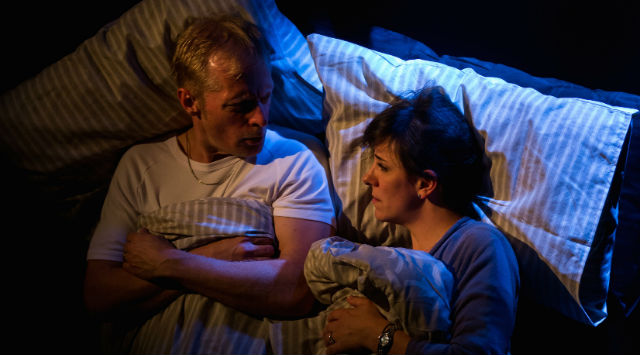
Review: Resolution (Brave New Word Theatre Company)

bravenewwordVenue: Pulse Group Theatre (Redfern NSW), Jul 26 – Aug 6, 2016
Playwright: Luke Holmes
Director: Sascha Hall
Cast: Peter Bass, Deirdre Campbell, Lauren Lloyd Williams, Jacqueline Marriott, Nicholas Starte
Image by David Hooley

Theatre review
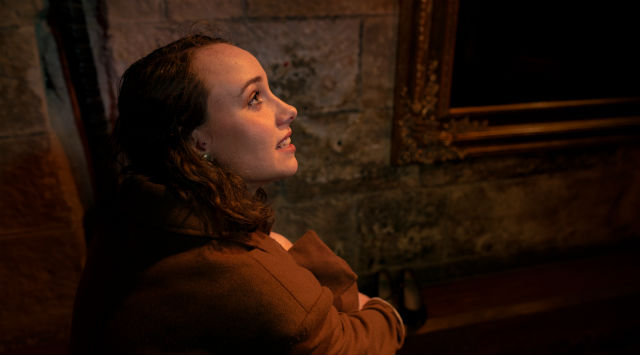
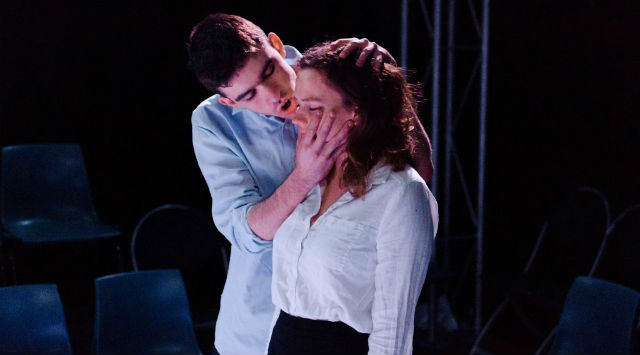
The CEO of a media giant passes away, and names her daughter heir to the company. Suddenly thrust into the limelight, Abigail has to deal with her mother’s death as well as unexpected revelations of the inconvenient inheritance. The story is about coming to terms with one’s parent’s failings, and even though Resolution is guided by strong ideas that most are able to relate to, the script is dry, with few opportunities for effective comedy or drama to take hold.

The narrative is needlessly complex, with superfluous characters and numerous scene changes that the simple style of direction struggles to bring clarity to. Jacqueline Marriott is a likeable leading lady, but her work lacks the gravity required by the role, and even though her commitment is faultless, there is little in her portrayal of a high powered corporate executive that is convincing. An improvement to costume and hair design might be helpful. The charismatic Nicholas Starte has a more straightforward part to play as Abigail’s beau Cameron, impressing us with strong dynamic range and a theatrical effervescence that brings flashes of life to the stage.

We may not relate to Abigail’s position as a leader of hundreds, but we understand the painful feelings that can exist between any parent and child. There are always things a mother could have done better, or words a father could have said with more kindness. As children grow into adults, and as we start seeing the world from older eyes, scars can begin to be erased. No one wishes for any bundle of joy to be contaminated, but babies can only be taught by the imperfect; innocence will be lost and disappointments will arise. We can remain idealistic, but the turbulence of life can never be eradicated.

www.bnwtheatre.com.au

Review: Drift (Two Peas)

twopeasVenue: ATYP (Walsh Bay NSW), Jul 20 – 30, 2016
Playwrights: Tara Clark, Kieran Foster
Director: Tara Clark
Cast: Ayeehsa Ash, Challito Browne, Olivia Jubb, Adam Kovarik, Alex Packard, Lauren Pegus

Theatre review
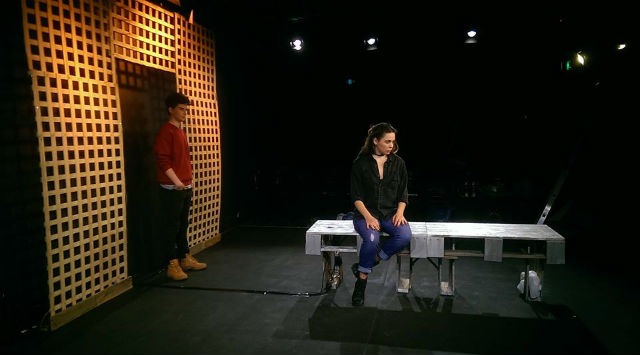
Six friends, tightly bonded, navigate the challenges of early adulthood together. When one of them is diagnosed with a terminal illness, their lives begin to unravel. Tara Clark and Kerian Foster’s Drift looks at friendship for twentysomethings, and the effect death has on them as individuals and as a group. There is a charming simplicity to the writing that presents the nature of relationships with a graceful honesty. The dynamics between friends, lovers, and siblings are depicted accurately and intimately in a series of small scenes, many of them meaningfully mundane.

The production however, charts a haphazard emotional journey that does not deliver us to its desired conclusion accurately. We struggle to connect sufficiently with appropriate personalities and narratives for a focused enough experience that would arouse the sentiments necessary for what the show tries to achieve. In the absence of lead roles, our attention is spread thin, and unable to find suitable empathy for appropriate characters, we are kept outside of their microcosm. Performances are accomplished, although the players seem to take time to settle, only able to establish chemistry and energy after several minutes of imprecision. Adam Kovarik impresses in the role of Harrison, bringing much needed exuberance and authenticity to a play that is essentially about our raw emotions. The actor’s vigour brings life to the stage, and with a distinct sense of theatricality, relays his part of the story with clarity and ironic humour.

Death is the end of suffering, but is also agony for loved ones left behind. Time is key in the process of mourning. Nothing can speed it up, but one has to find ways to fill that time. Theatre is the most ancient form of time-based art, and in Drift, we spend moments with its characters counting the minutes as they contemplate the future after being inflicted with an abrupt end. For a life well lived, there must be movement forward, but for motion to matter, stillness must be embraced. While we are alive, heaven and hell are the here and now, both inescapable and both requiring our complicity, in order that our brief existences may become rich, and loved.

www.thetwopeas.com

Review: Betrayal (Ensemble Theatre)

ensembleVenue: Ensemble Theatre (Kirribilli NSW), Jul 16 – Aug 20, 2016
Playwright: Harold Pinter
Director: Mark Kilmurry
Cast: Guy Edmonds, Ursula Mills, Matthew Zeremes
Image by Clare Hawley

Theatre review
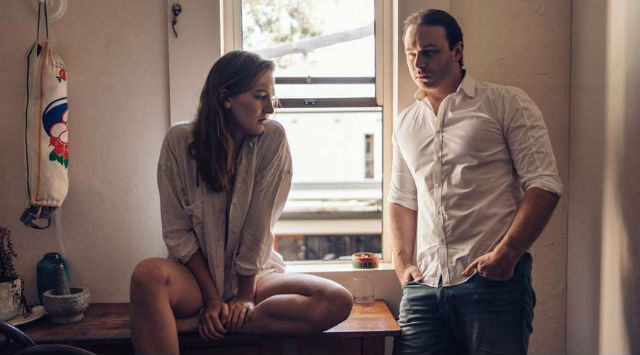
In Harold Pinter’s Betrayal, everyone cheats on their spouses. The play first appeared in 1978, with a plot that moves in reverse chronological order, and in some ways, we do have to go back many years in time to find an appreciation of the work. Its drama relies on a sense of scandal and taboo that is no longer scintillating. We may still hold the concept of marriage in high regard, and still be hurt by infidelity, but as a dramatic device, we have clearly become jaded and immune to its effects. Nevertheless, Pinter’s dialogue remains delightful, almost mesmerising in its lexical beauty. His sardonic expressions bear a seductive power that keeps us eager to hear more, if only for the richly evocative, and ironic, words that the characters say to each other.

The production is saturated with tension from the very beginning. Director Mark Kilmurry’s ability to engage our thirst for intrigue is put to good use here, as we find ourselves keenly following the plot, in anticipation of dramatic revelations, which unfortunately, the script does not always deliver. A minimal approach to its staging ensures that all attention is placed on its cast of three very attractive players, each with their own allure, but all skillful and committed in their respective characterisations.

The radiant Ursula Mills plays serial adulterer Emma, conflicted yet libidinous, with an impressive confidence that makes her part in the show powerful and surprisingly believable. Emma’s husband Robert is given excellent nuance by Guy Edmonds, whose dynamic depiction of a man betrayed, is perfectly measured and consistently entertaining. Robert’s best friend Jerry, who sleeps with Emma for seven years, is an energetic and affable presence in actor Matthew Zeremes, whose caddish but sincere approach protects the production from descending into melodrama. Comprised mainly of two-hander scenes, the actors manufacture great chemistry on stage for a cohesive and compelling experience, even if the play’s age does work against them.

Jerry’s wife and best friend both fail him, but he sticks around, accepting the betrayals with little resistance. Keeping calm and carrying on, the British gentleman is dejected but does not seem to demand more of life; it is not the end of the world, after all. His tolerance is perhaps not uncommon. We imagine married couples to be monogamous, but what happens behind closed doors is anyone’s guess. Jerry has to keep up appearances, because everyone else does. We maintain a certain image required of us by society, even when under great hardship, because there are few things as painful as ostracism. We see the characters in Betrayal live their own lies, and think about the price of truth. An authentic existence is an extravagance that many do not wish to pay for, but what we are left with at the end, will only be tainted with regret.

www.ensemble.com.au

Review: Cristina In The Cupboard (The Depot Theatre)

depottheatreVenue: The Depot Theatre (Marrickville NSW), Jul 13 – 30, 2016
Playwright: Paul Gilchrist
Director: Julie Baz
Cast: Nyssa Hamilton, Teale Howie, David Jeffrey, Emily McGowan, Tasha O’Brien, Sarah Plummer, Lucy Quill, Rachael Williams
Image by Katy Green Loughrey

Theatre review
We hear of people going on therapeutic retreats, travelling to the countryside, away from everyday city life, to find themselves. Some sound like lavish holidays disguised as spiritual endeavours, while others seem too challenging for mere mortals to even imagine, such as those who require individuals to be shut off from the world, speaking to no one at all for weeks on end. Cristina locks herself up in her cupboard, compelled to look inward, rejecting efforts to intervene from family and friends. She is determined to withdraw from the noise, and listen only to her own heart.

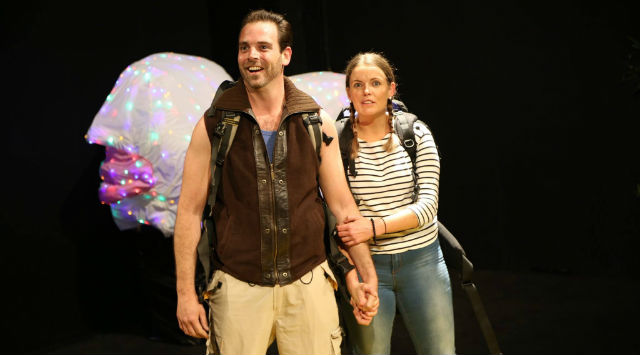
In Paul Gilchrist’s exceptional and very contemplative play Cristina In The Cupboard, we join a girl on her journey of self-discovery, as she asks all of life’s big questions and takes it upon herself to provide the answers. Like Cristina, the script is charming, intelligent and brave. It is an invaluable expression of the universal but private experience of introspection, giving form to something that is usually subconscious, so that our hidden and buried realities comes to light, and that we may begin to have a better understanding of our minds, along with a warmer regard for our souls.

The vibrant and imaginative production under Julie Baz’s direction works effectively at enhancing the ideas of the play, bringing lucidity to the many deep meditations therein. There are powerful and oftentimes complicated concepts that require the physical dimensions of theatre to put to effect, and Baz negotiates them successfully. Sections of the show could be dealt with with a lighter touch, but the overall impression it leaves is dynamic and surprisingly entertaining. Each of the production’s characters are well considered and delightfully detailed, for a stage that is consistently abuzz with adventure and life. It is a strong cast, featuring Emily McGowan in the title role portraying the demanding duality of girlish innocence and a remarkable wisdom. McGowan’s confident presence allows us to connect with her character’s unusual circumstances, and the precision at which she delivers her performance turns the show’s context of magical realism into something quite profoundly authentic.

Life is hard, and art alleviates suffering by letting us know that we are not alone. As we relate to Cristina’s struggles, we are consoled by the mutuality of all our concerns and anxieties, and in the process come to a re-acquaintance with humanity and its inevitable vulnerabilities. Without art, we are sold only false representations of life that tend only to make things even harder. It is no wonder that we have to hide away, to retreat into spaces of safety that can only be provided by the self, the truth, and everything we trust to be real art.

www.thedepottheatre.com

Review: Proof (Freefall Productions)

freefallVenue: New Theatre (Newtown NSW), Jul 14 – 30, 2016
Playwright: David Auburn
Director: Derek Walker
Cast: Alex Brown, Julia Christensen, Peter Flett, Ylaria Rogers
Image by Michael Snow

Theatre review
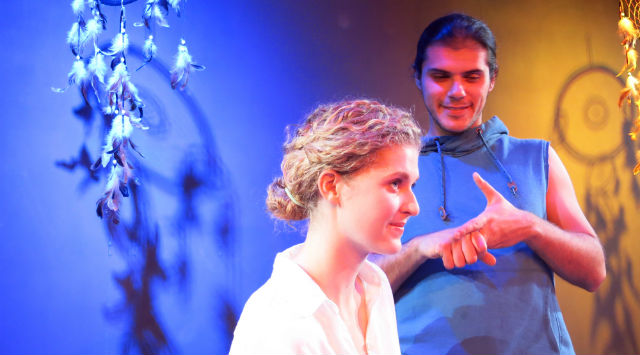
Catherine has not lived up to her considerable potential as a mathematics prodigy because of sacrifices that have had to be made for her family. Also, her talents are constantly being underestimated and undermined in the patriarchal worlds of academia and maths, who insist on perceiving her as an insignificant shadow of her genius father. David Auburn’s Proof does not explore sufficiently the sexism experienced by his protagonist, even introducing a male love interest to help Catherine realise her dreams, but the narrative is nonetheless a fascinating one, with twists and turns that ensure a gripping experience.

Derek Walker’s direction of the piece brings a good amount of tension for drama to take hold, and although enjoyable for most of the duration, a stricter hand over actors’ choices would give the show a better sense of polish. Playing Catherine is Ylaria Rogers, a dynamic performer who delivers each scene with a thoughtful diligence, but there are inconsistencies in her interpretation that make her character feel slightly distant. Alex Brown leaves a strong impression as Hal, charming and authentic, with a natural sense of timing that serves to make his role effortlessly convincing. Also memorable is Jeremy Allen’s set design, beautiful in its rustic realism, and bold in the way it dominates and transforms space.

It is an entertaining production that will satisfy audiences who want a good story. Proof has got tragedy, comedy and a lot of intrigue, but the moral of its tale is uncertain. This show does not have a strong message that it wishes to advocate, leaving us instead to absorb what we can from its staging of a very popular play. Making theatre is essentially political. It involves strangers talking to each other. The artistic act in today’s pragmatic economies is by nature one of subversion, even if the work itself is polite to the degree of being nondescript. As long as artists remain dedicated, as they appear to be here, there is hope for the world.

www.freefallproductions.com.au

Review: Leaves (Bakehouse Theatre Company)

kxtVenue: Kings Cross Theatre (Kings Cross NSW), Jul 9 – 23, 2016
Playwright: Lucy Caldwell
Director: Rachel Chant
Cast: Harriet Gordon-Anderson, Bobbie-Jean Henning, Poppy Lynch, Simon Lyndon, Amanda Stephens-Lee

Theatre review (of a preview performance)
When news broke several months ago that a 10 year-old Aboriginal girl had taken her own life in Western Australia, our nation was stunned into a moment of grief and rare self-reflection, searching for reasons to help us understand what had happened. We knew that it was the fault of a wider community, but struggled to find a way to take responsibility for the deeply unfortunate incident. In Lucy Caldwell’s Leaves, a teenager attempts suicide and we must again investigate the causes of her calamity. The play takes place in Lori’s home, where everything is healthy and normal, bringing us to the conclusion that family is unable to shield us from all the failings of society. It is a tender script, confidently quiet but with subtle fluctuations in tone that provide unexpected hints of drama and comedy.

Situations in Leaves are volatile, so corresponding emotions are kept under tight containment by director Rachel Chant for a work that is elegant, melancholic and extremely thoughtful. It is a production full of nuance, aided by the considerable talents of music composer Nate Edmondson and lighting designer Sian James-Holland, both providing unobtrusive but essential elements of movement and tension to the piece. A strong cast provides the show with a cohesive and unique flavour (too rich and ephemeral to put to words), with each actor compelling in their respective parts. Poppy Lynch is especially memorable playing a 12 year-old, adorable and authentic in her emulation of childlike qualities, but complex in the relationships she harnesses with co-actors. Bobbie-Jean Henning plays the feisty Clover, rebellious in demeanour but innocent by nature. The actor is convincing and dynamic in her characterisations, effectively adding sprightliness to a largely sombre production.

Places have problems, and sometimes leaving is the best answer. Forming attachment with community is human, but where we call home might not be nurturing or gratifying. The grass is greener on the other side, but when given the opportunity, we must make the effort to discover the truth in what was once only imagined. Taking chances can mean win or lose, but to truly live requires motion. When Lori chose to give up on life, she gave in to stasis and hopelessness. The solution for her problems may not be concrete or certain, but the only way to find it is to get moving.

www.kingsxtheatre.com

Review: Forbidden (Blood Moon Theatre)

bloodmoonVenue: Blood Moon Theatre (Potts Point NSW), Jul 6 – 23, 2016
Playwright: Visakesa Chandrasekaram
Director: Neil Khare
Cast: Dimitri Armatas, Neil Khare, Belinda Maree

Theatre review
Terrorism ranks atop our most pressing issues of the day, and we argue endlessly to find explanations and remedies for the actions of enemies that we seem never to be able to find an understanding of. Visakesa Chandrasekaram’s Forbidden is the story of one Sri Lankan woman’s personal struggle as we find her on a journey towards oblivion with a militant Tamil separatist organisation.

Chandrasekaram’s script is romantic, colourful and emotional, offering unique insight into a mystifying world. It does not make excuses for the abomination that takes place, but seeks to expand our understanding of a hidden microcosm. Where things are forbidden, there are secrets. The play may not be biographical or even factual, but it inspires a wider conception of an otherness, dissolving a threatening enigma to reach an understanding of what is always and essentially a shared humanity.

The production is a simple one, and too basic in approach for a highly imaginative text that features a non-chronological timeline and supernatural influences. Acting style tends to be overly dramatic for the very intimate space, but strong commitment by the cast helps us find meaning in the story. Each actor is clearly invested in their respective roles, but chemistry is lacking, which can make relationships confusing and events incoherent. The show needs more time to mature, in order that greater depth can be discovered in all areas and for its message to sing with better clarity.

Urmila’s reasons for adopting drastic measures are as personal as they are political. We forget the individual experiences of soldiers from all sides, choosing to conflate every disaster of war into the purely ideological. In Forbidden, the suicide bomber is given a name and her identity is exempt from simplification. To know even one sacrificed life is a powerful antithesis to the faceless apathy that we have come to accept as daily normalcy. No single work of art will solve the problems of the world, but an opportunity to broaden minds exists in every creation, and every bit of wisdom gained is an existence grown stronger.

www.facebook.com/bloodmoontheatre

Review: Hurt (White Box Theatre)

old505Venue: Old 505 Theatre @ 5 Eliza St (Newtown NSW), Jul 5 – 23, 2016
Playwright: Catherine McKinnon
Director: Kim Hardwick
Cast: Ivan Donato, Meredith Penman, Gabrielle Scawthorn

Theatre review
A horrific road accident brings the breakdown of a relationship to its accelerated boiling point. Surrounded by trauma, Mel and Dom are in a state of anguished disintegration, trying to make sense of marriage and family amidst the smithereens. Catherine McKinnon’s Hurt is ruthless in its depiction of human frailties. Through themes of parenthood and misfortune, her play illustrates life at its most difficult moments, asking us to consider the importance of empathy and compassion, not only for others but also for ourselves. There is a complexity to the writing that demands of us, deep analysis as well as a humane response, bringing attention to the nature of our collective ethics and values. Hurt is both controversial and mundane, exposing highly contentious issues within a context of common occurrences, to orchestrate great dramatic tension for the theatre, and to challenge the ways we think about life and the way we treat one another.

Director Kim Hardwick brings a lethal combination of operatic emotionality and psychological acuity to a production that enthrals from start to finish. The interplay of characters constantly fluctuates to keep us mystified and on edge, but a sense of truth prevails no matter which way the show’s tone oscillates. An unrelenting and dark intensity drives the plot through its surprising revelations, with a seductive force, impossible to resist, drawing us further and further into its agonising quagmire. Production design adheres to Hardwick’s powerful but subtle aesthetic approach. Set design by Isabel Hudson, lights by Martin Kinnane, and Katelyn Shaw’s soundscapes provide the cast with elegantly effective backdrops against which their magic happens.

Meredith Penman plays Mel, the troubled mother of two, with a delicious daring that complicates our need to sympathise and deride. Resisting the temptation to turn her character into a convenient victim, Penman’s ability to portray convincing fallibility is key to the show’s brilliance. No parent can ever be perfect, but we hold them to a certain standard that Mel’s story shows to be impossible for many. The role of Alex is performed by the very impressive Gabrielle Scawthorn, whose work in Hurt is nothing short of spectacular. Perfectly measured and delicately balanced, Scawthorn’s creation is simultaneously brutal and tender, displaying an extraordinary vulnerability in her undeniably painful process. Ivan Donato provides excellent support as Mel’s husband Dominic, with a focused conviction that helps sustain the protracted and mesmerising hysteria of Mel’s world.

When it all comes tumbling down, we are faced with the choice of surrender or struggle. We watch the people in Hurt fight through incredible hardship, and worry if their spirit can pull them through. We want to believe that our fortitude can surmount anything, but the truth is that weakness co-exists with strength, and can sometimes be the element that defeats. It is in trauma, that one’s mettle gets tested, and even though every successful attempt to overcome must be celebrated, it is necessary that our failures are afforded forgiveness.

www.whiteboxtheatre.com.au

Review: The Viagra Monologues (Off The Avenue Productions)

offtheavenueVenue: Blood Moon Theatre (Potts Point NSW), Jun 16 – Jul 2, 2016
Playwright: Geraldine Brophy
Director: Samuel Allen
Cast: Tom Matthews, John Molyneux, Meynard Penalosa

Theatre review
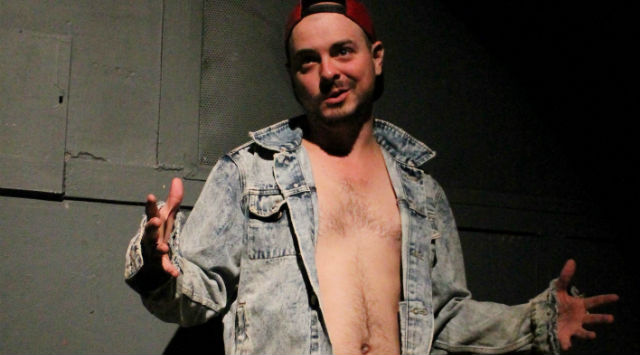
Three male actors present a series of small episodes offering perspectives on life and humanity, through experiences of male sexuality. Like its very famous feminine predecessor, characters in The Viagra Monologues centre their stories on their genitalia. The pharmaceutical referenced in the title does not make frequent appearances, but its presence is a conspicuous metaphor figuring alongside ideas of masculinity and emasculation, which form the play’s main focus. An erect penis alone does not maketh the man, and we explore what it is that today’s man needs in order to find strength and spirit for his existence. Geraldine Brophy’s script is appropriately diverse in scope, with an admirable objective of portraying vulnerability within its very wide range of personality types. Virtually everything we see in the theatrical landscape involves men, but it is not a regular occurrence to see them only at their most vulnerable, stripped of every macho pretence.

Director Samuel Allen does well to create on the stage, distinct scenes and people who appeal in differing ways. The use of space has a tendency to be too basic and repetitive (and lighting design leaves much to be desired), but Allen’s attention to detail in performances provides an effective realism to all the stories we hear. It is an accomplished cast, balanced and cohesive in their efforts but each with their own idiosyncrasies. Tom Matthews entertains with a flamboyant edge to each of his depictions, John Molyneux is charismatic especially when playing young children, and Meynard Penalosa is captivating in his portrayals of emotional intensity. There are inconsistencies in their ability to delve into the fragility of each sequence, but when successful, the monologues take on a powerful poignancy that speaks deeply about the way we are, and how we treat each other.

These are stories about men, but written by a woman. The best of feminism benefits all, and it is the acknowledgement of the destructive qualities of manhood in these stories that make them meaningful. We observe a series of male characters in varying stages of intimate vulnerability, each exposing themselves in a way that real life (outside of the theatre) disallows. The men are beautiful when they bare all under this spotlight, but these are moments of imagination that, although truthful, are rarely encountered face to face, even with the ones we love. We make our men resilient, powerful and hard, as a matter of course, without stopping to think about the sacrifices involved. They soldier on, with all their softer sides buried and suppressed, but dark monsters manifest when we fail to take care.

www.offtheavenue.com.au

Review: Away (Sport For Jove Theatre)

sportforjoveVenue: Seymour Centre (Chippendale NSW), Jun 22 – 25, 2016
Playwright: Michael Gow
Director: Damien Ryan, Samantha Young
Cast: Angela Bauer, George Banders, James Bell, Michael Cullen, Danielle King, Berynn Schwerdt, Georgia Scott, Lizzie Schebesta, Christopher Stalley, Christopher Tomkinson, Eloise Winestock, Amy Usherwood, Sarah Woods
Image by Marnya Rothe

Theatre review
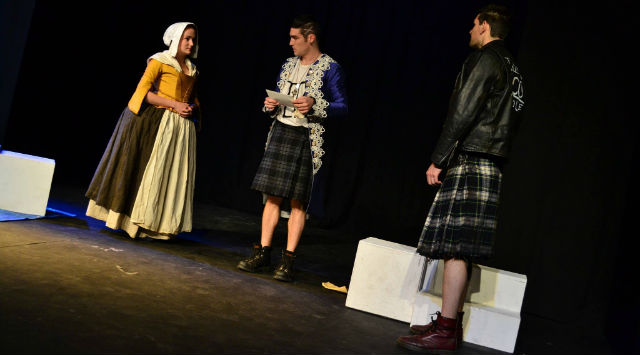
Michael Gow’s Away is about ordinary lives and their hidden struggles. The action takes place in 1967 Australia, but the problems faced by its characters are of a personal nature and therefore eternal in their resonance. Social turbulence evolves with each era, and although we think of the world as being a different place with different challenges through time, Gow’s play demonstrates the constancy of our inner struggles. We can imagine ourselves existing in any period, but human mortality is the basis of how we conceive of ourselves; the awareness of death’s inevitability tells us what we want from each day and what we wish to leave behind.

Away is not essentially of an operatic scale, and its many intimate qualities are lost in the very vast theatre space. The production is attractively designed, sleek and refreshing in its simplicity, but the set has an asymmetry that causes the play to project to approximately two-thirds of the auditorium, leaving remaining seats cold. Direction is similarly negligent of this spacial imbalance. Actor Sarah Woods is a clear stand out for her deliberately exaggerated performance, gripping the audience with an over-the-top entrance, and keeping us engaged with her dramatic flourishes as her character Gwen proceeds to reveal her surprising complexities.

The text has an interest in the dark and messy sides of life but the show has a sterility that disconnects from its intentions. The story might be conveyed well to the better seats in the house, but its message is not delivered with sufficient power. We congregate at the theatre to listen, and those on stage have the responsibility to reach out to all who have made the effort to participate. The room can be packed full through commercial brilliance, but the night proves to be fruitless if people leave with emptiness.

www.sportforjove.com.au