Review: Member (Fairly Lucid Productions)

fairlylucidVenue: Blood Moon Theatre (Potts Point NSW), Feb 21 – Mar 4, 2017
Playwright: Ben Noble
Director: Casey Gould
Cast: Ben Noble
Image by Deryk McAlpin

Theatre review
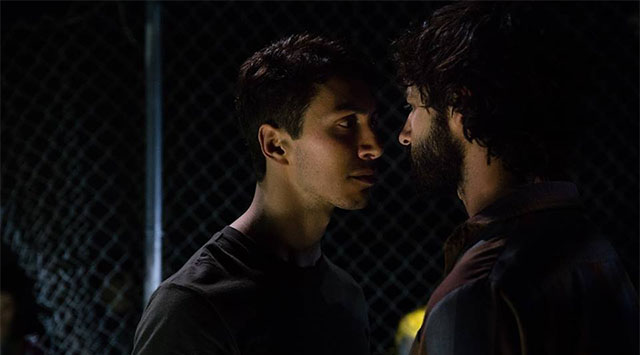
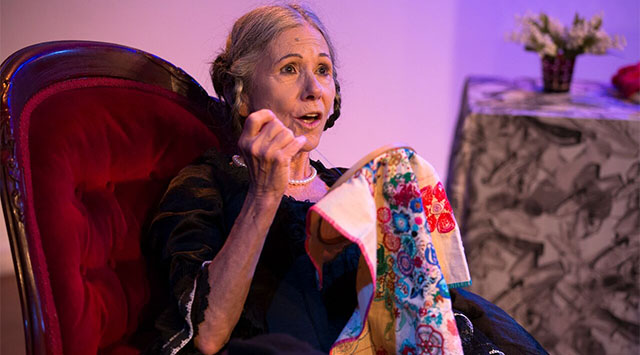
Corey is a man whose homophobia is bigger than the love for his own son. Ben Noble’s Member is an investigation into how young men learn to hate, and more specifically, how a culture of gay bashing and gay murders, is fostered in places like Sydney. Corey grew up in the Northern Beaches, a regular white boy with no cares in the world, wanting for nothing except for the acceptance of his peers. We see him fall in with a gang of young men who hunt down gay individuals in isolated areas, and witness how he is pressured into his first killing.

The writing is powerful, dark and urgent. Although conceived as a monologue, it comprises voices of the many personalities in Corey’s world, that reflect the social construct of his very being. It helps us understand how violence is bred, not so that we forgive perpetrators, but to find a way to dismantle the process by which our innocent children are groomed into hateful forces of evil. The play marvellously exposes us to the depths of Corey’s vicious immorality, while insisting on his unassailable humanity, in order that we may recognise the reality of his wrongdoing and not have it glossed over as some kind of psychopathic exception. As a community, we are made to see in Member, where our complicity lies in the formation of behaviour and belief systems of people like Corey. We may not be responsible for these murderers, but we have to discover a change that will ensure that this continuing misanthropy is eradicated.

It is a finely calibrated show by director Casey Gould, impressively dynamic and wildly captivating with its expansive landscape of sentimentality. Very effective design work (sound by Coleman Grehan and lights by Lisa Mibus) relies on a high-polish precision that helps facilitate our every emotional response, and the delicate transitions between. Gould’s very complicated structure of speedy character transformations is a remarkably tall order, and although Ben Noble’s execution as actor is not completely flawless, he is often astonishing on stage. Noble’s extraordinary concentration and impeccable ability to thoroughly communicate meanings and emotions, elevates this simplest of theatrical forms, the one man show, to an art that is hard to beat for its empathetic impact.

There remain parts of the world where LGBT people are marginalised, and killed, as a matter of course. We may not feel the need to concern ourselves with those lives, but we must acknowledge that that same psychology and sociology of hatred exists right here, and when left unchecked, can manifest just as brutally. The flavour of the month in our violent West, may no longer be the lonely gay man who seeks solace in dangerous beats, but that attitude of senseless persecution of minorities is a thriving part of our lives, and must never be left disregarded.

www.fairlylucidproductions.com

Review: Big Crow (Brave New Word Theatre Company)

bravenewwordVenue: Pulse Group Theatre (Redfern NSW), Feb 21 – Mar 4, 2017
Playwright: Mark Langham
Director: Barry Walsh
Cast: Amylea Griffin, Charles Jones, Ben Maclaine, Jodine Muir, Liam Smith
Image by David Hooley

Theatre review
Many of us have felt the urge to kill our bosses, at one time or another. We may be able to operate under authority on most days, but human nature has its limits when kept under tight control. Tommy and Albert were Londoners brought to Australia in the 1930’s. Fed up with slave-like conditions, they decide to capture their employer in an effort to turn their fortunes around. Based on a true story, Mark Langham’s Big Crow features five contrasting personalities, each with their own distinct proclivities. The play sets up a fascinating context for their interactions, and even though the stakes at play are high, the sparks that fly are minute and momentary.

It is a plot that struggles to find focus, with competing narratives fighting for our attention. We are intrigued by the theatrical temperament of its characters, but their individual stories all seem too vague and under-cooked. What they reveal of themselves only teeter on the brink of something enticing and salacious, never really bringing us to a satisfying epiphany. Director Barry Walsh’s attempts at manufacturing an atmosphere of violence and brutality helps provide some visceral drama to the piece, and although some of the acting is convincing (Charles Jones and Jodine Muir are its saving grace), the show offers little that would allow us to connect.

When Peg discovers her husband tied up, about to be slaughtered, she reacts with an unexpected sadistic delight. The show is on, and like Peg, we wait for something to happen that would deliver thrills and enlightenment. When our expectations are not met, we can look back for what might have been missed, or we can move forward in search of the inevitable next opportunity.

www.bnwtheatre.com.au

Review: The Trouble With Harry (Siren Theatre Co)

sirentheatrecoVenue: Seymour Centre (Chippendale NSW), Feb 16 – Mar 3, 2017
Playwright: Lachlan Philpott
Director: Kate Gaul
Cast: Thomas Campbell, Bobbie-Jean Henning, Jodie Le Vesconte, Niki Owen, Jane Phegan, Jonas Thomson
Image by Clare Hawley

Theatre review
In there somewhere, is a true story. Harry Crawford was a transgender man who lived in Sydney a century ago, and when he fell foul of the law, was forced to present as female in public. Stories of the oppressed are systematically sublimated by dominant forces that demand not just acquiescence in behaviour, but also censorship of histories. Lachlan Philpott’s The Trouble With Harry goes in search of a fascinating figure from our cultural past, to create a new collective memory that is as significant to our lives today as it should have been yesterday.

It is a modern piece of writing on the subject. We are still focused on the persisting struggles of trans people, but Philpott does not put us through the exasperating process of “understanding why”. The trans person is not required to defend his position, or explain his existence, and this is radical. We only see the persecution and injustices that befall Harry, and that is more than enough for our protagonist to connect with his audience’s humanity.

The sophistication of the script is reflected in the production’s look and sound, with an exceedingly elegant team of designers bringing to the space, a serene beauty that evokes an appropriate grandness of emotion and meaning, so as to correspond to Harry’s extraordinary experiences. Matt Cox’s work on lights is particularly laudable, for an unmistakable quality of transcendence that permeates the show.

The same sophistication is missing however, in the casting of a female actor as the leading man. One could easily imagine Harry turning in his grave at the very idea. The play’s structure too is damaged by the cat being let out of the bag, far too early in the plot. We need to see what Harry’s neighbours see, in order that the cruelty and absurdity of his troubles can be revealed with greater poignancy, and accuracy. (More on this “theatrical misgendering” of trans characters in my piece last year on Belvoir’s Back At The Dojo.)

Nonetheless, performances are uniformly accomplished in The Trouble With Harry. Jodie Le Vesconte is a soulful Harry, convincingly strong and silent, with an impressive sense of depth to his inarticulate suffering. A mesmerising couple, with Jane Phegan as his Annie, their mutual affection feels completely genuine, and a crucial point of success for the production. Director Kate Gaul’s confident, understated approach gives us a very smart show, with a lot of integrity injected into her depiction of one of society’s most misunderstood. There is a real beauty in Gaul’s theatricality, but dramatic tension for the piece is inconsistent and occasionally underwhelming. We want the tragedy to play out in a more predictable way, but the staging resists that convention and its associated clichés.

There is a delicate balance in our society that involves the constant negotiation between cohesion and individuality. We want to feel safe in our communities, so we are compelled to make endless assumptions about our neighbours, and how much they are just like us. We want other people to conform, because if we are to follow the rules unquestionably, we will ensure that others must do the same. Gender, it can be argued, is nothing but a long list of requirements made of us that contain virtually no inherent logic. Harry was a man with a quirk, and a man with no quirks, is no human at all.

www.sirentheatreco.com

Review: The Judas Kiss (Old Fitz Theatre)

redlineVenue: Old Fitzroy Theatre (Woolloomooloo NSW), Feb 15 – Mar 11, 2017
Playwright: David Hare
Director: Iain Sinclair
Cast: Robert Alexander, Luke Fewster, Simon London, Hayden Maher, Hannah Raven, David Soncin, Josh Quong Tart
Image by John Marmaras

Theatre review
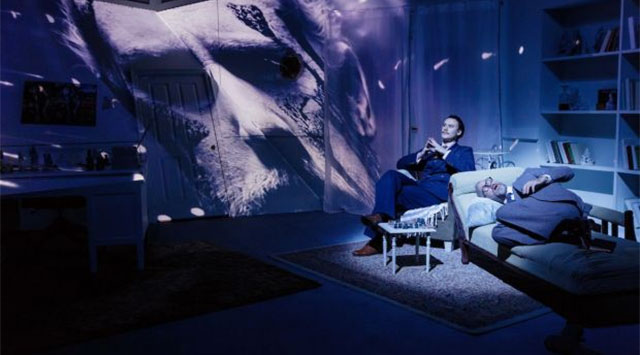
Oscar Wilde’s career was cut short, when in 1895, just several months after The Importance Of Being Earnest first opened, he was sentenced to two years’ imprisonment for homosexual behaviour. David Hare’s The Judas Kiss is a chronicle of Wilde’s downfall, with Act 1 detailing his last day of freedom, and Act 2 summing up his final years in exile and poverty.

Hare’s writing is nothing short of sublime. The beauty of his language lives up to our expectations of Wilde’s speech and milieu, along with gripping philosophy incorporated into its plot at every turn. It is a rewarding intellectual experience, but the play is also rich with romantic and emotional dimensions that have the ability to engage the more empathetic sides of our attention.

Under Iain Sinclair’s heavily melancholic direction, the show’s humorous Act 1 becomes more sombre than necessary. A dark cloud looms over all the brilliant wit and notorious flippancy associated with Wilde, taking away the laughs, and causing the gravity of the piece to appear too plain and obvious. Sinclair’s style is more effective in Act 2, where the serious tone provides good support to the dramatic unravelling of its main characters.

Playing Wilde is Josh Quong Tart, an actor capable of great intensity, excellent at portraying the role’s inner turmoil. We see him grapple with the writing’s complexity, slipping in and out of resonance, but Quong Tart proves himself to be always captivating even in momentary lapses of authenticity. The Judas in question is Wilde’s lover Alfred, performed by Hayden Maher who brings youth and energy to the stage, but his interpretation is a simplistic one that detracts from the story’s otherwise extraordinary depth. Simon London leaves a remarkable impression with his disciplined, understated approach as Robbie, a quiet personality given tremendous presence by the actor.

Kudos must also be given to Jonathan Hindmarsh’s extremely ambitious set design. Breathtakingly constructed by Colin Emmerton and Gautier Pavlovic-Hobba, one can hardly imagine the effort required for its daily assembly and dismantling.

The persecution of Oscar Wilde has made him an unwilling hero of our LGBT movement, one that is hungry for historical figures to help validate our existence, and to provide contexts for our narratives of struggle. People who had suffered before, tend to have their stories wiped away by the same dominant forces responsible for their mistreatment, so we cling on tightly to the tales that remain. Wilde is remembered not only for his legacy in writing, but also his part in helping us articulate, as a community to the wider world, the prejudice we face, and the value we bring to the world.

www.oldfitztheatre.com

Review: The Mystery Of Love & Sex (Darlinghurst Theatre Company)

darlotheatreVenue: Eternity Playhouse (Darlinghurst NSW), Feb 10 – Mar 12, 2017
Playwright: Bathsheba Doran
Director: Anthony Skuse
Cast: Deborah Galanos, Thuso Lekwape, Nicholas Papademetriou, Contessa Treffone
Image by Steven Siewert

Theatre review
We have told many “coming out” stories over the last several decades. The agonising process of revealing one’s own queerness to inevitably heterosexual parents and a correspondingly straight world, is a mainstay of queer art. In Bathsheba Doran’s The Mystery Of Love & Sex however, we are concerned with how individuals come out to themselves.

Charlotte’s parents are open-minded, savvy individuals who are relaxed about homosexuality, yet she finds herself in a state of crisis when discovering that she might be gay. Her closest confidante Jonny, too, is taken by surprise. Even with all the intimacies that they had shared through the years, the assumption of heterosexuality never goes away. Best friends can tell each other everything, but when it comes to any possible deviation of sexual preferences, those remain a deep, dark private secret.

The play is about society’s persistent inability to makes structural adjustments, that will allow our children to grow into adults with sexual idiosyncrasies, without fear of discrimination or persecution. Doran’s approach for this political issue is subtle, very cleverly handled. It is an intriguing plot, with dialogue that amuse, resonate and challenge. Its ideas are not new, but they are presented in a manner that makes us feel only their relevance and urgency.

Directed by Anthony Skuse, the show has an enchanting warmth that appeals to our sentimental selves. These may not be our families and friends who tell their stories on stage, but Skuse makes us feel as though they are part of our lives. The production has a tendency to be overly polite and placid, but all its messages are relayed with clarity and a beautiful deliberateness.

Charlotte is played by Contessa Treffone, effervescent in personality and comic timing, for a central character impossible to dislike. Best friend Jonny is sensitively crafted by Thuso Lekwape who brings wonderful depth and complexity to a young man trapped between tradition and modernity. Nicholas Papademetriou as Howard is a loving father, almost too sweet for several of his more combative scenes, but we believe all the relationships he fosters. The fiery Lucinda is a memorable presence in actor Deborah Galanos who contributes an excellent vitality, and whose artistic instincts are relied upon for much of the staging’s authentic sense of time and space.

It is a real privilege when the greatest obstacle for social acceptance comes from one’s self. Many of us who will see The Mystery Of Love & Sex, live in progressive communities who have learned about our LGBTQ neighbours, and the diverse expressions of love, sex and gender of all peoples, yet many of us struggle to face our personal desires and sexual experiences with honesty, and without shame. The things we are taught as children stick with us tenaciously. Values and beliefs that have long expired can retain their grip on how we think of ourselves. Each of us has to come to a full realisation that these old ideas have outstayed their welcome, and have them banished.

www.darlinghursttheatre.com

Review: Blink (Stories Like These)

storiesliketheseVenue: Kings Cross Theatre (Kings Cross NSW), Feb 9 – Mar 4, 2017
Playwright: Phil Porter
Director: Luke Rogers
Cast: James Raggatt, Charlotte Hazzard
Image by Robert Catto

Theatre review
It is a love story between a simple man and a complicated woman. Phil Porter’s Blink is a work of fantasy that magnifies the experience of infatuation, to sometimes inappropriate levels of obsession. We can choose to see Jonah as a creepy stalker, even though the play tries to show him only as naive and sweet. His actions are clearly harmless, but that of course, is what most men will say about their fixations. Sophie is made mastermind of Jonah’s actions, and although there is something gratifying in having a woman orchestrate her own experience of romance, the reprehensible fact that Jonah is a Peeping Tom who follows her everywhere, thinking that the object of his desire is completely oblivious, cannot be discounted.

Ultimately though, the characters do develop mutual feelings, and what the play does with their relationship is wistful, and very whimsical. Anna Gardiner’s set design corresponds with the quirkiness of the text, for a performance space imaginatively conceived to provide an enchanting sense of innocent wonder. Director Luke Rogers brings good coherence to a piece of unfettered mosaic-like writing, and his ability to balance upbeat energy with a daydream quality, gives the production its charming, and distinct style. In the role of Jonah is James Raggatt, awfully adorable and convincingly wide-eyed in his Tim Burton-esque interpretation of a young man smitten. His gentle but animated approach almost makes you believe his trespasses to be no more than a little innocuous skylarking. Sophie is a much more complex character, played by Charlotte Hazzard who portrays a woman’s need to be seen, with vital delicate care.

We all want to be acknowledged, for to be invisible is intolerable, but we are not always ready to pay the price for a bit of attention. Sophie wants to be on Jonah’s mind, but is unwilling to offer anything in return. Relationships do not always fit definitions or expectations. People can connect in unexpected ways, but convention can be agonising, and if we let it, can pull us apart. What a happy ending looks like, is familiar to everyone, but when destiny takes us in different directions, we may have to modify our beliefs, and see an alternate image of fulfilment.

www.storieslikethese.com

Review: BU21 (Outhouse Theatre Co)

outhouseVenue: Old 505 Theatre (Newtown NSW), Feb 8 – 25, 2017
Playwright: Stuart Slade
Director: Erin Taylor
Cast: Jessica-Belle Keogh, Skyler Ellis, Emily Havea, Bardiya McKinnon, Whitney Richards, Jeremy Waters
Image by Rupert Reid

Theatre review
In Stuart Slade’s BU21 a terrorist attack occurs in London, but it is not a work of documentary, and the event being investigated did not happen on the public transport system, 7 July 2005. The play presents as fiction, focusing on the aftermath as experienced by the humans of collateral damage, following the horrific incident of a plane crashing into an area where people live and work. The stories may not be true, but the trauma is real. Slade’s writing feels thoroughly researched, and his subjects are explored at extraordinary depth. A sense of theatricality is built around the main concern to provide greater structural complexity, but the value of BU21 is in the intimacy at which it allows us to observe unadulterated human responses to catastrophe.

Direction by Erin Taylor brings a certain minimal elegance that keeps our minds attentive only to what is important at each moment. There is great sensitivity to her storytelling that protects us from ever feeling alienated, no matter how the phenomenon of pain is expressed. The messy business of dealing with emotional devastation is often ugly, but Taylor is always able to let humanity emerge, and our empathy cannot help but connect with it. Atmosphere is calibrated gently, but brilliantly, by Christopher Page’s lights and Nate Edmondson’s sound and music. Both demonstrate acuity and artistic maturity with their respective disciplines, contributing significantly to a show that communicates with precision and confident ease.

The cast of six is exceptional. Each distinct character is brought to life with great vividness (and convincing London accents), by a team of talented and charming actors, all conspiring with a beautiful stylistic cohesion, to take us through a mesmerising journey of agony and truth. They are spirited, colourful, dramatic, but also honest and disarmingly vulnerable. Jessica-Belle Keogh is particularly moving as Ana, distressed with injuries inside and out, in a constant state of disorientated struggle, but she delivers the most life-affirming speeches, perhaps without herself being aware of their profundity. Keogh plunges deep, to reveal something raw and brazenly soulful, that makes the entire harrowing experience of BU21 a meaningful one.

When disaster strikes people like us, we have the burden of getting back to business as usual, in lightning speed. Unlike war-torn countries where daily survival demands that one must sink or swim, our privileged existence forces troubles to be repressed, and in the face of apparent normalcy within a solitude of debilitation, all the wounds are made to subsist out of sight, and out of control. The people in BU21 seek salvation in different ways, but none of them believes that complete emancipation is possible, such is the power of hatred and terror.

www.outhousetheatre.org

Review: Losing You (Twice) (King Street Theatre)

kingsttheatreVenue: King Street Theatre (Newtown NSW), Feb 7 – 11, 2017
Playwright: Kate O’Keefe
Director: Paul Gilchrist
Cast: Kate O’Keefe
Image by Liam O’Keefe

Theatre review
Kate O’Keefe learned about her brother Daniel’s depression shortly before he disappeared. The anguish in losing a loved one, and the feelings of guilt, are immense, but there is little one can do that is constructive, except to talk. O’Keefe’s Losing You (Twice) is a manifestation of grief. It is conscious of the effect it could have on its audience, and does incorporate elements of activism and public service, but the work’s real concern is catharsis.

We are present to witness and to assist in O’Keefe’s healing, captivated by the authenticity of her revelations, along with the emotional power that she embodies. As performer of the piece however, O’Keefe can tend to push too hard with what she wishes to convey. Director Paul Gilchrist is aware of the show’s effectiveness when the story is seen at its most honest, but how we experience truth can become diluted when we see a person in pain indulge excessively in their sorrow. In real life, we have to suppress emotions in order that trauma can be made verbal. On this bare stage where every effort is made to strip off theatricality and pretence, the performer’s ability to be without embellishment is key, and very demanding, even if it is a real story.

Ultimately we never for one second, question any of the suffering, or the validity of O’Keefe’s efforts at turning it into art, which are sublime. In Losing You (Twice), we come face to face with the fragility of existence, and the meaning of empathy for us as individuals and communities. Not all of us will encounter such horrific events, but we have to be mindful of people who walk next to us with their own wounds. Life often seems to be easier for others, but the truth is that everybody hurts.

www.kingstreettheatre.com.au

Review: Intersection (ATYP)

atypVenue: ATYP (Walsh Bay NSW), Feb 1 – 18, 2017
Playwrights: Peter Beaglehole, Angela Collins, Thomas De Angelis, Isabella Jacob, Suzannah Kennett-Lister, Louis Klee, Laura Lethlean, Isabelle McDonald, Kevin Ngo, Charles O’Grady, Eliza Oliver, Farnoush Parsiavashi, Zoe Ridgway, Anita Sanders, Michelle Sewell, Jordan Shea, Brenden Snow, Lewis Treston, Mark Tripodi, Jackson Used, Honor Webster-Mannison
Director: Katrina Douglas
Cast: Tamara Bailey, Asha Boswarva, Alex Chalwell, Alex Chorley, Sonia Elliott, Elliott Falzon, Rebecca Gulia, Monica Kumar, Steffan Lazar, Ingrid Leighton, Hudson Musty, Kurt Pimblet, Esther Randles, Iris Simpson, Adam Stepfner, Ilai Swindells, May Tran, Darius Williams, Jackson Williams
Image by Tracey Schramm

Theatre review
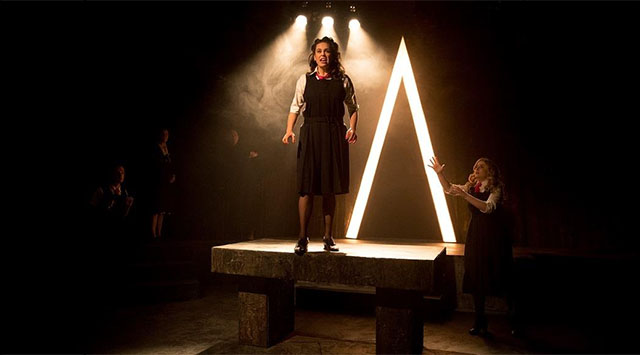
Somewhere in the background there exists a high school formal, but what we see on stage are ten stories written and performed by young people, about young people who may or may not be connected with each other. Intersection is an earnest and wholesome collection of personalities, reflecting interests and concerns of today’s middle-class Australian youth.

Jordan Shea’s Little Differences is perhaps the most consciously political, in its passionate investigation of teenagers negotiating differences in religious and cultural backgrounds. Also significant is Charles O’Grady’s subtle depiction of queer identities in Pray 4 Mojo, whereby two lonely souls form a charming bond of friendship through their shared ostracism. Actors Kurt Pimblet and Adam Stepfner prove themselves sensitive and intelligent, offering up great insight into adolescence with their very charming tale.

Excellent performances can be found in Lewis Treston’s Starlight Plaza, in which romantic leads Ingrid Leighton and Steffan Lazar establish spectacular chemistry, transforming a sweet love story into the most engaging vignette of the production. Eminently memorable comedian Monica Kumar brings the laughs in Cassie And Saoirse by Suzannah Kennett Lister, a quirky piece involving an urn and the tricky business of mourning. Asha Boswarva is equally impressive with her delicately balanced portrayal of the recently bereaved.

There is an unmistakable warmth that comes through every one of the show’s segments. Director Katrina Douglas instils a soulful quality that translates as a sense of truth for the audience, even when the stories turn obscure. Creativity materialises in an infinite number of ways, and in Intersection we witness different dispositions and approaches, all finding their way to voice the things that matter. We may not always connect or indeed, agree on all of those things, but to be able to meet at a space of artistic expression, is a moment of harmony that is undeniably precious.

www.atyp.com.au

Review: I Hate You My Mother (Old Fitz Theatre)

whiteboxVenue: Old Fitzroy Theatre (Woolloomooloo NSW), Jan 24 – Feb 11, 2017
Playwright: Jeanette Cronin
Director: Kim Hardwick
Cast: Jeanette Cronin, Simen Glømmen Bostad
Image by Rupert Reid

Theatre review
In Jeanette Cronin’s I Hate You My Mother, strange stories are told of women with webbed feet and their, less strange but more abhorrent, transgressions as defilers of sons. The playwright’s epic, mysterious, poetic style means that access to psychological dimensions are restricted, but its ability to intrigue is without doubt. Her characters are boundlessly colourful, made seductive by generous helpings of ambiguity. We find ourselves drawn in, enthralled by the sounds of their speech, although the subtlety of their revelations can cause frustration. The play’s enigmatic qualities work effectively beyond the sensual when they manage to provoke thought, but we often luxuriate only on the surface.

Elevated by beautiful work from its team of designers, the production is effortlessly elegant, with an atmosphere cleverly calculated to secure our attention. Director Kim Hardwick establishes an ethereal grace that underscores the entire show, but even though its theatricality is charming, its sense of drama tends to be underwhelming. Qualities of danger and moral deficiencies are central to the work but they feel underplayed, subsequently distancing the audience from its controversial themes. The play wishes to talk about paedophilia and incest, both difficult subjects, but its sophisticated approach lets us off the hook, and we continue to pretend not to see.

Cronin is actor for the female roles, each of them devious, powerful and unpredictable. There is no performer more gratifying than one with something to say, and Cronin is certainly rich with ideas and passionate intentions. Her male counterparts are played by Simen Glømmen Bostad, less confident but equally compelling nonetheless. They find excellent chemistry in every scene, luring us into all their exchanges, although resolutely cryptic in their expressions. The experience of gender can tell great stories, because none is free of its taint, yet it often hides itself from consciousness. In I Hate You My Mother, women do unspeakable things to boys, and we have to wonder why.

www.oldfitztheatre.com