Review: My Name Is Jimi (Belvoir St Theatre / Queensland Theatre)

Venue: Belvoir St Theatre (Surry Hills NSW), Jan 5 – 21, 2018
Playwrights: Jimi Bani, Jason Klarwein
Director: Jason Klarwein
Cast: Dmitri Ahwang-Bani, Agnes Bani, Conwell Bani, Jimi Bani, Petharie Bani, Richard Bani
Image by Daniel Boud

Theatre review
Jimi Bani hails from Mabuiag Island, in the near Western part of Torres Strait. His show My Name Is Jimi, is about culture and tradition, and the resolve to keep the uniqueness of his Wagadagam tribe alive and thriving in the modern age. True to form, the production features performers from his own family, across four generations, illustrating the essence and the importance of what is being relayed.

Small communities are always at risk of losing their identity. The young is seduced by external forces, through cultures of technology and consumption determined to establish a conformity, as required and dictated by Western capitalism. We see Jimi’s son Dimitri devouring the smartphone like any other youth, gradually losing touch with the real kinship that surrounds him.

Ambitiously directed by Jason Klarwein, the work is complex and detailed with its depictions. We learn not only what it is, that Jimi is keen to preserve, but also why and how these traditions have come to be of such value. Folklore and dance feature prominently, to inform and to entertain, but perhaps most importantly, as a demonstration of ancestral pride. There is exquisite humour in the piece, alongside its inherent warmth and poignancy.

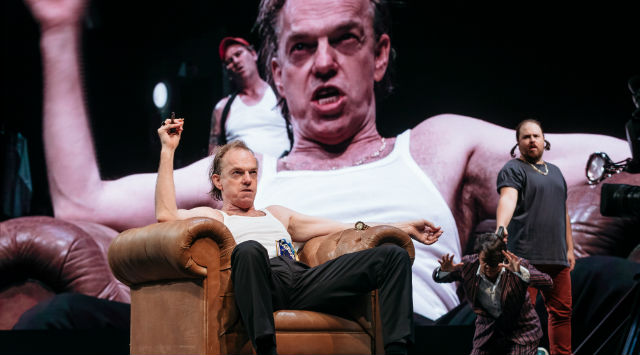
Jimi Bani’s naturally commanding presence wins us over from the get-go, allowing us to empathise with his story effortlessly, even though his circumstances are admittedly far removed from many of our daily realities. Dimitri shares his father’s humour, delivering memorable moments of comedy. Agnes and Petharie are the senior women providing music, in ethereal, glamorous and dignified fashion. Conwell and Richard are Jimi’s brothers, appropriately sharing the weight of the show, as nimble sidekicks, particularly effective with their live camera work for filmic projections called upon to represent legends of the land. Especially noteworthy is Justin Harrison’s work as sound and projection designer, beautifully transcendent and crucial to the success of My Name Is Jimi.

Family can mean different things to people, but there is no denying the emotional hold it can have over each of us. Watching Jimi and his loved ones cultivate their extraordinary closeness, is reassuring, but also challenging to those who seek a radical independence in today’s climate of rationalism. It is now normal in many societies, to find definition for the self as an entity distinct from practices of the past, especially when one identifies weaknesses and problems associated with those customs. Jimi’s emphasis on language however, is noble and inspiring. Words contain so much, and they allow us to connect with histories when we choose to. Times will change, but forgetting the past, will only hamper any effort to progress. As we seek to become better, a link with earlier experiences is invaluable. Talking with those who had come before necessitates a bridge, and understanding cultures, especially one’s own, is often more rewarding than we can imagine.

www.queenslandtheatre.com.au | www.belvoir.com.au

Review: Fag/Stag (The Last Great Hunt / Griffin Theatre Company)

Venue: SBW Stables Theatre (Kings Cross NSW), Jan 10 – 27, 2018
Playwrights: Jeffrey Jay Fowler, Chris Isaacs
Directors: Jeffrey Jay Fowler, Chris Isaacs
Cast: Jeffrey Jay Fowler, Chris Isaacs
Image by Robert Catto

Theatre review
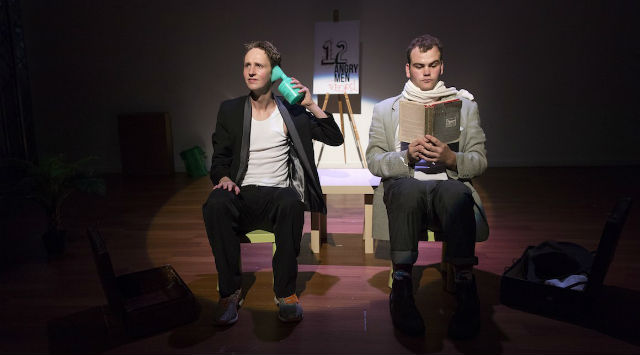
Corgan and Jimmy are best friends who live the easy Australian middle-class existence. Fag/Stag sees them fumble and struggle through episodes of triviality, as young men with few legitimate worries, save for the difficulties of having to negotiate the perils of modern masculinity. Without the burden of work and children, nothing very serious ever happens to them, yet anxiety and pain are constants. Their concerns are often silly, but we nonetheless understand that first-world problems are real, for we recognise those symptoms to be genuine, and identify with what is being presented through the creators’ admirable honesty.

Jeffrey Jay Fowler and Chris Isaacs create an amusing hour examining the privileged lives of our young white men, straight and gay. Fag/Stag is a dynamic work, compelling and entertaining, even though its persistent earnestness seems somewhat misplaced. As writers, directors and performers of the piece, Fowler and Isaacs seem never to be critical of Corgan and Jimmy, but it is evident that much of the problems the boys encounter, are a result of their self-absorption. The characters do nothing for society, spending all their days inside their own little inconsequential dramas.

Fowler is more vibrant and animated an actor than his counterpart, tenacious with every nuance, eager for his audience to gain a deep understanding of his Jimmy. Straight guy Corgan is suitably restrained, played sensitively by Isaacs whose portrayal is memorable for its sense of familiar authenticity. The pair is tremendously endearing, and warmly comedic in their depiction of a very close friendship. We like them, and many will allow ourselves to be convinced of the hardships being proclaimed.

White men may be in positions of power, but it is questionable if things are necessarily easier for them. Sexism is detrimental to all genders. In many ways, we can see that Corgan and Jimmy have it easy, but all of that convenience adds up to an aimlessness, that causes meaning to be elusive. We watch them suffer, as a result of having nothing substantial to live for. They turn to each other, for comfort and support, and for affirmation that something of value and import, can ultimately be discovered.

www.thelastgreathunt.com

Review: A Christmas Carol (Lies, Lies And Propaganda)

Venue: Kings Cross Theatre (Kings Cross NSW), Dec 14 – 24, 2017
Playwright: Melissa Lee Speyer (from the Charles Dickens novel)
Director: Michael Dean
Cast: Aslam Abdus-Samad, Dymphna Carew, Bobbie-Jean Henning, Jacqueline Marriott, Monica Sayers, Bishanyia Vincent, Michael Yore
Image by Omnes Photography

Theatre review
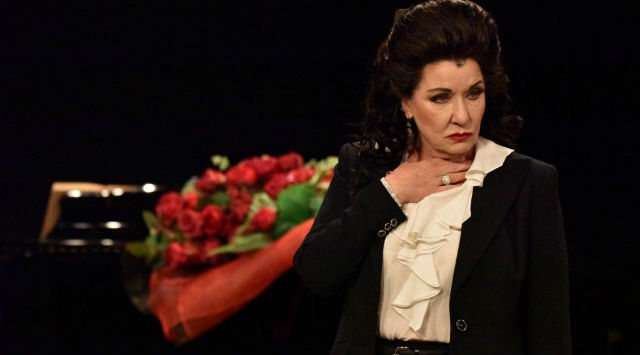
The famous Mr. Scrooge is resurrected, in Melissa Lee Speyer’s retelling of A Christmas Carol. The notorious characteristics remain, but his story is updated for our times, with new resonances for the Trump era. This new Scrooge belongs to the tribe that believes in the “trickle-down effect” of conservative politics; the kind of man who tells his employees that they have to work harder, whilst he dreams up new ways to cut their wages. Scrooge’s sin is not that he has an aversion to Christmas, but that he is selfish and unkind. On that one day his workers are away, and he is unable to scheme and torture, ghosts come to haunt him as he faces his own desperate loneliness. On Christmas Day, money proves ineffectual, and he has no recourse but to confront the man in the mirror.

It is a strong adaptation, poignant and accurate with its melancholic observations of contemporary life. Michael Dean’s direction of the piece turns A Christmas Carol into a pantomime for grown-ups, silly in parts, but impressively enthusiastic in the way its message is communicated. Music by Miles Elkington brings a quirky edge, and although not always calibrated to perfection, its function as guide for our emotional responses from scene to scene, is indispensable. The cast is adorable, and very sprightly, with Bobbie-Jean Henning as a captivating, if not entirely convincing, Scrooge. Michael Yore is memorable as the Ghost of Christmas Past, with splendid comic timing and an endearing sense of mischief. Similarly noteworthy is Bishanyia Vincent, especially in the role of Mrs. Cratchit for the production’s most moving sequence, with a contribution surprising in nuance, proving to be remarkably powerful.

When Scrooge is shown the error of his ways, we are reminded of tyrants everywhere who refuse to acknowledge the damage they do, even when presented with incontrovertible evidence. Our cynicism in the age of “fake news” has taught us to expect the worst from men in power, who will deny all their crimes, no matter how plain the truth that is laid out before their eyes. We cannot afford to do nothing and wait for bad men to come to their senses, but their dominance in our world means that we have little at our disposal, in terms of remedy or retribution. It is idealistic, indeed fairytale-like, to wait for the miraculous return of kindness in today’s climate, but on the darkest days, it does seem to be the only thing left. It is perhaps pertinent at Christmas time to remember that Jesus Christ had said, “do not be overcome by evil, but overcome evil with good.”

www.liesliesandpropaganda.com

Review: I Walk In Your Words (Blood Moon Theatre)

Venue: Blood Moon Theatre (Potts Point NSW), Dec 7 – 9, 2017
Director: Kristine Landon-Smith
Cast: Lily Black, Yerin Ha, Nicholas Hasemann, Elliot Mitchell, Mark Paguio, Jens Radda, Laila Rind, Nikita Waldron

Theatre review
The performers have headphones on, listening to the very recordings that they present to us. These are interviews with Australians from all walks of life, about culture, identity and belonging. Many of the stories are about the migrant experience, but Indigenous voices bring the show to an end with exceptional poignancy. I Walk In Your Words centres the discussion around those who matter equally, but who are systematically erased, in favour of the dominant colonialist ideology that white Australia tenaciously imposes.

The technique seems an inelegant proposition, but from the very instance the show begins, it becomes clear that the visually awkward headphones serve a unique and quite marvellous purpose, of unparalleled accuracy in the representation of real lives that rarely attract attention. It is not just the words that are spoken, but also the spaces surrounding those sentences, in breaths, chuckles and silence. Actors are prevented from interpretations that would change these personalities to fit standardised narratives. The headphones make it a requisite that we hear the tone, and sense the energy and aura, of the people being featured.

The interviews are compiled deliberately, to provide a picture of Australia’s minorities that is respectful and harmonious. The verbatim format proclaims objectivity, but the politics of I Walk In Your Words are unabashedly subjective. The moment we notice that only the admirable sides of these people are revealed, is when the show becomes less persuasive; the discord between its hyper naturalism and the overblown virtuousness that it poses, turns us sceptical.

The production is however, thoroughly engaging. The cast is uniformly impassioned and well-rehearsed; with every actor coming across convincing and endearing. Kristine Landon-Smith’s precise and minimal direction keeps focus appropriately on the all-important results of the interview process, although a more creative approach to lights and sound could bring valuable enhancement to the experience.

Our community is an unimaginably large one, but we all exist in little enclaves, forgetting or perhaps refusing to acknowledge, the many who are different. We may not see a pressing need to intermingle, but injustice clearly exists in the discrepancies between communities, and silence is misconstrued as consensus. The simple truth is that we cannot allow portions of Australia to suffer while others are prospering. The selfish denial of another person’s well-being, is simply oppression. To witness suffering and then choose to do nothing, is the lowest of sins.

www.bloodmoontheatre.com

Review: The Seagull (The Depot Theatre)

Venue: The Depot Theatre (Marrickville NSW), Dec 6 – 16, 2017
Playwright: Anton Chekhov (adapted by Anthony Skuse)
Director: Anthony Skuse
Cast: Jane Angharad, Paul Armstrong, Matthew Bartlett, Charmaine Bingwa, Alan Faulkner, Deborah Galanos, Tony Goh, Leilani Loau, Abe Mitchell, James Smithers, Shan-Ree Tan
Image by Bob Seary

Theatre review
The characters in Chekhov’s The Seagull seem to become increasingly obscure as the years pass. Our hectic lives are now the antithesis of Konstantin’s circle. Where Chekhov had lamented the futility of Russian lives that sat around talking too much and not doing any work, we are today, a century later, in an age where being busy is glorified, and rarely does anyone take the time to congregate and shoot the breeze. That is not to say that the truths of The Seagull are no longer valid, only that their resonance has inevitably faded.

It is a relief then, that director Anthony Skuse places emphasis on the comedy of the piece. Like the Real Housewives and the Kardashian family of reality television, the high-intensity dramatics of the wealthy are certainly fodder for laughs. Our reality involves so much time worrying about making money, but all these people seem to do, is worry about having nothing to do with their undepletable resources. Chekhov’s love for the representation of angst is however, not trivialised in the production. There are innumerable scenes of depression and anxiety, sensitively formed, often robust in their manifestation.

Skuse’s dramedy is highly enjoyable, with scintillating dialogue and playful, vibrant characters. Konstantin is performed by James Smithers, a genuinely forlorn presence, who introduces a sense of gravity that prevents the show from ever turning frivolously farcical. Deborah Galanos is outstanding as his narcissistic mother Arkadina, flamboyant with exquisite timing and an admirable capacity for nuance. Her sex scene with Abe Mitchell’s Trigorin is the unequivocal highlight, palpably revealing in more ways than one. Mitchell is himself a captivating actor, passionate and convincing. Equally memorable is Charmaine Bingwa whose emotions are as dark as they are fiery, for a viscerally despondent Masha.

Music is cleverly incorporated into many scenes, with Matthew Bartlett’s considerable talents showcased over a variety of instruments. Also noteworthy is Kyle Jonsson’s marvellous set design, providing an unmistakable aura of luxury and crumbling decadence, ably supported by the delicate lighting design of Liam O’Keefe.

The production is a dynamic one, but for all that we are able to see portrayed in its impressive range of emotions, there is a conspicuous lack of poignancy in The Seagull. We find ourselves in a strange situation, engaged but unmoved. Its personalities prove to be fascinating, but we struggle to connect with them. From another time and place, their concerns are not readily identifiable, perhaps irrelevant to the people we have become. Nevertheless, there is an undeniable beauty in the classic, that on this occasion, is splendidly revived. Relics are so called, because they survive, even as their lustre wanes.

www.secrethouse.com.au

Review: Barbara And The Camp Dogs (Belvoir St Theatre)

Venue: Belvoir St Theatre (Surry Hills NSW), Dec 2 – 23, 2017
Playwrights: Alana Valentine, Ursula Yovich
Director: Leticia Cáceres
Cast: Troy Brady, Elaine Crombie, Jessica Dunn, Michelle Vincent, Debbie Yap, Ursula Yovich
Image by Brett Boardman

Theatre review
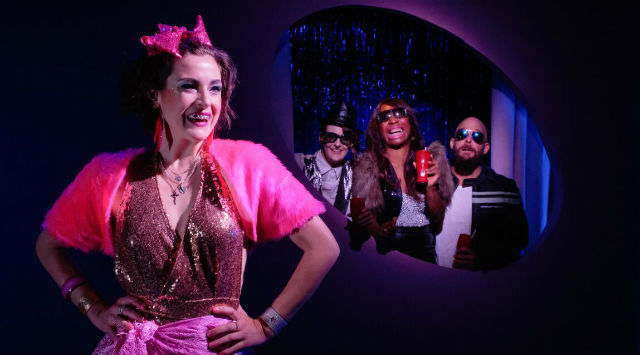
Barbara has a lot of fun in the city, singing at bars and events, being independent and vivacious. She is a mischievous character, and together with her cousin René, they paint the town red on the regular, determined to devour all that life has to offer, and to escape the troubling roots of their outback origins. Barbara And The Camp Dogs by Alana Valentine and Ursula Yovich, falls into categories of the musical and the epic journey, but it is a consistently surprising ride that defies all manner of expectations.

Barbara does well in life, but as an Aboriginal woman, the scars that she carries are deep, agonising and easier left ignored. When she finds herself having to return home to fulfil her filial obligations, all that she tries to deny, come flooding back to taunt her. The play expresses the nature of that immense suffering, with extraordinary acuity. Barbara and René sing, because so much of Indigenous experience is beyond our usual capacities of speech. In Barbara And The Camp Dogs, we are able to connect with the injustice and pain that have become entrenched in Black Australia. It divulges with power and wit, through its songs and storytelling, the darkest, most hidden of many Indigenous women’s lives.

It is impossible to overstate Jessica Dunn’s achievements as musical director. Barbara’s secret inner world turns intimately palpable, via influences of rock and soul, for a mode of communication sublime in its startling veracity. The songs move us as though a spiritual entity has taken hold. We are guided from scene to scene, with emotional intensity, precise and lush at every juncture.

Director Leticia Cáceres imbues the show with a warm glow, enchanting and irresistibly alluring. Everything about Barbara And The Camp Dogs is designed to have us fall in love with its characters and their narratives, and we endear to it all, readily and completely. There are occasional instances of abruptness in the transition of scenes, that can be slightly disorienting, but the raw aesthetic of the production is a forgiving one. Moreover, any blemishes would be easily shielded by the show’s incredibly charismatic stars.

The sensational voices and effervescent personalities of Ursula Yovich and Elaine Crombie win us over effortlessly, from the very beginning. The harmony forged between the two is a delight to our ears and to our hearts; what they present is wonderfully tender and exceptionally real. Yovich in particular, moves us in the most profound but unexpected ways. Telling us Barbara’s story of intolerable suffering, is not for a moment of catharsis, but a lasting gift of inspiration. We observe and learn, and promise to do better, to do more.

Barbara is not a social justice warrior. She is not a conscious activist, but she has to fight every day of her life, to defend herself against structural forces determined to keep her down. Australia’s shameful history of genocide, originating from the illegitimate claim of terra nullius in 1788, has reverberations that remain cruel and potent in the twenty-first century. A semblance of equality is not sufficient to heal these dreadfully severe wounds. Meaningful reparations will cost, but they must be made.

www.belvoir.com.au

Review: Wasted (The Kings Collective)

Venue: The Factory Theatre (Marrickville NSW), Dec 1 – 9, 2017
Playwright: Kate Tempest
Director: Elsie Edgerton-Till
Cast: Jack Crumlin, David Harrison, Eliza Scott
Image by Robert Catto

Theatre review
Charlotte, Danny and Ted live in England where, like in all developed nations, opportunities abound. It is never easy though, to get ahead, to carve out a life, even when all the fruit is ripe for one’s picking. We stand in our own way, with psychological barriers that exist mainly as a result of social conditioning, or maybe the competitive nature of our economies are determined to make losers out of some, in order that the rich can get richer.

Kate Tempest’s Wasted does not take a strong stance on the external factors that affect English youth, but makes a case for personal responsibility. These are able-bodied, heterosexual, white people after all. Tempest is frustrated with the way these twenty-somethings jeopardise their own lives, when they clearly know better. This generation is given all the information and resources they require, yet many are unable to create a meaningful existence, choosing instead to languish in drugs, alcohol, in a state of perpetual purgatory.

The play’s message is simple, but Tempest’s writing is extraordinary. The passion with which her ideas are articulated, and the emotive use of language, go for the jugular, and we are held captive by the sheer intensity that the playwright builds into every line of dialogue. Directed by Elsie Edgerton-Till, the production is correspondingly powerful. Choreography for several of its more theatrical moments could be improved, but there is no question that Tegan Nicholls’ music is a source of energy that adds a great deal of excitement to the show.

Most memorable of all, is the trio of actors that bring scintillating life to the piece. We are shaken by Eliza Scott’s compassion as Charlotte, whose purity of spirit shines through, amid the despondent confusion of her pessimistic narrative. Together with Jack Crumlin’s convincingly crestfallen Danny, the couple’s love story moves us, in spite of the carelessness with which they regard each other. Ted is played by the charming David Harrison, who entertains us with an inexorable ebullience. The three strike the perfect balance in providing amusement, along with a sincerity and a sense of urgency that keeps us heedful of the work’s pertinence.

For those who have the privilege of access, the only real definition of failure, is when they ignore the opportunities that have been made available. There is no need to subscribe to how the concept of success is generally construed, but one has to understand the destructiveness that can be self-inflicted. When we have the freedom to decide for ourselves, what is good and bad, values can be poorly judged, and individual lives can turn to waste. Not everyone should aspire to be a millionaire, but we must all try to give more than we take, and to leave the world a better place.

www.tkcaus.com

Review: Virgins And Cowboys (Motherboard Productions)

Venue: SBW Stables Theatre (Kings Cross NSW), Nov 30 – Dec 16, 2017
Playwright: Morgan Rose
Director: Dave Sleswick
Cast: Katrina Cornwall, George Lingard, James Deeth, Penny Harpham, Kieran Law
Image by Ashley de Prazer

Theatre review
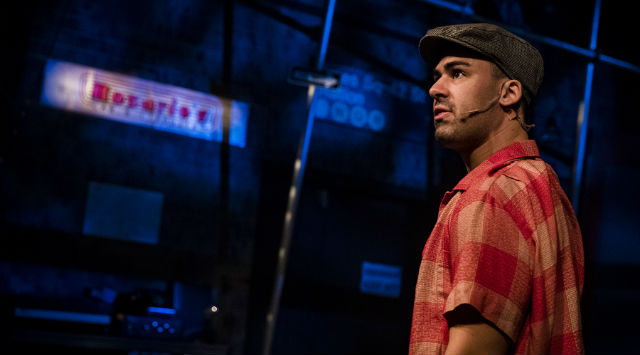
The characters in Morgan Rose’s Virgins And Cowboys are in a constant state of struggle. Unable to identify anything authentic in their lives, they go about their days acting upon desires that never seem to come from within. We observe these derivative existences, and wonder how much of our own being, is a result of the control that others exert. The question of self-determination, it appears, is always a tricky one, even though it is clear that narcissism is never in short supply.

The play is a cryptic and therefore challenging one, although the nature of our libido is unquestionably at the centre of its explorations. Sexuality motivates the five personalities, and fuels our imagination. The things we do as a matter of course; the fucking, the procreation, the careers, are put under a microscope, devoid of delusion and romance, so that we may examine our behaviours, with perhaps, some sense of objective accuracy. It is an interrogation into our unconscious masochism, an attempt to locate what it is that we do to ourselves, that makes us so miserable.

Beautiful and quietly surreal, the production is inventively designed by a team of creatives impressive in their artistic rigour. Sound by Liam Barton is edgy, often quirky, in its definition of a space, both fragile and phantasmal. Lisa Mibus’ lights are sensual, surprising, and entertainingly dynamic. The evocative set and costumes establish the tone of the show, succinctly assembled by Yvette Turnbull.

Director Dave Sleswick’s academic approach can be confounding, but his ability to manufacture intrigue, keeps us on tenterhooks. There is a lot to be curious about, and Sleswick does a marvellous job of sustaining our attention without ever damaging the mysterious qualities of Virgins And Cowboys. He never reveals too much, and only very little is explained.

The cast is splendid. Uniformly and cohesively vivacious, each actor brings a sense of luxuriant depth to the discussions that they facilitate. Even when we lose sight of the point being made, the people on stage are full of conviction, infallible with their undisclosed narratives at the heart of Virgins And Cowboys‘ absurdist aesthetic.

We can show each other all kinds of practices and all manners of wanting, but for an individual to discover the essence and truth of their own being, the exercise of introspection is imperative. So much of how we spend each day is reliant on emulation; people will tell us how we should act, and what is required of us, but it is not always clear to the self, when the social and personal are melded, and confused. When we observe the dissatisfaction of characters in Virgins And Cowboys, and recognise our universal conundrum, the impulse is to stop, for a moment of evaluation. Consumed by the world, we rarely take stock of things habitual. We settle for being lesser, when we forget to question.

www.motherboardproductions.com.au

Review: Jobready (Feckful Theatre)

Venue: 107 Projects (Redfern NSW), Nov 30 – Dec 1, 2017
Playwright: Caitlin Doyle-Markwick
Cast: Sabrina D’Angelo, Caitlin Doyle-Markwick, Sarah Easterman, Matte Rochford

Theatre review
Matte is a musician in need of an income. Australian bureaucracy dictates that he goes through onerous channels, to find a job that addresses that need, without concern for the talents that he possesses. It certainly pays no attention to any of the interests that he may have as a sentient being.

In Caitlin Doyle-Markwick’s Jobready, we see our economy determined to dehumanise those who rely on it to survive. We allow money to drive the way communities operate, and as we become increasingly consumed by financial pragmatism, and the accompanying concept of productivity, what makes us human is reduced into a process of monetisation that seems to value only that which can be commodified. It is just too bad that Matte’s abilities are judged to be worthless.

The ideas are sombre, but the show is uproarious. We watch our ludicrous beliefs presented in a comedy unhinged with an exaggerated absurdity, but feel only its accuracy. Although a straightforward piece of writing, the self-directed cast of Jobready brings to the stage, something that is quite extraordinary in its acerbity and exuberance. Its commedia dell’arte style of presentation is joyful, and marvellously entertaining; the laughs in this show are nothing short of rambunctious.

As Matte is put through the system, his transformation into something robotic, reminds us of technological advancements that are now said to be poised to take over most of our jobs. The things that we are grooming Matte for, will soon be taken over by machines. He will then have to exploit parts of himself that artificial intelligence is unable to replicate, and in that process become more human than ever before. This is a future we should not be afraid of. Utopia might still require money, but it is up to our most optimistic humanity to re-imagine that iteration of a new economy.

www.107.org.au

Review: Taking Steps (Ensemble Theatre)

Venue: Ensemble Theatre (Kirribilli NSW), Nov 23, 2017 – Jan 13, 2018
Playwright: Alan Ayckbourn
Director: Mark Kilmurry
Cast: Emma Harvie, Peter Kowitz, Drew Livingston, Simon London, Christa Nicola, Andrew Tighe
Image by Prudence Upton

Theatre review
We can all have an appetite for a silly comedy, but how much frivolity a person is able to handle in one sitting, is certainly a variable factor between individuals. There is nothing in Alan Ayckbourn’s Taking Steps that pretends to offer more than simple laughs, but the 1979 play does seem to think, erroneously, that its sense of humour has stood the test of time. It is all terribly old-fashioned, and at two-and-a-half-hours, very arduous indeed for those of us who have moved on from Fawlty Towers and The Two Ronnies.

The production is a sleek one, with good energy from a well-rehearsed cast that has figured out their ordered trajectories within the erratic chaos of a classic farce. Some actors do however, appear to be more naturally suited to the genre than others. Peter Kowitz is particularly credible in this presentation style, appropriately nostalgic in approach and effortlessly charming in the part of Roland. Emma Harvie and Drew Livingston are refreshing presences, who bring a sensibility that is slightly more au courant, through their idiosyncratic interpretations of supporting roles.

Humour can be general or very specific, but there is perhaps not one show, that will make every person laugh. Taking Steps still has an audience; its jokes have after all, been tried and tested. Theatre has the responsibility to do many things, and providing comfort has always been one of them. The familiarity of an old play, that transports us back to an idea of better times, is valuable, and for some, that reminiscence represents the best form of entertainment. There is always the temptation to live in the past, when the present and future look to be persistently disappointing. This is understandable of course, but tomorrow will come, come hell or high water, and we need to find a way to just get on with it.

www.ensemble.com.au