Review: Dorian Gray Naked (Popinjay Productions)

Venue: Limelight on Oxford (Darlinghurst NSW), Jan 30 – Feb 16, 2019
Libretto: Melvyn Morrow
Music: Dion Condack
Director: Melvyn Morrow
Cast: Blake Appelqvist

Theatre review
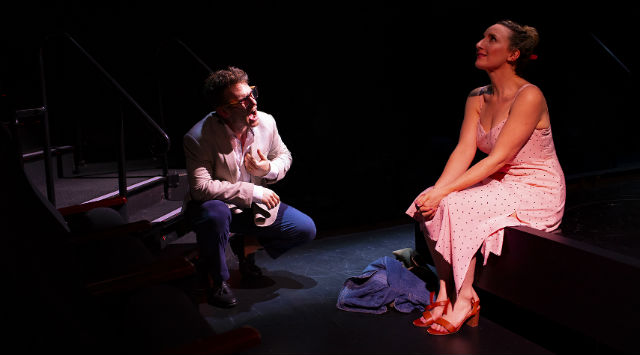
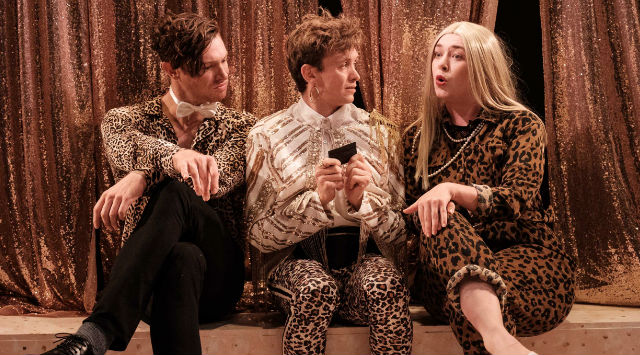
A fictional character provides the inside scoop on his author Oscar Wilde, in Melvyn Morrow’s Dorian Gray Naked. Resurrected to speculate on the inner workings of a novel, from a time when homosexuality was an abomination that would render entire existences underground and secret, Dorian the Adonis/Narcissus of queer literature offers a revised perspective for our comparatively liberated times.

Imaginative and appropriately flamboyant, Morrow waxes lyrical about what might have been. Together with Dion Condack’s music, Dorian Gray Naked paints a melancholic and often abstract picture, about artistic creation, highly sentimental but insufficiently witty. Performer Blake Appelqvist’s affected approach, punctuated by incessant sharp inhales, executed like DIY sound effects, can be alienating, but his presence is a strong one that fills the room effortlessly. It is basically a one-man show, but with Condack positioned onstage, passionate on the piano, interplay between the two men are inevitable in this exploration of gay culture and history.

Choreographer Nathan Mark Wright uses exaggerated body shapes to make a statement about camp, and to disrupt the meanings of masculinity in Wilde’s suspicious narrative of heterosexual love. The effect is skin deep, but it reveals an aspect of gayness that is obsessive about surface. Although Dorian Gray Naked is thorough with its reinventions and fabrications, it seems incapable of reaching greater emotional or psychological depths that will achieve meaningful resonance. It remains mainly a cerebral experience, and for some, that could be enough.

www.limelightonoxford.com.au

Review: Intersection 2019: Arrival (ATYP)

Venue: SBW Stables Theatre (Darlinghurst NSW), Jan 30 – Feb 16, 2019
Playwrights: Georgie Adamson, Joshua Allen, Grace Chapple, Hannah Cockroft, Sasha Dyer, Meg Goodfellow, Flynn Hall, Jasper Lee—Lindsay, Brooke Murray, Emma Skalicky
Director: Sophie Kelly
Cast: Marvin Adler, Teodora Avramovic, Salem Barrett-Brown, Bebe Bettencourt, Toby Blume, Apsara Lindeman, Ryan Hodson, Kelly Nguyen, Grace Stamnas, Sophie Strykowski, Harry Winsome, Emma Wright
Images by Tracey Schramm

Theatre review
To arrive, implies a destination, an end to travels, but at the conclusion of every journey, if conclusions exist at all, are inevitable new beginnings. In Arrival, we witness young people undertaking an act of emergence, one that is propulsive rather than stagnant. Ten short plays present them as a force to be reckoned with, full of hope and exhilaration, in an event that will no doubt provide inspiration to the young and young-at-heart.

The material is light, almost blithe in attitude, that director Sophie Kelly uses to her advantage in cultivating an irresistible vivacity for a show that keeps us wanting more. Set design by Tyler Ray Hawkins is attractive and sophisticated, cleverly utilising abstract patterns to stoke our imagination. Martin Kinnane’s lights are called upon to inject drama, highly effective in enhancing all that the cast aim to unfurls on stage.

Performers Teodora Avramovic and Sophie Stykowski are especially memorable in Flynn Hall’s Fish Fingers, a cheeky piece about teenage masturbation and self-discovery in a carnal sense. The pair’s extraordinary chemistry, along with their confident timing, deliver some very big laughs, in a joyful display of promising new talent. Georgie Adamson’s Real Dry is a refreshing take on a classic lesbian story, featuring BeBe Bettencourt and Kelly Nguyen, who offer a sensitive and intelligent interpretation of girls experiencing crushes. It is noteworthy that queerness is represented beautifully in the production, to reflect a new evolution in the understanding of human sexuality that Sydney youth has so readily embraced.

We may not be able to find anything radical in these works, but the energy derived from each of these artists’ optimism is palpable. There is a quality of bravery that shines through, even if things can feel somewhat contained and safe. It is clear that our affluence in this lucky country compels an overprotection of ourselves, especially our young. Art, like most things of significance, can only be accomplished with risk, which is perhaps the hardest of all to teach.

www.atyp.com.au

Review: Are You Listening Now? (Fixed Foot Productions)

Venue: Old 505 Theatre (Newtown NSW), Jan 29 – Feb 2, 2019
Playwright: Xavier Coy
Director: Ed Wightman
Cast: Martin Bell, Xavier Coy, Fiona Mahl, Emily J Stewart
Images by Becky Matthews

Theatre review
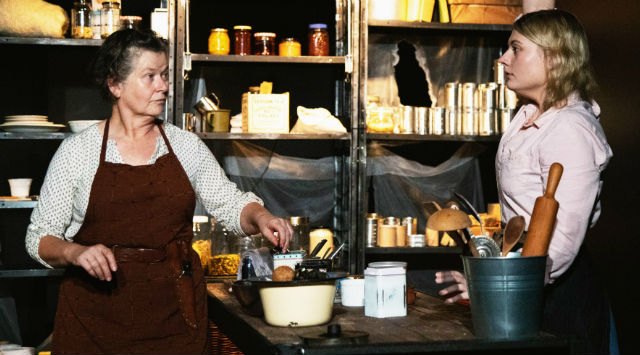
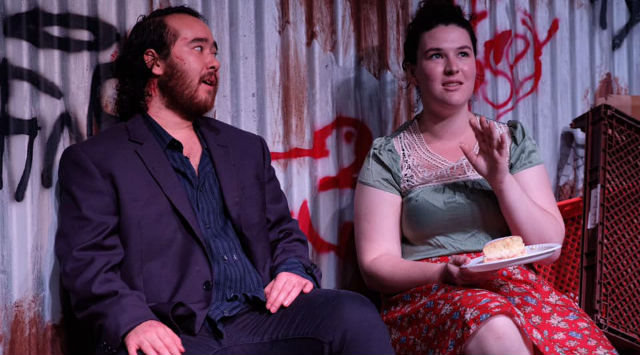
Mez and Gaz are intruders in a 6-million-dollar house, with intentions not only to burgle but also to teach the affluent homeowners a lesson. Even though Xavier Coy’s Are You Listening Now? makes its point about wealth distribution with no concern for subtlety, the message is nonetheless an important one. By embedding plenty of comedy and drama, the writer ensures his play to be an amusing one, and laughing about class is certainly a worthwhile activity, at these times of unprecedented prosperity for the top end of town.

Directed by Ed Wightman, the staging is energetic, with a high level of intensity fortifying the hour-long piece. Coy himself performs the role of Gaz, adept at delivering laughs in his portrayal of a surprising innocent. His criminal mentor Mez is played by Fiona Mahl, who in her strongest moments, can prove impressively convincing. Emily J Stewart is riveting as Claudia, one-half of the rich couple under siege, a persuasive presence who brings much needed nuance to the production. Multimillionaire Charles is a predictable personality that Martin Bell is able to make believable, for a familiar portrayal of Sydney-style privilege.

It is sometimes surprising to observe the degree to which Australia has embraced neo-liberalism. For generations we have prided ourselves on our egalitarianism, but it appears that greed is truly indomitable. The moral at the centre of Are You Listening Now? is timeless and pertinent; money is a complex beast that if left unchallenged, will inflict harm and turn us inhumane. Mez’s refusal to obey rules that are designed to subjugate her, is admirable, but without compatriots joining her rebellion, we see that a one-woman movement can amount to nothing more than empty gestures.

www.facebook.com/fixedfootproductions

Review: Brown Skin Girl (Black Birds / Old Fitz Theatre)

Venue: Old Fitzroy Theatre (Woolloomooloo NSW), Jan 29 – Feb 9, 2019
Playwrights: Ayeesha Ash, Emily Havea, Angela Nica
Director: Ayeesha Ash
Cast: Ayeesha Ash, Emily Havea, Angela Nica

Theatre review
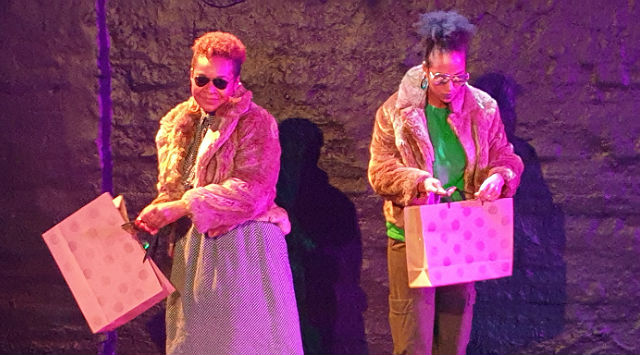
Three mixed-race women offer their perspectives as young Australians living while brown. In Brown Skin Girl, creators Ayeesha Ash, Emily Havea and Angela Nica are themselves on stage, delivering autobiographical accounts of challenges faced by women of colour, on a land that although never was ceded to white colonists, has had to struggle with racism since the very dawn of European invasion. The work arises from dark experiences, but it is a passionate and brilliantly joyful encounter that results, featuring anecdotes, observations and sheer poetry that aim not only to bring light to what is normally repressed, it proves to be immensely uplifting, especially for those of similar backgrounds.

The women have fathers who are African-American and Cherokee, Grenadian, and Tongan, so their appearance makes them a target, of constantly being othered in a society that never fails to exert its whiteness, no matter how much we call out its illegitimacy. This absurdity is effectively transposed into comedy, and the show is uproariously funny, with all its subversive and critical denunciation of the prejudices being perpetuated on people of colour. Ash, Havea and Nica are extremely appealing personalities, warm and effervescent, charming even when dispensing their most cutting beratements. Their chemistry is honed to perfection, on a stage replete with fiery, feminine confidence.

As people of colour, we need to be the ones to lead this nation’s discussions on race. The project of dismantling white supremacy in our spaces and structures, simply cannot be left to the powerful. We need to remember that there is little incentive for them to change the way things are, even as they profess a seemingly genuine desire to help better our communities. We must stop being fearful of radical thought and action, and at the same time, learn to manipulate these broken systems to our advantage. This will require our coming together, our refusal to be kept apart by a white patriarchy that benefits from our fractured and dispersed existences. Brown Skin Girl is a rare moment in Australian theatre, that does not imagine a white audience; it dares to speak to its own, and for once, the minorities in the audience feels seen. This is the beginning of empowerment, where hopes can begin to turn into reality.

www.black-birds.net

Review: Herringbone (Squabbalogic Independent Music Theatre)

Venue: Kings Cross Theatre (Kings Cross NSW), Jan 18 – Feb 2, 2019
Playwright: Tom Cone
Music: Skip Kennon
Lyrics: Ellen Fitzhugh
Directors: Jay James-Moody, Michael Ralph
Cast: Jay James-Moody
Images by David Hooley

Theatre review
It was 1929, at the dawn of the Great Depression when eight-year-old George was assigned to be star of the stage, and bread winner at home. Billed as “a vaudevillian ghost story”, Tom Cone’s Herringbone tells the fantastical tale of George’s possession by a poltergeist named Lou who returns, determined to resume his prematurely terminated acting career. Wonderfully imaginative, with a flamboyant and quirky sensibility that transports us to realms of fascinating awe, the show also includes songs in a nostalgic style inspired by the era, all of them full of charm, certain to delight.

Jay James-Moody alone plays all ten of Herringbone‘s different characters, enthralling for the entire 90-minute duration. We witness superhuman talent, along with extraordinary skill and conviction, as the consummate storyteller takes us to the farthest reaches of what theatrical magic can achieve. His technical abilities prove as moving as the palpable love he has for the art form, so clearly discernible on this stage. James-Moody (who also co-directs) allows himself to be completely vulnerable, so that we can come in contact not only with the humanity of the piece, but also the staggeringly delicate nature of live performance. Creating theatre, especially at this intimate scale, is to fly without a safety net, and when we see the work soaring, the inspiration that it provides is incomparable.

Choreography by co-director Michael Ralph is thoroughly inventive, with a jubilant spirit that makes the experience an uplifting one (in spite of its dark themes). Adding to the visual splendour is Benjamin Brockman’s lights, extravagantly conceived to deliver luscious and dramatic imagery, much of which lingers on well after curtain call. Three musicians, Natalya Aynsley, Amanda Jenkins and Tom McCracken, electrify the space with their passionate interpretations of the score, having us impressed by their detailed and tight performance, no doubt due in large part to musical direction by Benjamin Kiehne.

Musical theatre is big business, and as such, much of what we see can tend to be predictable and formulaic. Even if there is undeniable professionalism on display, all the money in the world can never guarantee that our soul is touched by a production. Commerce is always risk averse, and by the same token, it can often be fearful of ingenuity and all things ephemeral, ingredients that great art can never do without. Herringbone has a little bit to say about how we care for children, but it is the very application of artistry, and the collaboration of disciplines, that makes this show so exquisite.

www.squabbalogic.com.au

Review: The Big Time (Ensemble Theatre)

Venue: Ensemble Theatre (Kirribilli NSW), Jan 18 – Mar 16, 2019
Playwright: David Williamson
Director: Mark Kilmurry
Cast: Claudia Barrie, Zoe Carides, Aileen Huynh, Matt Minto, Jeremy Waters, Ben Wood
Images by Brett Boardman
Theatre review
Celia and Rohan are lovers in the film industry, both trying to advance their careers onto the next step. In David Williamson’s The Big Time, we see the dirty business of betrayal, jealousy and deception, operating in a dog eat dog world, in which integrity seems almost certain to make one a loser. Laden with cliché and implausible characters, the play’s narrative never manages to become convincing, even if the story does feel like it has been told a hundred times before. The shallowness of the people we meet may bear some semblance of truth, but there is little that we are able to relate to, in Williamson’s oversimplified depiction of their approaches to work and life.

As Celia, Aileen Huynh is able to bring some emotional intensity to the piece, but her sense of humour proves incompatible with what the show requires. Jeremy Waters’ energetic presence as Rohan helps to sustain our interest, particularly enjoyable in a handful of scenes with Ben Wood’s Rolly, in which we witness the only moments of chemistry on this stage. Director Mark Kilmurry keeps a close eye on performances, careful to prevent his actors from transforming the production into a campy farce, but the earnestness at which the show is calibrated, does make the experience somewhat lacklustre.

It is funny that we take show business so seriously. The billions of dollars poured into the entertainment industry can seem a waste of resources, but it reflects the lightness of our beings that can never be underestimated. We want to have a good time, and it can often seem that escapism comprises a substantial portion of our realities. Business does however, on occasion, make transactions with art, when a deeper investigation into the human condition can accompany the procurement of enjoyment. It is a rare beast that can combine things amusing with that which is truly important, and most of the time, we are grateful to encounter just one of those elements.

www.ensemble.com.au

Review: Love And Anger (Griffin Theatre Company)

Venue: SBW Stables Theatre (Kings Cross NSW), Jan 21 – 26, 2019
Creator: Betty Grumble
Cast: Betty Grumble
Images by Ryan Ammon, Liz Ham, Dean Tirkot

Theatre review
The legendary SCUM Manifesto by Valerie Solanas makes several appearances in the show, but Betty Grumble’s Love And Anger does not try to recruit for the Society for Cutting Up Men. It seeks to unify the human race, and all of the planet, by interrogating (and integrating) the matter from which we are composed. Grumble’s work is about flesh and blood, the only things perhaps that we cannot deny of ourselves. We never fail to imagine our identities to be much more grandiose, and in that process, create endless demarcations and conflicts. The artist devotes her entirety to the demolition of those narratives, making us succumb to the admission and the acceptance of our truest and basest selves, in order that we may renounce the countless structures that ultimately seek to create more harm than good.

Grumble insists that our attention is placed on the here and now, and in a theatre space where all our corporeality is congregated, present and irrefutable, she does marvellous things to her body, with her body, inside and onto her body, so that we may reach an image of ourselves, beyond taboo and outrage, that represents a renewed purity. After Grumble removes all of her clothing, she finds ways to take away all the meanings imposed upon her nudity, and because her words are rarely effective in this exercise, the artist’s strongest statements must be made through physical manipulation. Her performance style almost fits into genres of clowning and cabaret, and as is customary in Australia, difficult messages come in the guise of comedy, and Grumble’s extremely bawdy humour is the bridge that leads us to her subversive epiphanies.

The best thing about Love And Anger, is Grumble herself. When we attempt to isolate the text from the artist, it becomes clear that the persona she has evolved, can offer us everything important irrespective of the context in which we locate her. It is the embodiment of culminated meanings that we come into contact with, that is most virtuous in the performance of Grumble. Those virtues are impossible to condense, but chief components of her expressions include beauty, femininity, masculinity, equality, compassion, joy, peace, and above all, love.

When goddesses unravel, we remain goddesses. Betty Grumble’s act explores the notion of ugliness in her efforts to redefine social and anti-social, but it is impossible that she would be perceived in any other way than benevolent and divine, even in the midst of (simulated) excretion. In Love And Anger, we discover that beauty is much more than skin deep. It exists through the skin and beyond it. We receive her beauty because of who she is, but it is probably a greater truth, that we receive her beauty because of who we are.

www.griffintheatre.com.au

Review: Nosferatu: A Fractured Symphony (Montague Basement)

Venue: Old 505 Theatre (Newtown NSW), Jan 8 – 19, 2019
Director: Saro Lusty-Cavallari
Cast: Lucy Burke, Jeremi Campese, Lulu Howes, Annie Stafford
Images by Zaina Ahmed

Theatre review
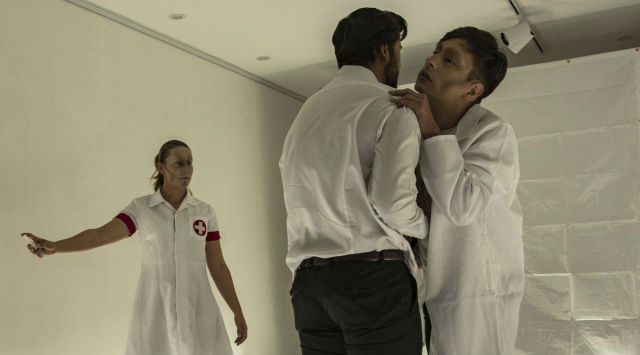
The play is structured around title cards of its 1922 silent film forebear, so Nosferatu: A Fractured Symphony is more than a little indebted, not only to that German classic, but also to its legitimate point of origin, Bram Stoker’s Dracula. It is an update of sorts, but also a kind of demystification of the greatest vampire story ever told, for a 2019 audience. Themes of horror, lust and survival, converge with very contemporary concerns that include xenophobia, the me too movement, capitalism, wealth disparity and property ownership, resulting in a new version stripped of old world romance, revealing a more utilitarian dimension of the supernatural tale.

Director Saro Lusty-Cavallari demonstrates artistic innovation alongside an enthusiastic intellect, for this creative, albeit slightly clinical, reinterpretation. The production is at its most mesmerising when allowed to venture into the bizarre. When proffering the political, its approach has a tendency to be obvious. Detailed work on lighting design by Veronique Benett helps to manufacture a sense of visual dynamism, and Justin Gardam’s music brings excellent atmospheric transformations to each surprising scene change.

A motley crew of characters are played by four engaging actors, including Jeremi Campese whose remarkable conviction as the Count, delivers a realistic portrayal of evil that turns the walking dead into a living, breathing rendition of one of the world’s richest men. Lulu Howes’ intense presence gives complexity to the naive Hutton, cleverly resisting our urge to conveniently underestimate her, as we traditionally do all the women in this story. A very enjoyable flamboyance is introduced by Annie Stafford who excels in the show’s more comical and absurd dimensions, and Lucy Burke is relied upon to provide a warmth to this otherwise entirely inhumane milieu.

There is very little that could be done to hold the extremely rich to account; Dracula and Nosferatu are our 1% and they literally get away with murder. In our fantasies, they can be destroyed with a stake through the heart, a reflection of how we are never able to accept their invincibility. Humans are incurably hopeful, for life is in many ways synonymous with hope, but much of our truth, as is evidenced in the pessimism of Nosferatu: A Fractured Symphony is beyond repair. To exist however, requires that we continue searching for answers and solutions, even if we never really get anywhere, it is this motion of endeavouring that makes us virtuous.

www.montaguebasement.com

Review: The Weekend (Moogahlin Performing Arts)

Venue: Carriageworks (Eveleigh NSW), Jan 18 – 23, 2019
Playwright: Henrietta Baird
Director: Liza-Mare Syron
Cast: Shakira Clanton
Images by Jamie James

Theatre review
Lara is trying to do the right thing, by working hard in Cairns, trusting that her partner is taking care of their children back home in Sydney. When one of her sons phones up to notify her of their father’s disappearance, Lara takes the first plane home to save the day. The real drama happens after her kids are fed, when she is compelled to go looking for Simon, even though it is not the first time that he makes an unexplained exit from his responsibilities.

Henrietta Baird’s The Weekend is a one-woman action-packed comedy, that sees our heroine brave the enigmatic public housing towers of Redfern, to encounter the lower classes of her Indigenous community, and the harrowing socio-economic challenges that they face. Baird’s writing is full of thrills, brimming with keenly observed humour, and a modern attitude that boldly pushes Australian playwriting into exciting new realms.

Actor Shakira Clanton takes on all ten characters in the play, each one vibrant and richly manifested. Her mischievous approach is deeply delightful, as she turns us into putty in her hands, taking us through every peak and trough of this amazing journey. It is an unforgettable experience, to see and hear hidden facets of our beloved city, to vicariously revel in Lara’s extraordinary weekend of discoveries. Clanton’s is a performance replete with artistic detail, endlessly intricate and dynamic, thoroughly enjoyable.

Directed by Liza-Mare Syron, the show is often edge-of-your-seat exhilarating, and pure unadulterated fun. Supported by a marvellous team of creatives, including lighting designer Karen Norris, and composers Nick Wales and Rhyan Clapham (Dobby), it is a smart production that provides just enough embellishment, so that we can luxuriate in The Weekend‘s colourful dialogue and personalities, to enjoy the best storytelling that the theatrical arts can facilitate.

Much of The Weekend is about the problems that we inherit. When our behaviour is disappointing, or when we simply find ourselves to be lacking in some way, and we try to reason with these dysfunctions, it is necessary that we go back in time, in order that we can locate explanations for deficiencies. For Lara, Australia’s history of colonisation informs a substantial portion of her misadventures, and on a personal level, archaic notions of womanhood too, are crucial to how she had been able to tolerate mistreatment. When we arrive at an understanding of our baggage, tangible and intangible, is when the hard work has to truly begin.

www.moogahlin.org

Review: The Chat (Carriageworks)

Venue: Carriageworks (Eveleigh NSW), Jan 16 – 20, 2019
Creators: J R Brennan, David Woods
Cast: Arthur Bolkas, J R Brennan, Shane Brennan, Ashley Dyer, Nicholas Maltzahn, Ray Morgan, John Tjepkema, Simon Warner, Les Wiggins, David Woods
Images by Prudence Upton

Theatre review
We are informed that some of those performing in The Chat are ex-offenders from the Melbourne area. The work is a collaboration with artists, including creators J R Brennan and David Woods, reenacting performance workshops centred around a role play scenario, in which an ex-offender plays the part of a parole officer. When the show reaches its concluding episode, the audience finds itself in the position of a parole board, and we have to decide if the role player had revealed enough redeeming qualities in order to be set free.

That responsibility bestowed upon us, although fictitious, carries an undeniably enormous weight, making us think about the nature of justice and rehabilitation in our societies, a topic that most of us have the privilege of circumventing. Being in close quarters with characters whose very lives depend on how our rules concerning incarceration are exercised, turns abstract ideas into a palpably distressing process, as we try to make decisions that bear the most serious of consequences on individuals who we have come to know.

Although much of The Chat is, predictably, not performed with a great deal of skill, an invaluable sense of authenticity is introduced by people who have lived through first-hand, these issues we have to wrestle with. Their presence prevents us from engaging the usual intellectual distancing, that makes answering these questions, inappropriately convenient. The production is given polish by Jenny Hector and Steve Hendy’s lighting design, and by Brennan’s sound design, for a presentation that ultimately leaves an impression that is simultaneously simple and sophisticated.

These difficult circumstances, of punishment and banishment, underlie so much of how we operate, yet matters of law and order are rarely interrogated meaningfully by the general populace. We leave them to experts and tradition, trusting that others know better, when in fact, there probably are no concerns more democratic. Those in need of pardon, work hardest for our compassion, but when we have to determine how compassion is being dispensed, people often forget the universality of our fallibility.

www.carriageworks.com.au