Review: Travelling North (Sydney Theatre Company)

rsz_398087-6086798c-83c3-11e3-b691-c4bd5b62f2b6Venue: Wharf 1 Sydney Theatre Company (Walsh Bay NSW), Jan 10 – Mar 22, 2014
Playwright: David Williamson
Director: Andrew Upton
Actors: Alison Whyte, Bryan Brown, Harriet Dyer, Russell Kiefel, Emily Russell, Andrew Tighe, Sara West

Theatre review
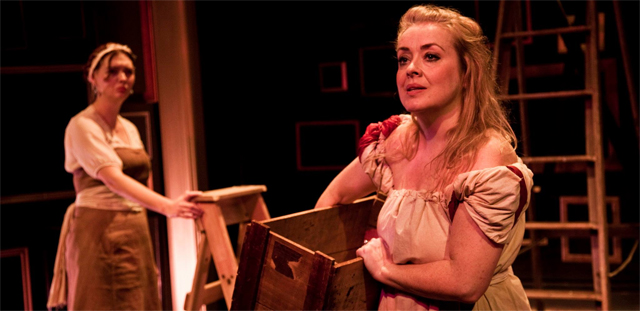
David Williamson’s 1979 play about a Melbourne couple moving up north, finds new life with the Sydney Theatre Company. Andrew Upton once again focuses attention on people and stories, and keeps visual design to a minimum. Set and props are rendered virtually invisible, except for an effective three tiered curved stage reminiscent of Australian landscapes. Upton’s direction brings out the realism of relationships and characters, creating everyday personalities that we are able to identify and relate to easily. There is a tendency for Williamson’s concepts to appear overly mundane as a result of Upton’s minimalist vision, but the production is kept buoyant by a healthy dose of humour that thrives in the midst of its pervasive simplicity.

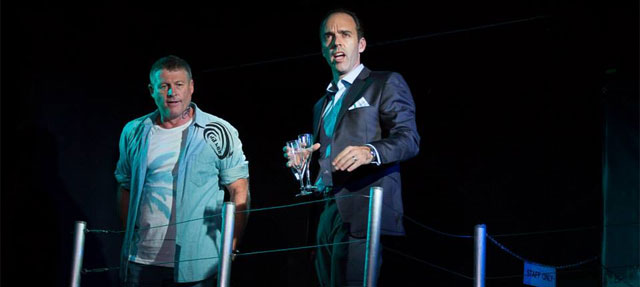
Bryan Brown is miscast as the elderly Frank. Brown is charming, handsome and carries an air of magnificence that is completely at odds with the story about a sick man at the end of his days. We love his performance, which is always funny and sometimes poignant, and we understand everything his character goes through, but ultimately Brown’s celebrity gets in the way of the depiction of a regular old “cobber” we should feel sorry for.

Alison Whyte plays Frances with a lovely balance of strength and gentility, and while her role makes life choices that might not be entirely clear, the actor manages enough conviction and solidness to sell us her story. Noteworthy in the support cast include Harriet Dyer who does not miss any opportunity for comedy, and Andrew Tighe who makes good use of his physicality and costumes to carve out a very memorable character. Tighe brings authenticity and lightness to the production, and we anticipate his every appearance.

The relevance of Travelling North‘s staging today is not immediately relevant. Its themes of family, marriage, ageing, and seachanges unify many of our lives, but this 35 year-old play struggles to make a fresh statement about the Australian experience. It does, however, showcase some of our idiosyncrasies as a people, and is an occasion for us to excel at quite a bit of self-deprecating humour.

www.sydneytheatre.com.au

Review: Noises Off (Sydney Theatre Company)

noisesoffVenue: Sydney Opera House (Sydney NSW), Feb 17 – Apr 5, 2014
Playwright: Michael Frayn
Director: Jonathan Biggins
Actors: Alan Dukes, Lindsay Farris, Marcus Graham, Ron Haddrick, Danielle King, Genevieve Lemon, Tracy Mann, Josh McConville, Ash Ricardo

Theatre review
Sydney Theatre Company’s new production of the now classic farce, Noises Off, is comedy at its broadest. This comedy of errors is not sophisticated in concept but its execution under the directorship of Jonathan Biggins is highly accomplished and outlandishly dynamic. From men falling off staircases to women sitting on sardines, and girls in gartered lingerie to boys in bell bottoms and mullet hair cuts, Biggins approaches Frayn’s 1982 work with the most basic of motivations. He wants to make us laugh, and he is determined to pull out all the stops to make it happen.

The cast Biggins has assembled shares his vision. They show no qualms in playing for laughs at every available opportunity, which means that not all characters are clearly defined, and some plot lines get lost in all the mayhem, but the entertainment value of their show is guaranteed. Josh McConville as Roger/Garry impresses with his athletic agility and the most exaggerated physical gags in the production. The volume of his performance sets the standard for how extravagant the actors can go on that stage.

Tracy Mann plays Flavia/Belinda with more subtlety, but her use of voice is strongest in the cast. The excessively, and comically, stagey English accent from the era not only assists with a more distinct characterisation, its overt articulation actually provides clarity to the many twists and turns that occur in the busy story. Ash Ricardo as the Vicki/Brooke “bimbo” characters triumphs in spite of the restrictive and narrow scope given. Her energetic interpretation brings a fresh edginess, and the running joke about her contact lens is a big crowd pleaser. Marcus Graham, usually known for dramatically serious roles, is surprisingly effective as Lloyd. Like the rest of the cast, his enjoyment of the show is genuine, and infectious.

Laughter is the best medicine. Theatre goers can often be an uptight bunch. Jonathan Biggins’ Noises Off forces us to open up and it speaks to a different part of our minds. Like the brilliant extended section in Act 2 where virtually no words are spoken, but the biggest laughs are heard, our senses are kept busy. We work overtime to keep up, not with lines and ideas, but by observing all the funny unfold and responding with the thoroughly visceral, and biological, guttural guffaws from deep within… that space which is too often hidden away from the light of day.

www.sydneytheatre.com.au

Review: The Vaudevillians (Strut & Fret Production House)

vaudevillians1Venue: The Vanguard (Newtown NSW), Feb 18 – Mar 2, 2014
Musical Director: Richard Andriessen (Major Scales)
Performers: Jerick Hoffer (Jinkx Monsoon), Richard Andriessen (Major Scales)

Theatre review
The premise is simple. Spouses Kitty Witless and Dan Von Dandy were accidentally frozen under a torrent of snow and cocaine in the 1920s, but were discovered and revived in our very recent times of global warming. Both happen to be brilliant performers, and have found their way to Sydney, just in time to present their show for the Mardi Gras season.

Cabaret is about performance. Stories are rarely important, but storytelling is everything. The Vaudevillians are played by Jinkx Monsoon and Major Scales, American artists who are truly of an “international standard”. Scales provides excellent support to his leading lady. He is superb on the piano, and the re-arrangements he has created are intelligent and delightful. The choice of familiar songs by the likes of Madonna, Daft Punk, Cyndi Lauper, M.I.A., and Britney Spears makes for a setlist that would appeal to most, but it is his extravagantly comical interpretations that make them all so thoroughly entertaining. Scales does falter a little in confidence when performing his solo number, but it is wonderfully refreshing to see a highly animated and energetic piano man.

Jinkx Monsoon is a comic cabaret artist of the highest calibre. Clearly, The Vaudevillians is a work tailored to her specific talents and abilities, but the 80 minute show impresses and overflows with scintillating wit, belly laughs and stunning singing. Monsoon’s vocals are powerful, and she seems to have an infinite well of techniques for turning every line in every song into something that earns the audience’s laughter. A segment referencing Henrik Ibsen, “A Doll’s House 2: Electric Boogaloo” sees the leading lady attack Gloria Gaynor’s “I Will Survive” with the greatest amount of flamboyant drama one could ever wish to see. She is like a young Gloria Swanson, only louder and a whole lot sillier.

Combining disciplined training (you can hear it in her singing, and see it with her splits and headstands) and a sense of looseness that is unafraid of heckles and other chanced occurrences, Monsoon’s style is deceptively casual, and incredibly brave. It is live performance at its most thrilling, where the audience feels that anything could happen because the performers and the show’s structure allow, or even ask for it. There is danger in the air, the kind that is completely delicious and irresistible. The Vaudevillians is fun, entertaining theatre. Monsoon and Scales are silly as they come, but without a hint of stupidity, and their show is filled with genuine talent and quite genius creativity.

www.theofficialvaudevillians.com

Review: Everything I Know I Learnt From Madonna (Tunks Productions / Sydney Independent Theatre Company)

rsz_1899685_623939144321658_1856255859_oVenue: Old Fitzroy Theatre (Woolloomooloo NSW), Feb 18 – 22, 2014
Playwright: Wayne Tunks
Director: Fiona Hallenan-Barker
Actor: Wayne Tunks
Image by Katy Green Loughrey

Theatre review
Madonna, the pop star, means many things to many people. Like many brassy women in the public eye, she is regarded by gay communities as an icon. An outspoken proponent of the gay movement since the early 1990s, it is understandable that her place with LGBT people has endured the years. In this one-man play by Wayne Tunks, he talks about his obsession with Madonna in the introduction, then goes on to share with us his stories of coming out and relationships with various men, liberally quoting lyrics by his hero at every available opportunity. His script is an interesting one. It is almost as if Tunks is unable to verbalise his thoughts and feelings without the aide of Madonna songs, so her words keep appearing in his monologue, sometimes seamlessly, sometimes a little forced, but it is no doubt that his admiration is beyond skin deep, and that her work actually provides a space of solace. It looks a lot like religion.

Tunks is an actor full of vigour. He appears on stage and is determined to seize your attention, and for the entirey of his performance, we pay close attention to his stories. It helps that Tunks’ voice is commanding and versatile. It is naturalistic acting but there is definitely not a hint of mumbling, everything is said loud and clear, which is fortunate as the bareness of the staging and minimal direction of the near two hour work, leave nothing else for Tunks and his audience to hold on to.

The show overflows with earnestness. For a seemingly shallow premise of pop star fandom, it contains no irony and very little frivolity. We are presented love stories with a string of men, Sean, Warren, Guy, Jesus, and (presumably) Brahim. They are not particularly colourful events, in fact, slightly mundane. There isn’t really a set up of context, just a man keen to share with a captive crowd, and we are inspired by his fighting spirit that never gets dampened by failed relationships. He keeps getting back in business as though nothing’s better than more because ultimately, what can you lose?

“You’re never gonna see me standin’ still, I’m never gonna stop ’till I get my fill” (Over And Over, Madonna 1984).

www.tunks.com.au

Review: Desperate Houseboys (Matthew Management / Neil Gooding Productions)

despboysVenue: Seymour Centre (Chippendale NSW), Feb 18 – 28, 2014
Playwrights: Cole Escola, Jeffery Self
Directors: Christian Coulson
Performers: Cole Escola, Jeffery Self

Theatre review
It takes a certain amount of gall and audacity to present a work that is entirely frivolous. Theatre practitioners are rarely able to look at their work as purely entertainment, while having no concern for conventions and audience expectations. Cole Escola and Jeffery Self’s Desperate Houseboys is creative, original, irreverent and wild. It is Generation Y post-modernism, attacking the notion of comedy with constant references to popular, theatre and gay culture, with the aide of theatrical structures that shift throughout the hour. It is like John Waters, only a lot younger.

Cole Escola and Jeffery Self do not seem to take themselves seriously. There are no discernible politics, and no obvious ambition to their work, but their supreme confidence in their niche is rare and admirable. Their undeniable talent is thoroughly utilised in this production, but it is within their comfort zones that the action takes place. It is high camp and highly amusing, without a need to try being too clever. Maybe because these young men are already extremely clever.

Their performance is energetic, with a manic silliness that characterises their persona and show. Like all great comic duos, the chemistry that exists between Escola and Self is bewilderingly powerful. Escola is more animated of the two, but Self is hardly the Dean Martin in this relationship. Both are outlandish and ridiculous, and it is this meeting of likeness that creates their success. It can be argued that their work requires these same qualities from its audience. This is a show about inside jokes, not necessarily with its themes, but in tone. Desperate Houseboys appeals to a specific sense of humour, one which is neither mainstream nor common. This would then mean that what Escola and Self have here is pure comedy gold for the right audience, but for others, quite possibly the opposite.

Presented as part of the Mardi Gras festival, the question remains whether Escola and Self are too offbeat for the target audience. With LGBT liberation in Sydney entering its fifth decade, and so many advances made in our sociopolitical lives, has the “gay community” become something too mainstream for this brand of madness? Have the Sydney gays gone too straight for a show about lube closets and overgrown twinks?

www.twitter.com/HouseBoysOz

Review: Privates On Parade (New Theatre)

rsz_1069838_594783037267230_490878940_nVenue: New Theatre (Newtown NSW), Feb 11 – Mar 8, 2014
Playwright: Peter Nichols
Music: Denis King
Director: Alice Livingstone
Choreographer: Trent Kidd
Actors: Matt Butcher, Jamie Collette, Peter Eyers, David Hooley, Morgan Junor-Larwood, James Lee, Henry Moss, David Ouch, Diana Perini, Martin Searles, Gerwin Widjaja
Image by Bob Seary

Theatre review
Written in 1977, this “play with music” appeared just two years before the inaugural Sydney Gay & Lesbian Mardi Gras parade. It contains some of the earliest progressive depictions of same sex relationships, and is an excellent choice for the New Theatre to present it in conjunction with the Mardi Gras festival this year. The work comes from a time before political correctness, and includes many references to ethnicity, gender and sexual preference that could make contemporary audiences cringe, but director Alice Livingstone is mindful of the change in context and deals with those awkward moments shrewdly and with sensitivity.

Livingstone’s decision to add a prologue featuring the “Boogie Woogie Bugle Boys” is a stroke of genius. Gerwin Widjaja, Henry Moss and David Ouch play a trio of drag queens in cheongsams inviting the audience to 1948 Singapore, and providing a side of the fictitious SADUSEA (Song And Dance Unit South East Asia) that is missing from Peter Nichols’ show. More importantly, it showcases the talents of Widjaja and Ouch, who would otherwise have been completely mute as the multiple “oriental men” in the original work.

The greatest strength of this production is its cast. Diana Perini in particular rises to the challenge, and does almost everything one could possibly ask of a performer. She plays comedy and tragedy, sings in ensemble and solo, dances en pointe and on tap heels, gets her top off, and does a mean Indian accent. Her role is not terribly interesting, but she sure makes a jaw-dropping one-woman tour de force out of it. James Lee plays Terri Dennis, the most flamboyant character imaginable. He masters all his song and dance routines, and endears himself as a crowd favourite from his very first appearance. Lee is also very effective in creating chemistry, always bringing out the best in his co-actors when appearing together. There is an effortless warmth to this man that most performers can only dream of. David Hooley is polished and disciplined as Steven Flowers. He seems slight in stature but his singing is big and confident, and his tap dancing is thoroughly impressive. His dreamy “Fred and Ginger” style sequence with Perini is most memorable.

Politics shift constantly, and ideologies evolve. Old works of art can be left behind and buried, but creativity can unearth and shine new light on them. We need not be afraid of mistakes past, if we learn to deal with them at every developed age. A 1977 comedy about British forces in 1948 Singapore, has crossed many borders, time and geographical, to reach this point. It is with refreshed enlightenment and a sense of progressiveness that should mark our approach to it today.

www.newtheatre.org.au

Review: Sweet Charity (Luckiest Productions / Neil Gooding Productions)

rsz_sc_0005_bps4219Venue: Hayes Theatre Co (Potts Point NSW), Feb 7 – Mar 9, 2014
Book: Neil Simon
Music: Cy Coleman
Lyrics: Dorothy Fields
Director: Dean Bryant
Choreography: Andrew Hallsworth
Musical Direction: Andrew Worboys
Actors: Verity Hunt-Ballard, Martin Crewes, Debora Krizak, Lisa Sontag

Theatre review
Bob Fosse directed and choreographed the iconic Sweet Charity, on stage and on film, in the late 1960s. The dance sequences are some of the most striking moving images ever seen, so one of the main challenges in staging the work today would be the treatment given to the re-creation of those scenes.

The current production at Hayes Theatre Co, helmed by director Dean Bryant and choreographer Andrew Hallsworth straddles between faithfulness and innovation. There is an acknowledgment that times and audiences have changed, but also an awareness that the immortal is a hard act to follow. Bryant’s adaptation uses the theatre’s spacial limitations to his advantage, and turns the work into an intimate and emotionally rich experience. There is a sense of things being scaled down, but for the most part, he achieves a good intensity on stage that results from the distillation of something conceptually grander. Hallsworth’s thankless task of re-interpreting Fosse’s choreography is surprisingly effective, even if the numbers “Hey Big Spender” and “Rich Man’s Frug” do leave us pining desperately for the film.

Visual elements are especially noteworthy. Ross Graham’s lighting is varied, dynamic and sensually appealing, providing the minimal set an aura of tragic beauty. It also gives logic to time and place, making the innumerable scene transitions happen flawlessly. Tim Chappel’s costumes and Ben Moir’s wigs are thoughtful and impactful without being overwhelming. They tell the story of the characters even before they begin to speak.

Martin Crewes plays a trio of Charity’s men, and delights with every role. The energy he brings to the stage is staggering, and he possesses a headstrong determination that is seductive and commanding. Crewes impresses with his powerful and creative song interpretations, and is responsible for both the funniest and saddest moments of the show in his role of Oscar. Debora Krizak shines as Nickie, one of the more jaded dance hall hostesses, and is easily the raunchiest and most colourful of characters. Krizak’s ability to portray earthiness and pathos is a real highlight. Verity Hunt-Ballard is the star of the show, with a vocal talent that makes Charity’s songs more meaningful than ever. The comic elements of the role are difficult (it’s not the funniest of scripts), but Hunt-Ballard is deeply moving at every tragic turn.

Sweet Charity can be thought of as pre-feminist. It constantly defines its women in terms of their relationships with men, and depicts their work in the adult industry as unquestionably pessimistic. All efforts are made for them to appear vivacious and intelligent, but their desires are left unexamined and unevolved. Unlike Fosse’s film, this production does not leave you with thoughts of glitz, glamour and glossy dance routines. Instead, it makes you ponder the big questions in our lives… and the meaning of love.

www.hayestheatre.com.au


www.facebook.com/luckiestproductions


www.goodingproductions.com

Review: Thank You For Being A Friend (Matthew Management / Neil Gooding Productions)

goldengirlsVenue: Seymour Centre (Chippendale NSW), Feb 13 – 28, 2014
Playwrights: Thomas Duncan-Watt, Jonathan Worsley
Directors: Neil Gooding, Luke Joslin
Performers: Julia Billington, Chrystal de Grussa, Donna Lee, Darren Mapes, Nigel Turner-Carroll

Theatre review
The Golden Girls was a big TV hit series in the 1980s, and has left an indelible mark on audiences everywhere. Many of us remember catchphrases, character traits, relationship dynamics, and plot structures. Indeed it is nostalgia that gives this revival in puppetry form its appeal. There are minor references to contemporary culture (like a “cell phone”, Fifty Shades Of Grey and Kim Kardashian), but effort was put into a show and script that is absolutely faithful to the original. The set is a delightful re-creation. We even get ad breaks that feature commercials from the era, of defunct fashion labels and forgotten brands.

All four puppeteers have a thorough understanding of the roles they assume. The mannerisms and voices they replicate are funny and thoroughly delightful. Donna Lee’s depiction of Sophia is endearing and, like on the TV show, delivers the biggest punchlines. Darren Mapes facial expressions are so reminiscent of Beatrice Arthur’s Dorothy, one probably looks at him more than his puppet. Julia Billington never fails to get a laugh whenever she brings up St. Olaf as Rose, and Chrystal de Grussa’s Blanche is a hilariously overblown version of Blanche Devereaux, whose “man-eater” antics remain uproariously ridiculous. Also noteworthy is Nigel Turner-Carroll, the fifth member of the cast who tackles a host of male support characters with aplomb and great humour.

The production is part of the 2014 Sydney Gay & Lesbian Mardi Gras program, not only because of Blanche’s gay son’s appearance, but also because of our memories of the original series’ efforts at discussing issues such as coming out, same-sex marriage, AIDS and discrimination against people with HIV. This loving tribute has rekindled a strangely deep relationship between audience and those golden girls. These ladies are fictional, but they are also dear friends.

www.thankyouforbeingafriend.com.au

Review: Falsettos (Darlinghurst Theatre Company)

falsettos1Venue: Eternity Playhouse (Darlinghurst NSW), Feb 7 – Mar 16, 2014
Book by William Finn, James Lapine
Music and lyrics: William Finn
Director: Stephen Colyer
Co-musical directors: Nigel Ubrihien, Chris King
Actors: Stephen Anderson, Margi de Ferranti, Ben Hall, Tamlyn Henderson, Elise McCann, Katrina Retallick, Isaac Shaw
Image by Helen White

Theatre review
Falsettos is a musical that has everything. More than that, Darlinghurst Theatre’s latest production achieves excellence on many different levels, and provides a theatrical experience that exceeds many shows in Sydney of much grander scales (with far heftier price tags). This is a modest and intimate interpretation of an off-Broadway musical that first took form in 1981, but it surprises with the emotional punch it delivers, and the incredibly impressive standard of choreography, direction and performance.

When an actor is allowed to showcase the clichéd triple-threat in demanding roles, results can be breathtaking, and in the case of lead man Tamlyn Henderson, it is definitely so. Henderson’s performance is skilful and complex. He draws laughter and tears, all the while being Mr Showbiz, all booming singing voice and nifty footwork, but simultaneously completely believable and tender in his characterisation. Henderson is in a word, fantastic.

Katrina Retallick brings an extraordinary warmth to her Trina, and performs the single most memorable number of the night, based entirely on a step aerobics routine. Young actor Isaac Shaw steals hearts in the role of the irresistibly cute Jason, displaying talent and ability that matches up confidently to his adult counterparts.

In spite of his ugly wig and spectacles, Stephen Anderson’s natural charisma is clearly evident. His comic ability is well utilised in the show, and his singing voice is delightfully versatile and reliably resonant. Ben Hall provides the story’s eye candy, and certainly lives up to that challenge. Thankfully, Hall imbues his role with a healthy sense of humour, and is a strong enough singer to hold his own (but does suffer a little from the lack of microphones). It must be noted that Nigel Ubrihien’s solo piano accompaniment is outstanding, and does what a full orchestra sometimes fails to do. The feel and accuracy he contributes to the sonic landscape of the production is absolutely crucial and perfectly executed.

Visual design elements are effective but understated. Ingenuity is shown in the use of seven coffin-like structures that are incorporated elegantly into stage design and choreography, but could probably benefit from a little sprucing up. Our eyes focus on characters, while set, props, costumes and lighting take a back seat in this musical.

Director Stephen Colyer’s extensive background in dance shines through brilliantly. His use of movement and the physical form is intricate, deeply considered, and beautiful. The lines between choreography and direction are entirely blurred. Characters never dance for the sake of dancing alone. Every move is for character development and storytelling. Colyer obviously knows all there is to know about entertainment and show pacing, but he is also careful to handle the material with sensitivity and spirituality, which in turn produces a good level of depth that accompanies the sentimentalities that pervade the writing. The show he has created is artistically inventive and technically accomplished. It is also highly entertaining, thought provoking and full of humanity. This is the musical format thoroughly evolved.

www.darlinghursttheatre.com

Review: We’re Bastards (Two Peas)

bastards1Venue: Old 505 Theatre (Surry Hills NSW), Feb 6 – 23, 2014
Playwright: Oleg Pupovac
Director: Glen Hamilton
Actors: Tara Clark, Oleg Pupovac
Image by Anna Chase

Theatre review
We’re Bastards is a play that doesn’t go anywhere, about people who don’t go anywhere. Everything seems congested, but within the stagnation, an abundance of characterisation is explored in its main characters. Darling and Joe are siblings living in the disenfranchised lower classes of the United States of America. Their concerns are a world away from our middle class Australian theatre audiences, but they are a pair of oddities that instantly spark our interest. It is a bit of a freak show that unfolds, but care is taken to attempt an explanation for the damage they display.

Oleg Pupovac’s script might be too simple for some tastes, but his strength as an actor shines through within the straightforward context. Pupovac achieves a level of realism with his speech and movement that gives the production a feel of authenticity. His chemistry with Tara Clark, who plays his sister, is a highlight of the show. There is a level of intimacy between the actors that comes across, and adds complexity and mystery to their relationship.

Glen Hamilton’s direction is colourful and energetic, but his style is gentle, which sometimes comes into conflict with the script that resides in a space simultaneously cold and brutal. We’re Bastards is a brave work that takes on a time and place that is ignored but intriguing. It is about the third world that is sprouting in our own backyards in this age of increasingly severe class divisions. We all have a stake in this bastardry/illegitimacy, but it is too easy to turn a blind eye, and it is the job of art to impose these stories of injustices upon us.

www.venue505.com/theatre