5 Questions with Nicole Pingon and Mike Ugo

Nicole Pingon

Mike Ugo: If you were about to embark on a journey on the deep blue seas, what two things would you take with you and why?
Nicole Pingon: A waterproof notebook and stationery set. I don’t think this has been invented yet, (at least not that I know of), but I’d love to be able to write and doodle, without worrying about the risk of losing them to the ocean!

Why do you think this story is relevant today?
The ideas Coleridge lamented back in 1798, like reciprocity with the natural world, guilt and existentialism frankly couldn’t be more relevant today, as we live in a time where things aren’t exactly looking bright for our future – socially, politically or environmentally. Not only have Coleridge’s ideas have persisted over time because we are still flawed humans, I think the reason this particular story continues to resonate with us, is due to its exploration of these big scary ideas through a philosophical and moral lens. It deals with fundamental human concerns in a way that feels magical and otherworldly, yet undeniably human and close to home. This story continues to remind us that like the natural world around us, we are creatures of this earth and perhaps don’t have as much control over the future as we may believe we do. Because without Mother Nature, where does that leave us? This is a question Coleridge asked, and a question we will continue to ask ourselves until – I suppose until something changes.  

Working on this production, how has it impacted you?
I’m a firm believer in the fact that we’re constantly learning and growing, and being a part of this production has absolutely been a testament to that! I’m continuously growing throughout this process, both as an artist and a human. I’m so grateful to create with some of the most wondrous, generous and talented creatives, and am constantly inspired by them. Every moment in the room has honestly been such a joy. The excitement I feel is a reminder of how much I love being on the floor, collaborating, discovering and creating. As a human, it’s really encouraged me to read further, watch more and helped me deepen my own worldview, particularly surrounding environmentalism and the language we use to discuss it. It’s also ignited a spark in me to continue exploring new ways to communicate big ideas through performance.

Little Eggs Collective in a sentence?
A collective of passionate, ambitious and diverse storytellers, creating new work and new modes of storytelling, who also happen to be the most wonderful eggs you will ever meet!

Which country would you like to visit that you haven’t been to and why?
I’d really love to visit Iceland some time soon! Not only is it absolutely beautiful, it’s a country that genuinely puts the environment at the forefront. I’d love to immerse myself in their sustainable way of living, and see how it all works. Otherwise Antarctica would be super cool, because Antarctica!

Mike Ugo

Nicole Pingon:What is your favourite bird?
Mike Ugo: Favourite bird would have to be an eagle. My surname actually means eagle of God in my native language (Igbo). Shoutout to my dad, he is late now but I always carry him with me in my heart everywhere I go.

Why do you think this story is important to share?
As a society we can often place significance on the wrong things, whether that be on social media, an excessive indulgence in material goods, celebrity gossip/culture, standards of beauty, the list goes on. These things tend to be glorified in society; but when someone is dying, suddenly all of that becomes trivial.

What type of life did I live?
How did I treat people?
Did I travel enough?
Did I get to experience all the jewels of this beautiful earth?

This story urges you to look within yourself and ask yourself what it means to be human because at the end of the day we all bleed the same. But not only that, realising that it is a gift just to breathe fresh air and that it’s really in all of our best interests to protect and preserve our environment.

What would you love to see in the future of the Sydney theatre scene?
Well as well as having a brother, I have two sisters. If you add my mother, that’s three women in the household (lol) and I would love to just see more female related stories. That would be cool to see. When women win, we all win!!! There’s more than enough room for everyone to shine, so us as men shouldn’t ever feel threatened in any way, shape or form.

What have you learnt/enjoyed about the process of creating this show?
Everything. This type of theatre-making is new to me so just being patient with the whole process. I won’t disclose any gems haha because that stays in the room, but I will say I’m forever indebted to Julia Robertson because she’s the first person to give me an opportunity in the Sydney independent theatre scene. She’s a real genuine soul and you want to be around people like that. I’m still early in my development in terms of acting so every rehearsal has been a gift. It has been challenging because I’ve never been in this type of environment before and the level of excellence amongst everyone is high. But the energy is amazing and everyone is so warm.

What does it mean to be a person of colour in the arts in Sydney?
Well, thank God for my parents raising me with love and affording me with so much. This is why I’ve always loved who I am and translating that positive energy into stories for younger generations is something I find invigorating.

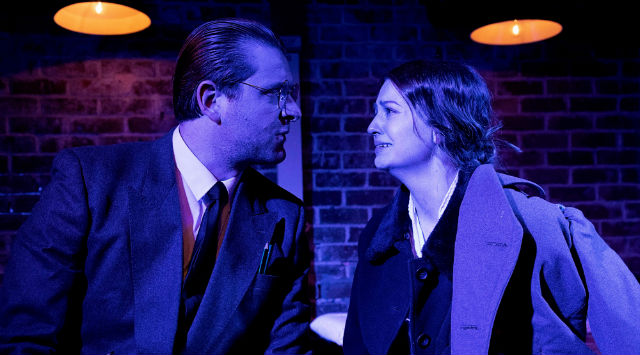
Nicole Pingon and Mike Ugo can be seen in The Rime Of The Ancient Mariner.
Dates: 2 – 13 Apr, 2019
Venue: Kings Cross Theatre

Review: Seed Bomb (Subtlenuance / The Old 505 Theatre)

Venue: The Old 505 Theatre (Newtown NSW), Mar 5 – 9, 2019
Playwright: Daniela Giorgi
Director: Paul Gilchrist
Cast: Matthew Abotomey, Kate Bookallil, Lindsey Chapman, Sonya Kerr, Julian Ramundi
Image by Matthew Abotomey

Theatre review
Kat dreams of moving out to the country, so that she can escape the ugly rat race of city life. Upon meeting guerrilla gardeners Gridlock and Pax however, her mind changes, as she begins involvement in a political movement that helps her feel an integral part of community. Daniela Giorgi’s Seed Bomb talks about the responsibility of individuals, in an environment where the power to influence our own destinies, is routinely made to feel diminished. Kat discovers that she is not helpless in her home, and to leave it for greener pastures is in some ways a selfish act.

Giorgi’s benevolent writing is idealistic but not naive. Although its didacticism has a tendency to turn obvious, the immediacy of its concerns bear a pertinence that keeps us engaged, with Kat’s awakening bringing a sense of hope to our humdrum passivity. Directed by Paul Gilchrist, the show is tender and earnest, insufficiently dynamic but certainly authentic with its representations. Actor Sonya Kerr is particularly genuine in her convincing portrayal of Kat, our mild-mannered protagonist who learns to carve her own niche in micro activism.

Other cast members are similarly accomplished. Matthew Abotomey and Kate Bookallil bring conviction to their roles as provocateurs of the piece, both distinct and specific with their respective interpretations of the modern social justice warrior. Excellent comedy by a very cheeky Lindsey Chapman, who plays an ignorant financial adviser, leaves a lasting impression. The frustrations of Kat’s partner Toby are conveyed persuasively by Julian Ramundi, whose depiction of the one left behind, serves as caution against political apathy.

Whether we like it or not, to exist is to be political. We can choose either to participate or withdraw, but there is never neutrality in any of our decisions. Everything we say and do, causes reverberations, like dominoes toppling in all directions. Kat does not become radical, but her new awareness of things beneath the surface, has sparked a fundamental shift in how she behaves. We can never be sure if knowledge will necessarily improve lives; after all, ignorance is bliss. There is however, no possibility for reversal, once the truth is out. This is only the beginning of Kat’s story, what is to follow is a test of our optimism and faith.

www.subtlenuance.com

Review: Exit The King (Théâtre Excentrique)

Venue: Chippen Street Theatre (Chippendale NSW), Mar 7 – 16, 2019
Playwright: Eugène Ionesco (translated by Anna Jahjah, Kris Shalvey)
Director: Anna Jahjah
Cast: Clay Cruighton, Kirsty Jordan, Leof Kingsford-Smith, Josef Schneider, Gerry Sont, Alison Windsor
Images by Mansoor Noor

Theatre review
The king is informed that he is to die by the time the play ends. It is absurd that we are shocked by this notion, as death remains one of our only certainties. In Eugène Ionesco’s Exit The King, the protagonist is given 90 minutes to reflect on what he leaves behind, and what he is about to encounter. An exploration of existential angst, it attempts to anatomise the meaning of life, by looking closely at impending death.

Apart from Ionesco’s intentions, an alternate reading could be applied to Exit The King, whereby the monarchy is being taken down by those determined to have him vanquished. We see him being told repeatedly that his death is inevitable, and that he is no longer needed. The play has a new pertinence in our Time’s Up era, able to resonate with our thirst for stories featuring the demolition of traditional hierarchies.

Actor Kirsty Jordan plays Queen Marguerite, a strong almost ruthless personality who leads the charge in guiding the king to his demise. It is a robust performance, of great conviction, that provokes us into the formulation of hidden narratives that would make her story a more politically enticing one. Leof Kingsford-Smith is an excellent King Berenger, powerful with the vulnerability he introduces, an energetic presence capable of sustaining our interest through the production’s thick and thin. Ionesco’s densely surreal dialogue requires more detailed attention for the show to speak incisively, but director Anna Jahjah does good work with atmosphere and tone, allowing us access to poetic dimensions that appeal to parts of ourselves that are perhaps more visceral than logical.

None is immortal, yet we often carry on as though life is forever. We leave loose ends unattended at the end of every day, and we postpone pleasures to the future, believing that there will always be tomorrow. The old saying, “never go to bed angry” seems to imply that resolutions, permanent or temporary, must be reached, because there is every chance that slumber can turn eternal. If we understand that life is short, it would mean making the most of our days, and also to make the best of all our potentials, right here and right now.

www.theatrexcentrique.com

Review: The Miser (Bell Shakespeare)

Venue: Sydney Opera House (Sydney NSW), Mar 2 – Apr 6, 2019
Playwright: Molière (a new version by Justin Fleming)
Director: Peter Evans
Cast: John Bell, Michelle Doake, Harriet Gordon-Anderson, Elizabeth Nabben, Sean O’Shea, Jamie Oxenbould, Russell Smith, Damien Strouthos, Jessica Tovey
Images by Prudence Upton

Theatre review
Harpagon is the most miserly man you can imagine. He wants to marry off his daughter to a rich noble who has offered to waive the customary dowry, and is himself eager to marry a young woman who seems likely to be a frugal wife. Justin Fleming’s new version of Molière’s The Miser is a faithful adaptation that inflicts little disruption on the 350 year-old work, but the application of contemporary Australian lexicon refreshes it for a newly immediate experience. That we remain accustom to patriarchal structures, with mediocre men still ruling the roost in much of our daily lives, means that the very old play retains resonance. We relate to Molière’s iconoclastic spirit, but a sense of resignation pervades the play, for which our modern sensibilities should not be content with.

Designer Anna Tregloan offers a simple setting that conveys both Harpagon’s wealth and meanness, but it is her costumes that really impress. Flamboyant, colourful and unexpectedly trendy, every character is attired with an admirable level of taste and irony, perfectly coordinated to create a memorable visual vibrancy. Music by Max Lyandvert is charming, able to lure us into the story with a seductive power not unlike the irresistible magnetism of money. Peter Evans’ direction of the piece is less fanciful, with a straightforward approach that relies heavily on what each performer brings to the table.

John Bell is a convincing Harpagon, effortless in his portrayal of a very unlikable personality. More energetic members of cast leave a stronger impression, with Michelle Doake delivering the biggest laughs as Frosine, a matchmaker of sorts, demonstrating extraordinary aptitude for the classic farce genre. Damien Strouthos plays the son Cléante, deftly transforming the powerless offspring into a force of comedy, through bold physical explorations that delight, by virtue of their inventive quirkiness.

The problem with misers is that nobody seems to benefit from their obsession with hoarding. Those guilty are themselves constantly miserable, overwhelmed with an anxiety that accompanies the belief that nothing is ever enough. Everybody else is subsequently deprived of resources that are withdrawn from productivity, unable to gain necessary access for the general advancement of society. Harpagon puts his money in a cash box, allowing no one to do anything with it. What was once highly valued, is converted into dead objects. To have money means being able to do what the heart desires and what the brain can conceive. It can buy meaningless things, but it can also facilitate the betterment of countless lives. Misunderstanding the nature of money and the mismanagement of it, is responsible for so much of our ills and those who have lots of it have so much to answer for.

www.bellshakespeare.com.au

5 Questions with Kate Champion and Steve Rodgers

Kate Champion

Steve Rodgers: What’s the first memory you have of seeing live theatre?
Kate Champion: I was lucky enough to see Lindsey Kemp, the mime artist who taught Bowie, when I was pretty young. I remember there was nudity and men wearing frocks with powdered faces – they were moving but it wasn’t like any dance I’d ever seen and they were acting but it certainly wasn’t naturalism. It was exciting because it was outrageous and risky and different.

What works by others over the years have inspired you?
Hmmm – I always find this question difficult to answer because there are so many and afterwards I’ll end up thinking more about the ones I’ve left out. I find that work from genres other than the ones I work in have probably influenced me more. Music, film, comedy, visual arts, architecture, books…

You’ve been directing a heap of shows lately, Evie May a musical at Hayes Theatre, you’ve got Arthur Miller’s A View From A Bridge coming up at SASTC, what’s special about Every Brilliant Thing?
I am enjoying how different the shows I’ve been working on are – it really tests my skill set as a director. Every Brilliant Thing – as we wrote in the program notes – is almost not a play. It practically creates its own form which I love. Its form has come about as an honest and appropriate response to its subject matter. I come from a history of devising work from scratch. I recognise the skill with which Every Brilliant Thing has been devised and therefore appreciate its distilled and deceptive simplicity. To achieve what it does without the usual bells and whistles is its triumph.

What are the ingredients for a ‘brilliant’ rehearsal room?
I think having mutual respect in the room is vital. Giving everyone the ability to contribute their opinion yet at the same time asserting the necessary leadership that you, as directors, will make the final call. Talking about personal experiences around the subject matter of the play is vital. We’ve been writing our own list of Every Brilliant Thing every morning of rehearsal. Everyone who is in the room writes down ten brilliant things and then we read them out aloud. I think we’ve learnt more nuanced information about each other this way than we would have found out otherwise. It’s a ‘brilliant’ way to start the day. It’s also vital that everyone knows that they can be vulnerable in the room and will be supported. A combination of discipline and playfulness is imperative.

Why should people come to this play, now?
There seems to be a strong disconnect these days between a surface way of sharing and deep social isolation. Every Brilliant Thing brings us together as an audience literally face to face to share the personal account of a struggle with unstable mental health. This difficult subject matter is handled in a down to earth, tender, even lighthearted way which is ultimately beautifully life affirming. I think there’s a good chance it will still be relevant long into the future.

Steve Rodgers

Kate Champion: You’re both a writer and an actor – how do you think your acting experience influences your writing and visa versa?
Steve Rodgers: I think writing and acting inform each other in the sense that they’re both about making words live off the page. I guess obviously acting is more about playing the words, where as with playwriting you get the chance to create the words for someone else to play. But they talk to each other because they’re both beautiful imaginative leaps that require discipline.

How does Every Brilliant Thing differ from how you might approach other roles?
Every role I’ve ever done is about examining what I think I understand and know about the character in relation to my own experience, and what I don’t know or understand, and need to find out. This role is all about shedding your skin, without layering something else on top.

What’s it like going from the co-directing to the acting ‘head space’?
I understand the director has the final call, so as the co-director I think my job is to be a part of the discussion as another observer, offer another perspective, and in a small tight room like ours, try and make a few jokes. As an actor I’m also doing the same. It’s a discussion about personalising the work. I must admit watching Mulvers get up and do it each day is easier than getting up and doing it your self. I’m reminded how much acting personally costs.

Do you enjoy learning lines?
No… But when they’re learnt, I’m anyone’s.

What part of the process of creating/getting a show to the stage do you enjoy the most?
Rehearsals for me are sacred, where I’m always reminded I’m not alone in the world. People and stories… what else is there?

Kate Champion and Steve Rodgers are co-directing Every Brilliant Thing by Duncan Macmillan.
Dates: 8 – 31 Mar, 2019
Venue: Belvoir St Theatre

5 Questions with Nyx Calder and Julia Robertson

Nyx Calder

Julia Robertson: In your experience, what was the best part about being a kid?
Nyx Calder: It was definitely the boundless curiosity and hunger for knowledge, I remember spending hours finding new words in dictionaries and looking up synonyms to broaden my vocabulary. I was so eager to learn how to read that I drove my parents half mad, they eventually taught me to read out of sheer frustration.

What’s a big similarity between you and Joe? What’s a major difference?
In terms of similarity, definitely the gentle and quiet nature. While I get pretty wild after getting comfortable with folks, I tend to be quite slow to develop connections, and I am inherently quite shy – I have a lot of social anxiety that I think Joe shares. Unlike Joe, I tend to wear my heart on my sleeve! I’m slow to develop connection, but I tend to overshare quite a fair bit and without knowing people very long, while Joe tends to keep his personal history under lock and key.

You’ve recently graduated from NIDA, how does it feel to surface from the depths of drama school and dive straight into a two person text?
It’s an absolute dream! While NIDA educated me in a great many ways, it also left me feeling very boxed in at times, especially towards the end of my stay. Being able to step into a rehearsal room as an actor and not a student is such a pleasure, and even more so to do it with a text as rich and expansive as Jess & Joe Forever. It’s also incredibly liberating to be working in such an intimate and direct form of theatre with such giving and wonderful folks.

What is something that has challenged you during the rehearsal process of Jess & Joe?
The voices! I underestimated just how many perspectives we see through this play in spite of the cast size, and when you start throwing dialects into the mix, it can all be quite overwhelming. Fortunately, everyone has been very patient and nurturing, and we’ve had wonderful input from our dialect coach, so it’s been entirely manageable.

What makes this story worth seeing, and why should audiences see this production in particular?  
I think this story speaks to something quite universal in the experience of puberty; the sense of loneliness and isolation felt during those vulnerable developmental years, and the yearning for companionship and acceptance. This play allows us to see a beautiful connection blossom between two kids who do not just survive their circumstances, but start to thrive and prosper alongside each other. Jess & Joe Forever is for those of us who, in our adolescent years, struggled to find ourselves in the world around us. This play speaks to that uncertainty in a tender, honest and loving way, and I believe audiences will be thrilled to join us on such a moving journey.

Julia Robertson

Nyx Calder: Given that we’re both twenty eight years old, what has your process been in finding your inner adolescent?
Julia Robertson: My inner adolescent is… disturbingly accessible? Julia means youthful after all! I spend a lot of time with teenage girls as a drama and singing teacher. Their complexities, empathy and curiosity are continually fascinating to me. Teenage me made a lot of mistakes, felt very alone but always wore a smile on her face. I like in this production that we are able to see the truths, whatever they may be, underneath the polite smile that has been forced upon young women for a very long time.

What’s the biggest difference, and the biggest similarity, between you and your character Jess?
I find differentiating myself from a character once I’ve gotten them under my skin quite difficult! But let’s try. Difference: in her younger years Jess is very feminine and proper. I was not. I was a “boy-girl” and pretty determined to be an entomologist when I grew up. When I began at an all girls school, I was suspended for punching someone in the face a week in. Jess takes a little longer to find her physical prowess! Similarity: Too many. She’s lovable and annoying. I hope/think that’s me. 

What’s your favourite rom-com of all time?
Goshhhhhh I honestly don’t know if I have one! I used to like How To Lose A Guy In Ten Days? Maybe? The hairless dog in it is good?

What sets Jess & Joe Forever apart from other plays and makes it a must-see?
Jess & Joe Forever is unique. It tenderly explores hardships that only a minority of us have ever or will ever experience. Jess and Joe are like and unlike any tweens you know and love. And that’s what makes this story so special. 

What even is a scotch egg, anyway?
A tiny, bald, white man in a kilt. Nah, jokes it’s some bacon-crusted egg thing? Sounds gross. Apparently it’s artisanal. 

Nyx Calder and Julia Robertson can be seen in Jess & Joe Forever by Zoe Cooper.
Dates: 13 – 30 Mar, 2019
Venue: Belvoir St Theatre

Review: Angels In America (Apocalypse Theatre Company)

Venue: Old Fitzroy Theatre (Woolloomooloo NSW), Feb 15 – Mar 16, 2019
Playwright: Tony Kushner
Director: Dino Dimitriadis
Cast: Joseph Althouse, Catherine Davies, Maggie Dence, Ben Gerrard, Jude Gibson, Ashley Lyons, Gus Murray, Timothy Wardell
Images by Robert Catto

Theatre review
At the centre of Tony Kushner’s Angels In America, are the breakdown of two relationships, from two different worlds. We might like to term those seemingly separate existences the left and the right, as we are want to do in so much of our political conversations. In the middle of catastrophe however, when the devastation of human frailty becomes palpable, categories dissipate as they prove increasingly impotent and therefore meaningless. Set in the middle of the 1980s AIDS crisis, Angels In America is an ode to desperation, that condition for which the face of humanity has to reveal its truest nature.

In their hopelessness, characters in the story are met with divine intervention. Ghosts, angels and other apparitions descend upon their consciousness, not always as a form of salvation or even reprieve, but as a refusal of the finitude to which we regard life, especially during sickness and disease. Kushner summons the vastness of our mental capacities; call it belief, imagination, or fantasy, to render a theatrical representation of being, that extends our conception of sentience to include metaphysical dimensions.

Not that our bodies are unimportant. In fact, in this deep interrogation of material versus immaterial, we are consumed more than ever, by our very corporeality. Flesh and blood are never far from the centre of our attention, functioning as literal concerns and as symbols, reiterating time and again, that we are immovably both vessel and soul. Heaven and earth are inextricably linked at the location where skin breathes, making us simultaneously, painfully so, sacred and profane.

This transcendental drama is communicated through director Dino Dimitriades’ pursuit of the sublime. The aesthetic world that he manufactures as vehicle for Kushner’s words, is heavy yet delicate, a sentimental embrace of past sacrifices, and a benediction that regards our future, as LGBTQI communities, with caution. At over seven hours long, it is probably inevitable that the journey would feel uneven, with certain portions coming across less powerful than others. It is a massive undertaking, and the considerable confidence with which the epic is approached, sets our expectations very high, and we struggle to overlook moments win which our awe is allowed to falter.

Jeremy Allen’s set design is carefully proportioned and elegantly conceived, but the minimalism of its style is unforgiving of construction imperfections. The colour palette of costumes is thoughtfully calibrated by Maya Keys, who perhaps exercises too much restraint in her visual representation of personalities and their physicality. Lights by Benjamin Brockman are memorable for their dark sensuality, moving us between spaces of despair with an artistic finesse reminiscent of Rembrandt and Caravaggio. Ben Pierpoint is tasked the impossible challenge of providing original music for the endurance piece, understandably deficient in its thoroughness, but sensational at each key juncture of the plot.

The show boasts some extraordinary acting by its indefatigable cast. Mormon wife Harper is played with luxuriant and interminable nuance by Catherine Davies, whose disarming authenticity brings invaluable poignancy to the entire operation. Her husband Joe is interpreted with unexpected tenderness by Gus Murray, tremendously convincing in the complex duplicity that he is charged to portray. The dynamic Ben Gerrard offers up a depiction of a dying man at all his extremes. As Prior, he is more provocative than he is moving, successful at engaging our minds for an intellectual understanding of the story. Ashley Lyons plays another AIDS patient Roy, admirable for the energy and colour that he brings to the stage.

As Belize and Mr. Lies, Joseph Althouse is a scintillating presence, with a marvellous, precise use of voice and gesture that gently steals all of his scenes. Timothy Wardell goes on an emotional roller coaster, able to convey Louis’ passions with aplomb but insufficiently lucid with the role’s philosophical attributes. The Angel is given the Maggie Dence treatment and proves quite the phenomenon, appropriately strong and otherworldly. Jude Gibson impresses in a variety of roles, particularly memorable as Mormon mother Hannah and as Dr. Henry, intricate and humorous with everything she presents.

When we reach for the esoteric, it is a greater truth that we seek, but being mortal, we can only understand its messages within our ultimately insurmountable limits. What we receive will always bear a reflection of ourselves, no matter how much bigger a version we can perceive. Angels In America suggests however, that we can move beyond good and bad, right and wrong, past and present. We are encouraged, through this spiritual fable, to think and act radically, to turn boundaries into starting points, for where we know things to end, is but the beginning of mystery. Much as we are essentially flawed and addicted to destruction, it is in our nature to imagine a higher power, and be able to conjure a notion of purity. The choice whether to follow that celestial magnificence, determines how we paint the destiny of each breath, in all our days.

www.apocalypsetheatrecompany.com

Review: Art V Garbage (Dumpster Divas / Jackrabbit Theatre)

Venue: Kings Cross Theatre (Kings Cross NSW), Feb 26 – Mar 1, 2019
Creators and Cast: Salem Barrett-Brown, Danni Paradiso, Rory Nolan
Images by Clare Hawley

Theatre review
The Dumpster Divas have a very passionate social conscience. Like many of their generation, these young Australians have a certitude about what is right, the people we need to become, and how things should be run. They are idealistic, and in their 45-minute production, convincing with their perspective of the world that we share. Comprised of short sketches, Art V Garbage is variously themed, but each segment is united by a distinct queer sensibility, all flamboyantly conceptualised and slightly anarchic in approach.

The exuberant humour of Art V Garbage is thoroughly enjoyable, with the trio proving themselves to be as adept in the art of comedic performance, as they are in writing and directing their own material. Creative and clever, the work encompasses virtually all that is resonating within our immediate zeitgeist, effectively shaping itself into a condensed representation of our life and times, as things stand at the moment. Its absurdist style allows us to take its meanings beyond the obvious. We are able to look at art, politics, society and economics from new angles, maybe not to reach completely unexpected conclusions, but its refreshing take on important issues are definitely provocative.

From sanctimonious single mothers to the Prime Minister, the iconoclastic trio cuts them down to size, in a spirited exercise that re-focuses our mores through an improved, more equitable lens. The gay rights movement feels to have past its prime in Australia, but the queer principles and values we have engendered through the last forty or so years, continue to serve in the unending expansion of democracy in our ways of life. Queer refuses hierarchies, and is always quick to disseminate power. It protects the weak, and insists on challenging every convention. Salem Barrett-Brown, Danni Paradiso and Rory Nolan demonstrate in their sketches, the virtues of the new Australian; more egalitarian than before, more intelligent, more caring. They work for the good of everyone, even when we think of them as outsiders.

www.jackrabbittheatre.com

Review: Dead Cat Bounce (Griffin Theatre Company)

Venue: SBW Stables Theatre (Kings Cross NSW), Feb 22 – Apr 6, 2019
Playwright: Mary Rachel Brown
Director: Mitchell Butel
Cast: Kate Cheel, Lucia Mastrantone, Johnny Nasser, Josh Quong Tart
Images by Brett Boardman

Theatre review
In Mary Rachel Brown’s Dead Cat Bounce, Gabriel is a moderately successful novelist, a middle aged alcoholic, and also it seems, quite the ladykiller. Two women are madly in love with him, in this story of addiction and redemption, but we spend most of the duration trying instead to figure out his appeal, wondering what it is that his current and ex beaus are actually drawn to. This of course, is not a wholly uncommon experience, for those of us who have watched our friends (and ourselves) fall for the wrong people, bewildered by the things a human heart is capable of making us do. In this play however, those dynamics are unconvincing, and worse, neither its narrative nor characters are capable of keeping us meaningfully engaged.

Little of the comedy manages to be truly amusing, and where we hope for poignancy, or at least some valuable depth to its observations of quite serious themes, we find only cliché and banality. People are often stupid, that is unassailable, but our storytelling must bring insightful illumination to our nature, even if it is idiocy that is placed under scrutiny. The production is fortunately, a fairly polished one, with Alexander Berlage’s lights and Nate Edmondson’s music providing a great deal of elevation, even if only on a cosmetic level.

Although lacking in substance, the show is undoubtedly energetic, with director Mitchell Butel maintaining a bold pitch in performances, insisting that we pay attention. Josh Quong Tart is accurate in his portrayal of the unremarkable Gabriel, intentionally unlikable but clearly committed to the part. His young lover Matilda is played by Kate Cheel, who demonstrates great inventiveness in her efforts to find creative dimensions within this unenviable task. Lucia Mastrantone takes every opportunity to bring the drama, for which we are grateful, even if her character Angela’s choices prove to be relentlessly frustrating. Equally intense is Johnny Nasser, whose personal charisma almost compensates for the flimsiness of Tony, a ridiculously whiny and small man, rendered with too much unnecessary kindness.

The women in Dead Cat Bounce are suckers for punishment, but it is not hard to figure out why they stand firm on playing the fool. Girls are taught that they are worthless without children and a husband. Society seems obsessed with instilling a sense of inadequacy in us, always finding ways to say that we are not good enough, and we seem never to be able to entirely escape from these systems of control. Matilda is smart enough to read Tolstoy and Dostoevsky, but somehow finds herself happily planning to raise a family with a drunk twice her age. Angela is a powerful woman in the publishing business, but is addicted to toxic men and all their unreasonable demands. From our vantage point, we can only conclude that they should simply have walked away, and learned to be unafraid of independence. If one should think that this is easier said than done, then that is indication of where much of the problem lies.

www.griffintheatre.com.au

5 Questions with Lucia Mastrantone and Josh Quong Tart

Lucia Mastrantone

Josh Quong Tart: For ‘great’ television, who would you choose as a partner if you were to enter The Amazing Race and why?
Lucia Mastrantone: Valentino Rossi because I’m not a lover of rugged travel nor roughing it whilst I travel. I’d love to fang it around the world with an Italian who’d be very good at getting you to each destination quickly and in time for an aperitif before dinner and face whatever adventure one needs to face after having a beautiful meal.

What was your greatest culinary disaster? Please explain.
Serving a gluten-free and vegetarian meal to a potential Italian mother-in-law. I don’t think that needs an explanation.

If you had all the money in the world what would you bid on at the auction house?
Australian art and furniture.

Re the art of comedy who do see as your funniest female actor?
Madeline Carn.

If you could choose anywhere in the world to tell someone you love something REALLY special where would that be and why?
The island of Ischia off the port of Naples. An unknown proper working Mediterranean village with incredible seafood, views, volcanic springs and nightlife that only Italians and Germans visit or know of, as a holiday resort.

Josh Quong Tart

Lucia Mastrantone: What is your favourite non-touristic destination in NSW?
Josh Quong Tart: Dolphin Point (near Ulladulla). Swimming in crystal clear water fed by the ocean into Burrill Lake. Best time to do it – on the incoming tide just before it peeks. Dive in let the current take you a couple of hundred meters where you can jump out and do it all over again. Amazing.

In what country overseas did you have your most romantic love affair and why was that so?
Innsbruck Austria. Travelling alone a few years back (got off the train by accident) to discover this beautiful place. I’m a big sucker for mountains and centuries-old town squares covered in snow and dripping elegant Christmas decos.

What would be your monster’s ball meal if you were ever on death row?
Spaghetti bol.

Who is your artistic idol?
Barry Humphries is right up there.

If you were a genie, what famous person would you like to find your genie bottle and bring you to life and why?
Jenny Morris singer in the 80’s. Cause she’s kinda fun and thinks big. I’d trust her judgement with her wishes.

Lucia Mastrantone and Josh Quong Tart can be seen in Griffin Theatre’s Dead Cat Bounce by Mary Rachel Brown.
Dates: 22 Feb – 6 Apr, 2019
Venue: SBW Stables Theatre