5 Questions with Chika Ikogwe and Vaishnavi Suryaprakash

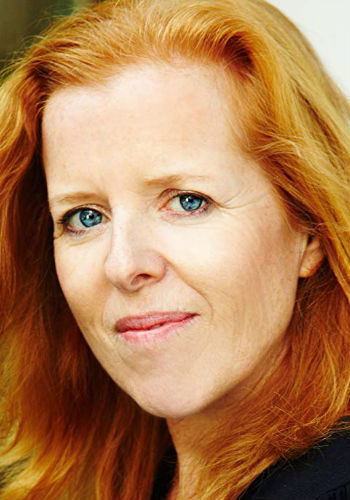
Chika Ikogwe

Vaishnavi Suryaprakash: If you could use your acting platform to change one thing about the Australian performance scene, what would it be?
Chika Ikogwe: I would love to see a more diverse and inclusive industry here in Australia. I know there are a lot of people that are tired of hearing this, and even people that believe that the pendulum has swung so far, that now the industry only favours diversity. Which is just completely false. The majority of work on stage and screen still majorly lacks First Nations people, People of Colour and minorities in general. And there’s also a lack of stories that are being created / written by people from these minority groups. I absolutely acknowledge the amazing work and the great strides that have been made in the last few years to create a more diverse and inclusive industry, but there’s so much more work to be done on that front. I just want to see the Australia that I see as I walk down the street, as I catch the bus and as I do my grocery shopping, being reflected on stage and screen here in Australia. That’s what I’d change ¯\_(ツ)_/¯

What has it been like growing up with the name “Chika Ikogwe”?
It has changed a lot over time. When I was younger, there were times when I absolutely hated my name, and wished I was called something else. I distinctly remember my first day of prep when the teacher called out my name on the roll, and all the kids just burst into laughter because for some reason they found my name so funny. One kid even yelled out ‘Chicken! Her name is chicken!’ That was the first time in my life I’d felt any kind of shame regarding my name. Then there’ve been other times when I’ve done over-the-phone job interviews, secured the job and have been greeted with perplexed facial expressions on my first day of work. Turns out some people don’t know Chika is also a Nigerian name. There’s been so much I’ve lost out on because of my name, but to balance that so much I’ve gained. Life is just funny like that though, and I kinda love it. It gives character. I wouldn’t trade my name for anything else… Except maybe Beyoncé?! Just kidding. I think…

What do you most love about the character you play in Good People?
Jess is an actor and she takes her best pals on a holiday so they can reunite and just, like, hang out?! That’s awesome and I hope one day I can do that with my friends. #Goals.

When you think about the vastness and contents of the universe, how do you feel?
Bruh, I feel a LOT. Sometimes I feel super overwhelmed at the fact that there’s so much out there that we don’t even know about. Sometimes I feel like I can do anything, and the world really is my oyster. Sometimes I feel incredibly small. Sometimes I wonder if the world’s richest people congregate monthly to discuss their plans to leave everyone on Earth behind to start a new life on Mars or Europa or something. Sometimes I wonder if Beyoncé remembers me from that one time we locked eyes at her concert back in 2013 (probably not, but I’ll keep lying to myself). Sometimes I ask myself, “Who the hell let Donald Trump, Scott Morrison and Boris Johnson occupy any kind of political space, AT THE SAME TIME?!” I feel many feels. 

Who’s your favourite tennis player and why?
The Williams sisters are my forever Queens. Particularly Serena Williams. I played tennis for about 6 years growing up, and Serena was one of the only players I could identify with. Not only was she a black woman, but she also had broad shoulders and a muscular build amongst players that were mostly tall, white and skinny. She played with such force and passion. I remember wanting to be just like her when I grew up. She made me feel so seen and inspired me so much. 

Vaishnavi Suryaprakash

Chika Ikogwe: If you could use your acting platform to change one thing about the Australian performance scene, what would it be?
Vaishnavi Suryaprakash: I would get more young people from CALD backgrounds involved in theatre and performance art. I want an artistic career path to be contemplated by more of these children, and for them to feel encouraged to create art.
 
What’s the worst Christmas present you’ve ever received?
I actually can’t remember – nothing stands out! I think I’ve been pretty lucky. On a related note, I think Harry Potter’s worst Christmas present would be the tissue from the Dursleys (yes, I am currently re-reading Harry Potter, how did you know). Though I have often wondered how they sent their presents to Harry. Does Hedwig turn up every year a few days before Christmas? How do they know the reason she has turned up? How come they give Harry Christmas presents, but never birthday presents?
 
If your character in Shandy’s Corner had a catch phrase, what would it be?
“A lady never discusses the size of her yarn stash.”
 
You win a million dollars. What are the first 3 things you spend the money on? 
The very thought makes me stress out… so let me tell you instead what I love to buy: good quality tea, books (a guilty habit because libraries exist!), and hiking gear (ooh nothing beats the feeling of the perfect supportive backpack resting on your shoulders…)
 
Which actor would you cast to play “Vaishnavi Suryaprakash” in your biopic? 
Definitely Scarlett Johansson. 

Chika Ikogwe and Vaishnavi Suryaprakash can be seen in Blue Christmas, a double bill featuring two new Australian plays, by Katy Warner and Gretel Vella.
Dates: 11 – 22 Dec, 2019
Venue: Kings Cross Theatre

Review: Krapp’s Last Tape (Red Line Productions)

Venue: Old Fitzroy Theatre (Woolloomooloo NSW), Nov 26 – Dec 14, 2019
Playwright: Samuel Beckett
Director: Gale Edwards
Cast: Jonathan Biggins
Images by John Marmaras

Theatre review
Another grumpy old man takes to the stage in Samuel Beckett’s Krapp’s Last Tape. He brings along a sense of confusion, perhaps disillusioned and defeated by a world that never lived up to its promises. A wall of filing cabinets containing a lifetime of voice recordings that he has made, an ongoing project representing a memoir that is both self-important, and self derisive. Indeed, it charts the man’s ageing process, from idealistic to despondent, as we find him in a state of decrepitude.

Most of the show involves Krapp listening to his tape machine, playing a collection of narrations that could only ever mean more to him than to anyone else. We observe past and present converge as he sits attentive to his personal oral history. Directed by Gale Edwards, the staging bears an affecting melancholy, with Veronique Benett’s lights and Brian Thomson’s set design providing just the right ennui. Actor Jonathan Biggins is confident and a sturdy presence, able to convey degrees of regret for a role that seems to be about little besides. He provides a charming wistfulness that translates as a sort of gentle comedy, more likely to elicit empathy than it would laughter.

Krapp looks back in anger and in pain, making us wonder about the way we regard the past, as it relates to today and tomorrow. On the occasion of his 69th birthday, he demonstrates that the older we get, the less we are able to be buoyed by the future. The anguish he experiences, as he hits playback on the tape, is a result of poor choices and bad luck. Decisions can be made every which way; right, wrong, indeterminate, bearing in mind that regret is valuable only as a concept for future use.

www.redlineproductions.com.au

Review: Coram Boy (Kings Cross Theatre)

Venue: Kings Cross Theatre (Kings Cross NSW), Nov 22 – Dec 7, 2019
Playwright: Helen Edmundson (adapted from the novel by Jamila Gavin)
Directors: Michael Dean, John Harrison
Cast: Rebecca Abdel-Messih, Lloyd Allison-Young, Violette Ayad, Andrew Den, Ryan Hodson, Joshua McElroy, Tinashe Mangwana, Suz Mawer, Emma O’Sullivan, Gideon Payten-Griffiths, Ariadne Sgouros, Annie Stafford, Amanda Stephens-Lee, Petronella Van Tienen, Joshua Wiseman
Images by Clare Hawley

Theatre review
The story revolves around the “Coram Hospital for Deserted Children” in 18th century London. Babies are abandoned, with some subsequently rescued and many others allowed to die, in Jamila Gavin’s novel Coram Boy, adapted for the stage by Helen Edmundson. The epic features unfeeling landowners, ruthless criminals, desperate mothers, music prodigies and George Frideric Handel, all woven into a very big play with narratives that all concern themselves with the welfare of children.

Wonderfully imaginative and often very touching, Coram Boy is written almost like a screenplay, with short scenes taking place in a myriad different places. Directors Michael Dean and John Harrison orchestrate the action marvellously, adventurous in their efforts to help us suspend disbelief inside a small black auditorium, allowing us to see in our mind’s eye, old streets, stately homes and the deep blue ocean. Lighting design by Benjamin Brockman is instrumental in manufacturing these impossible visions, extravagant and evocative with everything he presents. Similarly rhapsodic is Nate Edmondson’s sound design, an unbelievably rich aspect of the show, thoroughly assembled to cover all bases for a luscious rendering of this period drama.

Fifteen passionate members of cast bring soulful life to a huge roster of personalities, all of them imbued a sense of authenticity under the strict supervision of Dean and Harrison. The powerful Lloyd Allison-Young is captivating with the flamboyance he brings to the baddie Otis Gardiner, as is Gideon Payen-Griffiths who plays Handel, and other roles, with a delicious sense of theatrical ostentation. Annie Stafford takes care to introduce valuable nuance to the ingenue Melissa Milcote, while Joshua Wiseman impresses with musical talents that measure up beautifully to his considerable acting abilities.

Ariadne Sgouros is unforgettable with the emotional intensity she provides Mrs Lynch, a complex character with severely conflicting qualities that the actor makes truthful. Equally genuine in presence is Violette Ayad as Isobel Ashbrook, whose subtleties never fail to catch our attention, even in a sea of persistent cacophony. The noteworthy Emma O’Sullivan takes on a range of smaller parts with gusto, remarkably persuasive with all of them.

The greatest inspiration one would take from Coram Boy relates to the immense ambition on display. A grander project could not be envisioned for a smaller space, yet all three hours of the experience is entrancing, satisfying and fruitful. The rich people in the story have every resource to do good, but they do only bad. It may not be true that money will only bring forth evil, but it is clear that on this occasion, necessity has become the mother of invention. Endless shows have been put on costing more, but have delivered far less. When we feel as though in the gutter, looking at starry affairs of the wealthy, it is important to remember that the problems that money can solve for our individual lives, are not often as exhaustive as they seem to promise. When a lot is done with very little, is when we know that something truly great has been achieved.

www.kingsxtheatre.com

Review: The Odd Couple (Ensemble Theatre)

Venue: Ensemble Theatre (Kirribilli NSW), Nov 22 – Dec 29, 2019
Playwright: Neil Simon
Director: Mark Kilmurry
Cast: Laurence Coy, Katie Fitchett, Robert Jago, James Lugton, Brian Meegan, Nicholas Papademetriou, Olivia Pigeot, Steve Rodgers
Images by Prudence Upton

Theatre review
Felix has left his wife, and is moving in with Oscar who is himself also a divorcee. The two are good friends, but also vastly different personalities, which means that their newly single lives are proving to be less harmonious than either had hoped for. Neil Simon’s The Odd Couple is over half a century old, but much of the comedy, largely based on laddish antics, still works. It would appear that the man-child trope still resonates, in fact its interest in the immature adult is probably more pertinent in our age of high tech comfort and reduced responsibilities. A pervasive and perpetual state of arrested development seems to be taking hold, and the farcical childishness of characters in Simon’s play becomes surprisingly relevant.

Energetic and entertaining, Mark Kilmurry’s crowd pleasing direction revives the work for an audience hankering for 1960s American nostalgia. Costumes and a set by designer Hugh O’Connor are effective contributions to the overall vibrancy of the production, along with Christopher Page’s lights maintaining a sense of joviality for the staging.

Actor Steve Rodgers is endearing as the fun-loving easy-going Oscar, able to turn the slob into someone disarmingly likeable. Felix the neat freak is played by Brian Meegan, who demonstrates unexpected range for the role, delivering charming humour alongside the portrayal of someone struggling with the difficulties of divorce. Stage chemistry is enjoyable, not just between the two, but also for all other members of cast. The group of eight embodies a cohesiveness that ensures solid comic timing from start to end, with Katie Fitchett and Olivia Pigeot particularly remarkable, in their ability to manufacture hilarity for scenes involving a couple of very poorly written female characters.

The success of relationships should be judged by their quality, and not in accordance with duration, yet we obsess over the number of years that people stay together, ignoring all the times those individuals may be suffering inside unhappy unions. Divorces are celebratory occasions, as they mark an end to one’s hardship, allowing them to begin again and find ways to welcome better days, that may have been elusive for considerable lengths of time. Narratives determine so much of our behaviour and emotions. If we know to make better sense of our stories, how we feel about our lives can be correspondingly improved.

www.ensemble.com.au

Review: Kasama Kita (Aya Productions)

Venue: Belvoir St Theatre (Surry Hills NSW), Nov 20 – Dec 7, 2019
Playwright: Jordan Shea
Director: Erin Taylor
Cast: Kip Chapman, Jude Gibson, Kenneth Moraleda, Monica Sayers, Teresa Tate Britten

Theatre review
It is 1974, and we follow three student nurses, as they leave the chaos of Marcos’ Philippines, for Whitlam’s newly progressive Australia. Jordan Shea’s Kasama Kita is a look at success stories of the Asian migrant experience, featuring colourful characters making unexpected and diverse journeys, in the land of their adopted country. Perhaps inevitable with its focus on adversity, Kasama Kita is however, remarkably humorous, and fascinating in its depictions of the different ways in which individuals are able to be of value to society.

The play’s unmistakable sentimentality is showcased powerfully by director Erin Taylor, who does not shy away from moments of melodrama. Its comedy too, is vigorously explored to deliver thoroughly satisfying entertainment, as it works simultaneously, on a separate quieter level, for a more heartrending result. Design aspects are fairly minimal, but the production’s subtle approach for sound and visuals, proves effective in keeping us attentive and emotionally invested.

In the role of Nancy is Monica Sayers, whose strong presence provides a sense of gravity to the model citizen narrative. Teresa Tate Britten plays the less honourable but equally impressive Cory, with excellent sass and dignity. Memorable, and very endearing, is Kenneth Moraleda who brings on the laughs as Antero, wonderfully authentic in his proud portrayal of a gay Filipino. Kip Chapman and Jude Gibson are delightful in multiple parts, both actors highly accomplished and full of conviction with all that they put on stage.

After 45 years, Nancy, Cory and Antero are still required to justify their place as Australians. Their achievements have far exceeded expectations, including their own, but their legitimacy still feels questioned, by a colonial establishment that itself struggles to be persuasive with its own validity. We can get into all kinds of discussions about prejudice and injustice, as we have done for many lifetimes, but it is evident that for as long as we do not adequately address the issue of land rights and ownership, all talk that pertains to race can only be rendered erroneous. If only 3% of Australians are Indigenous to this land, the 97% of us needs to find new ways to understand our positions here, in relation to the rightful custodians who must, for the foreseeable future, always be centred and prioritised.

www.ayaproductions.com.au

Review: The Beauty Queen Of Leenane (Sydney Theatre Company)

Venue: Roslyn Packer Theatre at Walsh Bay (Sydney NSW), Nov 18 – Dec 21, 2019
Playwright: Martin McDonagh
Director: Paige Rattray
Cast: Noni Hazlehurst, Hamish Michael, Shiv Palekar, Yael Stone
Images by Brett Boardman

Theatre review
Maureen is full of resentment, because she has to live at home to care for her incapacitated and very demanding mother Mag. After a passionate night with Pato however, Maureen starts to think of a brighter future, and in Martin McDonagh’s The Beauty Queen Of Leenane, we wonder how much of destiny is indeed predetermined, as our protagonist navigates what appears to be a new shift in luck.

The play is savage in its depictions of hard lives. Maureen and Mag are Irish women of the lower classes, and fending for themselves is nigh on impossible, as made abundantly clear in this painful story, about the compounding disadvantage of living with disability and poverty, as well as the structural sexism that functions as a major component keeping them at the bottom of the pile. McDonagh’s comedy is of the darkest variety, becoming pitch black as we approach its end.

It is a magnificently accomplished production that director Paige Rattray has assembled. Humour and drama are balanced exquisitely against dread and revulsion, for an entirely mesmerising experience at the theatre. Production design by Renée Mulder offers sensational rendering of the Folan’s home, both inside and out, for a vision of unimaginable decrepitude, reminiscent of the stuff nightmares are made of. The Beauty Queen Of Leenane is a masterpiece in the style of the modern Gothic horror; although devoid of supernatural elements, its atmosphere is unmistakably ominous.

Stunning performances by all four actors have us absolutely riveted. Maureen is played by Yael Stone who dances on a knife’s edge, in an intoxicating portrayal of a woman at the end of her tether, having us on the edge of our seats, with the psychological thrill of witnessing someone on the brink of losing her mind. Our perception of mother Mag oscillates precariously between humour and terror, as the fantastic Noni Hazlehurst masterfully manipulates her role to offer us immense entertainment.

Shiv Palekar has us amazed with his exceptional comic timing, as the puerile and very laddish neighbour Ray, able to deliver huge laughs with every one of his precise and intuitively executed punchlines. Maureen’s object of affection Pato too is a funny character, made tender and surprisingly earnest by Hamish Michael, who brings valuable sentimentality to the often brutal narrative.

Maureen’s world is a horrible existence, one that she has been taught to never leave. Poverty keeps people in their place. It works as a form of indoctrination that hopes to make large numbers feel a sense of acceptance of their stations, so that they can remain exploited for generations, if not for eternity. The two women are stuck at home, languishing and never daring to move beyond the familiar. They will not be rescued, but the rules are there ready to be broken, if only they were to choose defiance.

www.sydneytheatre.com.au

Review: Rudy & Cuthbert Too (Kings Cross Theatre)

Venue: Kings Cross Theatre (Kings Cross NSW), Nov 17 – 21, 2019
Playwrights: Toby Blome, Zelman Cressey-Gladwin
Director: Jo Turner
Cast: Toby Blome, Zelman Cressey-Gladwin
Images by Jasmin Simmons

Theatre review
Rudy and Cuthbert are throwing a party. They consult a listicle on the internet, for ten sure-fire ways to make it a success, but it appears that information on the world wide web is not always reliable. In accordance with the top tips they had discovered, the young men work hard to make fun. Performers Toby Blome and Zelman Cressey-Gladwin, on the other hand, are effortless in their approach, for a whimsical comedy based on mime and clowning principles.

There is an unmistakable innocence in the characters, that sets the tone for the show. Having presented themselves to be devoid of agenda, other than the simple intention of having a party for their friends, we watch circumstances evolve, and observe the way things begin to happen to Rudy and Cuthbert, to arrive at an understanding that life has its way of taking you by surprise.

Directed by Jo Turner, the show is perfectly paced, to offer an experience that is deeply amusing and consistently delightful. The escalation in stakes and therefore tension, gives Rudy & Cuthbert Too an emotional dimension that is perhaps surprising for a presentation of this form. Although eccentric in style, Blome and Cressey-Gladwin have energetic presences that always maintain a firm grip over their audience. The boys make it a point to look like they are fooling around, but their irrefutable proficiency would suggest that they mean business.

Click-baits are deceptive by nature, and they take without giving anything satisfying in return. Theatre is quite the opposite. It allows us to sit in what is usually a state of passivity, while extraordinary attempts at deciphering the universe’s meanings are being offered up in earnest. Whether entertaining, informative, inspiring, or exasperating, these gifts from artists everywhere are immense, and a crucial element in determining how our civilisation does or does not flourish. There is no question that most of Australia’s art is devalued. If we could only give it as much as we do the endless pointless clicks on our phones, our extinction might just become avertible.

www.facebook.com/rudycuthbert

Review: Packer & Sons (Belvoir St Theatre)

Venue: Belvoir St Theatre (Surry Hills NSW), Nov 11 – Dec 22, 2019
Playwright: Tommy Murphy
Director: Eamon Flack
Cast: Nick Bartlett, John Gaden, Anthony Harkin, John Howard, Brandon McClelland, Josh McConville, Nate Sammut, Byron Wolffe
Images by Brett Boardman

Theatre review
It is assumed in Tommy Murphy’s Packer & Sons that we would be interested in three generations of awful men, simply because they rank amongst some of the most notorious people in the country. The play makes little effort to elicit our emotional investment in these repulsive characters, relying only on their celebrity to fascinate, as it dives straight into the nitty-gritty of their ruthless business dealings. Frank, Kerry and James Packer wield a lot of power as media moguls, and as the top one percentile their every major financial decision causes reverberations for the rest of us, yet the family shows nothing but contempt for consumers who they only seek to exploit and never to serve.

Packer & Sons seems to have an abundance of misplaced empathy for the Packer boys. James at its conclusion especially, weeps and wails as though innocent of all sins, begging for father’s approval, in an extended sequence that we can only regard with incredulity. We want to laugh at these animals, but the production is reluctant to heap scorn, expending its energy instead on the inner mechanics of the empire, as though offering something revelatory or profound.

The production is remarkably unimaginative, with too great an emphasis on a realism that works only to inform us on things that have long been public knowledge. Eamon Flack’s direction is able to convey with accuracy, dynamics between the men, which form the crux of the piece, but this focus on father-son relations is ultimately insufficiently substantial to sustain our engagement. Design elements of the presentation are accomplished, if slightly underwhelming, in their representations of some of the world’s wealthiest. The staging misses an opportunity to mock the Packer’s obsession with money and commercial success, especially in visual terms.

Actor John Howard is effective as tyrants of the dynasty, the grumpy old men Frank and Kerry, persuasive with the cunning he depicts, as the cruel instigator of chaotic discord at home and at work. Howard’s portrayal of toxic fatherhood in both roles, is a captivating feature of the show. As James and young Kerry, Josh McConville is irrepressibly vivacious. The energetic desperation that he embodies for Kerry, almost makes up for Packer & Sons‘s lacklustre drama.

Performances feel predictable, in this obvious and conservative take on a story about the patriarchy. Everything seems to be done the most convenient way, and the result is just banal. These characters are hateful, and if we are to spend any theatrical time with them, the approach should not be any less controversial than the way these assholes have always presented themselves, and prided themselves to be.

www.belvoir.com.au

Review: Little Miss Sunshine (New Theatre)

Venue: New Theatre (Newtown NSW), Nov 12 – Dec 14, 2019
Book: James Lapine
Music & Lyrics: William Finn
Director: Deborah Jones
Cast: Kiera Dzeparoski, Sarah Furnari, Aneke Golowenko, Martin Grelis, John Grinston, Ellacoco Hammer McIver, Gavin Leahy, Christopher O’Shea, Fiona Pearson, Julian Ramundi, Grace Ryan, Adam van den Bok
Images by Bob Seary

Theatre review
Olive dreams of winning the Miss America beauty contest one day but is for now, more than happy competing in child pageants. When she qualifies for a prestigious event 800 miles away, the Hoover family finds itself in the tight quarters of a mini bus, travelling together and living in each other’s pockets, on the road for two days. A musical version of the 2006 film, Little Miss Sunshine is about kinship, and the dreams of regular folk. It is a work replete with pathos and tenderness, a bittersweet comedy that can touch the hardest of hearts.

Director Deborah Jones infuses the production with a charming quirkiness that endears us to all of its characters. Beautifully lit by Michael Schell, against a whimsical set by David Marshall-Martin, which includes a truly delightful interpretation of the famed vintage Volkswagen, as seen at the movies. Musical direction by Laura Heuston makes good use of a three piece band to convey a swathe of emotions, for a show best consumed with generous doses of sentimentality.

An impressive level of conviction is demonstrated by the cast, memorable also for a sense of cohesion they bring to this story about the ordinary American family. Young Olive is played by Kiera Dzeparoski, whose effervescence provides persuasive driving force for the narrative. As mother Sheryl, Fiona Pearson’s astonishing singing voice delivers the most enjoyable moments of Little Miss Sunshine. John Grinston is very funny as Grandpa, with an irrepressible zest for life that gives heart and soul to the staging. Equally hilarious is Sarah Furnari, strong in all three of her roles, making us laugh heartily with each of her appearances.

It often seems that life is determined to beat us down, as though it knows the potency of our resilience. When we first meet the Hoover family, its members are at varying degrees of failure, with several personalities close to giving up. It is true that having loved ones as support, can help us weather difficulties of all kinds, but for those less fortunate, the human spirit must not be underestimated. Some live without families, and some even have to live without love, but there is always a way out, no matter how hard it may get.

www.newtheatre.org.au

Review: Simple Souls (Fringe HQ)

Venue: Fringe HQ (Potts Point NSW), Nov 13 – 30, 2019
Playwright: Paul Gilchrist
Director: Paul Gilchrist
Cast: Alison Benstead, Julia Christensen, Lisa Haanssens, Simon Lee, Thu Nguyen, Madeleine Withington

Theatre review
Frustrated with the senseless jibber-jabber she encounters on the internet, Marguerite embarks on creating a work of theatre, with people who have responded to a paper sign she had stuck onto a lamppost. Using the parody of a TV game show, Marguerite and her new friends proceed to criticise their audience for the stupid things being said on social media, but soon discover the exercise to be futile, as they fail to move beyond this easy act of castigation.

With Simple Souls, playwright Paul Gilchrist expresses a burning desire to determine how we can be better persons, in this age of high technology and deep divisions. He passionately explores why we are so poorly behaved, asking if our nature is capable of improvement, or if we are in an immutable state, on the road to no return. Simple Souls implores us all to be more reflective, and is itself very analytical, about how we are with one another, and how it thinks we might be able to learn to get along.

Gilchrist’s approach for direction is much more basic than how he writes. Early sections of the staging are enjoyable, with less complicated ideas accompanied by a playfulness that keeps us amused, as it prepares us for more sophisticated ideas to come. As the text gets increasingly dense, the performance ramps up in intensity, which may be appropriate in terms of the tension it conveys, but the speed at which Gilchrist dispenses his philosophy can prove too challenging. His thoughts are undoubtedly fascinating, but they race past too quickly for us to attain full appreciation.

Actor Madeleine Withington brings a convincing despondency to Marguerite’s story, and a dissatisfaction with the world that is understandably emphatic. Julian Christensen and Simon Lee play Trudy and Thomas respectively, flamboyant characters with admirable energy, both effective in injecting a valuable sense of theatricality that sustains our attention. The introverted Veronica who is never without her glove puppet, is brought to life by Alison Benstead whose depiction of naivety and idealism, gives the play unexpectedly meaningful balance.

Marguerite toys with the notion that stupid people have it easier, but there really is no way for anyone to know if other people’s lives are truly any better. The weight of the world is heavy on the shoulders of our protagonist, who is doing the right thing by resisting evils, and trying to invent solutions for the problems that she has identified. However admirable her efforts, it seems that the only one facing defeat is herself, as we watch Marguerite gradually consumed by anger and resentment. There is much that needs to be done, but part of the project is to survive one’s own darkness, even if unjustifiable optimism that makes one look a simpleton, is required.

www.subtlenuance.com