
5 Questions with Annie Byron and Ildiko Susany

Annie Byron

Annie Byron

Ildiko Susany: What would be one piece of advice you would give an emerging actor breaking into the industry?
Annie Byron: To thine own self be true. Train, meditate, exercise, read, forge your inner resources – you’ll need them. Pursue your passion. If the challenges start to sour your love of your craft, stop it and do something else. Persisting makes no sense if you are not being enriched by the experiences, and having fun.

How do you think things have changed for women in theatre since the time you started in the industry to now?
Well, not enough. It was astonishing to sit in those early Women In Theatre meetings last year and hear exactly the same things being said as in the Limited Life funding meetings of almost FOUR decades ago. But look! Within a year a whole Festival Fatale organised, that’s women working with women for women. Women have always supported each other. Maybe what’s changed is that companies generally take more seriously the need to be conscious of gender equity. I think we might be better organised and more articulate. I’d like to think the work of those who have gone before has made taking new steps easier. I’m not sure I can answer this question. It’s depressing that it still needs answering.

What do you think is the naughtiest part of this production of Babes In The Woods?
I think it has to be the relationship between Phyllis and Jack, with a moment of leg licking being one among numerous exquisite high points.

What is your biggest challenge in playing ‘The Dame’ (or, a woman playing a man, playing a woman)?
Before we started rehearsal, this is what I thought about most. Perhaps it says something about the level of subtlety of my performance (!) that now that we are in to it, I have kind of forgotten all about those layers, and I’m just going for a character, and for clarity of story telling. And enjoying the possibility of facial hair. There is a generous allocation of gender bending in this show, and I’m trusting it is something to be played with and enjoyed – without too much depth of thought.

If you could sing any song in this production (regardless of rights) what would it be?
“37 Babies” – the one I WILL be singing! It’s fierce and black and cheeky and political, and I adore it. Having been told repeatedly as a child that I couldn’t sing (and even instructed to mime in the school choir!) this is a major victory for me. I’m delighted that it is so steeped in the feel of Kurt Weill, and I intend to have a lot of fun with it!

Ildiko Susany

Ildiko Susany

Annie Byron: What do you experience as the things most needing to change for young women in our profession?
Ildio Susany: Gender parity. The erroneous view is that women require more training; women aren’t ready; women aren’t as talented or produce as good work as men in the industry (this is also the perception of artists of diverse backgrounds). This is completely false. We need to change this view from the outset. An example of this is that statistics show that roughly 50% of film school graduates are women and yet these women are only represented at less than 30% across all fields in the film industry. Women are in greater audience numbers than men and according to the Geena Davis Institute on Gender in Media, films with female leads made considerable more money than films with male leads. Women don’t need further training or internships – women need access to work and opportunity. Women need to be trusted for their work and skills and insights and capability in the same way that men are. Young women need to own this conversation. Be a part of Women In Theatre & Screen (WITS) and Women In Film and Television (WIFT). The industry is not a meritocracy – unconscious bias and notions of historic gender roles are still in effect today. We need to work together to change this.

Working with full commitment for little or no money, what makes being in an ‘independent’ production worthwhile?
Independent theatre is a place where artists can test their muscle, take risks and break new ground. I think this space can be the best for creating change and bringing major issues to light. I perform in independent theatre and create independent productions because I love to work, I love to be able to tell the stories that I want to tell (stories which may not be featured on the mainstage); stories which might be more inclusive and reflective of our society in terms of gender and diversity and the issues that we need to be exploring in society.

What is the best thing about being in our panto, Babes In The Woods?
The team. I’m working with some of the best artists, actors and creatives who are highly astute with excellent comic timing! It is a joy to play and improvise in this work space. I also love the themes and politics explored in this play which are centred on Australian identity and landscape.

What do you most enjoy about playing a male role?
My favourite part about playing the male role of Robbie is debunking the myths of masculinity and exploring issues of feminism, white privilege and male privilege from my perspective as a woman of colour.

Can you name 5 roles you would like to play by the time you are 60?
Lady Anne. Lady Macbeth. Eliza Schuyler Hamilton or Angelica Schuyler. Any other strong and complex female character – who might have to do some stunts or fight choreography!

Annie Byron and Ildiko Susany can be seen in Babes In The Woods by Phil Rouse (based on the good works of Tom Wright).
Dates: 13 – 21 Dec, 2016 and 6 – 21 Jan, 2017
Venue: Old Fitz Theatre

Review: The Taming Of The Shrew (Montague Basement)

montaguebasementVenue: PACT Centre for Emerging Artists (Erskineville NSW), Nov 29 – Dec 10, 2016
Playwright: William Shakespeare
Director: Caitlin West
Cast: Travis Ash, Tel Benjamin, Robert Boddington, Sam Brewer, Hannah Cox, Jane Watt
Image by Zaina Ahmed

Theatre review
Shakespeare’s The Taming Of The Shrew is about society’s need to subjugate women. The play takes issue with Katherine, characterising her as headstrong and troublesome, a young woman to be brought under control. The plot is kept basically the same under Caitlin West’s direction, but comedy is turned into tragedy in her version of events.

The production is a heavily edited, compressed revision of the, now objectionable tale. A more detailed approach to Katherine’s and her beau, Petruchio’s perspective backgrounds would allow us to feel more involved in the story, but the main concern here is the argument between West and Shakespeare, between where we are today and how we had been yesterday. The ideas are simple but powerful, and although the methodology would benefit from finding more nuance in its expressions, the resultant show is nonetheless, an exciting one.

There is good conviction from the actors who take the stage. The rapidity of their performance keeps things enjoyable, but by the same token, we are prevented from getting to know any of the characters very well. Robert Boddington and Hannah Cox are combustive as the lead couple, both passionate for the work, and able to achieve a valuable volatile connection that gives the show its dangerous, astringent quality.

We can leave the past behind, but have to acknowledge its influence on how we think and behave. In order to move forward, we must look back and address history. This cyclical concept of time requires that the scars we carry are being attended to, in order that progress may be found. Much of Shakespeare’s legacy involves the ugliness of humanity. Each generation of theatre makers that comes along will have amongst them, those who fall for the Bard’s words, and who must bear the burden of his failures.

www.montaguebasement.com

Review: Bare (The Depot Theatre)

supplyevolutionVenue: The Depot Theatre (Marrickville NSW), Nov 30 – Dec 17, 2016
Book: Jon Hartmere, Damon Intrabartolo
Lyrics: Jon Hartmere
Music: Damon Intrabartolo
Director/Choreographer: Hannah Barn
Cast: Aaron Robuck, Sophie Perkins, Alex Jeans, Natalie Abbott, Timothy Langan, Teale Howie, Alexandra Lewtas, Caroline Oayda, Matt Laird, Stephanie McKenna, Ibrahim Matar, Tara Hanrahan, Annette Vitetta, Penny Larkins, Gavin Leahy

Theatre review
The musical is set in a Catholic high school. Peter and Jason are secret lovers struggling to come to terms with their gay relationship and the identity markers that will inevitably become a matter of controversy given the social context. It is an age-old story, but one that bears repeating. Our religious institutions remain unkind to those who do not conform to their narrow definition of acceptable sexual behaviour, and Bare‘s response is still important, even if its story offers little that would be refreshing for the twenty-first century.

Hannah Barn’s direction of the piece pays strong attention to the show’s emotive qualities. Every melodramatic flourish is amplified to passionately drive its point, and to captivate. The more humorous portions of the musical seem to be neglected, which results in a production that can feel slightly unvarying and predictable, but there is plenty of dynamism to be found in the music. Musical director Matthew Reid does wonders with his 8-piece band, providing injections of energy whenever required, and calibrating atmosphere with remarkable sensitivity throughout, but sound design, especially in the first half, needs to be refined.

It is a very committed cast of performers that take to the stage. Alex Jeans and Aaron Robuck play their leading parts with integrity, and even though their interpretations of characters can feel somewhat one-dimensional, both young men tell their stories with impressive enthusiasm. Along with Jeans and Robuck, accomplished singing by Natalie Abbott and Penny Larkins give the production a surprising polish that reflects a good level of professionalism and admirable devotion to the time-honoured craft of musical theatre.

Bare is yet another work that documents the struggle of gay men in a society that refuses to accept them as equals. We have heard it all before, but we must not stop telling these tales of oppression as long as the cruelty persists. For some of us, progressive political movements have brought us better lives, but for many others, the chains of injustice are a daily reality. We might like to think of ourselves as first world civilisations, but if we have children living in fear and in some tragic cases, taking their lives, our complacency has to take responsibility.

www.thedepottheatre.com

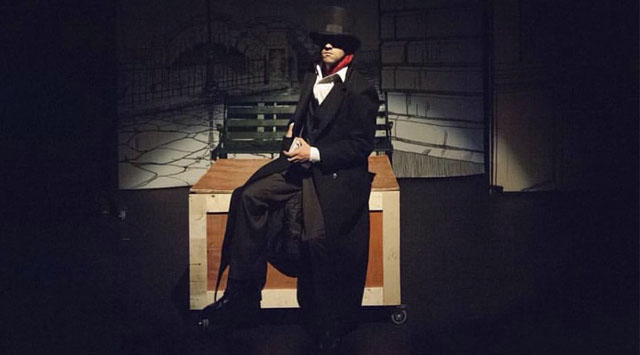
Review: Hiding Jekyll (Mon Sans Productions)

monsansVenue: King Street Theatre (Newtown NSW), Dec 6 – 10, 2016
Playwright: Liviu Monsted
Director: Liviu Monsted
Cast: Wills Burke, Nic D’Arrigo, Jordan Gallegos, Nathanael Hole, Dale Johnson-Green, Liviu Monsted, Jordan Rafter, Vitas Varnas

Theatre review
It is the Jekyll & Hyde story turned pantomime. The protagonist’s infamous condition is clearly fertile ground for comedy, so there is no surprise that Liviu Monsted (writer, director and lead actor) has identified it appropriate for lampooning. The sense of humour in Hiding Jekyll is very specific, and not to everyone’s tastes, but the production is certainly full of passion in its bid for a style of presentation, that had gone out of fashion when Mel Brooks ended his directorial career more than 20 years ago.

The jokes are cheesy, and the gags hammy, but the cast looks to be enjoying their experience. One person’s meat is another person’s poison, and it is probably true that there is no one thing that is universally funny. The cast is energetic and committed, but chemistry is lacking and timing poorly measured, with strange pauses between lines that prevent the show from ever gaining momentum. Performer Dale Johnson-Green however, leaves a good impression in the role of Enfield, with one of the more naturally animated, yet sensitive, approaches in the show.

The Jekyll & Hyde conceit will forever be relevant, and is therefore always primed for a retelling. The uncontrollable evil that resides within, is deeply familiar but also a mysterious and neglected stranger. We may not all share a common funny bone, but what is irrevocably true is our understanding that human nature comprises both good and bad, and it is important that we know when the bad guy takes over.

www.monsansproductions.com

Review: Girl Asleep (Belvoir St Theatre)

belvoirstVenue: Belvoir St Theatre (Surry Hills NSW), Dec 2 – 24, 2016
Playwright: Matthew Whittet
Director: Rosemary Myers
Cast: Ruby Burke, Sheridan Harbridge, Amber McMahon, Martha Morgan, Ellen Steele, Matthew Whittet, Dylan Young
Images by Lisa Tomasetti

Theatre review
Alice and Dorothy are young ladies who travel famously into their subconscious, for memorable stories that have shaped generations. In Matthew Whittet’s Girl Asleep, Greta joins the list, for an exploration into teenage anxiety as it relates to all things social, familial and sexual. Like her predecessors, we meet Greta when she is in a moment of confusion, but our new heroine seems stronger, more independent and wilful, as we watch her battle the demons to emerge with newfound wisdom.

The play is often funny, but its explorations do not go deep enough for us to derive much more than what is presented on the surface. As the show becomes more surreal, we expect harder truths to reveal themselves, but what we get instead are elaborate effects (courtesy of a very impressive team of designers) that fascinate our senses without much intellectual engagement. Music by Luke Smiles and Harry Covill, along with Richard Vabre’s lights and Jonathan Oxlade’s set and costumes, are truly commendable, for the many dimensions they add to what is essentially a static stage.

Ellen Steele brings an admirable dignity to Greta, choosing to portray the girl with grit and pluckiness, without a hint of twee. Her relationships are established with authenticity, most notably her friendship with Elliot, played by the very charming Dylan Young, who brings a valuable quality of joyful innocence to the production. The actor’s irresistible comedy is certainly one of the strongest assets of a show memorable for its sense of humour.

Greta is not quite ready to grow up, but there are forces determined to hurry her into womanhood. Nature has a way of taking us places against our will. Just as we learn to be content with how things are, disruptions inevitably come upon us, and we have to fasten those seat belts again for yet another bumpy ride. Childhood may be a wonderful time, but the promise of better days is always palpable, and in our every breath, we anticipate new gifts from the great unknown.

www.belvoir.com.au

Review: Macbeth (Montague Basement)

montaguebasementVenue: PACT Centre for Emerging Artists (Erskineville NSW), Nov 29 – Dec 10, 2016
Playwright: William Shakespeare
Director: Saro Lusty-Cavallari
Cast: Travis Ash, Robert Boddington, Hannah Cox, Alex Francis, Barret Griffin, Lulu Howes, Jem Rowe
Image by Zaina Ahmed

Theatre review
It is a story of greed and betrayal, arising from unbridled ambition, but it is also a parable of retribution and punishment. The transgressions in Macbeth reveal dark and buried parts of our psyche, although neglected in much of daily life, we all know to exist beneath our amiable surfaces. Our conscience keeps things in check, but some of us use divine inspiration as permission to carry out less than pleasant deeds. Shakespeare’s characters know that the supernatural forces they conspire with are evil, but in our realities, they are never quite so undisguised.

Saro Lusty-Cavallari’s rendition of the play is a straightforward telling of the story. A few artistic licenses are taken in his effective conflation of characters, but the plot is left soundly, almost radically, unaltered. Good work on music selection by Lusty-Cavallari brings drama to the production, but the frequent use of stage blood has a tendency to look puerile. Flashes of strong acting by Hannah Cox as Lady Macbeth and Jem Rowe as Malcolm, introduce moments of elevation to a cast that is generally underwhelming. Robert Boddington as Macbeth is insufficiently expressive, in body and in voice, neither to entertain nor to provide psychological insight into one of Western theatre’s most infamous characters.

Countless other productions of Macbeth have come before, many of which have been huge successes. Artists have the right to take on any classic, should they think themselves capable, but they must remain conscious of their audience’s relationship with the text in question. It is highly likely that any performance of a work like Macbeth would be compared to memorable versions that have come prior. Young artists can choose between cutting their teeth with challenging material in the public domain, or settle for something more attainable. Impatience usually results in clumsiness, but it is also a valuable quality necessary for us to soar at great heights.

www.montaguebasement.com

Review: Resplendence (Old Fitzroy Theatre)

oldfitzVenue: Old Fitzroy Theatre (Woolloomooloo NSW), Nov 29 – Dec 10, 2016
Playwright: Angus Cerini
Director: Nathan Lovejoy
Cast: James O’Connell
Image by Pernilla Finne

Theatre review
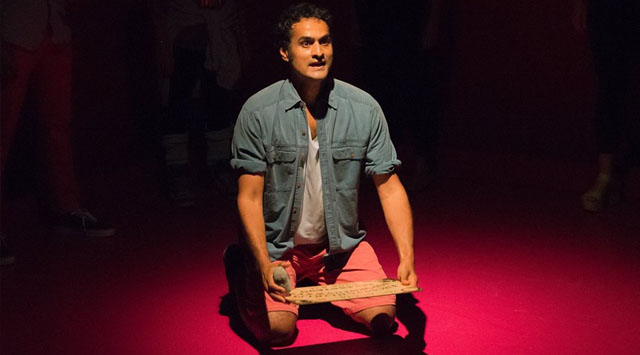
A young man walks into the auditorium, dishevelled and distressed. He is incoherent, and remains so for the entire duration of the 50-minute play. Our humanity compels us to connect; our instinct is to reach out for an understanding, but he is elusive, and we must decide how to make sense of his evanescent presence.

Actor James O’Connell’s performance is vulnerable yet confident, full of power and focus. What the play lacks in structural conventionality or narrative logic, O’Connell compensates with outstanding emotional intensity. Adding to the astringent atmosphere is director Nathan Lovejoy’s clever use of lights and sound, delivering an experience memorable for its unrelenting severity.

Angus Cerini’s Resplendence may not communicate well, but it represents with convincing legitimacy, a state, or perhaps, a mode of being, that contradicts how most of us think of life. Fractured, irrational and puzzling, the man reminds us of lost souls who roam the streets, people we might consider vagrant, even insane, but as we get lost in his anguished rhapsodies, we discover parts within our selves that are not dissimilar to the smithereens disseminated onstage.

www.oldfitztheatre.com

Review: Lighten Up (Griffin Theatre Company)

griffinVenue: SBW Stables Theatre (Kings Cross NSW), Dec 2 – 17, 2016
Playwrights: Nicholas Brown, Sam McCool
Director: Shane Anthony
Cast: Katie Beckett, Nicholas Brown, Vivienne Garrett, Julie Goss, Sam McCool, Bishanyia Vincent
Image by AH Imagery

Theatre review
John thinks that he is white, but people keep telling him that he looks Indian. In his efforts to make his appearance fit his sense of self-identity, he scrubs his skin with pumice stone, and owns a collection of contact lenses in green and blue. To make things even more problematic, John is an actor, whose looks are his meal ticket, but also a constant source of judgement and frustration to be endured virtually every day. Nicholas Brown and Sam McCool’s Lighten Up is about racism, that complex and fraught topic of discussion Australians love to fight over. We never seem to be able to agree on what it means to be racist, and every individual’s unwillingness to own up to their prejudices means that we are rarely able to get to the truths of the matter. Often, the best we can do is agree to disagree, which unfortunately fixes none of our problems.

Brown and McCool’s play however, is brutally honest in its social commentary. There are no surprises in its depiction of our culture of colonialism, but what it says about ethnic minorities helping to perpetuate our own subjugation is fascinating. The issues it raises are clearly concerning, but the show is a funny one, often uproariously so. The playwrights’ acerbic wit gives Lighten Up an edginess that is as startling as it is entertaining, and even though several of its plot devices are slightly dubious, the show’s power is undeniable. Its politics may not be everybody’s cup of tea, but its refreshing approach makes for exciting theatre that will amuse any audience type.

As director and dramaturg, Shane Anthony brings excellent illumination to the play’s important nuances. His show is bright and bubbly, but always determined to make its point. In its tenacious effort to drive home its message, the staging can sometimes feel less than elegant, with awkward transitions in terms of mood and character dynamics, but its overall effect is very rewarding indeed.

The cast is wonderfully accomplished, and tremendously likeable, with writer Brown taking on the lead role and inhabiting perfectly the essence of John and his story, proving himself to be a precise and dynamic performer who communicates with surprising depth and impressive charm. Similarly compelling is supporting player Julie Goss, memorable for an alluring exuberance that fluctuates playfully, and provocatively, between sincerity and sarcasm. Bishanyia Vincent is an outrageous presence whose every entrance is greeted with sparkling laughter. Her ability to find comedy in every line is a major contribution to the show’s deceptive but pertinent congeniality.

The worst people in Lighten Up are the ones who hate themselves the most. We often explain racism to be a hatred of others, but in the play, it is clear that that compulsion arises first for the self. When we are unable to accept perceived flaws or weaknesses in ourselves, we often turn that disdain outwards, scapegoating convenient targets to manufacture a kind of psychological and emotional balance. When the world tells us that we are not enough, it is easy to use that same barometer to chastise others. Compassion is our hope to better communities, but it needs to begin with a greater internal kindness. Love can only be true, if the one who gives it knows it well.

www.griffintheatre.com.au

Review: Who’s Afraid Of Virginia Woolf? (The Greek Theatre)

Venue: The Greek Theatre (Marrickville NSW), Nov 25 – Dec 17, 2016
Playwright: Edward Albee
Director: uncredited
Cast:  Christian Charisiou, Deborah Galanos, Nicholas Papademetriou, Adele Querol
Image by Rocket K Weijers

Theatre review
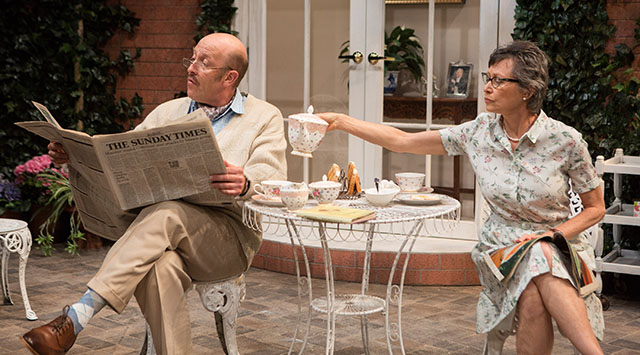
Martha and George have a sado-masochistic relationship, one that requires a heavy dose of exhibitionism to function. Edward Albee’s play does not put their sex life on display, but the couple’s existence is a chaotic one, in which joy and pain are intensely experienced, with little in terms of boundaries differentiating between the two. George’s emasculation is at the centre of all the action, along with Martha’s anguish under the glass ceiling. Finding herself without opportunities to live up to her father’s professional eminence, she resents George for failing to reach those heights on her behalf. There are very big problems in their marriage, and they find resolution through ruthless arguments, but only in the presence of other people.

The masterpiece says a lot about human nature, and it is through the immense complexity of Albee’s characters that we gain access to some very deep truths about ourselves. The roles are hugely challenging, and performances garner mixed results in this production, which incidentally comes with uncredited directorship. Nicholas Papademetriou does a respectable job as George, believable as the pussy-whipped, deflated middle-aged academic, but lacking in the toxic bitterness that is required to drive the play. The character is weak, but also full of anger, and the actor never quite convinces us of George’s dangerous sides. Martha is much bolder, as interpreted by the dynamic Deborah Galanos. Wild, volatile and carnal, it is an energetic performance that the production relies on for its vigour. Christian Charisiou and Adele Querol are memorable as the show’s supporting players, both charming and considered in their approach, demonstrating a strong level of conviction that makes their work persuasive.

In Who’s Afraid Of Virginia Woolf? men are supposed to look, act and think a certain way. The rules may not be explicitly stated, but we know what they are, and in these characters’ suffering, we see that those standards are unrealistic, and in fact, harmful. They all busy themselves with roles assigned by society, but no one is fulfilled. We spend much of our lives carrying out expectations that come from the external. Like any other social creature that walks the earth, it is impossible to extricate oneself from the herd. We can try to turn introspective and find desires that seem to be only personal, but we can never be sure of its authenticity. What is doubtless, is our ability to change society. In Albee’s dark universe, lie the clues for letting the light come in.

www.facebook.com/thetheatrongroup

Review: Relatively Speaking (Ensemble Theatre)

ensembleVenue: Ensemble Theatre (Kirribilli NSW), Nov 18, 2016 – Jan 14, 2017
Playwright: Alan Auckbourn
Director: Mark Kilmurry
Cast: Jonny Hawkins, Tracy Mann, Emma Palmer, David Whitney
Image by Clare Hawley

Theatre review
It is a very serious case of mistaken identities in Alan Ayckbourn’s Relatively Speaking, and the hilarity that ensues is rarely surpassed. It is about Ginny leaving one lover for another, but the story is hardly important in how the play is remembered. There is no throwaway line of dialogue, with each word calibrated to a staggering precision in order that we may experience the greatest amplitude of comedy possible. The 50-year-old work may not bear any trendy trimmings or indeed, political relevance to how we now live, but its theatrical structure and language specificity still remains outstanding in our age of perpetual mobile amusement.

The four riotous roles are performed flawlessly by a cast that can only be described as magnificent. Cohesive in tone and style, but each one idiosyncratic and independently captivating, their creations are all unforgettable, but it is the chemistry they manufacture for this ensemble piece that really delivers the goods. Ginny is played by the vivacious Emma Palmer, exuberant and dignified in her interpretation of a young woman in the swinging sixties. Jonny Hawkins is her adorable beau Greg, unbelievably animated and entirely compelling. David Whitney is the other man, spectacularly charming, knowing and droll as Philip, while his wife Sheila is brought to life by the truly extraordinary Tracy Mann with understated flair and impressive confidence.

It may all seem deeply familiar, but director Mark Kilmurry’s realisation of Relatively Speaking feels as though we had never actually seen a show of this genre executed with quite as much panache. His thorough engagement with the material and its particular form, ensures that the laughs are ceaseless for all of its two hours, and that we never tire of whatever he chooses to present. Life is never this much fun, but at the theatre, we sparkle eternal.

www.ensemble.com.au