Review: Ghosts Of Glebe (Jetpack Theatre Collective)

Venue: Streets of Glebe (Glebe NSW), Oct 31 – Nov 11, 2017
Curators: Emilia Higgs, Kirsty McGuire
Cast: Gabby Florek, Nicole Archer, Chloe Leathlan-Higson, Kipp Carina, Tim McNaught and Elliot Ulm

Theatre review
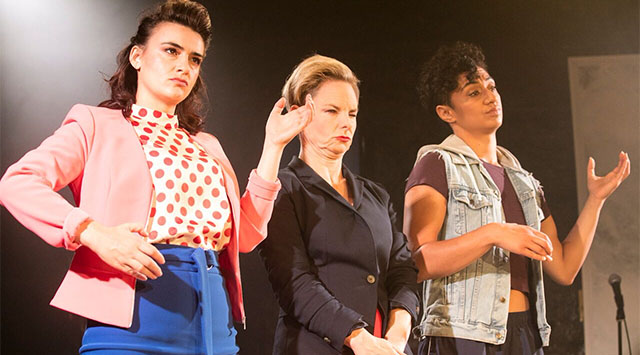
The entire experience is disguised as a “ghost tour”, and we quickly forget that our tickets had originally been acquired, for a theatre production. Ghosts Of Glebe works best when we submit to the fantasy, and actively participate in the creation of its narrative. The more we are able to behave and react like tourists, the greater its results.

We walk the streets of Glebe, rich with a history of murders, accidental deaths, and spooky stories. The spine tingles, in spite of our better judgement. Things get eerie, when our minds fail to decipher fiction from reality, but we relieve the tension when the inevitable sense of awkwardness starts to make us giggle.

It is a well-conceived production, although less eventful sections of the plot do feel lacking in imagination. There is wondrous use of space; Glebe at night is beautiful, and the theatricality that is wrapped around its topography, is highly enjoyable, if unconventionally brief.

Theatre is group activity, but in the West, we are used to it being the most passive of adventures. Ghosts Of Glebe offers an opportunity for our involvement to go slightly beyond the usual “sit back and wait”, and like in the rest of life, it is when we are willing to put in the effort, that the rewards become even more gratifying.

www.jetpacktheatre.com

5 Questions with Lap Nguyen and Amelia Robertson-Cuninghame

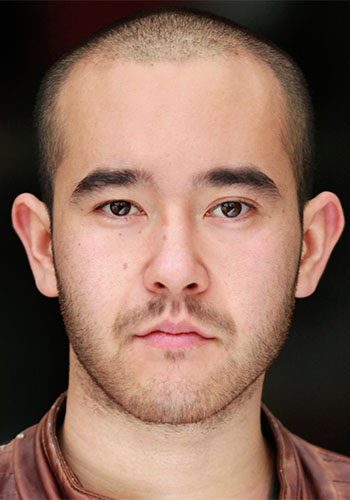
Lap Nguyen

Amelia Robertson-Cuninghame: Did you bring any of your own experiences of being a foreigner in Australia to the rehearsal process?
Lap Nguyen: Yes, it certainly felt very odd playing a foreigner in an Australia Day committee and being a foreigner in Australia itself! I bought a lot of unnecessary awkwardness to the character simply because I had encountered so many of those moments but what I think I forgot about Chester is that he’s a lot more adaptable than I am. I think he handled the whole ‘fitting in’ thing a lot better than I did. Plus he’s so likeable and cute (I’m playing him by the way). 

What is the most rewarding project you’ve ever worked on and why?
It’s probably a year 10 school production I did in Vietnam hah! All My Sons by Arthur Miller. It’s rewarding in the selfish way that the audience probably didn’t get anything out of it but I learnt so much throughout the entire process. 

It was really an enlightening moment to be honest. I played Chris Keller and I was so shitty at it. I had this habit of dragging my feet back then and every line I said or when I moved, there would be this screeching noise on the floor. I would mumble my lines, forget my blocking, the whole shazam. It was horrid. The funny thing was that I actually thought I did a good job at the time! Looking back at it, the best thing I learnt is that, no matter how good you think you are, you’re probably shit. Which sounds like harsh advice but I personally take it with me on every production now. I always strive to be better than what I think I am. Sometimes it works, sometimes I end up crying myself to sleep…

Who was the first actor you saw that blew you away?
Johnny Depp. Jack Sparrow. He was infectious. The role’s gone a bit downhill now but back then, Sparrow was the jam. He was my Iron-Man back in the day! Depp did such a phenomenal job fleshing our that role, it made me realise that it doesn’t take an Oscar to make someone’s childhood. 14 years old me was hooked to the bone. 

Your character Chester has a tendency to make poorly timed jokes, has there been a time where you, Lap have done the same?
All the time. I also can’t tell jokes apparently. I find myself way too funny. I just laugh and kill the gag before it even arrives. 

An acrostic poem for Australia Day please:
Anyone
Up for
Satire
Theatre? 
Really
Amazing
Lap
In yet
Another play!

Don’t forget to
Accentuate
Your lovely actors! 

Amelia Robertson-Cuninghame

Lap Nguyen: Have you ever been involved with an Australia Day committee?
Amelia Robertson-Cuninghame: You know what, I absolutely haven’t. I actually haven’t sat on any committee. I am however from a rural country town, so I think I get the je ne sais quoi or lack there of, that comes from being part of such a small community. 

What was your last Australia Day like?
I’m not one to really celebrate Australia Day, as not all Australians see January 26 as a day of celebration, and I want to stand with them.  I would much rather change the date, so all Australians feel they can come together to celebrate what is great about this fair country of ours. 
 
My favourite Australia Day however, was spent in Pokhara, Nepal. Started the day with some vegemite & cheese on toast (!!), that was spread so thick it stung our gums, followed by tandem paragliding. Catching those sweet thermals, that sent my friends into a cold sweat, with the most magical view of the lake in front of us, and the Himalayas behind. Put it on your bucket list if you haven’t done so already!
 
What’s it like to work with the New Theatre’s Australia Day cast and team?
Working with actors that have had so much more experience than me, is truly humbling. It has been wonderful to watch their processes and see how they tackle all the elements of the script. Everyone brings such a different quality to the rehearsal process, it’s a really warm, enjoyable space. 

What was your first performance and how was it?
My first performance was as a four year old, where I played the princess in Princess Smarty Pants at my preschools Christmas production. Whilst lapping up the attention, what I didn’t like was having to give my co-star Cory, a kiss on the cheek, because boys: ick! Having said that, it did turn Prince Swashbuckle into a gigantic warty toad and meant none of the other princes wanted to marry me, so I lived happily ever after. 

What is your dream role?
I don’t know if there is just one role that is my dream role. There are many characters that I have watched over the years and been enamoured with. Mostly badass chicks that get shit done! Lagertha the kick-arse shield maiden from Vikings is one, Tanya from the film Chopper with her brilliant one liners is another. Debbie Jellinsky from The Addams Family Values! *Sigh* So much fun! 

Lap Nguyen and Amelia Robertson-Cuninghame are appearing in Australia Day, by Jonathan Biggins.
Dates: 14 November – 16 December, 2017
Venue: New Theatre

Review: Atlantis (Belvoir St Theatre)

Venue: Belvoir St Theatre (Surry Hills NSW), Oct 28 – Nov 26, 2017
Playwright: Lally Katz
Director: Rosemary Myers
Cast: Paula Arundell, Lucia Mastrantone, Amber McMahon, Hazem Shammas, Matthew Whittet
Images by Daniel Boud

Theatre review
Lally Katz’s Atlantis is an autobiographical fantasy. It sprouts from the personal and authentic, then leads to something entirely imaginary. Lally, the protagonist, is consumed by anxiety, when at 35, she finds herself single and childless. We follow her on an odyssey that takes her from Sydney, to the USA’s east coast; an eventful, wacky journey that comprises a string of amusing characters and incidents. Lally goes through many discoveries, fuelled by a desperate search for love, or at least a husband and a baby.

It is not a quest that all will find persuasive. The deliberately silly scenes in Atlantis are certainly a lot of whimsical fun, but the central disquiet that motivates all the action seems too trivial, perhaps even narcissistic, to allow us to invest in a meaningful way. Through the plot, Lally comes in contact with more worthy concepts, of climate change, of poverty and of mortality, but they affect her only momentarily. We can all see that her problems diminish in significance as time passes, but nonetheless, Lally persists. She must find a man to fall pregnant with, or she simply cannot go on.

Amber McMahon plays a juvenile, although very likeable, version of the playwright. As though in a pantomime, McMahon’s exaggerated effervescence proves to be captivating, as she keeps us attentive through the highs and lows of Lally’s stories. The production is unquestionably humorous, directed by Rosemary Myers with a relentless sprightliness that offers entertainment and laughter, even when the narrative turns tiresome. Four other actors are called upon to perform a big roster of small roles, and they are all remarkable. The infinite versatility of the ensemble astounds us, with what they are able to achieve through sheer inventiveness. Also noteworthy are Damien Cooper’s lights and Jonathan Oxlade’s set, creating exciting images full of colour and movement, increasingly mesmerising as the show turns hopelessly hallucinatory.

Like in all our lives, the promise of a utopia propels the action in Atlantis. We need to believe in something, like that pot of gold at the end of a rainbow, in order that we can set ourselves in motion, so that we can fill time with meaning. Lally Katz does so much in the play, through all its scenes of mischievous adventure, but we see her being neglectful of each moment, keeping her mind focused instead on a puerile objective. When there is joy surrounding us, we must take notice and take pleasure in it. Better days will come, but understanding that they have a propensity to surprise us, and learning to see the signs that wish to evolve us, is how we can experience the magical unpredictability of this existence.

www.belvoir.com.au

Review: Give Me Your Love (Seymour Centre)

Venue: Seymour Centre (Chippendale NSW), Oct 31 – Nov 4, 2017
Playwright: Jon Haynes, David Woods
Director: Jon Haynes, David Woods
Cast: Jon Haynes, David Woods

Theatre review
Not only is Zach trapped in his room, he has resolved to stay inside a cardboard box, never to emerge. Jon Haynes and David Woods’ Give Me Your Love portrays life after war, for a Welsh soldier suffering from Post Traumatic Stress Disorder. Although wildly imagined, the work never deviates from a sense of authenticity in the way it discusses mental illness. The comedy is clearly outlandish in style, but the scope of its concerns remains faithful to a sense of accuracy, and urgency, in its depiction of a veiled but serious social problem.

It is an enormously witty show, and fantastically inventive, not only with its clever dialogue, but also in the sheer theatricality of what it presents. Jacob Williams’ set design is viscerally affecting, powerfully evocative of spaces in and around our protagonist. Zach’s tattered box is wielded masterfully by Woods, like an oversized mask. In his best moments, we connect in a profound way to the agony being explored, and reach a decent understanding of the difficult psychology and emotions, as experienced by those who live with PTSD. We can see that Zach is being ridiculous, but in quite an inexplicable way, we know what it feels like, to persist with behaviour that makes no sense.

Give Me Your Love relies on our universal need for empathy. The audience is introduced to an extraordinary set of circumstances, but the storytelling touches us intimately, and we recognise Zach’s dysfunction to be fundamentally human. It is also about sacrifice, personal and communal, inevitable and unfortunate. Life does not permit anyone to go through it unscathed. Damage will be done, but it is when we learn to heal the wounded, that we can begin to regain some control.

www.ridiculusmus.com

5 Questions with Lucy Goleby and Martin Ashley Jones

Lucy Goleby

Martin Ashley Jones: What attracted you to this work?
Lucy Goleby: I have been a long-time admirer of Lucy Clements, our director, and would have agreed to work with her on anything! But when I read Katy Warner’s heartbreaking, poetic, provocative script, I absolutely had to be involved. I think Paper Doll is exactly what theatre, and especially new work, should always be – challenging, insightful and conflicting.

What has been the most challenging aspect of the rehearsal process?
You’d think the content would be the most challenging aspect in this sort of play, but actually we’ve had a very fun – and funny – rehearsal room. It’s primarily just been the three of us – Martin and the two Lucys. I think he’s had the challenge!

What has been the most enjoyable and/or rewarding aspect of the rehearsal process?
Definitely the freedom and space Martin and I have been given by both Lucy and Katy to really discover who these people are, what they want and when they’re lying. We’ve spent a lot of time wrestling with various interpretations of the script, really pushing each other to find the rawest truth possible in every moment.

What do you hope people leaving the play will think about?
I hope they’re as deeply conflicted as we have been. Katy has written a play about a deeply controversial issue and yet has managed to continually shift our allegiances, expectations and assumptions. I’m imagining many conversations about empathy – what it looks like, what is asks and when it’s deserved.

If you had the opportunity to play any Disney Princess which one would it be and would you prefer to play her in a musical, opera, stage play, on ice, multi series TV show or feature film? 😊
Definitely Sleeping Beauty. That’s gotta be the most restful role ever, right?!

Martin Ashley Jones

Lucy Goleby: What attracted you to this work?
Martin Ashley Jones: It’s always a privilege to be a part of bringing new work to life. When I received the audition sides I was captivated by how sparse and simple the text appeared but how complex, dark and disturbing the imagery is. I was intrigued and excited and immediately wanted to get the role.

What has been the biggest challenge rehearsing the play?
Initially I thought that the subject matter could be challenging but working with Katy, Lucy and Lucy has been a very interesting and enjoyable process, so I feel that the journey thus far has been rewarding and challenging only in a positive way.

What do you hope people leave the play thinking about?
The terrible impact one can have on another’s life when trust is violated and abused. To receive someone’s trust is a gift that must be respected and honoured always.

What’s your favourite line in the play?
I did my time. I paid the fucking price. It’s completely honest and such an insipid, disgusting and pathetic justification for the crimes he perpetrated.

Had any dreams lately?
I dream all the time but the most recent and vivid one was that I was at Machu Picchu, but it wasn’t in the Andes it was on the beach with warm water and perfect waves. It was beautiful, one of those dreams that it feels a bit of shame to wake up from.

Lucy Goleby and Martin Ashley Jones are appearing in Paper Doll, by Katy Warner.
Dates: 7 – 18 November, 2017
Venue: Old Fitz Theatre

5 Questions with Lana Kershaw and Gemma Scoble

Lana Kershaw

Gemma Scoble: What is freedom?
Lana Kershaw: Freedom comes in degrees, and I think it’s often invisible to those who have it. In Egypt, my father’s homeland, repressive laws impact on freedoms relating to religion, sexual preference, and gender-based power. As a result of this, a number of our extended family came to Australia as refugees in the early 2000’s. Grateful for the freedom to make choices about how they lived their lives without fear of imprisonment or physical harm, there was still a sense of disempowerment that came with having to leave their home. Having freedom is not always exactly the same as having power. And when freedom is reduced to language, it can become a passively oppressive force, allowing us to turn a blind eye to discrimination present in our own society. When ‘freedom’ becomes a defence for hate speech, it becomes actively oppressive. So I think it’s a loaded term.

What space would you like to claim as an artist?
I would like to occupy the gaps and silences in our social narratives, to glory in the spaces we avoid, gloss over, or pretend not to see. I’d like the ideas I explore through my art to resonate, to disrupt the comfortable spaces. Ultimately, I think art is such a paradox; simultaneously transient and immortal. In a temporal sense, it’s such a gift to be able to claim a finite space of time with those who come to share in a performance. But there’s always the hope that the experience of that performance will be retained, relived, reconstructed and remembered. That the expansive realm of the subconscious will take the work and find a space to make sense of it, and reflect on its purpose and relevance. So I guess I want to climb inside you and jump around a little bit.

Have you worked with the Leftovers Collective before?
Yes. We collaborated together on Encounter My Heart. I love that the collective trust in the artistry of their performers, and that there’s no fear in raising questions we don’t have the answers to. The Leftovers celebrate such a wide diversity of experiences, both in relation to the artists and the audience, and it’s exciting to be working together again.

Do you believe in the power of words, or is it just sounds at the end of the day?
The only language my parents shared was English, and so that ended up being the language I speak. When I was a kid, I used to sit on my dad’s lap with my ear against his chest. I’d listen to him speaking
Arabic with his friends, and it never occurred to me that he was saying words. I listened to it as a
musical arrangement that echoed in his chest and often lulled me to sleep. I still find immense
comfort in listening to my family conversing in Arabic, though I don’t understand what they’re
saying. Words need context to have meaning, and a shared one at that. Give them context, and they
can tear holes in your flesh.

If you could add a word to any language what would it be and what would it mean?
Etialiseh: it would be a universal word with a flexible meaning, used to express feelings not able to
be adequately expressed by language.

Gemma Scoble

Lana Kershaw: How did you become involved with The Leftovers Collective?
Gemma Scoble: I auditioned for the Leftovers Collective this year when they held general auditions. It was the most open, accessible and freeing audition I’ve had. I left feeling genuinely inspired and empowered by my own creativity. I jumped when they asked if I wanted to be a part of Don’t Go To This Show. I also know Curly from working with ATYP and quite simply have the highest opinion of him as
director and a human.

What weren’t you allowed to do as a kid that would have changed your world?
My mum wasn’t really strict on us a kids so I was allowed to do most things – with the exception of
The Simpsons – I remember that being turned off a lot, not because of the swearing or content but because it was “American” and not made in Australia (turns out Mum was an early advocate of
homegrown content – she also bought us Australian Monopoly which always confuses me now
when I play other editions. I just know the dark blue is what you want.) I’d say the thing that would’ve really changed my world as a kid in a big way would’ve been moving to a bigger city. I’m from Townsville which is a great place to grow up for many reasons, but the arts industry is definitely larger in Brisbane or Sydney. I had dreams of running away as a kid to “make it in the big smoke”. So probably that.

Clean or dirty, which is better?
Dirty. I used to be a clean freak but now I think a little bit of chaos and imperfection is useful and
it’s fun.

There’s a saying that “He who controls language controls the world”. What are your thoughts?
I’m reluctant to bring up Trump any more than is necessary, but I do think we’ve recently seen an
example of how powerful language and narrative can be. And it doesn’t even need to be true.

Without using the words “and, the, but, I, a” can you describe your vision for the future?
Hearts full of empathy + compassion. Fear combated with love.

Catch Lana Kershaw and Gemma Scoble in Don’t Go To This Show.
Dates: 25 – 26 Nov, 2017
Venue: Yellow Umbrella, Potts Point

Review: A Westerner’s Guide To The Opium Wars (Thirty Five Square Theatre)

Venue: M2 Gallery (Surry Hills NSW), Oct 25 – 30, 2017
Playwright: Tabitha Woo
Director: Kevin Ng
Cast: Tabitha Woo

Theatre review
In Tabitha Woo’s mostly autobiographical work A Westerner’s Guide To The Opium Wars, it is not the historical event in China mid-1800’s that takes our focus. The conflict between East and West that Woo is concerned with, is a personal one. Being of both Asian and European heritage, Woo’s understanding of her own Australian identity can be a complicated one, shaped by our society’s persistent rejection of affiliations with neighbouring cultures.

As Woo traces her lineal descent, through Tasmania, Malaysia and China, we begin to gain a greater understanding of our collective character as a singular yet diverse nation. We think about the meanings of migration, and the tension between having to leave behind that which is unsatisfactory, and the need to remember where we come from. In the construction of new identities as we flee from one place to another, a deliberate renunciation occurs, of things and memories best left behind, but the nature of time requires that we return eventually, usually momentarily, for a more honest evaluation of states of being.

The show is often fascinating in the way it uncovers decades and centuries of information behind Woo’s smiling exterior. Its juxtapositions of cultural influences from all over the world makes for a rich experience, although transitions between the theatrical forms it explores, could be handled more imaginatively. As performer, Woo makes up for her reticent presence with clarity of thought and intention, always ensuring that our understanding of her work is accurate and comprehensive.

Each person carries with them, ghosts from generations past, yet we can only regard our acquaintances with a sense of egalitarian homogeneity. We have no choice but to make assumptions of uniformity in how we deal with the world, but in relation to the self, a thorough authenticity is necessary or existence can turn unbearable. How a person wakes up every morning, depends on how much they respect the mind and body that is being nourished. The better we know ourselves, whether as individuals or as communities, the better a life we can create.

www.thirtyfivesquare.com

Review: She Rode Horses Like The Stock Exchange (Rocket Productions)

Venue: Kings Cross Theatre (Kings Cross NSW), Oct 20 – Nov 11, 2017
Playwright: Amelia Roper
Director: Nell Ranney
Cast: Nikki Britton, Tom Anson Mesker, Matilda Ridgway, Dorje Swallow
Image by Clare Hawley

Theatre review
A couple attempts to have a pleasant Sunday picnic, but investment banker Amy’s mind is preoccupied with work. She obsesses about money and power, unable to enjoy her day in the park, even as she is immersed in the glorious sunshine, with her beau Henry by her side.

Amelia Roper’s She Rode Horses Like The Stock Exchange examines our propensity to dwell on materialism and narcissistic conceptions of success, whilst ignoring the better things in life. Its characters pursue hollow dreams, making big sacrifices that amount to nothing. For all of us who participate in societies defined by commodification and consumption, that inability to find fulfilment and happiness can only ring true.

For all its pessimism, the play is humorously written, in a style that charms with its idiosyncrasy. Speech patterns are a delight in Roper’s piece. The production, helmed by director Nell Ranney, is correspondingly quirky, made memorable by Isabel Hudson’s attractive set and costume design. Early moments struggle to resonate, but the show recovers wonderfully when a second couple joins the stage.

Nikki Britton and Dorje Swallow are a vivacious pair, bringing necessary acerbity to the black comedy being performed. Their housewife and executive stereotypes are personalities we want to laugh at, and the actors allow us that opportunity by presenting those roles in a crisp, uncomplicated manner.

Tom Anson Mesker and Matilda Ridgway have more complex concerns, and although less funny with their interpretations, what they bring to the table is equally meaningful. Ridgway is especially effective in moments when we deal directly with issues of professional sexism, cuttingly salient with what she wishes to impart.

Amy and Sara may have diverse strategies in surviving patriarchy, but both are serving and preserving its dominance. The career woman plays by every rule at work, but finds herself discarded. The wife does all that is expected of her at home, then loses everything. They wager all that they have, on systems designed to fail them, and remain oblivious to the quandary that has them confined. We are taught to be good, and we spend years of our lives behaving appropriately, until a day comes when we realise our own freedom to establish a personal sovereignty.

http://www.kingsxtheatre.com

Review: The Merchant Of Venice (Bell Shakespeare)

Venue: Sydney Opera House (Sydney NSW), Feb 25 – Apr 1, 2017
Playwright: William Shakespeare
Director: Anne-Louise Sarks
Cast: Mitchell Butel, Catherine Davies, Eugene Glifedder, Felicity McKay, Shiv Palekar, Damien Strouthos, Anthony Taufa, Jessica Tovey, Jo Turner, Jacob Warner
Image by Prudence Upton

Theatre review
It is clear that Shakespeare wrote The Merchant Of Venice for an antisemitic audience. When we revisit the play today, there are choices to be made in its interpretation, to appropriately address its inherent prejudices. If it was indeed Shakespeare’s intention to shame and vilify Jewish people, contemporary productions must take the radical decision of going against the playwright’s will, or risk making statements that are completely unacceptable in our modern day.

Director Anne-Louise Sarks shifts the discussion from being an indictment on Jews, to one that chastises both Christianity and Judaism, effectively turning all the characters in The Merchant Of Venice uniformly into villains, and deftly solving the problem of Shakespeare’s racism. It is a thoroughly enjoyable staging, with commendable proficiency in all aspects, but it is the dialogue between Sarks and Shakespeare that is most engaging.

In imposing contemporary sensibilities onto the piece, Sarks lets us observe an evolution that has taken place over four centuries, and gives us the opportunity for repudiation and rectification. There is no better reason to remount classics, than using them to distance ourselves from the traditions and cultures they represent.

In acts of subversion, symbols of power, along with their gatekeepers and revered masters, are often implicated in the creation of something progressive and new. If we are to do Shakespeare endlessly, we must not permit the repetition of mistakes, even if it means changing the very essence of what is being said.

The role of Antonio the pious Christian, is carefully modified in this iteration to provide new meaning. Actor Jo Turner plays him unforgivable and contemptible, so that we too, want his pound of flesh. Shylock is performed by Mitchell Butel with excellent nuance, providing an image of vulnerable humanity, coupled with a vengeful ferocity, to make comprehensible the character’s temperament and intentions. It is an excellent cast, inventive and entertaining in all their contributions, for a show as amusing as it is intelligent.

In 2017, it is no longer tolerable to express any form of racial discrimination, but religion has itself become susceptible to scrutiny. In our refusal to abide by Shakespeare’s sanctimonious depiction of Christianity through the denigration of Jews, how we think about The Merchant Of Venice must go through transformation. What our gods represent must be allowed to move with the times, even if it means to disregard those who insist on adhering to unreasoning traditions.

www.bellshakespeare.com.au

Review: As You Like It (Sheshakespeare)

Venue: Muse Clinic (Darlinghurst NSW), Oct 24 – Nov 4, 2017
Playwright: William Shakespeare
Director: Shelley Casey
Cast: Courtney Bell, Michelle Cameron, Rebecca Day, Lauren Dillon, Amy Hack, Prudence Holloway, Sonya Kerr, Lana Kershaw, Emma Louise, Cassady Maddox, Kelly Robinson, Charlotte Tilelli
Image by Lauren Orrell

Theatre review
Drag kings can be thought of as women who overtly reject rules of social behaviour as they pertain to femininity, and thus represent the ultimate symbol of resistance against sexism, or we can think of cross-dressers, as women performing gender in a way that would elevate these individuals most effectively, in immoral structures that champion and venerate masculinity.

In director Shelley Casey’s rendition of As You Like It, a cast of twelve women play all the roles, female and male. It is a display less about the content of the piece, than it is about making a statement on the gendered imbalances pervasive in the state of our art and of our society. Shakespeare’s writing can only be considered misogynist by today’s standards, so the need to find a way to seek redress always seems urgent, but it remains an issue, that unquestioned and perpetual reverence for this great exemplar of Western theatre. It would be remiss to think that the absence of women of colour on this Australian stage, is simply a coincidence.

Tradition and feminism do not make a convenient pairing. The production is an experiment in the negotiation of a space between the progressive and the conservative. It succeeds when making fun of macho stereotypes (actors Prudence Holloway and Charlotte Tilelli are endlessly amusing, with their extravagant mockery of hypermasculinity), and when it blurs the representation of heterosexuality, the results are thrilling, but the production is awkwardly respectful of the original text. We have to wonder what it is that it wants to protect and preserve, so vehemently.

If one is able to set aside politics, this is a Shakespeare comedy that can always be relied on to delight. Casey’s two-hour version is fast and funny, with a comforting warmth that draws us in. In the role of Rosalind is Amy Hack, fabulously expressive, and determined to entertain with her dexterous creativity and captivating effervescence. Also impressive is the use of live music, cleverly composed to bring a sense of enchantment to the setting.

It is debatable whether well-behaved women can make history. This production of As You Like It is made of sugar and spice, possibly a little too nice for those of us seeking something radical. If we wish to be rid of the old guard, our actions need to be more than symbolic. The atmosphere is ripe for a brave and audacious movement, that will bring subversion to two-and-a-half centuries of violation on this land. Only those in direct participation, will know that the revolution has begun.

www.sheshakespeare.com