Review: Three Sisters (Sydney Theatre Company)

Venue: Sydney Opera House (Sydney NSW), Nov 6 – Dec 16, 2017
Playwright: Anton Chekhov (adapted by Andrew Upton)
Director: Kip Williams
Cast: Alison Bell, Peter Carroll, Callan Colley, Miranda Daughtry, Harry Greenwood, Melita Jurisic, Brandon McClelland, Eryn Jean Norvill, Rahel Romahn, Chris Ryan, Nikki Shiels, Mark Leonard Winter, Anthony Brandon Wong, Charles Wu
Images by Brett Boardman

Theatre review
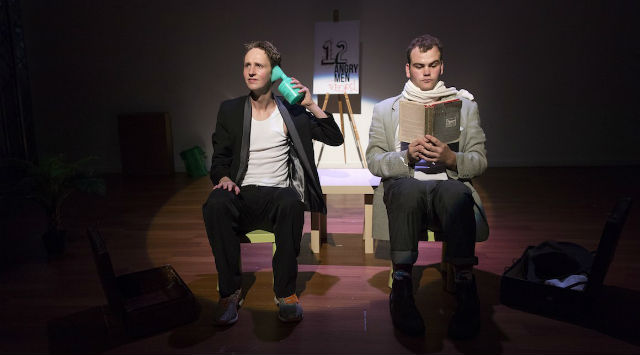
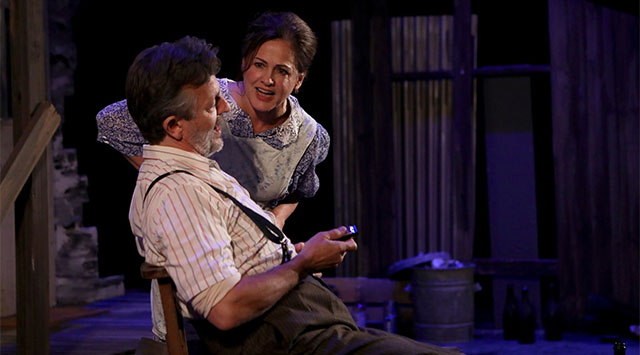
The existential angst in Chekhov’s Three Sisters is timeless; the need to understand what we are here for, and how we can find happiness, are fundamentally human and eternal. Once again, we see Olga, Irina, Masha and all their friends babble on for three hours, about how hard it is to do life. Andrew Upton’s adaptation gives the play a slight refresh, but it is a predictably faithful rendering that takes on the burden of the original’s dreariness, as it ruminates on the tedium of the bourgeoisie.

As is characteristic of director Kip Williams’ style, the show is presented with remarkable polish and an impressive elegance. Alice Babidge’s set design establishes an inescapable air of glamour for the production’s minimalist aesthetic, while Nick Schlieper’s delicate lights bring sumptuous beauty to proceedings. Music by The Sweats and sound by Nate Edmondson help us locate the contemporary relevance in Chekhov’s story, whilst retaining its intrinsic sense of Russian austerity.

It comes as no surprise that this is yet another dry and dreary rendition of Three Sisters. For all the reverence associate with the play, it is at its core, a work about the lifelessness of the privileged. The point is its stasis, that nothing happens for years, and that these women are mysteriously incapable of taking meaningful action.

Williams is inventive in the first half, introducing energy wherever possible, but the depressive quality of the text proves insurmountable. Although some of the flourishes can be distracting and excessive, there is no denying our appreciation for the effort put into injecting animation and comedy, derived from the sheer desire to see some theatricality.

Actor Miranda Daughtry is memorable as Irina, with explosive emotions that are both captivating and genuine. The cast understandably adopts an extravagantly declarative approach to performance, but Daughtry’s way of connecting with her audience is particularly truthful. Alison Bell’s droll humour as Olga shines a light on the often neglected irony in Chekhov’s writing, and Eryn Jean Norvill’s exaggerated comedy as Masha is similarly delightful. We are glad to be spared too much bleakness, but it is arguable if these interpretations are effective, in helping us absorb the philosophies in Chekhov and Upton’s writing.

There always seems to be a Chekhov play on a stage in Australia somewhere. We are so much like the sisters, understanding the concept of progress but unable to extricate ourselves from the old and deficient. We may not be able to create anything without being informed by tradition, but this Three Sisters draws attention to the parts of us that refuse to move on, that are rigid in their worship of a conceptual “home”, undeviating from sacred points of origin. These parts of us that are backward and regressive must be interrogated, if not demolished.

www.sydneytheatre.com.au

5 Questions with Danielle King and Johnny Nasser

Danielle King

Johnny Nasser: Is theatre dead?
Danielle King: Fuck, I hope not! Maybe it’s starving. But it’s, historically, proved resilient. And, surely, somebody who has the insight, ability and fortunes to recognise the benefits of having a thriving arts scene to the mental health, education, evolution and tourism trade of a society will realise that it needs support….? Aren’t there studies saying this by far, far greater minds than mine? It’s hard enough trying to justify being involved in productions within the Independent Theatre scene where the actor is sponsoring the production with their time and resources for free without holding onto the ideal that Theatre will, any day now, be restored to health. Risks are still being taken, new writing still being discovered and classics still being performed- we just need to turn up and support the companies doing it.

Why do you act?
Because- you’ll be relieved to know- I’m not qualified to diagnose you, operate on you in surgery, defend you in a court of law, educate you in a classroom or even mix you a cocktail but I can be part of a company that tries to tell you a story to make you think differently, laugh, fall in love, chill you, break your heart and help you forget a shitty day. And I think that should have its place, and I’d like to be a part of that.

You have a lot of experience with classical text, does your approach as an actor differ with new writing?
I don’t think so. You’ve still got to find the truth and humanity in any text and attempt to communicate that. The difference is that you may be one of the first, if not the first, performer to attempt to find that characters voice in new writing, whereas you’re often following in other actors footsteps- sometimes extremely well documented and lauded and, therefore, intimidating footsteps. In new writing, you often have the writer there to be able to develop the piece and the language within it with the cast. Phil is handling our mangling of his writing with a gracious patience and, at times, a stick…

Have you ever been involved in a riot?
I haven’t. Especially not like the one Sharon describes in the play. I guess I can understand how a group of people can quickly and seemingly inexplicably become a mob and its terrifying. Even something as innocuous as a group of fans for a celebrity or a football match that’s particularly heated can become dangerous if the hysteria gets out of hand. To have that number of people powered by protest, frustration or passion it doesn’t seem to take much for civil human behaviour to become riotous. Maybe it’s something about being a group, you’re faceless and so the consequences feel removed. That seems to be Sharon’s experience in the play.

Do you have racist friends?
That’s such a tough question. Yeah, I probably do. Thoughtless, careless comments are made by some, which I may or may not call out at the time. So that’s something for me to address.. Snap judgements made, and shared, whilst watching the news etc. Having conversations with the cast and other creatives around events and sentiments in this play has been really challenging, however, with what’s happening around the world these are conversations to be had- and our medium happens to be the theatre.

Johnny Nasser

Danielle King: This is the first time we’ve worked together. Who are you and how’d you start acting?
Johnny Nasser: I’m someone who still doesn’t know what they want to be when they grow up, so I will continue to act until that happens. When will that be I wonder? I got a taste for acting as a teenager and had an older brother who was an actor who introduced me to the storytelling caper.

You recently did a creative development on another show and Night Slows Down is a new work, is this a coincidence or do you particularly enjoy being involved in the new writing process?
75% of the theatre work I have done has been new or actor supported devised work and I think I’m naturally drawn to that. Working on a new work takes a lot of commitment, energy and there’s no guarantees of an amazing product. When a show you’ve been involved in from its infancy works and resonates with an audience it’s very satisfying.

The subject of the play is pretty close to the bone looking at world events. Have you ever experienced similar behaviour to Martin, though not to the extent of the events in the play?
I’m of Lebanese descent and growing up got called the usual names: Wog etc… can’t say I enjoyed that and didn’t understand why I was being belittled when I felt like any other Australian kid. Even in terms of casual racism people should consider how a comment is received rather than intended.

When is violence acceptable?
When a cockroach invades your home. That sounds like a Seth comment from the play doesn’t it? My answer is never and sometimes. I have great admiration for those who refuse to resort to violence in the face of violence and tyranny. Could I be that brave? I doubt it.

What music are you listening to and are you discovering anything new?
In the play, Martin and Seth get into a passionate discussion about Kendrick Lamar, so I’m listening to plenty of Kendrick. Especially “M.A.A.D City” which is totally…… dope? Is that what the cool cats say? It’s quite a departure from my usual diet of ABC local radio I tell you!

Catch Danielle King and Johnny Nasser in Night Slows Down, by Phillip James Rouse.
Dates: 17 Nov – 9 Dec, 2017
Venue: Kings Cross Theatre

5 Questions with Zoe Jensen and Emma O’Sullivan

Zoe Jensen

Emma O’Sullivan: What do you find the most challenging about performing?
Zoe Jensen: The thing I find the most challenging is pretty basic: it’s the absolute fear that I will second-guess myself in the moment and drop a line, or forget some blocking, or (worst thing ever) lose my shit and start laughing and not be able to pull it back! Thank goodness though most of these things aren’t issue if you practise often enough!

What’s your secret for getting into character?
Everyone’s got their own way of doing it. What I find works for me is to spend at least half an hour before the show going over the big moments in the play for my character. Clarifying this to myself. I find that once I’ve found those 2 or 3 moments, I can drop into it a lot easier. Also just being in the space, walking around and warming up, going over lines or speeches, even just listening to some music – these are all extremely helpful tools.

What’s your dream role?
My dream role would be to play a super bad-ass cold-hearted private detective, and solve some really messed up crimes. (This is what I would love to do in real life but I don’t have the patience to go to uni and do some science thing for years and years, so playing a character who does this would be the BEST THING EVER!) One day…

Tell us about your show Orange Is The New Crack?
Our show is a silly silly silly little show, that will make you laugh A LOT and forget about everything outside of the theatre 😊 There’s no big morals, or messages or anything like that. It’s just myself, Jane and Michael reverting back to childhood and playing a funny make-believe game. I assure you it’s very entertaining!

Why should people go and see Hijacked Rabbit?
Four new pieces of Australian Work?!?! That’s incredible! And they are all under an hour, and have really talented actors, writers and directors behind them, and you can have a drink and a HUGE laugh. It’s such a fun, chilled, entertaining night 😊

Emma O’Sullivan

Zoe Jensen: What do you find the most challenging about performing?
Emma O’Sullivan: There’s a tonne of great challenges for me when performing. One big challenge is making sure I leave whatever day I’ve had at the door. Some days a billion different things happen before I’ve even headed in to the theatre, I try my best to make sure they don’t bleed into the story I’m about to tell onstage.

The second big challenge for me is if I’ve got the luxury of doing heaps of runs of a show then finding that sweet spot between all my preparation and keeping it fresh as a new pair of sneakers every night, you know? You don’t want to go nuts and do stuff like throwing a chair across the room mid scene to keep it fresh – I just want it to be nice and aired out for each audience. Trusting the work I’ve done and then going out there and performing it like; I haven’t done it for the last 2 months, and I didn’t trip over and rip my pants in act one the night before and just go for it. Each show may be the last one I ever get to do so I try to just go for a ride.

What’s your secret for getting into character?
I just try to get the hell out of my own way. Before each show I warm up like there’s no tomorrow, then just sit somewhere for 5 minutes. I just close my eyes, breathe and try to tune out any noise from the day – and any thoughts that are useless for the task I’ve got ahead of me. I started doing that a few years ago and it really seems to help me.

Now, tell us a about Hijacked Rabbit and how you’re involved?
Hijacked Rabbit is this rad season that Jackrabbit Theatre have put together. They’ve selected four one-act, really punchy and tasty pieces of theatre to show at Blood Moon Theatre in Kings Cross from October 31st- November 11th. It’s such a fantastic opportunity to get some theatre onstage that ranges from balls-to-the-wall comedy through to some seriously heartfelt moments.

I’ll be performing in Hit which is written and directed by Lincoln Vickery. The cast also includes heaps of serious talent including Adam Sollis, Seamus Quinn and Elle Harris. It’s such a treat getting to see them all work. The show is honestly like nothing you could ever imagine and is such a blast to perform in. And on every other night I’ll be performing in a one-woman show I’ve written called It’s Mars Time, directed by Charlotte Devenport. I literally cannot wait to do it!

Oh, and then of course there’s your show Orange Is The New Crack written by James Sweeny and Gate 64, written and performed by Jane Watt.

And your one woman show, It’s Mars Time, where does the inspiration come from for your character of Judy?
It comes from loads of different points of interest for me. One of them is the fact that some people (including myself) are just not natural born leaders. I honestly find it hilarious having to really figure out any sort of leadership position I’m in as I go along. Sometimes doing it right and sometimes getting it so so wrong. But what I’m really interested in is watching someone deal with that in a super heightened situation such as; being in a leader in a WWIII bunker, and being severely under-experienced for the job. There’s a comical amount of people in leadership positions in the world who – like Judy – are not natural born leaders and have to just deal with it. It can be hilarious to watch but the results can also be a real tragedy.

I’m also really intrigued by people who have extremely heightened survival instincts. And I love that they’ll prepare for a war no matter the circumstances, they’re survivors and just do what they need to do. I’m fascinated by their natural instincts to get organised, and get prepared for a tragedy at any given moment. You name it – they’ve got a plan for it.

And which show is better do you think, Orange Is The New Crack or It’s Mars Time?
(Laughs) Both of the shows are brill! But lucky for everyone they’re on the same night as a double bill, so the they/I don’t have to choose 😉

Zoe Jensen and Emma O’Sullivan are appearing in Hijacked Rabbit, an anthology of 4 comedies.
Dates: 31 October – 11 November, 2017
Venue: Blood Moon Theatre

Review: Plastic (The Old 505 Theatre)

Venue: Old 505 Theatre (Newtown NSW), Oct 31 – Nov 18, 2017
Playwright: Mark Rogers
Director: Sanja Simic
Cast: Nick Bartlett, Hannah Goodwin, Harry McGee, Douglas Niebling, Michelle Ny
Image by Carly Young

Theatre review
When we first meet Franz, he seems nice enough. A young scientist excited for the opportunity to discover wonderful things about the universe, he soon gets absorbed into the big machine of corporations, academia and the fourth estate, and idealism turns corrupt, as the golden boy attempts to carve out a name for himself in Mark Rogers’ Plastic.

Having little more than Franz’s personal reputation and career at stake, the context is admittedly dry, but although not a particularly moving story, Plastic is written with remarkable inventiveness and nuance. Its dialogue is consistently amusing, and the playwright’s theatrical flair concocts a range of characters that come readily to life on stage.

Sanja Simic’s exacting and energetic direction makes for a marvellously captivating show. We may not care very much for Franz’s predicament, but we find ourselves nonetheless fascinated, and thoroughly entertained by the production’s clever presentation of sequences that reveal its plot.

The spirited cast of five has a whale of a time, and we go along gleefully with their infectious exuberance. Their work is impressively well-rehearsed, and each actor demonstrates a thrilling sense of passionate conviction, along with an arresting fastidiousness required of the script. The charming Nick Bartlett keeps us attentive to Franz’s narrative even as the character proves himself to have few redeeming features. The roles are not particularly likeable, but there is no resisting the charm offensive from these players.

We often worry about our art being stifled by commercial forces, but in Plastic, we see that things are no different for those working in the field of science. Instead of discovering and cultivating the best that one has to offer the world, individuals pursue only things that promise reward and glory. With our eye on the prize, as it were, we lose sight of the bigger picture, and of greater possibilities. Innovation pertains to that which is yet unknown, but if we focus only on results already predetermined, progress will forever be suppressed.

www.bodysnatcherstheatre.com

Review: Paper Doll (Old Fitz Theatre)

Venue: Old Fitzroy Theatre (Woolloomooloo NSW), Nov 7 – 18, 2017
Playwright: Katy Warner
Director: Lucy Clements
Cast: Martin Ashley-Jones, Lucy Goleby
Image by Kate Williams

Theatre review
At its most fundamental, theatre is an instrument that wishes to get us together, and have us find consensus, or at least to gain valuable awareness on issues of relevance. We share space and come to an understanding of what each other thinks, when we laugh together, or when we hear people gasp in demonstration of their disapproval or outrage.

Katy Warner’s Paper Doll is a topical work about sexual predation and paedophilia, depicting a grown woman meeting her abuser, years after the fact. Dialogue is well crafted, but the work takes a safe approach, rarely controversial in how the subject is handled. The plot and its characters offer little that is new to how we regard the matter, although individuals who might be personally affected, would probably identify more palpable qualities.

Director Lucy Clements’ obvious attempts at manufacturing dramatic tension vary in effectiveness. The show has many captivating moments, but can at times feel laboured, in its efforts at creating something theatrical out of a quiet piece of writing. Both performers are strong personalities, with impressive stage presences. Lucy Goleby’s intensity dictates the tone of proceedings, while Martin Ashley-Jones brings a more organic interpretation that reads with a better sense of authenticity. We may not always be convinced of the action on stage, but the production makes all of its assertions crystal clear.

In representing the zeitgeist’s hot topics, a conundrum exists when our minds are already made up before entering the auditorium. There can only be one way of considering issues surrounding rape, and unless the production takes exceptional risks, the chances of it being less than predictable, are close to none. Paper Dolls is careful to say all the right things, but we have heard it all too many times before, and it is not fair to expect fabricated controversy where none is permitted. We want our art to be inventive, but it seems that not everything can be talked about in unexpected ways.

www.redlineproductions.com.au

5 Questions with Claudia Barrie and Emily J Stewart

Claudia Barrie

Emily J Stewart: If you were lost in a labyrinth what would you do and why?
Claudia Barrie: If I was lost in THE Labyrinth I would have tea with the worm and his Missus, hang out with Sir Didymus and then dance with Jareth the Goblin King.

Destination you’ve not been to yet and why?
Japan. Desperate to go there. For the snow, food, culture. Everything.

How important was the casting of Time Stands Still?
Just as important as it is with any show. It’s not just about talent, chemistry and work ethic. It’s also about balancing personalities. Can I spend the next couple of months with this person? Luckily all of the cast (and crew) of TSS are a bunch of legends!

What has working in a non-conventional space been like?
Actually once we got past all the usual technical challenges, it’s been really freeing and as a result I think we’ve created a beautiful and very relaxed space.

If you weren’t doing what you are doing now what would you do?
Paint!

Emily J Stewart

Claudia Barrie: If you could have 3 dinner party guests who would they be and why?
Emily J Stewart: Prince; greatest creative musical genius and inspiration. My dad; to check in on how he’s going up there and tell him about the show. Nelson Mandela; he maintained such dignity through heartbreaking circumstances. Incredibly humbling.

What has been the best part of the Time Stands Still journey so far?
Seeing something that I have been working on for almost 5 years come to life with such incredible people involved.

Name your greatest inspiration?
My dad; He was a jazz muso. Played and wrote sheet music for near on 12 instruments. Extremely passionate, taught me to follow anything I wanted to do, as long as I did it with everything I have.

How have you navigated the complexities of the script for Time Stands Still?
There are so many layers of the text. Each layer takes time to build. Gradually layer by layer I’ve pieced Sarah together and each night the layers and connection deepens.

Do you see a life for this show beyond the Tap?
It would be great to add greater production value to the show, in a bigger warehouse with larger audience capacity.

Claudia Barrie directs Emily J Stewart in Time Stands Still by Donald Margulies.
Dates: 1 – 25 November, 2017
Venue: Tap Gallery

5 Questions with Cheryn Frost and Thomas E.S. Kelly

Cheryn Frost

Thomas E.S. Kelly: What is your show about?
Cheryn Frost: Fem Menace is about how there is a monster inside me. It’s also about women; the fun we have, the fears we face, our lived and shared experiences. 

What made you want to explore this topic?
We wanted to make a work that is about being women, the world in which we live and the monsters we’re constantly facing and fighting. Considering the huge discussion at the moment with how women are being mistreated by monsters in the industry, it reinforces the importance of continuing that dialogue and getting our voices heard by wider audience.

Why now?
Why not?

What can the audience expect watching your work?
You can expect a warped fragmented party, with a slap of reality, a drop knee of what ifs, a shot of confidence and purge of monsters.

Who has helped bring your project to life?
Catherine McNamara & Tahlee Leeson! They are the other two spicy ladies that make up Fish Hook. The three of us met whilst studying at the University of Wollongong and realised that we all wanted to make dynamic kick-ass theatre. Fish Hook was born and here we are finally making our first show that actual people will see!

Thomas E.S. Kelly

Cheryn Frost: What is your show about?
Thomas E.S. Kelly: Shifting > Shapes is about shape shifting. Humans to animals to landforms and back again. Looking at it through an Indigenous and non-Indigenous lens, seeing it culturally and how it sits in today’s society. 

What has been the biggest challenge making the work?
The biggest challenge for this work is simply just time. Making sure that I’ve dedicated enough time to all the elements so that the show works on all levels.

What do you hope your audience will think about when they leave your show?
I always hope that when the audience leaves one of my shows that they find out something about the Aboriginal culture that they didn’t know before and then find a place for that knowledge in today’s society.

Who and or what inspires you?
I draw inspiration from my lineages of the past and future. The lineage of my ancestors, my family, my dance lineage.

You can have dinner with 5 people (living or dead) who do you choose and why?
Nan and Pop on my mothers side because they passed away when I was younger and I have so many questions for them. And a family member from each one of my heritages that is the knowledge keepers to simply listen and learn. 1 Aboriginal 1 Ni-Vanuatu 1 Irish.

Catch Cheryn Frost and Thomas E.S. Kelly in Fem Menace / Shifting > Shapes, part of the Afterglow season at PACT.
Dates: 22 – 25 November, 2017
Venue: PACT

Review: Time Stands Still (Eclipse Productions)

Venue: Tap Gallery (Surry Hills NSW), Nov 1 – 25, 2017
Playwright: Donald Margulies
Director: Claudia Barrie
Cast: Laura Dejanegara, Matt Minto, Terry Serio, Emily J Stewart
Image by Katie Barget

Theatre review
After sustaining serious injuries in Iraq, Sarah returns to Brooklyn, under the care of her partner James. For the first time, the independent woman turns reliant, and we watch the nature of their relationship go through a gradual but drastic change.

Donald Margulies’ Time Stands Still examines the meaning of modern living for some of the more fortunate people of our times. The action is situated in a New York apartment, where its inhabitants engage in degrees of introspection, never having to worry about money, food or shelter. The play oscillates between concerns that are admittedly frivolous, with international issues that are unquestionably serious. It discusses responsibilities of the world’s rich, as other parts of the globe engulf in flames and disaster, while simultaneously worrying about the dwindling relevance of marriage and monogamy.

The production places its audience quite literally inside Sarah and James’ home. The intimate setting exposes us to the frequently caustic energy that seethes between its characters, although a greater sense of polish for the set, would improve the story’s ability to focus on its concerns regarding class and privilege. Claudia Barrie’s direction is strong for the piece; we are constantly reminded of its deeper resonances even when people are squabbling over the pettier things in life.

Leading lady Emily J Stewart is full of conviction, and effective in providing a quality of heightened sentimentality to the show, although her Sarah seems too persistently vulnerable, with an overemphasis on her role’s fragility, that can interfere with the play’s celebration of female autonomy. Matt Minto is persuasive as James, the journalist determined to retreat from the rough business of war correspondence. The actor is beautifully nuanced in his portrayal of a man struggling to dominate his household. Supporting players Laura Dejanegara and Terry Serio are both delightful and dynamic, adding charming effervescence with every appearance.

Guilt means nothing if it is not an intermediary emotion that leads to proactive action. With the proliferation of information technology, big business sells us news stories about terrible things happening near and far, and we live in a state of constantly feeling bad as a result of this new capitalism. Disaster porn is lucrative, and we pay for it with money and with languishing in sadness, wondering who is left to go and solve the problems.

www.eclipseproductions.com.au

Review: Hijacked Rabbit (Jackrabbit Theatre)

Venue: Blood Moon Theatre (Potts Point NSW), Oct 31 – Nov 11, 2017
Playwrights: Emma O’Sullivan, James Sweeny, Lincoln Vickery, Jane Watt
Directors: Michael Abercromby, Charlotte Devenport, Lincoln Vickery
Cast: Michael Abercromby, Elle Harris, Zoe Jensen, Emma O’Sullivan, Adam Sollis, Seamus Quinn, Jane Watt
Image by Clare Hawley

Theatre review
Hijacked Rabbit features 4 separate hour-long comedies, each with its own style and characteristics. The plays are individually surprising, although some are funnier than others, and not all are equally meaningful. A matter of personal taste would determine how an audience member responds to the varying comedic approaches, but this is an amusing collection of ideas, presented with infectious enthusiasm.

The one-woman piece Gate 64, written and performed by Jane Watt, sees Winnie, who resides at an airport, talking to her captive crowd, comprised of passengers awaiting a delayed flight. Exploring delusions and memories, fantasies and hopes, Watt demonstrates impressive talent in both artistic capacities. As playwright, she is witty and gently profound, and as actor, she is simultaneously sensitive and daring, tremendously likeable as a result of the extraordinary vulnerability she brings to the role.

Watt again appears in Orange Is The New Crack by James Sweeny, accompanied by equally funny players Michael Abercromby and Zoe Jensen, for some excellent scenes of hilarious tomfoolery. It is this accomplished trio that takes us through the delightfully messy story from ancient times, of sugar-peddling women, their junkies and other dependants.

Although not always executed with finesse, the plays prove themselves to be fantastically imagined. Hit by Lincoln Vickery is a dynamic, fast-paced story about hit men and gay love. It’s Mars Time by Emma O’Sullivan is inspired by the troubles of our times, and the desire to flee this anguished existence.

Each segment of Hijacked Rabbit offers moments of brilliance, and we are enchanted whenever a glimmer of genius is revealed, within these rambunctious, jaunty proceedings. It is the raw talent on show that has us excited, and on this occasion, proves itself to be more than satisfactory.

www.jackrabbittheatre.com

Review: Merciless Gods (Little Ones Theatre)

Venue: SBW Stables Theatre (Kings Cross NSW), Nov 1 – 25, 2017
Playwright: Dan Giovannoni (based on the book by Christos Tsiolkas)
Director: Stephen Nicolazzo
Cast: Paul Blenheim, Brigid Gallacher, Sapidah Kian, Peter Paltos, Charles Purcell, Jennifer Vuletic
Image by Sarah Walker

Theatre review
Art can reshape lives. It provides new perspectives and an accompanying freedom, so that we are able to imagine a way of being that is better, than what had been available before. Christos Tsiolkas’ books might have a penchant for all things gloomy, but their refusal to adhere to dominant myths of our culture, helps us define an Australia that is more authentic, and certainly more inclusive, than paradigms that persist in spite of their diminishing relevance. We all want to belong, it is only human to wish for acceptance.

In Merciless Gods, eight short plays, adapted by Don Giovannoni from Tsiolkas’ book of the same name, explore the bleaker recesses of our psyche, paying particular focus to universal concepts of family, violence and sex. The writing is lyrical, faithful to Tsiolkas’ own renowned style, though dialogue can sometimes sound stilted through its translation of forms.

Operatically evocative, the work involves huge emotions and flamboyantly devised contexts. Six powerful performers are called upon to manufacture a rhapsodic sense of theatricality, in the absence of more extravagant manoeuvres by director Stephen Nicolazzo, who approaches the show with a misplaced and redundant restraint. Merciless Gods contains a spirit that feels boundless, and very wild, yet the staging is adamant in its preference for abstinence, and presumably, good taste.

Actor Jennifer Vuletic is unforgettable in two of the stories, converting the literary into intimate moments thrilling and visceral, through her sensational portrayals of contrasting parental types. We meet Dan the benevolent father, just as his light dims into the unknown thereafter, and we meet the phenomenal Lisbeth, an evil mother whose destructive darkness, threatens to outlive us all.

There is no good, without the bad. In Merciless Gods, we encounter them both, with little judgement, only an acceptance of their inevitability. The exotic creatures resist our moralising, and reveal to us instead, with brutal honesty, the unrelenting imperfections of our humanity. Rendered immediately recognisable, our ugliness demands to be owned, but what happens after the curtains fall, is that eternal battle between hope and hopelessness, with neither emerging the decisive victor.

www.littleonestheatre.com.au