5 Questions with James Elazzi and Aanisa Vylet

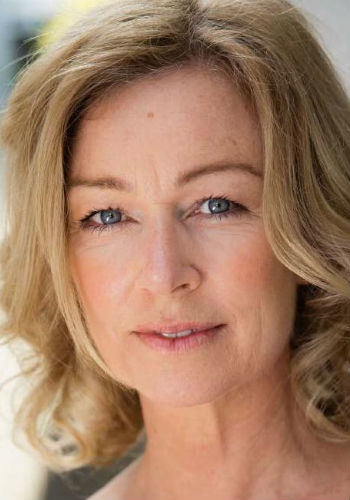
James Elazzi

Aanisa Vylet: What story does Lady Tabouli share with its audience, and who is Lady Tabouli?
James Elazzi: Lady Tabouli is a story about what it means to come to terms with the past, how the past can mould who we are as adults and how every single person we meet plays a part in our journey, right up to today. Lady Tabouli is freedom, within all the characters in my play. It is the protagonist but is also all the people that are related to him. It is a knock on effect. Lady Tabouli is a celebration, it is hope, it is healing the pain of yesterday to finally reaching a state of liberation. To live in our truth, or try our best to live life like that.

What inspired you to create this story?
My inspiration for Lady Tabouli is derived from the people around me. It’s inspired by people that I love and it is my love letter to them. It’s inspired by those trailblazers that did not accept what was expected of them. It’s about standing up for our right to be happy. But with happiness and freedom, there is a price to pay. Are you willing to pay this price? I’m inspired by those who do not live their lives in other people’s shadows. Brave, strong people that have been broken, but have healed and learned from their mistakes.

When did you realize that you were a writer?
I’ve been a writer ever since I knew how to write. I’ve only recently had the courage to share my stories with the world, I hope to allow change through storytelling. I want to represent my community and where I come from in a clearer light. To write about the complexities that exist within my community,

As an artist of colour living in Western Sydney, what would you like to see more of in our greater artistic community?
Different perspectives, different storytelling, migrant stories, stories about women that have broken the mould and persevered. I want to see all types of Australians on the stage.

What is the best advice that you have been given?
Every single rule can be broken. Never fear to have a voice and a to need to be heard. That change is never ending and our journey never ceases until we cease to breathe.

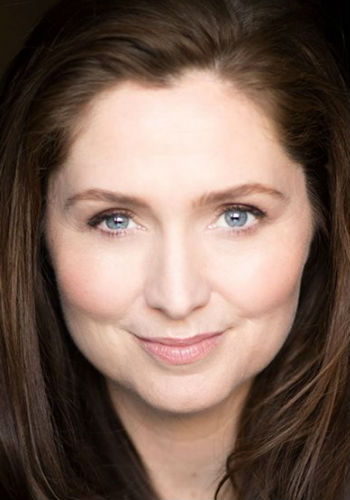
Aanisa Vylet

James Elazzi: Tell me a little about your new play Sauvage.
Aanisa Vylet: Sauvage is a myth that I have created about the patriarchy. The seed for this play began in 2015. I was living in Barcelona and I asked myself… who am I as a storyteller… beyond my religious background, my culture and my socialization? That question led me to create a myth. In doing so, I have found a sense of freedom that I could only imagine, not only as a storyteller, but as a woman. The play has been a joy to create. We look forward to sharing this joy and the many layers of this wild myth with you.

What inspires you to write?
The deep sense to fulfill a “need”.

What would you like to see more of on Australian stages?
More scratch performances and safe, supported spaces for artists to experiment.
A richer landscape of theatrical forms.
More Australian feminist theatre and practitioners.
More focus on the “spirit” of the work.
More Australian plays that do more than to sate our audience’s wants… I want more plays that know how to tap into what we need.
(I could say much more but, I will keep my answer short…)

What type of writers inspire you?
Ones that admit to having their own kind of genius and their own kind of foolery.

Things that you believe are essential in the world of writing.
The right to process. We demand our right to process, a process which allows us and our work to evolve.
Artist dates / processes of silliness and play.
A healthy personal life.
Coffee.

James Elazzi and Aanisa Vylet present new work at Batch Festival, by Griffin Theatre Co.
Dates: 25 Apr – 11 May, 2019
Venue: SBW Stables Theatre

5 Questions with Deng Deng and Alice Keohavong

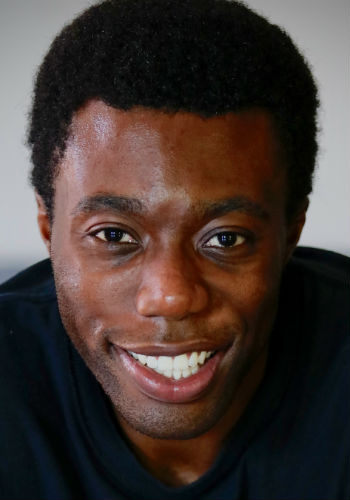
Deng Deng

Alice Keohavong: So, who is Deng?
Deng Deng: I am a Sudanese born actor and writer who came to Australia in 2002 along with my family. I’m the eldest of seven children. I graduated from Trinity Catholic College in 2011 and also from the Academy of Film, Theatre and Television.

What drew you to Blood On The Cat’s Neck?
I was drawn by the storyline more than anything else. I do love the idea of an alien who is here to learn from humanity and exploring what makes us who we are, whether it be good or bad. Plus I also love anything sci-fi.

What has been a highlight of your acting career?
To this day the biggest highlight of my career is performing at the Sydney Opera House. Even though it wasn’t on the main centre stage, being able to perform there has been by far the best and most amazing part of my acting career. I remember coming down the steps of the Opera House and having the biggest smile on my face, ever since nothing has come close to this feeling.

What has been an influential piece of advice you’ve received?
Make your own work. I know that waiting around can be annoying at times – I think especially in this industry – but making my own work (whether it be short films or writing) has kept me busy and I never have nothing to do. It helps me stay motivated in my everyday life or last least as active as I can be, so I believe that’s the best advice that I have been given.

What would you like to tell/warn/promote to people about Montague Basement?
If you have an opportunity to work with them, do it. I’m not saying this because I’m doing this play now, it’s because of who they are as people. They care about this industry. I love the amount of work and time they put into their work, and caring. I know that these are people I can see myself working with again.

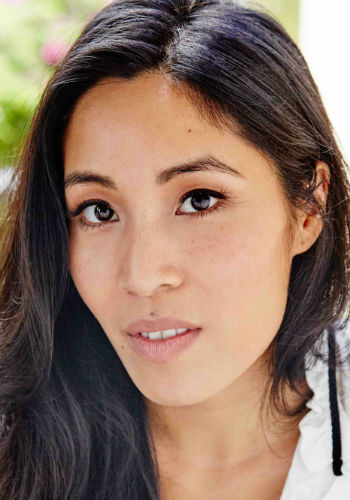
Alice Keohavong

Deng Deng: What drew you to this industry?
Alice Keohavong: As a child, I had (still do) an overactive imagination. I was constantly entertaining myself with made-up stories. In high school, when I found myself surrounded by a community of people who loved telling stories and weren’t afraid to be silly, fun and human, I was hooked. I’ve also always been fascinated by people and trying to understand why we do the things we do… I was either going to be an actor or a psychologist…

What is your favourite production so far and why?
A stand out for me has a lot to do with nostalgic reasons. I was in high school and saw The Pillowman at Belvoir. Growing up, I didn’t have many opportunities to experience theatre and whenever I did, it was always an event and forced upon us by school. This show was an extra curricular activity our drama teacher proposed and one of the first I went to outside of school hours, surrounded friends who were also keen to experience it. This is one of many reasons why I’m so grateful for the wonderful teacher we had. The show had me spellbound… and here I am.

Which are you more drawn towards theatre or screen?
Both for different reasons. I love the thrill of immediacy with theatre. I love that the medium is so transient and I enjoy the sense of community you build through the rehearsal process. With screen work, I love the naked intimacy you can get. You feel quite bare and vulnerable in a very different way.

What’s the most enjoyable part of any rehearsals process?
The first dress run. After all the weeks of hard work, you and your new family are thrown together with all the other elements of the show, and you get to see what the hell it is you’ve actually made. It is frightening and adrenalin-pumping and I love it.

Tell me something about Alice that people don’t know about?
I hate watermelon. I mean, I HATE the stuff. Why. Why would you eat that? Watermelon smelling bubble bath? Sure. Watermelon earrings? Cute. Just please don’t put that thing into my mouth.

Deng Deng and Alice Keohavong can be seen in Blood On The Cat’s Neck, by Rainer Werner Fassbinder.
Dates: 22 May – 1 June, 2019
Venue: Kings Cross Theatre

5 Questions with Tara Clark and Asalemo Tofete

Tara Clark


Asalemo Tofete: What are the pleasures and challenges you’ve found in performing this new work?
Tara Clark: The pleasures and the challenges have been one in the same. It’s a pretty huge cast of twelve, and I’ve never worked with any of the other actors before. That’s been a real treat. At the same time, it’s a cast of twelve and I think we’ve only all been in the same room on one or two occasions!

The play is about the power of stories, in the political sphere and in our personal lives. What stories do you fill your head with?
Pure filth, Asa. Nothing I could repeat in polite company. In seriousness though, I’m trying to read more novels this year and fewer plays. I recently finished We Need To Talk About Kevin by Lionel Shriver. It’s absolutely harrowing. Notwithstanding, it’s an incredible read. I’ve seen the film and the novel still managed to surprise me. Highly recommended.  

What’s the last thing you do before you step out on stage and why?
Question all my life choices until that moment, swallow my self-loathing and throw a few air punches. 

If you had the chance to play any role in any show, what would it be and why?
Asa! What are you doing to me? How long have we got?  My dream is to play Sylv in Berkoff’s East… because… because… Sylv’s speech of longing. Enough said. 

Lastly, this show is a dark comedy, other than yourself and me, who in the cast is the funniest person in real life?
Well, it’s certainly not me. I never get to the play the funny girl. Largely because most often girls aren’t written to be funny, but let me step down off my soap box to answer your question… Everyone is great to have a laugh with… but I would have to say that Will Bartolo is one who I laugh at the most. He’s laughs on legs. No pressure Will. 

Asalemo Tofete

Tara Clark: In a classic example of art imitating life, you play an actor known as The Player. How has The Player’s career trajectory differed from yours? Are there any similarities? 
Asalemo Tofete: There are similar circumstances that The Player and I share like trying to convince others that he’s good. Also the love of performing in front of crowds and the swapping of troupes depending on the situation. So very similar.  We both are pretty passionate about what we do, performing, sharing stories, sharing experiences. I think the only difference would be that in the end… well people will just have to come and see what happens to The Player in the end.

Did you always want to be an actor? If acting wasn’t an option, what would you be instead? 
I started off at university, training to become a teacher. A friend of mine suggested the Theatre course and, well, the rest is history. I guess if I hadn’t had the curiosity to try the theatre course I would have become an educator shaping the minds of our future geniuses (or that’s what I like to think I’d be doing).

Appropriation picks up where Hamlet leaves off. If you could write the sequel (or prequel) to any great story (play, novel or film) what would it be and how would it play out?
Ooooohhhhh! That’s a good one. If I were to stick to a Shakespeare play, I would probably like to write the sequel to Much Ado About Nothing… following Don John’s escape. Where DJ would gather an army and return to march on Messina where he would in the end be killed by the waiting woman Margaret who then marries the night watchman Verges and because everyone is dead becomes the Queen of Messina – of course, with a whole lot of twists and turns along the way.

What has been the highlight of working on Appropriation for you?
Working with this very talented cast. Everyone has their own particular skills set that they bring with them. Especially leading the music, as the #fakemusicguy, this cast has blown my mind, with what they’ve come up with. Also being a part of this new work gives me the chance to be the first to speak these words, the first person to bring The Player to life. That in itself is pretty exciting.

Please translate the following sentence into Shakespearean English: “Check out Appropriation, playing at Studio Blueprint from April 17th to 27th.
The year of our Lord two thousand nineteen,
The Fledgling troupe presents a tale for you,
A tale that fish would sooner fly than swim,
Appropriation is the name forsooth,
It playeth at the play house of Blueprint,
From seventeen to twenty seventh moon,
Of April it shall play. Come one come all.
Checketh us out, before we checketh out!

Tara Clark and Asalemo Tofete can be seen in Appropriation, by Paul Gilchrist.
Dates: 12 – 24 Apr, 2019
Venue: Studio Blueprint

5 Questions with Justin Amankwah and Stella Ye

Justin Amankwah

Stella Ye: Justin you are one busy and hard-working human. How is your soul going and what do you do to stay grounded?
Justin Amankwah: My soul is swell! I’m no good at sitting still so I prefer to always have something to do. In terms of staying grounded, all credit is due to my calendar.

What would be your game plan during a demon apocalypse?
Run to the nearest Church & repent. Then grab a rosary & some holy water. If all else fails, I’ll channel my juju and kick some demon ass.

Seeing Edgar evolve during rehearsals has been NUTS. What’s it been like working with puppetry? What has is taught you about yourself as a performer?
It’s quite profound working with a character both inside and outside of my physical self. I’m still wrapping my head around it to be honest. I initially thought I’d just have to get the mechanics of puppeteering correct, but I’ve come to find that the real challenge is to bring myself into him and work towards him moving like I would If I were a talking teddy bear. It’s taught me that I rely very heavily on my body in performance. But mainly that I like to get the work right straight away. & I noticed this while enduring the very slow burn of bringing the puppet to life.

If Edgar had two theme songs, what would they be and why?
‘Battle Without Honor or Humanity’ by Tomoyasu Hotei because it’s a powerful track with grit. & the instrumental for ‘Simon Says’ by Pharoahe Monch because it’s an awesome blend of demonic & straight up gangster, just like Edgar.

What does the show mean to you and why should people come and see it?
This show for me is a great opportunity to entertain through means I’ve never got to before, to play this boisterous & melodramatic character unabashedly is a total joy. I think people should come because it’ll be such a good time at the theatre & my hope is that audiences will be wildly amused by our ridiculous show.

Stella Ye

Justin Amankwah: What were your thoughts when you first read Alice In Slasherland?
Stella Ye: My mind kind of went like this: “!!!!!!!!!!!!” because I found it so wonderful and fun to read. I felt like Qui Nguyen threw all of the ingredients from the fridge into the pan and somehow made the best omelette ever. I loved that it played into all of these familiar American teenage and horror tropes, yet allowed room to see and experience beyond them as well. So yes, shoutout to Qui for creating such a hilarious, vibrant and heightened world.

What are your favourite things about being a part of this show (besides kicking ass)?
Getting to explore crazy ideas. Being with an amazing group of humans also exploring crazy ideas. Using my voice and body in ways that I never have before. Blood capsules.

You face some heavily racist comments as Alice in the show, how do you deal with that, and has it become less challenging as we’ve progressed?
That was definitely a scene that Rachel [Kerry, director] and I talked about after the first read and had to ask exactly how it served the story. High school can be a tough place and I think we’ve all come across a Tommy at some point in our lives. Moving forward with it has been about honouring what’s going on for Alice in that moment, and she’s still demonic and freshly adjusting to life out of hell (cue internal monologue: humans are weird) so I’m learning to sit inside her brain and trust in how she chooses to handle that interaction.

In a world where the action is commonly reserved for men, what are you feeling about portraying a powerful female protagonist battling an even more powerful female antagonist?
Life has taught me that women are incredible and powerful and badass, so it’s been fantastic being able to reflect that on stage through Alice. I love that she gets to be so physically engaged in everything that she does, and those fight scenes are so, so fun to perform. Laura and I especially have a lot of fight moments together in the show, and working with her during rehearsals has really made me appreciate her strength and bravery, as a woman but as a human being really.

Justin Amankwah and Stella Ye can be seen in Alice In Slasherland.
Dates: 18 Apr – 11 May, 2019
Venue: Old Fitz Theatre

5 Questions with Stephanie Somerville and Megan Wilding

Stephanie Somerville

Megan Wilding: What has been the best piece of advice you’ve ever heard?
Stephanie Somerville: Probably something Rick Brayford, the head of the Aboriginal acting course, at WAAPA told me before I went for my call back for the acting course. I was super, super nervous and he said to me “It’s your land, now go act those little white girls off the stage.” I find myself saying that to myself a lot; it grounds me, gives me confidence and makes me laugh.

Do you have a mantra you say to yourself before you go on stage?
“It’s your land, now go act those little white girls off the stage.”

What has been the most exciting thing about bringing A Little Piece Of Ash to life?
I’ve never gotten to work with a writer/director on a play before. It feels like such an enormous privilege to help a friend and someone who I admire so deeply tell her story.

Do you have a good warm-up song that you blast before a show?
I usually have a little playlist for each show I do, and I’ve got a few already for A Little Piece Of Ash. It’s a lot of country music, but ‘G.U.Y’ by Lady Gaga is always a great one to get the blood pumping.

Why should people come and see A Little Piece Of Ash?
It’s a deeply touching and hilarious play about the absurdity of life, death and how we deal with it. It’s written by an incredible new talent. It’s powerful, it’s truthful, it’s Aboriginal and it’s completely unapologetic.

Megan Wilding

Stephanie Somerville: What first made you want to start writing?
Megan Wilding: Ever since I was a little anxiety-riddled kid, I found it hard to express what I was feeling. I discovered at quiet a young age that I could explore things that that were going on around me that I didn’t really understand through writing and making stories. As I grew older and became more aware of the theatre industry, it was just a natural progression that my writing turned into plays and performance poetry. It’s nice to give my feelings to characters and let them explore the extreme. Writing A Little Piece Of Ash certainly helped me understand my feelings towards loss and love a lot more.

Why did you feel it was important for you to also direct A Little Piece Of Ash?
Can I say I’m a bit of a control freak? A Little Piece Of Ash is my first little trauma baby, and I wasn’t ready to give her away just yet; I wanted to see her take her first steps and start to walk. Also, I’ve wanted to pursue directing for a while and this presented itself as a really great opportunity to jump in. Hopefully from here some more opportunities will come along.

What’s one thing you wish people talked about more?
Everything. Treaty, trauma, and truth. But more importantly I wished more people listened when someone spoke. It’s scary how much talking is done to blocked ears.

What do you hope audiences will take away from the show?
That there’s no one way to grieve; that you can and should reach out if you need to; that love can be expressed across time and space.

How do you unwind after a long day of writer/actor/directoring…?
I’ve watched every season of RuPaul’s Drag Race at least 5 times. Honestly, that show with all feathers and fierceness helps me switch off every time. Or a nice, hot, eucalyptus bath.

Stephanie Somerville and Megan Wilding are collaborating on A Little Piece Of Ash.
Dates: 12 – 27 Apr, 2019
Venue: Kings Cross Theatre

5 Questions with Fiona Press and Jasmin Simmons

Fiona Press

Jasmin Simmons: You recently appeared in a production of 1984, do you see any similarities between our world in Ditch and in Orwell’s?
Fiona Press: Yes! So many! Right down to tinned rations and Victory Gin – except in the Ditch world, we drink copious quantities of government-supplied whisky. And there’s no chocolate. Both worlds are governed by a fascistic totalitarian regime that controls the population by pitting the ’Security’ against ‘Civilian’ and turning both against the ‘Illegals’. The threat of amorphous foreign enemies rotates on a monthly basis (think Trump and North Korea) and there’s a touch of Margaret Atwood as well; women are controlled by having their reproductive rights totally denied.

Your character is somewhat of a mentor to mine, are there any women in our industry that have particularly inspired you?
Absolutely. First and most influential was the late Doreen Warburton, co-founder of the Q Theatre, which was my theatrical cradle. Doreen had been mentored by the legendary Joan Littlewood, and brought those same socialist and creative principles to bear in Penrith, which – at the time – had little cultural life. I spent three years attached to the Q, as a student, ASM, ran the box office, understudy (to Judy Davis, another enduring influence) – kind of an unofficial apprenticeship. Doreen was from Lancashire and was larger than life “with the bosom of a goddess and the carriage of an eagle” – PERFECT casting for Mrs Peel!

Do you share Mrs Peel’s green thumb?
Who doing indie theatre has time to garden?! I have a large messy block that’s basically a lizard and funnel web habitat at the moment. However, treat me nice and I might bake us a cake for tech week … my floury thumb is better than my green one.

My character, Megan, is just becoming politically aware, were you a politically aware teenager? Did you march and protest like Mrs Peel did when she was younger?
Oooh yeah – child of the 70s, me. That era defined my political convictions forever. With the Vietnam War on the news as we ate dinner every night, I can remember insisting to my primary school teacher that the topic of our first classroom debate should be ‘that conscription be abolished’. I was convinced my younger brothers would grow up to be drafted and die. I was ten. Then, as a twelve year old, I was the sole ‘It’s Time’ badge wearer at my ‘school for gels’ in 1972 when Gough swept to power and upon the Dismissal in 1975, swapped it for ‘Shame Fraser Shame’. My first overseas trip was in 1978 to the People’s Republic of China.

If you were transported to the world of Ditch in 2050, what are 3 things you would bring with you from 2019?
The small etymological dictionary that my grandfather gave me when I was eight. It still soothes me to open its yellow pages and skim the beauty of words and their origins, their connectedness. A folding hand fan to keep me from going spare in the humidity. And a crystal whisky glass – because if I’m going to drown in my sorrows while living in a ditch, I’m going to do it in style.

Jasmin Simmons

Fiona Press: So, Ditch was written by a young English woman ten years ago. What drew you, as a young Australian woman to this play right now?
Jasmin Simmons: First of all, the play is exceedingly relevant and remarkably fresh. Secondly, I was drawn to the team of inventive and assured women that I am fortunate enough to be working with.

How do the female characters deal within the hefty masculine world of Ditch?
Ditch is set in a post feminist world – the men of the play seem to be the most dominant. The women, however, are the great observers – and there is great power in that.

What’s the most useful skill you have brought to this production?
Multitasking!

‘Post apocalyptic, climate change, fascist dystopia’ sounds a tad depressing. Where’s the hope?
I don’t want to spoil the ending, but the hope lies within the devastation – similar to a bushfire – destruction provokes regrowth, new life.

And are there laughs?
Believe it or not, yes! As well as much breakfast making, animal skinning and whisky drinking.

Fiona Press and Jasmin Simmons can be seen in Ditch by Beth Steel.
Dates: 3 – 13 Apr, 2019
Venue: Limelight On Oxford

5 Questions with Zach Selmes and Caitlin Williams

Zach Selmes

Caitlin Williams: We might as well start out with the most obvious question – what’s your kink?
Zach Selmes: Such a Vanda question! Would it be such an actor thing of me to say “role-playing”?

You play two characters in this, the playwright Thomas and his character Kushemski. What drew you to these roles?
The greatest thing about acting is being given the opportunity to explore such a variety of characters, of lifestyles you’ll never lead, and play within that world for a while – a gentleman in the Austro-Hungarian empire, for example. I love this industry and if a show is meta, I’m interested! As an aspiring director, Thomas is an excellent example of the traps a creative with privilege can fall into if they aren’t thoughtful of their subject matter or choose to regard their colleagues as little more than puppets to do their bidding. He’s a great case-study on how NOT to negotiate with your actors.

You come from a musical theatre background, how does it feel working on straight theatre?
Two people alone onstage for ninety minutes is definitely a jump in the deep end. After majoring in musical theatre at uni, I played a lot of comedy roles in what were largely ensemble shows. More recently, I was in A Midsummer Night’s Dream and Twelfth Night but played the fool and musician in both and always had a joke or instrument to charm the audience onto my side. ‘Venus in Fur’ is the first show I’ve done without a single song and, while Thomas gets in some dry zingers, he is far from comic relief. It’s a refreshing learning experience to be playing the antagonistic straight man.

What do you think this play has to say about the complexity of power in relationships?
It certainly subverts the idea that power comes down to physical dominance. Indeed, while it explores the erotic side of power, the play is far more driven by the psychological nature of Thomas and Vanda’s relationship. From the moment Vanda storms the stage, Thomas has to fight to maintain his directorial power and as soon as you think you have a handle on the power struggle within his play, it becomes apparent that any power Vanda has is a result of Kushemski’s manipulation of her… until she manipulates Thomas right back and the lines between the plays blur! It’s a constant tug of war and the longer it goes on, the more gloriously frustrated everyone becomes.

With the #MeToo movement all over the media, how do you feel this play is relevant to the current moment, particularly surrounding the treatment of actors?
I’ve been very fortunate to be a part of some overwhelmingly conscientious casts, but I’ve only fairly recently been delving into plays. While I could only reference media reports with regard to straight theatre, I can say first hand that being a young man on the musical theatre side of the fence means a lot of unsolicited attention – typically from male creatives or networking figures – in situations where it is difficult for a performer to refuse the advances for fear of losing current or future work. As we see with #MeToo, it’s an industry-wide problem because of the unique ways our work environment relies on trust. Every show that I’ve worked on has had a co-ed dressing room (often closer in size to a closet) where you have to trust that your colleagues are being respectful of your privacy. Onstage, you become more intimate with people in ways you normally wouldn’t and have to trust that their focus is on what’s best for the scene and show, and not something more sinister. The industry and its workers are vulnerable to that trust being taken advantage of or broken which is why it’s incredibly important to be constantly aware of your other actors and their wellbeing. Having support systems in place like cast reps and being a part of your actor’s union (MEAA) gives power back to the majority of the industry who just want to be able to work and create safely.

Caitlin Williams

Zach Selmes: You’ve been involved in a lot of shows recently, what’s special about Venus In Fur?
Caitlin Williams: What’s special to me about Venus In Fur, is that it lets me play a role I rarely get to play — the young, sexy, confident, take-no-prisoners Vanda. I can’t tell you how many times in the last two years I’ve played an older role or a male character rewritten as a woman, so it’s nice to finally get back to playing someone age appropriate who’s so much fun.

As an emerging female creative working both onstage and behind the scenes, how relevant do you find this play to the theatre scene in Sydney?
I think what this play shows is that the audition room is such a fascinating, terrifying thing, where the power imbalance is profound and can, as we’ve seen in the international and Sydney theatre scene, be easily exploited. What Thomas expects out of Vanda is a level of perfection that’s impossible for any woman to reach, and I think that standard of perfection is still subconsciously expected of emerging female artists.

Performing a two-person text isn’t easy, especially when that text involves a play within a play. Is there a craft to bouncing back and forth between character mid-scene? Mid-sentence even?
For these roles I’ve been finding lot of the character changes come from my voice and accents. Vanda Jordan has your typical American accent, while Vanda Von Dunayev has this much more regal, old-school transatlantic accent. I’ve found that once I’ve gotten the accent switches down then I can bring in that characterisation and physicality that comes along with each change.

Were you always a theatre kid, or was there a specific moment that converted you?
I think it was a high school production of A Midsummer Nights Dream, where I went in determined to play Helena. I’d never spoken a word of Shakespeare out loud before but I went in, auditioned, and got the part. Being part of a cast, getting to explore a character and have fun on stage in a safe environment, really kicked off a love of theatre in me.

As your character Vanda so eloquently describes Venus In Fur “basically it’s S&M Porn”. What would you say to any hesitant theatre-goers who worry the show might lack depth?
This is a play that’s fun, sexy, and hilarious. But it also tackles issues that the entertainment industry has really had to come to terms with in the form of #MeToo. This play is about female empowerment and the complexities of power in relationships.

Zach Selmes and Caitlin Williams can be seen in Venus In Fur by David Ives.
Dates: 10 – 13 Apr, 2019
Venue: 107, Redfern

5 Questions with Chantelle Jamieson and Lauren Richardson

Chantelle Jamieson

Lauren Richardson: Chantelle, what do you love about AFL?
Chantelle Jamieson: Well I grew up in Melbs, so love of footy kind of just seeps into your skin. I’m a huge bombers supporter having grown up in Essendon. There’s nothing like turning up at Essendon station on game day decked out in your black and red, and finding hundreds of others wearing the same colours as you. They are your tribe. And growing up being one of the only black kids at my school (the others were my sisters), it was really important to feel like you belonged somewhere- we belonged as Essendon supporters.

This play deals with many themes and one of them is ambition. It seems like there are many things your character would’ve liked the opportunity to tackle but she hasn’t. Are there things you’ve always wanted to try but haven’t and what’s held you back?
My character Mel is a WAG married to footy player Vance Arrowsmith (played by Andrew Shaw) life should be good, but she is deeply unhappy with where she’s ended up and constantly looking for the root of where it went wrong. I find it heartbreaking. There are always shoulda-coulda-woulda-didn’t-don’t moments in everyone’s life, but I haven’t really felt those to the kind of level that Mel does. It would make life unbearable.

Having a game plan and being strategic is essential. So let’s get analytical. What are Chantelle’s strengths and weaknesses?
Strength: finding a way to answer a question that might get too personal without actually answering it.
Weakness: wanting to avoid answering those questions.

What did you dream of becoming when you were small?
Like most kids who aren’t psychopaths- I loved animals. So I wanted to become a vet. My mum warned me that that would involve cutting animals open. So I dropped that idea. Then I wanted to become a jockey because that would mean working with horses. Mum warned me that I’d have to whip the horses to make them run fast. So, I dropped that idea too. My mum issued no warnings about becoming an actor.

What are the parallels do you think between footy and theatre?
For the audience, it’s a communal experience, the atmosphere is never exactly the same at every show or at every game. You have to be there to feel it.

Lauren Richardson

Chantelle Jamieson: Fierce is the story of Suzie Flack’s journey as a woman in a men’s AFL team, what has been the most challenging part of (corny pun alert) tackling this role?
Lauren Richardson: Suzie Flack is a character that has muscled her way, elbows out, into an environment that doesn’t expect or welcome her. But she stands her ground. Without apology. And I think that’s a task women aren’t always encouraged in. So I guess for Lauren the actor, backing myself. Standing my ground. Not diminishing. That’s felt confronting in rehearsal… but also exciting.

I know you grew up in NSW, what was your AFL knowledge like, going into Fierce?
Nil. Nada. Zero. I knew who the giants were and who the swans were. And that the guys that played were generally pretty lean, athletic and attractive. But the game itself made no sense to someone who grew up with “proper football”, the one with the right shaped ball [ie soccer] the beautiful game as my Dad calls it. I looked at AFL and it made no sense. We’re in an oval?! People are coming from all directions?! The balls bouncing all over the shop?! It just seemed like anarchy. But I’m a total convert. I think Aussie Rules is bloody brilliant now.

Suzie Flack is a super athlete, how have you gone about physically preparing for this role?
Go hard or go home hahaha. Obviously I’m an actor not an athlete. That being said, I’ve entered into a pretty rigorous physical engagement with my body throughout rehearsals. I’ve learnt how to box, as that’s something my character does. And unexpectedly I’ve fallen in love with it and have lofty aspirations to get in the ring competitively now. We’ve been lucky enough to get cast personal training from Spectrum Fitness so just clocking hours at the gym. We also got to go behind the scenes and watch GWS women’s team during training sessions which has been invaluable. And then just kicking the footy in the park with the boys in the cast who are very skilled and who have been very patient, kind and generous with me, a total novice. Oh, and protein shakes.

You worked with Janine Watson as an actor in Sport for Jove’s Three Sisters, how have you found working with her as a director?
Working with Janine has been a dream. We met working together as actors and since then have been firm friends, but it’s been a delight to become collaborators and co conspirators on this project. I have so much admiration and respect for her as an artist and as a woman. And working together has been challenging and exciting and incredibly fulfilling. I’ve loved every moment.

What can audiences look forward with Fierce?
It’s an exceptional piece of writing. A new Australian play that defies easy categorisation. Every scene surprises. It’s funny, physically dynamic and incredibly moving. And plus there’s some Justin Bieber in there for good measure!!!

Chantelle Jamieson and Lauren Richardson can be seen in Fierce, by Jane E. Thompson.
Dates: 20 Mar – 13 Apr, 2018
Venue: Old Fitz Theatre

5 Questions with Suzann James and Jodine Muir

Suzann James

Jodine Muir: What was your first acting experience and what made you want to act as a career?
Suzann James: Ha ha! I was living in Hong Kong and was cast as an alter ego in Neil Simon’s They’re Playing Our Song. I was also the choreographer but I didn’t know how to read music, so the whole cast had to put up with my learned harmonies whilst learning the dance routines. I knew I wanted to perform after seeing and being thoroughly captivated by a live performance of Steel Magnolias. I figured I was overseas, nobody knew me, so I had a license to fail… or not. So I went for it!

You have been a great support to your actress daughter, in particular keeping it ‘realistic’ to the highs and lows of an acting career. Did you have any similar support when you took up acting or did you learn on the job?
Yeah, no. I learnt on the job. And then got myself into a performing arts academy. And my daughter has kind of done the same thing. She was cast in an international musical, got the bug and now goes to a performing arts school. I guess we’re a little backwards in moving forwards.

What were your first impressions of the play The Realistic Joneses, what inspired you to get involved and do you have a personal connection to its themes?
Easy, I loved the script. And I kept getting so much more out of it every time I read it. I loved the way Will Eno’s quirky characters deal and react so differently to life’s dilemmas. It’s great how he can take the most mundane or depressing of subjects and make them funny and surprising. Actually I do have a nephew that has a similar challenge to the Joneses’ dilemma, and from my experience there are definitely parallels in the ways that they cope.

Your character in The Realistic Joneses seems to be the only one grounded in reality and has been called the ‘straight one’ to the other characters who appear to be avoiding reality. Do you feel this is true of your character and what other discoveries have you made?
Yes, she is sensible and has taken on the role as the responsible one. In her marriage she carries the intellectual and emotional burden, but funnily, resorts to her own quiet little crazy way of venting.

Why do you think these two odd couples in The Realistic Joneses are drawn together?
I think they all, just quietly, need each other. Filling voids, buoying spirits, entertaining, that sort of thing. It makes me think that we work better as a community. Friendships are invaluable. Feeling uncomfortable can be liberating and some issues are too big to deal with on your own. The challenges they’re facing have given them a greater appreciation of life, for living in the moment and of nature and the world around them.

Jodine Muir

Suzann James: What makes you laugh about your character, Pony?
Jodine Muir: Yes she does make me laugh a lot! I was drawn to Pony because she seemed to be having the most fun, at the expense of others! She says and does what she wants, whatever suits her mood. She doesn’t seem to be able to cope with much in her adult life and relies on others to help keep her together.

Have you ever had crazy neighbours?
Yes a few, they certainly keep things interesting! Right now I live next door to an aged care facility. One gentleman doesn’t have any noise awareness and mostly shouts his words in a muffled kind of way. Oddly enough, he manages to have many ongoing and engaging conversations with the staff and other occupants but I can never understand a word he says. It’s usually what wakes me up early in the morning!

Are you sympathetic to sick people? Or do you prefer to avoid them?
Quite the opposite of my character Pony, I would say that I am very nurturing and caring… probably to the point of being annoying! However, like Pony, if it impedes on my ability to sleep then my patience will be tested!

Have you seen anything else by Will Eno?
No I haven’t but I had heard of him and had planned to read some of his plays. That was the first reason I applied for the auditions. As soon as I read the play, I was hooked. I found the quirky behaviour and awkward dialogue between the characters delicious!

What do you think somebody might write about Pony after she’s gone?
Oh I love this question! Well, I think that they might say: “She made a few mistakes along the way but her heart was always in the right place!” Or perhaps… “She managed to avoid life and has instead found peace”.

Suzann James and Jodine Muir can be seen in The Realistic Joneses by Will Eno.
Dates: 13 – 30 Mar, 2019
Venue: Limelight On Oxford

5 Questions with Nicole Pingon and Mike Ugo

Nicole Pingon

Mike Ugo: If you were about to embark on a journey on the deep blue seas, what two things would you take with you and why?
Nicole Pingon: A waterproof notebook and stationery set. I don’t think this has been invented yet, (at least not that I know of), but I’d love to be able to write and doodle, without worrying about the risk of losing them to the ocean!

Why do you think this story is relevant today?
The ideas Coleridge lamented back in 1798, like reciprocity with the natural world, guilt and existentialism frankly couldn’t be more relevant today, as we live in a time where things aren’t exactly looking bright for our future – socially, politically or environmentally. Not only have Coleridge’s ideas have persisted over time because we are still flawed humans, I think the reason this particular story continues to resonate with us, is due to its exploration of these big scary ideas through a philosophical and moral lens. It deals with fundamental human concerns in a way that feels magical and otherworldly, yet undeniably human and close to home. This story continues to remind us that like the natural world around us, we are creatures of this earth and perhaps don’t have as much control over the future as we may believe we do. Because without Mother Nature, where does that leave us? This is a question Coleridge asked, and a question we will continue to ask ourselves until – I suppose until something changes.  

Working on this production, how has it impacted you?
I’m a firm believer in the fact that we’re constantly learning and growing, and being a part of this production has absolutely been a testament to that! I’m continuously growing throughout this process, both as an artist and a human. I’m so grateful to create with some of the most wondrous, generous and talented creatives, and am constantly inspired by them. Every moment in the room has honestly been such a joy. The excitement I feel is a reminder of how much I love being on the floor, collaborating, discovering and creating. As a human, it’s really encouraged me to read further, watch more and helped me deepen my own worldview, particularly surrounding environmentalism and the language we use to discuss it. It’s also ignited a spark in me to continue exploring new ways to communicate big ideas through performance.

Little Eggs Collective in a sentence?
A collective of passionate, ambitious and diverse storytellers, creating new work and new modes of storytelling, who also happen to be the most wonderful eggs you will ever meet!

Which country would you like to visit that you haven’t been to and why?
I’d really love to visit Iceland some time soon! Not only is it absolutely beautiful, it’s a country that genuinely puts the environment at the forefront. I’d love to immerse myself in their sustainable way of living, and see how it all works. Otherwise Antarctica would be super cool, because Antarctica!

Mike Ugo

Nicole Pingon:What is your favourite bird?
Mike Ugo: Favourite bird would have to be an eagle. My surname actually means eagle of God in my native language (Igbo). Shoutout to my dad, he is late now but I always carry him with me in my heart everywhere I go.

Why do you think this story is important to share?
As a society we can often place significance on the wrong things, whether that be on social media, an excessive indulgence in material goods, celebrity gossip/culture, standards of beauty, the list goes on. These things tend to be glorified in society; but when someone is dying, suddenly all of that becomes trivial.

What type of life did I live?
How did I treat people?
Did I travel enough?
Did I get to experience all the jewels of this beautiful earth?

This story urges you to look within yourself and ask yourself what it means to be human because at the end of the day we all bleed the same. But not only that, realising that it is a gift just to breathe fresh air and that it’s really in all of our best interests to protect and preserve our environment.

What would you love to see in the future of the Sydney theatre scene?
Well as well as having a brother, I have two sisters. If you add my mother, that’s three women in the household (lol) and I would love to just see more female related stories. That would be cool to see. When women win, we all win!!! There’s more than enough room for everyone to shine, so us as men shouldn’t ever feel threatened in any way, shape or form.

What have you learnt/enjoyed about the process of creating this show?
Everything. This type of theatre-making is new to me so just being patient with the whole process. I won’t disclose any gems haha because that stays in the room, but I will say I’m forever indebted to Julia Robertson because she’s the first person to give me an opportunity in the Sydney independent theatre scene. She’s a real genuine soul and you want to be around people like that. I’m still early in my development in terms of acting so every rehearsal has been a gift. It has been challenging because I’ve never been in this type of environment before and the level of excellence amongst everyone is high. But the energy is amazing and everyone is so warm.

What does it mean to be a person of colour in the arts in Sydney?
Well, thank God for my parents raising me with love and affording me with so much. This is why I’ve always loved who I am and translating that positive energy into stories for younger generations is something I find invigorating.

Nicole Pingon and Mike Ugo can be seen in The Rime Of The Ancient Mariner.
Dates: 2 – 13 Apr, 2019
Venue: Kings Cross Theatre