5 Questions with Isaro Kayitesi and Mansoor Noor

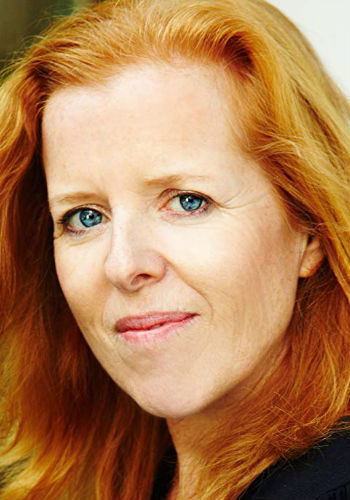
Isaro Kayitesi

Mansoor Noor: If you could take one thing with you to the after life what would it be?
Isaro Kayitesi: My great tchotchke collection would be comforting, but actually I think I would take the good memories from my life to play over and over again whenever I wanted. Though, that’s assuming that I’d have a mind to experience them in…?

What’s it like learning every role in a play?
Well “nearly” every role… I reckon it must be really good for my brain (the nervous system, not so much). I’ve been doing a lot of shutting off of that little voice inside my head that’s saying: “this is impossible!!” I just hope I don’t start mouthing the other character’s lines while I’m not supposed to be playing them!

Who would you turn to for help on a presentation about your life?
Probably my mother because she is a glass-half-full kind of person, so I think she would leave out all the bad bits for me.

Who’s your favourite cast member slash which one of us would you take to meet God?
I’d probably take you, only because you naturally talk much more rapidly than I do so you could ask “God” like a million questions and do all the talking until I could actually wrap my head around the whole weirdness of the fact that I was apparently meeting “God”! (I don’t have favourites! That is crazy!)

Are you nervous about not knowing which role you will get to play each night?
Not knowing means that I’m going to have to just go for it without any time to over think. It also helps to know that there are 5 of us going through the same thing. So, no, not yet, but ask me again on the first night!

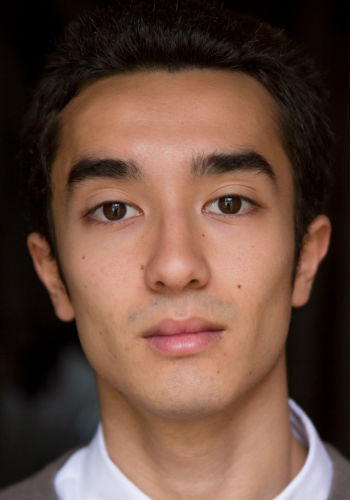
Mansoor Noor

Isaro Kayitesi: Would you rather go to an afterlife or just disappear in to nothingness, and why?
Defs the afterlife. Have you not seen The Good Place? It’s a never ending party where you can do whatever you like! The Good Place is based on facts… right?

Which kinds of lines do you find the hardest to remember?
All of them… apparently. Nah but seriously… the ones where you have to remember EVERY CHARACTER’S LINES.

Are you going to call “line!” during a show if you dry? Or what will you do if you forget your lines in front of an audience?
My usual trick is to just freeze and hope that nobody notices. Nah I’m kidding… I’ve only done that once. In this show we’re lucky because the actor opposite us knows all of our lines too. So the real question is, what will you do Isaro if I forget my lines?

How existential do you get in your day to day life; has working on this play affected that?
You might say I’m constantly in existential crisis. But it has nothing to do with this play. More with the fact that I’m a single, sometimes working actor (and headshot photographer at www.mansoornoor.com – I’ve mentioned this in another Suzy interview, she’s down with it) and living in a share-house. But no, I’m fine. I’m really, really fine.

Would you walk out on your friend’s death bed if they irrevocably insulted you?
Walk out? Never. I’d most likely smother them… with forgiveness… just so I could look like the bigger person… and then watch them die anyway. If that got too dark then I’m blaming the play.

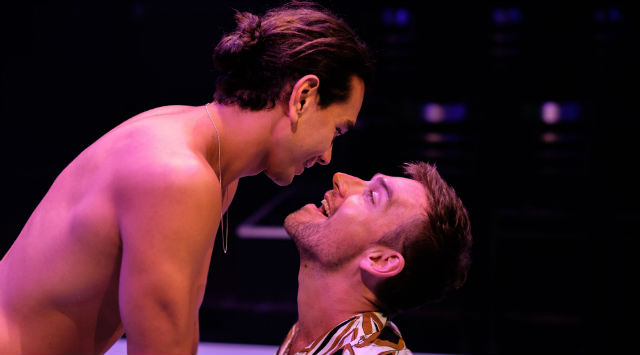
Isaro Kayitesi and Mansoor Noor can be seen in Everybody, by Branden Jacobs-Jenkins.
Dates: 6 – 21 Mar, 2020
Venue: Kings Cross Theatre
Review: Australian Open (Kings Cross Theatre)

Venue: Kings Cross Theatre (Kings Cross NSW), Feb 14 – 29, 2020
Playwright: Angus Cameron
Director: Riley Spadaro
Cast: Di Adams, Gerard Carroll, Miranda Daughtry, Patrick Jhanur, Tom Anson Mesker, Tom Russell
Images by Clare Hawley

Theatre review
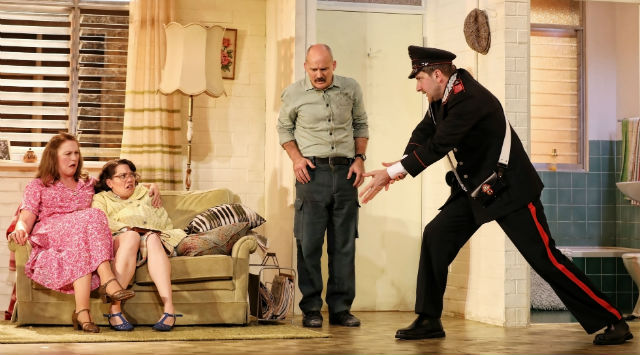
Inspired by her son Felix, Belinda decides to change the nature of her marriage, in order to try out new things. Felix adamantly objects, even though it is his own open relationship with Lucas, that had acted as the very catalyst for his mother’s radical transformation. Australian Open by Angus Cameron looks at the way we let our most personal lives be dictated by others, and how we in turn feel at liberty to intervene with other people’s private business. It is a wonderfully progressive piece of writing, that takes the discussion of sexuality and marriage into the twenty-first century. Framed by some fabulously mischievous wit, the play is often hilarious, with its strengths clearly residing in dialogue rather than in plot.

Relentlessly camp, the show is directed by Riley Spadaro, whose penchant for grand gestures makes the experience a vivaciously engaging one. Spadaro is meticulous with the comedy of the piece, never letting any opportunity for laughs go wasted, although it must be said that more serious moments at the end, can in comparison, feel perfunctorily handled. There is a sense of refinement to the staging, with Grace Deacon’s work on set and costumes proving enchanting with her refreshing palette. Phoebe Pilcher’s lights too, bring an exuberance to keep us in the mood for all the bubbly goings on.

An extremely adorable cast keeps us enthralled in their slightly naughty story, with Di Adams particularly charming as Belinda, full of pointed nuance and jubilant playfulness, for a character luxuriating in being able to get back her groove. Felix is played by Tom Anson Mesker, whose proficient comic timing establishes pace for the proceedings. Also very funny is Gerard Carroll as Peter, able to portray vulnerability whilst bringing cheeky humour to the role. The millennial tennis star Lucas is given a surprising authenticity by Patrick Jhanur, who hits the mark effortlessly, both in terms of his acting and allure, for the very sex-positive part. Miranda Daughtry is appropriately stern as Annabelle, a commanding presence who offers a valuable counterbalance to her flighty family members. Finally, Tom Russell is memorable in the smaller role of Hot Ball Boy, simultaneously playing clown and eye candy, for a delighted and appreciative crowd.

As demonstrated by Felix, the hardest part about love and sex, is the discovery for oneself, what it is that one really wants. The inundation of messages relating to those subjects makes it nigh on impossible to know, if one is acting in response to influences, or if one’s true nature or essence is actually being expressed. As children, we are given explanations about partnerships and gender, that are at best interpretations of phenomena. There comes a time in adulthood, that each individual must determine for themselves, and themselves only, what those things should mean.

www.presentedbybub.com

Review: Our Blood Runs In The Street (Old Fitzroy Theatre)

Venue: Old Fitzroy Theatre (Woolloomooloo NSW), Feb 19 – Mar 21, 2020
Director: Shane Anthony
Cast: Andrew Fraser, Cassie Hamilton, David Helman, Eddie Orton, Sam Plummer, Ross Walker, Tim Walker
Images by Jasmin Simmons

Theatre review
Violence is an indelible part of LGBTQI history in NSW. In the many years leading up to the decriminalisation of homosexuality and then the legalisation of same-sex marriage, Sydney’s gay men and trans women especially, have suffered physical harm, to the extent of murder, as a result of homophobia and transphobia.

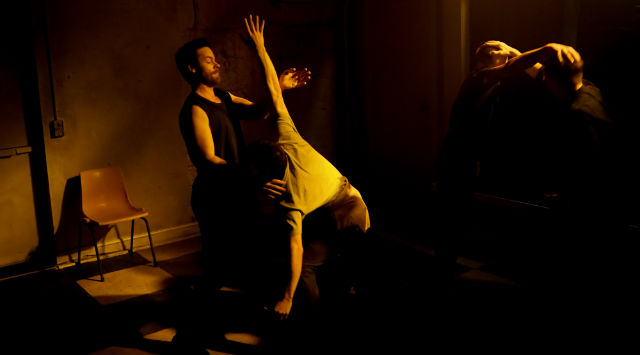
Our Blood Runs In The Street is a work of verbatim theatre, composed of accounts by victims, as well as “family members, witnesses, historians, police officers, journalists and researchers,” presented alongside contemporary dance and physical theatre, for an examination of the prejudice and brutality that has shaped the community.

With stories mainly from the last three decades of the previous century, director Shane Anthony and his team have collated a meaningful text from which we can better understand that past. We are additionally informed that investigations are ongoing, in case new revelations should surface as a result of the show. It is a heavily fragmented work, and although able to convey the severity of incidents, struggles to elicit emotional involvement.

Visually enticing, with imaginative choreography throughout, and lights by Richard Whitehouse bringing constant colour and movement, our eyes are kept entertained. Auditory capacities are attended by composer Damien Lane and sound designer Nate Edmondson, who move us seamless from scene to scene, as they maintain an uncompromising gravity for these harrowing tales.

Seven performers, each one earnest and passionate, deliver testimonials with indisputable conviction. David Helman is particularly impressive with his clever blend of words and movement. Imagery and dialogue in the show do not always work well together, but Helman makes us watch and listen with coherence, without distraction from one or the other. A powerful speech is given by Cassie Hamilton, captivating in her stillness, recounting the serious under-estimation of violence against trans people, as reported by Eloise Brook of The Gender Centre.

The times are slowly changing, but problems for LGBTQI Australians continue, now most notably for ethnic minorities in suburbia. That the stage for Our Blood Runs In The Street is filled with white bodies, is indicative of the disparity that exists between cultures. People of colour have benefited from the work of Western activists, but there remains challenges, specific and nuanced, yet to be addressed. Pride has functioned as an effective war cry for many queers, but it is still a concept that eludes some, for which shame is still the default experience.

www.redlineproductions.com.au

Review: Shepherd (Aya Productions)

Venue: Belvoir St Theatre (Surry Hills NSW), Feb 19 – Mar 7, 2020
Playwright: Liam Maguire
Director: Liam Maguire
Cast: Mark Paguio, Cecelia Peters, Rose Riley, Adam Sollis, Grace Victoria, Jacob Warner
Images by Matt Predny

Theatre review
Anna is sort of a charismatic cult leader, but she would of course never call herself that. Inside what might be termed a wellness facility, we meet a group of seekers, overwhelmed with a sense of inadequacy, anxiety and narcissism, trying to attain a state of bliss, by surrendering themselves to the teachings of their Gwyneth Paltrow lookalike guru. Liam Maguire’s Shepherd is a self-effacing meditation on the disquiet of modern existence, with characters full of neurosis presenting a sardonic theatre that appeals to our most cynical selves.

Operating as both playwright and director, Maguire’s idiosyncratic humour shines through for a quirky style of show, delivering big laughs as well as ample opportunity for intellectual engagement. His mischievous approach reveals the people we have become, in what is now one of the world’s richest countries; seeing ourselves represented as complete idiots, is actually highly rewarding.

Although not an extravagant production, lights by Martin Kinnane and sound by Sam Maguire, work together to provide a polish that reflects the sophistication underpinning Shepherd. Their efforts combine to shift tensions and tone between each scene, so that we interpret the action from varying heights of comedy and drama, letting us in on the play’s intentions, in subtle subliminal ways.

The cast is extraordinarily funny, including a deadpan Adam Sollis, who as Mark utters just four words, but whose depictions of wilful ignorance proves unforgettable. Anna is played by Grace Victoria, who portrays quiet malice with a powerful sarcasm, and captivating flamboyance. Also very ostentatious is Cecelia Peters, an energetic and meticulous performer, whose exquisite timing and high campery as Elsa is a delicious highlight. Mark Paguio’s overwrought earnestness leaves a remarkable impression, for an irresistibly hilarious take on lost souls and their confused desperation. Rose Riley and Jacob Warner play a quarrelling couple, both actors intense and wonderfully ironic with the parody of romance that they bring to the stage,

Anna exploits these bewildered sheep, gaining money and power from those eager to give up agency and indulge in the comfort of blindly following a false god. The world can make us acutely aware of personal shortcomings, even though these ideas of lack, are rarely genuine. We need to learn to switch perspectives, and see that it is the economy and the ways we run society that are at fault. The structures we subsist under fail to accommodate our nature, and makes us feel as though we are the ones to be blamed for not being able to cope. It then sells us solutions to problems of its own creation, and sets us on a perpetual cycle of frustration and dissatisfaction. When we recognise that the system is not serving our purpose, radical measures must be taken.

www.ayaproductions.com.au

Review: The Rise And Disguise Of Elizabeth R (Sugary Rum Productions)

Venue: Hayes Theatre Co (Potts Point NSW), Feb 13 – Mar 1, 2020
Book & Lyrics: Gerry Connolly, Nick Coyle, Gus Murray
Music: Max Lambert
Director: Shaun Rennie
Cast: Gerry Connolly, Rob Mallett, Laura Murphy
Images by Kate Williams

Theatre review
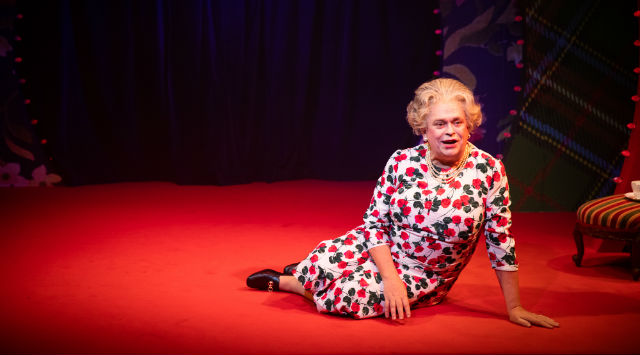
The Queen of England comes to terms with her long career, and the significant diminishment of her empire, in The Rise And Disguise Of Elizabeth R by Gerry Connolly, Nick Coyle and Gus Murray. Connolly himself too, faces a reckoning in the show, as we watch the star confront his achievements as entertainer and impersonator of the Queen, a man of a certain age unable to step out of a majestic shadow, forever eclipsed. These two stories form the basis of a rich tapestry, a multi-disciplinary presentation involving burlesque, cabaret and stand up, intersecting with conventional theatre and Broadway elements, for a witty exploration into the amalgamated phenomena of legacy and ageing.

Directed by Shaun Rennie, the production captivates our senses with its irresistible exuberance, and engages our minds through considered examinations of the Queen as cultural catalyst and icon. Costumes and set design by Jeremy Allen, along with lights by Trent Suidgeest, serve up striking imagery, able to create beauty for every scene, whether fantastical or realistic. Connolly’s performance is unfortunately tentative, but although lacking in confidence, occasional glimpses of genius are revealed in his knack for subtle but acerbic irony. A small but very strong supporting cast keeps us buoyant, with the spirited duo of Rob Mallett and Laura Murphy bringing exceptional proficiency and charisma to the stage. Also noteworthy are Leah Howard’s choreography and Max Lambert’s musical direction, both consistently surprising with their work, and valuable in helping to sustain high energy levels for the 80-minute duration.

No matter what a person does for work, it should always be personally fulfilling, but if an individual’s contributions to community are substantial, life can begin to take on real meaning. Both the show’s main characters are frustrated with the people they have become. They rarely see beyond the repetitive toil that dictates how each day pans out, even though what they do constitutes extensive benefit to societies. We are taught to think about work in selfish ways, always looking at it in personal terms of profit and advantage, ignoring the greater good that can result from a broader comprehension of one’s decisions. The Queen is a lucky woman, not only for the wealth and power bestowed upon her, but also for being affixed to a path that offers her endless opportunities to make the world a better place. The rest of us have destinies that are more pliable, and we need to rise to the challenge of making bolder choices as a result of understanding those freedoms and responsibilities.

www.facebook.com/sugaryrumproductions

Review: Crunch Time (Ensemble Theatre)

Venue: Ensemble Theatre (Kirribilli NSW), Feb 14 – Apr 9, 2020
Playwright: David Williamson
Director: Mark Kilmurry
Cast: Diane Craig, Megan Drury, Guy Edmonds, Matt Minto, Emma Palmer, John Wood
Images by Prudence Upton

Theatre review
Although a grown man and father of two, Luke is unable to grow out of the shadow of Steve, his own father, whom he perceives to not have been a loving parent. Now that the old man is approaching end of life, things must come to a head or risk being unresolved for many years hereafter.

David Williamson’s Crunch Time is a family drama, but one that struggles to resonate, featuring a collection of unlikable characters in situations that are unconvincing and distant. We recognise the dynamics at play, for we all have experiences relating to problematic kinship, but few of its ingredients feel authentic, and meaningful emotional investment into any part of the story proves elusive.

Mark Kilmurry’s direction capitalises on comical aspects of the writing, always taking care that the humour is conveyed with clarity. Actor Guy Edmonds is effortlessly funny as Luke, and a charming presence, even though a strange casting choice for an entirely charmless role. Daddy Steve is played by an elegant John Wood, whose restrained approach tends to downplay tensions of the piece.

Other parts in Crunch Time are performed well, despite their unfortunate lack of complexity. Matt Minto is appropriately comical as favourite son Jimmy, and Diane Craig brings a degree of self-respect to Helen, the strangely overlooked mother who does little more than orbit around the disputes within her household. Daughters-in-law are played by Megan Drury and Emma Palmer, who retain some integrity for a couple of women burdened by some shockingly unimaginative dialogue.

It is curious that Steve’s family does little to question his decisions pertaining to euthanasia, but Crunch Time is a rare example of how the matter of death, can be dealt with in a less than tragic fashion. Traditionally, we have insisted that people bear with terminal illnesses, no matter how painful and dehumanising. For years, we have debated as a community on how dying can be made dignified, but that journey to legislative change has been at snail pace. It is hard to understand that anyone who has witnessed unimaginable suffering on deathbeds would argue against assisted suicide, but our conservative culture is determined as ever, to keep us in the dark ages.

www.ensemble.com.au

Review: War Horse (Sydney Lyric Theatre)

Venue: Sydney Lyric Theatre (Sydney NSW), Feb 15 – Mar 15, 2020
Playwright: Nick Stafford (based on the novel by Michael Morpurgo)
Director: Marianne Elliott, Tom Morris
Images by Brinkhoff Mögenburg, Andrew Tauber

Theatre review
Michael Morpurgo’s War Horse features the life story of a horse named Joey, and his friendship with Albert, the young man with whom he shares an unbreakable bond. Sold off to a cavalry in World War I, Joey spends the wilderness years in hard toil, whilst Albert pines for his mate as he too, struggles in the trenches. Adapted by Nick Stafford, this stage version is cleverly balanced, to deliver both pathos and amusement, allowing a theatrical audience to indulge in an evening of nostalgic escapism.

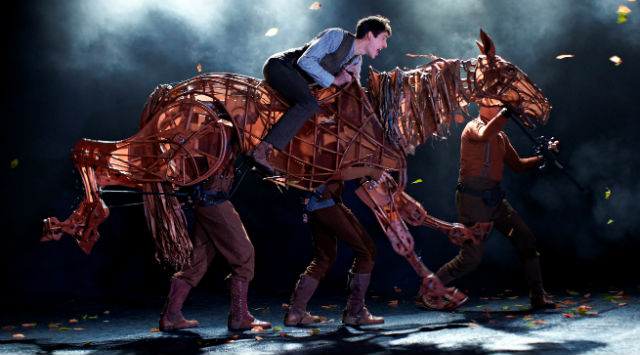
War Horse is the paragon of immaculate stagecraft. All technical faculties are rendered in extraordinary ways, for a show best described as magical, from start to end. The very prerequisite of bringing to life a lead character that is not human, but a magnificent beast, means that all the tools for make belief, are activated in the most inventive and dynamic ways. The audacious and oversized puppetry involved in telling Joey’s story, is central to the enjoyment of the production, with up to six persons employed to animate one creature, often with multiple horses sharing the stage, for images that will stay with the viewer for years to come.

Although stridently sentimental, the show is not always a moving experience. It is however, endlessly fascinating, with a multitude of mechanical devices employed to tell an emotional story. Some may find themselves swept away with the innocent love portrayed in the piece, but most will be hopelessly captivated by the sheer ambition of the staging. Its scale is overwhelming, and the pleasure of feeling awestruck should never be underestimated.

wwww.warhorseonstage.com.au

5 Questions with Di Adams and Patrick Jhanur

Di Adams

Patrick Jhanur: What do you love about the Australian theatre community?
Di Adams: I love that there are actors, directors, creatives who move between mainstage and independent productions dependent on the work and the company. There appears to be a level of respect for good work that allows this to happen. In the independent sector I am constantly impressed that so many people work so hard to put on a show with virtually no money, relying on so much good will and just a drive to produce theatre. I love being a part of these shows because everyone is giving their time, and everyone is so committed because why would you do it for nothing if you didn’t love it?

What is the most surprising unscripted, unexpected moment you’ve experienced on stage?
I did a play a few years ago with an older actor and we had the final scene together. A few moments in she suffered a mini stroke and could only tap my arm. At first, I thought she had completely forgotten her lines but then I realised something was wrong. I had a brief moment where I thought – should I stop and ask if there’s a doctor in the house? But I just went ahead and did a 2-person scene basically as a monologue. A friend in the audience had no idea anything had happened and neither did my fellow cast mates backstage. The actor was fine the next day, but it was terrifying at the time!

What are your top tips for approaching a new Australian work?
Be open and prepared for changes! Also make cuts with a pencil cause they’re likely to find their way back in to the script. If the writer is involved it’s great to have a good
relationship with them so you can discuss and suggest what works and what doesn’t. We’ve been so lucky having Angus around and so open to making the play the best it can be.

Who would be your most influential sport role model?
I’m not a sports fan so this is hard. I guess I would have to say Adam Goodes purely for the dignified way he handled the horrendous racist treatment he received during his career. It was inspiring and it showed him to have more humanity than any of the people who vilified him. And I’d mention Ian Thorpe for his bravery and his support of youth with mental health issues as patron of Reach Out.

In Australian Open, your character embarks upon a spectacular adventure, what would be your dream trip of a lifetime?
I’m not really into adventure holidays. Give me a big city and lots of walking & eating/drinking local specialities. That said – I’ve always wanted to sail around the Greek Islands and swim into the beach to a little Taverna with delicious food waiting.

Patrick Jhanur

Di Adams: Do you feel any responsibility doing a new work?
Patrick Jhanur: Absolutely, it’s a huge honour being a part of a completely new Australian story. The ripples of new Australian work tend to inspire different, fresh and often subversive perspectives within our theatre community and cannon. It’s so vital that these new works continue to occupy creative space with diverse and authentic Australian voices so as to create a self-sustaining and perpetually evolving industry.

There’s a line in the play about training, focus, competition, is this applicable to acting as well?
I like to put myself through a bit of a boot camp in the lead up to a gig. I might be a bit of a hermit in the weeks preceding and keep to a consistent health and fitness routine. Nothing too hectic! My day starts with 1200 crunches, 750 push ups and 18 Weetbix drizzled with organic honey from Amazonian Bees.

What is the difference between working in main stage and independent theatre?
I think independent theatre demands phenomenal stamina. I love the rigour of this creative process where in everyone committed to the gig is doing their job with less of many variables and luxuries you’re afforded in a main stage show. The sense of camaraderie amongst this chaos is wonderful. Often, plays we see on indie stages are new, untried or tested so you become very dependent on the trust built between your ensemble and fellow creatives.

If you could be in any play anywhere, what play and where?
Performing on the West End in London is my highest ambition. I also have this extravagant fantasy of one day performing in a play at the State Theatre here in Sydney. It’s such a spectacularly grand and beautiful space. I couldn’t choose between Holding The Man or Death Of A Salesman. They’re both incredibly influential plays for me and hold such great sentiment in their teaching me of the power and beauty of storytelling and theatre.

How do you feel about the sweltering conditions and harsh summer heat that tennis players compete in the Australian Open and could you do that?
A game of tennis in 35+ degree heat doesn’t sound too bad for a six figure plus pay day! I do love working under extreme pressure or uncomfortable circumstances or conditions. I’ve done a few touring gigs where things have gone awry and the pressure to make it work no matter and get the job done is thrilling!

Di Adams and Patrick Jhanur can be seen in Australian Open, by Angus Cameron.
Dates: 14 – 29 Feb, 2020
Venue: Kings Cross Theatre

5 Questions with Jeremi Campese and Aanisa Vylet

Jeremi Campese

Aanisa Vylet: Hey Jeremi, what excites you the most about this production of Hamlet?
Jeremi Campese: Harriet’s performance first and foremost. But also, Peter’s vision of nostalgia incorporates projections of memories (shot on a period-appropriate Super 8mm camera!!). Placing the past in such clear view gives the present a REALLY moving poignancy at particular moments. I won’t say too much else about the projections, but they’re beautiful and work with Hamlet constantly trying to look back and remember/grieve for his father. The same for Ophelia too!

I understand that you have worked previously with Bell Shakespeare as part of their Players Education program, what was the process like and how has it contributed to your approach during rehearsals?
It was a total joy. Especially performing at regional schools: you’re often their only form of live Shakespeare (and sometimes of live performance) so they were super generous in their excitement and willingness to learn. Of course, there are down days and tough audiences — hormonal 14 years olds at 9am? Thank u next. The whole tour has just made me far more confident in myself as an actor and with the Shakespearean text. But most importantly, no audience can intimidate you after performing to some of those teenagers!

Can you tell us a little bit about your character Rosencrantz and his buddy Guildenstern?
Ros and Guil are school-friends of Hamlet’s. They probably haven’t seen him in a couple years since uni began, but the King and Queen call them after Hamlet’s behaviour becomes strange to find out what’s wrong. It’s a very fun dynamic because they’re constantly having to choose between their childhood friend and the authority of the Court.

Something that I very much respect about your practice is that you are self taught. Do you have any advice for younger actors who wish to pursue a similar path?
Acting is an applied discipline, so it’s only natural that best way to learn is just on the job. So, my advice would just be to keep yourself busy with work. If you don’t have a show lined up, go to auditions; if you don’t have auditions lined up, do workshops (ATYP run fantastic ones for e.g.); if you don’t have workshops lined up, read/learn monologues (contemporary, Shakespearean, classical). If you keep your actor-brain working whenever you can, you’ll always be improving. But also, don’t totally throw away drama school as an option: take those auditions and opportunities seriously.

Which character do you have a secret crush on in Hamlet?
WOW what a question. Maybe Gertrude. I truly think her and Claudius love each other dearly: and Lisa McCune (who’s playing her) and I agree, she was definitely a party animal when she was younger!

Aanisa Vylet

Jeremi Campese: What excites you most about this production of Hamlet?
Witnessing Harriet Gordon Anderson play Hamlet and seeing Peter Evans’ vision for the work unfold. What excites me the most about this endeavour is both Harriet and Peter’s commitment to drawing out Hamlet’s humanity. It is the first time I have witnessed Hamlet being played by a woman and I hope it is not the last.

The Mousetrap is a huge plot point in the play, and Shakespeare builds up to it a fair bit. Without giving too much away, what’s your vision for it in this show?
Hmmm…. Our collective vision is a melange of John Cage, Merce Cunningham, Martha Graham, Russian Absurdist Theatre, Ballet, Greek Tragedy & Comical Historical Pastoral Theatre.

Much of your work has been on contemporary and your own, new work (The Girl/The Woman was amazing). How have you found working on a classic text with such a long history of performance and study?
I will let you all in on a little secret – as a high school student I was terrified of Shakespeare. I am also an advocate of creating new work (as I truly believe we are the Shakespeare’s of our times). So… when I auditioned for this production I decidedly went in as my true self, with my truth and my interpretation of the text. I was deeply impressed with the collaborative approach of the Company. I felt at home as an artist and I quickly realised that we were creating a new play from an old story and I could still bring my artistry to it and I could learn quite a lot from the process.

I still believe we need to continue to create new stories that reflect the cultural sensibility of our times but I have also realised these stories have their place too. I believe the text, the world within these plays inspires audiences and speaks to the humanity in many people. The fears of “not knowing enough”, “not being articulate enough” or “stuffing it up” have calmed down due to these realizations, the help of generous cast members and an incredibly supportive company. And in terms of dealing with a text that has had such a long performance history… well… for me every text is up to interpretation.

Who’s your favourite character in the play?
Hamlet. Hands down. The first play I had ever seen was Bell Shakespeare’s Hamlet, directed by John Bell. I was in year 10. I related to Hamlet so much… I could not understand why. All I knew was that I couldn’t shake the feeling that something hidden within me was laid bare on stage.

QUICK! The Aanisa Vylet biopic is being made: who do you want playing you?
A chorus of women of colour speaking in voice.

Jeremi Campese and Aanisa Vylet can be seen in Hamlet, by Bell Shakespeare.
Dates: 29 Feb – 4 Apr, 2020
Venue: Sydney Opera House

Review: No Pay? No Way! (Sydney Theatre Company)

Venue: Sydney Opera House (Sydney NSW), Feb 10 – Apr 4, 2020
Playwright: Dario Fo (adapted by Marieke Hardy)
Director: Sarah Giles
Cast: Glenn Hazeldine, Rahel Romahn, Helen Thomson, Aaron Tsindos, Catherine Văn-Davies
Images by Prudence Upton

Theatre review ⭐️⭐️⭐️⭐️
Margherita was only lending Antonia a hand with her groceries, when it was discovered that none of the goods had been paid for, and because the authorities are now on the hunt for all the women who had robbed a supermarket, Margherita inadvertently finds herself pretending to be pregnant, with bags of food hiding under her coat. Dario Fo’s No Pay? No Way! is concerned with the working class in 70’s Italy, and their awakening to the fact that the bourgeoisie has been taking advantage of them for far too long, and that it is finally time to revolt.

The absurdist comedy is adapted by Marieke Hardy, who bridges gaps of time and space, for a magnificent new version that makes the story feel pertinent and surprisingly urgent. In her process of language conversion, Hardy shines a light on 21st century Australian neo-liberalism, to create a rousing work that has us questioning the state of our economy. Director Sarah Giles’ rendering of the play is relentlessly energetic, for scenes of hilarity that tickle us from start to end. Although the laughs are incessant, hearty and thoroughly enjoyable, not one moment goes by that lets us forget the politics being discussed. Giles is as cutting as she is funny, and her production is satisfying beyond the entertainment value that it obviously offers.

A glorious set design by Charles Davis facilitates the raucous activity of characters, whilst providing evocative visual cues that relate to the sociopolitical climate being interrogated. Davis’ costumes too, help to depict a world that is distant yet resonant, allowing us to peer into somewhere far away but achieving an intimate understanding about who these people are. Lights by Paul Jackson are extravagantly designed, to create an inexhaustible sense of dynamism for the staging; his work adds powerful amplification to both comic and dramatic qualities of the play, cleverly creating imagery that keeps us invested, no matter where the story chooses to wander.

Five extraordinary talents take the stage, with Helen Thomson’s performance as Antonia setting the tone, through a sophisticated blend of dazzling slapstick and fierce intelligence. Catherine Văn-Davies adds strong commentary to her interpretation of the slightly ditsy Margherita, bringing meaningful elevation to the role, as she executes some seriously boisterous manoeuvres that has us howling. Playing the husbands are Glenn Hazeldine and Rahel Romahn, who display impressive skill not only in their impeccable timing, but also laudable in terms of the narrative depth they convey for these battlers. Aaron Tsindos is unforgettable in all of his quirky roles, wonderfully precise and confident in the wild artistic choices he invests for each of his distinct and very delightful manifestations.

When all the delicious humour comes to a crashing halt at the show’s conclusion, we face the stark reality of what the farce is all about. Dario Fo’s Marxist influences sing beautifully, and painfully, as we confront the increasingly lamentable problems of our society. Demonstrations and rallies are gradually increasing in potency on Australian streets, but truly radical action still seems unimaginable. We are unable to concede to the desperation that has become permanent in our lives, always choosing to believe that the way things are can be improved, instead of daring to completely do away with the old, so that we can be in search of something new. We fool ourselves into thinking that necessary evils are worth the good that we do possess, never allowing idealism to take us somewhere better. We are given crumbs and are expected to be content with our lot. Unlike Antonia and Margherita, who arrive at the last straw of their exploitation, we carry on hating so much of what surrounds us, believing that this is as good as it gets.

www.sydneytheatre.com.au