Review: Platonov (Mophead / Catnip Productions )

mophead1Venue: ATYP (Walsh Bay NSW), Nov 5 – 22, 2014
Playwright: Anton Chekhov (adapted by Anthony Skuse)
Director: Anthony Skuse
Cast: Gary Clementson, Charlie Garber, Suzanne Pereira, Amy Hack, Geraldine Hakewill, Graeme McRae, Sam O’Sullivan, Jason Perini, Matilda Ridgway, Eloise Snape, Dorje Swallow, Sam Trotman, Terry Karabelas, Edward McKenna
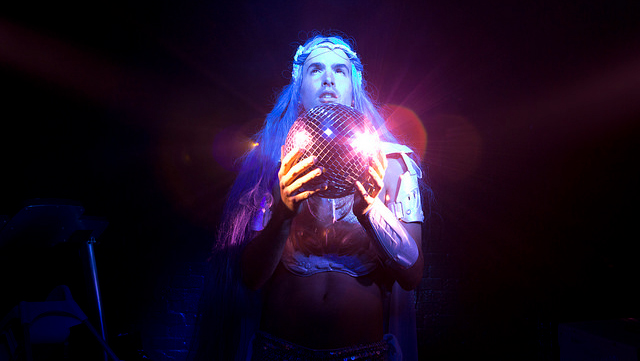
Image by Matthew Neville

Theatre review
“Impoverished nobility, bored gentry, long afternoons, and a gun” is Anthony Skuse’s characterisation of Chekhov’s legacy, and in this new adaptation of Platonov, Skuse constructs a languid late nineteenth century Russian town, focusing on the title character’s love affairs, and the acquisition of an estate by the underclass. Skuse’s script contains several strong narratives with complex psychological and emotional dimensions, but the work is surprisingly comical, buoyed by a young cast who seems determined to keep proceedings light and frothy.

Skuse’s use of space is aesthetically outstanding. His stage design is minimal, but through the sensitive positioning of a generous number of chairs and actors, scenes come to life and we experience a sublime transformation of time and space. Lighting design by Chris Page and sound by Alistair Wallace are subtle but powerful in effecting atmosphere with a dramatic elegance. The innovative use of chorus and Russian folk songs further enhances the theatrical experience, and this is where most of the performers excel. Direction of performance timing and energy is executed well, but motivations tend to be surface, and it is this lack of gravity that tarnishes the production. Costume is not credited, and the cast often looks as though they are still in rehearsal garb, which detracts from the social and class structures that inform much of the play’s content.

Leading man Charlie Garber is charismatic, with an impressive presence, but his approach is persistently farcical, and he anchors the production in a frivolity that sits uncomfortably with Chekhov’s weighty themes. Platonov’s spinelessness can be humorous, but it is also a serious element that ultimately represents the core reason for the destruction of lives in the story. We may perceive the responsibility associated with the lack of courage and virtue in key personalities, but the show needs to deliver something more poignant in order for its audience to connect on a personal and emotional level. Sam Trotman as Sergei demonstrates a much stronger commitment to the role’s authenticity. His ascension from puerility to anguish over the course of the play is thoroughly compelling, and his fierce vitality adds a much needed edge to a production that tends to be too understated in its storytelling.

The show successfully removes conventional stylistic touches that could be thought of as clichéd in standard representations of Chekhov’s scripts, but the vacuity left behind in their absence is not sufficiently compensated by the show’s moderate sense of originality. Skuse wishes to expose the essence of these character’s very beings, to achieve an understanding of how we function as individuals and as societies, but the language required to communicate those concepts seem to ask for something more elaborate and substantial. It turns out that stripping something bare does not necessarily give easy access to the truth, and what we think of as cosmetic could actually hold significance and meaning.

www.mophead.com.au | www.catnipproductions.com

Review: The Way Things Work (Rock Surfers Theatre Company)

rocksurfersVenue: Bondi Pavilion Theatre (Bondi NSW), Nov 5 – 29, 2014
Playwright: Aidan Fennessy
Director: Leland Kean
Actors: Ashley Lyons, Nicholas Papademetriou
Image by Zakarij Kaczmarek

Theatre review
Aidan Fennessy’s The Way Things Work is about betrayal, corruption and greed. It is also about maleness, focusing on its ambitious manifestations that can often be dishonourable and undignified. The six men in Fennessy’s play are deeply flawed, and their stories reveal them for the low lives that people are capable of becoming. Constructed of three acts, each with a different pair of characters in almost entirely separate scenarios, the script is a dynamic one, with carefully plotted points of tension, drama and danger. The narratives in The Way Things Work are thoughtful expressions that reflect its author’s social concerns. It might not be easy to relate to the contexts Fennessy presents, but his acute observations of the human condition allows us to connect with the material at hand.

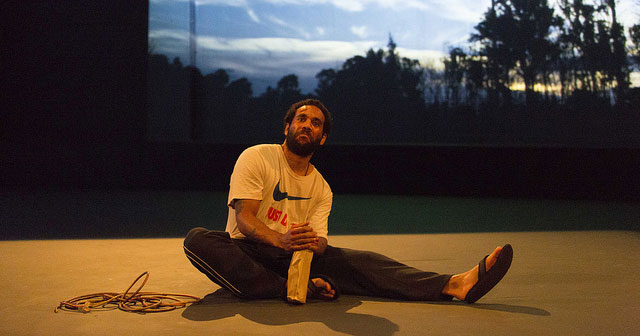
Direction of the three long scenes by Leland Kean is challenged by the casting of only two actors, Ashley Lyons and Nicholas Papademetriou, who each take on three parts. Kean manages to create enough differentiation between each segment to keep us engaged, but the cast is not always a perfect fit for every set of characters they tackle, resulting in a show that is unevenly realised. Nevertheless, the production’s use of space is accomplished, and the powerful physicality of both players is used effectively to create lively action from the written pages. Both Lyons and Papademetriou have affable presences that endear us to their time on stage, even though what they put on display is fairly alienating. They are particularly compelling as a couple of Greek-Australian brothers in the second act, with charming idiosyncrasies and a brilliant chemistry that delivers some breathtaking scenes of confrontation and savagery.

Kean’s stage design is a strong feature that provides a confident backdrop, with an appealing aesthetic that relates to some of the themes and concepts, but the three pieces of furniture used to create spacial configurations are very pale by comparison. Also unsuccessful is lighting design that seems to lay dormant during each act, and atmosphere becomes lacklustre without sufficient flourishes in illumination to accompany tonal shifts in the story. The space is persistently dimly lit, which can detract from energy levels in plot and performance. The production’s inadequacy on this level is surprising and confounding.

Our sons’ lives are shaped by families, schools, and communities. How they grow up relies on the environment in which they live, and the men that they become is a consequence of the societies we construct. It is tempting to view adults as self-made individuals responsible for all their own choices, but our personal circumstances cannot be divorced from the people who surround us. Men are not all violent and selfish, as the play might suggest, but there is certainly good reason to examine the reasons behind how we behave, if only to gain control of elements that will improve civilisations for the betterment of humankind as a whole. The Way Things Work talks a lot about power, and our system of government is implicit in its discussions. The media portrays many of our leaders as vile and despicable, but we need to take a closer look at what it is that bestows upon them that privilege and sovereignty.

www.rocksurfers.org

Review: Switzerland (Sydney Theatre Company)

Venue: Sydney Opera House (Sydney NSW), Nov 3 – Dec 20, 2014
Playwright: Joanna Murray–Smith
Director: Sarah Goodes
Cast: Eamon Farren, Sarah Peirse
Images by Brett Boardman

Theatre review (originally published at Auditorium Magazine)
The term masterpiece is used to describe a work of outstanding creativity, skill and workmanship. Although it is far too early to declare that Switzerland is Joanna Murray-Smith’s most celebrated work, there is no doubt that the playwright has founded something extraordinary with this fictional account of American author Patricia Highsmith’s very last days. Along with Sarah Peirse’s phenomenal performance as Highsmith, this is a production that will be remembered as one of the grandest achievements from two of contemporary theatre’s geniuses.

Highsmith died in Switzerland in 1995, but the story takes place in 2001. In her austere living room, she receives a guest Edward Ridgeway, who has arrived from New York as a representative from her publisher, despatched to obtain Highsmith’s signature on a contract for a new instalment to her famed Ripley series of novels. The young Ridgeway is bright and aspirational, but timid in the presence of the great writer, who has no qualms about berating and offending the rookie at every opportunity. Ridgeway presents himself as a devotee of Highsmith’s oeuvre, and uses all his might to complete the task at hand. The subject of his imploring however, is difficult and mean, and she proceeds to turn his visit into a living hell. Like Highsmith’s books of suspense in the crime fiction genre, Switzerland too is intriguing and seductive, with an unmistakeable Hitchcockian sensibility to its plot and pace. The breathtaking work is a remarkably gripping experience not commonly found in live performances that tend to appeal to emotions more than they do our very visceral responses and indeed, nerves.

It is always tempting to think of writings about writers to be at least partially autobiographical, and Murray-Smith does seem to be extremely personal and revelatory about that creative process in the palpable intimacy witnessed here. Highsmith was more interested in the “why” of murder, than the “how” of it, and this play thoroughly explores human behaviour and psychology, providing a window through which we discover the manifold logic behind the way we tick, especially in our dark moments. The characters thrive in their morbidity; conversations rarely veer from death and destruction, but the play is not deadly serious. It is often piercingly funny, particularly in the way Highsmith’s eccentricities and nastier qualities are accentuated. More than entertaining, Murray-Smith’s comedy helps with her macabre narratives, making them more convincing and threatening. It is the way light and dark vacillate that makes us lose ourselves, and fall headfirst into this indulgently baroque world of deception and narcissism.

Sarah Goodes’ direction is tense, taut and terrific. The deeply complex text is brought to life with crystal clarity in its narrative and characterisations, yet the astonishing multilayeredness of its themes is retained. It is the kind of play that seems to touch on everything, even though its story is ostensibly about something simpler. The context of a hermitic novelist is far removed from many of our own lives, but at no point does Goodes allow us to feel estranged from its themes and ideas. The script’s ambitious structure switches mode constantly within its three single-scene acts, taking cue from Highsmith’s unpredictable and capricious temperament. The direction’s acceding variances in tone and atmosphere are sensitively formed, and the results are edge-of-the-seat exhilarating.

In Switzerland, leading lady Peirse is perfection incarnate. She is at once Maria Callas, Greta Garbo and Bette Davis, bringing to the production a charisma that outweighs the Sydney Opera House, and a storytelling ability that seizes and manipulates our imagination as though reducing us to children hypnotised by a lullaby. Her Highsmith is obnoxious, contemptible, almost evil, yet we are drawn to her helplessly, desperate for her every utterance and gesture. There is a mysterious skill involved in the way Peirse makes each moment of her performance seem majestic, while letting us see textures of subtlety and importantly, authenticity. A real character exists on that stage, but the enormity of the actor’s power is its awe-inspiring double. Many excellent actors grace the stages in the lucky city of Sydney, but it is the splendour on this occasion that causes one to bemoan the ephemerality of the theatrical form.

The role of Ridgeway is equally substantial. The character is half of the story and script, even though he is necessarily subservient. Eamon Farren is a strong actor who tackles the role thoughtfully, and with evident conviction, but he is often eclipsed by Peirse. There is an unfortunate imbalance arising from the difference in levels of experience that is almost inevitable. Pitting an 80 year-old character against a twenty-something, and casting actors with over twenty years’ discrepancy in their respective craft maturation in a two-hander, proves to be more than a little precarious. Our attention resists being split 50/50, and Farren is outclassed and relegated to unofficial supporting actor. Nonetheless, the actor’s accomplishments in creating an interesting personality is significant and so is his contribution to the effectiveness of the plot. The chemistry of the pair is also noteworthy, with an impressive fluency to their dialogic rhythms.

All the action takes place in the living room. Michael Scott-Mitchell based his set design on Highsmith’s final home, suitably bringing to focus the Brutalist environs in which she dwelt. Taking a sharply angled perspective of the house, the stage is shaped like a dagger, reflecting Highsmith’s love of weaponry, and the harshness she had embraced into all aspects of life. Scott-Mitchell’s creation is masculine and perversely beautiful, with a large working fireplace in the centre that provides warmth to the visual aesthetic, but also a menacing sense of impending doom. Lighting is subdued but is central to mood changes and assists in illustrating character transformations. Nick Schlieper’s work is unassuming, but very elegant. Steve Francis’ memorable music compositions between scenes are cinematic and evocative, bringing to mind Hitchcock collaborator Bernard Herrmann’s more noir opus.

In Switzerland, Highsmith humorously claims to be neutral, never judging the actions of her characters, content to sit back and observe things unfolding, seemingly on their own accord. She washes her hands of all their sins and misdeeds, almost extricating herself from the part she plays as their sole architect. The show however, bears the fingerprints of all its authors and they should be immensely proud of their artistic marvel. Tom Ripley lives on as a literary landmark, and Joanna Murray-Smith’s play will likely go on to be a considerable part of Australian theatre legacy.
,

www.sydneytheatre.com.au

Review: Little Egypt’s Speakeasy (Grand Moustache / Django Bar)

grandmoustacheVenue: Camelot Lounge (Marrickville NSW), Nov 6 – 9, 2014
Writers: Luke Escombe, Lucian McGuiness, Dominic Santangelo
Director: Lucian McGuiness
Cast: Brian Campeau, Kelly Ann Doll, Amos Elroy, Luke Escombe, Danica Lee, Lucian McGuiness, Katie-Elle Reeve, Dominic Santangelo, Damien Slingsby, Elana Stone, Aaron Flower, Nick Hoorweg, Evan Mannell, Mathew Ottignon
Image by Frank Farrugia

Theatre review
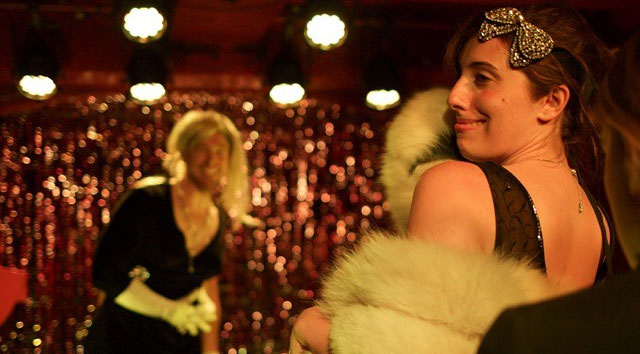
The term speakeasy refers to the illegal trade of alcohol during the American “prohibition” period from 1920 to 1933, and Little Egypt is the name of an exotic dancer from even earlier in the twentieth century. Lucian McGuiness’ show Little Egypt’s Speakeasy draws inspiration from both, to recreate the setting of a nightclub filled with sounds and sights from the 1950s. McGuiness is leader of the handsomest band in town, with four kooky vocalists, and a beatnik MC who provides the thread that helps us imagine the narrative that the show is vaguely built upon. Incorporated flawlessly are two burlesque dancers and the band leader’s comedic brother Don who owns the joint.

There are some stellar performances in the piece. The dancers Kelly Ann Doll and Danica Lee are both scintillating and drop dead gorgeous. The MC and narrator Amos Elroy has the deepest voice imaginable from a baby face, with a use of words and humour that is transportative and quite magnificent. Singer Elana Stone is vibrant in personality and in voice, and her male counterpart Brian Campeau is simply divine with a Chet Baker style sensuality, only with much stronger pipes. McGuiness is star of the show with an extraordinarily sharp presence that exemplifies the irresistible sexual allure of the entire evening.

Don and his club’s story do not quite take hold, but the introduction of a through line for a cabaret show is ambitious and astute. It is almost human nature to want to follow a plot, and the experience is certainly enriched with Don and the MC bringing cohesion to the many separate items presented. Little Egypt’s Speakeasy brings a taste of the bohemian life to Sydney, and it is delicious.

camelotlounge.wordpress.com | www.lucianmcguiness.com

Review: Daylight Saving (Darlinghurst Theatre Company)

darlotheatreVenue: Eternity Playhouse (Darlinghurst NSW), Oct 31 – Nov 30, 2014
Playwright: Nick Enright
Director: Adam Cook
Cast: Helen Dallimore, Belinda Giblin, Rachel Gordon, Ian Stenlake, Christopher Stollery, Jacob Warner
Image by Helen White

Theatre review
Nick Enright’s Daylight Saving was written at the dawn of the 1990s. Director Adam Cook’s straightforward staging in 2014 preserves its original sensibilities, but time has not moved on far enough for the play to feel like a classic. Instead, the production appears outdated despite its very polished execution on all fronts. Enright’s story about the farcical turmoil of well-to-do north shore Sydneysiders no longer bears an edge to rival the more relevant comedies of today, and its “first world problems” context can be quite grating when presented without sufficient mockery.

It is evident that Cook has an excellent understanding of the text and the way dynamics are ingrained into the dialogue. His work feels faithful to the author and to the milieu being referenced, and if produced in ten or so years, the play might come across more charming and nostalgic. Cook’s flair with actors gives the show a confidence that allows it to gleam with impressive professionalism, and the cast is an endearing one, even if the characters they play tend to be annoyingly lightweight. Leads Rachel Gordon and Christopher Stollery provide the narrative with a sturdy anchor, and a surprising authenticity, but they are also less colourful than supporting players, resulting in a loss of emotional connection with the audience.

Jacob Warner lights up the space with his entrance late in the piece as Jason Strutt, a spoilt and insolent tennis star. The part is small, but the actor leaves a lasting impression with enthusiastic and risky comedic choices. Also quirky is Helen Dallimore’s madcap rendition of the desperate girl next door Stephanie, who exists mainly to make the protagonists look good, but Dallimore’s gleeful performance is a fiercely delightful one. Belinda Giblin’s sharp humour as Bunty sees her coming on and off stage like a mini hurricane, and Ian Stenlake’s compelling mix of casanova and goofball is oddly alluring.

Daylight Saving is a story about small things that disrupt very comfortable lives. Its frivolity will certainly appeal to some, but its lightness would also prove unbearable to others. Although Enright’s comedy is not quite universal, the conviction of performances on this occasion is magnetic, and audiences will engage and respond, if only in appreciation for the vibrant energy that fills the theatre.

www.darlinghursttheatre.com

Review: Journey’s End (The Theatre Troupe)

theatretroupeVenue: Seymour Centre (Chippendale NSW), Oct 21 – Nov 15, 2014
Playwright: R.C. Sherriff
Director: Will Usic
Cast: Andrew George, Will Usic, Yannick Lawry, Jack Douglas, Jeremy Bridie, Richard Cotter, Ian Bezzina, Jim Robison, Steve Tait
Image by Toby Zerna

Theatre review
Journey’s End was first performed in 1928, ten years after the end of World War I. Its playwright R.C. Sherriff based the play on his experiences as a British officer in the trenches, and what he had provided is a perspective that feels unusually personal and specific. Focus is moved from the big picture of ideology and territories, to looking at individual lives of those “boots on the ground” as they try to cope with persistent threat, danger and fear.

Will Usic’s work in directing actors is strong. He extracts thoughtful performances from the entire cast, and all are able to instil in their portrayals something that feels genuine and dignified. There are some issues with plot that indicate a need for the very long text to be edited, and while many character interchanges are dynamic and moving, several scenes of dialogue fail to ignite. Poetic license is required but not often utilised in the production. Sherriff’s writing is borne out of stiff upper lip England, so sentiment and passion are extremely restrained, and can make for uncomfortable viewing by today’s conventions.

Usic in the role of Osbourne is the stand out performance of the piece. He is palpably present, and sensitively conscious of conveying the very subtle emotional shifts that exist in those highly precarious situations of battle. His reactions to his comrade’s lines reveal as much as the words themselves do. Also engaging is Yannick Lawry’s humorous take on Trotter, who brings charming levity to the grave proceedings. Lawry pitches his character’s jolliness just right, so as to deliver comedy but also to retain the dark qualities of the narrative. Young Raleigh is played by Jack Douglas with excellent conviction, who maps out the part’s evolution beautifully and convincingly. Leading man Andrew George is believable as Captain Stanhope, with his effortlessly domineering stature, but there is a monotony to his depiction of the role’s depression that detracts from the dramatics of the production.

Set design (uncredited) is ambitious and effective. The stage is pleasantly transformed, and acting space is elegantly accommodated. Sound design (also uncredited) and Toby Knyvett’s lighting are under-explored in the first two acts, which adds to the aforementioned monotony, but both are intelligently conceived and executed thereafter to represent the horrific destruction of lives at war.

There is a delicate balance to be found when discussing the honour of people who serve in battle. Journey’s End does not glorify war, but it shows camaraderie at its deepest. The exaltation of those who have sacrificed can be worthwhile, but the condemnation of war must prevail.

www.facebook.com/TheTheatreTroupe

Review: V.D. (Copanirvana Theatre Co / Sydney Independent Theatre Company)

sitco2Venue: Old Fitzroy Theatre (Woolloomooloo NSW), Oct 28 – Nov 15, 2014
Playwright: Pete Malicki
Director: Lisa Eismen
Cast: Eliza St John
Image by Katy Green Loughrey

Theatre review
This is a story about a woman in love only with two things; herself and alcohol. Pete Malicki’s script is crafted with some skill. His jokes are incessant, and timed with a natural flair. His characters are abused and ridiculed, and no one is presented in a positive light. There is very little beauty and inspiration in the play, but it has a humour that will appeal to many. It is a harsh truth that Australians find alcohol funny. We laugh at people making destructive decisions and falling over due to drunkenness, and V.D. capitalises on that unfortunate part of our culture. It also takes advantage of the fact that making women desperate and dateless gets laughs easily. Sophie Webb is hopeless, almost idiotic, but she is not unrealistic, and of course, our artistic landscape must make room for all kinds of characters no matter how undesirable.

The script is skilfully executed by director Lisa Eismen and actor Eliza St John. Presentation of the comedy is wide ranging, from the very broad to the very subtle. Character development is sometimes uncomfortable in the plot, but the women manage to create a narrative that is often believable, although the show’s ending is quite bewildering. St John’s performance is masterful. She is wild, intuitive and considered, with a conviction that can turn water into wine. Her work is completely absorbing, and she manages to endear herself to her captive crowd, like using sleight of hand techniques to mask the hideous uselessness of the woman she portrays.

The world can be an ugly place, and it is necessary to know its flaws. The theatre is not reserved for snowdrops and daffodils, and artists must not be censored, but audiences look for morals in stories, and maybe even find meaning in listening to what is being said. What V.D. articulates is sometimes true, but also very sad indeed. Life is worth living because of hope, and we need to acknowledge the darkness that we live with, but we must always recognise it as such.

www.sitco.net.au

Review: November Spawned A Monster (Fly-On-The-Wall Theatre / Sydney Independent Theatre Company)

sitco1Venue: Old Fitzroy Theatre (Woolloomooloo NSW), Oct 28 – Nov 15, 2014
Playwright: Alex Broun
Director: Robert Chuter
Cast: James Wright
Image by Katy Green Loughrey

Theatre review
Morrissey’s music courses through the veins of his fanatic devotees, and William is a young Melbournite who has the rock star’s records underscoring key events of his life. We meet him at a time of mourning, having recently encountered a deep personal loss. The struggle for clarity, direction and a new lease on life is a familiar experience, and Alex Broun’s script is an honest representation of that shared phenomenon. Melancholia is created beautifully in a plot that takes us from everyday banality to extraordinary circumstances, with gentle humour and a generous slew of Morrissey songs that provide poignant irony, and a remarkable coolness.

Also very cool, is Benjamin Brockman’s lighting design for the production, which gives a sense of differentiation between scenes so that we perceive a variety of moods as the leading man goes through scenes of transformation and evolution. Brockman’s work is intelligent and sophisticated, giving the show a visceral sensuality that connects with Morrissey’s omnipresence. Robert Chuter’s direction of the one-man show cleverly finds every opportunity to manufacture shifts in tone, preventing the production from ever being monotonous in spite of its monologue format. Chuter finds nuance in William’s journey and depicts the human condition at a time of sorrow with great sensitivity.

In the role of William is James Wright, who has the challenging task of memorising an eighty-minute play entirely on his own, along with singing a big selection of the idol’s highly idiosyncratic greatest hits at regular intervals. Wright is an enthusiastic performer who has the ability to be engaging, but his confidence levels are inconsistent, and on this stage, there is simply nowhere to hide when the actor’s consciousness is fractured, however briefly. Notwithstanding its energetic rhythm, November Spawned A Monster is chiefly about pain, which Wright does not sufficiently embody. It is almost a metaphysical quality that can be perceived when a person lives with a broken heart, and on the stage, that quality can be forcefully seductive, but that brand of charisma which we can see in Morrissey, is sadly absent in this show.

“Youth is wasted on the young”, said George Bernard Shaw, but William’s story is a reminder that feeling stranded in one’s youth is important for achieving an understanding of grief, and therefore, gaining an appreciation of all that is significant in life. It is not all a bed of roses, but that’s how people grow up.

www.sitco.net.au

Review: Blue/Orange (Ensemble Theatre)

ensembletheatreVenue: Ensemble Theatre (Kirribilli NSW), Oct 23 – Nov 29, 2014.
Playwright: Joe Penhall
Director: Anna Crawford
Cast: Ian Meadows, Dorian Nkono, Sean Taylor
Image by Clare Hawley

Theatre review (originally published at Auditorium Magazine)
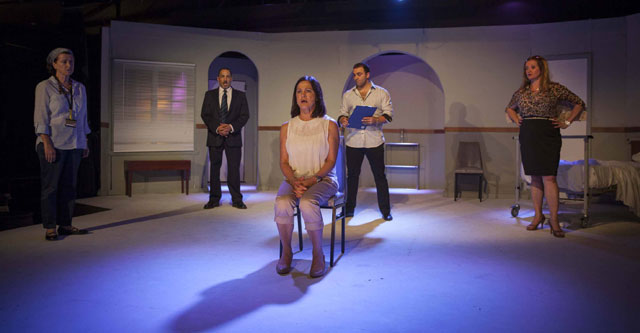
Health services are a crucial part of all civilisations, where access to medical professionals is a basic human right, regardless of class and creed. The subject of mental health is a growing area of concern in the West, with awareness and understanding of relevant issues fast improving through our communities. Joe Penhall’s script centres around Christopher, a mental health patient with the UK’s National Health Service. Surrounding him are two doctors, Bruce is the younger of the pair, idealistic but naive, and Robert is the authority figure of the hospital, seasoned and carnivorously ambitious. A fight ensues with Christopher caught in the middle, and as the plot unfolds, the play’s themes expand simultaneously. Christopher’s African ethnicity and low social status are the linchpin that brings into discussion, not just the intriguing process of psychiatric diagnosis and the health industry in general, but also race relations in contemporary settings and the machinations of authority (and its betrayal) in our daily social structures.

The ideas are big, but Penhall’s story is precise and simple. His captivating dialogue is rich with humour, controversy and intellect, consistently entertaining our senses and challenging our ethics. Some portions could be more succinct, but Penhall’s words and their rhythms are brilliantly crafted, as evidenced by the thrilling and energetic narratives that the show’s cast and director are able to create from the text. Anna Crawford’s direction is decidedly wonderful. The comedy of the piece is powerfully delivered, and the immense joy of being in an auditorium with laughter erupting at every turn is simply theatrical magic. Crawford introduces a daring freedom that encourages her actors to make risky choices, and much to our delight, they all seem to work. Likewise, the many scenes of altercation are loaded with explosive drama, always with a threatening tension and dangerous intrigue. Philosophical and ethical arguments in the work are the ingredients that make it feel substantial, and they are perfectly tuned, disallowed from disrupting dramatic flow, but often given an ambiguity that makes the ideas seductively confronting.

The use of space is however, not always elegant. Actors are frequently positioned so that their facial expressions are not available to big sections of the audience, which can be frustrating as well as distracting. Set pieces are composed of generic furniture elements from public sector offices, all terribly unattractive. The space has not been designed to be a realistic one, yet the several chairs and tables seem to use the notion of realism or accuracy as a convenient justification. A work of this calibre requires greater imagination and creativity in its visual design, and not be allowed to pale in comparison.

In the role of Robert is Sean Taylor, whose virtuoso performance bears the kind of astonishing glory that leaves a lasting impression. The most dangerous villain is the one who combines truths with lies, so that you are kept on his side, giving him benefit of the doubt until too late. Taylor makes it hard for us to know if his character is an evil racist doctor, or a progressive thinker, and our struggle in trying to figure him out is a masochistic pleasure. The actor is full of confidence and his presence is all-consuming; we cannot keep our eyes off of him. Taylor’s marvellous voice provides all that we need to know, and his face expresses everything his character wishes, but also contradicts the doctor’s intentions.

The show is thoroughly rehearsed, with every actor appearing to know exactly what they wish to achieve, yet the stage feels to be a spontaneous one. Dorian Nkono is extremely lively and likeable as Christopher, the patient who may or may not be schizophrenic. Nkono’s control over his physicality and the way he uses movement enrich the role and provide a vibrant energy that elevates the play to a level of theatre that is more than words. His sense for comedy is outstanding. Nkono is a truly funny actor whose approach ranges from subtle to slapstick, but an emphasis on storytelling makes his work authentic and compelling.

The young Dr Bruce is played by Ian Meadows who has the arduous task of maintaining composure as the only unassertive personality in the show. He often gets overwhelmed by his gargantuan counterparts, but he resists irrelevant exaggeration, and delivers a performance that is ultimately a truthful one. Meadow’s work is less flamboyant, which means that the ideological arguments he represents can get subsumed at certain points, but he manages to find a climax at the concluding moments to match in energy and produce an impressive ending to the piece.

Racism and mental illness are contentious issues that elude easy definition. We understand them in abstraction, but how they are discussed and dealt with in reality involves constant negotiation between vacillations of subjectivities. In Blue/Orange,  the powerful and the powerless collide in a system that attempts to be fair, just and democratic. We might all want the best for the world that we share, but our perspectives are different, and finding agreement on a unified destination becomes problematic. The doctor should know what is best for the patient, but the patient is not without rights and opinions. In assigning authority to some, society risks the removal of rights from others, but the ironic creation of power structures seems to be the only mechanism we have for finding harmony.

www.ensemble.com.au

Review: Five Women Wearing The Same Dress (Act IV Theatre Co)

activtheatreVenue: TAP Gallery (Darlinghurst NSW), Oct 28 – Nov 2, 2014
Playwright: Alan Ball
Director: Deborah Jones
Cast: Nadim Accari, Kaitlin DeLacy, Chloe McKenzie, Eleanor Ryan, Melinda Ryan, Wendy Winkler
Image by Tim Levy

Theatre review
Weddings are traditional affairs that expose the roles that we play for others in daily life, and our obligations as friends and family members. Participation in weddings often involves some level of reluctance, and most would probably prefer to be some place else doing something less painful. Alan Ball’s fabulous script is about the interactions between five bridesmaids after a wedding ceremony. The women have distinct personalities, with nothing in common, except for the hideous purple dress forced onto their bodies, and an unconcealed dislike for the bride. The play’s context positions the women in relation to the concept of marriage, and we observe how the supposed universal ideal of matrimony is no longer relevant to modern lives. Ball’s fascinating characters reveal their individual idiosyncrasies and it becomes clear that fulfilment and happiness might have little or nothing at all to do with marriage.

Ball’s writing is entertaining, whimsical and punchy. The charming language of the American South is showcased beautifully, and the women’s lives are vividly imagined, with a familiarity that allows us to find points of association. Their worlds seem real, because Ball exposes their imperfections in a way that demonstrates a humanity that we can relate to. Direction of the work is provided by Deborah Jones who brings a clarity to narratives and motivations. She keeps energy levels high, but there is a stasis to the atmosphere that prevents the show from providing a more dynamic experience. The comedy is written well, but it is not a uniformly strong cast, so the results of delivery are mixed and chemistry is not always fine. It must be noted that although some performances are less effective, every actor is clearly full of conviction and focus, and the stage is always an engaging one.

Eleanor Ryan is outstanding in the role of Mindy, a jovial lesbian who exemplifies the liberated individual in a world overrun by peer pressure and broken promises. Ryan’s comic timing is a highlight of the production and her creation is the most endearing of the group. Her style is much more flamboyant than her colleagues, but she retains a grounding authenticity that keeps her character believable and interesting. The complex role of Georgeanne is played by Wendy Winkler, who captivates with a clever blend of tragedy and irony. Her depiction of strength and optimism in the role’s banal existence is delightfully inspiring.

This is a play about women from a man’s perspective, and even though it is debatable if the writer knows the gender well, he certainly does understand the human condition. The anxieties it expresses and the desires it explores are absolutely real for many of us. Five Women Wearing The Same Dress often feels like light entertainment, but what it leaves behind is altogether more deep and meaningful. We think about the choices that present themselves, and the ones that seem elusive. The decisions that we make shape the life that we live, but so do the circumstances that seem to be beyond control. When a wedding invitation arrives, one can only choose to accept or decline, but to respond with honesty and truth is infinitely more perplexing.

www.activtheatreco.com