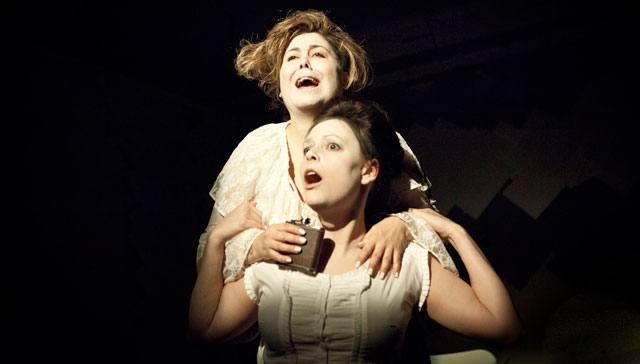
Review: Orphans (Old Fitz Theatre / Red Line Productions)

oldfitzVenue: Old Fitzroy Theatre (Woolloomooloo NSW), Apr 14 – May 9, 2015
Playwright: Lyle Kessler
Director: Anthony Gooley
Cast: Danny Adcock, Aaron Glenane, Andrew Henry
Image by Rupert Reid

Theatre review
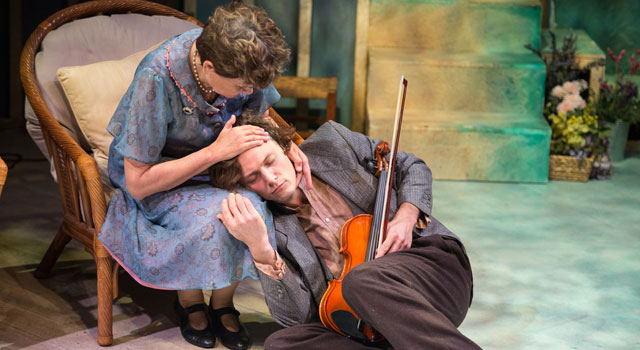
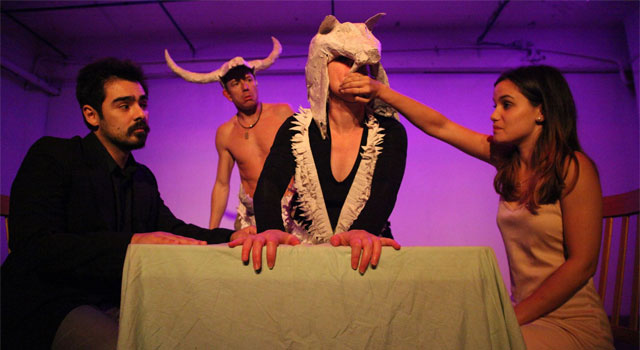
Many have likened love to air, associating both with an absolute necessity for survival. Unlike air however, love can manifest in many unpredictable ways, and in Orphans, we see how the best of intentions can become cruel behaviour responsible for untold suffering. Phillip and Treat are brothers who have grown up without parents. They share a close mutual reliance, but without any guidance, their instincts have created young men who are dysfunctional together and apart. Beneath the boisterous tone of Lyle Kessler’s writing, is a tender depiction of relationships that has the potential to move and to connect with every person’s experiences of difficult family dynamics. We all have an understanding of the imperfections that exist in our homes, and the accuracy at which the brothers’ problematic and insular world is explored, allows for thorough identification and empathy.

The production is directed well by Anthony Gooley, who ensures that characters are complex and fascinating, with an amplified realism that provides a sense of familiarity even though the circumstances being staged are fairly extreme. It is an unusual and unpredictable story, relayed with vigour and heightened drama, but we do not perceive a great sense of purpose to the director’s work, other than to establish an atmosphere of enthrallment for the duration of the play. We are gripped for its entirety but leave without discovering great insight that matches the gravity of what is seen. The character of Harold is a father figure who destabilises the brothers’ cozy dwelling, performed by Danny Adcock with excellent conviction and strength, but the role is positioned neither enigmatic enough nor believable enough. Harold’s presence does not always make sense in the narrative, and our questioning of his authenticity is an unfortunate dissuasion.

Aaron Glenane turns in a magnificent performance as the younger brother, Phillip. The actor is marvelously nuanced in his intensity, expressing with great efficacy an exhaustive range of psychological possibilities and physical attributes, completely captivating in a beautifully embellished characterisation of damaged innocence. Glenane’s approach is adventurous and playful, but also sensitive and studied. He understands chemistry instinctively, and fosters a strong bond with colleagues and audience that keeps us invested in Phillip’s plight. Offering a macho and manic counterbalance is Treat, the older brother played by Andrew Henry with a threatening and exuberant energy that keeps us anxiously seduced. The largeness of his personality keeps us on the edge, tense in anticipation of his next outburst of trespass or feelings. It is a powerful performance, but Henry’s final scene requires further finessing. A transition of emotion occurs too suddenly and unexpectedly, taking lustre away from the Orphans‘ concluding moment of piquancy.

We encounter strangers every day, but letting new people into our lives is a rare occurrence. The desire for a sense of permanence and security means that we prevent new influences from infiltrating, whether positive or negative. Phillip and Treat had made a habit of their suffering, unaware that a better way of life was within their grasp. Inspiration resides everywhere, and we must be able to welcome it in when the right ones present themselves, so that life can be lived to the fullest, and with any luck, be survived by a legacy of something good.

www.oldfitztheatre.com

Review: Rocky Horror Show (Lyric Theatre)

rockyhorrorVenue: Lyric Theatre (Sydney NSW), from Apr 11, 2015
Music, lyrics and book: Richard O’Brien
Director: Chris Luscombe
Choreographer: Nathan Wright
Cast: Angelique Cassimatis, Nicholas Christo, Brendan Irving, Kristian Lavercombe, Amy Lehpamer, Stephen Mahy, Craig McLachlan, Bert Newton, Jayde Westaby

Theatre review
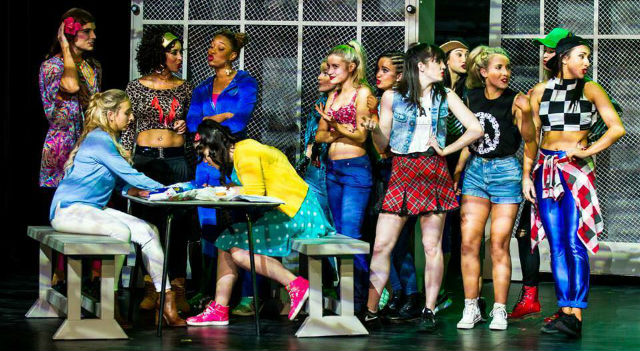
The Rocky Horror musical and its Australian star are icons within their own realms. They have their loyal followings, all coming with fixed expectations that have been cultivated from years of interaction and fandom. There is nothing at all that is unpredictable in this particular incarnation. Richard O’Brien’s material has dated and Craig McLachlan is no shinier a star than he was thirty years ago, but no ticket holder anticipates seeing anything out of the ordinary, other than a very well iterated version of the usual fare.

The production provides as much colour and fun as a dvd viewing of the 1975 film could deliver. Things feel old-fashioned but charming, and while we no longer respond to the show’s shock factor, its kitsch value is still unique and remarkable. The gender and sexual subversion that is fundamental to Rocky Horror‘s success is now passé and much too mild to resonate with the same sense of danger experienced four decades ago, but it provides context for very blue comedy, which this particular Dr. Frank N. Furter does not shy away from. McLachlan’s comic timing is not the key to his enduring popularity, but his determination and exceptional commitment to the stage carries an infectious joy that allows the two hour show to occur in the blink of an eye. The performer leads the cast with an exuberant and playful energy, but lacks the elegance of Tim Curry’s legendary rendition on celluloid. McLachlan’s singing is surprisingly strong, but the more memorable numbers are presented by Amy Lehpamer (Janet Weiss) and Kristian Lavercombe (Riff Raff), who impress with a kind of polish specific to stars of musical theatre, complete with piercing, unwavering vocals and irresistible pizzazz that entertains all from front row up to the nosebleeds.

Theatre, like life, needs occasional lashings of frivolity to provide some balance to the inevitable gloominess that afflicts everyone from time to time. Janet and Brad go through a profound metamorphosis in the story, having seen things that were previously unimaginable, and come away with lessons that are unfathomable to many. Some of us hope for that kind of poignancy every time we devote time and money to the arts, but others prefer to leave the auditorium with nothing more than a few laughs and several delightful song and dance sequences. Rocky Horror Show is lightweight but it does not pretend to be anything much more, and if Frank N Furter has lost his edge, we should probably be grateful that androgyny and gender fluidity is no longer an effective freak show centrepiece.

www.rockyhorror.com.au

Review: Seeing Unseen (Old 505 Theatre)

old505Venue: Old 505 Theatre (Surry Hills NSW), Apr 8 – 26, 2015
Devised by: Gareth Boylan, Michael Cullen, Kerri Glasscock, Michael Pigott
Director: Gareth Boylan
Cast: Michael Cullen, Kerri Glasscock, Michael Pigott

Theatre review
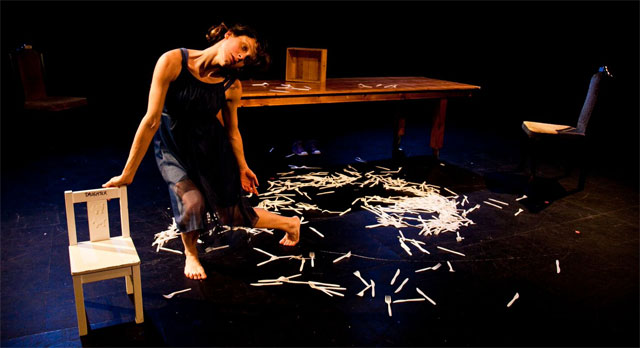
Nature and technology are a convenient dichotomy. We like thinking that they are mutually exclusive, as though nature has no part to play in the advancement of technology, and we imagine an ideal state where the primitive is pure and only good. This romantic notion of a regression of time that could bring us back to some place better, is the catalyst for many of the ideas in Seeing Unseen. The work is surreal and abstract, and slightly science fiction in style, but the universe it depicts is familiar to us. It is concerned with our daily lives, with all our petty interests and preoccupations, except it amplifies and articulates the parts that should be automatic and unheeded, and everything becomes strange. The play is about relationships, human volition, memory and of course, technology. Its narrative is an odd one, and even though we understand all that is happening, the key to its purpose can only be found late into the piece. The mysterious nature of its structure is a hugely satisfying one that keeps us on our toes, and makes our minds work overtime, trying to put pieces together, and to construct meaning out of a deceptive and fractured text.

Performance styles by the outstandingly cohesive yet individually brilliant trio of Michael Cullen, Kerri Glasscock and Michael Pigott, run the gamut from soap opera naturalism to high art avant garde. The fluidity of form, and confidence in composition means that its very original mode of presentation, although unique and deeply interesting, never feels forced or patronising. We know that we are witnessing brave creativity in unorthodox motion, but it is engaging and friendly. Gareth Boylan’s direction is sensitive to his audience’s needs and capacities. He keeps us satisfied by providing our senses with what they crave, but always adds an extra dimension that causes a little disorientation. We are offered more than we bargain for, and it is thrilling. There is however, a sense of repetition in the plot that can outstay its welcome. The premise of the work is basic, and the way it manifests on stage does not vary enough over the hour long duration, and things become predictable towards its end.

Seeing Unseen gives our hearts and brains a good work out, leaving no place for feelings to hide, and no moment for the head to dull. The show is quiet but tense, and it lures you into its unusual explorations, sharing its passionate sense of wonder, but always holding back slightly and never explaining too much. If one is interested only in the moral of the story, there is frankly not a great deal to write home about, but understanding how this small team of artists turn energy, time and inspiration into a magical communal experience in an empty space, is terribly impressive. Art, like technology, is only meaningful when it moves forward, and on this occasion, the search for a new frontier has returned excellent results.

www.venue505.com/theatre

Review: The Anzac Project (Ensemble Theatre)

ensembleVenue: Ensemble Theatre (Kirribilli NSW), Apr 2 – May 10, 2015.
Playwrights: Geoffrey Atherden (Dear Mum And Dad), Vanessa Bates (Light Begins To Fade)
Director: Mark Kilmurry
Actors: Anita Hegh, Eric Beecroft, Amy Mathews, David Terry
Image by Clare Hawley

Theatre review
Sacred cows insist on their stories being told repeatedly. Communities ascribe reverential value to our heroes, and lest we forget, their narratives are rehashed and recounted time and time again. With each passing year and with each new conflict, our attitudes about war, soldiers and nationhood change, and how we discuss these icons might alter accordingly but in the case of Australia’s Anzac legend, its social significance is guarded by a fierce loyalty that keeps its myth exceptionally pristine.

Ensemble Theatre’s The Anzac Project is a centennial commemoration of the 1915 Battle of Gallipoli, an event deeply meaningful to many Australians. Comprised of two plays, Geoffrey Atherden’s Dear Mum And Dad and Vanessa Bates’ Light Begins To Fade, the production attempts a fresh look at the hundred year story, with both pieces featuring characters from 1915 and 2015, juxtaposing time and tide to find a new way to represent our relationship with that monumental event in World War I. Artistic and subtle use of abstraction gives the work a sense of sophistication, but Atherden’s more prominent reliance on building a conventional narrative around a soldier is emotionally engaging, while Bates’ more sceptical approach, is too muted for dramatic effect, even if it is conceptually seductive. Mark Kilmurry’s direction is always respectful of the subject at hand, but he finds many opportunities to bring colour and energy to prevent the production from plunging too deeply into sombreness. His skill at creating an active and vibrant stage is to be admired, and his cleverness and flair with tricky scene transitions must not be left unacknowledged.

The cast of four is passionate and lively, with David Terry’s exuberance often stealing the show. The actor’s playfulness delivers a host of surprises, along with cheeky laughs, to what could have been a predictable retelling of these old tales. Anita Hegh’s versatility comes into full view with her portrayal of seven characters, each with a distinctive flavour and individual authenticity. The performers are required to constantly shift between roles, and although executed well, it demands of the audience a concentration that should be spent on more nuanced aspects of the plays.

As long as young people are being sent off to fight, we will always look upon sacrifices of our military organisations as worthy. Today, we are wary of making any statement that might be interpreted as a glorification of war, but by the same token, we hang on to the belief that our soldiers must be honoured. The tension between good and evil in this case is rarely explored sufficiently, perhaps because this Pandora’s box is a taboo that can never be breached. Art has the ability to bring intellect into any space, and to suggest alternate methods of exploring conventional thought, but sometimes the level of courage needed to articulate the unspeakable and profoundly unpopular, is simply beyond the capacity of any single person.

www.ensemble.com.au

Review: Jerry And Tom (Insomniac Theatre)

insomniactheatreVenue: Exchange Hotel (Balmain NSW), Apr 9 – 30, 2015
Playwright: Rick Cleveland
Director: Maggie Scott
Cast: Boris Bkric, Steve Maresca, Andrew Mead
Image by GiGee Photography

Theatre review
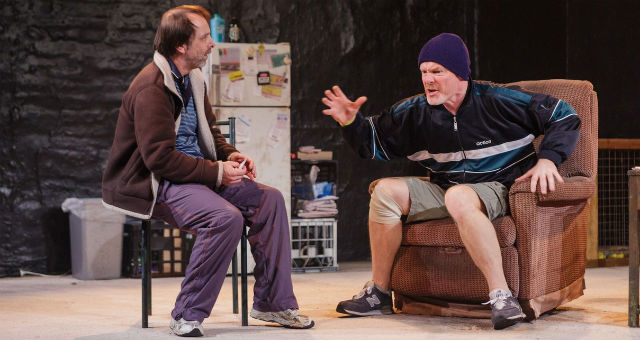
Rick Cleveland’s Jerry And Tom is a fairly uncomplicated comedy about two family men who also happen to moonlight as ruthless hitmen. We go from one humorous scenario to another, depicting their gruesome murders, all with a charming Bronx-type accent. Maggie Scott’s direction is a simple, no frills approach that focuses on character dynamics and chemistry. Pacing of the piece is jaunty and very light, with a delightful clarity in the way its plot is conveyed. The comedy is consistent but mild, and given the exaggerated context, a greater sense of irony would probably provide the show with a stronger edge.

Performances are polished and compelling, with all three actors showing good commitment and enthusiasm. Boris Brkic has a laid-back charm that makes his portrayal believable, and a keen sense of timing that allows a hint of authenticity to elevate his role Tom from mere caricature. Jerry is played by Steve Maresca whose infectious enjoyment of the stage connects with us, and although the actor’s serious side is quite obviously less developed than his funny side, he holds his own against more seasoned counterparts. Andrew Mead plays the remaining characters with excellent energy, although more versatility is required for a greater differentiation between personalities. There is a general cautiousness that feels too safe for the material at hand. We need a playfulness to meet with the reckless attitude of the narratives, but the performers seem too careful or apprehensive perhaps, to give the show the wild abandon it deserves.

Music from the television series Dexter underscores most of the blacked out scene changes, but unlike Dexter, we explore very little of the “dark passenger” that compels Jerry And Tom to do the things they do. Without enough psychological bite, the show ends up feeling a little too frothy, and after 90 minutes of senseless killing, we try to find meaning but discover emptiness instead. The production is not always satisfying, but the good work of karma does prevail in the story, and sometimes, that is all than we can bargain for.

www.facebook.com/insomniact.page

Review: Endgame (Sydney Theatre Company)

Venue: Roslyn Packer Theatre at Walsh Bay (Sydney NSW), Mar 31 – May 9, 2015
Playwright: Samuel Beckett
Director: Andrew Upton
Cast: Tom Budge, Sarah Peirse, Bruce Spence, Hugo Weaving
Images by Lisa Tomasetti

Theatre review (originally published at Auditorium Magazine)
On stage, artists can communicate ideas that they believe to be of interest to the wider community. They can also use it as grounds for exploration, to develop an improved understanding of the nature of their practice, or to investigate issues surrounding our lives. Stories are shared and concepts are illustrated, that may or may not connect with audiences but we never quite leave the theatre the same as when we first arrived. Samuel Beckett’s Endgame is light on narrative, but heavy on inventiveness, guided by a profound curiosity that brutally interrogates the fundamentals of existence. It is the most self-aware of texts, constantly drawing attention to the very act of writing, and also to the fragile artifice of its theatricality. If philosophy is its fixation, then any sense of conventionality must be removed from its structure, in order that everything may come under scrutiny, including basic notions of character and plot.

The play is both accessible and inaccessible. It challenges the way we read, and how we make sense, in the theatrical space, of language and signs, but it does not intend to alienate. Director Andrew Upton retains the integrity of Beckett’s words, sometimes impenetrable but always marvellous, and creates around them an intoxicating live experience that fascinates at every moment. Unreservedly intellectual, it is no surprise that one can be made to feel out of their depth at times, but the work’s density constantly morphs so that a switch in tone or subject inevitably occurs, and we become engaged again, only more thoroughly than ever, as our capacities gradually grow in their level of receptiveness. Upton’s voice increases in clarity over time, and the piece gains power accordingly.

Hugo Weaving is mesmeric as the hideous and hateful Hamm. Even in a wheelchair with legs bound and eyes obscured behind opaque spectacles, the star is irresistibly charismatic, and completely enthralling. Edith Piaf was said to have declared that she could sing the phone book and make it sound great. Similarly, Weaving captivates us with every word, even when we find our minds struggling to match the depth of what is being expounded. The extreme meticulousness of his approach seizes our attention, and the wild and unpredictable flourishes he builds into every scene and stanza is truly magnificent to witness. Endgame discusses the distinctions between meaninglessness and meaningfulness. Under Weaving’s spell, all that unfolds feels meaningful, and we are encouraged to seek a cerebral equivalent to the emotional sensations delivered to our gut. Also turning in a stunning performance is Tom Budge in the role of Clov, the voluntary slave who waits on Hamm for no straightforward reason. The actor opens the play in a wordless sequence, impressing us with his extraordinary physical expression. Part mime and part dance, the beauty of his execution shines in spite of the depressively ominous context he helps set up. Budge goes on to prove himself sensitive to the needs of black comedy, constantly toying with the delicate balance between morbidity and humour, much to our twisted delight. His dynamic range is quite exceptional, and the character he creates is fascinating from every perspective.

The single-act play does not require nor permit much flamboyance with design, but there is no shortage of creativity on show here. Nick Schlieper’s set is a dungeon built so horrifying, it could only have been dreamt up by a healthy dose of genius irony. The generous Roslyn Packer stage is expertly curtailed to evoke the oppressiveness explored in Beckett’s writing, and that shrunken performance space provides amplification for the performance energies so brilliantly harnessed. Lights also by Schlieper, and sound by Max Lyandvert are restrained but unquestionably satisfying, always in subtle control over our sensory reactions. Renée Mulder flexes her costume design muscles within the narrow demands of the piece, embellishing characters with objects and textures of interest and creating extraordinary colours out of a dark, sombre vista.

Difficult texts must exist, or our artistic landscape is worth nothing. If everything is within one’s grasp, one ceases to evolve. Endgame is about two hours long, but it contains wisdom from entire lifetimes by several outstanding minds. This production seduces with entertaining touches and intriguing elements, then presents life’s big questions in rarely articulated ways. If its propositions are unfamiliar, revisiting them seems necessary, like a good book that engages and bewilders, it tempts you at its end, to return to the start for another bout.

www.sydneytheatre.com.au

Review: Pvt. Wars (Dudley St Productions)

dudleystVenue: Old Fitz Theatre (Woolloomooloo NSW), Mar 17 – Apr 5, 2015
Writer: James McLure
Director: Mark Lee
Cast: Michael Booth, Thomas Campbell, Tom Oakley
Image by Rupert Reid

Theatre review
In James McLure’s Pvt. Wars we visit three injured soldiers at a rehabilitation facility. The play was first staged in 1979, but there is no clear indication of the time at which the action takes place. It could be the aftermath of any war, because the ramifications of sending young people to battle never seem to change. Some return victorious, but many end up dead or damaged. It is not a fiercely anti-war piece, but McLure’s writing does place focus on these individuals’ physical and psychological afflictions. Comedy is created from the interplay of their mental dysfunctions, as well as from the tensions derived from their divergent social classes and from the points of dissent, and assent, as cohabitants of the hospital.

Direction of the work by Mark Lee is gentle and elegant. The resultant work is funny, but its laughter comes naturally from the honest exploration of characters, rather than it being a desperate priority. The show is about trauma, but it is kept light-hearted by an evasive masculine approach to pain. The three men come face to face with each other’s terror, but they skirt around the issues, rarely able to address them directly.

Michael Booth plays Silvio, the overcompensating alpha male who brings energy and a sense of danger to the stage. The actor appears to be distracted at several points, but his timing is effective nonetheless, and the sense of barely hidden distress and anxiety he introduces, is a significant contributor to the dynamic pace of the show. The more sophisticated Natwick is performed by Thomas Campbell, an actor with a disarmingly sensitive presence that provides an air of authenticity to proceedings. His very regular sequences of letter-writing to Natwick’s mother is let down by poor sound design, but his warmth is an inviting quality that we connect well with. Tom Oakley’s character Gately sits centre stage for virtually the entire duration, repairing an old radio. He is perennially hopeful, but struggles every day to find direction and meaning. Oakley’s portrayal resists theatrical gesticulation and embellishment, but conveys that confused determination beautifully, with a confident and touching simplicity.

The play comes to a conclusion that intends to be poignant, but a sudden loss of clarity interferes. The story surprises us at the end when it takes an abstract and abrupt turn, leaving us to our own beliefs about war, soldiers and manhood. It does not make any persuasive arguments to change our political affiliations, and its social commentary is subtle. Perhaps all it requires is for us to remember that individual lives are affected, often dramatically, while we become increasingly numbed by headlines that are no longer able to occupy more than a few moments each morning.

www.oldfitztheatre.com

Review: Jumpy (Sydney Theatre Company / Melbourne Theatre Company)

Venue: Sydney Opera House (Sydney NSW), Mar 26 – May 16, 2015
Playwright: April De Angelis
Director: Pamela Rabe
Cast: Laurence Boxhall, Caroline Brazier, John Lloyd Fillingham, Brenna Harding, Tariro Mavondo, Marina Prior, David Tredinnick, Jane Turner, Dylan Watson
Images by Brett Boardman

Theatre review
With each scene of Jumpy, pieces of furniture travel across the stage on castor wheels, moving past its protagonist Hilary. She is fifty of age, her only daughter Tilly has turned sixteen and is beginning her own sex life, and we meet them at a time when Hilary has come to realise that a period of stasis is coming to an end. Like the set that keeps rolling past, life seems to have left her behind while she dutifully plays the role of mother and wife. April De Angelis’ script is concerned with women who had grown up with second-wave feminism, particularly those from the era marked by the legacies of Germaine Greer, Gloria Steinem and Helen Reddy. Idealism and militancy fades or perhaps evolves into a modernity that bears little resemblance to the dreams that were birthed, like Hilary, half a century ago. Tilly is in some ways, a disappointment for her mother. De Angelis is critical as well, of the young woman’s need to build her identity around the male gaze. She allows many of her decisions to be determined by a need for the affections of men, and the dissatisfaction she derives from those behaviour evade her self-awareness. Hilary is confounded, and we all wonder how it has come to be that a generation can grow so contrary to its parental intentions. The text does not however, go so far as to say that child-bearing is pointless (although there is a tendency to characterise some parents as being selfish and afraid of loneliness), but we are certainly encouraged to assess the choices Hilary had made for herself.

The context is simple, with a sense of the everyday found in all aspects of its plot. Characters and events are familiar, but De Angelis’ ironic humour is omnipresent. Her comedy depicts middle class existence with a healthy cynicism, and is indeed, thoroughly entertaining. Each personality’s flaws are exposed shamelessly, but the writer’s compassionate approach prevents anyone from turning into clowns or villains. In fact, we identify with all of them, and find most to be very charming. Pamela Rabe’s direction is nuanced and gentle, with no big political proclamations and few dramatic gestures. Relationships are established convincingly, and every narrative is delivered clearly to make us care, and to keep us engaged.

Star of the show, Jane Turner’s outstanding ability and likeability as one of Australia’s top comic performers is well utilised in the production. We are always on her side, and we laugh whenever she wants us to. Turner’s trademark vaudevillian style of performance keeps her at some distance from her role, but there is enough authenticity and commitment in her portrayal to keep things believable. Reasons for the production not being transposed to an Australian context is unclear, but Turner’s British accent is less than satisfactory. It is an unnatural and overly posh affectation that can be uncomfortable to hear, and slightly inappropriate for the story being told. Other cast members are more adept speech-wise, and every supporting character is colourfully performed and memorable. Hilary’s best friend Frances is played by Marina Prior whose captivating vibrancy and self-deprecating humour keep the show buoyant. The contrast, and similarities, between the two middle-aged women are fascinating to observe, and their friendship is deeply meaningful, even though other relationships are given greater weight in the text. Also impressive is Tariro Mavondo’s performance as Lyndsey, the sixteen year-old new mother who treads the fine line between ignorance and purity, spouting pearls of wisdom when least expected. A heart of gold can be tricky to inhabit, but the actor’s effortless charisma turns her character’s innocence into a thing of beauty, and poses a challenge to the way we think about teen moms.

The production is a hugely enjoyable one that keeps our attention firmly under its control. There is a mildness in tone that reflects the theme of maturation, but it finds ways to amuse us from start to end. Its message arrives in the form of questions, but it leaves answers ambiguous. Middle class lives are full of anxiety, and Jumpy shows that the state of peacefulness does not emerge spontaneously with age and happiness does not necessarily materialise upon the fulfilment of duties of one’s choosing. The show does not hold the key to peace and happiness, but it provides inspiration, or at least a reminder, that it is never too late.

www.sydneytheatre.com.au | www.mtc.com.au

Review: A Little Night Music (Sydney University Musical Theatre Ensemble)

muse2Venue: Seymour Centre (Chippendale NSW), Mar 25 – 28, 2015
Book: Hugh Wheeler
Music & Lyrics: Stephen Sondheim
Director: Alexander Andrews
Cast: Stuart Bryan, Emma Elsley, Owen Elsley, Harry Flitcroft, Louise Flynn, Sarah Gaul, Bronwyn Hicks, Christie New
Image by Wenray Wang

Theatre review
Desiree and Frederik are middle-aged but they are yet to find fulfilling relationships. Sondheim’s A Little Night Music is a very adult love story that contains more farce than it does romance, and speaks to a slightly jaded audience that understands the complexities and illusions of love. The text is an intelligent but mischievous one, offering interesting insight into the personal aspects of mature lives. The most popular song of Sondheim’s entire oeuvre, “Send In The Clowns” is a prominent feature that encapsulates the experience of longing and regret. The decision by MUSE (Sydney University Musical Theatre Ensemble) to stage the work is ambitious on many fronts, but the greatest challenge is for its very young team to convincingly portray the show’s main characters who are at least twice their age. The humour and pathos of the narrative, and its musical numbers, are heavily nuanced and demanding of any cast, but to expect those who have yet to taste all the flavours of life to interpret A Little Night Music with depth and poignancy is a very tall order indeed.

Director Alexander Andrews may not have the most seasoned performers at his disposal, but his flair for musical theatre is undeniable. Andrews is careful to keep the stage active with movement and surprise, so that we are visually engaged throughout the three hour production. Dramatic tension is not always present, and the piece often lacks exuberance, but sequences are paced quickly, with fresh events unfolding consistently to retain our attention. Stronger performers include Christie New, who creates a very funny Charlotte Malcolm, endearing us with sharp self-deprecation, and a knack for delivering powerful punchlines in both speech and song. Also memorable is Madame Armfeldt, the brilliantly zany matriarch presented by Sarah Gaul with gusto and flamboyance. Stuart Bryan cuts a fine figure as the show’s leading man, but his approach is too reserved, and his self-consciousness distracts from Frederik’s emotional journey. Quality of singing in the production is accomplished. Clare Richards’ powerful soprano is a standout, and Conrad Hamill’s work as Music Director, while being fairly rigid is delightfully detailed and precise.

Mr Sondheim’s work is quite literally second to none. He is an original and an undisputed genius, whose creations are ubiquitous and magnificent. Good productions of his body of work make for sublime nights of unparalleled theatrical pleasure, but lesser attempts can still be enjoyable by virtue of the sheer prowess of foundations already laid down years before. Musical theatre is rarely reinvented, and young practitioners of the genre subject themselves to emulating successes they had witnessed before. There is a sense of duplication that exists, whether effort is put into matching what had been great, or intentions are to supercede prior manifestations. It is a true conundrum, when one considers the true essence of art and the pursuit of all that is new.

www.museatusyd.com

Review: Idle Lies (Doll Parts)

dollparts1Venue: The Nag’s Head Hotel (Glebe NSW), Mar 23 – 29, 2015
Playwright: Erin Brookhouse, Jason Pizzarello, Adrian Yearwood
Director: Erin Brookhouse
Cast: Romy Bartz, Jack Marsden, Caspar Hardaker, Jaceline Marriott, Isaac Reefman

Theatre review
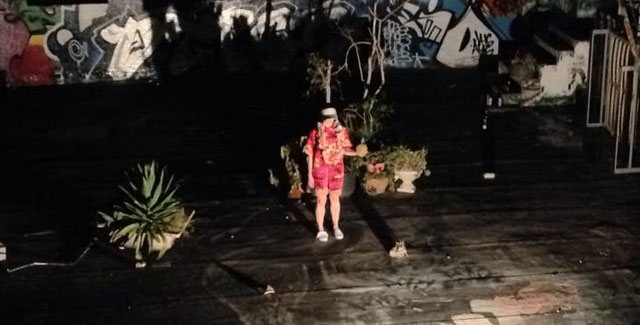
Erin Brookhouse’s Idle Lies is a multidisciplinary exploration of performance that attempts to redefine the experience of theatre. The venue is an old pub, and the action takes place in several conjoined rooms. A four-piece band is in a corner, providing jazzy versions of familiar pop and rock numbers. After every two or three songs, the cast appears to present a combination of dance and drama that relates to a vague narrative, of which we never really get to understand all too clearly. The show is not about story as much as it is about experimenting with the relationship between artist and audience, and about unpacking the complex meanings of space in life and in the theatre.

Stealing the show is Irene Nicola, the adorable chanteuse who leads the band with confident singing and a sensual touch on her keyboard. The women in the show are flamboyant and glamorous, but their male counterparts are less eloquent in expression. Brookhouse has an interesting vision to share, but not all moments bear enough conviction to persuade us of their artistry. Her use of movement is accomplished, but they are not executed with enough meaning or perhaps psychology in order for us to be more captivated.

Without the comfortable seats of an auditorium and the assurance of a predetermined stage, we are required to move around, using instinct, and common sense, to let the performers carry out their very physical sequences. The process is inconvenient and inelegant, but very kooky and quite charming. The production would look much more effective if a stage was built to those same spacial specifications, leaving us to observe outside of it, but that would miss the point. Before the cast’s each appearance, room lights flash as though forewarning poltergeist activity. The performers walk through us like spirits of the past, unaware of our presence. As we watch them go through their paces, it soon becomes clear that we had swapped places unknowingly, for it is the audience that watches in silence, like the creepy ghosts who hang around in rooms uninvited.

dollpartsproductions.wix.com