Review: Love (Shut The Front Door)

shutthefrontdoorVenue: PACT Theatre (Erskineville NSW), June 2 – 6, 2015
Playwright: Patricia Cornelius
Director: Sean O’Riordan
Cast: Kimberly Kelly, Ebony Halliday, Ford Sarhan

Theatre review
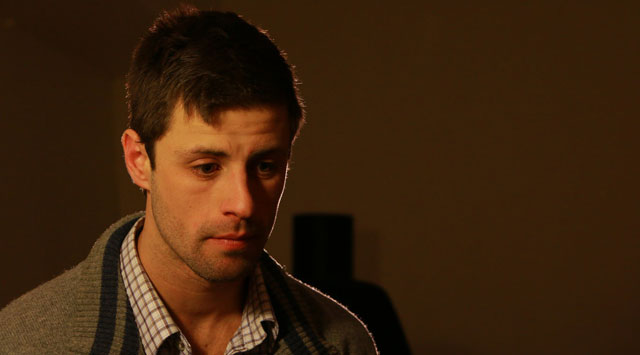
Art can tackle any subject matter, but when it ventures into the more obscure parts of life, artist and viewer must both find a way of communication that achieves some level of resonance. Patricia Cornelius’ Love features three young drug addicts and their aimless existences. Nothing they experience is more than fleeting pleasures, except for the romantic love that they may, or may not, have found. Cornelius’ use of language is an interesting exploration into the speech of young Australians from the low rungs of life’s echelon. They speak plainly, but their words do not express depth of thought and emotion. The best they can manage is frustration, which is perhaps a true representation of youth. For many theatregoers, the characters’ lives are distant and objectionable, and although Sean O’Riordan’s direction translates plot lines well, we struggle to find any common ground. Horrible things happen but finding empathy is challenging.

The performers begin the piece with insufficient passion, but eventually find their feet to portray more genuine sentiments in the latter half. The play is about love and romance, but we are rarely able to be convinced of the relationships on stage, which unfortunately makes the production quite precarious at many points. Ford Sarhan provides good support as Lenny, with a natural comic ability that can deliver laughs at will. Even though the actor can feel like the show’s saving grace, his style of performance does not always find cohesion with his colleagues, and the tone he introduces, although delightful, seems to run contrary to intentions of the text. Leading ladies Kimberly Kelly and Ebony Halliday are less charming, but both manage to provide strong focus and poignancy at the end.

For some, the only thing worth living for are the relationships they foster. Those less fortunate might have nothing but a string of pointless moments interrupted only by emptiness. Creating a life with meaning does not come easy, but with education and age, enlightenment is always within reach for those of us in the developed world. Love asks us to think of the young and how we treat them. Our prejudices are put to test, but converting fundamental beliefs is a difficult task, and compassion proves not to come spontaneously in all cases.

www.facebook.com/shutthefrontdoortheatre

Review: Venus In Fur (Darlinghurst Theatre Company)

darlo1Venue: Eternity Playhouse (Darlinghurst NSW), May 29 – Jul 5, 2015
Playwright: David Ives
Director: Grace Barnes
Cast: Anna Houston, Gareth Reeves
Image by Helen White

Theatre review
The bedroom is not for thinking about politics, if sexual pleasures are to be had. This statement reveals the wealth of meanings that are embedded into our desires and the way we satisfy them. David Ives’ Venus In Fur is a brilliant exploration into the manifestations of our sexualities, and an examination of impulses that might run contrary to our intentions and the kinds of people we wish ourselves to be. The quality of autonomous irrepressibility of our sexual appetites often betray the public personae we convey to the world. Ives’ writing is supremely complex, but truthfully so. It is highly intellectual but never pretentious or overly academic. It is a rare articulation of the way our problematic sexual selves resist suppression and tempering, and it looks at the implications of those deeper meanings that our sex seem to express. Through a context of sado-masochism, the play investigates the chasm between private and social, how we are able, or unable, to understand our true selves, and the impact that sex can have on the rest of one’s life. Also, Venus In Fur is some of the wittiest and most outrageously entertaining theatre one can ever wish to experience.

Direction by Grace Barnes is completely masterful, with a firm grasp on all the script’s themes that constantly and unpredictably fluctuate, thus representing the inconvenient and devious ways human nature can manifest. Barnes’ work pays attention to the most minute of nuances, and turns them into poignant, sometimes formidable statements, but she also creates flamboyant sequences of theatricality that are nothing short of edge-of-your-seat stuff. There are loud political messages being said here, and there is a delicious assertiveness that accompanies them, even (or maybe, especially) if they do come into conflict with one another. When art wants to get at the truth of something, the results are often antagonistic, and in this case, the incessant exposure of our humanly contradictions is exciting and at times, rapturously so. It is an acknowledgement of all our strengths and weaknesses, and a celebration of our determined exertion to become better.

Anna Houston is magnificent as Vanda, an enigmatic character written so vast, she seems destined to embody all of womanhood. It is an impossible idea, but Houston’s work is boundlessly passionate and versatile, and she exceeds all requirements of the hugely demanding text. The actor is dynamic at every moment, always keeping us entertained with a bold comic sensibility, and challenging our mental capacities with a range of subtexts so acerbic and provocative, that we cannot help but be entranced. The wildness of her approach is informed by a powerful impetus that can be emotional, political, or libidinous, depending on what she wishes to portray. Houston is a captivating performer full of drama and depth, perfectly formed for this show, and the kind who can shine in any other role on any stage. Her colleague Gareth Reeves is less vibrant in the role of Thomas, but equally solid and compelling. Reeves’ depiction of sexism from a male perspective is honest and surprisingly delicate. The authenticity of his work is key to the show’s intellectual effectiveness. The presentation of sexism as convoluted and inextricable gives the production an immense feeling of texture and an impression of interminable layers that plays on our minds relentlessly. Reeves’ commitment and focus gives the show an air of confidence, which allows us to lose ourselves in the plot, and let the players take us on a ride of extremes.

Design elements are understated but necessarily so. Sound and lights contribute greatly to psychological dimensions that are always in play. Aside from a few thunderous roars and purposefully abrupt light changes, Sian James-Holland (lighting designer) and Jessica James-Moody (composer and sound designer) work quietly to add to tensions and atmosphere without drawing attention to themselves. Realistic costume design by Mel Page also serves plot and characters beautifully without too much embellishment, although some fetishistic leather items do seem to have an ebullient effect on some members of the audience.

Telling stories about the other, inevitably makes one an easy target for criticism. Men writing plays about the subjugation of women can never escape chastisement, but an artist stepping into a minefield provides opportunities to reflect on the worst and most rarely visited recesses of our being. David Ives’s perspectives are unique and refreshing in contemporary discourse on issues of gender and sex. It takes a lot of sophistication to get into discussions that flow erratically like experimental jazz music, but Venus In Fur‘s consistent resonances assure us of the validity of its many controversial ideas. There are few things more valuable in art than its analysis of repressed or forbidden subjects, especially when they address the fundamentals of all human life, like love, sex, and the struggle for who gets to be on top.

www.darlinghursttheatre.com

Review: This Boy’s In Love (Red Line Productions)

TBIL 1Venue: Old Fitzroy Theatre (Woolloomooloo NSW), May 26 – 31, 2015
Playwright: Adriano Cappelletta
Director: Johann Walraven
Cast: Adriano Cappelletta
Musical Director: Daryl Wallis

Theatre review
With any luck, Adriano Cappelletta’s This Boy’s In Love is going to be the last great play about gay life in Australia before same-sex marriage is made legal. Ado’s experiences and perspective as a gay man in Sydney are beautifully, and extremely honestly, documented in this one-man show reflecting life for thousands of individuals from a city in its final throes of inequality and bigotry. Ado is hungry for love like everyone else, but his desires face obstacles unique to metropolitan gay lives. Emerging from periods of oppression and persecution, Ado’s community suffers from dysfunctions, tragic and funny, many of which are fluently articulated in the work.

The piece breaks from conventional monologue formats to provide a theatre that is full of variety, in order to engage, entertain and indeed, educate. It takes frequent detours into sub-genres like cabaret, stand up and dance, and adopts hints of the absurd, so that its ninety minute duration never loses a moment of vibrancy. Director Johann Walraven identifies brilliantly, the many nuances in the text to create moments of surprising poignancy, and to make us fall for the protagonist more and more as the show progresses. As its performer, Cappelletta is generous in spirit, and unbelievably warm, striking a rapport with his crowd so solid, that we cannot help but be enthralled. The level of dynamism in his work is astounding at points, and we get completely absorbed into all his stories, silly or serious.

This Boy’s In Love is as perfect as a monologue can get for small theatre. The only way one can envision this production improved, is with greater investment and imagination into its design elements. Technical enhancements can make the show even stronger, but with what this team is able to assemble, it conveys its intentions perfectly. Love is hard to define. It can mean many different things, but starving anyone of it is cruel and certainly evil. For centuries, love has been defined in narrow heteronormative and religious forms, and in that process, many of us have suffered senselessly. Times have changed, and everyday, more are able to find emancipation. May the day come when sexual bigotry of all kinds in all places be eradicated.

www.oldfitztheatre.com

Review: Neighbourhood Watch (Illuminate Educate)

illuminateVenue: Bondi Pavilion Theatre (Bondi NSW), May 28 – Jun 6, 2015
Playwright: Lally Katz
Director: Susanna Dowling
Cast: Skyler Ellis, Gertraud Ingeborg, Steven Kreamer, Odile Le Clezio, Andrew Lindqvist, Linden Wilkinson, Anne Wilson

Theatre review
In Lally Katz’s Neighbourhood Watch, two women find a special but unexpected connection, and their bond helps them grow into individually stronger persons. The relationship gives their lives greater meaning, and their story is a reminder that the social aspects of our being is crucial to the way we evolve and progress. Ana and Catherine are women who have needed time to find independence and self-worth, and Katz’s writing makes no bones about using them to inspire girls and women. We often define ourselves in relation to men, in fiction as well as in reality, and the play brings focus to how we let that transpire, and then how we can find emancipation.

Direction of the work by Susanna Dowling is very polite. There is a quietness to the production that hinders the wit of the writing, but although energy levels are low, its main characters are vivid enough for the audience to absorb all that the show wishes to impart. The play is set in many different locations, so scene changes are tricky, and not always handled with enough elegance. Spacial use requires greater inventiveness to prevent distractions and plot confusion. On a brighter note, music is beautifully utilised in the production, with composer Steven Kreamer’s work adding a sophisticated and emotional dimension to proceedings

Lead characters are performed well, although disappointingly restrained. The story is about intimacy, but there is insufficient vivacity between personalities, and they never feel close enough for the narrative to become poignant. Ana is played by Gertraud Ingebors, whose dry sense of humour charms the audience. Her work is convincing and evocative, but the actor seems to have trouble finding enough chemistry with colleagues. Anne Wilson is a likeable Catherine, with a warm and tender presence, but some of her depictions of heavier emotions call for greater authenticity. Like Wilson, Skyler Ellis is immediately endearing in the supporting role of Ken. The part is considerably lightweight by comparison, but Ellis steps up to the mark at every opportunity to showcase his excellent comedic abilities.

The characters in the story connect, but the production feels distant. There is enough lucidity for everything to make sense, but in a cool and slightly detached manner. The shattered dreams and broken hearts in Neighbourhood Watch do not translate with great passion and urgency. Although we hear the message, we want also to understand how it feels to be the people on stage. The live medium of theatre bears the right circumstances to affect its captive audience like no other art form can, and it needs to use that rare and uniquely exciting proximity to spark something visceral, so that its revelations can impress even deeper.

www.illuminateeducate.com.au

Review: Shivered (Mad March Hare Theatre Company)

madmarchVenue: PACT Theatre (Erskineville NSW), May 7 – 30, 2015
Playwright: Philip Ridley
Director: Claudia Barrie
Cast: Josh Anderson, Joseph Del Re, Rhonda Doyl, Libby Fleming, Andrew Johnston, Brendan Miles, Liam Nunan

Theatre review
Illusory contours “are perceived where there is no physical luminance, colour or texture difference,” referring to our ability to see things that are not actually there. In the case of Philip Ridley’s Shivered, we form narratives and create meanings from a series of scenes that do not immediately relate to each other, almost as though in a state of delusion. Our human nature is explored not only in the stories being told, but also in the way the audience is encouraged to makes sense of all that is put on stage. Looking at our propensity to interpret events in a way that never strays far from “cause and effect”, it is an examination of logic, which the play suggests is sometimes insufficient, and indeed, futile. Ridley’s work deals with many of the worst things in life, and makes us wonder if we can ever think of our darkest moments as inevitable, and the ethical implications of being embroiled in disappointments and disasters that we do not have direct control over.

These are big philosophical considerations, but individual scenes are melodramatic, almost operatic, in nature. Director Claudia Barrie invests heavily into that duality of intellect and emotion, with a fierce dedication to her stagecraft, and her work here is effective on both those levels. We get caught up in intense family drama not unlike those favoured by tabloid journalism, but the work is unrelenting in placing us at a conceptual distance so that we are always analysing the catastrophic consequences from an abstract perspective, in addition to experiencing the anguish that is being performed. The text is an edgy one, and Barrie takes great care in having Ridley’s words articulated with excellent clarity, but with all the taboo subjects involved, the production often feels tame in its expression when compared to the controversies being discussed.

Light and set design by Benjamin Brockman delivers a sophisticated space that is able to portray abstraction or realism as required, sometimes simultaneously. It accommodates the haphazard timeline of the plot beautifully, and the starkness of his aesthetic matches the brutality of Ridley’s writing very well, but at over two hours, scene transitions become repetitive and predictable later in the piece. The economy of technology Brockman experiments with, though slightly restrictive, is a success story that signals a significant evolution in lighting for Sydney stages.

The cast is detailed and powerful. Every character in the show touches us, despite the outrageous contexts we find them in. Libby Fleming alternates between quite campy humour and palpable rawness, for an enthralling performance that is as fascinating as it is moving. Her impressive ability to portray depths of despair provides a solid core of empathy that keep us anxiously attentive. The connection Fleming establishes with her sons in the play is the crucial ingredient that secures the gravity for its various threads of turmoil. Also wonderfully engaging is Liam Nunan whose presentational style effervesces with extravagance, but with a surprisingly convincing focus that keeps us engaged. Josh Anderson plays the damaged young Ryan with quiet sensitivity, but the threatening intensity he produces teeters close to eruption, and we are fascinated by the complexity he consistently works into his role.

There are horrors around us, and they are by nature absurd, for if they were fathomable, they would also be preventable. Humanity necessitates that we make sense of things, but life often insists on defying logic to demonstrate its dominance over humans. Life is hard, but we are resilient. All the characters in Shivered struggle, and their persistence with survival means that in order to overcome, they have to figure things out, whether possible or not. No one in the play gives up, and that is the moral of the story.

www.madmarchtheatreco.com

Review: Educating Rita (Ensemble Theatre)

ensembleVenue: Ensemble Theatre (Kirribilli NSW), May 21 – Jun 28, 2015
Playwright: Willy Russell
Director: Mark Kilmurry
Cast: Catherine McGraffin, Mark Kilmurry
Image by Clare Hawley

Theatre review
Willy Russell’s Educating Rita makes a case for aspirations, but not in capitalistic terms or in the form of the all too common middle-class pipe dream. He talks about the importance of culture and choice in all our lives, and suggests that the greatest value of life resides in the active pursuit of self-betterment. The very act of finding greater meanings and knowledge, is the key to enriching one’s existence. The effectiveness of Russell’s narrative relies on the obstructions that we face, especially repressive forces in our surrounds that hold us back and prevalent apathetic attitudes of our communities. Frank is an alcoholic, who is all but resigned from hopes, dreams and ambitions. He has removed the clock from his office wall and hides it along with the secret bottles of booze that occupy the back of bookshelves, so that he can deny the fact that time is passing him by, while he drinks his days away. Through his education of Rita, we observe all that Frank has to offer the world, but he does not acknowledge his own talents, and lets himself flounder and descend towards oblivion.

Direction of the work by Mark Kilmurry is beautifully executed, and very moving. Both characters are engaging and solidly established, so that we feel an instant familiarity that helps us become quickly invested in their stories. Kilmurry has created an environment where both actors collaborate intimately with little ego in the way of storytelling, and what they present often resonates with extraordinary authenticity, and we relate to the play from very personal and deep perspectives. As a performer, Kilmurry is lively and multifarious. His work is vivid, with remarkable clarity in intention and expression, but his character evolution as Frank is insufficiently dramatic in latter scenes for tensions to sustain beyond the show’s very exciting first half. Catherine McGraffin is an effervescent Rita, with the right variety and amount of charisma to let her role translate powerfully and emotionally. Through her heartfelt approach to the material at hand, we are able to examine our own lives, and to think about the parallels between Rita’s experiences and the choices we have made for ourselves. McGraffin’s intuitive and unrestrained style of performance takes hold of our empathy at will, but Rita’s progression later in the piece becomes unnecessarily subdued, resulting in the play seeming to lose steam over time.

Rita’s thirst for knowledge and her eagerness to lift the veil on secrets of the big, wide world is an inspiration, and Frank’s tragedy is a cautionary tale perhaps, of the increasingly parochial ways we live. Interaction with culture requires broad minds, but affluent societies are complacent. We spend time and energy chasing pleasures, but neglect the more challenging and meaningful parts of life. As we make our communities more wealthy and stable, interesting ideas become dangerous and we shut them out. It is difficult to be progressive in 2015 Australia, where fear is becoming a virtue, and we become increasingly protective against enemies real and imagined. The theatre might be a safe and sometimes conservative space where risky thoughts are contained, but at least they (theatre and risky thoughts) are both still thriving, and patrons can always leave with some degree of choice as to the freedoms they will allow themselves.

www.ensemble.com.au

Review: The School For Scandal (New Theatre)

newtheatreVenue: New Theatre (Newtown NSW), Apr 29 – May 30, 2015
Playwright: Richard Brinsley Sheridan
Director: David Burrowes
Cast: Tel Benjamin, Richard Cotter, Sasha Dyer, Peter Flett, Emma Harvie, Rhys Keir, Chantel Leseberg, Moreblessing Maturure, Lillian Silk, Marty O’Neill, Nick Rowe, Billie Scott, Eleanor Stankiewicz, Samantha Ward, Jacob Warner, Madeleine Withington
Photography © Matthias Engesser

Theatre review
Money makes the world go round, but it is also the root of all evil. No ordinary person is able to escape the claws of modern economy, and we all have to define our existences in, at least, partially monetary terms. The School For Scandal is about greed, and our ability to be blinded by wealth. Richard Brinsley Sheridan’s script is a wickedly funny one, and his outstanding wit has ensured that his story about deception and decadence is still well-regarded 238 years later.

Direction by David Burrowes is ambitious and visually striking, with a very contemporary rendering that draws inspiration from the nouveau riche of Australia’s more brazen social set. The work is wildly energetic, and comedy is always being created around the text, but less attention is paid on the nuances of the writing. The resultant work is flamboyant and amusing, but the actual story is often a secondary aside. Plot is sacrificed for effect, and while the experience is not always satisfying, there certainly is a lot that is remarkable in terms of the generous amount of creativity being featured. Isabella Andronos’ set and costume designs are mischievous and refreshing, adding to the Sydney theatre landscape an exciting aesthetic that is reflective of a particular generational and cultural segment. The representation of dominant social tribes is important in the understanding of our selves, and Andronos’ contribution is an acute study of the way things are, for some of us, in the absolute now.

All performances in the show are strong. The cast is committed to Burrowes’ vision of creating something extravagant, and to keep us entertained. Rhys Keir as Charles Surface is a quirky combination of sex appeal and clownish tomfoolery. The actor’s larger than life presence is determined to captivate, and his comedy is quite irresistible. Keir’s sharp instincts and confident timing make his joyful showmanship a real pleasure to witness, and his ability to manufacture chemistry with colleagues demonstrates a natural flair of someone born for the stage. Equally gifted is Madeleine Withington who plays Lady Teazle, a shrewd young lady with an impetuous, ditzy edge. Withington’s style feels unfettered, but there is an exacting focus to her manoeuvres that help provide a clarity to a plot that often gets lost in the incessant pandemonium. There is noteworthy work by two of the show’s smallest roles, played by Emma Harvie and Moreblessing Maturure, but it must be said that there is more than a little discomfort in watching the only actors who are not of Caucasian appearance, take on the parts of servants.

Theatre can do many things, but an audience will always concentrate on story if one exists, and treat other elements as subordinate. This production of The School For Scandal has a fierce experimental spirit that resides in every corner, but although undeniably passionate in approach, much of the effort does not translate as anything more than embellishment. Sheridan’s work is solid, and it resists obfuscation. There is much to admire in the show, but what we crave is something deeper and more substantial, something quite the opposite of surface.

www.newtheatre.org.au

Review: Rhymes With Silence (Improvising Change)

rhymeswithviolenceVenue: 107 Projects (Redfern NSW), May 16 – 24, 2015
Playwrights: Alex Broun, Jane Cafarella, Joy Roberts, Kate Rotherham, Loueen Winters, Natalie Banach, Pete Malicki, Suzy Wilds, Vee Malnar
Directors: Chrissy deSilva, Garreth Cruikshank, Glen Pead, Glenn Groves, Kaye Lopez, Lisa Eismen, Margaret Barnaby, Natasha McDonald, Uma Kali Shakti, Vee Malnar, Wayne Mitchell
Cast: Alex Gercsov, Ali Aitken, Angela Gibson, Bendeguz Daniel Devenyi-Botos, Debbie Tilley, Dede Attipoe, Elisa Cristallo, Eliza St John, Garreth Cruickshank, James Belfrage, Joanna Kedziora, Karina Bracken, Katherine Richardson, Katrina Papadopoulos, Kerrie Roberts, Lisa Hanssens, Liz Harper, Liz Hovey, Lynda Leavers, Matt Cowey, Melissa Day, Rebecca Van-Hek, Ros Richards, Sarah North, Tommy Deckard, Veena Sudarshan
Image by John Tsioulos

Theatre review
The programme comprises 13 short plays, unified by the theme of domestic violence against women and girls. The event aims to bring attention to a problem that struggles to find articulation, due to the unthinkable horror of being attacked within the most intimate of relationships. The perpetrators we hear about in Rhymes With Silence are husbands, lovers, fathers. Men who are meant to be our protectors have failed to provide the shield from harm, and their betrayal of trust is of the most severe and devastating kind. Without a doubt, the stories being shared here are dark and often harrowing. There is certainly no shortage of gravitas in spite of the casual presentation style, which simply moves from one basic staging to another with minimal fuss.

Some of the pieces can feel too obvious in their approach, and there is a repetitiveness to the proceedings that makes the two-and-a-half hours slightly challenging, but the earnest and direct way the artists deal with their difficult subject matter is a refreshing experience. The level of honesty we encounter is intimidating, but we are compelled to learn more. The scenarios are shocking but never unbelievable. Joy Roberts’ Regret is one of the few opportunities to hear from a male character, and the revelations of a wolf in sheep’s clothing is enlightening and exasperating. Also intriguing is Good Men Do Bad Things by Suzy Wilds, which features two mothers-in-law in dialogue after the son is sent to prison for killing the other’s daughter. The extraordinary context is fertile ground for explosive interchanges, and the script explores the possibilities beautifully. All the complex emotions are authentic and we relate effortlessly to every plea and confrontation. More than other stories in the collection, this work holds the greatest promise for a very interesting full length iteration.

The inordinately large number of cast members is evidence of the growing concern we have for the issue at hand. Some of the performances might be of an amateur level, but all are committed and serious in attitude. More polished actors include Karina Bracken, who shines in Whirlpools by Alex Broun. Bracken’s style is still but powerful, and her quiet confidence allows us to connect with the works she puts into her character’s thought processes. The fluidity in her interpretation provides a humanity that feels familiar and genuine. Also impressive is Melissa Day in Tara Weldon and Vee Malnar’s I Just Want My Little Family, whose energetic depiction of the single, low-income mother of an infant is as heartbreaking as it is threatening. The actor has a precision that is entertaining to watch, and a unique earthiness that gives her play a strong and individual flavour.

Theatre gives voice to the silent, and the formation of narratives allows us not only to share our experiences, but also works as a vehicle for individual catharsis. The healing process for the most gravely damaged is one that lasts a lifetime, and the artistic journey is also one with no end. The most enduring work comes from a place of truth, and unpacking emotional injuries requires an interrogation into the human condition that has no tolerance for pretence or triviality. There is nothing good that can come out of domestic violence, but many of the worst things that occur can be transposed into a new creativity, so that life can be be reconsolidated along with the art forms being built.

www.improvisingchange.com/

Review: The Merchant Of Venice (Sport For Jove Theatre)

sportforjoveVenue: Seymour Centre (Chippendale NSW), May 22 – 30, 2015
Playwright: William Shakespeare
Director: Richard Cottrell
Cast: Darcy Brown, Michael Cullen, Pip Dracakis, Jonathan Elsom, Lucy Heffernan, Jason Kos, Erica Lovell, James Lugton, Lizzie Schebesta, Christopher Stalley, Damien Strouthos, Aaron Tsindos, John Turnbull
Image by Marnya Rothe

Theatre review
At the centre of Shakespeare’s The Merchant Of Venice is its anti-semitic depiction of the principal antagonist, Shylock, the Jewish moneylender. Productions today face the conundrum of having to adjust their interpretations to fit contemporary sensibilities, while maintaining a level of faithfulness to the author’s original. The script not only demeans Shylock as an individual, it often makes sweeping statements that can only be termed racist.

Richard Cottrell is clearly aware of the problem, as his direction of the work reflects the precariousness of bringing to stage a script that, although well-crafted, is painfully archaic in its representation of attitudes toward Jewish peoples. Cottrell’s show does not hide the outrageously vilifying lines of the text, but subverts them to reveal ugliness of those words. Content that is objectionable by today’s standards, is portrayed as such, so that the company declares its oppositional stance to what Shakespeare had intended. The production is set in pre-WWII, and it encourages us to view the Bard’s vilifications in a context that relates to the rise of Nazism. It is a sophisticated treatment of the material, but the play’s conclusion is preserved sufficiently, so that the story’s distasteful moral is kept intact. It is hard to deny what the work is about, and much as Cottrell is careful with the issue, the show leaves a very bad after-taste. Some are fond of questioning the interminable choice of reviving Shakespeare, but on this occasion, the question is undeniably about the decision to pick this title in particular.

A reason for any interest in Merchant could be that Shylock is among the most spectacularly audacious characters in the Shakespearean oeuvre. Performed by the magnetic John Turnbull, the role is colourful, unpredictable and spine-chillingly dangerous. Turnbull’s work is precise and calculated, but also full of panache and vigour. It is a very stylish performance that is fascinating to watch, and the actor’s ability to present both good and bad sides of his character is complex and quite beautiful. Another star of the production is designer Anna Gardiner, who has created a simple but effective Art Deco set, and a wardrobe of very handsome suits, for an elegant aesthetic that makes the unpleasant goings-on slightly more digestible.

The way we relate to Shakespeare in Australia today is peculiar. We like to think that being suspicious of authority is a crucial part of our identity, yet virtually all quarters readily accept the legitimacy of his genius. The gender bigotry in all his texts is conveniently swept under the carpet, and it appears that we are quite happy as well, to let sleeping dogs lie when it comes to issues of ethnicity and faith. The company has created an entertaining show, and all their individual talents are marvellously present, but we need to take a stronger stand for the things we believe to be true.

www.sportforjove.com.au

Review: Dead Time (Lace Balloon)

laceballoon1Venue: 107 Projects (Redfern NSW), May 20 – 29, 2015
Playwright: Fleur Beaupert
Director: Fleur Beaupert
Cast: Paul Armstrong, Lara Lightfoot, Abi Rayment, Robert Rhode, Melissa Kathryn Rose, Eleni Schumacher, Barton Williams
Image by Phyllis Wong

Theatre review
Stories about the underdog hold a tenacious appeal. Fleur Beaupert’s Dead Time is based on the events surrounding Dr Mohamed Haneef’s arrest and subsequent release in 2007, at a time when the Australian government was placing threats of terrorism front and centre in the national consciousness. The post-9/11 era has allowed public life (including politics and media) to encroach upon individual liberties in the name of vigilance, and our collective paranoia is used to justify racist persecutions in place of sound legal processes. The script is partly verbatim, and it makes a conscious effort to depict events with accuracy. Consequently, moments of heightened drama are few, even though tension is effectively manufactured with relative consistency. Haneef’s ordeal is rightly portrayed as institutionalised exploitation, and the play’s purpose is to give voice to the oppressed. In the case of contemporary Australia, people of the Muslim faith are especially relevant to this discussion. Beaupert’s work as writer and director is not always elegant, but what she has created, is a compelling and stirring statement against our gradually increasing acceptance of injustice in the name of national security. It is a touchy subject, and the show elicits our emotional involvement effortlessly, and for many, its protestations are representative of how we feel about the world today, and the passion on display is reflective of our attitudes about the themes at hand.

Performances are uneven, but leading man Robert Rhode is entirely captivating. The actor’s presence and instincts are a real pleasure to witness, and his easy confidence allows us to empathise with his character at every point of his journey. His interpretation of innocence is authentic, and he builds just enough complexity into Haneef’s victimisation so that we identify intimately with his predicament and his fears. The production is a showcase for Rhode’s talent, which seems scarcely trained, but in its rawness, we observe a natural flair that emanates, and recognise in it, a fragility that makes the cruel mistreatment suffered by Haneef all the more upsetting.

Dead Time is not a polished work, but the clarity and importance of its message makes it a standout in a landscape of bourgeois concerns that characterises our lucky country. The land of the fair go has become delusional in its self identity, refusing to come to grips with its evolution into a Western power that has little capacity for compassion. We insist on seeing ourselves as earthy, sincere and wholesome. We think us better than our corrupt siblings of United States and Europe, but in fact our dealings in regional issues are shameful. Our eagerness to vilify, intimidate and abuse those in need is an extension of the way we have maltreated Aboriginal communities since 1788. Australia’s European history refuses to learn from its own mistakes, and we are now in the middle of a new cycle of violence that is heading towards a repeat performance of its very worst.

laceballoon.wordpress.com