Review: A Flea In Her Ear (Sydney Theatre Company)

stcVenue: Sydney Opera House (Sydney NSW), Oct 31 – Dec 17, 2016
Playwright: Georges Feydeau (adaptation by Andrew Upton)
Director: Simon Phillips
Cast: Helen Christinson, Harriet Dyer, Leon Ford, Harry Greenwood, Sean O’Shea, Kelly Paterniti, Justin Smith, Tim Walter, David Woods
Images by Brett Boardman

Theatre review
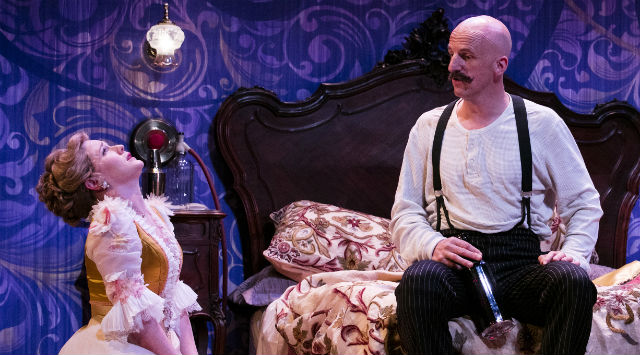
Raymonde Chandebise has doubts of her husband’s fidelity, as Victor Emmanuel is suddenly unable to perform in bed (he blames a disappointing night at the theatre). Putting his devotion to the test, Raymonde sends a letter from an anonymous admirer requesting Victor Emmanuel meet for a tryst at a sleazy hotel, thereby initiating a series of humorous mishaps and high jinks in Georges Feydeau’s 1907 A Flea In Her Ear. The classic farce is relentless in its comedic endeavours, unafraid to traverse the most juvenile and absurd for a good laugh. There is little that can now be seen as refreshing in Feydeau’s play, but its complex construction of topsy-turvied identities, intentions and narratives is masterfully imagined. Andrew Upton’s adaptation is an energetic update, although surprisingly restrained with its bawdy material. Opportunity for more biting commentary on the nature of hypocrisy in our lives is relinquished, for a work that relishes in endless frivolity and mirth, brilliantly shaped to deliver laughter in its every line.

The production comes in a very particular style of presentation that feels deeply old-fashioned, but is, in the same breath, a genre of theatre that remains highly effective. Simon Phillips demonstrates his genius at directing an astonishingly specific and vigorous show, where each moment of stage time seems to be crowded with a host of precisely located nuance, along with sounds and gestures all meticulously configured to a tee. The performers are in perpetual dynamic motion, whether a twitch of the head or somersaulting across the floor, every movement is calculated to provide punctuation to jokes that may or may not be very good on their own. The show is a furious, heady tickling of the funny bone that demands its audience respond with laughter, and we often find ourselves obliging, dumbfounded by its power.

A very enthusiastic cast challenges us to meet their feverish folly with corresponding glee. An air of overwhelming silliness pervades the auditorium, and only the most seriously jaded could leave unscathed. Raymonde is played by Harriet Dyer, strikingly confident and natural in how she is able to turn all the ridiculous goings on to her advantage. With immaculate timing and an extraordinarily agile voice, she is a stand out in a sea of raucous talent, trouncing other players who come armed with bigger costumes and even bigger acting. Other memorable performers include Justin Smith and David Woods, both playing dual roles, chopping and changing between characters at lightning speed to show off their unfathomable theatrical athleticism, and comic versatility. Smith’s campy playfulness as Carlos and August, is especially charming and a clear highlight, of a production that helps us rediscover the magic that happens when our artists are allowed to exhibit the very best of their abilities. Sometimes, the menu may not wish to serve up anything of great originality or intellect, but its familiar, comforting offerings can prove a delightful sanctuary, and the kind of entertaining reprieve that we all inevitably, find ourselves needing.

www.sydneytheatre.com.au

Review: A Midsummer Night’s Dream (Sydney Theatre Company)

stcVenue: Sydney Opera House (Sydney NSW), Sep 12 – Oct 22, 2016
Playwright: William Shakespeare
Director: Kip Williams
Cast: Paula Arundell, Matthew Backer, Rob Collins, Honey Debelle, Emma Harvie, Jay James-Moody, Brandon McClelland, Josh McConville, Robert Menzies, Susan Prior, Rose Riley, Rahel Romahn, Bruce Spence
Images by Brett Boardman

Theatre review
Characters get up to a lot of mischief in A Midsummer Night’s Dream, but what can be construed as humorous, can also be seen as menacing. The play features deception, sabotage, humiliation and misogyny, subversively, and surreptitiously, framed within a category of conventional comedy, leaving the depths of its darkness unacknowledged. One of Western theatre’s most well-known pieces, it is often regarded as light and frothy, fun for the whole family, with themes of romance and fantasy taken to their greatest extremes for hours of harmless entertainment.

Centuries on, it can be argued that much of Shakespeare’s comedy is no longer funny. Some insist that everything Shakespeare had penned can stand the test of time, but others will hold a more objective attitude. Kip Williams looks at the text with modern eyes, judging it with today’s values, and in exposing all that is archaic in the piece, creates something imaginative, powerful and irreverently spectacular. Turning A Midsummer Night’s Dream into a twisted nightmare, it is suddenly mesmerising. Williams’ concept might seem basic, but his detailed execution of a macabre and provocative utopia/dystopia is as sensitive as it is scandalous. Consistently fascinating, and frankly eye-opening, this is some of the most astonishing and iconoclastic theatre, full of spirit; adventurous, brave and ostentatious.

Actor Paula Arundell is unforgettable as Titania, queen of the fairies, via Donatella Versace. Regal, austere and decadent, her creation is strikingly sensual, full of danger and drama, compelling and beguiling in every moment. Arundell attacks her role with a fierce solemnity, resolutely playing against the comedy that we have become used to, in order that a fresh theatricality may be delivered; poetic, surreal, and irrevocably powerful. Also deadly serious are all the production’s design aspects. Chris Williams’ music and Nate Edmondson’s sound design hold us firmly in their dictatorial insistence for dramatic tension, and Alice Babidge’s costumes dare us to look away from the grotesque glamour reminiscent of Leigh Bowery and Cindy Sherman’s brutal legacies.

On stage is a morbid world, resplendently manufactured to satisfy our need for an art that is carnal, wild and audacious. It must be noted however, that the show closes with an abruptness that betrays its fundamental and delicious sophistication. The final transition from a scene of brilliant black humour to its concluding gravitas occurs with surprising carelessness, leaving us disoriented and prematurely awoken from what had been a deeply luscious reverie. Nevertheless, what is achieved here is an instance of magic rarely witnessed, and unlikely to be seen very soon again. Wonderful for its uniqueness, and its gutsy approach to the most time-honoured of classics, this is excellent theatre that reminds us how good it is to be alive, at a time when the ephemeral art form can thrive so brilliantly, and we are here to catch it.

www.sydneytheatre.com.au

Review: The Hanging (Sydney Theatre Company)

stcVenue: Wharf 1 Sydney Theatre Company (Walsh Bay NSW), Jul 28 – Sep 10, 2016
Playwright: Angela Betzien
Director: Sarah Goodes
Cast: Luke Carroll, Ashleigh Cummings, Genevieve Lemon
Image by Lisa Tomasetti

Theatre review
When a girl becomes a woman, her body changes and her mind expands. The world’s ugly sides begin to reveal themselves, and she is disoriented, trying to understand her new place in the bigger scheme of things. She may choose to subsist in delusion, pretending that her guardians can shield all evils, or she can test the waters in a life fraught with danger, seduced by its honesty and the knowledge of its inevitability.

In Angela Betzien’s The Hanging, three 14-year-old girls vanish from their private school privilege, and the nation is gripped. We make assumptions based on beliefs about innocence, and create visions of their victimhood. When one of them returns, the mystery deepens and all is not what it seems. Inspired by Joan Lindsay’s Picnic At Hanging Rock, the 1967 novel is also an actual presence in the play that characters refer to. We are reminded of how we had reacted to the older story, and wonder if the way we think about girls, their desires and their strength, are trapped in fictive and romantic idealism.

Betzien’s plot structure makes for an intriguing experience, with fragments of potent curiosities scattered through its dialogue, intimating but not divulging what the three girls try to hide. It is enthralling theatre, made even more sensational by its subtle incorporation of many au courant social and political concerns. Its ideas are progressive and plentiful, and they elevate the play from its mystery genre to something altogether more important and affecting.

Having adopted Lindsay’s Australian Gothic aesthetic, the production is viscerally haunting in a familiar way, similar to the book and its famous film adaptation, but also sensitively updated to its contemporary context for a more evolved portrayal of femininity, and its encircling issues. Director Sarah Goodes brings a strong sense of import to the themes of the story, whilst pursuing dramatic tension for the very fascinating narrative. A stronger ambience of danger and sexuality could make the show even darker and more powerful, but Goodes’ work is undoubtedly enchanting. We are invested in the riddles of The Hanging right from the start, and she makes us hunger for each revelation that she delivers in perfect time, every one of them satisfying.

Restrained but intense performances by Luke Carroll, Ashleigh Cummings and Genevieve Lemon bring to the stage a distinct flavour, partly a conventional, almost soap opera approach using common archetypes, coupled with a confident embrace of a more silent and poetic approach to acting. Lemon is particularly memorable in the role of Corrossi, sharp and abrasive, with surprising emotional range, interpreting beautifully, the being of a middle age modern woman, and the perspectives of a high school teacher who has seen legions of girls blossom and decay.

Society is disparaging of femininity, and underestimates the young. When Ava, Hannah and Iris disappear, they expose our beliefs and expectations, along with the prejudicial ways we think about adolescent girls. The Hanging questions the way we nurture and offer guidance, confronting us with difficult truths about the instability of human volition, freedom and fortitude, especially volatile in the teenage years. In an effort to find a real understanding of how we are, the reflections we see in the play are necessarily pessimistic. It refuses denial of the bad inherent in what we do and think, making us acknowledge the less than perfect aspects of our nature. There are masochistic pleasures discoverable in its gloomy expressions, but for those less morbidly-inclined, its important lessons although disturbing, are relevant to one and all.

www.sydneytheatre.com.au

Review: All My Sons (Sydney Theatre Company)

Venue: Roslyn Packer Theatre at Walsh Bay (Sydney NSW), Jun 4 – Jul 9, 2016
Playwright: Arthur Miller
Director: Kip Williams
Cast: Anita Hegh, John Howard, Bert LaBonte, John Leary, Josh McConville, Robyn Nevin, Eryn Jean Norvill, Jack Ruwald, Chris Ryan, Contessa Treffone
Images by Zan Wimberley

Theatre review
Joe Keller’s wealth is a result of monumental sacrifice. Arthur Miller’s All My Sons is about the cost of money, and the naivety that can come with human greed. Joe makes the decision to choose financial success over a clear conscience, thinking that his riches will be able to shield him from the damage that he causes. There is a willing ignorance at play in Joe’s story that many of us understand. We think that the pluses that come with money are powerful enough to contain the inevitable minuses, and it is that misguided optimism that brings about a series of calamitous consequences to Joe’s family and his neighbours.

It is intoxicating drama and a powerful moral that allows the play to maintain its resonance through the decades. Miller’s interrogation of the American dream (now international), along with themes of money, family and war, have not faded with time in their impact, in fact, our engagement with the ideas in All My Sons seem to be more intimate than ever. Soldiers once sent off to war in blazes of glory, are now seen as individuals we need to protect at all costs. Ideologies once used to justify deaths in battle, are now tainted with commerce, corruption and oil. Great riches from hard work have now exposed themselves to be hollow corporations trading in fraud. These very contemporary concerns are paired with classic melodramatic storytelling, for a masterpiece that still packs a wallop in 2016.

Kip Williams’ direction keeps focus on the play’s essence. Almost minimal in style, our attention is not to stray from its characters and dialogue. There are no bells and whistles to fill the vast auditorium, just a family drama that gets increasingly turbulent. Personalities are clearly defined, and relationships are dynamically formed. Williams sets the pace of the production at lightning speed to help ensure that tension is sustained, and that the audience remain engrossed. The intriguing qualities of Miller’s plot are perfectly engineered to keep us hooked on the story, but the venue’s size makes it a challenge communicating emotional intensity without performers having to perform at the extremes of their sentimental capacities. We follow every interchange that happens on stage, but our feelings become involved only when scenes become passionate.

The more energetic of the cast leave a greater impression. Chris Ryan’s ability to portray heightened agony gives the production its gravity, and the actor’s remarkably lucid depiction of his character Chris Keller’s loss of innocence, provides a soulfulness to the production, especially effective at its moving conclusion. Eryn Jean Norvill plays Ann Deever with great charm and an authentic complexity that adds surprising texture to the show. Norvill’s vocal and physical emulation of 1940’s American style is a delight, as is the vibrancy of her stage presence. In the role of Joe Keller is John Howard, imposing and confident, every bit the patriarch of the tale, but seems to fluctuate with concentration levels. Although powerful and nuanced, the actor has a tendency to be subsumed when action becomes frantic on stage. Young actor Jack Ruwald is memorable as Bert, lively and with a genuine sense of impulsiveness that is deeply endearing.

We cannot expect friends and family to be perfect, because every human is flawed. People will make mistakes, but how we forge ahead with them is the basis of how we live each day. The Kellers survive on love and lies, but the two prove to be ultimately incompatible. Where there is love, truth must triumph, but the ugliness that surfaces stands every chance of dissolving what we hold precious. All My Sons might be about family, marriage, betrayal and deception, but it is fundamentally a cautionary tale of greed’s destructive nature. Forgiveness and understanding can mend many wounds in our relationships, but the scars that are left behind are permanent and inescapable. Joe’s abominable sin cannot be undone, and its repercussions are tragic and endless.

www.sydneytheatre.com.au

Review: Disgraced (Sydney Theatre Company)

Venue: Wharf 1 Sydney Theatre Company (Walsh Bay NSW), Apr 16 – Jun 4, 2016
Playwright: Ayad Akhtar
Director: Sarah Goodes
Cast: Paula Arundell, Glenn Hazeldine, Sachin Joab, Shiv Palekar, Sophie Ross
Images by Prudence Upton

Theatre review
We can all agree that everything is not quite coming up roses in the world today, with terrorists blowing up cities everywhere, and people waging war against one another, all in the name of race and religion. There is no denying that at the root of these catastrophes is hate. Hate that comes in a manner of guises and a range of justifications, but ultimately it all boils down to the simple truth that people are prejudiced and destructive. This is difficult to hear, because life is impossible without believing that humanity is good, so we embrace hope with a kind of blind naivety and evade the truth in order that we may get out of bed and be happy.

Ayad Akhtar demolishes those delusions with Disgraced, in which racist hate is served up plain as day. The characters are intelligent, successful and glamorous, tailor-made so that they are irresistible to bourgeois theatregoers, but their ugly sides emerge, increasingly aggressive over time, and we find ourselves in a state of violation, caused by this transgressive mix of seduction and repulsion. It is at the point where we become intimate with protagonist Amir and the people around him that we see their racism. We are unable to dismiss them because we had already submitted trust, having decided that they are good people, so our minds are in conflict, made to juggle the puzzle pieces that refuse to form an easy picture. In that process of confusion, we reach for a new depth of understanding about our nature and how hate resides in our beings, and how it manifests. In the face of Akhtar’s explicit honesty, we are presented a challenge of interpretation. We recognise the reality of the situation, but we have no convenient way of dealing with the information. The big mess of life is truer than the circumscribed narratives we use to arrange our thoughts, and in this play, that chaos is allowed to rear its ugly head, without a false sense of resolution to contain our anxieties. Bad things happen because there are people with hate in their hearts. Getting to know them is important, but not having anywhere to go thereafter is the conundrum.

It is a stunning and explosive script that drops bombs at regular intervals to unnerve, to disarm and most of all, to confront. It is a response to the undeniable horrors around us that involves no sugar-coating, and no rose-tinted glasses. It is a brutal piece of writing, made only more powerful by its ability to tell us the worst while it secures our unwavering attention. Sarah Goodes’ direction delivers that brutality with a blunt but measured force. Her ability to communicate details no matter how subtle, makes this staging an enriching and enlightening experience. She draws attention to nuances that are missed in our daily interaction with the subject matter, dismantling our habit of two-minute sound bites and 140 character tweets, in exchange for a more thorough study on the state of our world.

Amir is among the most important characters to have appeared in recent theatre history. His experience is ubiquitous but virtually never brought to light. There is shame, fear and danger associated with his story, so our impulses tell us to keep it buried, for we are afraid of the controversies he represents, and we worry about the people he offends. Performing the role is Sachin Joab, exhilarating, authentic and alluring in his depiction of the Pakistani-American caught in a moment of crisis. Joab brings extraordinary illumination to the tremendous complexity of his part, presenting a great deal of insight into a psychology that we all need to know. His work is emotional and vulnerable, but the actor is also able to convey an unmistakeable menace that is central to the play’s effectiveness. Joab overwhelms us with his talent and conviction, and leaves an indelible impression with his remarkable grace. Also exquisite is Elizabeth Gadsby’s set design, providing a backdrop of sophistication and class to a tale about social status and division. The configuration of spaces caters cleverly to all seats in the auditorium, offering excellent perspective and a beautiful vista from every angle.

This is a show full of tension, with its drama derived from issues of the day that are usually too unseemly to discuss in frankness. The action happens in an exclusive New York apartment, but we all have a stake in the subject matter. Peace will benefit everyone, but in its pursuance, we all seem to be losers. In the middle of a war, we are never sure if anything that we say or do will contribute to making things better, but regardless of context, art must always reveal the truth. We cannot mend what is broken without knowing its problems and although a bitter pill is hard to swallow, there is no escaping it. In Disgraced, characters have to drop their pretences and acknowledge the cold, hard fact that their world is in turmoil, but whether they can bring about improvements, or revert to their previous delusions, is not a question anybody has a definitive answer for.

www.sydneytheatre.com.au

Review: Hay Fever (Sydney Theatre Company)

Venue: Sydney Opera House (Sydney NSW), Apr 11 – May 21, 2016
Playwright: Noël Coward
Director: Imara Savage
Cast: Briallen Clarke, Tom Conroy, Alan Dukes, Harriet Dyer, Genevieve Lemon, Tony Llewellyn-Jones, Josh McConville, Heather Mitchell, Helen Thomson
Images by Lisa Tomasetti

Theatre review
Judith Bliss and her family share an exquisite sense of humour, as well as dubious moral standards. They live out their self-obsession like a flamboyant form of high art, entangling unsuspecting acquaintances into their shenanigans, blurring the lines between fantasy and reality. Noël Coward’s Hay Fever is the pinnacle of British wit, transcending time and space with a style of frivolity that does not seem to age. Whether silly or edgy, the play’s air of sophistication never falters. Intelligent but not intellectual, it gives us feather light humour without ever being patronising. A sheer delight for fans of theatre, and rambunctious fun for those on stage.

Director Imara Savage finds room for creativity, and exercises her artistic freedom while retaining all the best of Coward’s essence. Savage’s rendition seems faithful to the writer’s milieu, even though its sensibilities are thoroughly modern, revealing an instinctive ability to locate the timeless and perhaps universal elements of the play. These are not characters with profound messages to convey but they offer opportunities for imaginative and extravagant use of the theatrical platform, and Savage certainly rises to that challenge. Her show is visually exciting, with an infectiously exuberant spirit that overflows the stage and demands our attention. Set and costume design by Alicia Clements is sublime. The Bliss home is rendered with a bohemian rustic beauty, and costumes although effortless, are rich with glamour and sex appeal.

A host of larger than life personalities is created with wild abandon by a remarkable ensemble, led by Heather Mitchell who appears to have amassed inexhaustible tricks up her sleeve for the depiction of a prima donna, and her Judith is spectacularly resplendent in grandiosity and excess. Performances in the production are exaggerated, but also nuanced and thoughtful. Grand gestures and overstatements are appropriately supported by its dramatic “show within a show” context. Tom Conroy and Harriet Dyer play Judith’s children, both powerfully inventive in their approach, using the entirety of their beings to embody the outlandish Bliss siblings. Conroy and Dyer are charming, funny and captivating actors whose creations are as engaging as they are eccentric.

In Hay Fever, there are the Blisses, and then there is everybody else. The world seems to be split into vibrant and dull, colourful and ordinary. It is a story about the joie de vivre that we should all be mindful of holding dear, no matter what age we find ourselves in life’s journey. Playfulness is a trait that many are afraid of. In the process of growing up and in the pursuit of individual ambitions, we often find ourselves feeling defeated by the ravages of time, and we begin to lose our natural lustre as optimism becomes hard to preserve. Judith and her loved ones live like there is no tomorrow. Fearless and audacious, they forge ahead, devouring all that life has to offer.

www.sydneytheatre.com.au

Review: King Charles III (Almeida Theatre)

stcVenue: Roslyn Packer Theatre at Walsh Bay (Sydney NSW), Mar 31 – Apr 30, 2016
Playwright: Mike Bartlett
Director: Rupert Goold, Whitney Mosery
Cast: Jennifer Bryden, Richard Glaves, Dominic Jephcott, Geoffrey Lumb, Lucy Phelps, Carolyn Pickles, Robert Powell, Ben Righton, Giles Taylor, Tim Treloar, Beatrice Walker, Paul Westwood, Emily Swain, Emily-Celine Thomson, Ryan Whittle, Karl Wilson
Image by Richard Hubert-Smith

Theatre review
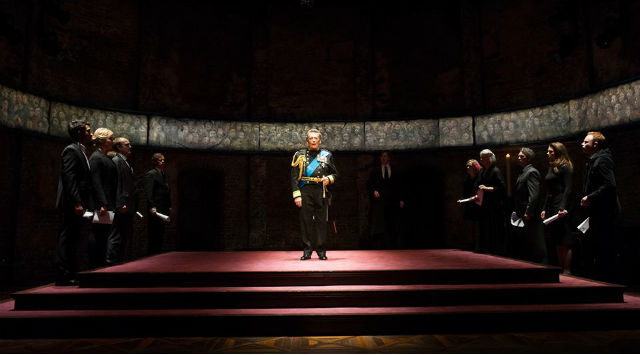
Many consider the monarchy to be an archaic and irrelevant institution. It is constantly under scrutiny and criticism, mostly for the notion that it bleeds the economy of money without seeming to contribute anything concrete. In Mike Bartlett’s imagined near future, Prince Charles finally ascends the throne, and we are presented with the astonishing circumstance of the new king exerting his right to influence governance of the United Kingdom. The silent figurehead decides to act according to his conscience, and opposes the passage of a new law by parliament, which results in unadulterated pandemonium and excellent drama. Bartlett’s story about the most famous family in the world is part Shakespearean, part tabloid influenced. The high and low brow concoction speaks to our perceptions about the royals; we think of them as enigmatic, grand and otherworldly, but also as gossip fodder, with petty concerns that our curiosity feels entitled to.

The show begins with exquisite humour, then develops increasingly heavy, ultimately ending in great pessimism similar to many cautioning fables about governments and democracy. Even though energy levels drop significantly as the plot turns serious, both its comedic and dramatic aspects are effectively conveyed. We are gripped by its fast moving scenes, each one short and scintillating, as though on steroids courtesy of prime-time TV. Its familiar personalities are seen just the way we expect them to be, but with additional dimensions that provide surprises to the startling narratives that unfold. Bartlett’s dialogue is endlessly amusing in its juxtaposition of contemporary speech with Shakespearean conventions, which the cast delivers with impressive skill and fluency.

Richard Glaves is a memorable Prince Harry, endearing and vulnerable just the way many would wish him to be. Humour in the production is extremely contained, but Glaves is able to find a sense of mischief within the restraints, consistently depicting emotional authenticity while asserting the entertaining qualities of his role. Charles is played by Robert Powell, imposing and noble, utterly believable as King. His portrayal bears little cosmetic resemblance to the character we see regularly on the news, but is full of nuance and texture. Even though appropriately stoic and stiff upper lipped, Powell brings complexity and psychological accuracy to the piece, replete with humane ambiguities that challenge our moralistic judgements. We find our opinions about Charles constantly shifting as we gain an increasingly deeper understanding of his nature and intentions.

We look for bad guys in the play, but there are no convenient answers. Democracy is what we value most in the collective entity we term society, and its machinations are evaluated in King Charles III in a theatrical but honest way. There are many Australians passionate about turning our country into a republic, and the play certainly pleads a strong argument for that case. Our democracy may be flawed but it is what we hold dear. In the play, Charles is a good man, and could well be a great leader, but he is not appointed by the people and further, unprotected by our legal and political processes. Civilisations need to work towards greater transparency, so that our progress may reach closer to democratic ideals, but the monarchy, by definition, contravenes those principles we revere in the highest regard. This story seems a wild one, but it resonates strongly and we believe its outrageous scenarios to be plausible, implying that there are dangers in our current systems, which although underestimated and overlooked, are in fact gravely threatening.

www.almeida.co.uk

Review: Golem (1927 Productions)

Venue: Roslyn Packer Theatre at Walsh Bay (Sydney NSW), Mar 16 – 26, 2016
Playwright: Suzanne Andrade
Director: Suzanne Andrade
Film, Animation & Design: Paul Barritt
Music: Lillian Henley
Cast: Esme Appleton, Will Close, Lillian Henley, Rose Robinson, Shamira Turner
Images by Bernhard Müller

Theatre review
It is in the nature of cities around the world to be obsessed with progress. Some economies are determined to find opportunities in international markets to bring communities out of poverty, while others are simply caught up in capitalism’s readiness to encourage and facilitate greed. Whether intentions are noble or otherwise, all of us in developing and industrialised countries are on a fast train to a future shaped almost exclusively by concepts of financial and technological advancement. Suzanne Andrade’s Golem is not only about the fear of being left behind, it is also interested in the involuntary embroilment that we often find ourselves, fuelled by the voracious appetite of today’s way of the world, with its monetisation of virtually everything and the impossibility of detaching oneself from these increasingly sinister systems of economy. Andrade’s work leaves no room for doubt about damage that results from the insatiable process of consumption. Disguised as machines of betterment, we participate and contribute to a never-ending order of perpetual buying, one with increasingly bigger promises at every step of the way.

The show combines the projection of an animated film, with live actors and musicians. It is a unique aesthetic, thoroughly idiosyncratic with a wide appeal that many would find delightful. The performance involves a high level of precision and technical sophistication (ironic considering its critique of technology), for a captivating experience that is as satisfying as its themes are troubling. A sense of wonder pervades the production, with a child-like tone that would speak to audiences young and old. Its message is grave, but also simple. It spells out what we secretly know to be true, but prefer to leave uncovered for we fear its inevitability and know not to act against it. Reality does not allow us to turn back the hands of time, but on stage, Golem is able to do just that. With brilliant imagination and refined wizardry, the show takes us to an earlier period of our industrialisation, and charts the path of our irreversible progress. We recognise all its allegories, and respond with appreciation, to the way it voices our apprehensions about modern life.

No one truly knows how to tame that monster within. We see it do its dirty work, and acknowledge our complicities. Some of us remain aware of its every pitfall, while others choose to turn a blind eye. Golem offers no alternatives or solutions to the civilisation it disparages, and its nostalgic longing for an innocent past seems futile. The result is either a melancholy that finds no emancipation, or the embrace of a certainty that is not all light. Tales of pessimism do their part in reminding us of the oft forgotten dark sides of being, if only to turn us into more compassionate people, but we have to make the best of what we do have, and even though far from perfect, it is easy to recognise the elements that are good in the way we live today.

www.19-27.co.uk

Review: Machu Picchu (Sydney Theatre Company / State Theatre Company Of South Australia)

STCVenue: Wharf 1 Sydney Theatre Company (Walsh Bay NSW), Mar 3 – Apr 9, 2016
Playwright: Sue Smith
Director: Geordie Brookman
Cast: Elena Carapetis, Darren Gilshenan, Luke Joslin, Annabel Matheson, Lisa McCune, Renato Musolino
Image by Brett Boardman

Theatre review
What we understand mid-life crises to be, seems relevant only to the privileged. Gabby and Paul are a middle class couple, both independently established and intelligent, reaching a point in time where their mortality suddenly comes into focus. Machu Picchu is about their reassessment of priorities and values, and although the threat of death is thankfully more than an abstract construct in Sue Smith’s play, the problems they face can often feel hyperbolic. Their struggles are honest, but also indulgent. Where others have had to just keep calm and carry on, Smith’s characters have the luxury of excessive rumination, which in turns disallows much drama or comedy to transpire. There are opportunities for philosophy, but those tend to be subsumed by domestic situations that prevent intriguing ideas from developing with satisfactory depth. Although emotionally distancing, the text has an enjoyable and innovative plot structure that reveals flair in the way its non-chronological timeline is formed. Scenes unfold unpredictably to keep us attentive, with surprising elements appearing at regular intervals for added variety.

We never quite warm to the characters in Machu Picchu. Director Geordie Brookman maintains an understated tone to proceedings, which gives an air of sophistication but also detracts from the story’s gravity. Gabby and Paul’s catastrophic state is comprehensible, but only intellectually so. The fears and trauma that they experience do not connect beyond the cerebral, and the work’s inability to encourage greater empathy gives the impression that its concerns are probably less meaningful than it wishes to be. Dramatic tension never becomes taut enough for us to feel strongly about the characters’ woes, and themes surrounding relationships and ageing, although earnestly portrayed, are not presented with sufficient ingenuity. The only people who are surprised by the effects of time seem to be on stage, and they add little to our own understanding of those ravages.

Lisa McCune’s performance as Gabby is focused and intense. There are many moments of authenticity in her depictions of disappointment, frustration and anguish, and her energetic approach helps sustain interest in her narrative, which can at times be lacklustre. The role of Paul is tackled by Darren Gilshenan who introduces an instinctive levity to the production. Gilshenan is a charming actor with tongue always firmly in cheek, but who proves capable of more serious material with this character’s adversity. It is not an entirely convincing coupling of actors, but the pair finds good rhythm with dialogue and together create imagery evocative of a bourgeois Australian identity that many will find familiar.

Clichés persist for their truth. Life is about the journey, not the destination. The Machu Picchu in Peru represents an ideal that exists in Gabby and Paul’s imagination, a place they have never experienced but that they believe to be special. In our lives, we often long for what we have yet to encounter, thinking that salvation lies therein. It is human to dream, but how much of dreams we allow to interfere with reality, is deeply personal, and determines the shape of each individual’s existence. It is ultimately inconsequential whether the protagonists get themselves to the location of their aspirations. What they are able to create and discover in their time before that fateful day is of great value, if they choose to recognise it as such.

www.sydneytheatre.com.au | www.statetheatrecompany.com.au

Review: Arcadia (Sydney Theatre Company)

stcVenue: Sydney Opera House (Sydney NSW), Feb 8 – Apr 2, 2016
Playwright: Tom Stoppard
Director: Richard Cottrell
Cast: Blazey Best, Ryan Corr, Honey Debelle, Andrea Demetriades, Jonathan Elsom, Georgia Flood, Julian Garner, Glenn Hazeldine, Josh McConville, Will McDonald, Michael Sheasby, Justin Smith
Image by Heidrun Löhr

Theatre review
Strong societies encourage each of their individuals to reach the greatest of their potential. Geniuses do not exist in vacuums; even though the uniqueness of their abilities easily becomes a source of isolation or detachment, they are part of communities that need to recognise the exceptional advantages they bring to the progress of our civilisations. In theatre, a conundrum exists with writers like Tom Stoppard. To produce a play such as his Arcadia, a team of highly accomplished talents must be employed in order that the density of his writing gets the best chance of finding elucidation, but that would necessitate considerable box office takings (at a time when government funding for the arts continues to plummet). Bringing Arcadia to the masses is a strange proposition. We are used to mindless sentimental tosh drawing in the crowds, but getting throngs into the Sydney Opera House for a night of intense intellectual exchange is, to put it mildly, ambitious.

Many will appreciate director Richard Cottrell’s sophisticated and vibrant take on the text, but there will be no shortage of viewers finding themselves entirely befuddled for its three-hour duration. The play is about mathematics, chaos theory, the second law of thermodynamics and English landscape gardens in the early 19th century, quite a different set of interests from what we encounter in Australia’s everyday media. Perhaps this is an indication that the public is actually capable of ingesting more than sporting scandals and partisan politics, but more realistically, this is a case of either seriously overestimating our cultural climate, or a very daring effort at lifting our game.

Art must challenge, but when it does, it often alienates. Cottrell’s show is energetic and seductive. Its jaunty rhythm and charismatic personalities are engaging but whether they make Stoppard’s subject matter enticing, is debatable. We are impressed by the passion depicted on stage. Some audiences might be able to get involved with the idiosyncratic obsessions of Arcadia‘s characters, but more are likely to be swept along by the cast’s incontrovertible thespian devotion.

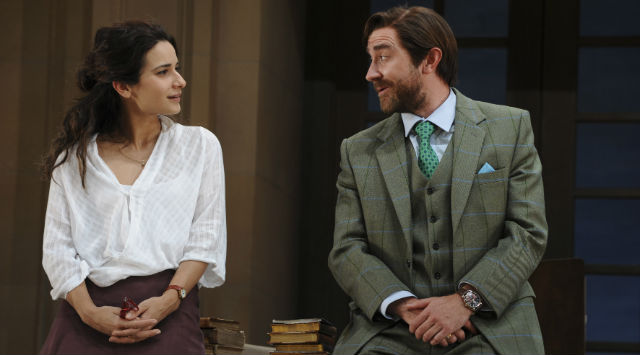
Key roles are marvellously performed with an infectious glee that for the most part, keep us within the action of the play. Andrea Demetriades is sensational as Hannah Jarvis, completely convincing and natural in her approach, and irresistibly compelling. What she presents is a model for the kind of acting that forbids the detection of any divergence between actor and character. Her conflation of the two seems effortless, yet there is no denying the theatricality that allows her to communicate intentions and emotions with brilliant clarity. Similarly delightful is Josh McConville as Bernard Nightingale, deliciously pompous and shrewdly sardonic, playing the role as an effective archetype but with a solid authenticity to keep us convinced and endeared.

Stoppard and his characters strive for a mastery of their domains. They locate and identify pieces to puzzles that will form a finished and satisfying picture to intellectual pursuits that inevitably become more complex as processes develop. Watching Arcadia asks of us that same commitment of attention and effort. It is not easy-going for the vast majority, but we can certainly jump back into the action whenever we find ourselves in moments of confusion, to continue on that chase for meaning. As a contender in the popularity contest that is the live theatre industry, this show is unlikely to be a crowd favourite, but as inhabitants of this city, we must hold deep gratitude that programming of this calibre exists, and is available to more than the privileged few.

www.sydneytheatre.com.au