Haus (Black Raven Productions)

Haus at the Tap Gallery 9th 14thVenue: TAP Gallery (Darlinghurst NSW), Jul 9 – 14, 2013
Playwright: Dimitri Armatas
Director: Dimitri Armatas
Actors: Ruth Murphy, Jorjia Gillis, Paddy Lester, Zacharie Di Ferdinando

Theatre review
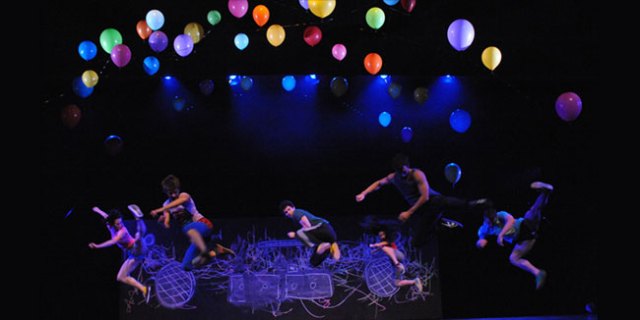
A small stage, at a small venue, telling a little tale, set in a tiny cellar, with simplicity and elegance. This is bare bones theatre, but with charming and meticulously thought out set and props. The script fits in perfectly with the space. All the action convincingly surrounds a table, content in the production’s budgetary and spacial limitations. Some effort is made with lighting to provide variation in mood and tone, but while design is effective, its realisation is unsteady. Perhaps the equipment lacks the flexibility required for its desired effects.

The story itself is a dramatic one, set in Nazi occupied Poland. The central theme of family allows some level of identification but the historic nature of the work is alienating. A good amount of tension and emotion is achieved, principally through the determination and stamina of actor Ruth Murphy, but one questions the relevance of a tale that seems to bear no contemporary parallels, and no obvious allegorical applications.  Additionally, the female characters are bewilderingly weak, and their powerlessness is discomforting and distracting.

Jorjia Gillis is miscast, but shows great potential. Although lacking in maturity, she has good presence and displays an unwavering devotion to her matronly character. Similarly, Paddy Lester shows great promise with a natural charm and has good physical agility that seems to elude most young actors. The aforementioned Murphy is a real talent, taking charge of the entire play through sheer grit and with meaningful clarity. Her thorough understanding of the play’s inner workings shows a very intelligent actor who understands not just acting, but also writing. She outshines other members of the cast at the play’s climax, and performs with such intense emotion that one is reminded of early twentieth century German Expressionism, which is completely delightful and suits perfectly the context of the work.

Director and playwright Dimitri Armatas is a brave young man with an idiosyncratic vision. Artists with original voices stand the test of time. There is no doubt that his creative facilities will flourish and the Armatas voice will reverberate for years to come.

www.facebook.com/…

Top Girls (New Theatre)

New TheatreVenue: New Theatre (Newtown NSW), Jul 9 – Aug 3, 2013
Playwright: Caryl Churchill
Director: Alice Livingstone
Actors: Sarah Aubrey, Claudia Barrie, Julia Billington, Maeve MacGregor, Ainslie McGlynn, Bishanyia Vincent, Cheryl Ward

Theatre review
Top Girls first appeared on the English stage 31 years ago in the Thatcher era. While feminism has evolved since that time, it is a concept that remains relevant, and to many, still a critically meaningful one. This landmark play is known to posit individual career successes of women as being similar to or even an extension of traditional patriarchy, thus retarding the gains of a common “sisterhood” movement. Times have changed, and Alice Livingstone presents a less critical view of that individual success, although carefully retaining the original intentions in espousing the importance of the collective, as though acknowledging that women’s choices today are all valid in their wild variances.

The surreal first act presents a group of historical women at a dinner party, all talking over one another, as if presenting monologues to very uninterested, self-absorbed listeners. This makes for difficult viewing, but establishes a context for the narrative that follows. This sequence also introduces the actors who very efficiently take over the space with tremendous confidence and in spite of the arduousness of the script, are all fascinating, convincing and importantly, very vigorously rehearsed. When the more conventional narrative begins in Act Two, these women seem to burst into life, presenting characters that are all flesh and blood where everything they say and do seems completely real. Livingstone has a knack for making every second count and every line meaningful. This is a group of actors who cherish every word, and nothing is left to waste. It is indeed an irregular occurrence at the theatre that one gets to be lost in the events unfolding, enthralled in all the action, hungering to see what is about to happen next. Julia Billington and Sarah Aubrey’s sibling rivalry, along with Claudia Barrie and Maeve MacGregor’s youthful innocence are at turns heartbreaking, and glorious.

Getting wrapped up in all the drama, however, runs the risk of distracting from the political arguments of the work. The lack of distance from the show’s magnetic characters almost encourages the audience to wallow too deeply in their individual turmoils, without an opportunity to “see the forest for the trees”. Does the enjoyment of a work like Top Girls have to muffle its subversive reverberations? Or is its agenda able to affect its viewer unconsciously? Regardless of the “big message” that this production’s audience may or may not receive, they will undoubtedly leave this theatre thoroughly sated and utterly invigorated.

www.newtheatre.org.au

The Importance Of Being Earnest (Burley Theatre)

earnestVenue: Reginald Theatre, Seymour Centre (Sydney NSW), Jul 11 – Aug 3, 2013
Playwright: Oscar Wilde
Director: Brandon Martignago
Actors: Michael Whalley, Kurt Phelan, Katie McDonald, Paige Gardiner, Andrew Benson, Tamlyn Henderson, Ana Maria Belo

Theatre review
Mason Browne has design credits for this production, and his work outshines all other components. Every visual aspect is beautiful, witty, thoughtful and sometimes quite sublime. The backdrop, costumes, furniture pieces, and even the colour palette of sweets on a cake stand, are delightful and faultless. He helps situate the play in a comfortable space between late Victorian England and modern day Sydney, which allows the show’s audience to effortlessly identify social and class mechanics which are crucial to the narrative.

Director Brandon Martignago has a flair for high camp, and his approach to comedy is dynamic and effervescent, so it is indeed these elements that he is able to extract best from Wilde’s writing. This production is best at its raucous moments, but falls down when the jokes are subtler and require more nuance. Martignago does interesting work, but needs to be more diligent in his casting. His actors all fit perfectly the physical requirements of this visually stunning show, but only half of them are able to deliver Wilde’s lines with enough complexity and skill.

Michael Whalley, Katie McDonald and Ana Maria Belo are stand outs, delivering hilariously broad comic moments, as well as clear character developments that move the plot along. Whalley is particularly strong and immensely likeable as John Worthing. His Noël Cowardesque voice is charming, and while he is usually playing the “straight” amidst the chaos, it often is his groundedness and well-timed reactions to the other players that help keep the story in the right trajectory.

Burley Theatre is an important figure on the Sydney stage. Its flamboyance and emphasis on beauty and production values are refreshing and well-received, and other groups should take heed.

www.burleytheatre.com.au

Arafat In Therapy (Jeremie Bracka)

brackaVenue: NIDA Parade Theatres (Kensington NSW), Jul 10 – 14, 2013
Playwright: Jeremie Bracka
Director: Pip Mushin
Actor: Jeremie Bracka
Music: Tomi Kalinski

Theatre review
Of course one gets trepidatious about the prospect of seeing an Australian Jewish actor tackling the role of Yasser Arafat as the show’s title would suggest, not knowing whether it would be an exercise of flaccid diplomacy, or disturbing controversy. Fortunately and very quickly into the performance, it does become clear that Bracka does not play Arafat for the entire duration, but prides himself on taking on a multitude of roles, switching at lightning speed between ages, accents and nationalities with extraordinary savvy and confidence. The biggest laughs, and there are many, come from Bracka’s uncanny ability at mimicking distinctive characteristics of familiar archetypes. He approaches all his characters with generosity and affection, which frees the audience into states of joyous laughter in spite of the frequently sensitive contexts.

Mushin’s direction excels at creating clear demarcations between Bracka’s many different characters. The audience is never left unsure about who is speaking, even though no costume changes or dramatic lighting effects are used. Careful and purposeful design with the actor’s positions, gestures and voice elevate this one-man show into a fast-moving, and thoroughly entertaining romp through many different times and spaces. The subtle, restrained use of music is cleverly utilised, and adds to comedic and dramatic effect whenever it is introduced. Sound in the new NIDA theatre is simply splendid. The set however, could probably add more to the show. The three pieces of furniture are sometimes distracting, and in fact all rather ugly. Bracka is uncomfortable sitting on the castor wheeled table, and is visibly distressed when having to move the items to their fluorescent marked spots.

It is noteworthy that the production does work for general Australian theatregoers even though it is concerned with sociopolitical events in Israel and the Middle East. A good understanding of those histories and conflicts would probably allow a greater insight into the nuances of the show, but its structure and plot are crafted well enough so that less aware  audiences would still enjoy every minute of this fascinating performance by a very funny Aussie.

www.jeremiebracka.com.au

Relative Merits (Lambert House Enterprises)

Les SolomonVenue: King Street Theatre (Newtown NSW), Jul 14 – 28, 2013
Playwright: Barry Lowe
Director: Les Solomon
Actors: Jeff Teale, James Wright

Theatre review
This 20th anniversary production of Relative Merits provides nostalgic value in abundance. The early 90s was a time when the Australian gay movement had reached its peak. The Mardi Gras held stronger socio-political meanings, and Sydney gays were still waiting for Ian Roberts to come out of the closet. Thankfully, some of the play’s content is outdated, such as the depiction of HIV and AIDS, which understandably colours its melancholic conclusion, but most of its themes still ring true and judging from the audience’s response, very much appreciated.

There were two moments of “television news reports” that seem overdone and probably would have been less intrusive as audio-only “radio broadcasts”, but lighting design was thoughtful and sensitive. The show’s staging is interesting, making good use of the awkward space that the theatre provides. The actors are forced to move around, encouraging a more physical performance than the script actually demands. This assists the young actors, and prevents them from being left with too many stagnant monologues. The director Les Solomon is particularly effective in the highly emotive passages (which are many). It is impressive to see the two young men deliver passionate and moving performances, not just drawing the audience into the drama of the work, but also displaying a reminder of the intensity that was fundamental to the political atmosphere of the time.

The actors are quite clearly inexperienced, and they do play things very big and loud, but their performances are compelling and serve the story very well. There is a lot of dignity and purity in their work. Their depth of understanding of the text is admittedly surprising, and it is the very clear and earnest telling of their stories that is the highlight of the show. The intimacy created on stage is undoubtedly moving, and is a real accomplishment with all due credit to both players and their director.

www.kingstreettheatre.com.au

Tiger Country (Little Spoon Theatre Co)

Little Spoon Theatre Co.Venue: Sidetrack Theatre (Marrickville NSW), Jul 3 – 13, 2013
Playwright: Jonathan Gavin
Director: Lara Kerestes
Actors: Leighton Cardno, Wade Doolan, Karli Evans, Lara Lightfoot, Matt Stewart

Theatre review
Advance promotional imagery for Tiger Country has been polished and seductive in spite of its “rough as guts” subject matter. Accordingly, visual design of this production is also exceptional. Most costume pieces are well thought out, helping to  materialise some of the most frightful and revolting characters on the Australian stage. Set design is innovative, efficient, and creates the appropriately sinister and vulgar mood in which all the action takes place. Lighting design is sophisticatedly intelligent, operated accurately and sensitively by the show’s crew. Design and stage management for this low budget production is truly incomparable.

Disappointingly, the performance feels under-rehearsed even though the actors do genuinely display a good level of commitment and discipline. Lara Lightfoot stands out with a certain interior authenticity that matches her character’s physical crudeness. In addition to the fragility inherent in the script, she brings strength and bravery that help create a fascinating and multi-dimensional role.

The pace of the entire piece feels monotonously slow, which is more fitting in its darker moments, but the show fails to buoy up in several key scenes that need to be contrastingly lighter or louder. Perhaps several edits should have been made for things to be more taut and tense. The plot tries to gravitate toward a central character, “Chuckles” who takes centre stage at the conclusion, but too many sub-plots and support characters dilute and distract from what would have been a more gratifying and direct narrative.

www.littlespoontheatre.com

Mrs Warren’s Profession (Sydney Theatre Company)

STC_MrsWarrensProfession_HelenLizzie_AM18323.jpg  788×1181Venue: Wharf 1 Sydney Theatre Company (Walsh Bay NSW), Jul 4 – 20, 2013
Playwright: George Bernard Shaw
Director: Sarah Giles
Actors: Helen Thomson, Lizzie Schebesta, Eamon Farren, Drew Forsythe, Martin Jacobs, David Whitney

Theatre review
This cast of six in Shaw’s late 19th century work is truly remarkable. All players are convincing, nuanced and colourful, and their chemistry with each other is frequently breathtaking. The two female leads are particularly enthralling, both effortless with their magnetic charisma. It is important that this mother-daughter pairing appeals to the audience symmetrically in order for the philosophical ideas in Shaw’s work to be effective, and in the case of this production, this balance is indeed one of its great strengths.

Ms Helen Thomson plays Mrs. Kitty Warren, and her performance is astoundingly brilliant. With every entrance, the stage is lit by her luminous presence, which is entirely appropriate and necessary for such a grandiose and controversial character. Thomson’s every calculated variation in her voice and perfectly designed physical gestures create not only the most alluring and commanding character onstage, but also presents a vigorous philosophical argument to the central theme of morality that could have easily collapsed at the hands of a lesser actor.

While it is easy to be lost in the actors’ magnificence, this production of Mrs Warren’s Profession explores morals, money and motherhood both effectively and intriguingly. It is a testament to the strength of Giles’ direction that the themes in this 120 year-old play still come across contentious and fascinating.

Special mention must be made of the beautiful costume and hair design, which are effectively transformative for the players, and help to create a sense of time and space within the minimal set design. The backdrop, also visually stunning, works effectively in conjuring up visions of splendid English gardens within the confines of a modern black box theatre. Music between scenes sets the tone perfectly for the action that is about to begin again.

Mrs Warren’s Profession by the Sydney Theatre Company is quite simply unmissable.

www.sydneytheatre.com.au

Rocket Man (Subtlenuance)

Rocket_Man_Hero_Shot_low_res.jpg  902×586Venue: TAP Gallery (Darlinghurst NSW), Jul 4 – 14, 2013
Playwright: Paul Gilchrist
Director: Paul Gilchrist
Actors: Daniel Hunter, Sylvia Keays, Alyssan Russell, Stephen Wilkinson
Photo Credit: Zorica Purlija

Theatre review
There’s something charming about a play that transports you from the real world, and into a world of theatrical hyperrealism. The actors’ performances, the uncomplicated set, the lack of lighting and audio effects, the language and structure of the script, all contribute to creating an unabridged, uncondensed fly-on-the-wall glimpse into a single hour inside one small bedroom.

Director and playwright Paul Gilchrist begins with several interesting self-referential elements that help connect with and acknowledge the audience, but mostly, his script seems to be concerned only with developing four characters’ journeys within that one hour. This allows a wealth of scope for the actors to explore and actualise their individual roles; and it is indeed their performances that are the most gratifying about this production. There is however, a fragmentation that exists from a lack of chemistry between certain characters, and prevents the story from being even more compelling. The actors have developed their own characters thoroughly and convincingly but they do seem to require a greater understanding of what the other players are trying to achieve, in order to incorporate those other perspectives and tell a more authentic story.

Stephen Wilkinson plays a supporting role in terms of stage time, but gives a wonderfully honest performance, creating a Justin that is truly touching in his vulnerability (even though his spectacles and hairstyle suggests that Justin should probably be an accountant, rather than a house painter). Daniel Hunter is central to the story and lives up to the challenge. His transformation from adorable man in underwear, to violent freaked out monster during the course of the play, without a moment spent offstage, is impressive. If only his leading lady would be more responsive when he does all he can to antagonise her.

www.subtlenuance.com

The Twins Pantalone (Fools In Progress Inc)

Venue: King Street Theatre (Newtown NSW), Jun 27-29, 2013
Actors: Guillaume Barrière, Bianca Bonino, Nicholas O’Regan, Ben-Jamin Newham, Fabiola Pellegrino

Theatre review
This production with its classic plot and archetypal characters is a delightful introduction into the world of Commedia dell’Arte. Technical issues with lighting and sound plagued the opening night performance, but did not prevent the show from being consistently comical and funny. The cast of five showcases the silliest of comedies, with the most serious of dedication and skill.

Moments of contemporary references and frequent use of modern language is refreshing, making its humour more immediate and accessible. Nicholas O’Regan is a stand-out performer, with his energy and agility, as well as a keen sense of timing. His use of facial expressions is impressive, considering the masks cover most of the players’ faces. O’Regan, along with Barrière worked with sexual innuendo effectively, and can be very hilarious depending on your personal tastes and capacity for off-colour humour.

www.kingstreettheatre.com.au

The Unthinkably Unsinkable Ship (Fools In Progress Inc)

commedia1Venue: King Street Theatre (Newtown NSW), Jun 20-22, 2013
Actors: Guillaume Barrière, Bianca Bonino, Ross Brown, Scott Parker

Theatre review
Commedia dell’Arte is today a rare art form, especially in Australia where conformity in the arts (and everywhere else) is order of the day. This production’s attempts at creating laughter within a tradition of forgotten rules and atypical disciplines, instead of resorting to the common and crass is laudable.  It is indeed that lost discipline with its specific sense of humour and use of classical physical movement and masks, that is the most interesting feature of this show.

The overall direction is kept casual, allowing the play’s performers to distinctly showcase their individual skills and training. Especially Guillaume Barrière and Bianca Bonino, who present an unconventional form of comedy that is simultaneously restrained and effervescent. The rest of the cast is also delightful, each given appropriate space for expression, allowing them to utilise their own idiosyncrasies to create characters that move the plot along.

Lighting design however, could have been more helpful in preventing each scene from looking and feeling too similar. Costume is surprisingly effective, with every article of clothing serving a purpose in illustrating character types and also in providing actors with additional creative devices.

It is a great merit of the theatrical arts that personalities from distinct backgrounds can collide and collaborate. It is at the theatre that moments can be concocted on a singular stage that is completely otherwordly and outside of the ordinary life.

www.kingstreettheatre.com.au