Review: LKY (Metropolitan Productions)

lkymusicalVenue: Marina Bay Sands (Singapore), Jul 21 – Aug 16, 2015
Book: Tony Petito
Story: Meira Chand
Music: Dick Lee
Lyrics: Stephen Clark
Director: Steven Dexter
Cast: Sharon Au, Benjamin Chow, Radhi Khalid, Vester Ng, Adrian Pang, Dayal Gian Singh, Sebastian Tan

Theatre review
Propaganda involves the telling of lies, usually by governments, to influence a population toward its own conception of an endorsed attitude. Aside from the always contentious nature of that sense of an approved and absolute outcome, what constitutes the nature of lies, and truth, are always ambiguous. There is no doubt that the achievements of Singapore’s legendary founding father, Lee Kuan Yew remains a stunning accomplishment, but the stories surrounding the man, like those of every other personality of such enormous fame, are enigmatic, sometimes tenuously so, and constantly debated over. In LKY, attempts at interpreting historical events leading up to the independence of Singapore, are understandably moderate. In the face of ever-conflicting memories and dissenting opinions of a shared past, the musical is careful to depict the country’s biography with sufficient heterogeneity to provide an impression of diversity in order that the work does not translate with a conceited Disney-like quality of convenient idealism, but it does predictably, take the last word, ultimately adhering to dominant ideologies of “what must have been”.

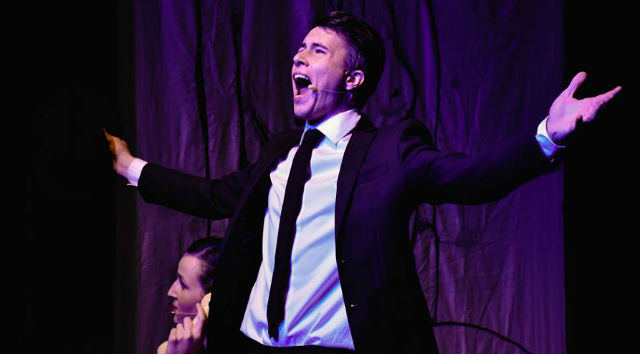
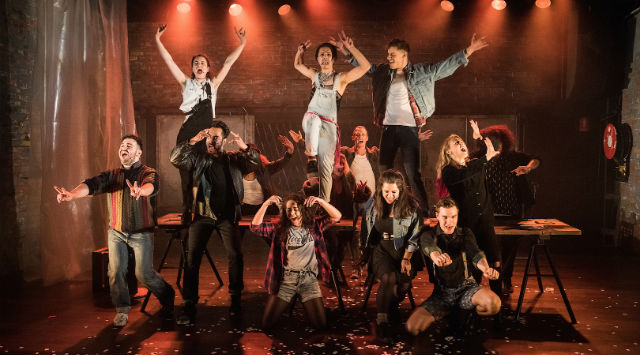
It is clear at every stage of the plot that no surprises will have an opportunity to rear its ugly head, which results in storytelling that suffers from a lack of dramatic tension, although the component of sentimentality is certainly not in shortage. Music by Dick Lee is expertly created not only to deliver the compelling emotional power equivalent to that of any successful mainstream musical, it uses patriotic sensibilities to manufacture irresistibly rousing tunes that takes hold of its audience with a level of conviction impossible to deny. Steven Dexter’s sophisticated direction ensures a captivatingly energetic show, with thoughtful and dynamic use of space that fascinates our senses at all times (brilliantly visualised by designers, Gabriel Chan on lights, and sets by Takis), and with distinct and coherent characters who help the often complex narrative flow with swift and graceful efficiency.

The mammoth task of encapsulating Lee’s extraordinarily active life over a twenty year period is less elegantly developed. Although Tony Petito’s book is not overly reductive of the period, its many renderings of significant moments in Singapore’s 50’s and 60’s are fleeting and, without the luxury of time for deeper political dissection, those crucial milestones become confusing for an audiences that are unlikely to be aficionados of political history. Also disappointing is the show’s inability to humanise its subjects, with an air of mythology persisting in its representation of an impossibly earnest host of personalities.

Adrian Pang stars as Lee, in a performance full of polish, but with no room for edge. Pang’s work is confident and accomplished, and in spite of an ordinary singing voice, provides a gravity to his clearly simplified role, which prevents the production from turning too lightweight. Without allowing a more multi-dimensional character to form, our affiliation with the icon is kept distant. Revealing no flaws, we are prevented from relating to Lee with greater closeness, and may even begin to regard his story in the production with some level of suspicion. Lee’s wife Kwa Geok Choo is the only feminine presence in a cast of more than 20. It is deeply unfortunate that women are eradicated from this important tale of nation building, and even though Kwa is shown to be highly intelligent, her role symbolises scarce more than a supportive and painfully traditional woman behind the great leader. Performed by Sharon Au, the part is virtually inconsequential to the show’s narratives, but due to her brief appearances in many key sequences, it is a memorable one. As with the title role, Kwa is written with a woeful blandness that the actor evidently finds challenging for creating anything substantial. There is a marked absence of authenticity in the woman being portrayed, but the two leads demonstrate a comfortable chemistry that delivers an ultimately convincing wife and husband pairing.

Stronger in voice, and in charisma, is Benjamin Chow as Lim Chin Siong, Lee’s adversary in the piece, who has the advantage of being attributed both light and dark qualities, thereby allowing a more nuanced approach than others. Chow manifests a commanding physicality that confirms his character’s leadership qualities, and his construction of a passionate figure of politics has a magnificence that frequently overshadows the comparatively mild “goody two shoes” version of Lee on this particular occasion. It must be noted also, that Radhi Khalid as Tunku Abdul Rahman, and Dayal Gian Singh as S. Rajaratnam are important features in a too frequently monoethnic perspective of early Singapore.

Every nation’s identity requires its own heroes and myths. The arbitrariness of borders are made material through the weaving of histories and legends, so that meaning and values can be manufactured for the hope of unifying peoples. Tensions always exist in the pursuit of common ideologies, because truth is always multifarious. In art, all things are possible but truth is fundamental. In LKY, the truths that we see are valid, but they do not offer fresh perspectives and serve only to reinforce the status quo. Mozart is played worldwide every minute, and Shakespeare is re-staged every day. The repetition of stories is central to being human, for the need to shape our understanding of the world never ceases, but artists have the responsibility to contribute something beyond common knowledge, especially in the making of something that is more than familiar.

www.metroprod.com

Review: The Women (New Theatre)

Venue: New Theatre (Newtown NSW), Aug 11 – Sep 12, 2015
Playwright: Clare Boothe Luce
Director: Deborah Jones
Cast: Heidi Baleisis, Melissa Burgess , Kailey Higgins, Jordan Keyes-Liley, Celia Kelly, Susan M Kennedy, Jess Loudon, Emma Louise, Joy Miller, Nell Nakkan, Lauren Orrell, Alexandra Plim, Jade Potts, Eleanor Ryan, Annie Schofield, Helen Stuart , Vola Vandere, Sandy Velini
Photography © Bob Seary

Theatre review
The play first appeared in 1936, with film versions following in 1939 and in 2008. Clare Boothe Luce’s The Women features a big roster of characters, all female, but it does not fit conveniently into notions of feminism. Arriving several years before the first World War, the play embraces life in the post-Great Depression era, reflecting no concern for big social issues of the day. Girls grew up to become heterosexual wives, and success was measured by her ability to keep a happy home. By today’s standards, the stakes in the play are incredibly low, but Boothe Luce’s exaggerations of domestic upheaval remains amusing, even though much of its regressive politics are undoubtedly irritating, notwithstanding its many outspoken and bold characters.

Direction by Deborah Jones pays homage to films and stars of the era, with outlandish performances and vaudeville humour pitched at an ideal where bigger is better. It is a welcome revisit to an almost forgotten style of theatre that proves to be unexpectedly refreshing and often very funny indeed. The production is not completely successful at bringing clarity to all depictions of characters and narratives, but every sequence is entertaining, with impressive power from a cast that is determined to play hard.

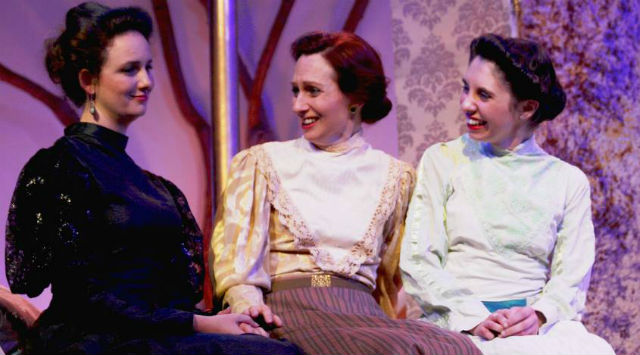
The very enthusiastic Jessica Loudon is Sylvia Fowler, a shallow and narcissistic troublemaker who fans every flame only to feign agony when lives are burnt to ashes. Loudon’s brand of brazen sass is a seductive combination of Mae West and Lucille Ball, and her persistently vibrant presence is an infectious one, which grabs our attention and demands that we engage in the party, of which she is the scintillating life of. Also outstanding is Helen Stuart who plays Mary Haines, the jilted misérables. It is not a particularly attractive role, but the actor brings grace and a beautiful authenticity to her depiction of heartbreak, desperation and betrayal that can only be met with empathy. Her focus needs greater tenacity, but she makes us believe, and understand, the far-flung world of privilege that she inhabits. Jade Potts plays a smaller role but leaves an excellent impression with a charming portrayal of a feisty and intelligent young girl.

It must be remarked upon that although the production makes the wise decision of not casting black women in the roles of servants, actors who are not of Caucasian appearance, are noticeably absent from the very large group of 18. We must celebrate a production that features talented women of all ages and sizes, but monoethnicity at this particular juncture of time and space, is an uncomfortable issue that requires attention.

In The Women, characters are split into madonnas and whores, and all of them are defined against unseen men who wield control over their emotions and destinies. We have, thankfully, evolved far enough to be able to recognise its many archaic and disappointing representations of womanhood, but the production needs to acknowledge more distinctly, this distance created by feminist developments over the decades, for a more meaningful approach to the text, and potentially, for greater comic effect. We have travelled a great distance from “there’s only one tragedy for a woman; losing her man!” of Boothe Luce’s script, and although it is certainly true that social equity remains a struggle, we can at least be grateful to be able to quote instead, the immortal Joan Crawford’s words in Mommie Dearest, “Don’t fuck with me, fellas. This ain’t my first time at the rodeo.”

www.newtheatre.org.au

Review: Ruby Moon (Samsonite Productions)

samsoniteproductionsVenue: The Factory Theatre (Marrickville NSW), Aug 12 – 23, 2015
Playwright: Matt Cameron
Director: Johann Walraven
Cast: Pash Julian, Samantha Lee
Image by Jacob Strong

Theatre review
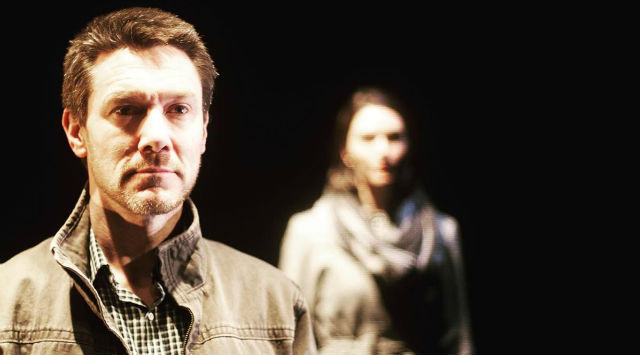
Matt Cameron’s Ruby Moon is a dark exploration into the human condition at extraordinarily difficult times. The Moon family experiences a profound loss, and we witness the manifestations that follow, in psychological and behavioural terms. Cameron’s writing is morbidly fascinating and very entertaining, with an unusual approach to the way we express bereavement. The script finds a beautiful balance between humour and anguish that allows for a thoroughly amusing theatrical experience in spite of its undeniable gravity. The strange dialogue and quirky characters are brilliantly constructed for a unique experience that can still engage our emotions.

Direction of the work by Johann Walraven brings an intrigue to the stage that befits the mysterious nature of Cameron’s play, and the unpredictability of the plot is successfully preserved in this incarnation. There are good attempts at offbeat comedy, but the haunting qualities of the text are not sufficiently explored. Design aspects are elegantly executed but they need to be pushed further for a stronger gothic feel to take hold that will help to provide greater drama. Also lacking in drama are its performances, which present insufficiently, the fundamental elements of sorrow and desperation that should feature prominently in the trauma that the Moons go through. However, both players Pash Julian and Samantha Lee show good focus, and demonstrate ability at versatility in the wide range of characters they inhabit.

The dark side of humanity is full of potential for any artist to create work that would communicate with satisfying depth, but we all have a special familiarity with personal pain that disallows any hint of falseness or inaccuracy when theatre decides to confront those inner demons. Ruby Moon is at its best when we catch glimpses of the unbelievable horrors that life is capable of delivering, but its lighter sections are also charming enough to retain our attention at other times, even if we do hanker for the nightmares to continue more powerfully for everyone concerned.

www.samsoniteproductions.com

Review: The Present (Sydney Theatre Company)

Venue: Roslyn Packer Theatre at Walsh Bay (Sydney NSW), Aug 4 – Sep 19, 2015
Playwright: Andrew Upton (after Anton Chekhov’s Platonov)
Director: John Crowley
Cast: Anna Bamford, Cate Blanchett, Andrew Buchanan, David Downer, Eamon Farren, Martin Jacobs, Jacqueline McKenzie, Brandon McClelland, Marshall Napier, Susan Prior, Richard Roxburgh, Chris Ryan, Toby Schmitz
Images by Lisa Tomasetti

Theatre review
What is now known to be Anton Chekhov’s Platonov, was an unpublished manuscript discovered a decade after the playwright’s 1904 death. His sister had called it “a long play without a title”, and it remains an obscure component of the master’s oeuvre. Andrew Upton’s The Present is an adaptation of the aforementioned work by the young Chekhov, and is significantly transformed from its original manifestation. The play is now updated, with events moved to the mid 1990’s, and its structure and language thoroughly altered to address our sensibilities in the early twenty-first century.

The play reads like a tribute to Chekhov, with his distinctively dry sense of humour and his legacy in Russian realism featuring prominently in its style and tone, but The Present is much more powerful and immediately provocative than its predecessor. Act One begins with Anna Petrovna firing a pistol into the audience, an act of aggression that warns us of the exhilarating ride that is to follow. Scenes are short and sharp, with vibrant characters full of intriguing quirk engaging in intense dialogue. Even in its early moments before “shit went down” (Upton’s words), tension is palpable and we always sense that an eruption is imminent. In fact, the play is repeatedly explosive, and at three hours, its ability to keep us on the edge of our seats is a remarkable achievement.

Directing the production is John Crowley, who introduces a wild and ferocious energy to the typically Chekhovian setting of gentries, then enforcing an air of restraint over its characters to create a sense of agonising oppression, that threatens to burst at the seams with every hint of conflict and confrontation. Crowley’s astounding ability to sustain the very satisfying comedy of the production throughout its increasingly disastrous and painful chain of revelations, creates a rare viewing response that is strangely potent. The tragicomedy manages to elicit feelings that alternate between mirthfulness and dread, almost to reflect the complexity of lived experience, and surprises us with the unexpected sensation of having these seemingly incompatible emotions co-exist singularly.

The philosophical aspects of The Present are undeniable, but they are presented with subtlety and benevolence, frequently through metaphor and symbolism not unlike Chekhov’s preferred mode of expression. Often with a playful, but ultimately poignant approach, we are urged to consider its universal themes from a personal perspective. Love and loss, honesty and delusion, hope and despair, all become resonant dichotomies, no matter our distance from the Russian summer of 1993. Design elements of the show are elegant and fairly minimal, but space is dutifully manipulated to frame performance and to aide the projection of its actors’ work, so that our attention falls squarely on their unbelievably nuanced portrayals. There are no distractions from what the play wishes to convey, but its central construct of materialism versus truth, might be a bitter pill for some regardless of the clarity at which the message is laid on stage.

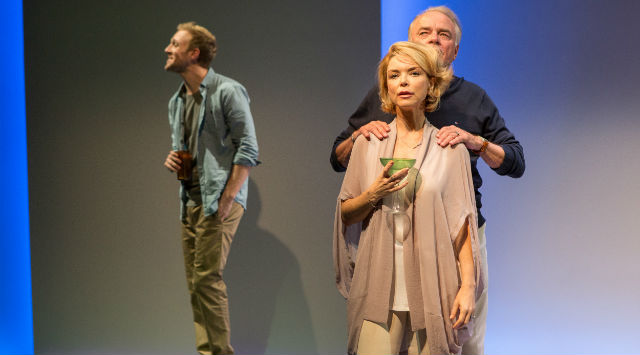
Cate Blanchett attacks her role, and the tenets of the text, with a forceful conviction that can only emerge from the extremely talented. The star’s undisguisable passion for her craft is a coherent match for the determination and fortitude of Anna, a woman coming very close to the end of her tether. Her portrayal of drunken and unhinged abandonment in Act Two is sheer theatrical delight, and a beautiful blend of studied precision with courageous impulse. Blanchett’s incredible allure keeps us spellbound, and she uses it to deliver the many thoughtful intentions of the play, which we absorb with enthusiastic acquiescence. Mikhail, the self-loathing cad brimming with regret, is played by the equally stellar Richard Roxburgh, with magnificent comedic aplomb. His flawless timing and uncanny capacity to intuit his audience’s temperament at all times, ensures that we are fascinated, entertained, shocked and moved, at his will. Roxburgh amuses us with outrageous frivolity, while lucidly communicating his character’s experiences and troubles at impressive depth. We identify intimately with Mikhail’s destruction, and the actor’s work leaves us wanting for nothing.

Questioning life, is not a daily preoccupation for many, but it is the business of artists to investigate and challenge the way we view our world, and then present to us, all that they discover. Andrew Upton’s The Present is concerned with contemporary life, and the choices we make as individuals. It is interested in the definitions of fulfilment, success and happiness, and Upton gifts us with the urgent encouragement for the pursuit of enlightenment while time rushes past. Life is meaningless without death, and while the end is always nigh, it is the now that must be cherished, and it is in the now that we must find redemption.

www.sydneytheatre.com.au

Review: Artwork (Carriageworks)

carriageworksVenue: Carriageworks (Eveleigh NSW), Aug 5 – 8, 2015
Artists: Branch Nebula

Theatre review
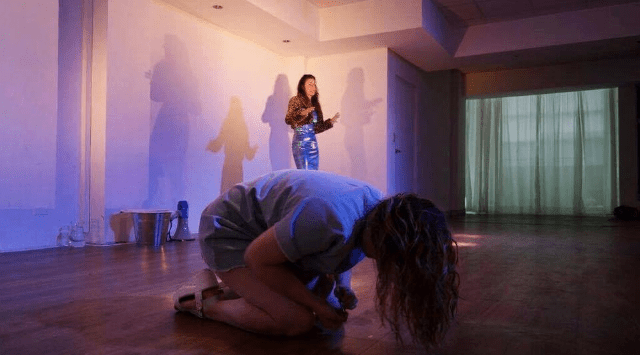
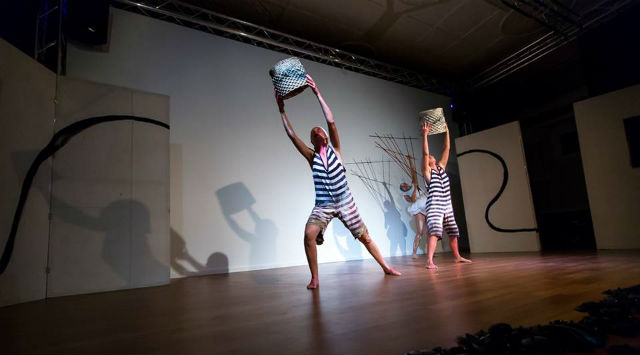
In Branch Nebula’s Artwork, eight members of the general public respond to a job advertisement and are put on stage at short notice. They follow prompts and instructions provided in a variety of ways, and become the performers of a theatrical piece before our eyes. The results are stunning. Our senses are skilfully engaged by a talented team that includes Mirabelle Wouters (set and lighting design) and Phil Downing (sound design), who create a highly sophisticated atmosphere wherein the cast carries out tasks that become the content of the show unfolding.

The range of activities is plotted shrewdly. Even though stories and narratives are never manufactured in a conventional sense, the audience is forced to establish meaning from personal perspectives based on the collection of symbols that arise from the work’s very articulate abstractions. In addition to machinations of the actual artwork occurring on stage, our attention is drawn to further themes about work and of art in general, which it explores at varying levels of subtlety. In the realm of work, ideas about the economy and capitalism relating to individual volition and the objectification of the disadvantaged, make for the show’s most pointed moments. Concepts about artistic intention also resonate with power, as we witness the “workers” carrying out mindless undertakings, as we formulate for ourselves, streams of meanings and consequences independent of their subjective processes and experiences.

Artwork is a gentle exploration into democracy and social equity. It looks at the state of our societies as they exist, and implicates its audiences and participants into the ways our world is allowed to function. The piece places us in the position of privilege, in order that we may achieve greater awareness about the failures of social and political systems, of which our involvement cannot be refused. In the stillness of Artwork, we are confronted with the fractures of our humanity, but we also discover its inherent and invulnerable strength, and a precarious hopefulness that we cannot help but embrace.

www.branchnebula.com | www.carriageworks.com.au

Review: Seventeen (Belvoir St Theatre)

Venue: Belvoir St Theatre (Surry Hills NSW), Aug 1 – Sep 13, 2015
Playwright: Matthew Whittet
Director: Anne-Louise Sarks
Cast: Peter Carroll, Maggie Dence, John Gaden, Genevieve Lemon, Barry Otto, Anna Volska
Images by Brett Boardman

Theatre review
It is the last day of school, and five seventeen year-olds are celebrating the milestone with great happiness and too much booze. Performed by actors in their seventies, the play promises to offer refreshing perspectives of a rite of passage that most of us are familiar with. Matthew Whittet’s script for Seventeen explores teenage life at its later stages, when adolescents begin to think about the future, and the choices they inevitably have to make. The writing’s approach is a gentle one that shows a mainstream idea of youth that does not use its characters to shock or sensationalize. The group seems thoroughly regular, and it is worthwhile giving them a voice, without requiring them to be controversial or achieving anything particularly extraordinary or dramatic. Their concerns and interests are revealed with honesty, and the play derives its dynamism from the colourful optimism of its teenage personalities, but challenges exist in dealing with what is essentially quite pedestrian experiences. The text has enough vibrancy and surprises peppered through its plot, but if it is to be performed by age appropriate actors, one can imagine the work to lack a sense of theatricality, and come across too ordinary. If casting much older players is the only way the play gains its edge, it can be interpreted that the manoeuvre is somewhat gimmicky, but the production does manage to use the age discrepancy in fascinating ways at many points.

The comedic components of the show are effective and very memorable. Watching these seniors mimic the physical and verbal expressions of persons much younger is a joy, and we never tire of the immediate and awkward juxtaposition of behaviour against body, young against old. Director Anne-Louise Sarks introduces that humorous sense of contemporariness into much of the piece, and the cast executes them with triumphant results, no matter how juvenile or, at times, embarrassing. Less successful however, are the many scenes of quite serious conversations in the latter half, where its characters indulge in romantic squabbles, and the performances loses its ironic charm. The tone of the show turns earnest, and as it moves away from comedy, it simultaneously loses energy and tension, and the strong focus placed on puppy love shifts the production from a thoroughly amusing one, to something altogether less involving.

At the centre of Seventeen is a meditation on how we conceive of the future, at different stages of life. A particularly moving scene involves Tom declaring his feelings about leaving his town and his friends, at the conclusion of his high school education. Actor Peter Carroll performs the scene with outstanding sensitivity and intuition, communicating the duality of his character’s sadness, and the undeniable poignancy of an older man saying goodbye to the mortal world. Carroll’s power on stage comes not only from his ability to tug at our heartstrings but also from his amazing agility that defies our beliefs about ageing. Equally magnetic is Barry Otto as the kooky and childlike Ronny, a character on the periphery, unpopular but undefeated, always exuberant and full of kindness. The role needs better integration into the play’s main narratives, but his presence is a touch of innocent tenderness that provides a balance to the boisterous and libidinous goings on that gives cohesion to the stories. Genevieve Lemon plays the very cheeky and adorable fifteen year-old Lizzy with expert comic timing and a very pronounced stage presence. We welcome each of her entrances and anticipate every one of her hilarious punchlines.

Time may not always be linear, but in Seventeen, we are reminded that turning back the clock is impossible, and that the desire to do so, is misguided. The elderly are able to contribute so much to society that cannot be matched by the young. Of course, the reverse is also true, but wisdom that comes from age and experience cannot be replaced or surpassed. What we witness in the show are stories about the very immature of our communities, presented by a group with centuries worth of combined insight and intelligence. They do not say very much more than what is asked of them, but we are glad to have them in our midst, putting on display their talent and skill, all for our benefit.

www.belvoir.com.au

Review: What Is The Matter With Mary Jane? (Seymour Centre)

seymourcentreVenue: Seymour Centre (Chippendale NSW), Aug 4 – 8, 2015
Playwright: Wendy Harmer, Sancia Robinson
Director: Sancia Robinson
Cast: Gabrielle Savrone
Image by Jodie Hutchinson

Theatre review
Wendy Harmer and Sancia Robinson’s What Is The Matter With Mary Jane? gives exposure to the experiences of patients who suffer from acute eating disorders. It is a passionate work with clear intentions of informing society about lives that are often shrouded in the secrecy and shame of anorexia and bulimia nervosa. The play has a desire to improve awareness and perhaps inspire political action that will help with healing or eradicating these horrific diseases from our communities, which results in a text that is full of enthusiasm but also clinical at times. The work focuses on the processes involved in, but not the reasons behind its protagonist’s affliction, so that it can represent a wide range of experiences unified by manifestations of the illness. The play acknowledges that the causes of these disorders vary widely, but the omission of psychological insight or analysis of specific events that have contributed to its unfortunate circumstances, is a significant decision that prevents the show from engaging with its audience more deeply. Sentimental dramatics might not always be elegant, especially in profoundly personal disclosures, but they are often necessary in helping our heads and hearts in becoming more involved with the story and its message.

In directing her own biography, Robinson brings to the stage an intimacy and truthfulness that can only come from having lived through the ordeal very personally. There are some shocking revelations, but the authenticity in her style of presentation disallows any room for doubt, and important facts from Robinson’s recollections are imparted in the process. Gabrielle Savrone’s portrayal of pain is accurate and moving. We are convinced of her character’s divulgements, and she satisfies the purpose of the work by alerting us to the nature of the problem from personal and societal perspectives. The lighter portions of the play are less effectively performed, but the actor’s conviction is strong, and her work develops with more power as the play progresses.

Self-image is an integral part of every individual’s being. How we live depends largely on how we see ourselves, and for many, physical appearance is a component that can turn into an all-consuming preoccupation, which is actually symptomatic of an impairment that lies deeper than skin. What Is The Matter With Mary Jane? demonstrates an extreme consequence of untreated emotional difficulties that requires our vigilance. Compassion towards others, and having a healthy attitude towards other people’s bodies is a good, and necessary start, that will quickly evolve into the same generosity that we must afford our selves.

www.seymourcentre.com

Review: Great Island (Beside Ourselves Productions)

besideourselves1Venue: 107 Projects (Redfern NSW), Jul 29 – Aug 9, 2015
Playwright: Pierce Wilcox (after Pierre de Marivaux’s L’Île des esclaves)
Director: Pierce Wilcox
Cast:  Anna Chase, Rob Johnson, Harrison Milas, Eleni Schumacher, Nicholas Starte
Image by Isabella Andronos

Theatre review
Absurdity is often used on stage to communicate ideas of a political nature. The exaggeration of circumstances helps us understand forces at work in society that might be too guileful for our anesthetized senses. Pierce Wilcox’s Great Island discusses capitalism through a series of very broad comedy sequences that sees very energetic and inventive performances, and although mirthful in general, its obscure humour delivers few laughs, and only ambiguous meaning can be derived from its wild constructs. Nevertheless, the work remains a fascinating one with a mischievous edge that keeps viewers engaged.

Although not uniformly strong, the cast of five is a spirited one that has a surprisingly cohesive approach to the material at hand. Nicholas Starte plays the King with a disciplined command of physicality and voice, and an easy confidence that endears him to the crowd. The actor has a natural eccentricity that suits the style of the production, and a cheeky effervescence that many will find impressive. Also accomplished is Rob Johnson who brings a necessary polish to the chaotic stage, and a conviction that gives a dimension of gravity to the show’s themes. It is not an easy task elevating a piece that has a tendency to come across frivolous, but the team’s commitment is evident.

Discussions about alternatives to capitalism are always interesting. None of us can escape the economy’s influence, and we should all participate in finding solutions to flaws that inevitably arise in any socio-political environment. There has never been a perfect system that satisfies every community it manages, and all we can do is to find refinement and improvement at every available opportunity. There is good promise at Great Island, but it reveals that we are still at primitive stages in the evolutionary process.

www.facebook.com/besideourselvescollective

Review: Blonde Poison (Strange Duck Productions / Red Line Productions)

BP2 CREDIT MARNYA ROTHEVenue: Old Fitzroy Theatre (Woolloomooloo NSW), Jul 28 – Aug 15, 2015
Playwright: Gail Louw
Director: Jennifer Hagan
Cast: Belinda Giblin
Image by Marnya Rothe

Theatre review
Stories of Jewish experiences during World War II continue to appear on our stages and screens with an urgency that refuses to be eradicated. The sheer volume of narratives means that there is a tendency for characters, emotions and perceptions to be conflated into a certain uniformity, providing impressions and understandings of a time that seem to vary little. Gail Louw’s Blonde Poison is a true story based on the life of Stella Goldschlag, a provocative character with incredible complexity, and whose involvement with Nazi Germany offers a powerful and controversial extension to our increasingly superficial memories of those horrific times. Louw’s writing however, fails to live up to the scintillating potentialities of the protagonist’s tales. The use of a realistic monologue format seems to restrict the amount of tension and drama that lies dormant in Goldschlag’s recollections. The shocking and duplicitous nature of her history holds the promise of a much more explosive presentation than Louw’s plot structure allows.

Direction of the work is a conservative one that dares not to depart from the script and its flaws. Jennifer Hagan’s faithfulness to the text leads to a thorough illustration of the author’s ideas, but greater gumption is required to fill in the blanks, and to elevate a play that needs more flair. Performance of the piece however, is marvellously captivating. Goldschlag is played by Belinda Giblin who is completely masterful on this stage. Her clarity of intent, along with her intelligence and agility (both mental and physical), deliver an impressive portrayal that is equal parts dynamic and intimate. Her emotions are expansive, immediate, and highly legible, but the decision to refrain from eye contact with the audience, along with the staidness of the script, prevents the work from making a connection that matches the poignancies of the actual events in discussion.

Humanity is at its most striking when revealed with its contradictions and imperfections. There is much ugliness in Blonde Poison that expose us to our own fallibilities, but it is too quick to forgive. We need to feel the gravity and realise the repugnance of the dark sides of our selves, before the light can resonate. Villains are indispensable, for they show us the truths within that we fail to acknowledge. Stella Goldschlag ultimately did arrive at confrontations with her own demons, and in those moments of malevolence on stage, poison tastes sweet, and we want more.

www.oldfitztheatre.com | www.facebook.com/strangeduckproductions

Review: Metafour (Glorious Thing Theatre Co)

gloriousthingVenue: PACT Theatre (Erskineville NSW), Jul 30 – Aug 15, 2015
Playwright: Samuel Beckett
Director: Erica J Brennan
Cast: Aslam Abdus-Samad, Bodelle De Ronde, Victoria Greiner, Sophie Littler, Pollyanna Nowicki, Gideon Payten-Griffiths
Image by Stephen Godfrey

Theatre review
Encompassing four short plays by Samuel Beckett; namely Quad, Rockaby, Come And Go, and Catastrophe, this exploration into Beckett’s experimental work is a daring venture into some of the most abstract writing for the theatrical space. Whether entirely composed of stage directions or of barely coherent dialogue, this is a collection of pieces that requires an examination of a practitioner’s relationship with conventions and ingenuity. Beckett uses time and space as language, without the aide of stories, to find a mode of communication that necessitates original thought from all participants. We confront the nature of theatre, and of art, to contemplate how the stage operates, and also how our psyches and senses work in the creation and reception of art.

The only certainty in theatre should be the very presence of an audience in a space that is activated in any capacity by artists. Beckett’s writing is interested in the essence of that connection, and the creative mechanisms that become available when people converge at showtime. Erica J Brennan’s direction embraces the ephemeral quality inherent in the text, to create an experience that compels us to pay attention to the erratic movement of time in the production, through fascinating sequences, bewildering moments, and periods of boredom. The work is a risky one that can alienate, but the discovery of theatrical qualities beyond entertainment and sentimentality, in its sophisticated deconstructed form, is valuable. The encounter is often meditative, hypnotic and mesmeric. Our approach as spectators is an unusual and stimulating one, and even though the discomfort and challenges it presents can be disarming, what endures is striking imagery and unique sensations that are rarely encountered.

Being present is key to the appreciation of Metafour, and being there is its main point. The meanings that the show imparts are difficult to articulate, but their subliminal existence is powerful. There are forms of art independent of words, and it is their visceral effects that demonstrate their relevance. At its best, this presentation of Beckett’s work opens minds and advances cultural milieus. At its worst, it numbs our senses, but we cannot resist returning to the impressions it leaves behind, for a repeated experience of their mystery. Time is made elastic, and the show continues to linger.

gloriousthingtheatreco.wordpress.com