Review: Crimes Of The Heart (Old Fitz Theatre)

Venue: Old Fitzroy Theatre (Woolloomooloo NSW), Mar 15 – Apr 8, 2017
Playwright: Beth Henley
Director: Janine Watson
Cast: Caleb Alloway, Rowan Davie, Amanda Mcgregor, Laura Pike, Renae Small, Amy Usherwood
Image by Rupert Reid

Theatre review
It’s not Russia in 1900, but the three sisters in Beth Henley’s Crimes Of The Heart are similarly oppressed and emotionally tortured. Where Chekhov had expressed these pains in more sociopolitical terms, Henley’s story is specific about the patriarchy that these Magrath ladies have to operate under. They are gregarious personalities who fight hard to make lemonade out of an endless supply of lemons, but things never pan out well. They are trapped, by forces that remain invisible to them, and in their minds, they only have themselves to blame.

Completed in 1978, the play is no longer lustrous, but with our refreshed interest in feminism, its themes have again become pertinent. There are dominant men in these women’s lives who wreak havoc, but we never see them. To many women, especially those in decades past, gender inequity is rarely conspicuous. The Magraths do not for one moment realise the cause of their suffering, and like many of us, we take the blame personally, unable to perceive the wider connotations of how we exist, and the deeply problematic contexts by which we go about our daily business. Janine Watson’s direction takes the comedy to delightfully dark and twisted places for many perverse laughs, but the production’s inability to make forceful, the presence of evil fathers and husbands, is a sore point that prevents the drama and poignancy to sufficiently take hold.

The people who do appear on stage though, are effectively presented. All three sisters, Babe, Lenny and Meg are convincing, and very compelling. Renae Small in particular, is fascinating as Babe, with a subtle but wicked sense of humour that gives the show a distinctive flavour of subversiveness. Her ability to make believable the contradictory qualities of a delicate lady in trouble, but free from the torment of guilt, is truly impressive. Laura Pike demonstrates excellent authority over her depictions of emotion in the role of Lenny, and Amanda McGregor’s energetic theatricality as Meg, give Crimes Of The Heart a richness that keeps us invested in how its characters develop.

Jonathan Hindmarsh’s set design is a remarkable achievement that converts an inconvenient space into the Magrath’s evocative American home of mid-twentieth century. Along with Alexander Berlage’s lights, the actors are framed perfectly, in a manner that represents a constant reminder of the women’s unconscious captivity. Our lives are controlled by forces insidious and surreptitious, and how we experience being, will always have elements that are under the manipulation of others. We may never be able to overcome them all, but understanding systems and their machinations, is how we can begin learning to benefit from them, or to dismantle and debase them. The sisters wish for happier days, but without knowing the cause of their agony, they can only leave their hopes to the powers that be, which in this case, remain concealed and malevolent.

www.imperialartistry.ontrapages.com

Review: Lady Eats Apple (Back To Back Theatre)

Venue: Carriageworks (Eveleigh NSW), Mar 16 – 18, 2017
Director: Bruce Gladwin
Cast/Devisors: Mark Deans, Simon Laherty, Romany Latham, Brian Lipson, Sarah Mainwaring, Scott Price

Theatre review
God told Adam that “in the day that you eat from it you shall surely die,” and so it seems, when Eve decided to take a bite of the forbidden fruit, it came to pass that humans would not be immortal beings. In Lady Eats Apple, the theme of death provides impetus for a three act show, featuring on one end of the scale, the most mundane of everyday interchanges, and on the other, some very extravagant explorations into esotericism.

In life, we see death, and through death, we see the heavens. It is existentialist theatre, with Director Bruce Gladwin offering us a close look at the simplest activities of our daily life, but with the rumbles of thereafter underscoring every action. What seems inconsequential begins to take on great meaning, when we come to an appreciation of the vastness in which we operate. The work is not preachy as its title might suggest, but it requires of the viewer to think of the afterlife, and to connect that conception with the here and now.

The staging is both minimal and staggeringly beautiful, both clumsy and incredibly exquisite. Mark Cuthbertson’s powerful set design does to the viewer what places of worship aim to do; it overwhelms us, creating a sensation of awe with each of its stunning transformations. Fascinating video projections by Rhian Hinkley are a riddle that challenges us at first, but goes on to deliver disarming images of glory and transcendence.

Lady Eats Apple features a very strong cast of actors, each one confident in their parts and persuasive with their stage presences. Scott Price is particularly impressive when setting the stage in Act One, playing a godlike figure, resolute and commanding with the vision he wishes to achieve. Also memorable is Sarah Mainwaring, who moves us with a very sensitive portrayal of empathy when attempting to rescue a man struggling to gain consciousness. Mark Deans and Simon Laherty entertain us, with their charming vibrancy, and with a healthy sense of humour that they bring to their respective characters.

Death can be frightening, if our imagination leads us astray. The play reiterates the line “we will take care of you,” offering us comfort and reassurance. We can only die alone, but our time on earth should be occupied with love and laughter. The community and companionship witnessed on this stage inspires us to remember, that whatever happens later, now is the time to make the most of things.

www.backtobacktheatre.com

Review: The Laden Table (Bakehouse Theatre Company)

Venue: Kings Cross Theatre (Kings Cross NSW), Mar 10 – 25, 2017
Playwrights: Nur Alam, Raya Gadir, Chris Hill, Marian Kernahan, Ruth Kliman, Yvonne Perczuk
Director: Suzanne Millar
Cast: Alex Chalwell, Doron Chester, Suz Mawer, Sarah Meacham, Mansoor Noor, Jessica Paterson, Abi Rayment, Monroe Reimers, Gigi Sawires, Geoff Sirmai, Donald Sword, Justina Ward
Image by Natasha Narula

Theatre review
A resplendent, but homely, dining table awaits, with twelve empty chairs anticipating two families and their stories about cultural displacement and historical discord. The Laden Table features Jewish and Muslim Australians, and the baggage they continue to carry after centuries of religious hostility. Their lives are in Sydney, but they exist beyond the here and now. What had happened in the past and what is yet to come, are crucial to how they act and think today.

It is a magnificent piece of writing, that interrogates, with unyielding severity, the nature of prejudice and more specifically, the way good people make enemies of each other through their religious affiliations. The Laden Table offers insight into how the layperson of the Jewish and Muslim faiths conceives of their own oppression, and how that manifests into hateful beliefs and behaviour. Structurally intricate, but with a vivid and coherent plot line, the play addresses issues of great profundity in a manner that is both elucidative and deeply affecting. It teaches some of the biggest lessons any individual could wish to learn.

The production is arresting in its poignancy, and thoroughly captivating. Director Suzanne Millar does a marvellous job of creating a work full of texture and nuance, with regular shifts in dramatic tone that secure our attention for the show’s entirety. Lighting designer Benjamin Brockman provides instinctual logic to every one of The Laden Table‘s startling scene changes, and amplifies emotional impact throughout its narrative, whether subtle or sensational. Will Newnham’s sound design adds to the carefully calibrated atmosphere, moving us between unpredictable spaces, and leaving a remarkable impression with a special moment that fuses prayers of both faiths in surprising harmony.

Stakes are high in the story, and the ensemble overwhelms us with an authentic gravitas. War is happening elsewhere but in these two Australian households, we feel the reverberations of the Israeli-Palestinian conflict, and the sense of mortal danger faced by millions is more than a bleep on the nightly news. Gigi Sawires and Geoff Sirmai are the elders, both flamboyantly engaging and unconventionally colourful with what they bring to the table. Jessica Paterson and Monroe Reimers introduce convincing depth to their characters’suffering, and Suz Mawer is a powerful presence as a modern Muslim woman, constantly having to negotiate past and future, spirituality and logic. The vulnerable complexity that Mawer portrays so well, is embodiment of what the play represents; and to expect easy answers is impracticable.

Religion does a lot of good, but the harm it causes cannot be denied. Atheists will say that the eradication of religion will solve many of the world’s problems, but that utopia will never come, even within the next few lifetimes. The way our faith is ingrained, has a tenacious permanency that endures over generations. It shapes many minds and guides many deeds, but it is never beyond reproach or provocation. God will always be there, but how we relate to them changes, and how we want them reflected in our lives, is up to us.

www.bakehousetheatrecompany.com.au

Review: The Bleeding Tree (Wharf 1 Theatre)

Venue: Wharf 1 Sydney Theatre Company (Walsh Bay NSW), Mar 9 – Apr 8, 2017
Playwright: Angus Cerini
Director: Lee Lewis
Cast: Paula Arundell, Airlie Dodds, Shari Sebbens
Image by Brett Boardman

Theatre review
A man has been killed by his wife and two daughters, shot deliberately in cold blood and left to die. It is rural Australia, so there is no hiding the disappearance of a person, or the circumstances surrounding the savage incident. Angus Cerini’s The Bleeding Tree confronts the rules of society, exposing the inadequacies of how we live as communities and how we forsake the weak. The dead man had been violently abusive, but the women in his home were never offered sufficient help to escape his brutality. As neighbours begin to discover their actions, we are surprised to see their acceptance of the episode.

Cerini’s writing is dangerous, deep and devastatingly beautiful. It operates at the precipice of morality, for a play that uses the audience’s imagination and reasoning, to deliver remarkable thrills, on levels that are emotional as well as intellectual. It is a story that rarely gets told. Family violence is commonplace, and is slowly being removed from secrecy, but we are are still learning how to talk about it. The Bleeding Tree is a new kind of parable that admonishes the guilty so that repugnant behaviour is seen unequivocally as such. The death of the patriarch does not occur in grey areas, and we are challenged to look at the remains of the monster and consider what is right and wrong, in a reality that does not allow time to be reversed. We do not exist in coulda, shoulda, woulda, and in The Bleeding Tree, we cannot have our cake and eat it too, if justice is to be served.

It is an extraordinarily sophisticated production, directed by Lee Lewis whose take on the Australian Gothic is as refreshing as it is visceral. Exquisitely designed to transport us to its nightmarish parabolic outback, the theatrical space is consummately considered. Renée Mulder’s set, Verity Hampson’s lights and Steve Toulmin’s music, all conspire to bring us into their psychological wilderness, where good and bad have swapped places, and we must shift our beliefs accordingly. The trio of actors deliver an astonishing performance, with a cohesion in energy, style and objective, giving polish and confidence to a production that delivers gripping drama and convincing proclamations. Paula Arundell is exceptional as Mother, with a complexity in her presence that conveys both vulnerability and strength, helping us understand the precariousness, along with the inevitability of what happens. It is a quiet approach, but the power that we connect with is fabulously palpable.

Women are often trapped in systems that fail us, and we are taught to tolerate the denial of what should only be just and fair. The women in The Bleeding Tree were caught within a familial patriarchy, as well as a greater social one, that required of them their prolonged and painful subservience. When it eventually became clear that sitting around and waiting for situations to improve was a fruitless exercise, they found the only way out was to take radical action. Every day everywhere, people are kept down by power structures that benefit from their oppression, but when those at the bottom realise the truth of their condition, their compliance will be seen in a new light, and change can begin to take place.

www.griffintheatre.com.auwww.sydneytheatre.com.au

Review: Are We Awake (Old Fitz Theatre)

Venue: Old Fitzroy Theatre (Woolloomooloo NSW), Feb 28 – Mar 11, 2017
Playwright: Charles O’Grady
Director: Sean Hawkins
Cast: Aleks Mikić, Daniel Monks

Theatre review
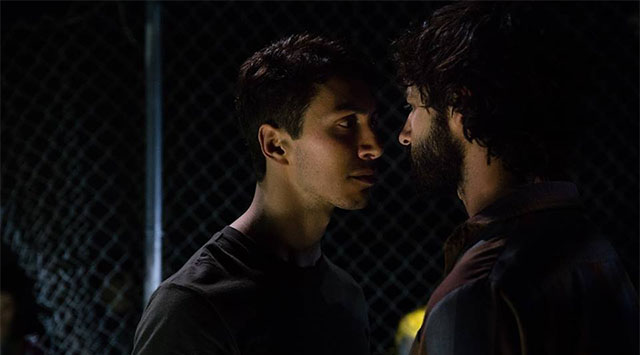
We think that an ideal romance is made of two perfect halves, where no one entity is more reliant on the relationship than the other. In Charles O’Grady’s Are We Awake, Hypnos lives with an increasingly severe disability, and while his lover Endymion has no problems taking on the role of carer, things come to a head when he is offered a job in a different city. The story is concerned with the nature of the unions that we forge, exploring what it means to be in love, when a person is unable to be self-sufficient. There is great sensitivity in O’Grady’s writing, with remarkable depth in his imagining of characters for this sentimental, and very angsty, two-hander.

Sean Hawkins does excellent work directing the piece, giving beautiful variation to texture and tension for this otherwise straightforward single-setting play. He overcomes the challenge of the writing’s big, rambling speeches by keeping delivery of dialogue pacy, but offers balance with charming sequences of momentary silences. In the role of Hypnos is Daniel Monks, impressive in his precise articulation of a very wide range of emotion, for a sensational performance that feels wholly convincing. Equally engaging is Aleks Mikić, whose creation moves us with an admirable psychological accuracy in his depiction of Endymion’s internal struggles. The couple’s fabulous chemistry is the strongest feature of the show, and we are hopelessly captivated.

Few of us will find happily ever after with that one true love, but we all defy the fairy tales of childhood, every day of our lives. Even with the tremendous challenges that Hypnos has to bear, he can only look ahead and keep moving. We are taught that marriage is the most necessary of loves, but the truth is that good people will always have someone to lean on, no matter how we categorise our human connections. Some of us may need more help than others, but all our hearts have the capacity to be as big as our companions require. Even though it will not look the way we had dreamed it, love exists and it is all around.

www.oldfitztheatre.com

Review: Chimerica (Sydney Theatre Company)

Venue: Roslyn Packer Theatre at Walsh Bay (Sydney NSW), Feb 28 – Apr 1, 2017
Playwright: Lucy Kirkwood
Director: Kip Williams
Cast: Matthew Backer, Gabrielle Chan, Jason Chong, Tony Cogin, Geraldine Hakewill, Brent Hill, Rebecca Massey, Monica Sayers, Mark Leonard Winter, Anthony Brandon Wong, Charles Wu, Jenny Wu
Images by Brett Boardman

Theatre review
Massacres, no matter how catastrophic, can get forgotten. Unlike the 9/11 attacks that we memorialise everyday, fuelled partially by economic imperatives of the USA, incidents such as the 1989 Tiananmen Square protests have faded away with time, and in this particular case, with rigorous effort on the part of Chinese officials.

The arresting image of a man standing in front of battle tanks however, still packs a punch, and 27 years after the event, it remains in circulation as one of the most influential and famous photographs ever taken. The enigma of Tank Man leaves many questions unanswered. It is an irrefutable document of an historical moment, but nothing of that moment (or the moments leading up to, and thereafter) has ever been explained.

Playwright Lucy Kirkwood’s imagination goes wild in Chimerica. It is 2012, and we meet a fictive photographer, Joe, who had famously captured the shocking moment at Tiananmen Square. He is now on a tenacious search for Tank Man, determined to uncover the truth, and through his escapades, we explore China as it stands today, or at least, are offered a Western conception of China’s current state of affairs. It is predictably precarious, for an American writer to offer critical assessment of the Chinese experience, but Kirkwood brings balance to her piece by portraying American institutions with a comparable level of disparagement; they are as bad as each other, perhaps.

The narrative of Chimerica is thoroughly enjoyable, a thriller that manages to grip right from the start, and that delivers a formidable jaw-dropper at its end. In this production however, details and personalities in the fairly complex story can become confusing. Direction by Kip Williams establishes a tautness in pace and atmosphere that makes for enthralling viewing, aided by Nick Schlieper’s very clever and diligent lighting design, but uneven acting for the main roles prevents the show from reaching its greatest potential.

Mark Leonard Winter is convincing as Joe the photographic journalist, but the emotional dimensions to his depictions often feel too vague and distant. The other lead character Zhang Lin is played by Jason Chong, who delivers several captivating scenes of poignancy, but the actor struggles to overcome the role’s quality of mystery, and he too is unable to help the audience connect at a more satisfying depth. Scene-stealer Charles Wu sparkles the brightest in two smaller parts. As Benny, he is refreshing, lively and charming, and as young Zhang, Wu is authentic and engaging. Also notable are the twenty performers who make up the ensemble, all impressive with their physical discipline, all in command of their excellent, and crucial, collective presence.

The song Long De Chuan Ren (Descendants of the Dragon) is a recurring sonic motif, introduced by sound designer The Sweats with wonderful inventiveness and cultural sensitivity, to orchestrate a representation of Chinese culture and its people, throughout the play. The song likens China to a dragon, a creature to be feared and revered, and it is true that iron fists have always ruled the nation, throughout different centuries, dynasties and governments, but the country is no stranger to revolutions. Whether or not we think of our governing mechanisms as democratic, systems of oppression will always attempt to ambush and exploit how we live, and it is up to the masses to find a way to resist, and to overturn the forces that wish to breach each and every one of our human rights.

www.sydneytheatre.com.au

Review: Mark Colvin’s Kidney (Belvoir St Theatre)

belvoirVenue: Belvoir St Theatre (Surry Hills NSW), Feb 25 – Apr 2, 2017
Playwright: Tommy Murphy
Director: David Berthold
Cast: Peter Carroll, Kit Esuruoso, John Howard, Sarah Peirse, Chris Stollery, Helen Thomson
Image by Brett Boardman

Theatre review
We want many ideas and themes running through our plays, so that they may be experienced with complexity and a sense of surprise. In Mark Colvin’s Kidney, by Tommy Murphy, we think about friendship, altruism, wealth, technology, and the Leveson “phone-hacking” inquiry, divergent concepts that the writer consolidates with the help of a real story.

It is a tricky undertaking, having to find the right balance so that our focus sticks with the plot’s main concern. The play wants to talk about the unusual affair of a broadcaster, Mark Colvin’s kidney transplant, but sets of circumstances in the donor’s life that take us to the main event, often seem equally or more interesting, perhaps due, admittedly, to the brevity at which they are dispensed. Protagonist Mary-Ellen Field is an extraordinary woman who has had a very full life, and we require more than just that one great deed of rescuing a sick man, to satisfy our desire to know and celebrate her.

Murphy’s representation of characters, Mary-Ellen and Mark, is warm, vibrant and suitably life-affirming. Actors Sarah Peirse and John Howard are both immensely affable, but their unpreparedness for opening night is apparent, and disappointing. The magic of the piece lies in the fascinating implausibility, of a friendship developing so quickly and deeply in cyberspace, with the actors assigned the unenviable task of making that relationship believable. Director David Berthold’s spatial manipulations are marvellously imagined, for his creative portrayal of dialogue that takes place only on mobile devices, but performances fail, ironically, to make convincing, events that actually did happen.

It is nonetheless, a feel-good uplifting tale that is at once hopeful and inspiring. Mary-Ellen’s determination to give up her kidney may not be entirely comprehensible, but we recognise the divine in her actions. Her name may not bear enough eminence to claim space in the title, but she is a modern day real-life hero to whom we should all aspire, if only we could come away with a greater understanding of what it is that makes her tick.

www.belvoir.com.au

Review: Away (Sydney Theatre Company)

stcVenue: Sydney Opera House (Sydney NSW), Feb 18 – Mar 25, 2017
Playwright: Michael Gow
Director: Matthew Lutton
Cast: Marco Chiappi, Julia Davis, Wadih Dona, Glenn Hazeldine, Natasha Herbert, Heather Mitchell, Liam Nunan, Naomi Rukavina
Image by Prudence Upton

Theatre review
It all happens in the summer of 1968. Martin Luther King, Jr. is assassinated in the USA, and the black power salute of the Mexico City Olympics stuns the world. Meanwhile in Australia, baby boomers come of age in a country of stability and abundance. Michael Gow’s Away is about life on this land, half a century ago. Three families, connected through high school, go through their private experiences of grief, at a time when all should have been peachy keen.

It is arguable whether their personal dramas are able to find relevance, two generations later, with today’s audiences. We exist in what seems like a completely different time, and even though we comprehend the human struggles and relationship pressures in Gow’s writing, their concerns seem far removed from our daily realities. There are allusions to issues of racial disharmony in Away that feels more current of its themes, but much of the piece hinges on anxieties of a bygone era. The Vietnam War and Gone With The Wind have long been surpassed as symbols of cultural significance.

Director Matthew Lutton chooses wisely, to hone in instead on the more theatrical, almost operatic qualities of the play, amplifying its non-naturalistic portions for a production that thrills with its flamboyance and episodic surrealness. The most memorable moments involve wildly imagined spectacle, usually without dialogue, prompting us to wonder if the text is but a conduit for Lutton’s prime interest in the visceral possibilities of the art form. Act IV commences with the most breathtaking of set transformations; a 10 second sequence stunning in its beauty, and flabbergasting with its technical proficiency, proving set designer Dale Ferguson and lighting designer Paul Jackson to be the real stars of the night.

Also stellar however, is the cast of eight, each one beautifully delicate in their interpretations of roles, and enchanting with the chemistry they formulate as an ensemble. Heather Mitchell is particularly mesmerising as Gwen, the angry unfulfilled mother, resentful of everything and everyone within earshot. Mitchell brings her performance close to caricature hysteria, but always ensuring that we understand Gwen’s small world of perpetual catastrophe. The other inconvenient female of Away is Coral, isolated and traumatised, played by Natasha Herbert who brings classic tragic glamour to the part, keeping us engaged in her painful journey, while providing entertainment value with her confidently expressive portrayal. These are two wonderful characters who give the show its exuberance, but they represent a kind of gender depiction that is thoroughly unbalanced and outmoded. The women are crazy and the men, sturdy. The women are a handful and the men have to pick up the pieces. This dichotomous construct is tired and dangerous.

There is noteworthy and substantial reinvention that takes place in this production of Away, demonstrating its undeniable need for an update. We are attached to works like this not just for its inherent artistic merit, but also because of commerce, nostalgia, and cultural sentiment. We must always move on when making art, but when we wish to look back, we must only do so without fear of being adventurous and radical.

www.sydneytheatre.com.au

Review: Member (Fairly Lucid Productions)

fairlylucidVenue: Blood Moon Theatre (Potts Point NSW), Feb 21 – Mar 4, 2017
Playwright: Ben Noble
Director: Casey Gould
Cast: Ben Noble
Image by Deryk McAlpin

Theatre review
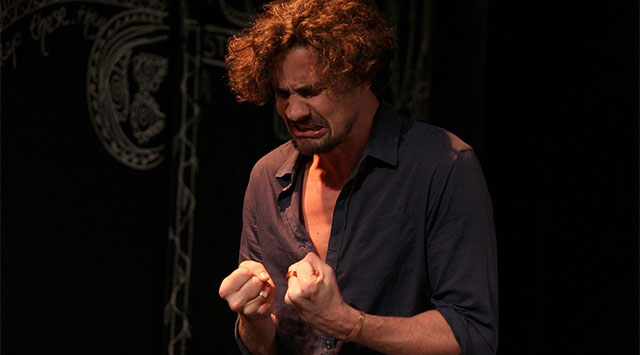
Corey is a man whose homophobia is bigger than the love for his own son. Ben Noble’s Member is an investigation into how young men learn to hate, and more specifically, how a culture of gay bashing and gay murders, is fostered in places like Sydney. Corey grew up in the Northern Beaches, a regular white boy with no cares in the world, wanting for nothing except for the acceptance of his peers. We see him fall in with a gang of young men who hunt down gay individuals in isolated areas, and witness how he is pressured into his first killing.

The writing is powerful, dark and urgent. Although conceived as a monologue, it comprises voices of the many personalities in Corey’s world, that reflect the social construct of his very being. It helps us understand how violence is bred, not so that we forgive perpetrators, but to find a way to dismantle the process by which our innocent children are groomed into hateful forces of evil. The play marvellously exposes us to the depths of Corey’s vicious immorality, while insisting on his unassailable humanity, in order that we may recognise the reality of his wrongdoing and not have it glossed over as some kind of psychopathic exception. As a community, we are made to see in Member, where our complicity lies in the formation of behaviour and belief systems of people like Corey. We may not be responsible for these murderers, but we have to discover a change that will ensure that this continuing misanthropy is eradicated.

It is a finely calibrated show by director Casey Gould, impressively dynamic and wildly captivating with its expansive landscape of sentimentality. Very effective design work (sound by Coleman Grehan and lights by Lisa Mibus) relies on a high-polish precision that helps facilitate our every emotional response, and the delicate transitions between. Gould’s very complicated structure of speedy character transformations is a remarkably tall order, and although Ben Noble’s execution as actor is not completely flawless, he is often astonishing on stage. Noble’s extraordinary concentration and impeccable ability to thoroughly communicate meanings and emotions, elevates this simplest of theatrical forms, the one man show, to an art that is hard to beat for its empathetic impact.

There remain parts of the world where LGBT people are marginalised, and killed, as a matter of course. We may not feel the need to concern ourselves with those lives, but we must acknowledge that that same psychology and sociology of hatred exists right here, and when left unchecked, can manifest just as brutally. The flavour of the month in our violent West, may no longer be the lonely gay man who seeks solace in dangerous beats, but that attitude of senseless persecution of minorities is a thriving part of our lives, and must never be left disregarded.

www.fairlylucidproductions.com

Review: Big Crow (Brave New Word Theatre Company)

bravenewwordVenue: Pulse Group Theatre (Redfern NSW), Feb 21 – Mar 4, 2017
Playwright: Mark Langham
Director: Barry Walsh
Cast: Amylea Griffin, Charles Jones, Ben Maclaine, Jodine Muir, Liam Smith
Image by David Hooley

Theatre review
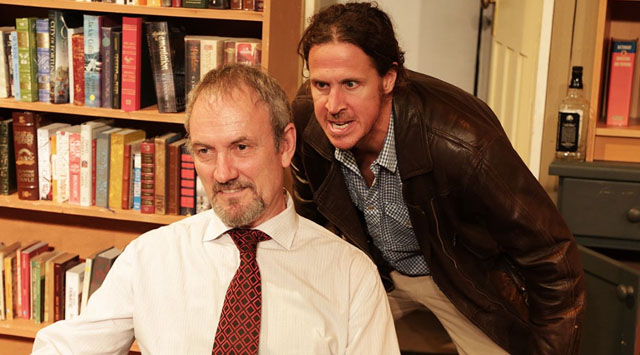
Many of us have felt the urge to kill our bosses, at one time or another. We may be able to operate under authority on most days, but human nature has its limits when kept under tight control. Tommy and Albert were Londoners brought to Australia in the 1930’s. Fed up with slave-like conditions, they decide to capture their employer in an effort to turn their fortunes around. Based on a true story, Mark Langham’s Big Crow features five contrasting personalities, each with their own distinct proclivities. The play sets up a fascinating context for their interactions, and even though the stakes at play are high, the sparks that fly are minute and momentary.

It is a plot that struggles to find focus, with competing narratives fighting for our attention. We are intrigued by the theatrical temperament of its characters, but their individual stories all seem too vague and under-cooked. What they reveal of themselves only teeter on the brink of something enticing and salacious, never really bringing us to a satisfying epiphany. Director Barry Walsh’s attempts at manufacturing an atmosphere of violence and brutality helps provide some visceral drama to the piece, and although some of the acting is convincing (Charles Jones and Jodine Muir are its saving grace), the show offers little that would allow us to connect.

When Peg discovers her husband tied up, about to be slaughtered, she reacts with an unexpected sadistic delight. The show is on, and like Peg, we wait for something to happen that would deliver thrills and enlightenment. When our expectations are not met, we can look back for what might have been missed, or we can move forward in search of the inevitable next opportunity.

www.bnwtheatre.com.au