Review: Diplomacy (Ensemble Theatre)

Venue: Ensemble Theatre (Kirribilli NSW), Mar 23 – Apr 28, 2018
Playwright: Cyril Gély (translated and adapted by Julie Rose)
Director: John Bell
Cast: John Bell, John Gaden, Genevieve Lemon, James Lugton, Joseph Raggatt
Image by Prudence Upton

Theatre review
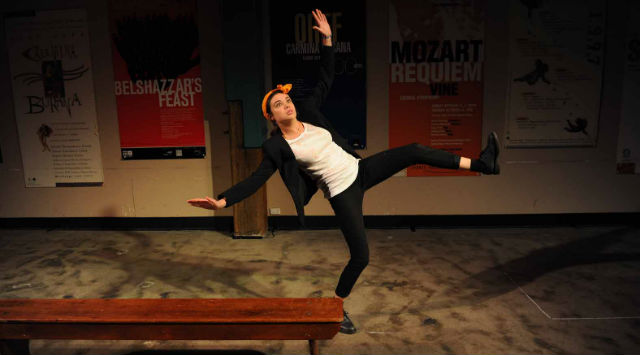
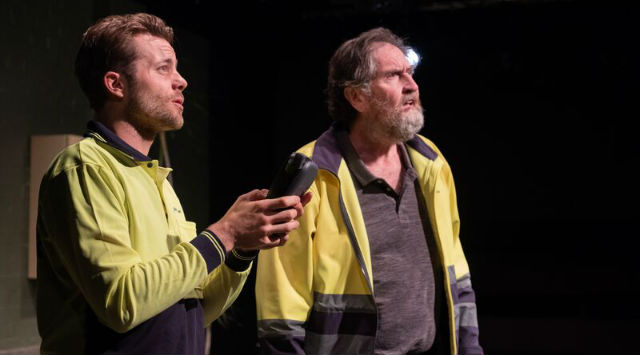
On the eve of Paris’ impending decimation by the Nazis, Raoul Nordling a Swedish diplomat, pays a surprise visit to the hotel suite of German military governor Dietrich von Choltitz. In Cyril Gély’s Diplomacy, we witness the intense negotiations that lead to Choltitz’s eventual surrender. We always knew how the play was going to conclude, so it is the dynamics between the two men that are crucial to the drama that ensues.

These historical facts, albeit amplified, are fascinating. The idea that one man could thwart an operation of such scale, should prove to be quite astonishing, but the production is tepid, unable to convey the tension of war, and the very serious stakes never become sufficiently persuasive.

It is a good looking show; Michael Scott-Mitchell’s set design is sophisticated and inventively functional, while Genevieve Graham’s costumes are detailed and impeccably tailored. Lights by Matt Cox and sound by Nate Edmondson, are elegant, both suitably restrained and minimal in approach.

As Choltitz, John Bell is appropriately imposing, but it is a portrayal that can feel surface and impenetrable. John Gaden plays up the charm of Nordling, and makes good use of comic opportunities, but chemistry between the two leads struggles for authenticity, and their story ends up being told with only grandiosity and no discernible nuance.

Stories of war will always be worth recounting, as long as we continue to undertake them. Histories repeat, as though human nature will forever be doomed to replicate all its mistakes. Some will consult the annals to try for improvements to our behaviour, but others it seems, will look to the past only to learn how to win at meaningless battles of our future.

www.ensemble.com.au

Review: Going Down (Sydney Theatre Company)

Venue: Wharf 2 Sydney Theatre Company (Walsh Bay NSW), Mar 23 – May 5, 2018
Playwright: Michele Lee
Director: Leticia Cáceres
Cast: Paul Blenheim, Catherine Davies, Josh Price, Naomi Rukavina, Jenny Wu
Images by Brett Boardman

Theatre review
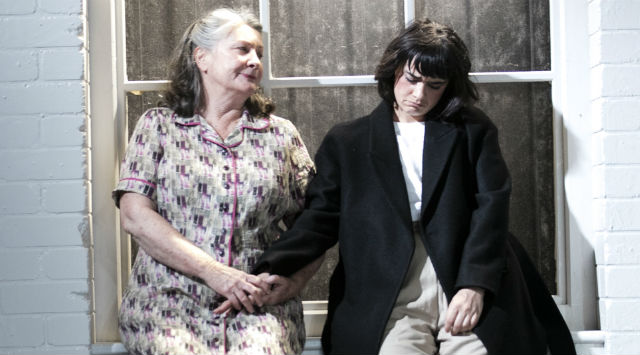
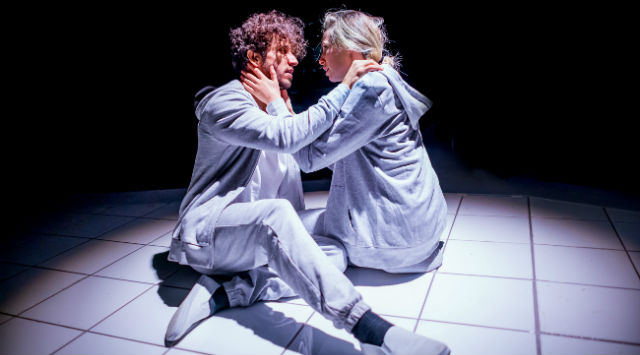
After the publication of her first book, young author Natalie finds herself at a crisis of authenticity. What she had thought to be a good representation of her life and times, has turned out a commercial disappointment. In the search for success, she embarks on a process of self-redefinition. Michele Lee’s Going Down is a tricky story to tell. The play begins at a point where we have to watch our protagonist cave in, to societal pressures that are determined to tell her that she is inadequate. Early scenes feature a confident woman being attacked for not producing a commercially viable product in her autobiography, and although she does offer some resistance, the premise of Going Down is that society wears Natalie down, transforming her from self-assured to self-doubting. Although we discover that society is ultimately right in its estimation of Natalie, as her story does lead to a conclusion of greater fulfilment, it remains a matter of contention that a young woman’s self belief should be defeated by market forces and community.

The spirit of the writing however, is undeniably vibrant, and the production is accordingly energetic and colourful. Set and costumes by The Sisters Hayes, along with lights by Sian James-Holland, are humorous and playful, completely delightful in their interpretation of the world inhabited by a youthful Melbournite. Much of the show’s comedy is reliant on visual cues, and the creatives are certainly excellent in this regard. Music too, is incisively formulated to reflect the culture being represented. Composer and sound designer The Sweats does marvellously to tell us precisely who these characters are, and in the process keeps us invigorated and entertained.

The extraordinary Catherine Davies plays Natalie, feisty yet vulnerable, for a character memorable for her passionate full throttle approach to living life. We are convinced by all that the actor offers, whether portraying juvenile antics or deep awakenings, her performance of the role is utterly perfect. The supporting cast is also effective and very funny. They play a big range of personalities, many of whom are weird and whacky, and thoroughly amusing. Director Leticia Cáceres has put together an inventive show, charming in its quirkiness. Her ability to infuse each moment of Going Down with layers of meaning, keeps us engaged, with both our instinctual and intellectual capacities.

It is difficult however, to find Natalie’s story entirely satisfying. Maybe being an ethnic minority does prevent one from being unfettered and wholly buoyant. Natalie is not a white woman, and the play questions if she can ever write a book that is blind to race. We wonder if she can ever put race aside, or if she will forever be talking about her Asian heritage. This is an honest conundrum, one that is worthy of considerable analysis. Natalie must be regarded as autonomous, for she is a grown woman, but our relentless expectations of her as one of the tribe must influence her conceptions of autonomy. The matter is a troubling one, and it awaits further exploration.

www.sydneytheatre.com.au

Review: The Resistible Rise Of Arturo Ui (Sydney Theatre Company)

Venue: Roslyn Packer Theatre at Walsh Bay (Sydney NSW), Mar 21 – Apr 28, 2018
Playwright: Bertolt Brecht (translated by Tom Wright)
Director: Kip Williams
Cast: Mitchell Butel, Peter Carroll, Tony Cogin, Ivan Donato, Anita Hegh, Brent Hill, Colin Moody, Monica Sayers, Hugo Weaving, Charles Wu, Ursula Yovich
Images by Daniel Boud

Theatre review
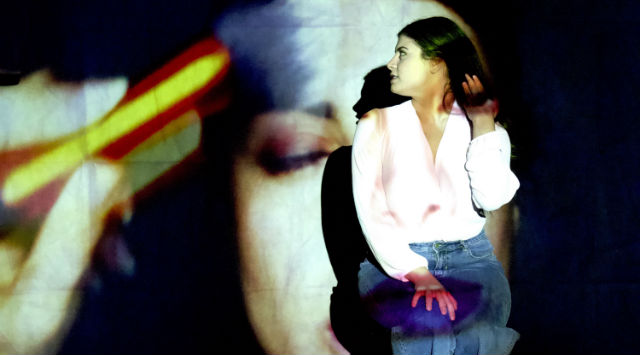
A gangster film is projected on screen, as we witness it being shot on a sound stage. The action happens across not two, but three platforms. We watch a film, the making of the film, and a theatre production, all simultaneously and frantically taking place before our eyes. Bertolt Brecht’s The Resistible Rise Of Arturo Ui is concerned with artifice and image, written at the time of Al Capone and Bugsy Siegel. Director Kip Williams’ decision for a multimedia presentation may seem initially, to be little more than gimmickry, but his profusion of Brechtian devices transcend academic tribute, proving themselves relevant and ultimately, highly effective.

Brought up to date by Tom Wright’s very shrewd adaptation, Arturo Ui’s story is now unquestionably of our time. A criminal hungry for attention, he stops at nothing to satisfy an interminable and narcissistic urge for notoriety. To make his presence a permanent fixture, Arturo takes on political ambitions in order that his influence may turn pervasive and inescapable. We can think of more than a few public figures who operate in a similar vein. It is a witty and wise transposition, taking Brecht’s meditations on the Hitler phenomenon and applying them to the current state of our world. Retaining the spirit of epic theatre, Wright’s work is dark but rarely pessimistic. A parable and cautionary tale, it demonstrates human nature at its worst, but is deliberate with its manipulations of our autonomy as audience and citizens. It always reminds us of our capacity to resist and reverse the actions of those with an appetite for destruction.

Williams’ production is sophisticated, often extravagant and flamboyant in its attitude and accompanying style. Its theatrical grandness is alluring; we find ourselves seduced by its many clever manoeuvres, and are surprised by our unequivocally political response to its ideas. The show knows what it wants to do, and achieves it well. Sections of dense dialogue might be lost, when we get distracted by the very busy stage, but the simple overall point of it all, is clear and powerful under Williams’ interpretations. The director’s ability to shift our attention between screen and stage becomes impressive, once we get over the shock of the unusual. Once we stop questioning the validity of the complicated form being presented, the efficacy at which information is being conveyed, through its complex amalgamations, is quite astounding.

The set takes the shape of an efficient film studio that accommodates complicated camera work whilst prioritising direct audience access, designed by Robert Cousins with appropriate restraint. Nick Schlieper’s lights are attractive and suitably dramatic, conspiring closely with cinematography to provide stunning live visuals with some very advanced video technology. Justine Kerrigan’s adventurous and imaginative cinematography is quite an amazing thing to behold. Also deeply satisfying is Stefan Gregory’s music, inspired by early genre films, and assisted by excellent sound engineering, to offer great drama and intrigue, electrifying from prologue to epilogue.

Hugo Weaving’s performance as Arturo Ui exhausts the gamut of emotions, as well as all the superlatives a critic is tempted to use in describing his brilliance. If there is ever perfection in art, Weaving embodies it here. The man is in charge every second, and we are putty in his hands, hopeless and lost in whatever he wishes to impart. His skill is second to none, and his mesmerising charisma is bewildering. It is hard to come close to the standard that he sets, but others in the cast too, are truly remarkable. Peter Carroll in particular, contributes extraordinary incisiveness as Dogsborough, depicting the blurred lines of good and bad with wonderful flair and persuasiveness.

If we see the natural world as an organism with tendency for chaos, and humankind’s insatiable need for creating order, in our own image, a kind of violation, then man’s obsession with power is an abomination. Arturo Ui goes against everything that we want to think of as good and right in the world, in his continual seizure of power and domination over every being, but it is likely that the only language he and his ilk understand is power, and to rival them requires that we take mirroring actions. Pacifism and the qualities of integrity that it encompasses, may be a more idealistic way of approaching peace, but in The Resistible Rise Of Arturo Ui it is hard to not see these romantic notions as ineffectual or much worse, calamitous. It is time perhaps to find better ways to fight fire with fire.

www.sydneytheatre.com.au

Review: Master Class (Sydney Opera House)

Venue: Sydney Opera House (Sydney NSW), Mar 20 – Apr 8, 2018
Playwright: Terrence McNally
Director: Adam Spreadbury-Maher
Cast: Jessica Boyd, Tomas Dalton, Dobbs Franks, Kala Gare, Amanda Muggleton
Image by Kate Ferguson

Theatre review
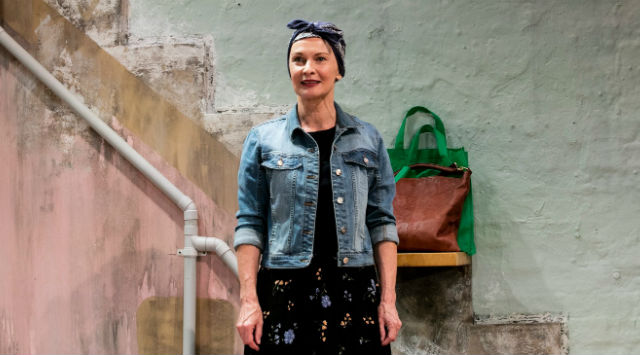
Maria Callas ranks amongst the world’s most loved opera singers in living memory. Terrence McNally’s Master Class features an extraordinary woman who understands her own magnificence, recreating sessions at the Juilliard School of 1971 and 1972, in which Callas provides instruction, on singing, art and life in general. McNally’s admiration is apparent, and the Callas he pens, is one determined to elicit her audience’s reverence, regardless of any feelings we may initially bear about the legendary star.

It is a spectacular piece of writing, with each line saturated with either comedy or pathos, and passionate lessons that many will find deeply affecting. It is also an extremely challenging work for the actor who decides to take Callas on, as no concessions are made that will allow any compromise in this portrayal of someone larger than life, and quite clearly a greater expression of human existence than most could ever fathom.

The best that one could hope for, is to come close, and actor Amanda Muggleton certainly does. Her astounding familiarity with the material and the technical precision she applies to it, are enough to impress, but the poignancy and disarming sense of spirit that she frequently delivers, not only has us captivated, we find ourselves moved, powerfully so, by her character’s unpredictably profound observations. We see Callas, but we also see Muggleton. In sections where the character is required to interact, with her audience or her students, there is often a humour that seems to emanate from Muggleton, that is somewhat distinct from La Divina, as she might figure in our imagination.

Adam Spreadbury-Maher’s direction is particularly noteworthy for the way vintage audio recordings are incorporated into the show. The simultaneous coalescence of Callas’ singing through speakers with Callas speaking on stage, is sublimely harmonised, to deliver a theatrical experience rarefied, and highly operatic. There is a tendency for the tone of performance to be repetitive, with speech patterns rarely deviating from an established range of inflections, but meanings and nuances of the text are always rigorously conveyed.

Callas wanted her students to leave it all on the stage; the inspiration she provides, is relevant to us all. The diva had lived fast, loved hard, and died young. In Master Class, some might choose to see a tragedy, but it is without doubt that her glory and influence remain immense and unequivocal. Whether or not one has an artistic practice, the notion that we have to give it our all, in order that something remarkable can result, is a lesson that bears repeating. It is not unusual advice by any means, but when it comes from a woman who had fought tooth and nail to attain her place in world history, its impact is tremendous.

www.sydneyoperahouse.com

Review: DNA (Last One Standing Theatre Company)

Venue: Kings Cross Theatre (Kings Cross NSW), Mar 15 – 24, 2018
Playwright: Dennis Kelly
Director: Claudia Barrie
Cast: Alex Beauman, Jeremi Campese, Holly Fraser, James Fraser, Jess-Belle Keogh, Alex Malone, Bardiya McKinnon, Liam Nunan, Millie Samuels, Jane Watt, Emm Wiseman
Image by Clare Hawley

Theatre review
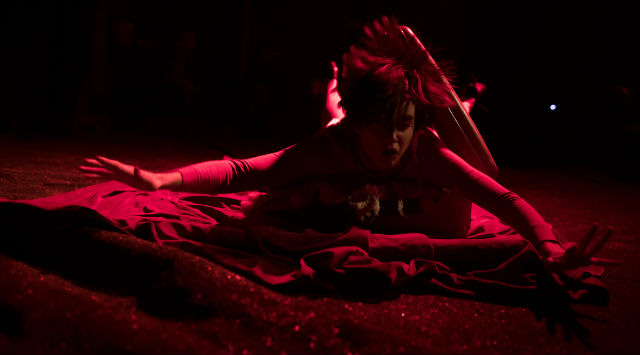
A group of teenagers get themselves in deep trouble, but instead of seeking help from adults or officials, their instinct leads them to the alpha male of their pack. Phil is the strong silent type, the intense young man always looking to be deep in thought. He takes on the role of top dog with supreme confidence, and everyone else does as they are told, but we quickly discover this designation to be a case of style over substance. Dennis Kelly’s DNA examines our attraction to masculinity, and its socialised associations with authority and legitimacy.

The play is curiously plotted, with the narrative of a murder mystery interrupted by scenes of Phil with Leah, a girlfriend perhaps, desperate for his attention, but whom he is determined to ignore and belittle. Juxtaposing scenes of urgency with those frankly tedious two-hander moments, may not be dramatically effective, but Kelly’s dialogue is refreshing, with his use of UK vernacular especially fascinating to Australian ears.

The couple is played by Bardiya McKinnon and Millie Samuels, both actors demonstrating a satisfying level of concentration, but unable to turn their characters likeable. There are many colourful personalities in DNA, although not conventionally appealing, and certainly not uplifting or inspiring types that draw us in. It is however, an honest tale that reveals darker shades of our humanity, and director Claudia Barrie makes sure that pertinent meanings of the piece, are conveyed with power and clarity. The big cast features some strong players, and they keep us attentive, even when their youthful folly threatens us with characteristic dreariness.

Sean Van Doornum’s sound design is noteworthy for introducing a wide range of tense ambiences to the space. Along with Liam O’Keefe’s lights and Ella Butler’s set, the production impresses with its polish, although the show’s overall result can be slightly underwhelming. DNA is a cautionary tale, and it does bear repeating, that humans are often very stupid creatures. Allowing us to see ourselves at our worst, is a gift that is almost unique to what art can achieve. How we proceed from having observed our deficiencies, is important, but never ascertainable at the point of conclusion when we consume a work.

www.lastonestandingtheatreco.com

Review: The Wolves (Old Fitz Theatre)

Venue: Old Fitzroy Theatre (Woolloomooloo NSW), Mar 14 – Apr 14, 2018
Playwright: Sarah DeLappe
Director: Jessica Arthur
Cast: Brenna Harding, Emma Harvie, Sarah Meacham, Sofia Nolan, Michelle Ny, Cece Peters, Zoe Terakes, Nikita Waldron, Nadia Zwecker
Image by John Marmaras

Theatre review
Nine American girls, approaching the end of their teenage years, are in a soccer team together, warming up their bodies and figuring out their place, both on the field and in the larger world. Sarah DeLappe’s The Wolves is no preachy melodrama about burgeoning womanhood. These characters may have seen little by virtue of their youth, but they all demonstrate wisdom and strength; each of their lives are richly established, not to provide some kind of tense narrative drive, but to foster, through the theatrical form, a modern social conception of our young and all the promise that they bear.

Director Jessica Arthur uses fragments of insight granted by the text, to manufacture on stage, quite marvellously, a dynamic experience that is relentlessly engaging, and unexpectedly powerful. We are only ever offered glimpses into each personality, but find ourselves forming emotional attachments as the show progresses, falling in love with all of their idiosyncrasies and vulnerabilities. Unlike traditional, namely, patriarchal forms of storytelling, no protagonists and antagonists are necessary here, and for its 90-minute duration, we are intrigued, thrilled and fulfilled. The show is frequently very funny, and the poignancy it eventually inscribes, is stunning.

Performances are nothing short of brilliant. The cohesion and closeness of the cast is extraordinary, generating a warm joyful glow, palpable and wonderful, for all to share within the intimacy of the auditorium. Beautifully well-rehearsed, the actors deliver the play’s short and sharp dialogue with admirable precision and astounding nuance, precipitating meaning with impact and efficiency. The many sequences that feature legitimate sporting ability and fitness, are quite sensational, and thoroughly impressive.

Right in this moment, young people in the USA are fighting to force changes to gun control. They have galvanised in spectacular fashion and are out in droves, propelled by passion and idealism. The girls in The Wolves are no doubt part of that pack. Smart, fearless and loud, they discern the truth, along with the bullshit, and are now refusing to acquiesce where they do know better. We care for our young, but in that mode of protection, we often underestimate them. There is in fact, much to learn from the The Wolves, even if just a reminder of that youthful spirit, capable of achieving anything.

www.redlineproductions.com.au

Review: One Way Mirror (Blood Moon Theatre)

Venue: Blood Moon Theatre (Potts Point NSW), Mar 14 – 24, 2018
Playwright: Paul Gilchrist
Director: Paul Gilchrist
Cast: Matthew Abotomey, Alison Benstead, Angus Evans, Sylvia Keays, Sonya Kerr, Mark Langham, Linda Nicholls-Gidley, Ash Sakha, Sheree Zellner

Theatre review
In the living of each day, humans use their mental and physical capacities for an endless variety of reasons, but whether conscious or unconscious, it is always a pursuit that involves us engaging with something quite mysterious. Nobody can know for certain, the purpose of being here, but we all participate in the project of figuring it out, whether we like it or not.

Paul Gilchrist’s One Way Mirror, involves a group of American actors in the 1960’s, hired to work with scientists conducting experiments to determine the nature of human conformity. Within this conflated microcosm of art and science, we observe all the individuals in a process of uncovering truths, whatever a truth might be.

It is a philosophical work, vast in its scope and therefore challenging for those who need a greater sense of certainty to hang on to. Gilchrist’s point of course, is that none of this can be certain, and to fabricate a narrative that is convenient and secure, would contradict its central interest, which is to arrive at some sort of knowledge about this thing we vaguely understand to be, and that we name, the truth.

The show features an intentionally fractured plot structure, with scenes differing in ideas and styles, some more appealing than others. Actor Matthew Abotomey is an intriguing presence in early sections, playing various subjects under institutionalised interrogation, intense and compelling with what he brings to the stage. Alison Benstead and Ash Sakha play young lovers, demonstrating good chemistry but also impressive with their diligence and focus as individuals.

Various storylines weave through the plot of One Way Mirror, but they come and go quickly, as though to evade our grasp. We wish to know these personalities better, because it feels natural to want to get to the bottom of things. Our curiosity is instead, turned outside in. One Way Mirror makes it vital that we examine for ourselves, that concept of truth, whether it be a matter of instinctual resonance, or rational meaningfulness, or enduring legacy, or whatever else one might find fulfilling. The conclusion is inexhaustible, and the journey inevitable.

www.subtlenuance.com | www.bloodmoontheatre.com

Review: Merrily We Roll Along (The Depot Theatre)

Venue: The Depot Theatre (Marrickville NSW), Mar 7 – 24, 2018
Music & Lyrics: Stephen Sondheim
Book: George Furth
Director: Alexander Andrews
Cast: Embla Bishop, Phoebe Clark, Blake Condon, Tiegan Denina, Caitlin Rose Harris, Patrick Howard, Tayla Jarrett, Katelin Koprivec, Jesse Layt, Victoria Luxton, Michael McPhee, Matilda Moran, Shannen Sarstedt, Zach Selmes, Richard Woodhouse, Victoria Zerbst
Image by Clare Hawley

Theatre review
It is the most straightforward rags to riches story, told backwards. Sondheim’s Merrily We Roll Along commences at the point where its protagonist has attained considerable professional success, but whose personal relationships are all falling apart. Observing the story unfold in reverse order, we discover little that is surprising, although Sondheim’s songs remain characteristically enchanting. The musical was first presented on Broadway in 1981, lasting only 16 performances, after 52 previews.

Director Alexander Andrews introduces an appropriate pizzazz to the production, working with a very exuberant cast for a standard of singing befitting the often tricky compositions. Leading man Patrick Howard gives his character Frank a strong presence, and a commanding voice, but lackadaisical costume design diminishes the personality transformations that the actor tries to portray. His besties are played by Zach Selmes and Victoria Zerbst, both accomplished and persuasive with what they wish to achieve. Shannen Sarstedt leaves a strong impression as first wife Beth, able to convey depths of emotion as well as unexpected dimension, for one of Merrily‘s many cardboard characters.

The two musicians, Conrad Hamill and Antonio Fernandez prove themselves reliably versatile and efficient in providing accompaniment for the entire duration, but the very small band can sometimes deliver underwhelming results. Similarly, visual design in terms of sets and costumes, are insufficiently ambitious, and the staging struggles to live up to Sondheim and George Furth’s quite grand piece of writing. Nothing however, can take away from the sheer delight of the master’s songs, all of which are sung with gusto and precision, and this for his legions of fans, is plenty.

www.littletriangle.com.au

Review: The Shifting Heart (White Box Theatre)

Venue: Seymour Centre (Chippendale NSW), Mar 8 – 24, 2018
Playwright: Richard Beynon
Director: Kim Hardwick
Cast: Laurence Coy, Lucas Linehan, Dina Panozzo, Tony Poli, Di Smith, David Soncin, Ariadne Sgouros
Image by Danielle Lyonne

Theatre review
It is Christmas time 1956, and the Bianchi home in Melbourne is bustling with activity. The family is getting excited about the festivities ahead, occupying themselves with the frenzied yet mundane business of the Australian summer. We soon discover, however, that beneath the Bianchis’ attempts to go about their normal lives, they have to contend with the social stigma of being recent immigrants to a land where strange and cruel attitudes prevail, about which people are deserving, and not deserving, of being here.

Richard Benyon’s 61 year-old play The Shifting Heart is concerned with a peculiar brand of racism that we undertake, whereby earlier immigrants persecute later immigrants, whilst Indigenous peoples are routinely neglected. The Bianchis discover that although legally permitted to settle here, many do not extend them a welcome. Benyon portrays the family trying to get on with life the best they can, amidst the unjust obstacles heaved at them every day.

It is a sensitive piece of writing, offering insights that remain pertinent; a valuable study of how racial prejudice operates in societies like ours, with an ever evolving racial composition. As a work of drama though, scenes of emotional vigour seem to occur few and far between, and its manufacture of tension tends to be overly understated.

Directed by Kim Hardwick, the production is a persuasive one. We may not be heavily invested in its personalities, but their stories are certainly believable. Isabel Hudson’s set and costumes, along with Martin Kinnane’s lights, are beautifully evocative, affecting our imagination with flair and efficiency.

Dina Panozzo and Tony Poli, as Momma and Poppa Bianchi, bring chemistry and warmth to the stage, both effective in transporting us to another time of our shameful history. David Soncin leaves a strong impression as Gino Bianchi, the gregarious and passionate young Italian-Australian determined to live unhampered by prejudice. Their neighbour Leila Pratt is played by the very likeable Di Smith, relied upon to deliver much needed humour, and effervescence, in this weighty observation of Australian life.

There is no denying that humans everywhere cannot help but create difference, seemingly for the purpose of baseless discrimination. Bigotry is not natural to our children but somehow, a need to hate is developed as we mature, and whether it pertains to race or to other arbitrary features, we learn to feel good about ourselves by exerting power over others. This is ubiquitous, but we must never think it irreversible.

www.whiteboxtheatre.com.au

Review: The Book Of Mormon (Sydney Lyric Theatre)

Venue: Sydney Lyric Theatre (Sydney NSW), from Feb 27, 2018
Book, Music & Lyrics: Robert Lopez, Trey Parker, Matt Stone
Directors: Casey Nicholaw, Trey Parker
Cast: Ryan Bondy, Andrew Broadbent, A.J. Holmes, Bert LaBonté, Zahra Newman, Augustin Aziz Tchantcho, Rowan Witt
Images by Jeff Busby

Theatre review
The best musical of all time, can only ever be a determination based on subjective assessment, but The Book Of Mormon is very possibly the funniest and cleverest, most unique iteration of a show in the Broadway musical genre, to have graced the stage. Two young men are dispatched from America to Uganda, to spread the word of their Mormon church. It is a simple story, but the layers of meaning that it explores are manifold and deeply trenchant.

From issues regarding religion’s inescapably oppressive nature, to the severe problem of poverty in developing nations, The Book Of Mormon is relentlessly, if subliminally, disturbing. It delivers big laughs at every turn, through an absurd sense of outrageous humour (the kind that is nothing less than exquisite, if shared by the right audience), but it is the savage evaluation of our humanity, and its pointed castigation demanding we do better, that provides impetus for its narrative drive.

The jokes are marvellously extreme, its songs are irresistibly charming and delightful, and everything is put together with extraordinary daring and finesse. There are elements that will likely offend sensibilities of those targeted by the pricey entrance fee, but the show is careful to couple soft with hard, tender with caustic, to make its lessons digestible. It ultimately retreats deftly into kumbaya territory, able to appease audiences of all persuasions.

Performed by a terrifically exuberant cast (and a fabulous orchestra headed by musical director David Young), this Sydney production is everything one could wish for, in a night of sensational, intelligent and thrillingly bawdy entertainment. The ensemble is given ample opportunity to showcase their talents, and they all rise to the occasion, as a group and as individuals, to present a work impressive with both its precision and nuance.

Ryan Bondy as Elder Price is suitably dazzling, all sharp moves and sonorous tenor, bringing youthful idealism to glorious life. Elder Cunningham is played by A.J. Holmes who charms the pants off of everyone, with splendid timing and inexhaustible zeal. The eminently memorable Zahra Newman gives us a Nabulungi so full of spirit, and so perfectly sung, that she shifts focus away from the Mormon boys to a greater story of international economic injustice.

No work of art can solve world hunger, but in The Book Of Mormon‘s tale of the haves and the have-nots, our culpability is clear. The West has always looked abroad for resources to pilfer, but we do little to mend the devastation that is inevitably left behind. Missionaries from our churches go with the best of intentions, trying to do what they can to bring relief to those who suffer, imposing belief systems on foreign lands that have thus far proven only to be inadequate. Thoughts and prayers can do wonders, but the miracles we wish to see the most, require real sacrifice.

wwww.bookofmormonmusical.com.au