Review: A Delicate Balance (Chippen Street Theatre)

Venue: Chippen Street Theatre (Chippendale NSW), Nov 7 – 16, 2019
Playwright: Edward Albee
Director: Viktor Kalka
Cast: James Bean, Martin Bell, Alison Chambers, Zoë Crawford, Suzann James, Alice Livingstone
Images by Blake Condon

Theatre review
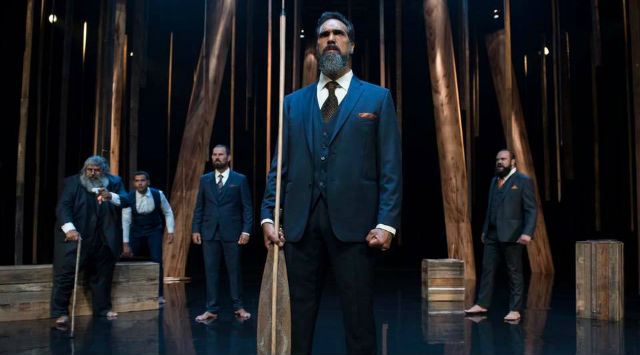
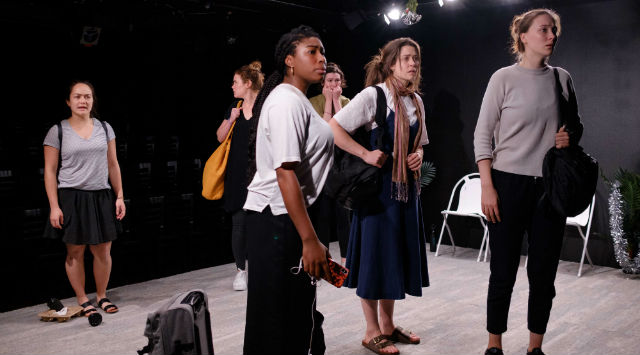
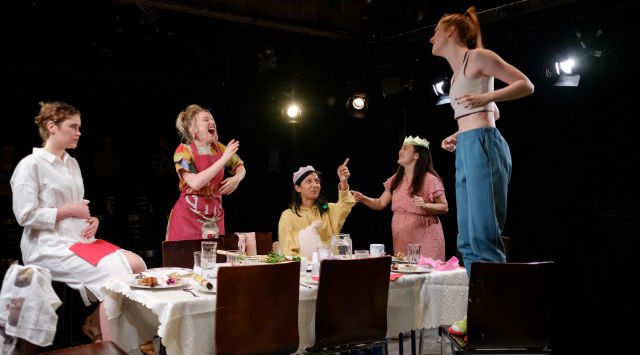
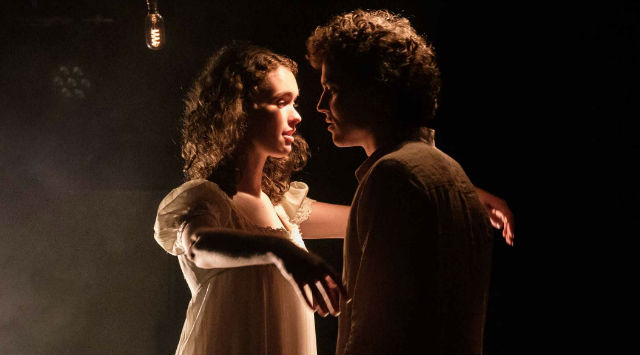
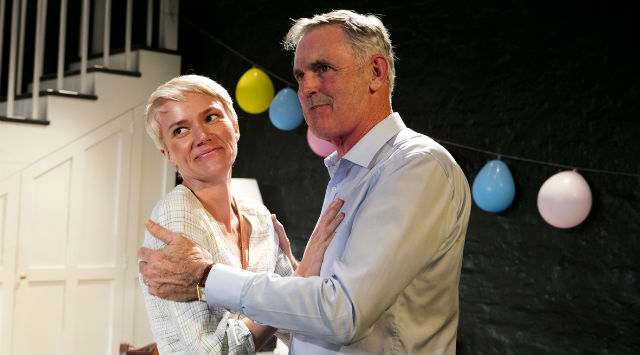
Agnes and Tobias are rich, white, empty nesters who appear to live the suburban dream, yet not a moment goes by that is not filled with anxiety, in Edward Albee’s A Delicate Balance. Everything seems in place so that the couple could go about their business without a care in the world, but there is a terror that permeates. We soon discover that all the characters in their home suffer from an intense and prolonged existential crisis. Albee shows only the manifestations of his characters’ fears, leaving us to find an explanation for their condition.

Under Viktor Kalka’s direction, the 53 year-old play retains its pertinent bite. Although the production lacks visual flourish, Kalka is able to manufacture a disquiet that rings with authenticity. Ryan Devlin’s restrained sound design helps us locate dramatic tension, as the plot moves through waves of dilemma.

The show is demanding of its cast, and can at times seem under rehearsed. Agnes is played by Alice Livingstone, who brings an appropriate sense of loss and bewilderment to proceedings. Martin Bell as Tobias has a tendency to be subdued in approach, but occasional emotional outbursts make for excellent drama. Their daughter Julia is made compelling by Zoë Crawford, and Suzann James as Agnes’ sister Claire, offers a persuasive portrait of an alcoholic escapist. James Bean and Alison Chambers leave a strong impression as family friends Harry and Edna, both actors invigorating with the precise humour that they bring to the stage.

Agnes and Tobias adhere to all the rules, and even though their cookie-cutter existence appears perfect on the outside, there is nothing right about how they feel on the inside. Every day we are told what achievement and success looks like, but if we follow every prescribed route, without sufficiently interrogating their true purposes and consequences, we risk using up our time only on the wishes of others.

The characters in A Delicate Balance spend all their energies wrestling frustrations, but fail to identify what they need that will deliver peace, or even a modicum of joy. They are in constant struggle with the expectations of those they do not like, refusing to disengage with the familiar, as though addicted to the comfort of their pain. It is true that people care too much about all the wrong things, but to shift focus to where the good things are, is always easier said than done.

www.chippenstreet.com | www.facebook.com/SydneyClassicTheatreCo

Review: First Love Is The Revolution (Griffin Theatre Company)

Venue: SBW Stables Theatre (Kings Cross NSW), Nov 1 – Dec 14, 2019
Playwright: Rita Kalnejais
Director: Lee Lewis
Cast: Amy Hack, Rebecca Massey, Bardiya McKinnon, Sarah Meacham, Guy Simon, Matthew Whittet
Images by Brett Boardman

Theatre review
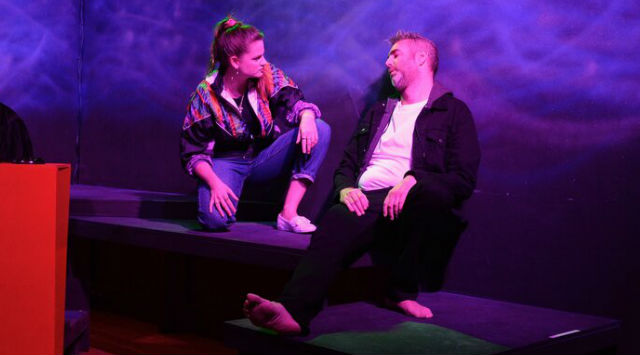
Basti and Rdeca meet one momentous night, and quickly fall for each other. What makes Rita Kalnejais’ rom-com First Love Is The Revolution unusual, is that its female lead is a fox, literally. Kalnejais’ play takes the star-crossed lovers trope to new heights of absurdity, for a story about nature and our interactions with it. The young rebels must walk away from their respective backgrounds, to establish for themselves entirely new ways of being, should they wish to find happiness. The writing is imaginative and daring, extremely mischievous in its flirtations with notions of bestiality, but delicate sensibilities can rest assured that there is never any doubt about sexual consent from any of its characters.

Passionate and joyous, the zesty production is directed by Lee Lewis, who leaves no stone unturned, in her explorations of this idiosyncratic text, to deliver an experience full of tension and intrigue. Funny, intelligent and highly captivating, First Love Is The Revolution is as entertaining as it is meaningful. Designer Ella Butler’s work on set and costumes is remarkable for its exuberance and refreshing use of colour. Lights by Trent Suidgeest, along with music by David Bergman, are memorable for their flamboyant flourishes, appropriately and enjoyably exaggerated in intensified moments of romance as well as comedy.

The luminescent Sarah Meacham plays Rdeca, with exceptional verve and faultless instinct; an astounding talent able to convey thorough authenticity for even the most bizarre, in her portrayal of an adolescent fox. Fourteen year-old Basti too is made very likeable by Bardiya McKinnon, an intricate performer who brings depth and conviction to the role. Rebecca Massey is powerful as the fox’s mother Cochineal, deftly oscillating between silly and serious, convincing from start to end. Amy Hack and Matthew Whittet each play three roles, all of them deeply amusing, with Whittet’s surprisingly poignant turn as Basti’s father Simon leaving a particularly strong impression. A magnetic Guy Simon alternates between fox and hound in two separate parts, wonderfully humorous in both, but terrifying as the bloodthirsty dog Rovis.

When a child grows up to become their own person, apron strings should have to be cut, before a true self can be said to have actualised. Young love is often a precipitating factor that urges one to examine one’s background, in a process that involves rethinking and re-contextualising of circumstances, to attain a more individualised world view. Basti and Rdeca need each other, in order that a destination can be identified for their inevitable departure from home. Growth is painful at any age, but stagnation, although comfortable at times, is a fate worse than death.

www.griffintheatre.com.au

Review: Good Dog (Green Door Theatre Co)

Venue: Kings Cross Theatre (Kings Cross NSW), Nov 1 – 16, 2019
Playwright: Arinzé Kene
Director: Rachel Chant
Cast: Justin Amankwah
Images by Jasmin Simmons

Theatre review
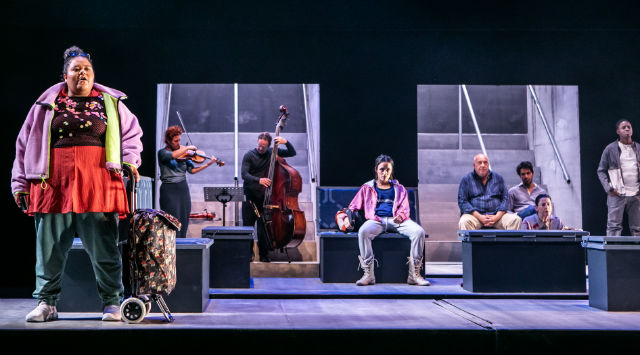
Good Dog by Arinzé Kene, details the life of a young black man in working class England. We watch him from childhood, an innocent boy like any other who dreams of owning a bicycle, but who learns instead, the harsh realities of poverty. It is a story about race and class, and how people can be depleted of patience and naivety, in the face of unremitting injustice. Years of deprivation sets our unnamed protagonist on a course of rebellion, that the play appropriately depicts as a valid response to systematic failures of modern economies.

Kene’s writing is intriguing, in a linguistic style faithful to the cultural contexts from which it emerges. Directed by Rachel Chant, the production is sensitive, and dignified, in its portrayals of prejudice and disparity in a foreign land. Sound design by Melanie Herbert is particularly subtle in how it conveys psychological shifts for the one-man show. Kelsey Lee’s lights are an elegant feature, and a set by Maya Keys provides just enough visual cues to spark our imagination. Actor Justin Amankwah is extraordinarily charismatic, but insufficiently inventive and overly naturalistic in the role. Good Dog requires a more expository approach to speak to an Australian audience, and at over two hours long, a stronger sense of theatricality is necessary to sustain our interest.

The power of white supremacist capitalism lies in the way it is able to subjugate so many, for so long. Those of us who are oppressed, not only buy into their myths about hard work and meritocracy, we further sympathise with their prescriptions of politeness and civility. They keep us asking for better, over generations, knowing that their continual denials are only met with perpetual compliance. Once in a blue moon however, a revolution will arise, with people tired of waiting, finally pressed to claim back their due by force. How and when this is going to happen, is as always, anyone’s guess.

www.greendoortheatreco.com

Review: Così (Sydney Theatre Company)

Venue: Sydney Opera House (Sydney NSW), Nov 1 – Dec 14, 2019
Playwright: Louis Nowra
Director: Sarah Goodes
Cast: Gabriel Fancourt, Esther Hannaford, Glenn Hazeldine, Bessie Holland, Sean Keenan, Robert Menzies, Rahel Romahn, Katherine Tonkin, George Zhao
Images by Jeff Busby

Theatre review
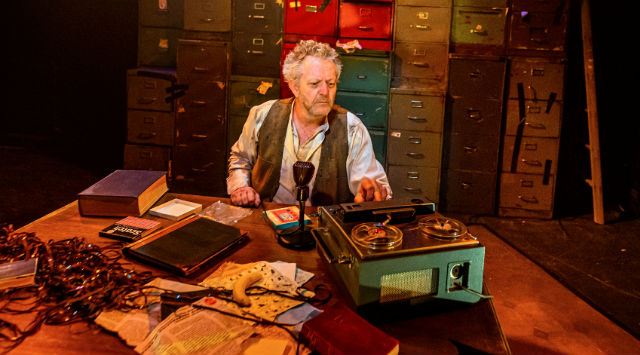
Theatre director Lewis finds himself at a mental asylum, not as a patient, but as a facilitator for a one-night-only staging of Mozart’s Così fan tutte, starring clients of the home. This is 1972, many years before deinstitutionalisation had begun, and the personalities Lewis meets are varied in capacities, but uniformly charming. Louis Nowra’s Così is a 1992 comedy with a premise that remains intriguing, but much of its humour has lost its lustre. We have learned to regard mental illness with a diminished sense of alienation, and characters in the play have lost their sense of otherness accordingly, causing many of its jokes to feel archaic.

The production is directed by Sarah Goodes, who does extensive work to reflect a modern sensibility in her iteration of Così. While it does provide an updated sense of cultural appropriateness, with a renewed perspective of people with mental health challenges, we discover that there is little at its heart that truly resonates for today’s audiences. Nevertheless, it is a smartly designed show, with Dale Ferguson’s set and Jonathon Oxlade’s costumes providing a valuable sense of playfulness. Lights by Niklas Pajanti, along with Chris Williams’ music, keep the action jaunty and energised.

Actor Sean Keenan is convincing as the unassuming and somewhat meek Lewis, a sturdy presence who lets his colourful counterparts occupy our attention. Unofficial ringmaster Roy is played by Robert Menzies, who is powerful in the role, and effective in having us invest in his passions for Mozart and classical opera. Bessie Holland is unforgettable as the brassy Cherry, impressive in her ability to deliver big laughs, even with Nowra’s dubious dialogue. Similarly charismatic is Rahel Romahn, consistently and effortlessly funny as Doug the pyromaniac, setting the stage alight at every appearance.

In Così fan tutte, people pretend to be somebody else to discover truths about themselves. Così too, features playacting, with patients of the asylum masquerading as characters in an opera, as though on a recess from their real lives. Individuals can come to new understandings of themselves, when they experience distance from their own existences. Art allows us to step out, and observe the world from a different perspective, which is an immense benefit for all of us who forget the diminutiveness of being, and the inanity of any ego.

www.sydneytheatre.com.au | www.mtc.com.au

Review: The Indian Wants The Bronx (Chippen Street Theatre)

Venue: Chippen Street Theatre (Chippendale NSW), Oct 24 – Nov 2, 2019
Playwright: Israel Horovitz
Director: Rahel Romahn
Cast: Tristan Artin, Elliott Giarola, Rajesh Valluri
Images by Shayan

Theatre review
As delinquents Murph and Joey wander the streets of New York, they stumble upon Gupta at a bus stop trying to get to the Bronx without knowing the English language. The boys are amused by Gupta’s Indian clothing, and proceed to taunt him, gradually increasing in intensity over the play’s 45 minutes.

Israel Horovitz’s The Indian Wants The Bronx premiered in 1968, the year of Martin Luther King’s death, at the height of America’s civil rights movement. Although the work is undoubtedly dated, with a central Indian character unable to speak English, the way it frames bigotry as an unassailable reality regardless of intentions by individuals, remains valuable in our discourse about race. The young New Yorkers do not think of themselves as xenophobic, but consequences of their actions are certainly racist.

Directed by Rahel Romahn, the show is suitably energetic, fuelled by the irrepressible ebullience of unruly youth. A greater sense of danger, and dramatic tension, is slightly missing in early portions, but the show delivers the goods in its second half. Sound by Kailesh Reitmans provides excellent support in calibrating atmosphere for every scene, and lighting design by Thomas Walsh, although obvious with its objectives, is effective in escalating tensions.

Three accomplished performers take us through this story of racially motivated violence, with Rajesh Valluri leaving a strong impression as Gupta, able to convey a sense of dignity for the character in spite of his unfortunate circumstances. Tristan Artin and Elliott Giarola are strong in their roles, both actors detailed and passionate with what they bring to the stage. The production is an engaging one, made believable by a thoughtful and cohesive team.

One of the boys is Irish, and the other Jewish. Mid-century New York was not always kind to them, yet they are unable to see themselves reflected in their Indian victim. History shows that it is easy for people to forget their own persecution, and dispense upon others the injustices they had previously suffered. Half a century after Horovitz’s writing however, it may seem that the new generations of today, determined to define themselves as unprecedentedly enlightened, have become much more compassionate in how they regard society. The establishment is still in the habit of keeping groups of people subjugated, but opposition to their modus operandi is indisputably growing.

www.chippenstreet.com

Review: Bird (Old Fitz Theatre)

Venue: Old Fitzroy Theatre (Woolloomooloo NSW), Oct 22 – Nov 2, 2019
Playwright: Katherine Chandler
Director: Jane Angharad
Cast: : Marvin Adler, Sarah Easterman, James Gordon, Bella Ridgway, Laura Wilson
Images by Clare Hawley

Theatre review
Ava is turning 16 and homeless. Her cruel mother rejects repeated efforts by Ava to mend bridges, letting the girl languish in crisis accommodation, and on the streets of her Welsh town. Katherine Chandler’s Bird is about survival, when a young person is abandoned. We look at the challenges that Ava has to negotiate having been left to her own devices, and the dangers she encounters as she does her best to stay alive.

It is a poignant story, featuring an honest portrayal of a loveless family not often seen in our storytelling. Its characters are realistic and thoroughly explored, so that we may sympathise with the depths of Ava’s despondency, and identify the hope that she never relinquishes. Directed by Jane Angharad, the production tends to be overly subtle in approach, but its emotional resonances are strong when necessary. The dynamics she renders between cast members is often moving, for an effective manifestation of the play’s generous measure of sentimentality.

Actor Laura Wilson’s authentic portrayal of innocence is crucial to how we regard Ava, along with a commendable focus and conviction that keeps us invested in the protagonist’s journey. The mother, Claire is played by Sarah Easterman, whose quiet brutality provides valuable fortification to how the plot unfolds. Mystery man Lee is given excellent depth by James Gordon, whose ambiguity creates exquisite dramatic tension for all his scenes. Marvin Adler and Bella Ridgway play Ava’s friends, both performers offering a balance of melancholy and purity, for depictions of youth that are vividly truthful.

To be unwanted by one’s parents is unimaginable for most, yet many continue to flourish in spite of this bitter deprivation. The odds against her are staggering, but Ava never gives up trying. With no choice but to be fearless, she is always able to muster the courage to march on, even if her days are aimless and sad. We have all experienced what it is like to be lost, but to brave the world when feeling unloved, is an immense tragedy, yet somehow, we are capable of it.

www.secrethouse.com.au | www.redlineproductions.com.au

Review: Much Ado About Nothing (Bell Shakespeare)

Venue: Sydney Opera House (Sydney NSW), Oct 22 – Nov 24, 2019
Playwright: William Shakespeare
Director: James Evans
Cast: Vivienne Awosoga, Danny Ball, Marissa Bennett, Mandy Bishop, Will McDonald, Zindzi Okenyo, Suzanne Pereira, Duncan Ragg, Paul Reichstein, David Whitney
Images by Clare Hawley

Theatre review
It is the classic story of misunderstandings, and the bumpy road that lovers must take, before arriving at happily ever after. Shakespeare’s Much Ado About Nothing features endless witty repartee, between idiosyncratic characters who seem to specialise only in matters of the heart. Romance takes centre stage, in an old-fashioned world that wants us to believe that nothing is more valuable than a monogamous heterosexual union.

Although rarely inventive, the production, directed by James Evans, is a joyful one, with a sense of playfulness that helps us get through the inevitable return of a perennial favourite. In the role of Benedick is an irrepressible Duncan Ragg, genuinely hilarious with his robust comedy, cleverly conceived and perfectly executed. Zindzi Okenyo plays a sophisticated Beatrice, memorable for an understated approach that works to reduce the cheese factor in Shakespeare’s play.

Hero is given emotional authenticity by Vivienne Awosoga whose efforts at instilling strength makes palatable the damsel in distress, and her gullible husband-to-be Claudio is depicted by a vibrant Will McDonald, who leaves a remarkable impression with his creative and energetic presence. Demonstrating that it is often Shakespeare’s male roles that truly shine, Mandy Bishop steals the limelight as Dogberry and Balthasar, incisive and effortlessly funny with all that she brings to the stage.

It is true, that we spend inordinate amounts of time and attention on romantic love. We seek a satisfaction unique to that experience, determined to find someone to fill an emptiness that cannot be otherwise occupied. There are things much more logical, and much more within an individual’s control, yet we stray from the possibilities of real achievement, to pursue that which is in many ways narrow and selfish. It seems that being human, we are capable of immense knowledge, but wisdom does not always mean that we act in the best interests of our species.

www.bellshakespeare.com.au

Review: Baby Doll (Ensemble Theatre)

Venue: Ensemble Theatre (Kirribilli NSW), Oct 18 – Nov 16, 2019
Playwright: Tennessee Williams (adapted by Pierre Laville, Emily Mann)
Director: Shaun Rennie
Cast: Kate Cheel, Maggie Dence, Socratis Otto, Jamie Oxenbould
Images by Prudence Upton
Theatre review
A young woman finally has to consummate her marriage, on her twentieth birthday, after two years of being with a much older husband. On the eve of that fateful night however, a tall, dark and handsome stranger appears, as though poised to rescue the girl from the event she has long dreaded. Tennessee Williams’ Baby Doll takes place in Mississippi Delta, at a time when women, even those who were young, white and beautiful, had few rights and opportunities to speak of. We observe the restrictive circumstances faced by the protagonist, and how her choices are limited to just two men, neither of whom have her best interests at heart, but in this adaptation by Pierre Laville and Emily Mann, we are able to see her desires and fortitude come to the fore, and it becomes evident that the girl is not giving up without a fight.

Directed by Shaun Rennie, the scintillating production grips us, not only with the exciting paradigm shifts deliberately introduced to the old story, but also with its exhaustive efforts at imbuing every theatrical moment with a rich sensuality, able to have us captivated on levels beyond character and narrative. Lights by Verity Hampson convey an intense sexuality, oppressed yet untameable, a wild undercurrent emerging from all sides of this lustful triangle. Sound and music by Nate Edmondson moves effortlessly from episodes of rhapsodic extravagance, to sequences filled with hushed precarity. We always know what the people on stage are thinking and feeling, even if their words are designed to disguise the truth.

Actor Kate Cheel plays the girl named Baby Doll, with a delicious intellectual aplomb that powerfully resists the relentless sexual objectification imposed upon her from all directions. The character we see is libidinous, seductive and strategic, courageously using everything she owns to make the best of a terrible situation. The shrewd defiance being portrayed by Cheel elevates the entire exercise, for a surprisingly modern take of an otherwise outdated Lolita tale.

The repellent husband Archie Lee is depicted in full bigoted glory, by an exuberant Jamie Oxenbould, who keeps us engaged by his bold embodiment of the deplorable antebellum hangover. Stoking the fire as Silva Vacarro, is Socratis Otto who manipulates levels of authenticity for a deceptive type who seems only to have ulterior motives. Otto makes every line of dialogue believable and enthralling, so that we may follow Baby Doll as she falls hopelessly under his spell. Maggie Dence is memorable in the subsidiary role of Aunt Rose, absolutely charming and humorous at each appearance.

There is little Baby Doll could do to make things better for herself, but she pulls out all the stops. Women today do not experience the same level of subjugation, but we certainly do have to rely on ingenuity and resourcefulness, to navigate a world that continues to be unjust and dangerous. Most of us can now walk away from failed marriages, but few of us can turn our backs on a culture determined to limit our identities, and an economy built on our servitude. Our survival requires that we participate within structures that routinely place us at a disadvantage. We may feel duplicitous and hypocritical, when we bite the hand that feeds, but there is no escaping that which we wish to demolish. As demonstrated in Baby Doll, we can never be prevented from being instigators for change, no matter how small a part we play in whatever revolution that may be brewing.

www.ensemble.com.au

Review: Natives Go Wild (Sydney Opera House)

Venue: Sydney Opera House (Sydney NSW), Oct 22 – 27, 2019
Playwright: Rhoda Roberts
Music: Damian Robinson
Director: Chelsea McGuffin
Cast: Waangenga Blanco, Mika Haka, Beau James, Josephine Mailisi, ‘SistaNative’ Seini Taumoepeau, Samuela Taukave aka Skillz
Images by Anna Kucera

Theatre review
There is probably nothing more objectifying than being part of the display at a human zoo. To be placed in that position can of course be an entirely voluntary enterprise, but in the 19th century, it is likely that circumstances at fairs and carnivals were less than dignified, with the acquisition and misrepresentation of Indigenous peoples for the pleasure of gawking colonials, forming a crucial feature of the circus industry.

Rhoda Roberts’ Natives Go Wild is critical of that tradition of humiliation, of a West obsessed with exoticism, depriving people of colour their agency. In this show however, identities are reclaimed, and tables are turned, as Indigenous performers from various Antipodean regions, take charge of their narratives, telling us precisely what we need to know, about who they are and what they do.

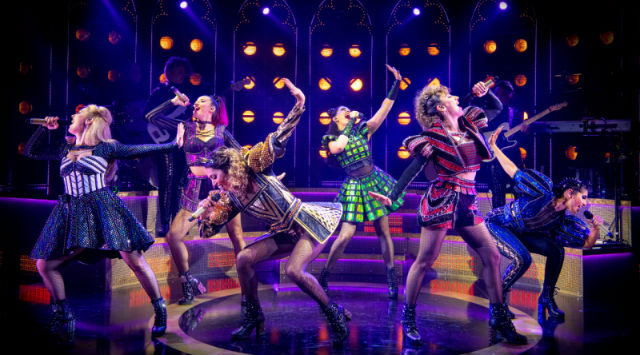
It is a glamorous production, featuring excellent work by designers Mark Howett (set and lights) and Tim Chappel (costumes). Original songs and music by Damian Robinson are full of inspiration, contributing a sense of transcendental elevation to the staging, with singer Seini SistaNative Taumoepeau bringing remarkable soul to these refreshing compositions. Director Chelsea McGuffin is charged with the responsibility of assembling disparate elements into a cohesive whole, for a vaudeville style of presentation that asks all the right questions.

Ringmaster Mika Haka is high camp personified, but in an acerbic and confrontational style, never letting us easily off the hook. Waangenga Blanco and Samuela Skillz Taukave are mesmerising dancers, both portraying a series of legendary Indigenous figures from circus history. Aerial artist and contortionist Josephine Mailisi conveys true beauty with a physicality full of strength and discipline. The interminably charming clown Beau James delivers some of the funniest and most moving sequences, proving himself a real star we cannot get enough of.

Some might argue that colonisation has improved lives, but there is no question that the inherent cruelty of Western values, has had negative impacts on Indigenous communities that remain significant today. The persistent inability of white people to prioritise Indigenous voices have meant that their needs are consistently ignored, and their wisdom disregarded. Even as we watch the world crumble under instruments of white supremacy, it refuses to cede power, tenaciously holding on to reins that have failed economies and the environment. Unless the next stage of our collective evolution is to better incorporate those who have demonstrated actual skills of survival, the future can only be bleak.

www.sydneyoperahouse.com

Review: Rosaline (Little Trojan Theatre Co)

Venue: Kings Cross Theatre (Kings Cross NSW), Oct 11 – 26, 2019
Playwright: Joanna Erskine
Director: Sophie Kelly
Cast: Alex Beauman, Jeremi Campese, David Lynch, Aanisa Vylet
Images by Marnya Rothe

Theatre review
Shakespeare never let us see Rosaline, when he wrote about her in Romeo & Juliet. We knew her to be Juliet’s cousin, the girl who had rejected Romeo’s advances, before the famous lovers’ fateful meeting at the Capulet ball. Joanna Erskine’s Rosaline takes what is ostensibly a stock character, and makes her the central figure of an alternate teenage love story. We are reminded that it was only Rosaline’s efforts at chastity that stood in the way, and discover that she too, was completely enamoured, just as Juliet had been head over heels in love with Romeo. Erskine’s play represents justice not only for a silenced woman, but asserts female perspectives in a culture that is too accepting of the Bard’s persistent and pervasive misogyny.

The work is however, only marginally radical with its revisions of the legendary saga. It concerns itself mainly with supplementing the original tale, rather than daring to argue for a completely different, wholly more palatable version of events. Directed by Sophie Kelly, the show can tend to feel excessively earnest, and therefore needlessly reverential toward Shakespeare’s old creation. The production is nonetheless a good-looking one, made lustrous and polished by Martin Kinnane’s lighting design.

Actor Aanisa Vylet is an alluring leading lady, with an easy confidence that makes believable Rosaline’s new-found existence. When given the opportunity, Vylet demonstrates herself to be a remarkably spirited performer, as does Jeremi Campese, who brings a valuable vibrancy to the piece. Romeo is played by Alex Beauman, passionate and appropriately naive in his portrayal of the juvenile romantic, and David Lynch surprises with the intricacies he is able to locate for his interpretation of the Friar.

It is certainly a valid choice to create a lovelorn Rosaline, but some would find it disheartening that centuries later, the young woman is still being defined so resolutely against a man who loves another. Even though we had come to know Rosaline through Romeo, there is certainly no need to remain within his doomed narrative. We are all bit parts in someone’s story, playing minuscule roles for people we could very well have forgotten. At the centre of each personal universe, is an undeniable responsibility to create a rich life, and to ensure a meaningful existence. Rosaline’s story might have begun with Romeo, but where she went thereafter, is still anyone’s guess.

www.facebook.com/littletrojantheatre