Review: Orphans (Seeker Productions)

seekerproductionsVenue: Old Fitzroy Theatre (Woolloomooloo NSW), Apr 19 – 30, 2016
Playwright: Dennis Kelly
Director: Richard Hilliar
Cast: Liam Nunan, Jacki Mison, Christopher Morris

Theatre review
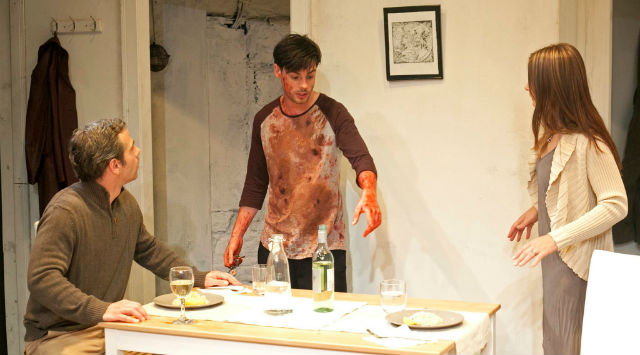
In Dennis Kelly’s Orphans, we look at violence and its origins. Liam is a young man who encounters unspeakable brutality. His world is one of turbulence and confusion, the nature of which was established years ago as an orphaned child, that he unfortunately sustains through to the present day. Helen is his caring sister who although similarly traumatised, is determined to create normalcy in their lives. Their story is a moving one, but presented with additional dimensions of a thriller and some very black comedy. The conflict between Helen’s order and Liam’s chaos presents tensions that serve the play well, with a skilfully designed escalation of stakes that draws us in deeper and deeper into its drama.

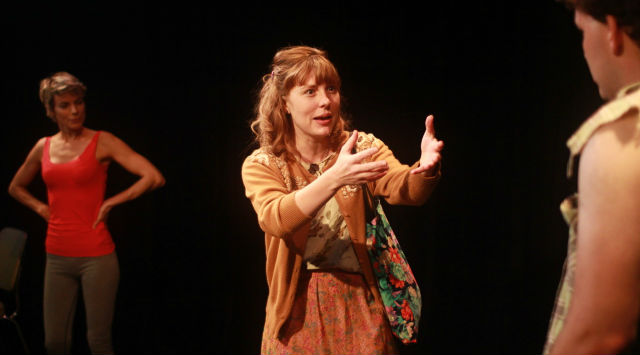
The very compelling characters in Orphans are played by three excellent actors who showcase their remarkable talents in a work that presents some colourful extremities to show off their thespian muscles. Director Richard Hilliar opens up every opportunity for the players to shine, and the thoroughness at which each personality is explored and portrayed, is the show’s strongest feature. Liam Nunan’s depiction of his role (also named) Liam’s trauma is unrelenting yet textured. The level of focus and emotional power he puts on display is a marvellous sight that provides a sense of edginess appropriate for the confronting nature of the material. Equally intense is Jacki Mison who gives Helen an intriguing sense of complexity that is almost hypnotic in its appeal. The more she reveals, the more we wish to discover, and the authenticity she is able to introduce along with the character’s strangeness keeps us engrossed in Helen’s quandary. Christopher Morris has a more subtle approach but is no less dynamic as Helen’s husband Danny, whose surprising transformations through the plot are crafted with great instinct and precision. The outlandish narrative is offered balance by the actor’s quiet but confident presence, allowing us breathing space within its profusion of aggressive energy.

There is also good work to be found in Liam O’Keefe’s lighting design and Tegan Nicholls’ efforts on sound. Atmosphere is generally modulated well for transitions between scenes, although visual cues do not provide enough certainty about the married couple’s socio-economic status, which becomes increasingly relevant. Similarly ambiguous are the play’s comic qualities. The darkness of its themes notwithstanding, clearer indication of humour would garner better responses to the production, and provide a greater variance in tonal shifts over its duration.

Trauma in childhood is perhaps inevitable. At varying degrees, each of us would have felt violated or betrayed in our time as small, vulnerable creatures navigating the environment, but how we develop from that tainted moment, is a real concern that Orphans investigates. We think about the process of growing up, and question the practicability of becoming happily stable adults. Some of us discover the fallacy of “happy ever after” early on but many others cling to the belief that ideals exist and a life of perfection is within reach. The truth is that things do get better, but whether we believe that there can ever be an end to personal struggle, would depend exclusively on each individual’s outlook.


www.facebook.com/…

5 Questions with Chantelle Jamieson and Mansoor Noor

Chantelle Jamieson

Chantelle Jamieson

Mansoor Noor: What role would you love to play that you haven’t yet?
Chantelle Jamieson: I’d love to play Beatrice in Much Ado About Nothing. Who wouldn’t love to be that witty.

What is a show you would never do again?
Unfortunately, Derek Walcott’s Caribbean version of The Odyssey. We did it at drama school and I think everyone involved would happily forget it. I was playing Athena and the only memory of the role I have is of putting more and more glitter on every night to try and distract from what was happening on stage.

What is something that you know now that you wish you knew when you were first starting out as an actor?
No matter how much glitter you wear, you can’t fix a bad performance.

What have you enjoyed the most about working on Belleville?
I know it’s sucky but, Claudia, our director. It’s been amazing to work with such a passionate gifted young female director. It takes so much out of you holding a team together over the journey of a show, but her indomitable attitude is infectious. Also the cast are pretty great. You’re welcome, Mansoor.

Any tips on speaking French?
When you see an ‘r’ in a word, forget about rolling it, think about clearing your throat. Comprenez vous? That means “do you understand?”… I had to use Google translate for that.

Mansoor Noor

Chantelle Jamieson: If a film was made about your life who would you want to play you and who would really get the part?
Mansoor Noor: Daniel Day Lewis or Meryl Streep. So transformational. Let’s face it though, it would probably be Dev Patel. Or Joel Edgerton, #diversity

What is the most valuable experience you’ve gained from working on Belleville?
Probably having to learn lines in another dialect. I already speak a second language so I didn’t think it would be this challenging but the slightest mispronunciation can change everything. My mother actually lived in Paris for 6 years. She didn’t help me at all.

You’re also a photographer, which do you get most enjoyment out of?
Being on stage is certainly one of the most thrilling things you can experience. I think as artists we sometimes forget that not everyone gets to have the feeling of walking around on stage pretending to be other people in front of complete strangers. But I also love shooting actors’ head shots. Is this your way of asking me to shoot you some new head shots Chantelle?

Favourite thing to say in French?
It’s actually one of the words you get to say in the play. Incredible or rather, in-croy-a-ble!
I’ve started using it in my everyday vernacular.
“How is your dating life Mansoor?”
“Oh! Incroyable… bad.”

What’s the first memory you have of performance?
My debut performance was in a production of Billy Goat Gruff And The Baby Troll in Grade 6. And I think it’s safe to say I stole the show with my unintentionally Middle Eastern sounding Billy Goat.

Chantelle Jamieson and Mansoor Noor can be seen in Belleville by Amy Herzog.
Dates: 13 April – 12 May, 2016
Venue: Old Fitz Theatre

5 Questions with Jacki Mison and Liam Nunan

Jacki Mison

Jacki Mison

Liam Nunan: If you could have the career of any other actor, who would that be?
Jacki Mison: Sigourney Weaver because I was a huge sci-fi fan growing up and Ripley was my idol! She’s tough, funny, smart and able to move across genres, stage and screen.

As a producer and actor, what drew you to putting on Orphans?
I had seen a fantastic production of Orphans done a few years ago by the Queensland Theatre Company and it was one of those shows that really stayed with me for a long time. The intensity of it, Dennis Kelly’s particular style of dialogue and the moral dilemma at the core of it, for my character Helen, led me to try and secure a production. It was also in a completely different ballpark to the last show I had produced, which was an American comedy, so it felt right to switch things up.

Tell us about Helen. What excites you most about playing her?
I love the fact that she is a survivor. She is one of those people who are capable of doing the things that need to be done. But the personal cost, while not always evident, eventually bubbles up. She’s incredibly complex and has a fascinating arc throughout the play.

If, when you died, you could come back as any character in theatre, who would it be?
Would love to be one of the witches from Macbeth!

What character or production in your body of work are you most proud of?
My Subway commercial…

Liam Nunan

Liam Nunan

Jacki Mison: Dennis Kelly has written an intense, fast-moving play with Orphans. What has been your biggest challenge with the role of Liam so far?
Liam Nunan: Understanding Liam’s thought process. The play is written in a sort of chaotic frenzy of interrupting dialogue and if the rhythm isn’t spot on, the whole thing can come crashing down. You need to be hyper aware of what words trigger your impulse to launch over the other characters’ lines. Liam also changes his thought process faster than he has time to verbally articulate it. So he very often doesn’t finish his thoughts at all and talks himself in circles. So to answer your question; the acting bit.

Do you choose particular underpants for each character you play?
Great question, Jacki. Not by myself. I like to think it’s a collaborative process. I prefer to get the designers input early on before rehearsals begin and have some renderings sketched up to put forward to the director. If we can’t come to an agreement I usually get my agent involved. Surprisingly, most of the time, no one but me cares.

Who are the actors that most inspire you?
I’m inspired by actors that allow themselves to be inspired. I don’t know who said ‘Don’t be interesting. Be interested’ (or something like that) but the same can be said here. I love watching and working with actors that are open and ready to be inspired. They allow themselves to be changed by you and respond so organically, you can’t help but be changed by them.

What’s been your most embarrassing moment on stage so far?
In drama school we had just finished our first production open to the general public, The Winter’s Tale. We ran on for our curtain call, bowed, and ran off. In the wings everyone turned and ushered me to run back on to lead a second curtain call. ‘That makes sense’, I thought. ‘The audience have just sat through 3 and a half hours of 2nd year student actors doing Shakespeare whilst dressed as cowboys with southern American accents. It’s likely the best thing they’ve seen this year. I sure think it is. Of course they want more’. So I bounded back on stage. Half the audience were already making there way up the aisle. I look around, and of course I’m alone, dressed as Old Shepherd. The cast laugh. The audience look back and they laugh. Everyone laughs.

There was also the time in year 12 I had a testy blow out while I was singing ‘Maria’ in West Side Story.

If you had a choice of any role, stage or screen, what would it be?
Believe it or not, Liam in Orphans by Dennis Kelly. I’ve wanted to do this play for a while now. I saw a brilliant production of it at QTC a number of years back. I was absolutely shaken by it. I picked it up and read it maybe a year later and I was still just as moved. I thought ‘I must play this role’. I jumped at the opportunity and I’m thrilled I’ve been given the chance to play with such a complex character.

Jacki Mison and Liam Nunan can be seen in Orphans by Dennis Kelly.
Dates: 19 -30 April, 2016
Venue: Old Fitz Theatre

Review: Kayak (Cross Pollinate Productions)

crosspollinateVenue: Old Fitzroy Theatre (Woolloomooloo NSW), Mar 29 – Apr 9, 2016

Playwright: Katherine Thomson
Director: Adam Cook
Cast: Matthew Cheetham, Matilda Ridgway, Francesca Savige
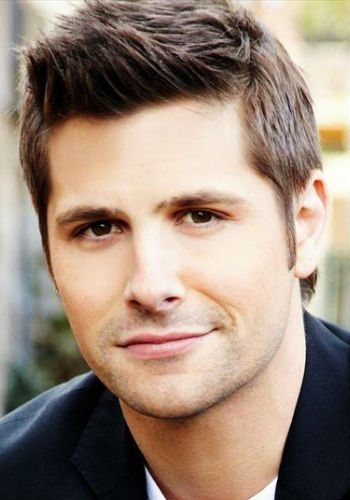
Image by Mansoor Noor Photography

Theatre review
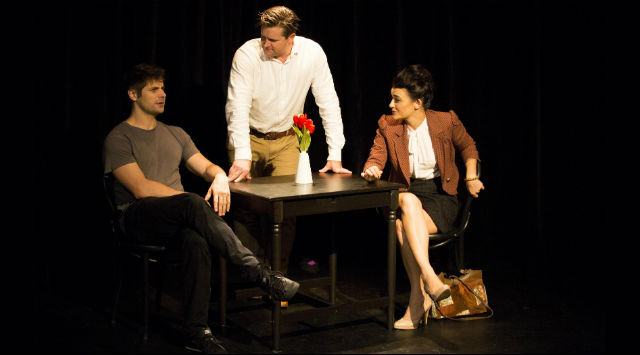
Desperate people do desperate things, and in Kayak, their actions are certainly outrageous. Katherine Thomson’s dark comedy features three characters, all lonely and lost, grasping at whatever crosses their paths that may contain salvation. Morals and ethics vanish when the going gets tough, and it is that process by which a person loses their mind, that provides the play with its biting humour. Thomson’s characters and dialogue are delightfully perverse and although they do not seem to make perfect psychological sense, it does provide sufficient contextual logic for us to connect with the increasingly wild stories that unfold.

Director Adam Cook’s interpretation of the work is full of energy, with attention placed on creating a lively and vibrant show. The narrative is conveyed with appropriate comedic levity, and each character is clearly defined, but the all-important humour of the production relies heavily on the cast, who do not always deliver the jokes with as much complexity as the material calls for. Matilda Ridgway is strongest, and very clever with the way she enacts the many surprises written for her character Wen. It is a charming performance, with an exaggerated quirkiness that is both theatrical and captivating. All players are passionate and determined to portray intense emotion, but the show lacks a certain melancholy. There are lots of tears, but we do not feel their sadness, and it is that sadness that is central to all the high jinks that transpire.

Wen, Ruth and Luke are dysfunctional people, crippled by misfortune. We identify with their pain because the causes of their troubles are all familiar. At the root of their many shenanigans are setbacks and misery that have descended upon us at one time or another, and while we may not express our grief in such dramatic fashion, the fantastical events they go through somehow ring true, perhaps relating to the fears we have about not being able to spring back, of not having enough resilience to cope with life. They crumble and fall into disaster, and we watch knowing that we are the lucky ones, if only for the moment, because disaster does happen, and people do break.

www.crosspollinate.com.au

5 Questions with Sheridan Harbridge and Ryan Johnson

Sheridan Harbridge

Sheridan Harbridge

Ryan Johnson: Is 80 Minutes No Interval exactly what it claims to be?
Sheridan Harbridge: It is exactly that. 80 minutes of punchy fun dark love with no breaks for a wee. Compact theatre for the average functioning bladder.

Your character has a real issue with theatre. Do you empathise?
My character Clare has a real problem with artsy fartsy theatre. She sits in the audience and feels ignored by the plays she sees. I don’t have that problem, I go dreamy for a beautiful classic where the director gets out of the way and honours the playwright’s intention, but I do also like risk and experimentation in my theatre. Unlike Clare, I am empathetic with the nature of risk and that more often than not, it doesn’t work, and you’re left with 35 actors running around on stage for 7 hours in diamante G-strings, holding dildos stuck on the end of some glittered sceptres singing Kylie Minogue hits in Latin. But when the risk pays off, the “Locomotion” in Latin is a real winner.

Do you think theatre needs to be more accessible?
I love the theatre scene in Australia. For the small arts community we have, we have a range of companies ticking the boxes for whatever may be your flavour. The problem is always the struggle for money, and how quickly these companies and artists burn out trying to consistently produce quality accessible and experimental theatre. Then they have to take less risks to stay safe and afloat and we all begin to complain again.

What makes our play different?
It’s a beautiful dark dark comedy with so much heart, and so so much absurdity. And plenty of fake blood, S&M whippings and nudity from an actor so handsome even Nanna will like it.

Most ridiculous thing I have ever seen in the theatre?
I saw a girl spill a tin of pencils on the floor and stand on them for half an hour trying to stay upright while monologuing. She fell so many times, the pencils were splitting in pieces and cutting the hell out of her legs. Exceptional.

Ryan Johnson

Ryan Johnson

Sheridan Harbridge: Is 80 Minutes No Interval exactly what it claims to be?
Ryan Johnson: Yes, depending on how many laughs we get and also how fast we act. It is absolutely endeavouring to be 80 minutes and it definitely has no interval.

Your character Louis is desperate to make a great work of art, to leave a legacy behind. What will people say about the legacy of Ryan Johnson?
I don’t think I’ll be remembered as a great actor or father or husband. It won’t be as ‘that scallywag who always seemed to have time for a chat with everyone.’ No – I’ll be remembered as the guy from the Cadbury Favourites commercial.

What do you think about 8-hour plays with 2 intervals and a dinner break?
I would rather eat hair. No one needs that in their life. Maybe the tech operators on the show who get paid by the hour but for anyone else, I’d say “don’t buy a ticket, you’re just enabling them”. If you want to be confused for 8 hours while watching A-list Australian actors talk funny in silly costumes, just watch one of the Hobbit movies.

What’s your favourite moment in the show?
The bits where you and Robin do anything. I think you are both comically brilliant and I feel very fortunate I get to share a space with you both!

What’s the most ridiculous thing you have ever seen in the theatre?
90’s Australian Basketball megastar Andrew Gaze in Jack And The Beanstalk at the Gold Coast Art Centre. The production was brilliant but he just didn’t capture the giant’s vulnerability. I wanted to know what was behind his ‘hunger’ for Jack but I couldn’t help but feel like Andrew was just ‘playing evil’.

Sheridan Harbridge and Ryan Johnson can be seen in 80 Minutes No Interval by Travis Cotton.
Dates: 8 March – 9 April, 2016
Venue: Old Fitz Theatre

Review: 80 Minutes No Interval (Thread Entertainment)

redlineVenue: Old Fitzroy Theatre (Woolloomooloo NSW), Mar 8 – Apr 9, 2016
Playwright: Travis Cotton
Director: Travis Cotton
Cast: Jacob Allan, Robin Goldsworthy, Sheridan Harbridge, Ryan Johnson, Julia Rorke
Image by Rupert Reid

Theatre review
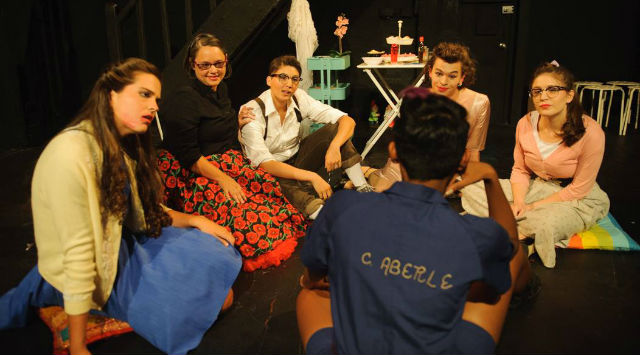
Travis Cotton’s play is as much an analysis on the creative process as it is about entertainment. 80 Minutes No Interval interrogates its own writer’s abilities, ambitions and approach to art and life, but its self-indulgence is very consciously altered to accommodate Cotton’s awareness of a paying crowd’s expectations of enjoyment and fulfilment. A brilliant wit provides coherence between the simultaneous, and usually divergent, needs of being innovative and crowd-pleasing, with an unabashed lust for laughter that determines its every stage moment.

When the show is not delivering unadulterated and outrageous hilarity, it is at least piercingly amusing. Constantly alternating between juvenile and sophisticated tones of humour, it tickles our funny bone relentlessly, and aggressively, insisting on our immersion into its worlds of humour. Robin Goldsworthy and Sheridan Harbridge play a range of supporting characters, and are linchpins to the effectiveness of this fun factory. Both gloriously adventurous and bold, the actors are faultless in their precise comedy, no matter how broad or how subtle they choose to attack the material. Their work here is unmissable. Leading man Ryan Johnson has the hard task of playing straight man in the midst of a lot of hysteria, and although not quite as funny, he certainly holds his own with graceful charm and an ever-present all-knowing glint in his eyes. The role of Louis is perhaps too unsentimental a creation for the play to establish poignancy, but Johnson is nonetheless able to introduce a valuable humanity that elevates it from mere farce.

The production is designed with ingenuity and admirable exactitude. Sound and music by Hamish Michael and Hue Blanes are crucial to how the audience’s emotions respond at every plot juncture, and Ross Graham’s dynamic lights create unexpected variety and dimension to what is essentially a small and blank black space. Beautifully executed by stage manager Liam Murray, the show’s technical accuracy contributes significantly to the way we are kept persuaded and engrossed.

80 Minutes No Interval is a study of negotiations between art and entertainment in theatre. The joy it provides is undeniable, and it makes statements about art that are acute and intelligent. Using autobiography as a point of departure, but disallowing the ego from getting in the way of a good time, Travis Cotton finds himself in a space that is both critical of the art world, and also deeply self-deprecating. It is hard to imagine better ways of spending eighty minutes than with this gleeful concoction of silly and smart, whether just for laughs or food for thought.

www.oldfitztheatre.com

Review: The Ultimate Lesbian Double Feature (Old Fitzroy Theatre)

ultimatelesbianVenue: Old Fitzroy Theatre (Woolloomooloo NSW), Feb 23 – Mar 4, 2016
Playwright: Zoe Brinnand
Director: Lucy Hotchin
Cast: Kristen Adriaan, Kristina Benton, Joseph Lai, Tamara Natt, Shamita Sivabalan, Lana Woolf
Image by Sarah Walker

Theatre review
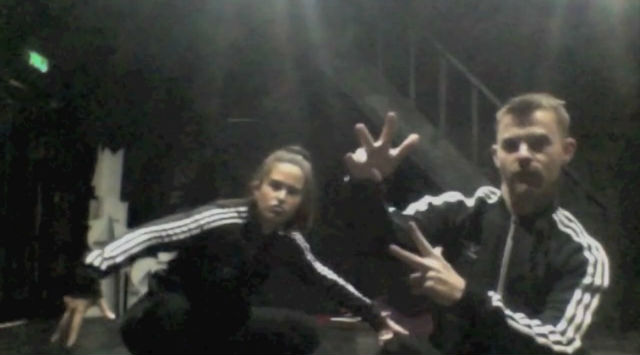
Zoe Brinnand’s half-hour plays Love In The Time Of Sexting and The Party traverse past and present in their examination of feminine desire and lesbian politics, to reflect a modern sensibility about queer identities in contemporary Australia. What the playwright presents is sassy, bold and funny, but most memorable for its celebratory spirit and a knowing rejection of tragedy and victimhood that tend to figure prominently in literary works about gay life.

Attempts at plot coherence are somewhat perfunctory, but Lucy Hotchin does a marvellous job of engineering amusing and lively episodes, while challenging conventional representations of gender and sexuality. The women in the work are neither consistently feminine nor masculine, and that fluidity extends to the way their libidos find expression. They are not one thing, and refuse to be restrained. Indeed, it is the freedom manifest in all their thoughts and actions that keeps us seduced and fascinated. Strong performances by Kristina Benton and Francis Lai bring excellent vibrancy to the production, both introducing a quality of passionate abandon that connects well with their audience.

The Ultimate Lesbian Double Feature may be radical but it is not pedantic with its world view. It is an inspiring work that can liberate, but one must remain open to the daring propositions it expounds especially when they seem much too boundless in relation to our prohibitive real lives. Theatre must spark our imagination, and provide a vision of what things might be. Utopia will always be found in the stories that we tell, but it is when they feel close to home that they are at their most powerful.

www.oldfitztheatre.com

Review: Alpha (Old Fitzroy Theatre)

oldfitzVenue: Old Fitzroy Theatre (Woolloomooloo NSW), Feb 9 – 20, 2016
Created and performed by: Tamara Natt, Sebastian Robinson
Director: Sebastian Robinson

Theatre review
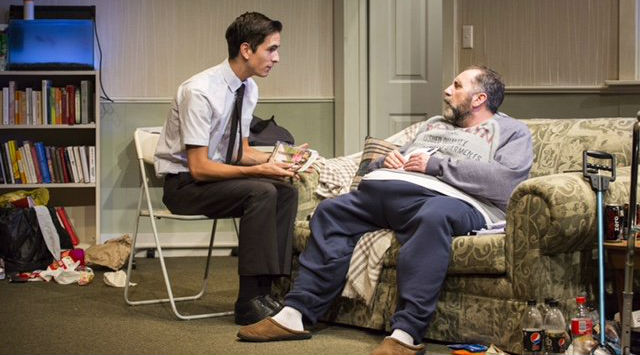
Tamara Natt and Sebastian Robinson meet in Alpha, a juncture at which poetry and physical theatre are combined to explore two queer identities and their place in the world. Along with the electric guitar and vocal accompaniment of Milla O’Sullivan, rhymes and rhythm are the key currency of the piece. Natt and Robinson’s bodies and voices fill the stage to connect with dormant sensibilities of the audience, making us look and hear with parts of our selves seldom employed, to discover the alternatives of our parochial existence, and to look beyond the fences we erect.

Natt and Robinson alternate between vulnerable and defensive in what they choose to present. We are drawn in and pushed away, as the piece fluctuates between impenetrability and its desire to excite. Gender and sexuality are often brought into discussion, with the subversion of female/male and gay/straight binaries taking centre stage. It offers new things as well as concepts that might be described as derivative, but it comes as no surprise that tried and tested elements should feel more effective. Like any work that rejects narrative, Alpha can be challenging to the more logical inclinations of our minds, but both performers are charismatic and spirited, with a tenacious grit that keeps us seduced.

We are not used to shows of this type, because we only allow poetry to be a cursory presence in our lives. We can make sense of it, but we prefer meanings pre-packaged and ready-made for our cultural consumption. We want to remain idle in audienceship, and leave creativity to the artists, but this distinction can be disrupted when artists find courage to prioritise their authenticity over the need to accommodate conventions. In Alpha, investment of the self is required for any significant interpretation to occur, and it is the installation of a universal I as first person that gives it purpose.

www.oldfitztheatre.com

Review: The Whale (Red Line Productions)

redlineVenue: Old Fitzroy Theatre (Woolloomooloo NSW), Feb 12 – Mar 4, 2016
Playwright: Samuel D. Hunter
Director: Shane Anthony
Cast: Keith Agius, Chloe Bayliss, Alex Beauman, Meredith Penman, Hannah Waterman

Theatre review
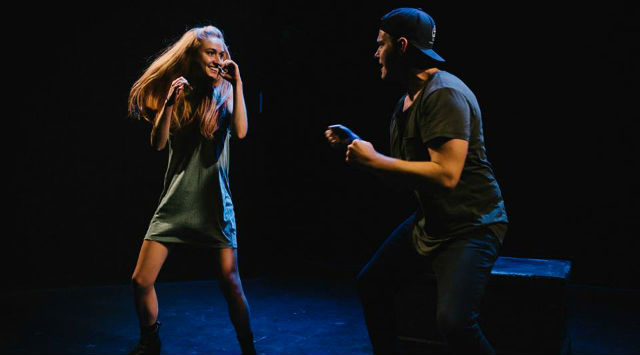
There is no question more fundamental than to consider why it is that we choose to live. In Samuel D. Hunter’s The Whale, a kind of suicidal impulse is explored, but the dramatic gesture is not a sudden one. Alan and Charlie let themselves waste away by withdrawing from the very living of life, allowing their bodies to approach certain and hastened death. The writing is powerful, poignant and sensitive, with a clever plot structure to fascinate and to provide plentiful food for thought.

Direction of the work by Shane Anthony is replete with tenderness and compassion, eager for us to find points of identification with its quirky characters. The show needs a more pronounced sense of humour for its overall emotional arc to make a greater impact, but its effect is nonetheless strong. Anthony’s use of space is dynamic and thoughtful, beautifully aided by Charlie Davis’ very accomplished and evocative set design.

Performances are well-rehearsed, with excellent chemistry to be found, but character interpretations can at times tend to be too straightforward. Keith Agius brings a valuable vibrancy to Charlie’s sad story, and although his portrayal of the role’s profound sorrow is not always convincing, we achieve a thorough understanding of his mind and spirit, and it is the actor’s work that provides his audience with many of the show’s reflective and meaningful moments. Also moving is Hannah Waterman as Mary, whose life struggles are immediately evident in spite of her brief stage time. Waterman’s approach brings a surprising complexity that makes her part the most authentic and empathetic of the group.

In The Whale, Charlie is crippled by regret and heartache. We watch him go through immense suffering, and although we appreciate the difficulties he faces, the play allows us to see the possibilities of a better life that is only a hair away. It is a lesson that we can all learn; about choice, strength and hope. Charlie might be an abomination to many, especially to himself, but to those of us who know his parable, he will serve as a reminder on our darker days, for a long time to come.

www.oldfitztheatre.com

Review: Tender Napalm (Brevity Theatre)

brevityVenue: Old Fitzroy Theatre (Woolloomooloo NSW), Jan 19 – 30, 2016
Playwright: Phillip Ridley
Director: Alexander Butt
Cast: Jordan Cowan, Tim Franklin
Image by Andre Vasquez

Theatre review
People who work in theatre know how to tell stories. Whether simple truths or tall tales, their creativity determines how a narrative takes shape. In Phillip Ridley’s Tender Napalm, a pair of lovers recite passages of extravagant fantasy, making sense of their relationship by constructing worlds far from reality, but ones that reveal the struggles they experience. Ridley provides his characters with outlandish words, but little happens in terms of plot. We catch meaningful glimpses of the relationship’s tensions, and fleeting poignancies that allow us to make sense, but the writing is fanciful and deliberately embellished, feeling as though it is more suited for the page than it does on the stage.

The work is demanding of its audience’s imagination. Both actors are presented in the plainest way possible, on a bare stage with ample room to conjure up the wild scenarios of the text. Katelyn Shaw’s sound design and Ben Brockman’s lights help significantly in manipulating ambience and energy, but the effectiveness of the show relies squarely on performances by the young duo of Jordan Cowan and Tim Franklin, both of whom tackle the script with gusto and impressive determination. Cowan has a vibrant theatricality that holds our attention effortlessly, with an endearing warmth in the personalities she inhabits. Equally charming but with a more laid-back approach is Franklin, whose natural sense of humour is omnipresent and delightful.

The performers give their all for a dynamic and engaging performance, but there is a surprising and strange emptiness to be discovered after the curtain call. No matter how accomplished, any hit show will have its detractors, and no matter how obtuse, a presentation can still find an appreciative audience. What makes a theatrical piece connect with its audience can be analysed and deconstructed into a multitude of things, but there is nothing that can guarantee all to be satisfied. It is not the responsibility of artists to please everyone, in fact it is harmful to conceive of one’s career thus. There are many other greater values that can guide one’s art, and as long as those are vested and present, the creation is valid.

www.oldfitztheatre.com | www.brevitytheatre.com.au